Posted on April 17, 2015 by Serbian Animals Voice (SAV)

Thursday, April 16, 2015
Petitions and More, April 16
Save the Zoo animals!
More signatures needed
======= News and more ==========
Filed under: GENERAL NEWS - International / National / Regional, GLOBAL PETITIONS - Anything Animal, Anywhere ! | Leave a comment »
Posted on April 17, 2015 by Serbian Animals Voice (SAV)

Well things have got off a truly brilliant start – thank you to everyone who has given; big or small donations – they all add up !!.
Please also remember that there are dozens of other small animal shelters throughout Serbia doing what they can to help animals in distress and need.
We try to sometimes show the odd appeal on this (SAV) site; but if you sign up to Facebook ‘Serbian Animals Voice’ then you can see all the works and efforts made by these other shelters.
It costs nothing and is very easy to become a member.
We currently have1,157 members; but are always happy to get a lot more !
Fingers crossed this link below will take you to the site where you can see some of the work by all these small groups who are calling for help.
Excellent people; excellent causes – they just need some help in reaching their dreams.
Filed under: Animals Requiring Adoption or Homes - Worldwide, CAMPAIGNS - Global Animal Welfare Issues, GENERAL NEWS - International / National / Regional, SERBIA (Central Serbia: Capital - Belgrade) and (Serbia, SHELTER - Information, The "Serbian Animals Voice (SAV) ALLIANCE | Leave a comment »
Posted on April 16, 2015 by Serbian Animals Voice (SAV)


SAV – we are just putting this out quickly tonight; but will tidy the appeal up tomorrow. Please give anything you can – thank you.
Please share and help if you can!
Our debt at the vet’s is up around 400 euros already and will get larger as the additional cost of de-worming and de-fleaing all of the shelter kitties is awaiting us next week. The even more serious problems are our expenses for food (which are always high) are becoming literally frighteningly high during the transitional season, when the temperature differences between day and night are vast and even the toughest kitties easily get sick if they’re not fed properly and abundantly.
Honestly, we don’t feel comfortable asking for help over and over again but the truth is we can’t do much without your support. Is there anything more heartwarming than the sight of content, happy kitties which don’t have to wonder where their next meal will come from? All of the Felix cats know what hunger feels like, they’re all familiar with neglect and the danger of life on the streets and when they found their safe haven, their first and only home, can we possibly all gather together to provide them with what they need most?
If you’re able to donate any amount please do so, as everything adds up and keeps these wonderful creatures’ eyes bright and their purrs loud! If you’re ever questioned if and how much the kitties appreciate your kindness and generosity, just look at them!
As to us, their staff, we are grateful beyond words for all of the help we get!

Filed under: Animals Requiring Adoption or Homes - Worldwide, CAMPAIGNS - Global Animal Welfare Issues, GENERAL NEWS - International / National / Regional, SERBIA (Central Serbia: Capital - Belgrade) and (Serbia, SHELTER - Information, The "Serbian Animals Voice (SAV) ALLIANCE | Leave a comment »
Posted on April 16, 2015 by Serbian Animals Voice (SAV)

UK (England) Hunting News

Photos – Mark Johnson – SAV. Ban ALL Hunting !
Hunt Saboteurs praised by judge
On 25th March 4 hunt saboteurs were found not-guilty of committing aggravated trespass after a 2 day trial at Reading magistrates.
The trial took place following their arrest at a meet of the Surrey Union Hunt near Ewhurst in Oct last year. The saboteurs were trying to come to the aid of a deer that had been chased and injured by the hunt.
Instead of allowing the sabs, who had years of animal sanctuary experience, to help the animal; Surrey Police arrested them for failing to leave private land. They left the deer with the hunt terrier men who shot it.
During the trial a leading vet, Professor Andrew Knight, criticised the way the terrier men had treated the animal as they dragged it around by a broken leg and said it was almost certain its injuries had been caused by a pack of hounds.
It became clear from video footage that the police had lied about the events of the day and the district judge in his summing up said that the hunt and police had caused unnecessary suffering to the deer due to their handling of the situation and that if the sabs had been allowed to help the animal they would have been able to reduce it’s suffering.
He also praised the saboteurs saying: “All of you contribute immensely to society not only in your working lives but in your free time. You deserve high praise for managing yourselves and your behaviour.”
Lee Moon, press spokesperson for the Hunt Saboteurs Association, stated: “Surrey police have a history of acting as private security for the Surrey Union Hunt. In this case they allowed their bias to lead to the unnecessary suffering of an animal. Despite the saboteurs informing the police that a crime had occurred they allowed the hunt to take the deer’s body and dispose of it and arrested the saboteurs who were trying to minimise the animals suffering.
We hope that the Surrey Union hunt will now be investigated for illegal hunting and that there will be an independent investigation into the actions of Surrey Police. Whilst we are pleased at the not-guilty verdict it is disgusting that this case ever came to trial.”
Paramedic sab helps huntsman
At a meet on Sat 7th March of the Old Surrey, Burstow and W. Kent Fox Hunt near Cowden, Kent, hunt master Ian Hamson lost consciousness after his horse fell and rolled on top of him.
A member of Croydon Hunt saboteurs who is also a trained paramedic provided critical medical treatment to the injured man until other paramedics arrived.
Despite initially stating that “he’d rather die” than receive help from a saboteur, Hamson, a crew manager at Dartford Fire Station, reluctantly accepted treatment when he realised there was a trained paramedic present. The saboteur assessed his injuries then stabilised him until the on-duty paramedics arrived having been called by other members of the sab group.
The saboteurs tried to move their vehicle to the top of a farm track to identify the access point for the arriving ambulance but were repeatedly blocked from doing so by hunt supporters, even after explaining their intentions. Other members of the hunt later apologised for this behaviour and thanked the saboteurs for their actions.
Lee Moon, spokesperson for the Hunt Saboteurs Association, stated: “Well done to the sab who put his differences aside to act so compassionately, even in the face of hostility from the injured huntsman. His actions prove once again that saboteurs are compassionate not only towards animals but humans as well. This is another nail in the coffin of the Countryside Alliance’s campaign to portray us in a negative light and it would be interesting to see what would have happened if the roles had been reversed.”
Woman trampled – case re-examined
A decision not to prosecute a rider whose horse trampled a hunt saboteur, leaving her with 7 broken ribs and a collapsed lung, is to be re-examined.
The woman was hurt during the Blackmore & Sparkford Vale Hunt on the border of Somerset and Dorset in August. The huntsman was arrested on suspicion of causing grievous bodily harm but the Crown Prosecution Service (CPS) decided not to proceed with bringing charges.
The CPS is now reviewing the case under the Victims’ Right to Review Scheme. The CPS said it originally decided not to bring the case to court as there was “insufficient evidence that the incident could have been foreseen”. The victim, a medical professional who asked not to be identified, said: “As I lay in hospital the only thing on my mind was ‘have they got this on video?’ Because I wanted to ensure it was looked at properly.
“If you ride at speed through a narrow gap where there are clearly people standing, there must be a risk of hitting them. “I’m a victim of crime and feel absolutely abandoned by a system that’s supposed to protect me.”
The master of the Blackmore & Sparkford Vale Hunt, Rupert Nuttall, said he was “clearly sorry that the accident happened in the first place”. “It’s up to them [the CPS], whether to bring charges – it’s nothing to do with us.”
A petition calling on the CPS to reverse its decision not to prosecute has gathered almost 12,000 signatures since Feb. Campaigners from the International Fund for Animal Welfare believe the decision not to proceed with the case was “legally flawed”. They argued because the incident and the injuries “were so serious” that “a court of law with a jury should have made the decision and not someone in a CPS office”.
Hounds rampage at RSPCA centre
Police are investigating reports from the RSPCA rescue centre at Godshill, IoW being overrun with up to 20 out of control hounds from the IoW Hunt.
Staff were forced to put the centre into lockdown and they were especially concerned for the welfare of terrified rescue badgers.
RSPCA Inspector Buggie said it took him 20 minutes to drive to the centre after being called by staff and the hounds were still running wild. They were out of control. He said it was the 2nd year it had happened and the arrogance of the hunt took his breath away.
Hounds in nearby roads were witnessed by Joan & Julian Tisdale from the League Against Cruel Sports who said it was one of a number of such incidents. A bus was amongst vehicles forced to stop for safety reasons.
Joint Master Anthony Blest said they were welcomed by landowners all around the RSPCA centre and for them not to use land within miles of the RSPCA would sterilise a large area. He said he was reasonably satisfied the hounds were under control as the huntsman is experienced.
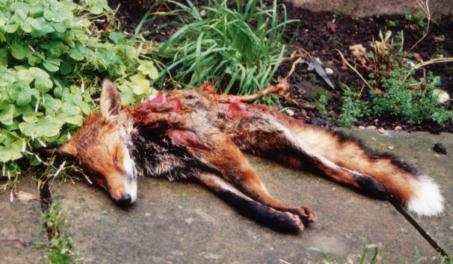
Fox killed on Sam Cameron’s dad’s estate
Police are investigating claims that a fox was killed in a hunt hosted by David Cameron’s father-in-law.
Hunt protesters clashed with the York & Ainsty South Hunt amid claims that 8 hounds chased and killed the fox after setting off from the 18th Century country estate of Sutton Park, in N. Yorkshire, owned by Samantha Cameron’s father Sir Reginald Sheffield.

Samantha Cameron – or ‘SamCam’ as she is known.
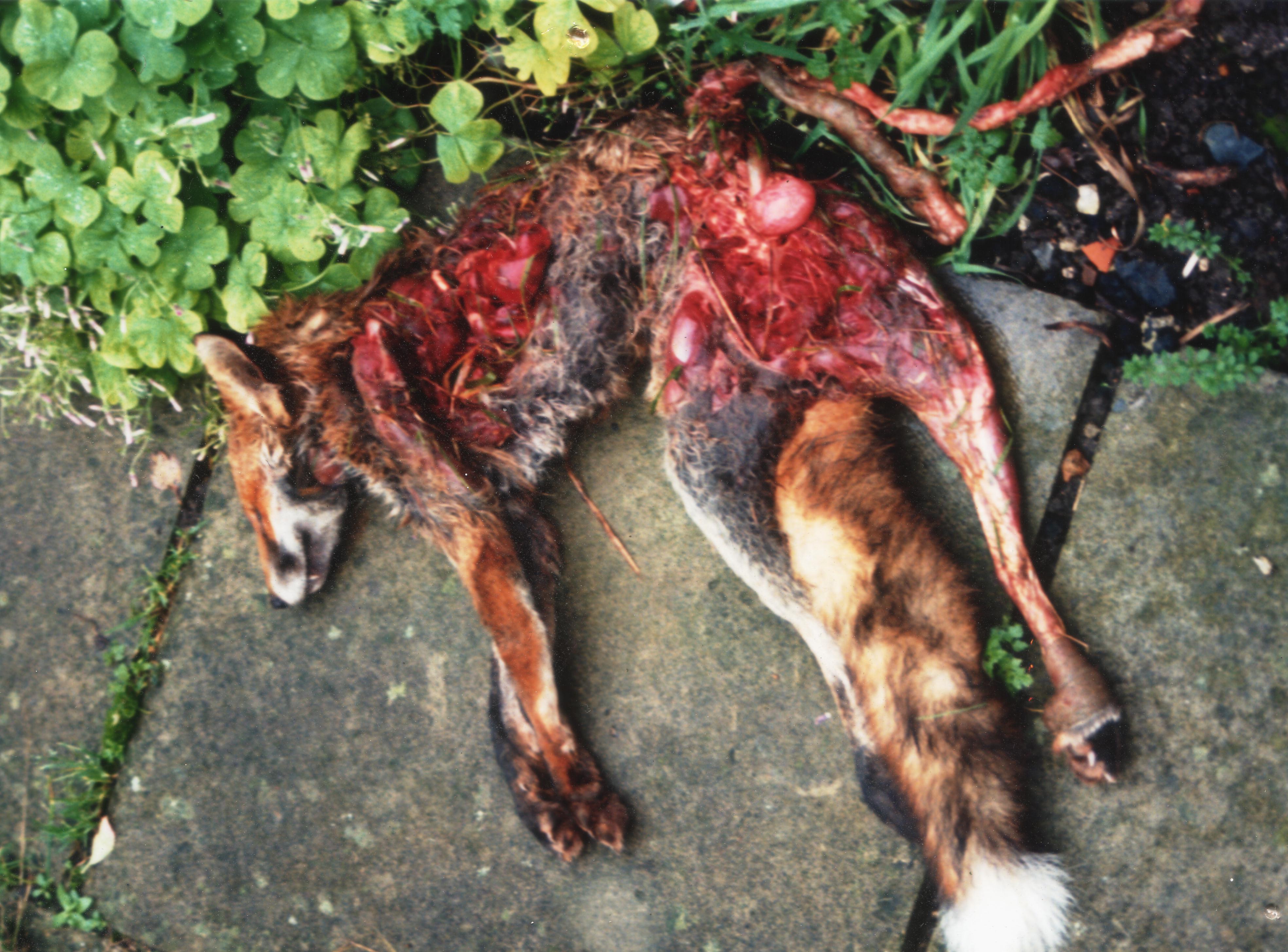
The hunt saboteurs allege that a member of the hunt – the ‘whipper-in’ whose job it is to keep the pack of hounds together – tried to take the animal’s lifeless body away but fled when a protester came across the scene. Afterwards, the Hunt Saboteurs Association, who had been monitoring the hunt on Feb 21, posted gruesome photos of a dead fox dripping with blood on social media.
The hunt had met at the home in the village of Sutton-on-the-Forest, before setting off on a legal ‘trail hunt’. A spokesman for the hunt claimed the fox had not been killed by its hounds. But hunt saboteur Jay Gillette said: ‘We were following the huntsmen through a woodland, and then the hounds started to cry, which means they were on the scent of a fox. ‘We did our best to put them off – we used horn calls to try and stop them chasing the fox. We use the same horn that a huntsman would use. ‘I then saw a fox bolt along the edge of the woodland so I raced over that way.
The best way to stop the hounds is to get in between them and the fox. Once I got to the fence where I saw the fox run past, I saw about 8 to 10 of the hounds in a semi-circle and a whipper-in. ‘She was in the semi-circle with the hounds. I couldn’t see what she was doing but I believe she was trying to pick up the fox and take it away so we couldn’t see it. ‘The whipper-in then took the hounds away as soon as I got there, leaving the fox. ‘After that, none of the huntsman would talk to us.
They went quiet and just carried on – moved off with the hounds to the next woodlands. ‘I could see the fox’s intestines. The hounds had opened up its stomach. I believe it was still alive when the hounds left and I came to it. When I carried it back to our van I could still hear short breaths from its mouth. We then gave it to the police for evidence. I was pretty distraught.’
A spokesman for the hunt said: ‘The York & Ainsty South Hunt were involved in legal trail hunting and were afterwards asked by police whether a fox had been killed by hounds. The answer to that was no.
It’s not unusual for hunt saboteurs, who’ve been harassing the legal activity on regular occasions, to make up such stories. From looking at the photos of the animal there was no indication of how it was killed.’ A spokesman for N. Yorkshire Police said: ‘We are aware of reports a fox was hunted illegally in the Sutton-on-the-Forest area. We take any allegation of wildlife crime seriously, and our enquiries into this incident are ongoing.’ Sir Reginald Sheffield was not available for comment.
Filed under: CAMPAIGNS - Global Animal Welfare Issues, GENERAL NEWS - International / National / Regional, PHOTOGRAPHS - **WARNING** (Animal Suffering) | Leave a comment »
Posted on April 15, 2015 by Serbian Animals Voice (SAV)

Keep your head and Enjoy the ride !
Have fun with the boys of the Royal Air Force and the Eurofighter ‘Typhoon’.
See some great UK landscape in the process.
Filed under: GENERAL NEWS - International / National / Regional, VIDEOS | Leave a comment »
Posted on April 15, 2015 by Serbian Animals Voice (SAV)
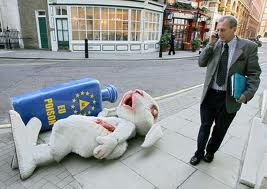
Cancer patients testing drugs on mouse ‘avatars’
Scientists often test drugs in mice. Now some cancer patients are paying a private lab to breed mice that carry bits of their own tumours so treatments can be tried first on the customised rodents.
The idea is to see which drugs might work best on a specific person’s specific cancer. Studies can suggest a certain chemotherapy may help, but patients wonder whether it will work for them. Often there’s more than one choice, and if the first one fails, a patient may be too sick to try another, so hundreds of people have made “mouse avatars” over the last few years to test chemotherapies.
But there are no guarantees the mice will help. “There’s not a lot of science” to say how well this works, and it should be considered highly experimental, said Dr. Len Lichtenfeld, deputy chief medical officer of the American Cancer Society.
There are some early encouraging reports, he said. One study of 70 patients found the mice generally reflected how well patients responded to various drugs. But there is no evidence that using mice is any better than care based on medical guidelines or the gene tests that many patients get now to help pick drugs.
Mouse testing costs $10,000 or more, and insurers don’t cover it. It takes several months, so patients usually have to start therapy before mouse results are in. “I do see promise, but it’s very time-consuming, it’s very expensive. For the average patient, standard care is going to be the way to go,” said Alana Welm, a cancer researcher at the Oklahoma Medical Research Foundation.
Several labs breed these mice but the main supplier to patients has been Champions Oncology, a company based in Hackensack, New Jersey, that also operates in London, Tel Aviv and Singapore. About 7,000 mice are kept in a Baltimore lab with 6 rooms that resemble stock rooms of a shoe store, with tall shelves that hold row upon row of plastic cages labelled with each cancer patient’s name.
Most mice are white-haired females, but others are hairless. Some live alone while others climb over one another and sleep in small piles. All have easy access to food and water, and many bear signs of the tumour graft — a shaved portion of hair, an incision scar and a lump growing off one side.
Patients have a tumour sample sent to Champions, which charges $1,500 to bank it, plus $2,500 for each drug tested in groups of mice implanted with bits of the tumour. Most patients try 3 to 5 drugs and spend $10,000 to $12,000, said Champions’ chief medical officer, Dr. Angela Davies. Mice have some drawbacks, said Dr. Benjamin Neel, director of research at Princess Margaret Cancer Centre in Toronto and a spokesman for the American Association for Cancer Research.
The tumour grafts are under the mouse skin — not in places where the cancer normally occurs, such as the pancreas or lungs, and therefore don’t reflect the human tumour’s environment. The mice also have highly impaired immune systems so they can tolerate the human tumours. That means they don’t reflect how a person’s immune system would respond to a treatment and cannot be used to test immunotherapies. “Even if it turns out these have real value,” they’re likely to be eclipsed by newer advances, such as ways to grow tumour cells in a lab dish that take only a few weeks, he said. It’s worth remembering that it has been proven that a majority of drugs known to work in humans are ineffective on human cancers implanted in mice.
Real alternative to animal testing
Fraunhofer Institute researchers have developed a promising alternative to using animals in experiments – a mini-organism inside a chip, which enables complex metabolic processes within the human body to be analysed realistically.
Researchers at the Dresden, Germany-based institute, working jointly with the Institute for Biotechnology at the Technical University (TU) of Berlin, say their solution could render the use of animal-based experiments superfluous in medical research because it faithfully replicates complex metabolic processes in the human body with startling accuracy.
‘Our system is a mini-organism on a 1:100,000 scale to the human being,’ says Frank Sonntag of the Fraunhofer Institute for Material and Beam Technology IWS. Human cells from various organs can be applied to several different positions within the chip.
The researchers obtained the cells from blood donations that were made available for research purposes. These ‘mini-organs’ are connected to each other through tiny canals. ‘This way we simulate human blood circulation,’ Sonntag explains.
Working much like the human heart, a micro-pump continuously transports liquid cell culture medium through infinitesimal micro-channels. The IWS researchers can modify the exact configuration of the chip, i.e. the number of mini-organs and the connection to the micro-channels, specifically to different sets of questions and different applications.
With the chip, it is possible to test both the active ingredients in new medicines, and also study cosmetics for their skin tolerability. The concept of combining various cell samples with fluid channels has been around for a long time, but this new system has 2 distinct advantages over previous approaches.
First, the microfluidic system is miniaturised and the pump is capable of channelling the tiniest flow rates of less than 0.5 microlitres per second through the channels. ‘This means the relationship between cell sample and liquid media is authentic,’ says Sonntag. If this ratio is incorrect, imprecise results will ensue. Second, the microfluidic system ensures that there is a constant flow of liquid cell culture medium. This is important, since some types of cells can only present ‘body-like’ morphology if they are stimulated by a current or flow.
To test the effect of a substance, the scientists initially loaded various cell samples onto the chip. Then the active ingredient to be tested was added through the medium for the cell sample of the organ into which the substance would be introduced in the real human body. For example, they could include the cells of the intestinal lining. The same metabolic responses are then processed on the chip just like in the human organism. ‘We use cell samples from various sexes and ethnicities.
We can set variations in body size and weight as desired on a scale of 1:100,000,’ says Sonntag. The scientists can see exactly which metabolic products form within specific cell samples, and what effects they might have on other cells. The results are ultimately even more predictive than those of animal-based experiments because the effects on the body of a mouse or a rat cannot be applied to human beings at a 1:1 ratio.
The artificial organism is already being used by scientists in the cosmetics industry. But, in addition to research on active ingredients, there is also another potential application. ‘We know today that certain kidney cells, the endothelial cells, play a key role in almost every kidney disease. With the in vitro tests to date, there was always the problem that the endothelial cells worked only under current conditions.
Here, our multi-organ chip could offer a test environment that would allow you to observe how cells regenerate following an injury,’ says Sonntag.

Training manual reveals cruelty
Scotland for Animals has obtained the internal training manual for animal experiments in Scottish research units.
Photographs show animals in highly distressing situations and many appear to have been taken within Glasgow University. SfA spokesman John Patrick: “This document is riddled with misinformation based on outdated ideas, it actively encourages bad practice. It’s worrying that this is the benchmark for medical research in Scotland”.
“The fact that this manual endorses brutal killing and restraint methods is a national embarrassment. It puts to rest the fallacy that animals are treated with care and respect in the UK vivisection industry”. “Scotland for Animals has called for jurisdiction over animal research to be included in any further transfer of powers to the Scottish Parliament.
We owe it to our families and everyone we care about to bin the use of animals and invest in real research”. Pictures show animals such as dogs, cats and rabbits being used in procedures. Dr Andre Menache, CEO of Antidote Europe: “The authors carefully chose to ignore the growing debate within the scientific community about the validity of animal experiments.
The authors claim that the main opposition to animal experiments comes from welfare groups. Why do they ignore the British Medical Journal?” “One of the photos in the manual shows how mice are restrained for taking blood samples from a vein in their hind leg – by being squashed into a centrifuge tube. The human equivalent would be to push a person into a drain pipe just wide enough for them to get into but that would not let them get out again without help.
This is a terrifying experience as anyone can tell you who has ever been in in a confined position like this.” “Some killing methods encouraged can lead to extreme animal suffering when performed incorrectly, either due to inexperience or bad practice by the researcher.
This is incompatible with the 3Rs principle of reducing animal suffering. It is a sad reflection on the UK animal research community that these forms of killing an animal should still be allowed in the 21st century.” The document also reveals that there could be only 24 Home Office inspectors supposedly enforcing welfare laws in the entire UK.
EU chemicals regulator scolded over animal testing
The European Ombudsman has upheld a complaint made by animal rights group PETA that the European Chemicals Agency (ECHA) is not doing enough to enforce substitution of animal testing when companies prepare safety data on compounds under EU regulations on registration, evaluation, authorisation and restriction of chemicals (REACH).
The ECHA’s triennial report on animal testing in June 2014 showed progress on alternative mechanisms for meeting REACH requirements without animal testing. However, the agency admitted that some firms had initiated animal tests that could have been substituted for validated in vitro methods, and that some animal tests were being undertaken without consultation with the ECHA as to whether they were necessary.
After negotiations, the ECHA has agreed to step up its enforcement, making better use of its existing powers. The regulator will also support executive bodies in EU member states in investigating cases where animal testing has been undertaken unnecessarily.
Brussels Airlines Stop Shipping Dogs and Cats!
Anti Dierproeven Coalitie (ADC) released footage of crates of cowering beagle dogs being transported from America to Belgium by Brussels Airlines for laboratory experiments.
In response, many animal protectors here in the UK supported ADC’s call for action by contacting the airline. After entering into talks with Brussels Airlines, the shipper has released a statement to ADC confirming an embargo has been placed on the shipping of dogs and cats for vivisection.
Animal abuse at Oklahoma university
The US Department of Agriculture has cited the University of Oklahoma for animal abuse, according to Bloomberg Business.
A recent report by the USDA claims a research lab at the university exposed young baboons to hypothermia and housed the monkeys in unsafe, grime-filled cages. The Jan 25th report, obtained by Bloomberg, found the monkeys had been hosed down with cold water, and their cages contained “an excessive build up of grime, debris, and excreta on the bars.”
The report also says the lab staff were ill-equipped to care for the 12 baboons, including ones as young as 3 months old, who were placed under their supervision.
This is far from the university’s first citation for animal abuse. According to Bloomberg, the institution has been cited for animal abuse 16 times over the course of just 2 years.
In 2013, the USDA reported OU was euthanising dogs by electrocution using a 9-volt battery and failing to administer painkillers to dogs about to undergo surgery.
In an email statement to Bloomberg, VP of research James Tomasek said, “The University of Oklahoma takes seriously its obligation to comply with all federal and regulatory standards related to animal welfare.”
Moves to reduce animal use
(UK) Sheffield MP Clive Betts has backed recent advances to reduce the use of animals in laboratories.
The British Union for the Abolition of Vivisection, which campaigns to end animal experiments, has called for an end to the use of animal testing for household products such as washing-up liquid. BUAV has been campaigning against animal testing for more than 100 years.
The campaigns have been accepted in principle by the Government, which last year promised to implement the changes before the 2015 general election. However, with just 2 months until voters go to the polls, Mr Betts, Labour MP for Sheffield South East, has joined 83 colleagues in supporting a motion calling for immediate action.
Mr Betts said: “The Labour Government banned animal experiments to test cosmetics and its now time for this Government to ban tests for household products. “Many retailers now have own brands which don’t rely on animal testing, so there is no reason why legislation should not be passed to ban tests altogether.”
Michelle Thew, of BUAV, said: “We welcome support from Mr Betts for this motion.” Details of experiments that use animals are published on the Home Office website.
A spokesman for Understanding Animal Research said the development of alternatives for household testing meant there was a sharp drop-off from 2002 and there have been no such tests in recent years. Therefore, he added, animals would not usually be used to test products such as washing up liquid or toilet cleaner today.
New method validated
The European Joint Research Centre has validated and recommended a new method which is not based on animal testing, to identify chemicals that can trigger skin allergies, estimated to affect already 20% of the population in Europe.
The human Cell Line Activation Test (h-CLAT) has been developed by industry and validated by the JRC managed European Union Reference Laboratory for Alternatives to Animal Testing (EURL ECVAM). It will help the identification of chemicals that can lead to allergic contact dermatitis (ACD), one of the most common occupational diseases, and therefore allow the number of animals currently used for this purpose to be reduced.
So far the potential of chemicals to induce skin allergies was tested on mice and guinea-pigs. Following the validation process ECVAM now recommends the use of h-CLAT in the context of integrated approaches to testing and assessment, i.e. together with data from other non-animal methods and computer model (in silico) predictions.
The recommendation aims to inform scientific discussions at OECD in view of developing an OECD Test Guideline on the h-CLAT. The OECD Test Guidelines are internationally agreed test methods used by government, industry and independent laboratories. They are used to determine the safety of chemicals and chemical preparations, including pesticides and industrial chemicals.
CRUK and animal experiments
Furless mice injected with human cancer cells; Rats chemically poisoned for 6 months; Mice genetically modified to develop cancer.
Cancer Research UK (CRUK) has been criticised by Animal Aid for helping to fund a series of ‘crude and archaic’ animal experiments that were conducted at Edinburgh University. The experiments, which were investigating treatments for bile duct cancer, involved injecting genetically modified (GM) mice with human cancer cells, while other groups of rodents were forced to endure around 6 months of chemical poisoning to induce cancer.
Campaigners have accused CRUK of using clumsy and outdated methods that have been widely criticised in the scientific literature. One of the CRUK-supported experiments used ‘nude mice’ – furless rodents who have been genetically modified to suffer from a weakened immune system.
These mice were injected with human cancer cells, and made to endure the growth of a tumour inside them for 3 weeks before some of them were given treatments to reduce its severity.
Another experiment used a different group of GM mice, who had been engineered to develop cancer when subjected to around 6 months of chemical poisoning. The chemical used was thioacetamide (TAA) – a substance that has traditionally been employed by the leather and motor fuel industries.
A group of rats were subjected to the same disturbing poisoning regime. Animal Aid argues that the methods used are outdated as well as cruel. Injecting human cancer cells into mice has long been regarded as a highly unreliable means of predicting how humans will respond to treatments.
Unlike the mice used in such research, human cancer patients have a functioning immune system, and this has a significant impact on the course of the disease. Even CRUK appears to have little faith in this method of research, declaring in a promotional poster that ‘the time for reliance on such models to determine the response to a new therapy has passed’.
Animal Aid is similarly critical of the practice of genetically modifying mice or poisoning rats in an attempt to ‘model’ bile duct cancer. Altering one or 2 genes in mice, argues the group, is a reductionist, simplistic approach, since human cancers are usually caused by multiple mutations in co-existent cells, and depend on a highly individualised cellular environment.
Poisoning rodents has, unsurprisingly, repeatedly failed to generate progress in the treatment of bile duct cancer. Treatments that appeared successful in these tests, such as sorafenib, have had to be withdrawn from clinical trials for bile duct cancer.
After all, humans do not develop this type of cancer by being forced to ingest a chemical from the leather industry. CRUK has serious questions to answer about how it decides which research to fund. In 2013-14, CRUK had a fundraising income of £490m. It has a duty to its dedicated fundraisers and donors, not to mention the victims of cancer, to ensure that this money is spent on research that has a genuine chance of contributing to medical progress.’
Filed under: CAMPAIGNS - Global Animal Welfare Issues, GENERAL NEWS - International / National / Regional | Leave a comment »
Posted on April 15, 2015 by Serbian Animals Voice (SAV)


We send our best wishes to Danica as we know she has not been feeling very well recently; the days are long and tiring for her looking after all the cats – and as you can see from the photos below; they are all looking so beautiful and content.
Quite rightly, Danica must be very proud of them all.
Here is part of the message she has sent to us this week – please help with a donation if you can – whatever amount – it all helps !
Pay a visit to the Webshop – link given below – and see the whole range of fab cat items which you can purchase; and support the shelter at the same time !
Thank You.
Felix Shelter Donations can be made in any of the following ways:
PayPal button is on our blog:
and our website:
Webshop:
Dinarske uplate: Felix-Felinolosko drustvo 355-1070729-96


—————————————————————-

Dear Mark;
We’ve been quite lucky weather wise this winter after all, but some of our oldest and sickest kitties sadly didn’t make it through the cold season. Winter is always a time of troubles, losses and grief, it somehow seems the most delicate cats simply can’t endure the dark, gloomy months, depressing for them and ourselves alike.
The biggest problem of running a cat sanctuary is exactly the fact that we provide all of the rescued cats with a lifetime of care, which means we’re here to offer them everything they need until the end of their days and when the time comes, we tearfully pet them for the last time and say our final goodbyes.
Our hearts have been broken countless times so far, but we must go on…


Right now some days are sunny, some are not, but even when the weather is nice the sun is deceiving and although the kitties enjoy spending their time outside during the day, all of them sleep in their properly heated rooms at night.
Luckily, thanks to all of our donors and friends, we’ll be able to keep the central heating running for as long as it’s needed.


Many kitties are shedding these days and looking shaggy and unkempt, some of them have lost some weight, but now when the real spring has finally come we’ll do everything in our power to help them thrive again.
The weather forecast is somewhat worrisome, it’s supposed to rain heavily in May and although the kitties won’t be cold, we all hope to avoid the horrible floods we had last year. Cat Shelter Felix wasn’t affected then, but no one can know what the future can bring…


We greatly appreciate your support!
To Everybody – Thank you so much for being there for us!
Sincerely
Danica


Filed under: Animals Requiring Adoption or Homes - Worldwide, CAMPAIGNS - Global Animal Welfare Issues, GENERAL NEWS - International / National / Regional, SERBIA (Central Serbia: Capital - Belgrade) and (Serbia, SHELTER - Information, SUPPORTERS, The "Serbian Animals Voice (SAV) ALLIANCE | Leave a comment »











 Serbian Animals Voice (SAV)