Multinational coffee company Dunkin’ just announced a rollout of the Beyond Sausage Sandwich to more than 9,000 U.S. locations on November 6! Hungry patrons will be able to veganize the sandwich by ordering the sausage on an English muffin without cheese or egg.
We are extremely proud of our partnership with Beyond Meat and thrilled to be the first U.S. quick-service restaurant to offer Beyond Breakfast Sausage nationwide. Dunkin’ is the brand that democratizes trends for America, and this latest addition to our menu gives consumers more choice to meet their evolving needs. As we continue to transform our brand, we’re proud to use our platform to give everyone the opportunity to enjoy the great taste and benefits of plant-based protein.
Beyond Meat seemed equally thrilled with the partnership. Founder and CEO Ethan Brown said in a statement:
We’re excited to introduce the Beyond Sausage Sandwich nationwide and in doing so, offer an option with fewer calories, less total fat, saturated fat, cholesterol and sodium, while delivering more protein and iron than a comparable pork sausage sandwich. We are excited that everyone who runs on Dunkin’ now has the option to make a delicious plant-based sausage sandwich part of their day.
As the world’s appetite for plant-based meat grows, huge companies like Dunkin’ are taking notice. McDonald’s, the largest restaurant company in the United States by sales, just partnered with Beyond Meat to start testing a plant-based burger in 28 restaurants in Ontario, Canada. In August, Kentucky Fried Chicken tested Beyond Meat fried chicken in Atlanta, even painting the restaurant green in honor of the launch.
With more and more companies adopting plant-based meals, it’s never been a better time for you to do the same. For delicious meal ideas and recipes, order a FREE Vegetarian Starter Guide today.
Posted on December 28, 2019 by Serbian Animals Voice (SAV)
A shocking video has emerged that hunt “saboteurs” in Sheffield claim shows their car being violently attacked by a man wielding the corpse of a dead fox.
UPDATE, December 26: We have been given a name for the hunt supporter smashing the fox against the van window. Cops and media will be informed in due course.
Today we decided to spread festive cheer across North Yorkshire with West Yorkshire Hunt sabs.
First, we stopped off at the Badsworth’s meet at Kirk Smeaton. Though they are now merged with the Yas and Bramham Moor, they still have separate Boxing Day meets. The Badsworth went for a bit of a trot.
The local scum were clearly unhappy not to see some actual hunting, so decide to be aggressive and block vehicles in and smash our window with a roadkill fox whilst also smashing bits off our vehicle!
Satisfied the hounds were packed away, we headed to meet the plucky York Anti Hunt League, who had been sabbing the Bramham Moor since they left the meet at Aberford.
We helped keep an eye on the hounds as they drew a couple of large coverts, but it soon became clear they were heading back to the meet.
Boxing Day hunts are among the UK’s most divisive traditions.
Fifteen years after the Hunting Act was introduced, hunts still take place across Britain every Boxing Day. The Hunting Act came into force almost 700 years after fox hunting first began in England and Wales.
It prohibits the chasing of wild animals in England and Wales, including fox hunting, deer hunting, hare hunting, hare coursing and mink hunting.
However, the Act does not completely ban hunting.
Drag hunting is still allowed, which involves a pack of hounds following an artificially-laid scent.
It’s very common for hunts to be interrupted or sabotaged by protestors, who suspect that hunts are ignoring the ban and harming foxes anyway.
The RSPCA has warned that trail hunting is often used as a “smokescreen” for traditional hunting.
A shocking video has emerged that hunt “saboteurs” in Sheffield claim shows their car being violently attacked by a man wielding the corpse of a dead fox.
The video shows a man (presumably a hunting supporter) repeatedly slamming what appears to be a fox’s body against their car.
Afterwards, animal rights activist Charlotte Smith uploaded photos to Twitter showing blood across the windows of the group’s vehicle.
Hunt saboteurs, or “sabs”, follow hunts and try to sabotage them if they suspect that animals are being harmed. It is unclear who the man who allegedly hit the car with a dead fox was, or if he was affiliated with any hunting group.
It’s also unclear how the fox was killed.
But this shockingly violentvideo will undoubtedly cause distress, and is a clear indication that this debate isn’t going anywhere.
My comment: So far 3,981 people have seen this video, it has been shared 9,014 times and 3,145 comments have been posted!
This is our hope: to bring justice to a just verdict against these choleric violent criminals by public jerk.
Because the courts only cover the hunters’ criminals.
Obviously not much has changed in England in terms of the brutality and primitivity with which the hunter sabotages are treated by the hunters.
In his book, the well-known animal rights activist and founder of the “Association Against Animal Factories” Dr. Dr. Martin Balluch, entitled “In the underground”, describes the hunting sabotage in England, in which he himself took part between 1989 and 1997, in a very exciting and documentary manner.
At the time, animal rights activist Tom Worby was also killed in a hunting sabotage, in England. The perpetrator and hunter Tony Ball was found innocent by the court; the case was declared as “accidental death”.
Shortly after the fatal attack, Tony Ball (the killer) was given a new identity by the state and went into hiding (page 155 from the book).
And so we see how closely and confidently justice and hunters work, everywhere.
The “hunter-friendly” country Germany, should also learn from the example of Geneva, where there has been no hunting since 1974; there is only professional wildlife management. With excellent results for the wild animal population.
That means: the hunters in Geneva have the task of redeeming only injured animals and to ensure peace and compliance with the law in the forest; Not to massacre animals on behalf of corrupt politicians, like in Germany.
A special message to activists around Britain and beyond who are protesting or sabotaging fox hunts 🦊!
Keep up the great work, frends! Good luck and thank you!
‘Boxing Day’, or 26th December each year, is a recognised day when the blood lust hunts take to the local towns and villages in order to parade themselves and the hunting hounds.
Although the Boxing Day hunt parades take place up and down the UK, especially in England; it is also a day for those opposed to hunting to take to the streets and villages also to make their voices heard. Naturally, with pro hunt supporters and anti hunt demonstrators in the same vicinity, conflict is virtually guaranteed.
The vast majority of the British public (around 85-90%) are opposed to all hunting – and so the passing of a long fought campaign resulting in the ‘Hunting Act’ of 2004 was widely welcomed by the vast majortity.
The Hunting Act 2004
The Hunting Act 2004 is the official law (legislation) law which bans chasing wild mammals with dogs in England and Wales – this basically means that fox hunting, deer hunting, hare hunting, hare coursing and mink hunting are all illegal, as they all are cruel sports based on dogs chasing wild mammals.
The introduction of the Hunting Act followed an extensive and often exhausting campaign spanning 80 years, with the League Against Cruel Sports and our supporters at the forefront since 1924. In Scotland, hunting with dogs was banned earlier by a different law, the Protection of Wild Mammals (Scotland) Act 2002.
Securing the Hunting Act was a key moment in the history of animal protection legislation in the UK and public polling consistently shows it is a popular law. Yet, since its introduction, the Hunting Act has been the target of considerable attack from the pro-hunt lobby which has waged an on-going campaign to try and undermine the Act with the aim of getting it scrapped or weakened, and defied the Act by developing and promoting methods to circumvent it in the form of false alibies or illicit exploitations of its exemptions.
This sabotage of the law continues today.
‘Trail hunting’ is an entirely new invention which purports to mimic traditional hunting by following an animal-based scent trail (using fox urine, according to the hunters) which has been laid in areas where foxes or hares are likely to be.
Crucially, those laying the trail are not meant to tell those controlling the hounds where the scent has been laid, so if the hounds end up following a live animal scent the hunt can claim that they did not know, and so ‘this is why they did not try to stop them’.
In drag hunting the trail doesn’t contains animal-based scent, is never laid in areas likely to have foxes, and those controlling the hounds always know where the trail was laid.
This is why in drag hunting, ‘accidents’ when live animals are chased are very rare, while in trail hunting they are very common.
The Case Against Trail Hunting
Of all those prosecuted for illegal hunting under the Hunting Act, over half claimed to be trail hunting. (Around a quarter of prosecuted hunts claimed to ‘exempt hunting’ – see below).
The hunts operate in exactly the same locations they used prior to the ban – areas which are known to contain foxes (or hares, deer or mink).
Trail hunts are always accompanied by ‘terrier men’ – contractors who follow the hunt on quadbikes and with terrier dogs. In traditional hunting these dogs were sent underground to find a fox if it had escaped the hunt by, for example, hiding in a hole underground. Terrier men would place the terrier in the hole to force the fox out so the chase could continue. If trail hunts genuinely don’t try to catch foxes – then why are they always accompanied by terrier men?
Trail hunts very rarely even bother laying a trail. Having looked at over 4,000 hunt monitoring reports of over 30 hunt monitors from different organisations covering the majority of hunts in England and Wales (157), since the Hunting Act 2004 was enacted, these hunt monitors have reported witnessing someone laying a possible trail only in an average of around 3% of the occasions they monitored hunts, but they believed that only an average of around 0.04% of the occasions they may have witnessed a genuine trail hunting event, rather than a fake one.
So, we think that trail hunting is not a genuine sport but a cover for illegal hunting, designed to deceive the authorities and make the prosecution of illegal hunters very difficult.
Fox hunting is illegal in England, Scotland and Wales. It is still legal in Northern Ireland.
Fox hunting was banned by the Hunting Act 2004 in England and Wales, and the Protection of Wild Mammals (Scotland) Act 2002 in Scotland. But while these were both welcome and hard-fought pieces of legislation, overwhelming evidence suggests that both are being ignored or exploited by hunts on a regular basis.
Hunts in England and Wales invented the activity of ‘trail’ hunting after the fox hunting ban came in. This claims to be a non-lethal sport where the hunt simply follows a pre-laid trail rather than searching for and chasing a fox. However, years of evidence shows that hunts are using trail hunting as a cover for illegal hunting by claiming to be following a trail but still carrying on and hunting foxes the way they did before the hunting ban.
Hunts in England and Wales also use ‘exemptions’ in the Hunting Act. These were designed to allow certain types of ‘pest’ control or scientific research, but are being exploited by the hunts to give them an excuse to carry on hunting.
In Scotland, an exemption in the law allows foxes to be killed by ‘flushing to guns’, where a pack of hounds is allowed to be used to chase a fox from cover where it can be shot. However, evidence from League investigators shows hunts claiming to be flushing to guns – but without having any guns present in the right place.
Some argue that ‘hunting’ should continue because it’s a grand old British tradition. However, bear baiting and bull baiting were also traditions hundreds of years ago, and they were rightfully consigned to the history books. Traditions are measured in more than years. They have to reflect the values and attitudes of a society, and the vast majority of the British people oppose hunting with dogs.
There was a General Election in the UK just a few weeks ago. In the past, the ‘Conservative Party’ were always regarded as the party which supported hunting. They were elected as the government a few weeks ago; but things have now changed very much. Many Conservative Members of Parliament (MP’s) are now also opposed to hunting with hounds; and they view animal welfare as a big issue, and vote winner !
The Conservative Party now has a ‘Blue Fox’, or Conservatives against fox hunting section; of which many MPs are supportive. Here is a link to the site they operate:
Very recently – November 2019, the Blue Fox made a Press Release in support of the omission of a free vote to repeal the Hunting Act 2004 in the new Conservative Manifesto.
With the omission of a ‘free vote’ in Parliament; which if successful could have seen the Hunting Act removed and a return to hunting; the Conservatives have largely stated that they are fully in support of the hunting ban that has been in force since 2004 – good news for anti blood sport campaigners and even better news for the animals which could have been allowed to be hunted once again.
So – end of 2019 – we feel very confident that there will be no return to the old days and the mass hunting of animals such as fox, deer, hare and mink. Now with cross party support in Parliament, it is time for the pitfalls in the current legislation; and as described above; to be fully reviewed by Parliament and the law changed to clean up all the pitfalls which hunts currently use as excuses to allow them to continue to hunt wild animals in a law by passing way. Only when the law is changed to fully implement all the pitfalls which currently exist to allow hunting to continue in some form, can we unite in saying that for the UK, hunting has finally been recorded in history books as something which happened in the past; like cock fighting and Bull baiting.
We have now moved on and most citizens want this issue confined simply to the history books. It is now time for the political parties to combine and do what the vast majority of people want – a revised Hunting Act which gives complete and utter protection to all animals which have suffered at the hands of the hunts – bring it on !!
Regards Mark
With big thanks to the ‘League Against Cruel Sports’ (LACS) who have provided invaluable assistance in the compilation of this WAV post.
Join the League; support them and become a member by visiting:
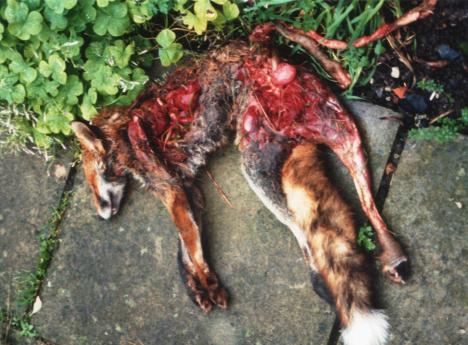
I took this picture many, many years ago; before the Hunting Act was passed, to kill the myth that foxes killed by hunting hounds die by a simple bite at the back of the neck. NOT TRUE, they are ripped to pieces and suffer immensely as a result. There is not need for this, and no need for the hunts all dressed up in their ‘Pinks’, or redcoats.
Posted on December 27, 2019 by Serbian Animals Voice (SAV)
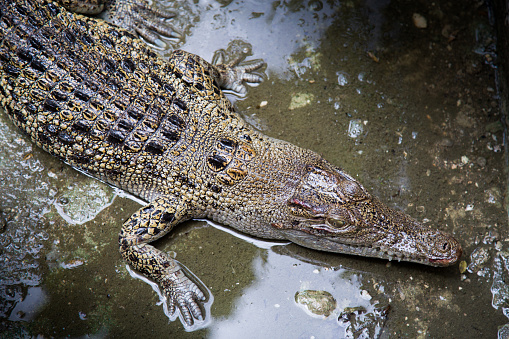
A zookeeper is bitten in the hand by a Philippines crocodile in the zoo in Zurich. The animal does not let go for minutes and must finally be killed.
At the zoo in Zurich, a crocodile has bitten into the hand of an animal keeper and has not let go for minutes.
Philippine crocodile in captivity
The animal was finally shot, the Swiss news agency SDA-Keystone reported on Wednesday.
The woman was taken to a hospital.
The zookeeper wanted to clean the enclosure on Monday evening and separated the male Philippines crocodile from the area, said zoo director Alex Rübel of the news agency. The animal had managed to grab the woman’s hand.
«It is sad that we had to shoot the animal.But of course the life and health of the zookeeper took precedence”, so Alex Rübel!
Since it could not let go, they finally decided to kill the animal. The crocodile, which is about 1.5 meters long and weighs around 15 kilograms, was said to be a rare species of the Philippines crocodiles from the Mindanao Islands, of which there are only 250 specimens left in the wild.
A female of the same species still lives in Zurich Zoo, said Rübel. It has not yet been decided whether the zoo will look for a new male.
And I mean.. Carpenters also lose fingers … occupational risk or carelessness.
However, they do not appear in the newspaper and therefore do not kill anyone.
Why was the slave murdered?
Because he had no rights.
Those who have rights are respected, those who have none are despised.
His slave owner Alex Rübel sold the public a human-friendly explanation of the murder: «It is sad that we had to shoot the animal. But of course the life and health of the zookeeper took precedence. »
Exactly … Mini croco with 15 kg …. would have swallowed a whole nurse of 68 kilos … and would then go down in history under “Wonders of the Wildlife”.
Given the number of 250 crocodile specimens still alive and the 7,674,575,000 living human pests, it would have been better to have traded the other way round.
Posted on December 26, 2019 by Serbian Animals Voice (SAV)
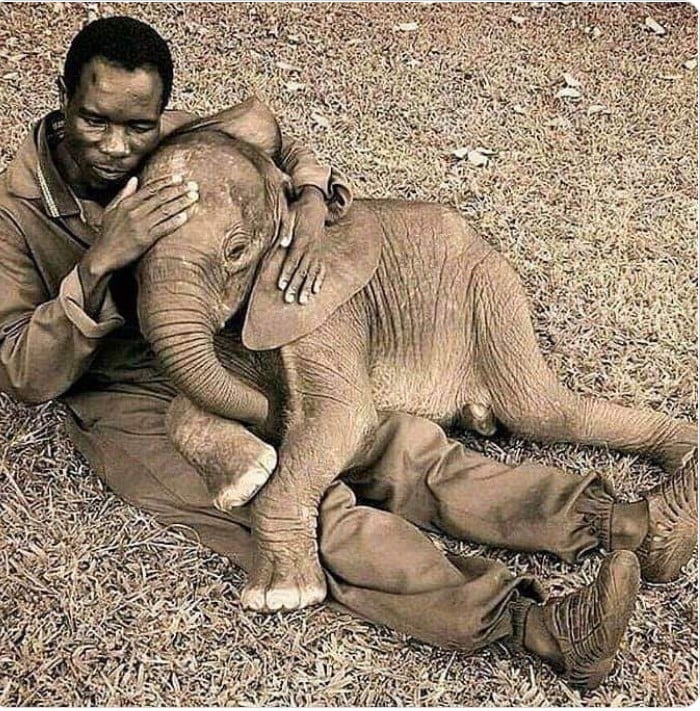
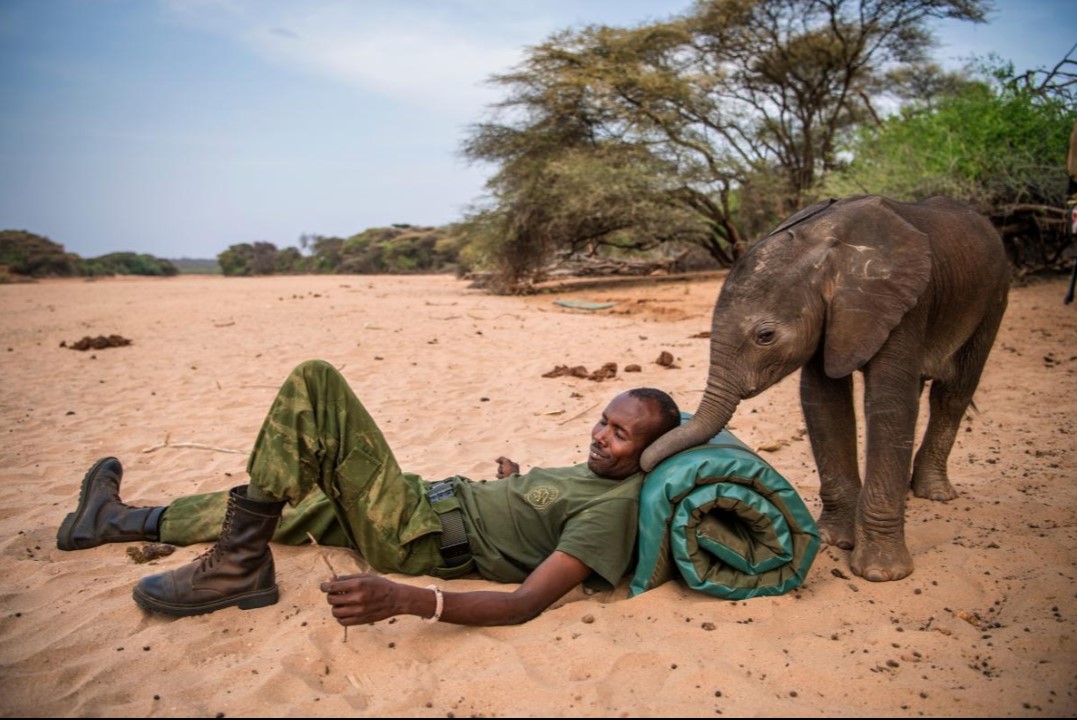
When a picture says more than just a thousand Words, then is this one 💖!
The kind of treatment that EVERY animal deserves.💚
Did you know that Botswana, Zimbabwe and Eswatini (formerly Swaziland) have legalized trade in ivory and animal skins?
In many African countries, the elephant is almost extinct.
But there is a tribe in northern Kenya who want to prevent this.
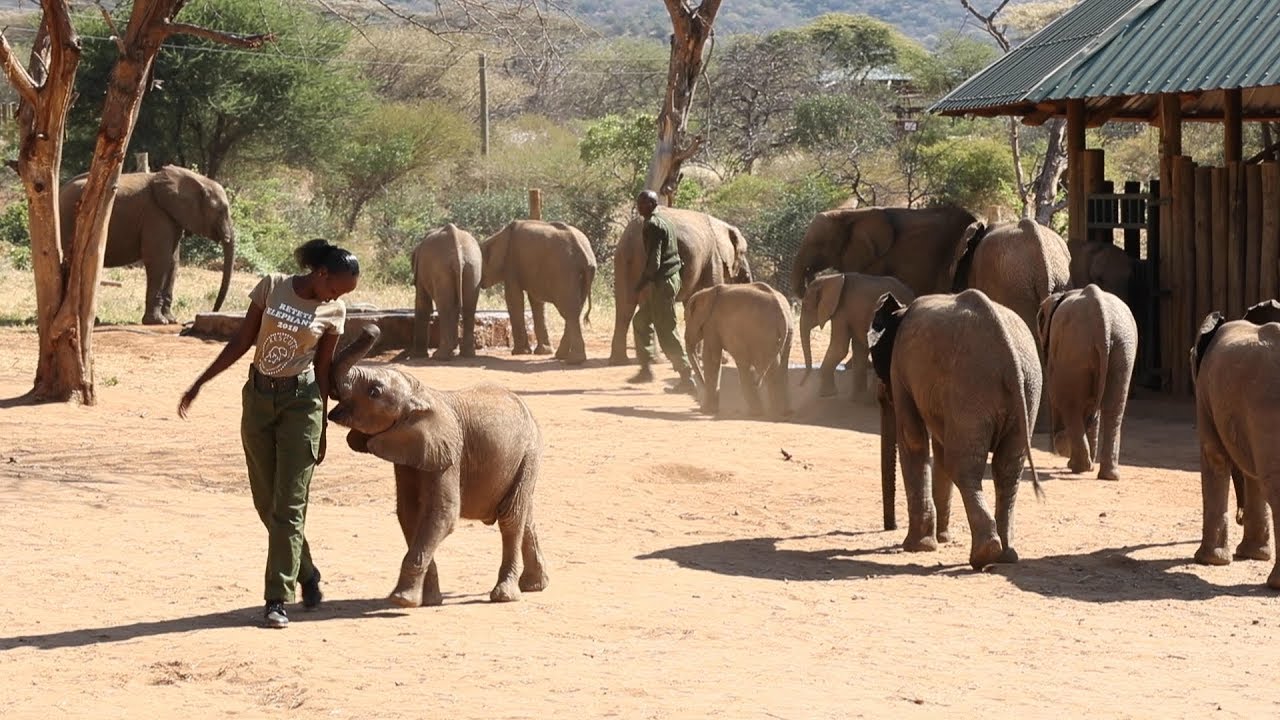
Years ago, these warriors were afraid of elephants. But now they even have an orphanage for little elephant babies.
Innovative Samburu communities in northern Kenya have come together to save orphaned elephants.
The region is home to Turkana, Rendille, Borana and Somali as well as the Samburu – ethnic groups that once fought for the country and its resources until death.
Now they are working together to strengthen their communities and protect the estimated 6,000 elephants that live with them!
The elephant orphanage Reteti, nestled in the gorge next to a crescent-shaped mountain range, is located in a 975,000 hectare thorny bush in northern Kenya and is known as the Namunyak Wildlife Conservation Trust – part of the ancestral home of the Samburu.
It was founded in 2016 by the Samburu. Funding comes from Conservation International, San Diego Zoo Global and Tusk UK. The Kenya Wildlife Service and the Northern Rangelands Trust provide ongoing support.
The 6,000 elephants in this part of Kenya form the second largest population in the country.
Black rhinos are starting to return – a small, carefully guarded population that has been reintroduced to the Sera Conservancy, adjacent to Namunyak, from parks and reserves across Kenya.
Warthog, impala, little kudu, buffalo, leopard, cheetah and reticulated giraffe are also on the rise.
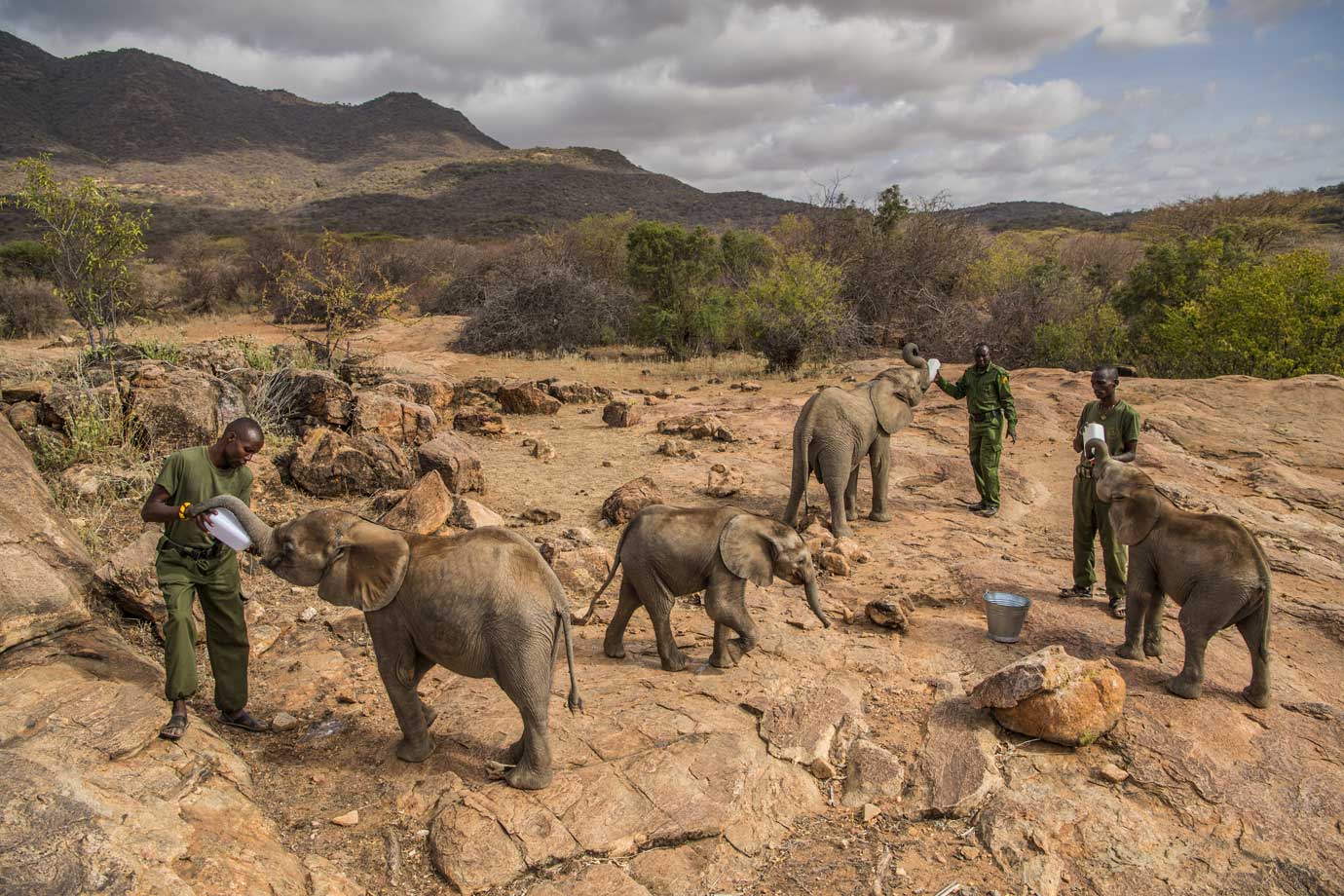
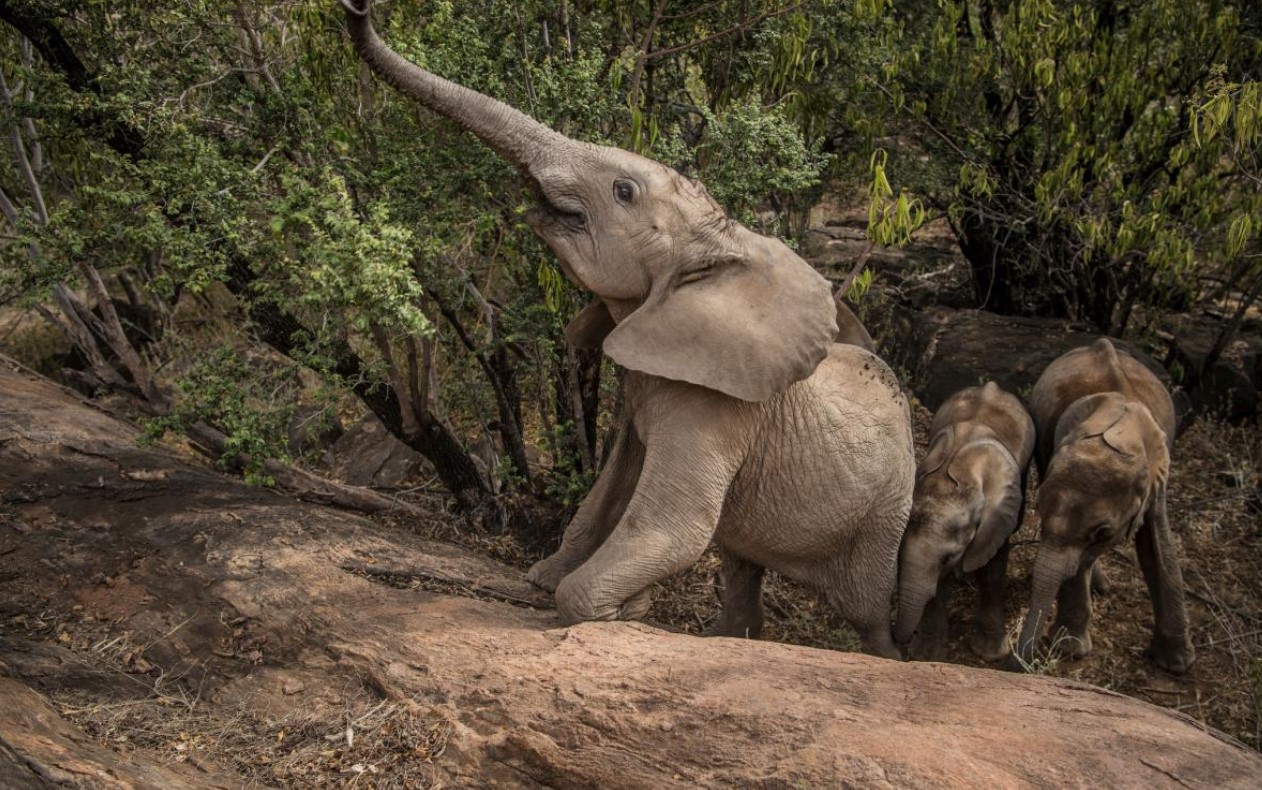
This is Shaba, almost two years old today, the acting matriarch of Reteti’s younger orphans, and she teaches them how to look for food in the wild.
Under the supervision of caregivers, she leads her small herd into the bush outside the protected area, pulls leaves, tastes bark, presses down small trees and takes mud baths (Photo: Ami Vitale, National Geographic)
What happens here in Reteti without much fuss is nothing less than the beginning of a transformation in the way Samburu relate to wild animals that they have long feared.
This oasis, where orphans grow up and learn to be wild so that they can one day return to their herds, is as much about people as it is about elephants.
Yes, they still exist those who protect elephants.
And I mean...Projects like this fill us with joy. Whenever possible, we want to finally see these animals in freedom and joy.
Our great lesson in animal welfare is collaboration and continuity. To be successful, we need to invest in long-term, trustworthy relationships. If an initiative is not strengthened by many groups, the work will not be successful.
Posted on December 26, 2019 by Serbian Animals Voice (SAV)
Uganda sits on vast oil resources, and three companies are ready to drill – in of all places, Murchison Falls National Park. A Chinese construction company is already expanding a road that cuts through the protected area.
Speak out against this disaster in the making!
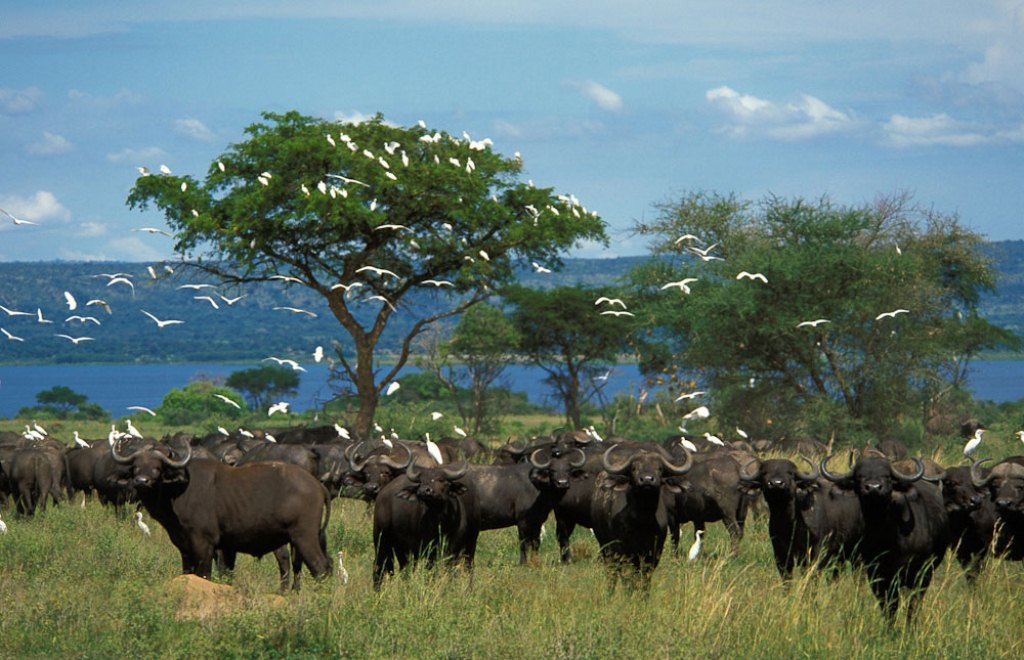
Murchison Falls National Park is one of Africa’s jewels. Every year, thousands of nature lovers come from all over the world to enjoy the spectacle of the Victoria Nile thundering down the cliffs of a narrow gorge.
This could soon be history if France’s TOTAL, UK-based Tullow Oil and China National Offshore Oil Corporation (CNOOC) were to drill 419 wells in the region and extract 200,000 barrels a day. T
hey would also build a refinery, an industrial zone and a 1,445-kilometer pipeline-the longest in the world-to the harbor of Tanga in Tanzania.
Tullow confirmed the commercial viability of the oil blocks in 2006 but a final investment decision has been delayed multiple times.
In early 2019, China Communications Construction Company(CCCC) started expanding a dirt track through Murchison Falls National Park used mainly by safari tourists, widening and paving it for heavy vehicles. The road expansion will fragment the national park and cut off wildlife corridors.
Environmental activists are convinced that the only possible purpose for the road is to serve the oil industry.
CCCC is one of the biggest construction companies globally. Its projects are textbook examples of how China initiates, finances and realizes major undertakings that run roughshod over the local environment in numerous countries.
Resistance is growing in Uganda: environmentalists and civil society are calling on the government to protect the environment and the livelihoods of ordinary Ugandans from the fossil-fuel industry.
International pressure can be successful, as the cancelation of a hydroelectric dam project close to Murchison Falls has shown. Now our aim is clear: Save the Murchison Falls region – tell Uganda to keep the oil in the ground!
Murchison Falls National Park was established in 1952 and covers an area of 3,878 square kilometers.
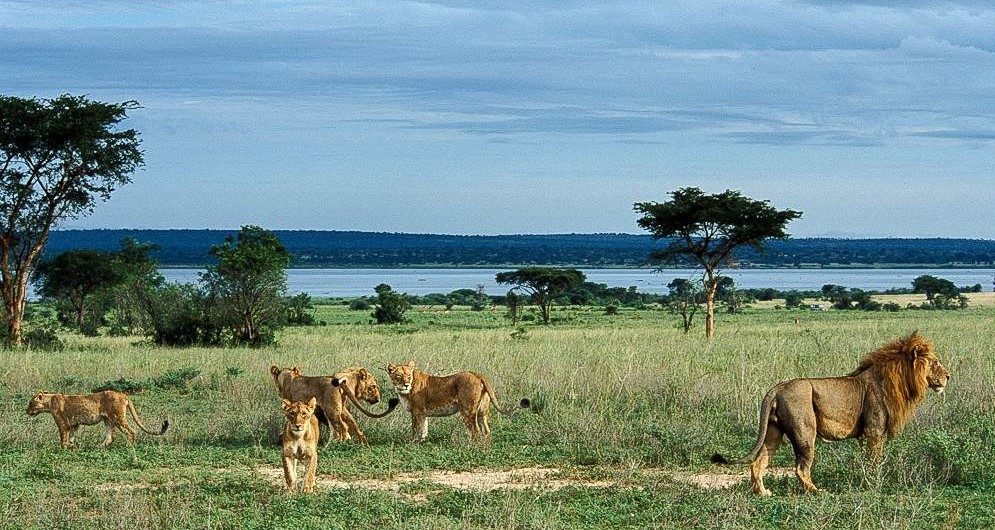
Scientists have counted 144 mammal, 51 reptile and 755 plant species in the region’s savanna ecosystems, which also includes the Budongo, Bugoma and Wambabya protected areas.
Oil in Murchison Falls National Park – the companies involved
The oil reserves are estimated at 6.5 billion barrels. Between 2011 and 2012, TOTAL and CNOOC each acquired a 33-percent share from the stakeholder, UK-based Tullow Oil.
A number of nature conservation and human rights organizations are already fighting against TOTAL, complaining of land grabbing, the loss of the livelihood of many local people and impoverishment.
Les Amis de la Terre France and others are filing a lawsuit against the oil company in Paris, referring to a law on corporate responsibility that also applies to foreign subsidiaries.
Tullow Oil, based in London, which bills itself as “Africa’s leading independent oil company”, is active in 15 countries in Africa, South America and off Jamaica. Its main business activity is the exploration of new oil and gas fields on land and offshore.
China National Offshore Oil Corporation (CNOOC) is the third largest oil company in the People’s Republic of China. It mainly operates in Africa, Iran and more recently in Europe and North America. The company is 70 percent state-owned.
China Communications Construction Company (CCCC) is one of the largest construction groups in the world. In Uganda, it built the 40-kilometer expressway between Entebbe Airport and the capital city, Kampala.
The Export Import Bank of China is involved in the destruction of the Murchison Falls National Park as a financier. The cost for the construction of three “national oil roads” has been estimated at around €485 million, of which 85 percent (€410 million) will be covered by a loan. In addition to CCCC, two other Chinese companies are involved.
According to environmentalists, the start of construction by CCCC is illegal. For example, it is unclear whether an environmental impact assessment has been carried out. During two public hearings on the Tilenga project, it became apparent that numerous regulations had been violated.
Environmentalists compare the construction of roads to opening a Pandora’s box of environmental evils and draw parallels to the spread of cancer cells. Satellite images show how, after a road is opened between population centers, numerous side roads soon branch off into the countryside in a herringbone pattern.
These are both official and unofficial roads, some of which are built by logging companies.
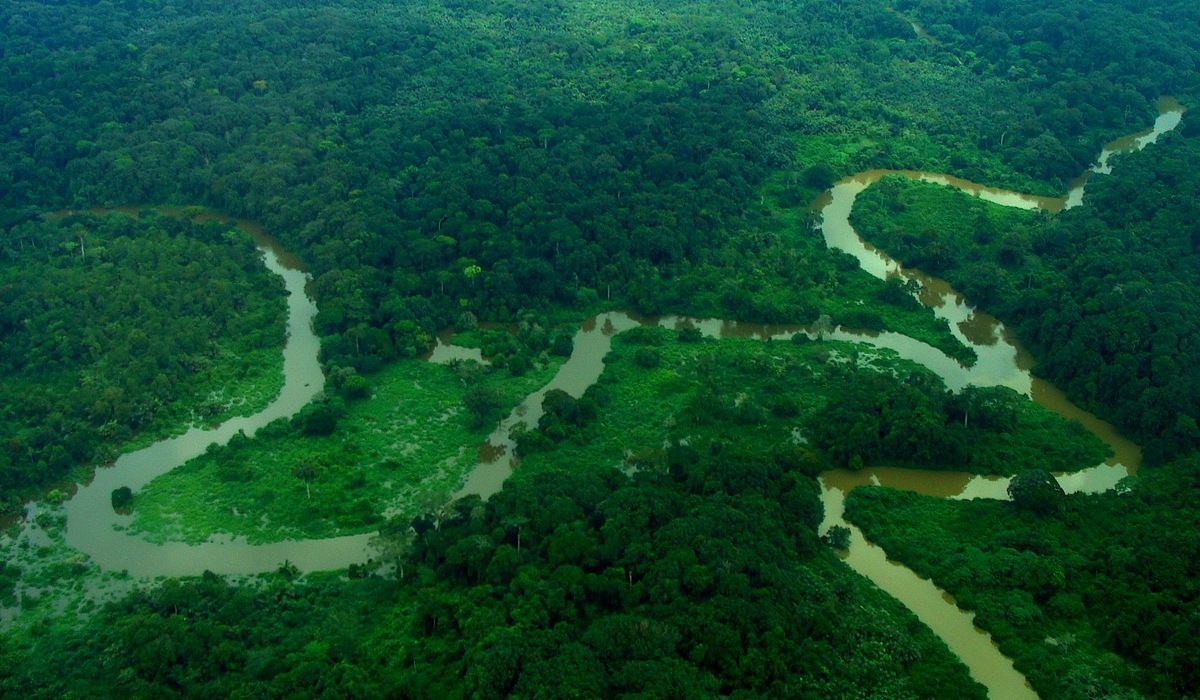
Roads open previously inaccessible areas to agriculture (farms, plantations, cattle feedlots), logging, mining, poaching and settlement. Many of the threats to rainforests are associated with the construction of roads. In the tropics, 95 percent of all deforestation takes place within five kilometers of the nearest road.
Uganda already confirmed the existence of huge commercially usable oil reserves around Lake Albert along the western border in 2006.
Tullow Oil, listed on the British stock exchange in France, and the China National Offshore Oil Corporation jointly control three oil blocks in Lake Albert, a huge stretch of water on the Ugandan border with the Democratic Republic of the Congo.
That would be enough to make Uganda an important player in the African oil industry. At least that is the hope of the Ugandan government wich says: “The discussions on ton the various issues are ongoing and we hope to reach an agreement very soon.”
But 13 years after the first discoveries were made, Total said it was stopping technical work on the oilfield and pipeline project following the collapse of a deal to buy additional equity from Tullow and the failure of talks with the Ugandan government to agree legal terms for the investment.
Now the pressure of the public has to be intensified so that this project, which has been postponed several times, does not arise.
Because from our experience in exploiting this continent by white collar criminals from abroad, we know, that the “man on the street” in Uganda – as happened in Nigeria and Angola – will be exploited and bled.











 Serbian Animals Voice (SAV)