EU: All Eyes on EU Court for Decision on Religious Slaughter.

All eyes on EU court for decision on religious slaughter

22 October 2020

Stunning animals before slaughter and avoiding unnecessary suffering is surely the least we owe these fellow sentient beings.

The practice of pre-stunning is mandatory throughout the EU.

Although the EU Animal Slaughter Regulation allows for a ‘religious exception’, it also expressly enables member states to adopt “national rules aimed at ensuring more extensive protection of animals at the time of killing”.

That’s how Denmark, Sweden and Slovenia were able to ban slaughter without stunning.

However, today a compromise between a religious exception, allowing slaughter without stunning, and an outright ban of the practice is close to reach.

Read more at source

EU Observer

Source:  https://uk.reuters.com/article/uk-eu-court-religion-slaughter/eu-court-adviser-backs-ritual-animal-slaughter-without-stunning-idUKKBN2611M9

EU court adviser backs ritual animal slaughter without stunning

By Reuters Staff

BRUSSELS (Reuters) – EU judges should strike down a Belgian law requiring all animals be stunned prior to their death, which has effectively outlawed slaughter according to Jewish and Muslim rites, an EU court adviser said on Thursday.

Gerard Hogan, an advocate general of the Court of Justice of the European Union, said an EU law of 2009 set out that animals should normally be stunned before they are slaughtered, but made a clear exception for slaughter prescribed by religious rites.

EU judges typically follow the opinions of advocate generals although are not bound to do so. They would normally deliver their ruling in two to four months.

The case came to the EU court in Luxembourg after a 2017 decree in the Belgian region of Flanders to amend its law on protection and welfare of animals by requiring all animals be first stunned.

Jewish and Muslim association challenged the decree and Belgium’s Constitutional Court referred the case to the EU Court of Justice.

Hogan said the religious exception reflected the European Union’s desire to respect freedom of religion and the right to manifest religious belief in practice and observance despite avoidable suffering caused to animals.

Jewish and Muslim methods of slaughter involves the animals’ throats being cut with a sharp knife, which advocates says results in death almost immediately. Traditionally, prior stunning is not permitted.

Belgian campaign group Global Action in the Interest of Animals (GAIA), whose representatives were present at the court on Thursday, said it was disappointed and perplexed by the opinion, but noted the judges might rule differently.

“How will the court deal with (EU) members that have for years had general bans on slaughter without stunning: Denmark, parts of Finland, Slovenia and Sweden?” said GAIA lawyer Anthony Godfroid.

All eyes on EU court for decision on religious slaughter

https://euobserver.com/opinion/149811

The popular image of a ritual killing is that of a butcher restraining an animal to expose its throat, covering its eyes with its ears while muttering prayers to calm it.

Sadly, this is far from the experience of animals being killed without pre-stunning for halal or kosher meat, where they are strung up and knifed in a relentless industrial process.

  • By now technological development makes it possible for animals to be butchered humanely, while still preserving religious freedom (Photo: Lukas Budimaier)

Even when their throat is cleanly cut, the massive injury triggers a barrage of sensory information to the brain, meaning their last, long minutes of consciousness as they bleed out are filled with pain and terror.

Stunning animals before slaughter and avoiding unnecessary suffering is surely the least we owe these fellow sentient beings.

That’s why the practice of pre-stunning is mandatory throughout the EU.

Although the EU Animal Slaughter Regulation allows for a ‘religious exception’, it also expressly enables member states to adopt “national rules aimed at ensuring more extensive protection of animals at the time of killing”.

That’s how Denmark, Sweden and Slovenia were able to ban slaughter without stunning.

However, today a compromise between a religious exception, allowing slaughter without stunning, and an outright ban of the practice is close to reach.

This is the method known as reversible stunning, which renders the animal unconscious for the time it takes to cut its throat while respecting the religious requirement of it remaining alive so the blood is pumped out by its still-beating heart.

According to well-established scientific evidence, this method is not only less traumatising for the animal and makes its handling easier for the butcher, but it is also accepted by a growing number of representatives of these religious communities.

However, reversible stunning now faces a major legal challenge across Europe.

After the Flemish region introduced reversible stunning in 2017, various Jewish and Muslim associations contested this decree before national courts and sought its total or partial annulment.

The case reached the Belgian Constitutional Court, which referred the matter to the European Court of Justice for a final decision.

What’s at stake in the present case is not a ban on religious slaughter, but whether a member state may adopt measures to improve the welfare of animals being slaughtered in the context of a religious rite – the aim of the Flemish legislation in requiring the animal to be reversibly stunned.

Not only does this method meet religious community requirements to have animals alive at the time of the throat cut, but it is also proportionate to its declared goal to protect animal welfare while guaranteeing the religious liberty and freedom contained in the EU’s Charter of Fundamental Rights.

Reversal on reverse stunning?

However, in a recent opinion, though seemingly favourable to the adoption of other technical conditions to minimise the suffering of animals at the time of the killing, a member of the Court of Justice of the EU – Advocate General (AG) Hogan – proposed that the court should find that member states were not permitted to implement reversible stunning.

The opinion argues that the ‘religious exception’ was intended to “grant more specific protection to the freedom of religion” in this context and that when establishing stricter national rules, member states must “operate within [its] confines”.

Yet this appears to overlook the fact that the EU legislation submits the adoption of stricter national rules to only one condition, that the importing country – in this case, Belgium – does not prevent the circulation of animal products from another member state with a laxer regime, i.e. meat from animals that were not stunned before slaughter.

There would be no need for this provision to exist if countries were entirely bound by the ‘religious exception’.

We disagree with the contention that the “preservation of the religious rites of animal slaughter often sits uneasily with modern conceptions of animal welfare” and that as a result, the court should not allow member states to “hollow out” the ‘religious exception’. Technology and best practices are there to guarantee that both interests can be reconciled and respected.

Far from being motivated by Islamophobia and anti-Semitism, the Flemish decree prescribing reversible stunning is the outcome of long-standing consultations with the relevant religious communities in an effort to strike a new balance between the exercise of religious freedom and animal welfare.

The acceptance of reversible stunning appears all the more important when analysing the broader context: in Europe, there are many more animals slaughtered without stunning than those needed, but no labelling is required for such meat.

This situation severely affects EU consumers’ right to know if they’re buying and consuming meat that might be derived from animals that have not been stunned before killing.

When these religious traditions were established, there were well-founded sanitary reasons for encouraging people to shun the flesh of animals they could not identify as being recently alive. But advances in food safety have long made such practices redundant.

By now technological development makes it possible for animals to be butchered humanely, while still preserving religious freedom. It is time for European law to recognise it is no longer acceptable to deny them a kinder end to their lives.

Regards Mark

Hungary: New (Hungarian) Petition for Elephants Mambo and Betty Killed By the Circus.

23/10/20

Re Mambo and Betty – the elephants who died tragically in Hungary recently – and the cover up has now been exposed.

Read more at:

Well Alexandra (animal rights) has now been in contact with us from Hungary to inform us that a petition has been started in Hungary for the elephants.

Here is the petition link:

https://www.peticiok.com/igazsagot_mambo_es_betty_elefantoknak

Also, next Monday (26/10) they are holding a demonstration about this in front of the Ministry of Agriculture building.  Please support them if you can.

Note – for the petition, you can provide your details; but then a new link is e mailed back to you which you need to confirm before your name is added to the petition.

Please do this; it is important.

We need justice for Mambo and Betty.

We wish our Hungarian activist friends the very best with all their work and demonstrations.

Regards Mark

Birds only sing in freedom….

…We can’t imagine a world without birdsong, can we?
Never cage them, then you’re on the right side.

Regards and good night, Venus


EU agricultural reform: “Greenwashing of the worst kind”.

Cruelty to animals, the destruction of nature, and climate change will continue in the EU for the next seven years!

In total, there are almost two thousand amendments to the European Commission’s draft for agrarian reform.

This shows how little agreements could be made in advance. There is pure chaos, so to speak, and ideological battles are waged, regardless of democracy or ethics.

IMAGE-GREECE/

And of course, the excruciating slaughter of animals is also involved because the minimal changes to the new seven-year agricultural budget do not provide for any improvements in animal welfare. Everything goes on as before!

It is possible that bullfighting subsidies will continue to be granted and instead of promoting plant-based agriculture, terms such as “veggie burger” or “with cheese flavor” will be banned.

The EU’s agricultural policy has no concept, is lobby-sensitive, anti-democratic, and despises people, animals, and nature.

Not even the official climate targets are taken into account, but rather simulated arithmetically.
Abolition of factory farming, reduction of methane gas, prevention of animal diseases, a ban on arable toxins?

Nothing!

For more…at https://worldanimalsvoice.com/2020/10/22/eu-agricultural-reform-greenwashing-of-the-worst-kind/


And I mean… The direction is clear: there will be no fundamental realignment of EU agricultural policy in the 2021-2027 budget period.

According to the decision of the heads of state and government, 345 billion euros are to flow into agricultural policy from July 2021 to 2027. That is almost a third of the total budget.

The basic principle for the distribution of the funds remains unchanged after the resolutions: a large part of the money, around three quarters, goes directly to the farmers.
But not to the little farmers.

WWF, BUND, and Greenpeace, like the Greens, have called for a completely new agricultural policy from the start.

One approach would have been to decouple the allocation of subsidies from the area. Farmers in Germany receive around 300 euros per hectare.
The suggestion was that the money should no longer be linked to the size of the farms, but to the award of eco-points.
Then farmers who ignore environmental protection would no longer receive any money.

But that was never on the agenda.

Factory farming with up to 80,000 pigs on a single farm and the constant demand from consumers for their cheap schnitzel have created an agricultural mafia that lives on completely nonsensical subsidies and cheap workers.

This agrarian mafia will continue to exist as before.

Agricultural companies do an incredible amount of lobbying. They have a massive presence in Brussels and millions are used to exert influence.

EUROPE needs politicians who will liberate us from the EU.

My best regards to everyone, Venus


How Mambo and Betty died

Do you remember the sudden deaths of these two circus elephants, Mambo and Betty?

Our previous report: https://worldanimalsvoice.com/2020/10/18/germany-circus-elephant-mambo-and-his-companion-die-painfully-in-the-truck/

We didn’t know Betty’s name yet, now we know what her name was.

And we don’t just know that! we also know a lot of other things about the cause of death for both of them.
A report from an informant from Hungary (where both animals died) shows that circuses that make money with animals work according to Mafia methods.

Like every industry that makes money with animal exploitation.

Here is the report from the Facebook page of the organization “Action Alliance – Animals do not belong to the circus”

“Obviously, the Cassellys managed to hide the death of their two elephants from the public for weeks.

Betty and Mambo died on the night of August 17th, reports an informant on the Hungarian online platform “Allatierdekessegek”, which means: “The Cassellys had transported their five elephants – spread over two trucks – within Hungary.

After arriving at Szada Safari Park, they were left in the van overnight in stormy weather; an insufficient air supply in the larger container is said to have led to the disaster. “

Unbearable to imagine the scenery. 💔

Three elephants were pulled out lifeless the next morning, according to the report.
Mambo and Betty were dead, Tonga could still be rescued by a veterinarian who was called in.
Severely beaten and traumatized, she survived.

The two other elephants of the Cassellys, Kimba and Nanda, spent the unlucky night in a separate van and are also alive.

An official government agency has also confirmed this version of the events including the date via a comment on social media.
The veterinarian could not determine anything about an infection.

The rumor that a virus caused the death of the elephants is obviously a lie so that the Cassellys wanted to protect themselves.

According to the informant’s report, Mambo and Betty were immediately buried!

It was only on October 21st today that René Casselly jr. the death of the two elephants announced on social media – more than 9 weeks after the tragedy.

Apparently the processes are being investigated by the Ministry of Agriculture – with how much honesty it remains to be seen. We stay tuned”!

Aktionsbündnis – Tiere gehören nicht zum Circus

Please sign the petition, it goes to Hungary’s Minister for Rural Development, Dr. Fazekas Sándor, and has until now 28,000 votes!
Mambo and Betty will at least get justice after their death if we manage to get the Casselly Gang a fair punishment.

And maybe that will be a reason, with the help of the second corona wave too, to shut down the Casselly business.

Petition: https://www.change.org/p/ungarns-minister-f%C3%BCr-l%C3%A4ndliche-entwicklung-dr-fazekas-s%C3%A1ndor-mysteri%C3%B6ser-tod-zweier-zirkuselefanten-muss-aufgekl%C3%A4rt-werden

My best regards to all, Venus


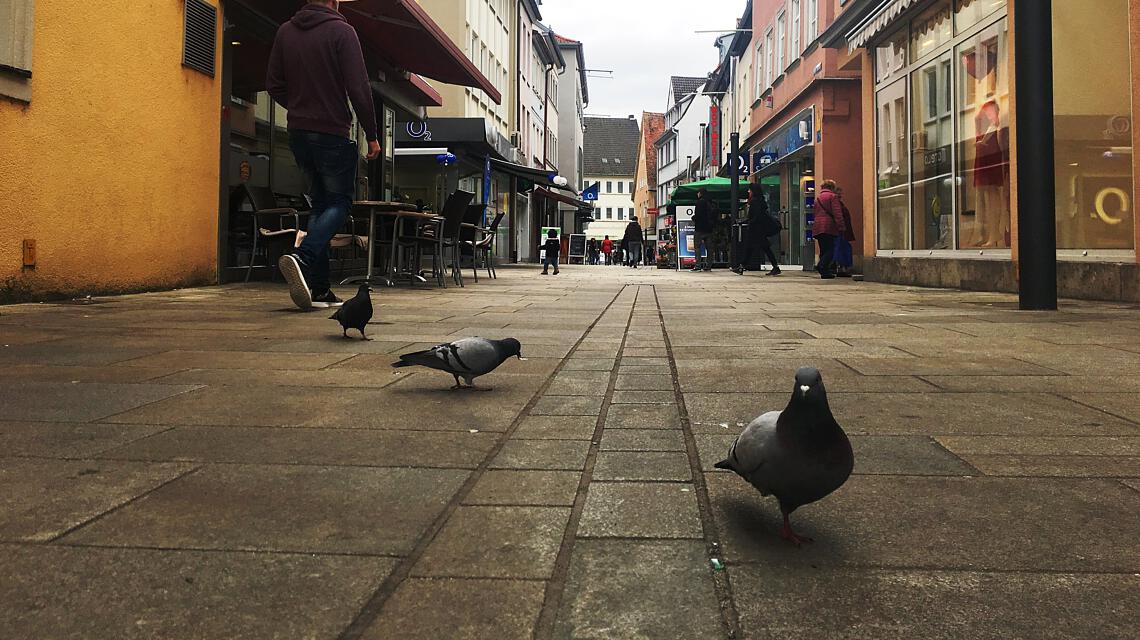
We have to help the pigeons

We meet them everywhere, every day.

They are abandoned, homeless house pigeons, the strays in our cities.
The way we deal with them is a scandal, a shame.

We take the right to domesticate, breed, exploit, abandon, scare, torture, starve, and kill these animals because we mean that their existence harms us.

Pigeons used to be on the rocks, we humans caught and bred them.

Because of the excessive expansion of the human population, pigeons have lost their houses and are therefore settled in the cities.
That is where their misery began.

They eat our waste to avoid starvation, they get sick, they are injured and die in agony because of our traps
People constantly blaspheme against their excrement, but no one blasphemes against the plastic waste by the sea and in barbecue areas

Stadttaube Schnur Beine

We accuse pigeons of transmitting diseases to us humans, but the Robert Koch Institute has proven the opposite

You don’t have to speculate for long as to who instigated the “arguments” against the pigeons … those responsible always refer to the so-called experts, such as hunters, falconers, and scare-off companies who fill their pockets with the suffering of the animals!

They are peaceful, harm no one.

They recognize faces, at least my face, as soon as I go to the train station in my city to feed them under strict discretion.

For most people, animal welfare ends when pigeons are fed.
That is why they are hunted, kicked, and arbitrarily harassed.

The only animal-friendly solution is dovecotes, which are built where pigeons live: in the city centers.

Animal rights activists (who are not paid for it) would provide them with species-appropriate feed and water as well as suitable breeding sites.

By exchanging pigeon eggs with gypsum eggs, an animal welfare-friendly and sustainable control of the population takes place.

Tauben Taubenschlag

Some cities have already started to successfully control pigeon populations in this way – but most of them still treat pigeons like strays in southerners.

We have to finally stop waging war against the pigeons, we have to make peace with them by helping them and giving back what we took from them: A roof over their head and appropriate food!

They love wheat, lentils, flax seeds, birdseed.

It is finally time to take responsibility for these animals.
Please feed the pigeons.

My best regards to all, Venus

You Can Have Cleansing Milk for Your Skin; Milk of Magnesia for Your Stomach; but NOT Soya Milk for your Vegan Food. Is the Dairy Industry Worried ?

The animal agriculture industry is feeling extremely threatened by the growth in the numbers of people going vegan and consuming a plant only diet, and, in response, is calling for a ban on the use of terms such as burger, sausage, cheese, milk, ice cream etc for plant based equivalents. The Irish Farmers Union is attempting to persuade Irish MEP’s to vote to ban words traditionally used by the animal agriculture industry such as burger, steak, milk, cheese etc.

Interview on Newstalk

Sandra Higgins was interviewed by Mark Cagney, along with IFA President Tim Cullinanon on this morning’s Newstalk Breakfast.

You can listen to the interview here.

Food terminology

The production of plant based equivalents of animal foods has a history that is thousands of years old, dating to Chinese Buddhist monk’s use of seitan (made from wheat gluten) and tofu (made from soya beans). There has been an enormous growth in the production and supply of plant based substitutes for animal foods which meets the demand by people for more ethical food production which necessitates the use of plants instead of animals. Many vegans would prefer to dissociate from terms which have been used to associate living, sentient animals with food, because they are not food, they are feeling beings with rights. It is perfectly feasible to eat a wholefoods, plant diet without these substitutes. Indeed, it is cheaper and in many cases healthier to do so. However, people buying and consuming plant based substitutes, for the most part, live in countries where we have all grown up consuming animal products such as burgers, cheese, milk and ice cream. It is a matter of convenience to have plant based substitutes replace dietary patterns and recipes based on animal products. Many of these products are a very useful way of meeting our nutritional needs. They ease the transition to a plant diet and to veganism for many people and that can only be a good thing. Most terms such as burger, sausage, etc refer to the shapes of food. Many animal versions of these products already contain more plant ingredients than animals’ bodies. It is the right of the plant based foods industry to label their products in a manner that facilites their sale.

Is this threatened Ban something Vegans should Be Concerned About?

The cost to the plant based food industry of changing it’s labelling and packaging would be harmful to a growing, ethical, and sustainable method of food production which, in every way, is better than using the lives and bodies of other animals who share our capacity to feel and have an interest in staying alive. Interestingly, there are two cases in the US that we are aware of, that have won their right to use dairy terminology (Miyoko’s Butter and Plant Based Milk in Virginia).

The EU has already banned the use of dairy terms such as milk on plant milks. The ban has done little to halt the rapid expansion of the market for plant substitutes for dairy products. Most people do not even notice the label. The Gestalt principles of perception operate even when most of an object is missing. Our minds are programmed to logically make sense of the world in terms of our understanding. That is why a carton of a product made from oats or soy does not have to be labelled ‘milk’ for the consumer to purchase it on the understanding that it is milk. The main concern in the consumer’s mind is that the milk did not violate the rights of other animals to their lives; that it is not harmful to the environment; and that it contributes to a diet that is nutritionally adequate, healthy, tasty, and affordable.

Misplaced Perception of Threat

The perception of threat by the animal agriculture industry is completely misplaced. The future of food production must, necessarily, be plant based and farmers will be necessary for the production of that plant food and are entitled to earn a living and be supported to transition in other ways to a more ethical, sustainable way of farming that excludes the use of other animals. The industry itself has seen the potential for expansion into the production of plant based foods; many of the vegan substitutes on our supermarket shelves are produced by the industry as it cashes in on this growing market. Given the current crises facing us in terms of a pandemic that has its origins in our oppression and use of other animals, combined with the loss of biodiversity and the climate crisis, which are caused, to a significant extent, by animal agriculture, surely it is in our interests to find solutions to halt disaster and ensure the sustainability of human life, than to argue over the terminology of the food we consume.

Misleading? The Kettle Calling the Pot Black

The argument that plant based substitutes for animal foods are misleading is ironic. The most misleading products of all on our shop shelves are those made from the bodies of other animals. The lengths to which the industry goes to to hide the standard legal practices on farms and in slaughterhouses, to fight against the science that explains the damage that animal agriculture inflicts on the environment and on other life, and to attempt to dispute the facts on the health benefits of a plant diet, are evidence  that it is an industry based on misleading consumers. There isn’t a single producer of animal products that would sanction putting the facts of animal agriculture on its food packaging.

Milking It

Why the furore over plant based foods and not a similar reaction to the use by the cosmetic industry of the term ‘cleansing milk’, the fruit and veg industry’s use of terms ‘coconut milk’ and the ‘flesh’ of fruit, or the pharmaceutical industry’s reference to ‘milk of magnesia’ or the medical phrase ‘milking’ referring to the expression of the contents of a tube or duct to obtain a specimen or to test for tenderness? Has anyone ever reacted to the term ‘milking it’? It is a derogatory phrase referring to the unjust taking advantage of another; a term which aptly derives from the dairy industry’s unjust process of breeding mammals so that they can be impregnated and lactate milk for their babies which is then taken from them for human consumption; the atrocious breeding of animals to give birth and lactate even though they are prevented from this natural right to feed their babies who are separated from them after birth; the exploitative and violent process of selectively breeding animals so that their bodies can be exploited for dairy products that humans do not need, until the burden of metabolic stress, continual lactation and pregnancy, combine to reduce their production of milk and their lives are ended in slaughterhouses.