Posted on December 12, 2020 by Serbian Animals Voice (SAV)
NEW WALMART DISCOVERED IN MEXICO?
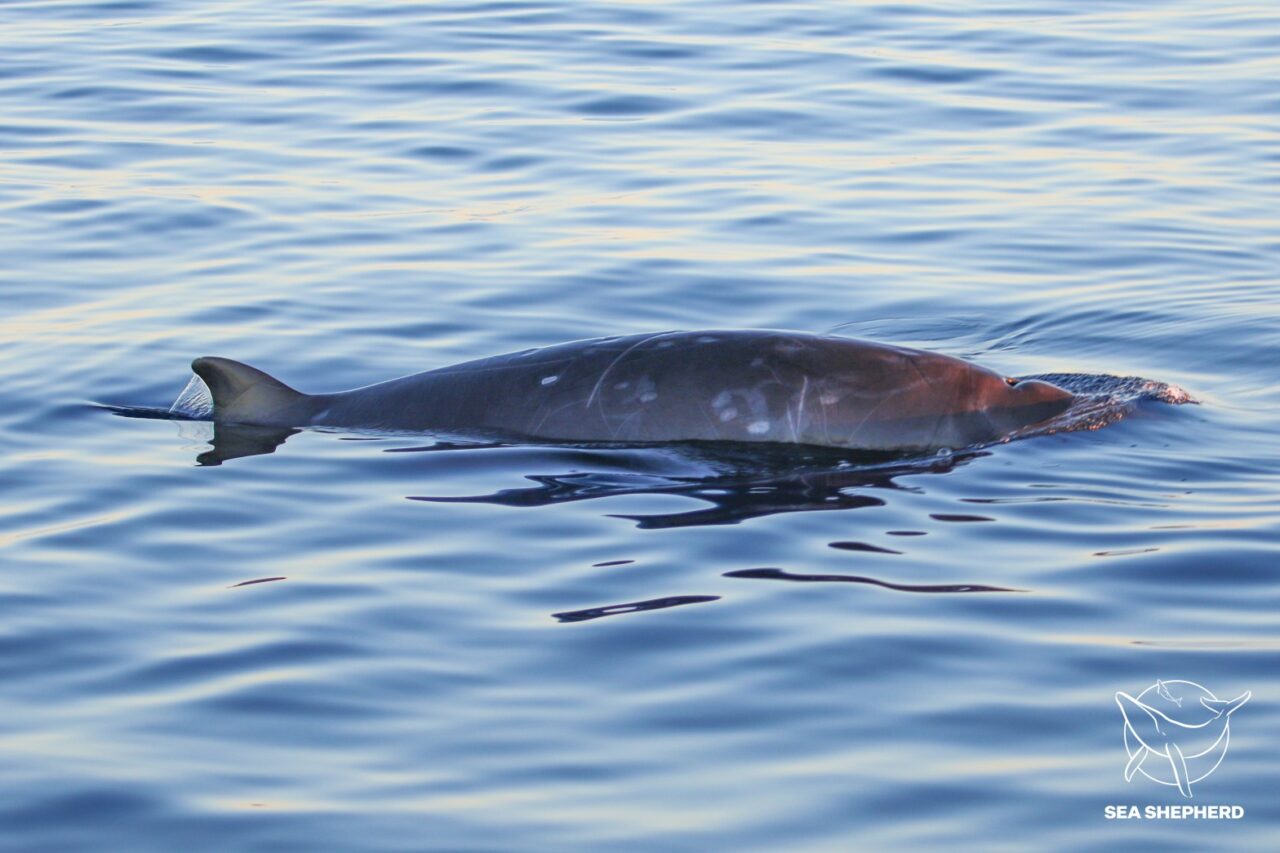
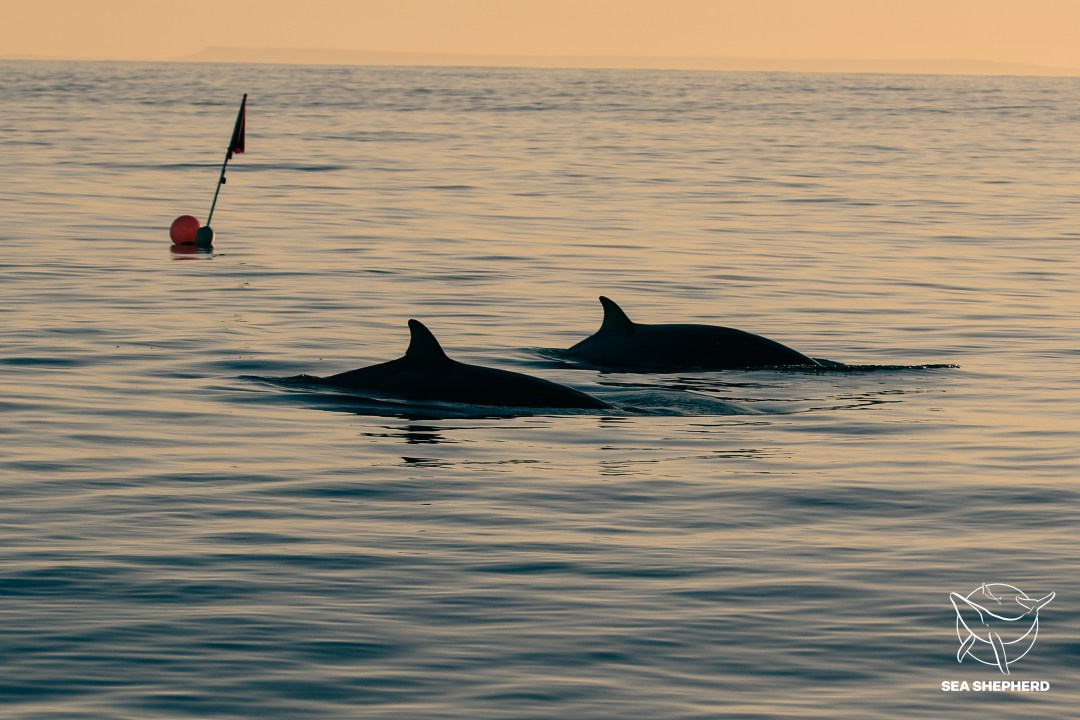
A previously unknown species of the whale may have been discovered in the waters north of Islas San Benito during Sea Shepherd’sresearch.
Ensenada, Mexico – December 8, 2020: On the morning of November 17, scientists aboard the Sea Shepherd ship MARTIN SHEEN observed three beaked whales in nearby waters.
The expedition, led by the renowned beaked whale researcher Dr. Gustavo Cárdenas Hinojosa (National Commission for Nature Reserves, Marine Mammal Research), Dr. Jay Barlow and Dr. Elizabeth Henderson, director of the NIWC PAC’s Whale Acoustic Reconnaissance Program in collaboration with Sea Shepherd’s research division, set out to investigate a species of a beaked whale that could be the cause of a previously unidentified acoustic signal previously recorded in the area.
Scientists and the Sea Shepherd crew took photos and video recordings of the animals and used a special underwater microphone to record the acoustic signals from the whales.
The beaked whale experts, who are leaders in their field, are “extremely confident” that the photographic and acoustic evidence shows the presence of an entirely new species of whale.
“We saw something new. Something we didn’t expect in this area. Something that doesn’t match anything in appearance or acoustics that is known to exist, ”said Dr. Jay Barlow.
“I get a chill when I think about the fact that we might have done something that most people would consider absolutely impossible – to find a large mammal that exists on earth that is completely unknown to science. Like finding a unicorn”!
Comment and Information: Beaked whales live in deep waters and therefore mostly far from the coast. They dive long and deep, and rarely spend time on the surface, usually, they are usually very shy and avoid ships and people, so the sighting of beaked whales (Ziphiidae) is extremely rare.
It is extremely rare for them to be so close to a boat.
That is why Jay Barlow raves about this phenomenal encounter to the press: “It was just the phenomenal encounter. It’s very rare to even see a beaked whale and to find a friendly group of beaked whales, it’s even rarer ”.
These three toothed whales came across a boat full of sharp-eyed marine biologists on a survey who were already using their binoculars and cameras – the video shows that the survey is in progress.
This enabled them to observe the rare marine mammals immediately, take photos, film them above and below the water and record their sounds with the hydrophone.
In addition, the scientists were able to take water samples from the vicinity of the whales that appeared. They are now being searched for traces of DNA.
Due to the technological development of the last few years, it is now possible to recognize the DNA of the animals that have swum through it from a water sample and to prove it.
Even in the complete absence of the DNA donor.
I mean…It is better not to trumpet such news through the media so loudly.
There are certainly many zoo owners who are already thinking about the money that would bring such a “sensation” into their coffers.
Posted on December 12, 2020 by Serbian Animals Voice (SAV)
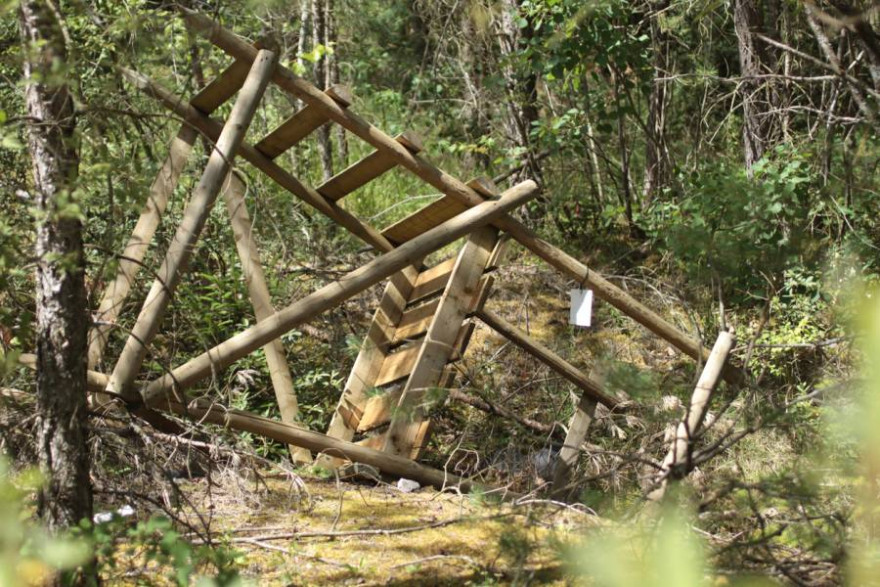
ALF Destroys 13 Hunting Stands in Germany Via local media:
According to local media, four hunting towers were set alight in Gödenstorf (a small community in the district of Harburg) during the evening of the 22nd November, causing total damage of 5000 EUR.
On the 19th, in Viernheim (a middle industrial city north of Mannheim) nine more towers were destroyed, legs sawed off, ladders were broken or overturned.
And I mean…Eliminating 13 Murder Stands in 4 days … is an above-average achievement.
Animals will no longer be shot from these execution towers, that is safe.
Posted on December 11, 2020 by Serbian Animals Voice (SAV)
In Thuringia, business with the blood of pregnant mares has been kept secret for years. According to MDR research, the responsible ministry had also known about the blood samples for years.
The topic is now a political issue.
So far, blood samples for the production of the hormone PMSG are known mainly from South America. Pregnant mares were repeatedly tortured there in order to be able to produce a drug for factory farming.
In December 2019, the FAKT magazine discovered that blood samples were also taken from horses in Germany.
That happens in Meura in Thuringia.
Anke Sendig runs a stud there. “The blood is taken four times a week, four liters each time,” she explains in December 2019 when the deal was uncovered.
“If everything is chic and normal, then 16 liters of whole blood are drawn a week.”
The hormone is then sold and later used in factory farming. This means that sows become pregnant and piglet at the same time. For the horses at the stud in Thuringia, this means that around 100 mares are drawn with large cannulas within 50 days. The operator claims that it would do this in accordance with the requirements.
More blood is drawn than allowed
Karsten Feige from the Clinic for Horses at the University of Veterinary Medicine in Hanover has worked on the guidelines for taking blood from horses. This sets the guideline for the maximum amount of blood that can be drawn from an animal.
Over 100 liters of blood were drawn from the mares in Meura in seven weeks.
“That clearly does not match the guidelines,” says veterinarian Karsten Feige. “If we use the guidelines to the maximum, you can lose a maximum of 24 liters from a 500-kilogram horse, but not 112.”
Experts also say that no blood should be drawn from pregnant mares.
The operators of the stud counter that red blood cells are returned to the animals and that the guidelines are only recommendations.
“They are not laws, they are guidelines. But of course, they do imply that you should absolutely adhere to them,” replies Professor Karsten Feige.
If this is not done, there must be a good reason.
Otherwise, there could be legal consequences, as court rulings have shown.
And I mean…“With over 350 horses, we are the largest Haflinger stud in Europe. We have been breeding these likable, blond horses here in the small town of Meura for over 30 years (…).
We keep our horses as species-appropriate as possible. “, this is how the Meura stud advertises on the Thuringia Tourism GmbH homepage “Discover Thuringia”.
When the suffering of horses during PMSG extraction became known in South America a few years ago, it was far away, and we thought it only happened where there was no legally binding animal welfare law.
But Meura is in Germany, with an animal protection law that is supposed to be one of the best in Europe.
In “Guidelines for the collection, storage, transport and administration of blood and blood products in the veterinary field, paragraph 2.1.2” it is stated quite clearly: Blood may not be drawn from pregnant or lactating mares.
The fact that it was possible to trade the blood of pregnant mares for years without a permit shows how meaningless and weak the animal welfare law becomes when corrupt politicians do business with animals
And it is typical of corrupt business: after years of inactivity, and only after the PMSG production in Meura has been published, the authorities and ministries are examining the jurisdiction and responsibility of a business that has for years been in the gray area of animal cruelty and therefore illegal.
There can be an explanation: there are conflicts of interest within a profitable business at the mares’ expense.
Posted on December 10, 2020 by Serbian Animals Voice (SAV)
The effects of Corona do not stop at sled dogs
Risk areas, quarantine regulations, closed borders: The Corona crisis hits the tourism industry very hard.
In addition to the obvious fellow sufferers such as restaurants, hotels, or transport companies, there are also some victims (!!!) of the crisis that no one has on their radar.
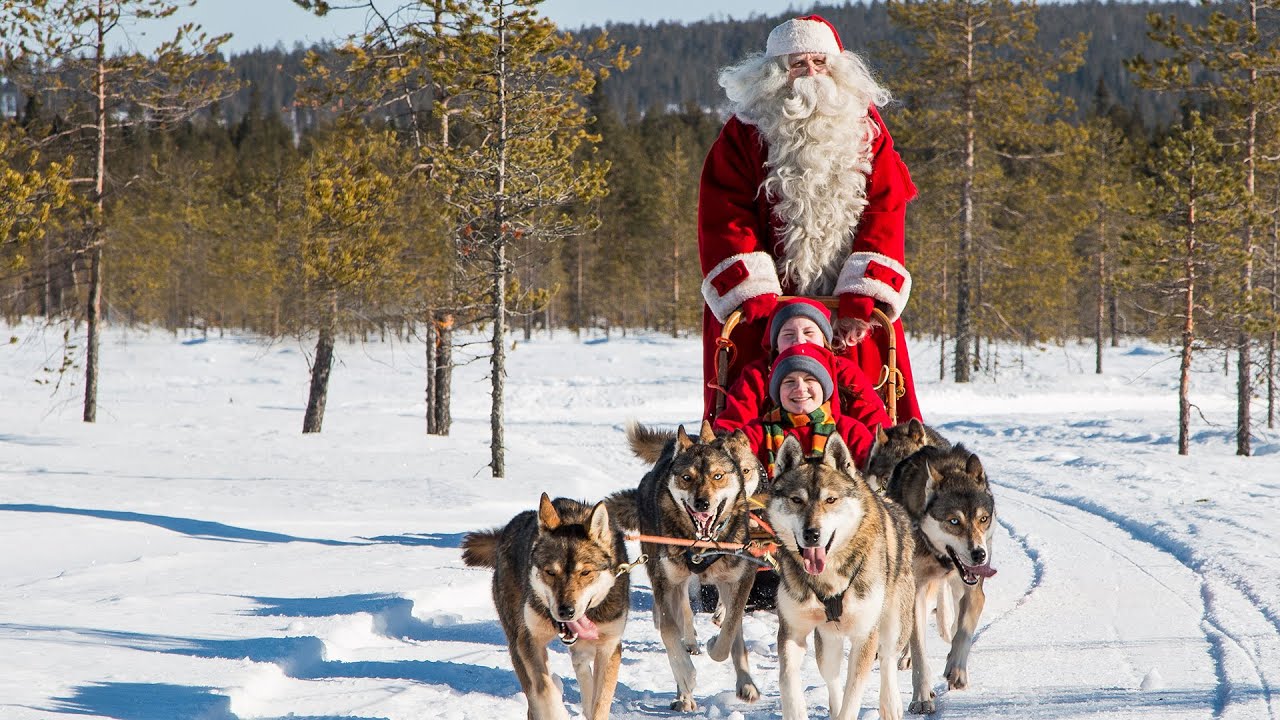
These include, for example, the providers of sled dog rides in Lapland(!!!)- and their animals. The situation on-site is so bad that some dogs even have to be euthanized or shot – because they can no longer be cared for.
The boom in dog sledding tours through Lapland
The boom in dog sledding has been great in recent years.
You can hardly imagine anything more beautiful: Just escape everyday life around the Christmas holidays and enjoy the snow-covered valleys and forests of Lapland.
And all on a sled, pulled by cute huskies and best of all with Santa Claus as a “musher” – the one who steers the sled.
Not all sled dogs are fine
Because this type of tour is becoming more and more popular, a real industry has sprung up around sledding.
According to “YLE”, the public broadcaster in Finland, around 5,000 to 7,000 dogs are used each season.
But according to a report by “CNN”, the boom became a problem even before Corona – not only in Finland but in all of Scandinavia.
The local providers were no longer able to meet the demand – more and more providers, including from abroad, pushed onto the market.
And with the price war, the exploitation of animals began more and more. Often flown in from southern Europe, many dogs struggle with health problems and poor holding conditions.
While the local dog farmers would have to adhere to strict requirements and the dogs could lead a good life there, seasonal suppliers could be less monitored by the authorities, according to the report.
“Sometimes the dogs are even put to sleep out of desperation and shot” (!!!)
And I mean...In Finnish Lapland, there are an estimated 65 to 70 dog sledding companies with 5,000 to 7,000 dogs who are mainly used for sled safaris.
The turnover of dog sled companies is around ten million per year.
The dog begins to work around the age of one year and its services often last up to ten years.
For years the husky owners have exploited their animals to entertain “nature lovers” with Santa Claus on husky paws.
Now they moan, the money stays away!
Every small company puts something aside for the bad times.
But in bad times, exploiters have no mercy on their slaves.
Now they are killing their most loyal servants, they were just a means of transport.
And the owners play the victims of the Corona, of course!
What an outrageous, exploitative gang are these dog sledding businessmen!
Please clarify all of your friends, acquaintances, relatives about this business.
Posted on December 10, 2020 by Serbian Animals Voice (SAV)
Today, December 10th is International Animal Rights Day.
In 1998, animal rights group Uncaged launched International Animal Rights Day to call for the recognition of a Universal Declaration of Animal Rights, specifically choosing December 10th to coincide with Human Rights Day and draw attention to speciesism.
Giving the basic respect due to all sentient beings takes nothing away from the struggle for human rights.
Everyone, human and non-human alike, deserves fundamental rights to life, freedom, and bodily integrity.
Oppression of animals is no more justifiable than the oppression of humans, and the ‘humans first’ ideology is human supremacism.
Humans are responsible for needlessly enslaving, torturing, and murdering these non-human animals by the trillion every year in the meat, dairy, and egg industries.
The United Nations claims to lead global efforts to achieve peace, dignity, and equality, yet they ignore these industries.
Seventy-two years after the United Nations ratified the Declaration of Human Rights, it’s long overdue that non-human animals get the least they deserve.
End human supremacism.
Non-human animals will have their own day.
And my Comment: Every year over 60 billion animals are killed for human consumption – without counting fish – mostly after a horrific life and mostly in a cruel way!
Anyone who has a glimmer of compassion must feel sick to see what is happening every second.
Even today, 22 years after the introduction of Animal Rights Day, catastrophic conditions in animal holdings, slaughterhouses, animal transports, and much more are documented and revealed again and again.
Even if small successes can be celebrated, there are always setbacks and the daily confrontation with the bitter fact that animals are nowhere in the world considered living beings.
But like humans, animals have rights that cannot be put into perspective or negotiated!
Why should one be allowed to torture someone because they belong to a different species?
The same pain is equally bad, regardless of whether it is experienced by whites, blacks, men, women, children, the disabled, or animals.
Species exploitation and discrimination are just as wrong as racism and sexism.
Remembrance days such as Animal Rights Day on December 10th remind us that work and struggle are more necessary and important today than ever.
Animals cannot go to court themselves and stand up for their rights, so they need us.
We will not betray them and will continue to fight for the abolition of their slavery
Posted on December 9, 2020 by Serbian Animals Voice (SAV)
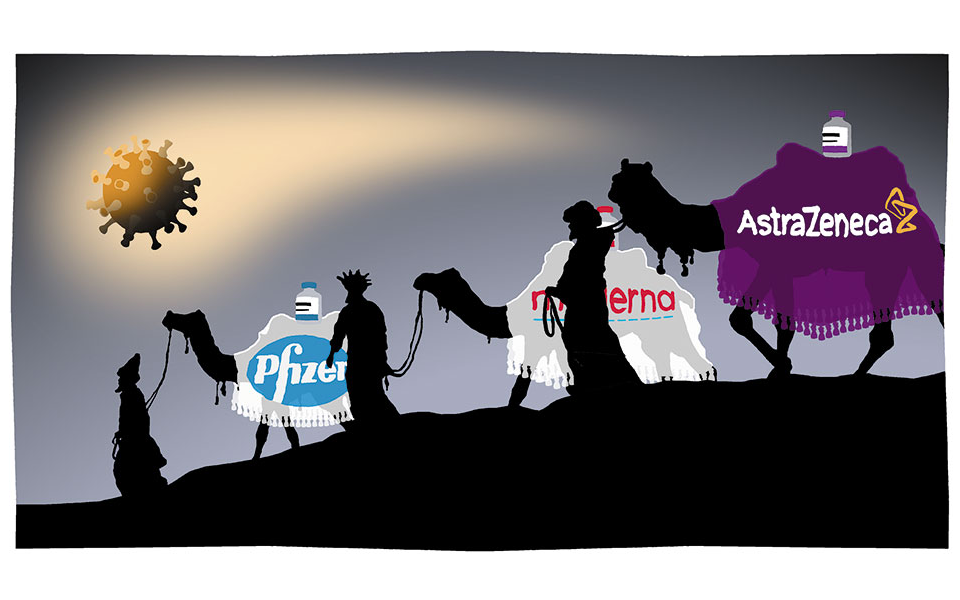
Hantzopoulos-Greece
The three kings have to go into quarantine first.
We avoid contact with them and their gifts
Maybe they come from a risk area and anyway they come from more than two households.
Posted on December 9, 2020 by Serbian Animals Voice (SAV)
By The Seattle Times editorial board
Construction of the Pebble Mine, a huge gold and copper mine, was officially rejected.
The mining would have destroyed the vast natural area in Bristol Bay, Alaska, and displaced indigenous people.
Where whales sing, seals and walruses live and there are extensive wetlands, a huge mine would have irreparably destroyed the region.
Bristol Bay is also known for its extraordinary stocks of salmon, which are the livelihoods of the native Eskimos, but also for food from orcas to thousands of brown bears.
Huge mines would destroy the last of the salmon populations, like in Bristol Bay, forever.
After the U.S. Army Corps of Engineers’ decision last week to reject a key permit for Alaska’s proposed Pebble Mine, it’s clear that federal protection is now needed to permanently preserve this uniquely valuable resource.
The project threatened too much destruction to the immense salmon runs of Bristol Bay.
The list of reasons to protect the bay’s watershed is long. Its annual chinook and sockeye salmon runs are the largest on Earth. All five species of Pacific salmon live in Bristol Bay, and its watershed produces about half the world’s annual sockeye harvest.
The commercial and recreational fisheries support large portions of the region’s economy, and Bristol Bay’s salmon have sustained Alaska natives for many generations.
Thousands of Washingtonians fish those salmon each year, for work and recreation.
The bay’s diverse salmon runs feed other populations, too — from orcas to the thousands of brown bears on the Alaska peninsula.
The mine was predicted to disrupt this food chain mightily in the name of extracting rich veins of copper and gold, and potentially molybdenum and rhenium.
It is fitting that the Corps stopped the mine by denying it a permit required by the Clean Water Act.
The impact on the wetlands surrounding Bristol Bay’s headwaters from excavating millions of tons of minerals each year could have been a catastrophe with long-lasting harmful reverberations.
But the Clean Water Act is not safe from political rollbacks.
The Trump administration proved this in undoing more than 80 environmental rules across the past four years, including seven water pollution regulations.
The time has come to permanently, and specifically, target Bristol Bay as a vital national resource. Its health must be preserved even if the Environmental Protection Agency is subverted.
And I mean…Developers wanted to dig a mine a mile wide and a quarter-mile deep, which would result in the destruction of 3,000 acres of wetlands and more than 21 miles of salmon streams.
You can’t put a gold and copper mine on top of the most productive salmon run in the world and not have substantial and permanent damage. Salmon and mining simply do not mix.
The ecosystem and fisheries would be seriously threatened by the largest gold and copper mine in North America.
The construction and operation of the Pebble Mine would have devastating impacts on salmon habitat, salmon populations, the Alaska Native communities that rely on subsistence fisheries, as well as the broader $1.5 billion commercial and recreational sockeye salmon fishery.
Arsenic, copper, nickel, and lead, contaminated drinking water, and salmon spawning grounds, that would be the consequences and an environmental disaster.
While most consider the salmon industry in Bristol Bay an axiomatic gold mine, it is the gold that lies beneath that threatens the future of what lies above.
This decision to torpedo the long-disputed mine marks a major victory for environmentalists and tribal rights.
The battle is won for now, but it is time to protect Bristol Bay for good.









 Serbian Animals Voice (SAV)