Medical University of Vienna leaves 100 mice to starve

“The Medical University of Vienna is the largest medical school in Austria, is one of the most important research institutions in Europe and provides the entire medical staff for the Vienna General Hospital in Vienna”, so we read in Wikipedia.

And yet an animal experiment scandal reached us that left every civilized and empathetic person speechless: This university lets mice starve!

In a restricted-access breeding laboratory of the Med Uni Wien, at least 100 animals died of starvation due to serious neglect of care!

According to the Association against animal factories” (VgT):

“After corona research has provided the latest evidence of how “inefficient and unnecessary animal experiments are”, now the latest evidence of how brutal the animal experiment industry is and how clever its marketing is.

Around 100 mice are said to have starved and died of thirst due to insufficient supply – there are also other supply shortages in the room.
“Tierschutz Austria” has filed a criminal complaint.

“It’s terrible – these little mice are already housed in a most unsuitable manner anyway. Starving and dying of thirst in this way is incredibly cruel. It’s a real scandal,” said VGT campaigner Roland Hoog.

In 2019, according to the latest animal experiment statistics1, 205,858 mice were used for animal experiments.
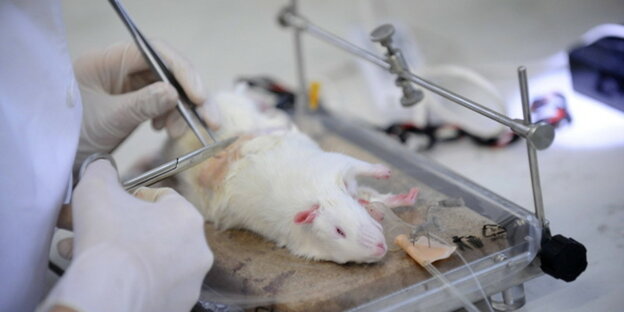
94,180 mice – almost half – were used for so-called basic research.

“Above all, animal experiments out of pure curiosity of the researchers hide behind this name – there are no relevant possible applications for the results,” criticizes Hoog.

The VGT calls for comprehensive education and significant improvements in the housing and management of animal care.

“Mice do not starve or die of thirst overnight. Apparently, there must have been a comprehensive lack of care and control,” says Roland Hoog.

If the Medical University of Vienna is serious, it should show responsibility towards animals and society: animals, society, and patients have earned modern human medicine and not senseless animal sacrifices.

The NAT (= Network Address Translation) database with over 300 established methods that do not involve animal experiments shows that animal experiments are not necessary.

There are better methods that clearly advance research, safety testing, and drug development.

Instead of investing 30 million in the new building of a retro project from which only the animal testing industry benefits, the Association against animal factories” calls for the establishment of a research center to research and evaluate alternative methods that are free of animal suffering.

http://www.vgt.at/tierversuche

And I mean…They weren’t even able to take care of a few mice?
And they want to convince us that we have to entrust them with bigger tasks?
Should we leave our health to their hands?
Should we give them full confidence that they can save us from disease?

This department should be closed immediately.
And the “responsible” ones – these full-idiots without competence and conscience – must be dismissed.

My best regards to all, Venus

The miner fox-Berlin’s first fox with an Instagram account!!

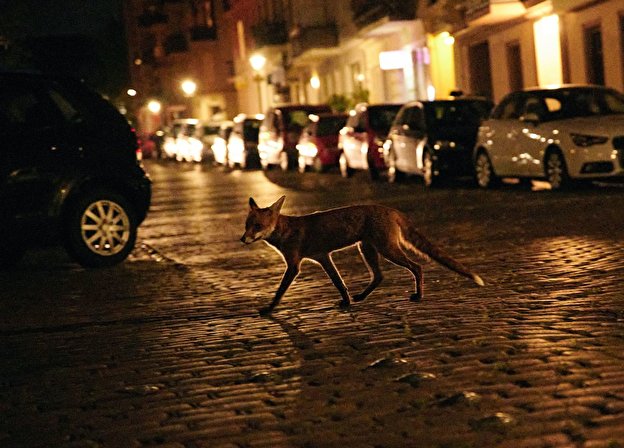
Foxes are now part of the Berlin cityscape – but one fox has been attracting particular attention for months: the miner fox.

With thousands of followers on Instagram and various regional press reports, the miner fox is probably the best-known four-legged friend of its kind in the capital.

Now the red fox is also an ambassador for a campaign against the hunt for foxes.

He is Berlin’s first fox with an Instagram account.
The miner fox as an ambassador for PETA shows that hunting is not necessary.

The trusting fox from Bergmannkiez in Berlin-Kreuzberg has his own Instagram profile.

For some time now, the fox has made Bergmannstrasse in Berlin-Kreuzberg his home: day and night he explores the area, observes what is happening, looks curiously into house entrances, and occasionally relaxes lazily in the midday sun.

Since May 2020, a resident (who wants to remain anonymous) has been taking pictures of him regularly on Instagram. When the animal sat under its balcony every night in the summer, the photographer decided to publish the photos.

The fox poses photogenic in the street, on sidewalks, and in house entrances.

The miner fox shows – contrary to the claims of many hunters – that the animals can live peacefully next to us humans even without hunting, without the fox population getting out of control.

Since the first picture at the end of May, almost 2,700 users have subscribed to his account. The reactions to the photos were mostly positive – especially the restaurateurs in the Kiez liked the pictures.

The photographer also knows his neighborhood much better now!!

As great as the temptation is to lure and stroke the foxes in the city with snacks: Foxes are not cuddly toys, but wild animals that can get their own food.

So if you are out and about on Bergmannstrasse, with a little luck you can spot, admire and take photos of the Berlin influencer – but petting or feeding him is not a good idea.

https://www.petazwei.de/bergmannfuchs

And I mean…Foxes are now sneaking undisturbed through parks and gardens. Wild rabbits hop over green areas. Beavers swim in lakes and canals. Squirrels do gymnastics and frolic through the trees.

Raccoons, martens, and wild boars unsettle and fascinate young and old alike. And first of all the many birds: Berlin is not only home to just under 3.8 million people and their pets, but also countless wild animals – more than in the surrounding area.

And the last ones now have all the freedom because of Corona!

The wild animals become real city animals; if you study them a little, you will learn and see with your own eyes the most amazing things:

Crows, which let crack their nuts in front of driving cars…
wild boars, which lead their newborns across the street at intersections…
foxes, that steal eggs…

Animals experience as many exciting things as we humans do every day.

And the most exciting thing is that Corona taught us how to coexist.

My best regards to all, Venus


Down isn’t a by-product – it’s a bloody business

Down can be obtained:

a) from plucked animals that have already been slaughtered (dead plucked) or
b) from the much more brutal live plucking

Most down come from plucking, in which the down and feathers are torn from the animals’ skin during their lifetime. Sometimes this is even done automatically.

Live plucking is banned in Germany and the EU but most of the down used in Germany comes from China, Hungary, and Poland, where plucking by living things is common.

“Plucking troops”– hired for this alone- often injure the animals when they ruthlessly pluck live chords, especially when the feather of the down is still immature, which tears and tears the skin during plucking.

Larger wounds are sutured immediately and broken wings are only sparsely tied without anesthesia.

Most of the down comes from Asia (80% from China), where it is common to tear the feathers out of birds while they are alive. In Europe, a lot of down comes from Hungary and Poland

So far there are no independent certificates or seals that exclude live-plucking from down products. The existing seals and certificates were introduced by the down industry itself to reassure customers.

German bed manufacturers “officially” condemn live-plucking but let it happen from the back door.


For more…at https://worldanimalsvoice.com/2020/12/15/down-isnt-a-by-product-its-a-bloody-business/


And I mean…Every year around 10,000 tons of down and feathers are imported to Germany, mainly from Poland, China, and Hungary. Live plucking has a long tradition in Hungary and around 300,000 animals are plucked every year.

During live-plucking, the geese’s feathers are pulled out while they are still alive.
That hurts a lot, and it’s animal cruelty

For the poultry industry, this practice is many times more lucrative than plucking after slaughter, as an animal can be plucked four to seven times until it dies before it is slaughtered.

The fact that the geese are allowed to pluck when their feathers fall on their own does not mean that this procedure is followed consistently because this time is difficult to determine and individually from animal to animal.

It is unlikely that an institution can determine this for each individual bird.

We regard this animal product in the same way as milk, leather, fur, or meat because it is also associated with painful origins.

Any consumer with a basic conscience and brain has to boycott this product; There are great variants of down that warm and protect just as well.

This is the only way we can damage the bloody down-industry and significantly reduce the suffering of these animals

My best regards to all, Venus


USA: First case of coronavirus detected in wild animal.


First case of coronavirus detected in wild animal

By Helen Briggs
BBC Environment correspondent

The first known case of coronavirus in a wild animal has been reported, leading to calls for widespread monitoring of wildlife.

The US Department of Agriculture (USDA) said a wild mink had tested positive around an infected mink farm in Utah.

Coronavirus outbreaks at fur farms in the US and in Europe have killed thousands of the animals.

As a consequence, millions of farmed mink have had to be culled across Europe.

The USDA said it had found one positive case in “free-ranging, wild mink” in Utah as part of wildlife surveillance around infected farms.

Several animals from different wildlife species were sampled and all tested negative, the agency added.

It said it had notified the World Organisation for Animal Health, but there is no evidence the virus has been widespread in wild populations around infected mink farms.

“To our knowledge, this is the first free-ranging, native wild animal confirmed with Sars-CoV-2,” the USDA said in an alert to the International Society for Infectious Diseases.

The discovery raises concerns that the infection could spread between wild mink, said Dr Dan Horton, a veterinary expert at the University of Surrey, UK.

The case “reinforces the need to undertake surveillance in wildlife and remain vigilant”, he added.

Mink are known to escape from mink farms and become established in the wild. In the UK, a population of mink that escaped from fur farms many years ago is thought to exist, but they are sparsely distributed and rarely come into contact with people, Dr Horton added.

The virus has also been found in zoo tigers, lions and snow leopards in the US, and in a small number of household cats and dogs.

First case of coronavirus detected in wild animal – BBC News

Forty Tonnes of Food Trucked In For Hungry Animals. Watch the Video Here.

WAV Comment:  We are really pleased to be able to give to Harmony Fund every month – and it is great to see the donations being put to such great use as shown in the video.  We would encourage everyone to give to HF if possible, to make the world for animals a better place – and to fill their bellies !

—————————————————————-

Those of you who have walked with us on this journey for the past 11 years know that Harmony Fund is a small charity doing BIG things. We throw our arms around underdog animal rescue squads all over the planet, creating circles of care to deliver food, shelter and veterinary care to thousands of animals each month. We recently brought food in for all the dogs, cats and horses at the beautiful Fundatia Sky rescue center in Romania…and it was breathtaking.

Two 18 wheeler trucks drove all the way from Germany to Romania, more than 1,000 miles, with 40 tons of kibble and canned food for hundreds of dogs and cats at Fundatia Sky shelter.  This food will also be shared with many homeless animals in the community.  Pet food is much less expensive in Germany and a higher quality and quanity of food can be bought here, making this the most efficient option.  But that’s not all. Another 40 tons of locally sourced hay was then brought in for the horses, and they started eating right off the lorries long before the men could unload the bales.  

Watch the video on our website

To give or donate, please click on:

Season of Giving to the Animals | Harmony Fund
 

Thanks

Mark – WAV.

There is not enough space in this great big world to contain our gratitude to all of you. 


England: Plans to ban the export of animals, supported by West Dorset MP, revealed.

WAV Comment  – we are currently working hard on our submission to Defra on this issue – read more at:  England: Live Animal Transport Consultation – 12/12/20 Progress Report. – World Animals Voice


Plans to ban the export of animals, supported by West Dorset MP, revealed

Plans to ban the export of animals, supported by West Dorset MP, revealed | Bridport and Lyme Regis News (bridportnews.co.uk)

PLANS to ban the export of live animals from England and Wales for slaughter and fattening, which have been strongly supported by West Dorset MP Chris Loder, have been unveiled.

The plans were revealed by the UK’s environment secretary, George Eustice, in the start of a renewed push by the Government to strengthen the UK’s position as a world leader on animal welfare.

An estimated 6,400 animals were sent to Europe for slaughter in 2018, according to the Department for Environment, Food and Rural Affairs (DEFRA).

Mr Loder has worked closely with the RSPCA and the British Veterinary Association among others to (enable this to happen) and is urging as many people as possible to support his campaign by responding to the Government consultation.

In his speech in the House of Commons on October 23, during the second reading of the Animal Welfare (Sentencing) Bill, the MP demanded the house support and deliver the government’s pledge to end live animal exports – claiming that it was disgraceful that well cared for farm animals could be loaded on to a lorry and sent thousands of miles by land and sea to destinations as far as Libya and Lebanon.

Mr Loder said: “Today’s announcement is a victory for animal welfare. It is a direct benefit of Britain leaving the EU. It is the EU’s trading rules on the movement of animals, along with the lobby from the National Farmers’ union to continue live exports for slaughter and fattening, that has enabled this cruel practice for so long.

“Bringing an end to the unnecessary suffering of animals during transport is long overdue. Through my Animal Welfare Bill, which reaches the Committee Stage early next year, I hope not only to achieve tougher custodial sentences for those who inflict the worst kinds of cruelty on innocent animals; but also to deal with the cruelty that has been happening on a mass scale, such as with live animal exports.”

Live animals commonly have to endure excessively long journeys during exports, causing distress and injury.

India: New Ambulance; and Latest Animal Saving Videos From ‘Animal Aid Unlimited’.

India: Latest Amazing Healing Rescues From ‘Animal Aid Unlimited’. Please Donate if You Can. – World Animals Voice

Dear Mark,

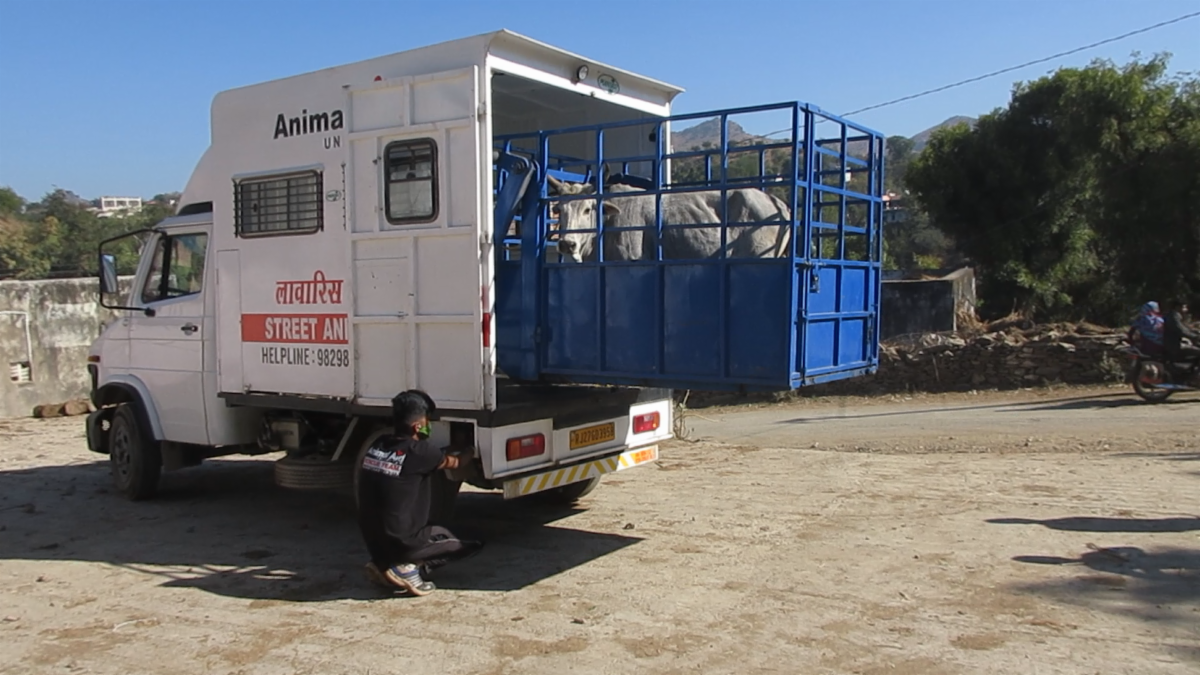
Introducing our brand new Large Animal Ambulance equipped with a hydraulic lift!

We sometimes find that bandaging a wound is the easier part of treatment. Often, what’s most difficult is moving the injured angel from the street to our hospital,especially when they are a 400 pound bull with a fracture.

We’ve been so lucky that our staff have had the strength and ability to work together in lifting really heavy animals even without an automatic lift. But it is amazing to lighten all their loads and most of all it makes rescue safer and stress-free for all.

Happiest thank you to the wonderful donors who made this possible!

Watch what happened when Penelope’s fractured pelvis healed!

The blood on her face was what alarmed our rescue team. But that wasn’t this beautiful girl’s worst problem.

Hit by a passing vehicle, Penelopehad alsosustained a fracture to her pelvis.Her facial laceration, although it caused a permanent droop to her eye, healed within just a few weeks. But her pelvis injury required 6 weeks of bed rest in order to heal.

Restricting her movement was necessary for healing, but boy was she glad when she was able to run again for the first time.Watch thisgorgeous wobbly whirlwind take the world by storm! 

Healing is beautiful. Please donate.

Jason’s fear melted when bandages eased his pain.

Jason’s wound was massive. All the skin of his front forelimb was pulled off when a vehicle tire caught the skin in its tread. His pain was hard to imagine, and we watched his face stilled with worry when we gently flushed his wound. But this little wonder-boy’s fear melted as soon as his wound was bandaged.

Rescuing him was so important. Because the world without Jason would be a little less beautiful.

For Someone “out there,” tomorrow will come because of you. Please donate


Cutest dog with no toes on one foot in India!

(6) Watch | Facebook

Delightful Jakeis a perfect family dog. He’sloving, playful, intelligent and friendly. A Labrador who was abandoned by his previous owners – possibly because of an old injury that has left him missing the toes on his hind leg. To his old owners he might have been less than perfect but we couldn’t disagree more!

Jake’s favourite thing to do is play – he carries his beloved bone toy over to every person who enters his area in the hope that they will engage in a game of tug-o-war, or even better, fetch! His damaged foot doesn’t slow him down at all. He’s a “people person” who also loves other dogs, and if you’re lucky enough to adopt him, your whole family will have an angel guarding your hearts for the rest of your lives.

Click here to adopt many 4 leggers at AAU:

Adopt | Adopt a resuced animal in India | Animal Aid Unlimited

 Regards Mark