The government has introduced landmark new legislation called “Lucy’s Law” which aims to tackle the low-welfare, high volume supply of puppies and kittens, by banning their commercial third-party sale in England.
When the law was first laid out in parliament in May 2019, Michael Gove, the minister for the cabinet office, said it was about “giving our animals the best possible start in life”.
“It will put an end to the early separation of puppies and kittens from their mothers, as well as the terrible conditions in which some of these animals are bred.”
But, what is exactly is Lucy’s Law and how does it protect cats and dogs? Here’s everything you need to know.
What is Lucy’s Law?
The new legislation cracks down on so-called puppy farms and requires animals to be born and reared in a safe environment, alongside their mother, and to be sold from their place of birth.
The rules, known as Lucy’s Law, were laid out in Parliament in May 2019 and officially came into force on 6 April 2020.
How does it protect puppies and kittens?
Lucy’s Law means that anyone wanting to get a new puppy or kitten in England must now buy direct from a breeder, or consider adopting from a rescue centre instead.
It also means that licensed dog breeders are required to show puppies interacting with their mothers in their place of birth.
If a business sells puppies or kittens without a licence, they could receive an unlimited fine or be sent to prison for up to six months.
Why was it introduced?
The law is named after Lucy, a Cavalier King Charles Spaniel who was rescued from a puppy farm in Wales where she was subjected to terrible conditions.
Puppy farms are located across the UK with most depending on third-party sellers or dealers to distribute often sick, traumatised, unsocialised puppies which have been taken away from their mother at just a few weeks old.
This often involves long-distance transportation, with the puppy or kitten suffering life-threatening medical, surgical, or behavioural problems which are passed on to unsuspecting new owners.
Lucy’s Law effectively removes the third-party dealer chain, resulting in all dog and cat breeders becoming accountable for the first time.
However, for anyone intent on buying, the government has shared some tips on warning signs to look out for.
Before visiting:
Research. Have a look at the seller’s profile and search their name online. If they are advertising many litters from different breeds, then this is a red flag.
Check contact details. Copy and paste the phone number into a search engine. If the number is being used on lots of different adverts, sites and dates then this is likely a deceitful seller.
Check the animal’s age. Puppies and kittens should never be sold under 8 weeks old – do not buy from anyone advertising a puppy or kitten younger than 8 weeks.
Check the animal’s health records. Make sure the seller shares all records of vaccinations, flea and worm treatment and microchipping with you before sale.
When visiting:
Make sure the mum is present. If mum is not available to meet, it’s unlikely the puppy or kitten was bred there. Beware of the seller making excuses as to why mum is not there e.g. she’s at the vet’s, asleep, or out for a walk.
Check there isn’t a ‘fake’ mum. Most fake mums don’t interact with the puppies as they fear the real mum returning.
Watch out for puppies or kittens labelled as ‘rescue’ but with much higher than expected price tags.
If you feel rushed or pressurised into parting with cash, this is a red flag.
Health problems observed at purchase are not normal and don’t be convinced otherwise.
Beware of offers to meet somewhere convenient e.g. car park or motorway services, or ‘shop front’ premises, common with rented properties just to make sales, and ‘sales rooms’ kept separate from nearby or onsite puppy farm.
How has the law been received?
Lucy’s Law has been welcomed by a number of animal welfare campaigners including Chris Sherwood, chief executive of the RSPCA, who said: “We’re incredibly pleased that the government is today introducing a ban on third-party sales of puppies and kittens. We believe that this, along with tougher licensing regulations that were introduced in 2018 and better education of the public on how to buy puppies responsibly, will help to crackdown on this cruel trade.
“We hope these laws will be properly enforced so that all dogs who are used for breeding and selling will live happy, healthy lives where their welfare is prioritised above profits.”
Marc Abraham, media vet, author, founder of Pup Aid and the Lucy’s Law campaign, added that he is “incredibly proud” to have led the 10-year campaign to ban cruel puppy and kitten dealers.
“I’d like to give a huge thanks to UK Government for passing this law, as well as every animal-loving parliamentarian, celebrity, welfare organisation, and member of the public that supported us,” Mr Abraham said.
“Lucy was an incredibly brave dog, and it’s right that her memory is honoured with such an important piece of legislation to help end puppy farm cruelty; protecting breeding dogs just like her, as well as cats, their young, and also unsuspecting animal-lovers from the dangers of irresponsible breeding and cruel puppy and kitten dealers.”
This Mumbai Boy Is Feeding Stray Animals Every Day Since Lockdown
For those who think that only human beings happen to face the difficulties and hardships of a distressing time like such, this veterinary student from Mumbai will help you shift your focus to just how bad animals have it.
COVID-19 has also had an equally scarring impact on the lives of stray animals across the nation and unfortunately like us they don’t have a voice. In a bid to help the suffering of these animals, Sagun Bhatjiwale is feeding these animals along with the help of some other good samaritans like himself.
Sagun is a part of he Nature’s Ally Foundation: an NGO dedicated to the welfare of birds, animals and trees, and his good deeds got him noticed on Instagram by account ‘nobordersshop’. The account shared his story, where he talks about how disheartening it is for him to see animals in such anguish
“My heart reaches out to the stray animals of the city, who face the scarcity of food and lack of water on a daily basis, struggling with extreme starvation and dehydration, as human activity has decreased to an unprecedented level.”
Sagun Bhatjiwale
Sagun also spoke about how people were also constrained to step out and help due to the restrictions of the lockdown.
“The shutting down of restaurants and eateries has completely stopped the usual leftovers that are discarded in garbage bins. I could not bear to see the stray animals suffer, so I decided to do something about it. I reached out for help, but no one was ready to risk coming out during the lockdown. I managed to convince a college canteen to help me cook the rice meal for the strays every morning.”
He organised for the food supplies from his own savings, but the bigger obstacle was to find transport to carry the food, however with the help of a local animal lover, Rakesh Gupta, Shagun managed to help feed over 100 dogs every day.
“I could not drive myself and I do not have a car of my own. Luckily a local animal lover, Rakesh Gupta, agreed to drive me. We would get up at 4 am, cook and pick up the rice meal from the canteen and start the no hunger drive. I served some food in plastic bowls and offered it to the strays, making sure to pick up the bowls after they were done. I encountered some pregnant dogs, some lactating mothers with their pups, and many old infirm and/or emaciated ones, who could not scout for food themselves. I used to feed 100-150 dogs per day. It was very heartening to see them eat hungrily.”
To see hungry animals finally eat in peace was the motivating factor for Shagun to do this almost every morning ever since the lockdown, despite being stopped by police officers.
“I spent 6-7 hours every morning doing this. I was stopped multiple times by policemen who questioned why I am out on the streets during the lockdown, but they allowed me to continue feeding the stray animals”
Posted on April 7, 2020 by Serbian Animals Voice (SAV)
WHO chief slams suggestion to use Africa as testing ground for Covid-19 vaccine!
The suggestion by two French medical experts to test coronavirus vaccines in Africa is racist, appalling and a relic of colonial mentality, head of the World Health Organization (WHO) Tedros Adhanom Ghebreyesus has said.
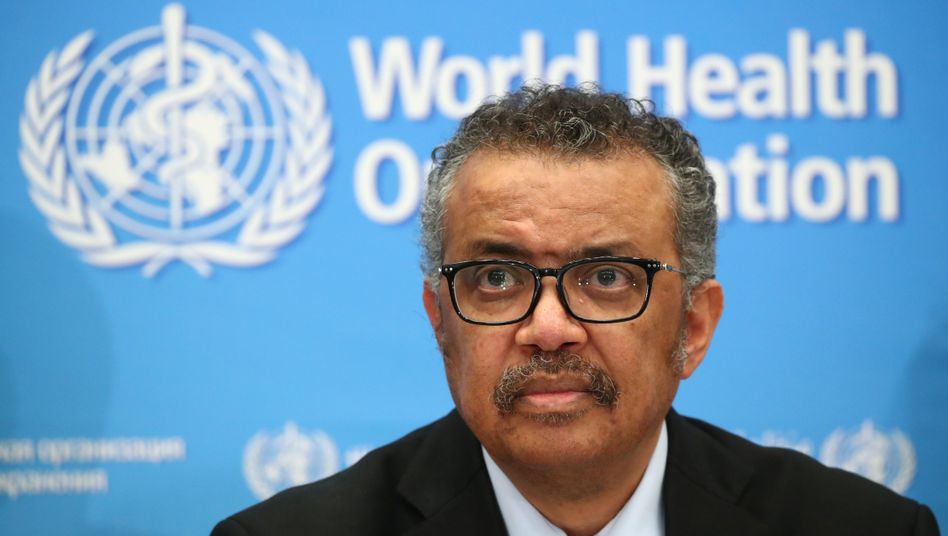
Director-General of the WHO Tedros Adhanom Ghebreyesus, attends a news conference on the coronavirus (COVID-2019) in Geneva, Switzerland February 24, 2020. REUTERS/Denis Balibouse
Jean Paul Mira and Camille Locht brought up the issue during an appearance on the French TV channel LCI last week, pointing to the lack of masks, treatments and ventilators on the continent.
Asked about it on Monday, Tedros said he was “appalled” by the “racist remarks.”
The hangover from the colonial mentality has to stop.
“Africa cannot and will not be a testing ground for any vaccine,” said the WHO chief, who hails from Ethiopia.
“We will follow all the rules to test any vaccine or therapeutics all over the world using exactly the same rules, whether it is in Europe, Africa or wherever.”
Tedros’s comments echo the condemnations made by several European footballers of African heritage soon after the French experts’ discussion aired.
African football icons including Didier Drogba, Samuel Eto’o and Demba Ba have reacted with rage after the two doctors suggested the continent could be used as a testing ground during the Covid-19 pandemic.
“Africa is not a playground for you,” tweeted Cameroonian-born former Barcelona striker Samuel Eto’o.
Didier Drogba — born in the Ivory Coast — called the suggestion “scandalous” and “absolutely disgusting,” adding that Africans should not be used as guinea pigs.
Republic of Congo midfielder Youssouf Mulumbu, who left Scottish champions Celtic last year and was a Player of the Year for West Bromwich Albion during their spell in the Premier League, added: “Africa is not a trash can or a laboratory. No coronavirus vaccine test in Africa.”
Outraged Senegal star Demba Ba shared the video on social media and called for uproar. “Welcome to the west, where white people believe themselves to be so superior that racism and debility become a banality,” wrote the former Premier League and current Basaksehir forward, urging: “TIME TO RISE.”
Despite its relative lack of protective equipment and technology compared to elsewhere, Africa has been far less affected by the pandemic to date.
Out of the 1.3 million documented cases of Covid-19 across the world, only 9,500 have been registered in Africa, along with just under 450 confirmed deaths.
By comparison, the US has had almost 350,000 cases and over 10,000 deaths.
And I mean…Bill Gates and Michael Bloomberg, now supported by Warren Buffett, with their foundations are the main financiers of the World Health OrganizationWHO.
The BGMF, at the top, finances the WHO’s five billion budget with around 700 million a year, together with the US and British governments, which otherwise keep the UN as short as possible or boycott it.
Among other things, the WHO defines which diseases are important for the world and when an epidemic has become a pandemic.
“The secret WHO boss is Bill Gates,” was the headline of the German weekly “Die ZEIT”, which admires the self-proclaimed human savior.
Conclusion: the head of the WHO reacted correctly and fairly, maybe his reaction cost him the job.
But because Bill Gates is the main shareholder of the WHO (the Bill Gates Foundation is one of the main donors of the WHO), I recommend testing the vaccine on him and his children first.
This means that Bill Gates’ children can be sure that the vaccine is safe.
Many of the world’s deadliest outbreaks, including COVID-19, SARS and bird flu – are directly linked to the exploitation of animals by humans.
Summarized in our latest Surge Media campaign released amid the global coronavirus pandemic, and explored in greater depth in an upcoming white paper, Surge has brought together findings from the world’s leading authorities on infectious diseases including the World Health Organisation (WHO), Centers for Disease Control and Prevention (CDC), Food and Agriculture Organization of the United Nations (FAO) and World Organisation for Animal Health (OIE).
The CDC warns that three out of four new or emerging infectious diseases in people come from animals, while the WHO, FAO and OIE have previously stated that increased demand for animal protein is one of the main risk factors of a pandemic.
The HIV virus started because of humans eating chimpanzees and the recent Ebola outbreak started because of people eating bats. Furthermore, BSE and the human equivalent vCJD is believed to have started in the UK because farmers were feeding dead infected cattle back to cattle, forcing them to cannibalise, and an ancestral strain of swine flu was traced back to a pig farm in North Carolina.
Surge also hopes that shedding light on the global prevalence of zoonotic outbreaks will help shift blame away from certain countries and cultures associated with more recent diseases, such as China where both COVID-19 and SARS are believed to have originated from so-called ‘wet’ markets according to the most widely accepted theories.
In light of recent attacks against individuals who appear Asian, Surge urges the public to understand that diseases occur all over the world – including the US (HIV and swine flu) and the UK (BSE / vCJD) – and their places of origin can be different to where their major outbreaks were recorded.
Not all of the world’s zoonotic outbreaks can be attributed to the intentional exploitation of non-human animals, but enough have been to warrant a discussion about the way we use others. The transmission of zoonotic diseases to humans is not entirely preventable as there is always a chance that zoonotic viruses, bacteria and other pathogens can be passed to humans in situations where there is no direct exploitation of animals, but Surge posits that the risk would be considerably lower than, taking the example of swine flu, in an intensive farming environment where huge numbers of animals are brought into close proximity with humans in a way that would virtually never happen in any other setting, or in the case of BSE, where cows would never naturally cannibalise other cows.
Moving away from the use of non-human animals will greatly lower the risk of future outbreaks of unknown zoonotic diseases, and save not only non-human animal lives, but those of countless thousands of humans. While it is impossible to predict how many lives could be saved this way, COVID-19 has already killed around 25,000 worldwide to-date, while other recent outbreaks like SARS, swine flu and avian flu combined have killed hundreds of thousands.
Take PETA’s Cruelty-Free Shopping Guide along with you next time you head to the store! The handy guide will help you find humane products at a glance. Order a FREE copyHERE
Searching for Cruelty-Free Cosmetics, Personal-Care Products, Vegan Products, or more? Click HERE to search.
Posted on April 6, 2020 by Serbian Animals Voice (SAV)
A four-year-old female Malayan tiger at the Bronx Zoo has tested positive for the coronavirus.
The tiger, named Nadia, is believed to be the first known case of an animal infected with Covid-19 in the US.
The Bronx Zoo, in New York City, says the test result was confirmed by the National Veterinary Services Laboratory in Iowa.
Nadia, along with six other big cats, is thought to have been infected by an asymptomatic zoo keeper.
The cats started showing symptoms, including a dry cough, late last month after exposure to the employee, who has not been identified.
“This is the first time that any of us know of anywhere in the world that a person infected the animal and the animal got sick,” Paul Calle, the chief veterinarian at the zoo, told Reuters news agency on Sunday.
There have been isolated instances of pets testing positive for the coronavirus elsewhere in the world, but experts have stressed there is no evidence they can become sick or spread the disease.
Mr Calle said he intends to share the findings with other zoos and institutions researching the transmission of Covid-19.
“We tested the cat [Nadia] out of an abundance of caution and will ensure any knowledge we gain about Covid-19 will contribute to the world’s continuing understanding of this novel coronavirus,” the zoo said in a statement.
Nadia, her sister Azul, as well as two Amur tigers and three African lions who showed symptoms, are all expected to make a full recovery, the zoo said.
The big cats did have some decrease in appetite but “are otherwise doing well under veterinary care and are bright, alert, and interactive with their keepers”, it said.
The zoo said it is not known how the virus will develop in animals like tigers and lions since various species can react differently to new infections, but all the animals will be closely monitored.
None of the zoo’s other big cats are showing any signs of illness. All the tigers showing symptoms were housed in the zoo’s Tiger Mountain area. It is unclear if the others will be tested.
All four zoos run by the Wildlife Conservation Society in New York City, including the Bronx Zoo, have been closed to the public since 16 March. New measures will now be put in place to protect the animals and their caretakers at all the facilities.
This coronavirus was first detected in humans in the Chinese city of Wuhan late last year.
The coronavirus (called Sars-CoV-2, which causes the disease Covid-19) is thought to have originated in wildlife and been passed to humans via a live animal market in Wuhan.
The pandemic has been driven by human-to-human transmission, but the infection of Nadia raises new questions about human-to-animal transmission.
There have been less than a handful of isolated reports of companion animals testing positive for coronavirus, including two dogs in Hong Kong.
There is “no evidence that any person has been infected with Covid-19 in the US by animals, including by pet dogs or cats,” the zoo’s statement noted.
Dr Sarah Caddy, Veterinarian and Clinical Research Fellow at the University of Cambridge, is among experts to respond to the reports.
“It is surprising that the tiger has become infected with what must have been a fairly low dose of virus – we can assume the tiger did not have continual close contact with the asymptomatic zoo keeper,” she said about the transmission.
“It is also interesting that the tiger showed clinical signs consistent with Covid-19 in humans. Although scientific proof is lacking, the chance this is just a coincidence is low.”
Conservation experts have warned that the virus could pose a threat to some wildlife like the great apes – and have said measures are needed to reduce the risk of wild gorillas, chimps and orangutans.
(CNN)Nadia, a tiger at the Bronx Zoo in New York, has become the first of her kind to test positive for the coronavirus.
The 4-year-old female Malayan tiger tested positive after developing a dry cough and is expected to recover, the Wildlife Conservation Society’s Bronx Zoo said in a news release.
Samples from Nadia were taken and tested after the tiger — and five other tigers and lions at the zoo — began showing symptoms of respiratory illness, according to the United States Department of Agriculture (USDA). No other animals at the zoo are showing symptoms.
“Though they have experienced some decrease in appetite, the cats at the Bronx Zoo are otherwise doing well under veterinary care and are bright, alert, and interactive with their keepers,” the zoo said.
“It is not known how this disease will develop in big cats since different species can react differently to novel infections, but we will continue to monitor them closely and anticipate full recoveries.”
The Covid-19 testing that was performed on Nadia was performed in a veterinary school laboratory and is not the same test used for people, Dr. Paul Calle, the zoo’s chief veterinarian, posted on Facebook.
The animals were infected by a zoo employee who was “asymptomatically infected with the virus” while caring for them, according to the zoo. The Bronx Zoo has been closed to the public since March 16.
Anyone sick with the coronavirus is being advised to minimize contact with animals, including pets, until more information is known about the virus, the USDA said.
CNN’s Aaron Cooper and Sarah Jorgensen contributed to this report.




 Serbian Animals Voice (SAV)
