Posted on April 1, 2020 by Serbian Animals Voice (SAV)
U.S. senators scrutinize meat packers’ big profits during pandemic
By Tom Polansek
CHICAGO (Reuters) – U.S. senators are calling for investigations of record profit margins for beef processors like Tyson Foods <TSN.N> and Cargill, after ranchers complained surging meat prices due to coronavirus hoarding did not translate into higher cattle prices.
Futures prices for cattle have tumbled during the outbreak, worrying farmers as the U.S. economy heads into a downturn and fueling questions about whether the market run by CME Group <CME.O> is an effective tool for risk management.
Senator Charles Grassley of Iowa wrote on Twitter that U.S. Department of Agriculture, Department of Justice and Commodity Futures Trading Commission probes may be needed to determine why ranchers did not benefit from soaring meat demand.
“Beef is flying off grocery shelves but farmers are seeing prices go down,” Grassley said. “If packers are illegally manipulating markets during crisis, we need USDA & DOJ & CFTC to investigate + help farmers. Four companies control 80% of market & they’re taking advantage.”
Processors’ margins leapt to more than $600 per head of cattle last week, HedgersEdge.com said. But cattle producers are operating at a net loss, four U.S. senators from South Dakota, North Dakota and Montana told the Justice Department in a letter that called for a price-fixing investigation.
Cargill said it is a committed buyer in the cash market for cattle, which was less impacted than futures. Tyson said it wants cattle producers to succeed and paid them a premium last week.
“This is an uncertain and unprecedented time, where food service beef demand has come to an immediate and virtual standstill, while retail demand has increased,” Tyson said.
USDA said it was working with CFTC to ensure transparency and integrity in agricultural markets.
Live cattle futures <LCJ0> dropped 3.5% on the Chicago Mercantile Exchange over the last three weeks amid worries the virus would shut slaughterhouses, while prices for beef that meat companies ship to wholesale buyers jumped about 20%.
Futures sank as managed funds liquidated long positions, or bets prices will rise, said Cassie Fish, a beef expert who formerly worked for Tyson. It was the market’s biggest event-driven decline in more than 45 years, she said.
“They decided to get out,” Fish said. “It was like a stampede.”
Farmers and processors use futures to offset the risk of producing meat, and futures are intended to reflect the underlying cash market. April cattle futures <LCJ0> ended last week at a record $18 to $19 under the cash market, according to consultancy AgResource.
CME Group said it is committed to improving its livestock markets. https://finance.yahoo.com/news/u-senators-scrutinize-meat-packers-201923580.html
Posted on April 1, 2020 by Serbian Animals Voice (SAV)
We recently did a post where it was suggested (not by us – we just reported it) that Bear saliva could be used instead of Bear bile as a use for the Coronavirus.
Over the last few days we have been in direct contact with Jill Robinson – Founder and CEO at ‘Animals Asia’ regarding this issue. AA have investigated the information that we sent; and today (1/4/20) Jill has come back to us on the issue; with a formal AA statement from Shaun Thomson BVSc MRCVS, Senior Veterinary Surgeon at the AA Vietnam Bear Rescue Centre.
Here is a copy of the mail sent to us from Jill and Shaun.
Dear Mark, I’m now posting a statement below from Shaun, our Senior Vet in Vietnam – and cc’ing Shaun too for any follow up you might have.
As an organisation we do not endorse this idea and suggest that reliance is placed on the herbal and synthetic alternatives to bear bile and saliva, healing without harm.
“As health-care and other industries work to replace, reduce and refine their use of animals in product testing and human health care, it is incredibly important that we critically consider the expected outcomes of any animal model or product used in an attempt to save human lives.
Currently, there is little evidence that any bear product provides a health benefit that can’t be obtained through other means. We know that the active component of bear bile has physiologic effects in certain circumstances, but its synthetic and other herbal counterparts have those effects also.
As for bear saliva providing antibodies to coronavirus, there is no good evidence to suggest that the claims made are supported. There are 7 different coronaviruses currently known to affect people and each of them is their own serotype. This means that each is neutralised by a different type of antibody and therefore resistance to one serotype does not confer immunity to another serotype. There is no evidence that bears can mount an immune response to human coronaviruses and therefore no evidence that we would expect to find antibodies to any human coronavirus in their saliva.
Bear saliva, like most animals, contains a lot of different microbes. The way microbes stop other microbes from attacking them is by making antimicrobials. A bacteria found in bear saliva has been found to make a chemical that works as an antibiotic against a bacteria that is a common human pathogen. This chemical is being evaluated for its potential use as an antibiotic, but this in no way supports that bear saliva is in anyway effective against coronavirus (or any other infections). Using bear saliva to treat a susceptible infection could be likened to using mouldy bread to treat an infection susceptible to penicillin.
The way to get antibodies for SARS-COV-2 to then treat people, in a way that makes mechanistic sense and has shown to work for other infections, is to take plasma from recovered people and give it to those that are suffering from COVID-19. This is already being done. This method provides a safer, more effective solution and requires the use of absolutely no animals. There is always the risk of blood borne infections, but with modern screening the chances of this are incredibly low. These risks are also likely significantly lower than problems that could be caused by the administration of bear saliva. Donating plasma allows those now immune to the disease to support their community to get healthier in a better way.”
Shaun Thomson BVSc MRCVS
Senior Veterinary Surgeon
Vietnam Bear Rescue Centre
Animals Asia
Posted on April 1, 2020 by Serbian Animals Voice (SAV)
You get up early in the morning and the first thought is whether corona symptoms have appeared overnight.
If you do not have it yet, you can count yourself lucky because the health system and governments, apart from causing panic, are unable to do anything else.
That said, regardless of whether you have it or not, you are medically on the ass actually.
The virus was officially reported to the WHO by China on December 31, 2019. Every country in the world has this duty when an epidemic breaks out.
Today China and South Korea have the virus under control so well that we will soon get protective masks from China. There haven’t been any in Germany for three months and if we get them now it’s too late.
The same applies to the test liquid of the corona virus, which is also produced in China, and cannot be delivered at the moment because all countries need it.
You get the feeling that you are at the mercy, except to lock us in, institutes, governments and laboratories are not even able to tell how it will go on. In the Middle Ages the church took over the role of science, today the economy does it.
There was something else, oh yes it was the Robert Koch Institute that told us that the 2017/2018 flu wave was the deadliest in 30 years.
Yes indeed! The season has been the deadliest in the past 30 years. According to this, an estimated 25,100 people died from influenza in the reporting period (only in Germany) Why didn’t we actually cause panic at the time? We reacted as if this death rate was the most normal in the world.
For 41 years, no thought has been given to any pandemic. Maybe just because it wasn’t a real deal, or because it was about African countries.
Since the outbreak of the Corona Virus, the message has been booming in the animal rights scene: “Stop eating meat, stop preserving wildlife markets in China”.
China is again the main culprit for the pandemic.
Of course, China and the Far East in general is responsible for the worst, most hideous forms of cruelty to animals this planet has ever seen, and on a large scale.
Most people, however, have not understood that China, as the main culprit for the development of the Corona Virus (even if it is true) is one thing. The other side is the inability of most governments to take corrective action against the virus.
It is a welcome excuse if the Chinese are blamed for Corona but no one blames EU that does not send help to Italia.
The German government is rubbing its hands that only the Chinese are found guilty, but not Merkel for doing nothing, for panic and acting too late.
There is a nice Chinese saying: “first solve the problem and then the question of guilt”.
As long as we only deal with the question of guilt, we run the risk of a ridiculous corona mass death due to a totally corrupt world elite that sucks humanity to the bone.
Officially, the panic and the whole breakdown is justified by the fact that humans do not yet have antibodies against this corona virus.
Well, if it is actually so unnaturally new, we should perhaps ask again in the bioweapons laboratories where this pathogen in particular is currently available.
Posted on March 30, 2020 by Serbian Animals Voice (SAV)
With thanks to Daniel H. for passing this information over to us.
We have strong reason to believe that the antibodies in bear saliva can be used to cure coronavirus, INSTEAD of bear bile injections, this will obviously avoid unnecessary pain to wildlife, if saliva can be used instead of bear bile to cure coronavirus.
Sincerely,
Daniel
The Chinese government has officially recommended to use bear bile injections to cure coronaviraus. Extraction involves an unnecessary painful procedure to the donor animal. We have reason to believe the antibodies in bear saliva will have the same medicinal effect, thus a cure can be provided without the unnecessary pain endured by the animal! Please encourage more research!
Posted on March 30, 2020 by Serbian Animals Voice (SAV)
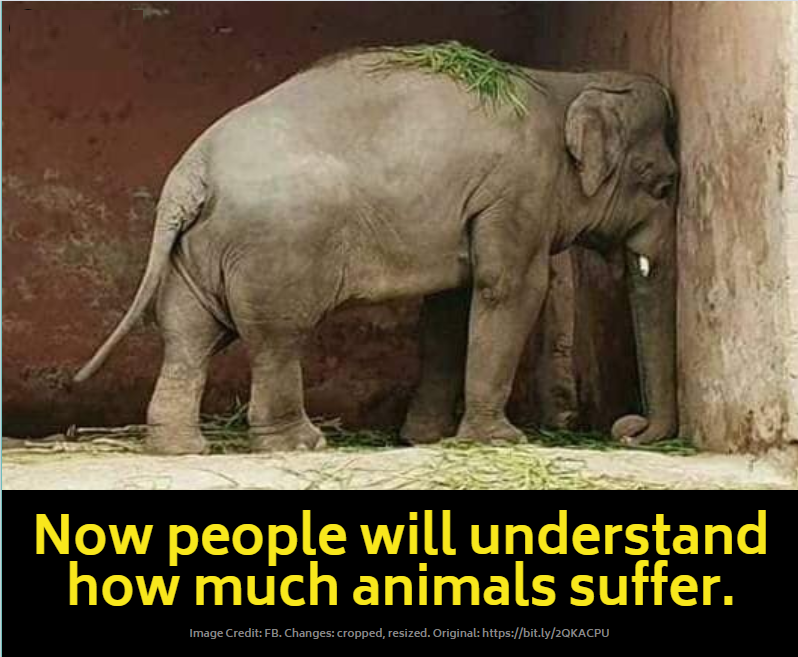
No! they won’t.
As soon as everything is over with the Corona invasion, animals will be eaten again, animals will suffer for tourist attractions again, animals will live in isolation because people want it to.
And because man is the only animal that does not learn from his mistakes and only cares about his own survival on earth.
Does it cost what it costs for other animal life..
This video is a reupload of a Dr. Michael Greger 2008 speech, where he covers the cause of infectious diseases and the likelihood of a pandemic almost identical to the coronavirus (Covid-19).
Posted on March 30, 2020 by Serbian Animals Voice (SAV)
WAV Comment:
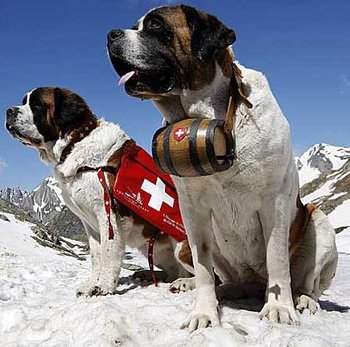
For our non European friends, the beautiful and majestic St. Bernard dog is always associated with the rescue of persons trapped in avalanches; on mountains etc. They are always shown carrying the Brandy barrel which contains the spirit which is given to rescued persons to ‘warm them up’. You can see a typical few pictures below.
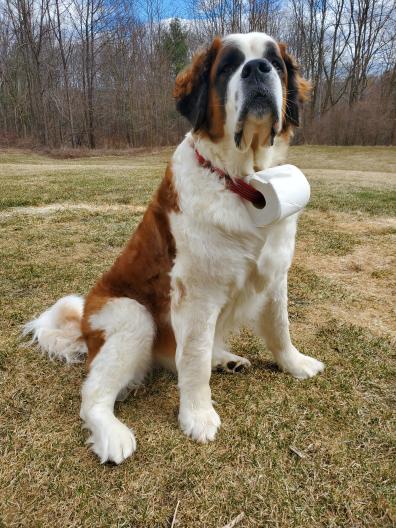
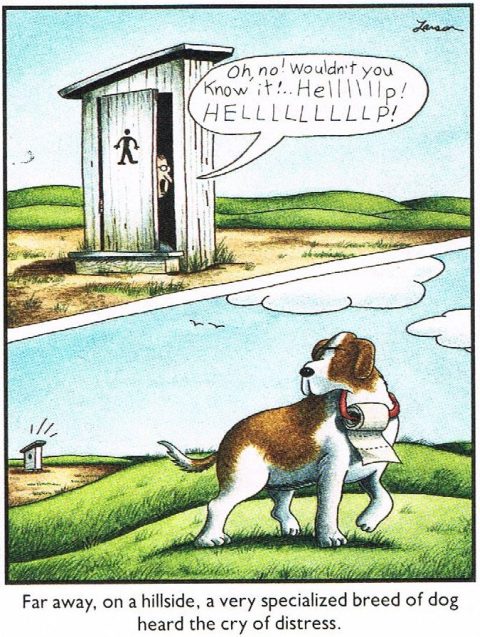
What with the Coronavirus now and what appears to be an obsession with toilet rolls; even though dysentery is not part of the virus problems; people seem to have gone into overdrive to obtain toilet rolls ! – why, don’t ask us !
So here is the latest fun pictures of the ‘rescue St. Bernards’; all kitted out with a toilet roll rather than the brandy barrel.
Here is further information on the beautiful dogs and their association with Swiss mountain rescue:
The Great St Bernard Pass (French: Col du Grand St-Bernard, Italian: Colle del Gran San Bernardo, German: Grosser Sankt Bernhard) is the third highest road pass in Switzerland, at an elevation of 2,469 m (8,100 ft). It connects Martigny in the canton of Valais in Switzerland with Aosta in the region Aosta Valley in Italy. It is the lowest pass lying on the ridge between the two highest mountains of the Alps, Mont Blanc and Monte Rosa. The pass itself is located in Switzerland in the canton of Valais, very close to Italy. It is located on the main watershed that separates the basin of the Rhône from that of the Po.[2]
Straddling the highest point of the road, the Great St Bernard Hospice was founded in 1049. The hospice later became famous for its use of St Bernard dogs in rescue operations.
The Great St Bernard Hospice (shown above) – (Italian: Ospizio del Gran San Bernardo, German: Hospiz auf dem Grossen St. Bernhard, French: Hospice du Grand St-Bernard), is a hospice or hostel for travellers in Switzerland, at 2469m altitude at the Great St Bernard Pass in the Pennine Alps. The border with Italy is only a few hundred metres to the south.
The first hospice or monastery was built in the 9th century at Bourg-Saint-Pierre, which was mentioned for the first time around 812-820. This was destroyed by Saracen incursions in the mid-10th century, probably in 940, the date at which they also occupied Saint-Maurice. Around 1050, Saint Bernard of Menthon, archdeacon of Aosta, regularly saw travellers arriving terrorised and distressed, so he decided to put an end to mountain brigandage in the area. With this in mind, he founded the hospice at the pass which later bore his name (it was originally dedicated to St Nicholas). The church’s first textual mention is in a document of 1125. The hospice was placed under the jurisdiction of the bishop of Sion, prefect and count of Valais, thus explaining why the whole pass is now in Swiss territory.
The St Bernard dog breed was created at the hospice from cross-breeding dogs, probably those offered by families in Valais in the 1660s and 1670s. The first definite mention of the breed is in 1709. The breed was originally raised to provide guard dogs for the hospice, before they became mountain rescue dogs. The St Bernards were specially bred and trained for the role of mountain rescue because they were sufficiently strong to cross deep snow drifts and had the capacity to track lost travelers by scent. The first evidence that the dogs were in use at the monastery is in two paintings dating to 1690 by Salvatore Rosa.
The dogs are often depicted as carrying a small flask of brandy around their necks to revive travelers. While this appears to have generally been a 19th century myth,[1] there was apparently at least one dog that really did. In The Percy Anecdotes, by Thomas Byerley, published in 1823, the following anecdote appears, and was often quoted in other books in the 19th century:
The breed of dogs kept by the monks to assist them … has been long celebrated for its sagacity and fidelity. All the oldest and most tried of them were lately buried, along with some unfortunate travellers, under a valanche [sic]; but three or four hopeful puppies were left at home in the convent, and still survive. The most celebrated of those who are no more, was a dog called Barry. This animal served the hospital for the space of twelve years, during which time he saved the lives of forty individuals. His zeal was indefatigable. Whenever the mountain was enveloped in fogs and snow, he set out in search of lost travellers. He was accustomed to run barking until he lost breath, and would frequently venture on the most perilous places. When he found his strength was insufficient to draw from the snow a traveller benumbed with cold, he would run back to the hospital in search of the monks….
When old age deprived him of strength, the Prior of the Convent pensioned him at Berney, by way of reward. After his death, his hide was stuffed and deposited in the museum of that town. The little phial, in which he carried a reviving liquor for the distressed travellers whom he found among the mountains, is still suspended from his neck.[2]
The last recorded rescue by one of the dogs was in 1955, although as late as 2004 eighteen of the animals were still kept at the Hospice for reasons of sentiment and tradition. In 2004, the breeding of the dogs was undertaken by the Barry foundation at Martigny, and the remaining St Bernards were transferred there from the Hospice. They remain a tourist attraction, and a number of the animals are temporarily relocated from Martigny to the Hospice during the summer months.






 Serbian Animals Voice (SAV)