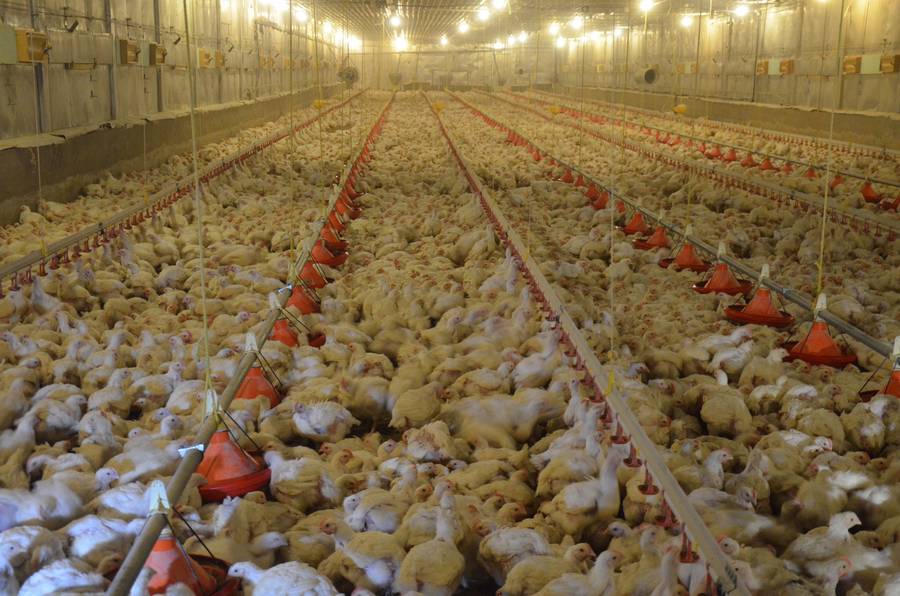
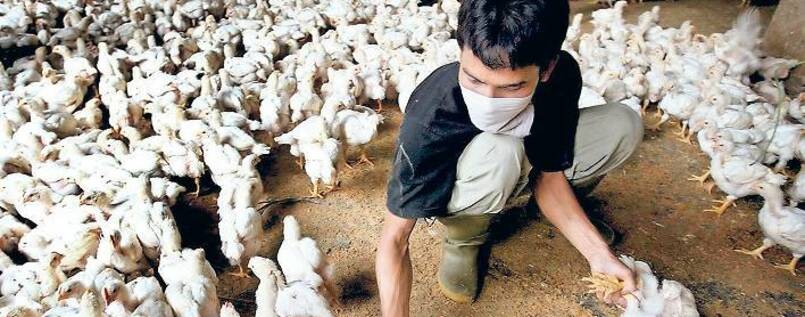
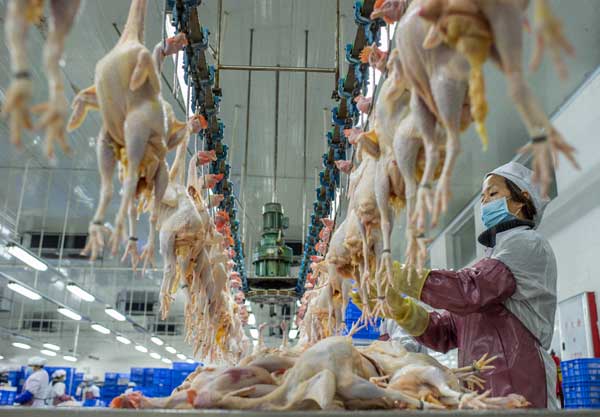
Tofu Never Caused a Pandemic !

With thanks as always to Stacey at ‘Our Compass’ for sending this over to us.

Our Compass | Our Compass (our-compass.org)

Regards Mark

Source YouTube , Plant Based News

VEGAN 2020 – The Film is sponsored by abillion – where you can find recommendations and review vegan-friendly restaurants near you, food products and cruelty-free beauty items.

USA: Congress’s omnibus package includes big wins for animals

Breaking news: Congress’s omnibus package includes big wins for animals · A Humane World (humanesociety.org)

Breaking news: Congress’s omnibus package includes big wins for animals

The appropriations bill and accompanying coronavirus relief/stimulus package for fiscal year 2021 now advancing through Congress will bring critical and much-needed support to millions of Americans. We are also pleased to report that the package, which funds federal agencies, includes a number of wins for animals, including horses, wildlife, companion animals and animals in research.

We’ve advocated for these and other items throughout 2020. Here, in brief, are key measures in the package that benefit animals:

Horse racing: The package includes the Horseracing Integrity and Safety Act (S. 4547/H.R. 1754) introduced by Sens. Mitch McConnell, R-Ky., Kirsten Gillibrand, D-N.Y., Martha McSally, R-Ariz., and Dianne Feinstein, D-Calif., and Reps. Paul Tonko, D-N.Y. and Andy Barr, R-Ky., to address the widespread doping of racehorses and unsafe track conditions that have been key contributing factors in frequent equine fatalities on American racetracks.

Horse slaughter: It renews the annual provision that “defunds” USDA inspections at domestic horse slaughter plants, effectively preventing those plants from reopening in the United States.

Wild horses and burros: It provides an increase of more than $14 million for the Bureau of Land Management to implement non-lethal management of wild horses and burros, featuring PZP, a humane, reversible fertility control vaccine. It also renews language preventing horses under the care of the BLM and the U.S. Forest Service from being sent to slaughter for human consumption.

Horse soring: It doubles the FY 2020 funding level for the U.S. Department of Agriculture to enforce the Horse Protection Act to $2.09 million to better curb cruel “soring” of Tennessee walking horses and related breeds, and it calls for the agency’s Inspector General to audit the HPA enforcement program. The package makes it clear that the authority of USDA inspectors supersedes that of industry inspectors and urges the agency to reinstate the HPA rule that was finalized but shelved in January 2017. The rule would end the failed system of industry self-policing and use of devices integral to soring.

Wildlife trafficking and Endangered Species Act: It increases investment in key Department of Interior law enforcement and wildlife and biodiversity conservation programs and continues investment in international conservation efforts to combat the transnational threat of wildlife poaching and trafficking and to protect imperiled species.

Live wildlife markets and disease spread: It includes a study on the impacts of wildlife markets on the emergence of new diseases, as well as increased funding to prevent the transmission of diseases from animals to humans (known as zoonotic diseases), through key global health security programs to build the capacity of public health institutions and organizations in developing countries for the prevention, treatment and control of zoonotic diseases..

Trophy hunting: It requires the U.S. Fish and Wildlife Service to provide Congress with the briefing mandated in the FY 2020 appropriations package, which the agency failed to complete, on its current policy for allowing imports of sport-hunted trophies of species like lions and elephants into the United States and to explain how these imports benefit the survival of these imperiled species after Congress expressed doubt due to continuing population declines.

Marine mammals and right whales: It increases funding to protect critically endangered North Atlantic right whales, to sustain the Marine Mammal Commission, a key, independent oversight agency, and to fund a program that coordinates nationwide emergency response for stranded, sick, injured, distressed or dead marine mammals.

Disaster plans: It directs the USDA to start the rulemaking process on lifting the stay on the rule requiring facilities regulated by the Animal Welfare Act, such as puppy mills and roadside zoos, to have emergency response plans for the animals in their care.

Animals in research: It directs the Department of Veterans Affairs to submit a plan to Congress by the end of 2021 on how it plans to reduce or eliminate the use of dogs, cats and non-human primates in its research within five years; encourages the use of non-animal testing methods by the Food and Drug Administration for new drugs; directs that USDA-run laboratories housing animals be inspected for compliance with the Animal Welfare Act; and renews the bar on licensing “Class B random source” dealers, who were notorious for obtaining cats and dogs through fraudulent means such as pet theft to sell them into research.

Domestic violence shelters: It provides $2.5 million—up from $2 million in FY 2020—to expand the PAWS grant program that provides funding for shelter and transitional housing services for survivors of domestic violence and their companion animals.

Slaughter plant line speed: It directs the USDA to review the impacts of waivers granted for increasing line speeds—the speeds at which animals are killed—at slaughter plants and report back to Congress within 90 days. It also requires that the USDA consult with the Occupational Safety and Health Administration on any future line speed increases.

Plant-based protein research: It promotes USDA-funded research into innovations in plant-based protein.

Animal fighting: It provides an additional $500,000 for USDA’s Inspector General to better enforce federal law against dogfighting and cockfighting.

Dog and cat meat: It urges the USDA to move forward with an international agreement to ban the trade of dog and cat meat worldwide.

Equine therapy: It provides no less than $1.5 million in the National Veterans Sports Program for equine therapy to support veterans’ mental health and help reduce PTSD-related anxiety.

Animal Welfare Act enforcement: It directs the USDA to ensure that each AWA noncompliance observed by an inspector is documented on an inspection report, and to make sure, as it restores AWA and HPA records purged from the agency’s website in 2017, that databases are at least as searchable—in function and content—as they were before the purge. It also encourages the USDA to conduct robust enforcement to ensure that online dealers selling dogs have the necessary license under the Animal Welfare Act.

These provisions are a sign of genuine progress in our work to push the frontiers of animal protection, and we are grateful to the members of Congress and our partners who worked with us to ensure they were included in the appropriations package. However, some provisions included in the bill, like one that urges the National Institutes of Health and the Air Force to seek “alternative arrangements for housing” of retired research chimpanzees currently residing on Alamogordo Air Force Base, but does not explicitly require those chimpanzees be transported to sanctuary, highlight that Congressional oversight will be needed to ensure that the right steps are taken for animals as the new administration steps into place. We hope the Biden administration will move more expeditiously to transfer these chimpanzees to sanctuary. And we will work hard to ensure that all these measures are approved this week.

P.S. The Humane Society of the United States and Humane Society Legislative Fund are committed to ending the cruel practice of horse soring. Fortunately, the omnibus/coronavirus package did not include a retrogressive measure on soring that was ill-conceived, ill-timed and ineffectual. Virtually all other stakeholders working to end soring agree with us that this proposal would have seriously set back anti-soring efforts, including the American Association of Equine Practitioners, American Horse Council and its 30 groups, American Veterinary Medical Association, Animal Welfare Institute, American Society for the Prevention of Cruelty to Animals, Friends of Sound Horses and Humane Society Veterinary Medical Association. We and these groups will instead push for the Biden administration to swiftly reinstate the final rule on soring that was put on hold at the beginning of 2017 and which will end the use of devices integral to soring and the conflict-ridden industry self-policing scheme. We will also continue to press Congress to codify those essential reforms and add stronger penalties and even more robust enforcement funding to finally end this scourge.

Sara Amundson is president of the Humane Society Legislative Fund.

European Parliament takes a strong stance to protect the welfare of wild-caught fish.

European Parliament takes a strong stance to protect the welfare of wild-caught fish

25 January 2021

On Thursday 21 January, the European Parliament adopted the own-initiative report “More fish in the seas?” by French MEP Caroline Roose (Greens/EFA). In this report, the European Parliament calls for strong measures to protect not only the oceans but also the welfare of wild-caught fish.

Every year, over one trillion wild fish are captured, with a significant majority being killed for food. This far outnumbers any animal farmed for food. Despite scientific evidence that fish are sentient (= having the capacity to suffer fear, pain or distress as well as a sense of well-being), public concern and consumer awareness about fish and their welfare is far behind that of other animals. 

Eurogroup for Animals, therefore, welcomes that the European Parliament has highlighted the need to protect the welfare of fish and marine biodiversity by adopting the report by MEP Roose. The report focuses attention on the urgency of setting fishing quotas at sustainable levels, expanding and improving Marine Protected Areas (MPAs), and restricting bottom trawling, together with fishers. 

The report further emphasises that fish and other living organisms have intrinsic value themselves. It also makes recommendations to restrict the harmful fishing technique of bottom trawling, which often causes exhaustion, injury and asphyxiation to fish and can have a significant impact on seabed fauna.

Moreover, the report by MEP Roose acknowledges and calls for the reduction of injuries and stress during capture: For wild-caught fish, the end of each life is commonly exceptionally stressful due to practices that would not be allowed in any kind of terrestrial animal production. During the capture process, fish face various hazards and are often chased to exhaustion, crushed, asphyxiated, injured due to interaction with fishing gear, eaten by predators while trapped, or subject to decompression injuries as they are brought to the surface.

MEP Roose states: “I very much welcome the adoption of this report and the fact that the text adopted by the Fisheries Committee has been improved in plenary. This is true in particular concerning the establishment of truly protected marine protected areas and concerning the most harmful fishing techniques for marine ecosystems and animals.”

With this report, the European Parliament calls on the European Commission to consider these requests and to respond to them in a new action plan to preserve fisheries resources and protect marine ecosystems. It is now up to the Commission to show how seriously they take their promise to follow-up on this report to tackle the damaging standard practices in wild fisheries. 

Earlier this month, Eurogroup for Animals also published a groundbreaking report which sheds light on the various hazards faced by wild fish throughout the process of capture, through to handling and death, and proposes measures and strategies to reduce unnecessary suffering.

food on wheels

We keep trying to open the packaging
Then the food comes on wheels

regards and good night, Venus


England: Viva! Have A New Website – Check It Out.

WAV Comment – Viva is based in Bristol, England; but has now also set up a major facility in Poland – see the Viva! Poland link below to enter the site; there should also be a ‘translate’ link for you to use if you wish.

Viva! Have now set up a brand new website, and we have provided some links to areas below.  Take a trip and investigate further one of the UK’s leading Vegan animal organisations:

From Viva !:

2021 – the perfect opportunity to clear away the cobwebs and make way for new beginnings. And that’s exactly what we’ve done with our new website.

We have been busy working away behind the scenes on a brand new website, and we really do mean brand new!

We have developed four stylish and vibrant sections of the new site, which represent the four key tenets of our work; Viva! Animals, Viva! Health, Viva! Planet and Viva! Lifestyle. Each section is beautifully designed and colour coded, with current, fully-referenced content.

When it comes to web, first impressions are everything. It takes web users just 50 milliseconds to form an opinion about a website. So your opinion matters to us!

Take a stroll (and a scroll!) through the new website and let us know what you think!

From WAV – we have supplied the following short cut links for you:

Explore:

Viva! – The Vegan Charity

Animals – Animals | Viva! – The Vegan Charity

Health – Vegan Health & Nutrition Based on Science | Viva! Health

Planet – Planet | Viva! – The Vegan Charity

Lifestyle – Lifestyle | Viva! – The Vegan Charity

Who we are – Who we are | Viva! – The Vegan Charity

Meet the Team – Staff | Viva! – The Vegan Charity

Media Centre – Media centre | Viva! – The Vegan Charity

Viva! Poland – Viva! Walczymy o konie i inne zwierzęta. Dbamy o bezdomne psy i koty.

Regards Mark

Explore:

Viva! – The Vegan Charity

Animals – Animals | Viva! – The Vegan Charity

Health – Vegan Health & Nutrition Based on Science | Viva! Health

Planet – Planet | Viva! – The Vegan Charity

Lifestyle – Lifestyle | Viva! – The Vegan Charity

Who we are – Who we are | Viva! – The Vegan Charity

Meet the Team – Staff | Viva! – The Vegan Charity

Media Centre – Media centre | Viva! – The Vegan Charity

Viva! Poland – Viva! Walczymy o konie i inne zwierzęta. Dbamy o bezdomne psy i koty.

Kenya: Stop the Illegal Wildlife Trade: The former naval officer now leading Kenya’s fight against poaching.

Stop the Illegal Wildlife Trade: The former naval officer now leading Kenya’s fight against poaching

With tourism on pause due to coronavirus, Kenya Wildlife Service has stepped up its battle against illegal wildlife trade, says Director General Brigadier John Waweru

Last year, for the first time since 1999, Kenya recorded zero rhino deaths to poaching.

“We are incredibly proud of that,” says Brigadier John Waweru, who left the navy to take up the role of Director General of Kenya Wildlife Service (KWS) two years ago. “It’s not just luck, it’s down to lots of hard work and dedication, especially in a pandemic year.“

Elephant poaching has also reduced from 350 a year five years ago to just 11 in 2020, which is the lowest recorded yearly total ever. “I believe it is not a pipe dream to get Kenya’s poaching level to zero.”

In the past the east African nation’s high levels of rhino and elephant poaching have threatened the survival of both species and fuelled the corruptive, corrosive illegal wildlife trade.

In 2016, 14 Kenya rhinos were slaughtered, and nine the following year. The deaths don’t just decimate critical wildlife populations, they also put the livelihoods of millions who depend on tourism for a living at risk.

Last year was a year like no other. Mr Waweru says the pandemic caused a 92 per cent drop in tourism revenue in Kenya, and there were widespread fears of a poaching uptick due to fewer eyes on the ground. Yet those fears proved to be unfounded.


“While Covid continues to be a huge crisis, there was no poaching increase,” said Mr Waweru. “Wildlife has flourished.

“Without tourists I think poachers might think KWS had gone to sleep, but instead we did the reverse and enhanced our efforts.

“At the start of the pandemic we found there was more interest in bushmeat poaching, but thanks to a sustained, aggressive campaign to help people understand it is not an alternative to beef, we were able to curtail it quickly.”

Mr Waweru says that it is only by educating and empowering Kenyans in the protection of wild animals that the war against poachers will eventually be won.

“To succeed there must be a very close interaction with the people that live alongside wildlife,” he says.

“The KWS provides training and support to help people to co exist with wildlife and to understand their value to all of us.

“Poachers do not operate in isolation. Thanks to the interaction we have with communities, anyone who sees or suspects wildlife crime alerts us. In this way we can alienate or apprehend potential poachers.

“Wildlife does not belong to KWS, it belongs to every Kenyan; it is our shared heritage.”

You could be forgiven for thinking the camo-uniformed, highly regimented KWS is an arm of the military rather than sitting under the department of tourism.

Set up in 1989 amid widespread corruption and insecurity in African parks, the KWS has worked alongside charity partners to transform wildlife security and stabilise the tourism sector.

In the three decades since, Kenya’s elephant population has more than doubled to an estimated 34,000, along with 1,258 rhinos.

Protecting these endangered animals, in addition to the mosaic of other wildlife, is a hugely complex and unending task.

Mr Waweru believes his military background enables him to face the challenges of being KWS’s Director General.

“When I was a naval officer I patrolled and apprehended those involved in illegal fishing or dumping.

“As an enforcement arm, when you go out and you expect to see resistance; to meet someone who is armed, just like you.

“So I understand what kind of dangers KWS troops face daily. I have been shot at when I was a UN military observer in Bosnia.”

When Mr Waweru began his new role after 36 years of public service, he announced that there would be changes in KWS, with all staff encouraged to focus their efforts on implementation, in line with his mission to restore the organisation to its former glory.

There was also warning that anyone who attempted to “pull in the opposite direction” would have to be let go. Collaboration, conservation and enterprise are Waweru’s ethos, with a strong emphasis on mutually beneficial partnerships.

“Kenya has suffered heavy poaching in the past, and inefficiency and low morale within the teams conserving and managing wildlife,” says Mr Waweru.

“I think there was a time of a bit of lethargy, but now there is a feeling of renewed energy in KWS. And we can see the results of that energy in how we are successfully protecting wildlife.

“KWS does not work in isolation, but through strong relationships with the police, intelligence services and other organisations such as Kenya Forest Service or charity Space for Giants.”

KWS established the Case Progression Unit, unique in Kenya, with the close support of Space for Giants, the international conservation organisation that The Independent‘s Stop The Illegal Wildlife Trade campaign supports. 

“What used to happen was rangers would put in all the effort, and face all the risk, to arrest suspected wildlife criminals, but they’d walk free from court days later because cases against them were flawed,” said Katto Wambua, Space for Giant’s Wildlife Justice Senior Advisor.

“The illegal wildlife trade will be defeated just as much in the courtroom as in the bush. It’s a testament to KWS’s coordinated approach to beating wildlife crime, and the DG’s leadership, that they set up and continue to support the Case Progression Unit. It allows the law to be the strong deterrent against wildlife crime that it should be.”

Mr Waweru says KWS feels “privileged” to work with Space for Giants on this pioneering initiative, and he welcomes the work being done by The Independent‘s Stop The Illegal Wildlife Trade campaign.

Mr Waweru adds “by strengthening partnerships wth stakeholders and communities, working with huge dedication to secure wildlife in all spaces we operate in – which is about 18 per cent of Kenya’s landmass – we will continue to see the results.

“No one has a better job than me. I’m one of the luckiest people on earth”.

Stop the Illegal Wildlife Trade: The former naval officer now leading Kenya’s fight against poaching | The Independent

Berlin: protection of poultry industry by mass murder

Berlin: A case of avian influenza has now been detected in the Prignitz district, Berlin.

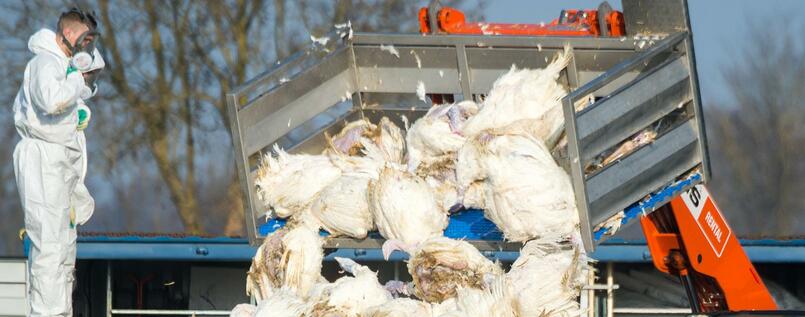
As the Potsdam Ministry of Health announced on Sunday evening, 16,000 turkeys had to be emergency slaughtered and “disposed of” (!!!) – as it is called in technical terms.

This means that the carcasses of the killed animals are disposed of, mostly incinerated, so that no other animals or people can become infected with the disease.

The disease, which is deadly for animals, is also known as bird flu and made headlines around the world a few years ago.
The epidemic is being dealt with in a more relaxed manner.
In this case, it is the avian influenza pathogen with the code H5N8.

It is already the second case of this disease that has been detected in the state of Brandenburg since autumn.
The first case was confirmed at the end of December 2020 in Lausitz on a small farm in the Spree-Neisse district (Germany).
Now a larger fattening farm is affected.

In addition, the virus has so far been detected in six wild birds in Brandenburg.

The virus is said to have spread wild birds, according to the Friedrich Loeffler Institute.

Transferable to humans

According to the Robert Koch Institute, animal disease can also be transmitted to humans.
“Influenza A viruses that occur in birds can also cause illness in humans and are then also referred to as bird flu,” it says.
“The transmission of avian influenza viruses from animals to humans is not very effective, which means that they are not very infectious for humans. However, if such an infection occurs, it can also lead to serious illnesses.”

For more…at https://worldanimalsvoice.com/2021/01/25/berlin-protection-of-poultry-industry-by-mass-murder/

And I mean…The “bird flu”, in its dangerous variant known as “avian influenza”, causes hysterical outbreaks in politics and their lobbyist environment in regular waves.

Then, contrary to any reason, ethics, and against specialist knowledge, thousands of “useful” birds are tortured and destroyed (culled) just because a harmless (“low pathogen”) bird flu virus of subtype H5 or H7 was detected in the population.

The avian influenza viruses belong to these two subtypes alone.

In the avian influenza epidemic from November 2016 to spring 2017, more than 900,000 animals were killed in this way nationwide, 65,000 of them in Schleswig-Holstein.

We are talking about mass murder.

The mutation of a harmless avian flu virus into a dangerous avian influenza virus is an extremely rare occurrence.

The more often the virus can successfully go through its development cycle, the more likely it is to occur.

In a free animal population, a flu wave dies quickly because the viruses fall victim to the immune system and cannot mutate into dangerous pathogens.

Often the disease is not even recognized and can then only be detected by antibody tests in the laboratory.

All of this is well-known and the Robert Koch Institute knows it too.

So why is the poultry industry killing poultry en masse?

There is only one reason for this: the protection of factory farming!

The poultry strongholds are to be protected from losses, and for this, the Robert Koch Institute needs the wild bird hypothesis of the spread of bird flu viruses.

It is apparently intended to divert attention from the virus problems that the cruel poultry industry itself creates.

As always, the losers in this story include the animals as victims.

The winners include the globally active poultry companies that are interested in the mass production of poultry products.

Even if 30 percent of the turkeys in the barn die of their ailments on a large farm, profit is made.

And that’s what the meat industry is all about: profit at all costs and every life

My best regards to all, Venus