Posted on April 2, 2021 by Serbian Animals Voice (SAV)
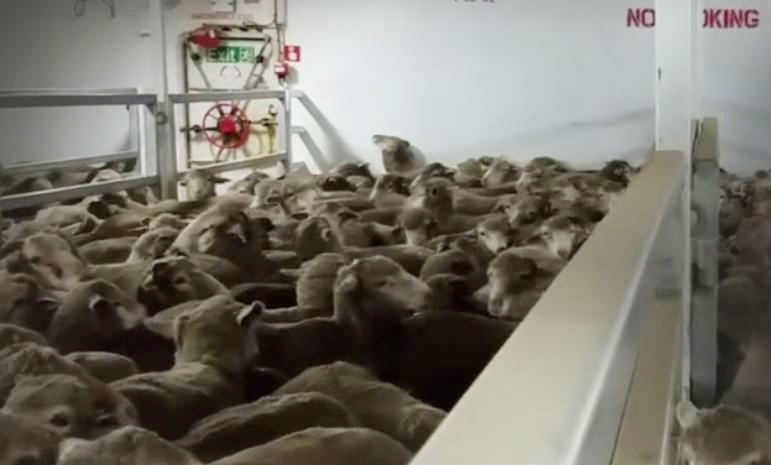
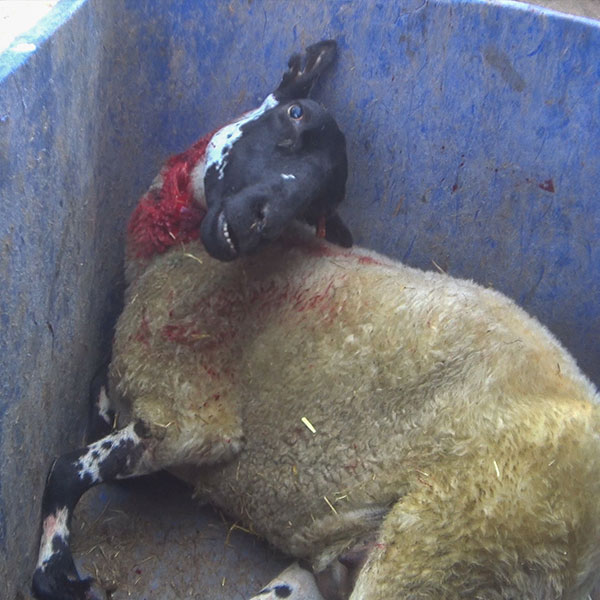
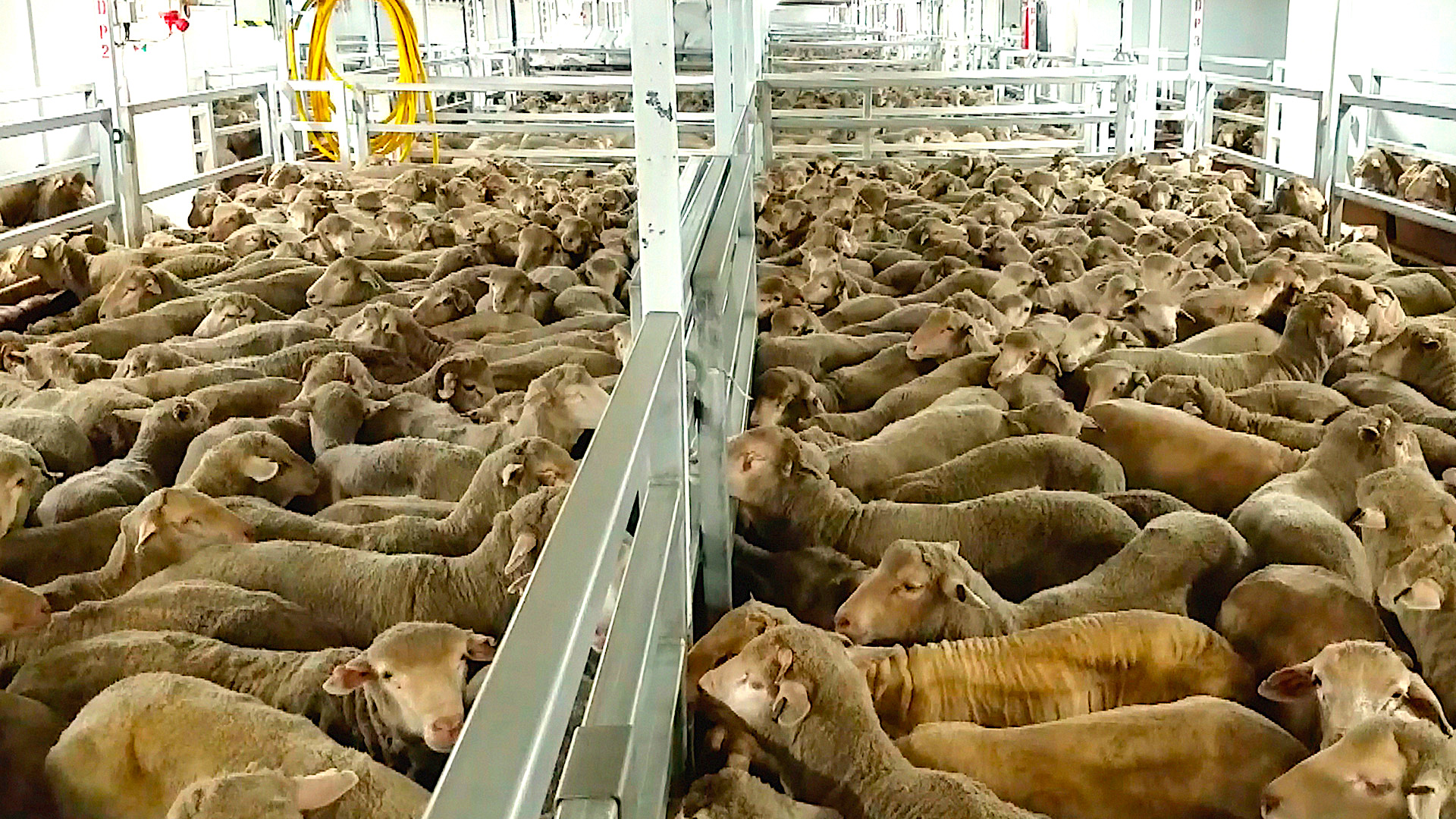
TheAwassi Expresssailed from Australia’s winter to the Middle Eastern summer in the lead up to the annual Muslim festival of sacrifice. But something went “wrong”. Approximately 2,400 sheep didn’t make it to port.
They died of heat stress, some trapped in a bog of excrement, and someone on board filmed it.
This hell for the animals continues to this day.
One mass murder chases the next.
Decaying animals that lie in the ship for days and weeks, and not even a responsible person who would have to be released for violating the law, cruel conditions in mobile coffins with exotic names such as “Al Shuwaikh,” “Karim Allah”, “Elbeik”… the list could go on and on and everyone is horrified for a few days, everyone calls for more “animal welfare” and “respect for animal laws” but – as always – nothing changes.
And we can be sure that what we learn through videos is only a small part of what is really happening, and most importantly, we can be sure that such crimes happen much more often than we know.
And every time we write petitions to politicians, ministers, commissions, that means to bodies that treat their grandmother’s old console better and more carefully than do with animals.
Hypocrisy, ignorance, indifference to cruelty, mass murders, violations of protective laws and agreements – these are the main characteristics of everyone who benefits from animal corpses
Rights and dignity are reserved exclusively for humans and are often completely denied to non-human animals.
The machinery draws its energy from the large power stations of business, press, religion, and politics, but the energy itself is extracted in the deep, dark pits of human stupidity.
We don’t have to wait for politicians or laws.
We can always start to create real animal welfare by denying the animal profiteers our money.
Where there is no demand, there is no production and where there is no production, there are no “failures” and not even “unfortunate individual cases”.
Posted on April 2, 2021 by Serbian Animals Voice (SAV)
From the Facebook page of the Austrian animal rights activist Martin Balluch
“Incomprehensible!
A “citizens ‘initiative against animal factories” has put up a poster that reads:
“God protect us from poisonous farmers! No germs and antibiotics on our families’ plate”.
Content of the poster: “God protect us from poisonous farmers! No germs and antibiotics on our families’ plates “!
A criticism of pesticides without specifically addressing anyone.
The farmers’ union felt addressed and sued for revocation and omission, although the union is not even mentioned.
As a result, a judge whose husband works in a company that is 100% owned by Raiffeisen * Markt actually ruled that:
– the farmers’ union was meant and therefore may complain – it is a statement of facts and not an opinion – these facts are incorrect.
Therefore, the citizens ‘initiativemust revoke the statement as untrue, publish the revocation in the “Kleine Zeitung” (small Newspaper) and on a poster for a fee, and pay the farmers’ union money(!!!)
It is hard to believe what kind of judges there are. We had it very often in animal welfare.
It is to be hoped that this disgrace will be reversed in the instance.”
* Raiffeisen: is the brand or name part of more than 330,000 companies that deal with agricultural products in the upstream and downstream sectors as well as general financial services worldwide.
And I mean…The farmers’ association, which is of course known to play the victim, said: “Our local farmers don’t deserve to be denigrated like that, because they produce high-quality food 356 days a year“ !!!
Since when have environmental polluters been portrayed as victims?
The farmers think it is completely okay to put pigs in cages for 4 months in which they cannot turn around, mothers take their children away, kill excess piglets and when they have exploited cows enough, they let them kill the last moneyclose.And that is subsidized!
If I am not an animal abuser, then I do not use them for my economic interests either.
Animal breeding alone is torture because the animals are bred for maximum performance and have physical problems (especially with poultry).
Where’s the animal owner’s love in this business?
And now there is something else: How much groundwater is contaminated by the liquid manure? We afford the luxury of destroying our environment so that we can worship our daily flesh.
And thus give the animals a torturous life.
I think it would be very fair if the farmer paid for the removal of the nitrates from the water; after all, he caused it.
A vile and despicable judgment, the lobby at its worst.
Posted on April 1, 2021 by Serbian Animals Voice (SAV)
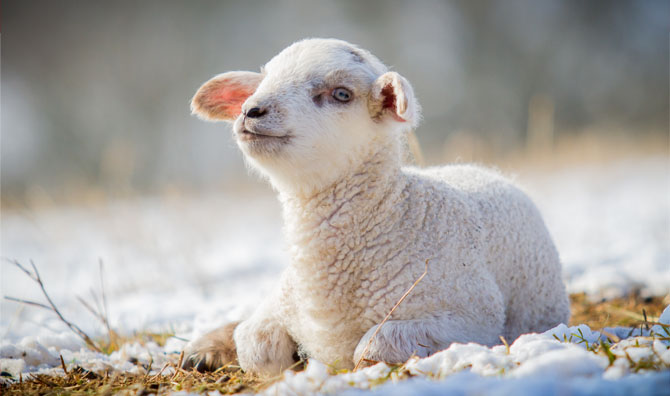
The beautiful picture of the little lambs is not only elicited by children.
Many adults also shout at this sight: “How cute! How cute! ”
But the cruel truth is: All these little lambs will soon end up under the butcher’s knife – punctually for Easter, they end up on the plate as roast lamb.
Because for many people who celebrate the “Festival of Life”, children’s corpses are part of the traditional Easter banquet.
In Germany, sheep have long ceased to be kept for their wool, as world market prices for wool are below production costs. Today sheep are used almost exclusively for meat production: 98 percent of the sheep farmers’ income is generated from meat sales. One to two million sheep – almost exclusively lambs – are slaughtered in Germany every year.
A particular specialty at Easter is milk lambs – infants who still drink from their mother and have never eaten grass, between 8 weeks and six months old.
Suez Canal Situation Highlights Atrocious Animal Trade, With 200K Animals Stuck On Ships
When things go awry at sea, livestock on board ships suffer immeasurably. Animals have to stand in their own waste, for weeks on end. And if resources run out, the animals suffer dehydration and starvation; the ones who don’t survive are thrown overboard.
The atrocities these sentient beings are forced to endure are overwhelming.
Recently, a livestock ship with 1,800 head of cattle was denied port entry for THREE months! According to The Guardian, nearly 200 of the cattle died in conditions described as “hellish.”
The animals forced onboard these ships of death are already slated for death – must they suffer unnecessarily before they are slaughtered? Does anyone care for their welfare?
Your signatures and comments will be sent to the European Parliament along with our letter asking for this cruel live export transportation business to come to an end.
The worst maritime animal welfare tragedy in history could, by now, be unavoidable, says Gabrile Păun, the EU director for Animals International, an NGO.
There are 16 ships taking live animals from the EU to the Persian Gulf which have been stuck for several days behind the stranded ‘Ever Given’ cargo vessel in the Suez Canal.
Even with the Ever Given now slowly moving again, the live animals inside the blistering cargo containers, which are quickly running out of feed and water, are now nearing an even more tragic end than that which awaits them in the slaughterhouses at their destination.
Even if the ships were to resume full course today, the water and food would not last until their sea journey is over.
Romania is the source for the 130,000 of the 200,000 live animals now caught in the Suez bottleneck.
Some six of the 11 ships full to the brim with the live animals from the South-Eastern European nation are in a particularly critical situation. They were supposed to reach harbours in the Persian Gulf over four days ago, but still have not left the Canal.
According to EU law, ships carrying live animals need to load 25 percent more food than planned for their trip in case of delays, but animal welfare organisations warned that this rarely happens.
Meanwhile, Păun explained to EUobserver that even with the 25 percent buffer, these ships would now run out of animal feed long before they arrive in port.
“A ship that left Romania on 16 March was scheduled to arrive in Jordan on 23 March, but instead it would now reach port on 1 April at the earliest. That is a nine-day delay. Even if the ship had the required 25 percent additional animal feed, it would only have lasted for 1.5 days”, he said.
The ‘ANSVSA’, the Romanian authority in charge of live-animal exports issued a press release two days ago saying that after reaching out to those in charge on board the ships, there is enough food and water to last a few days.
The press release added that live animal exports have been currently suspended until the situation in the Suez is dealt with.
But for Păun, those responsible for the shipment would never admit that animals are dying by the thousands on their vessels.
Meanwhile, the EU legislation does not compel an EU member state to report on animal mortality on board these ships and Romania would never release that information voluntarily because authorities know that it would lead to investigations, he added.
Romania is one of Europe’s largest live-sheep exporters and has several times been singled out by the European Commission for its bad practices regarding live-animal exports.
Last year, Romania was red-flagged by Brussels for failing to meet live-animal transport conditions after more than 14,000 sheep drowned when a cargo vessel capsized off the Black Sea coast.
A year earlier, the then EU commissioner for food safety, Vytenis Andriukaitis, urged Romania – to no avail – to stop the export of 70,000 live sheep to the Persian Gulf because temperatures inside the cargo vessel exceed 60 degrees Celsius.
Instead, Romanian authorities increased their live-animal exports, despite an investigation that showed animals exported to Gulf countries dying from the high temperatures, being unloaded violently off ships, squeezed into car trunks, and slaughtered by unskilled butchers.
Păun says the only chance now for some of the animals to make it to destination alive is for Egyptian authorities to move quickly and clear the ships trapped in the Suez.
“I am appalled that legislation did not offer Romania the power to command cargo ships to return back home. Romania should have used diplomatic pressure to resolve the issue,” he said.
“According to a ruling by the European Court of Justice, the EU member state exporting live animals to a third party country is responsible for their wellbeing until reaching destination”, he added.
For Păun, Romania should move toward exporting meat rather than live animals.
“It would cancel the unnecessary suffering of the animals and would be more economically profitable for Romania”, he said.
But even though other countries have agreed that exporting processed and refrigerated meat is far more profitable and less cruel, live animal exports remain unabated from Romania.








 Serbian Animals Voice (SAV)