Denmark: fur industry are compensated with billions

After months of negotiations, a majority in the Folketing agreed to pay mink farmers compensation.

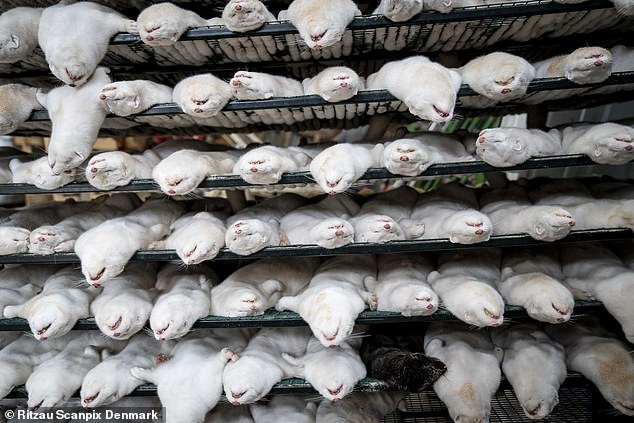
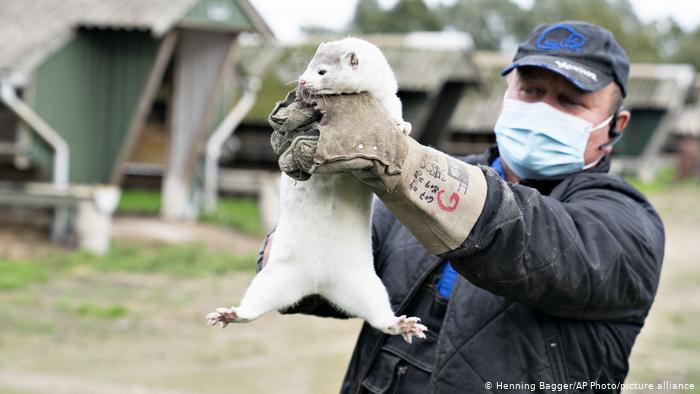
It will be a costly proposition for Danish society if the Danish mink breeders who were ordered to kill their mink last year receive compensation.

This emerges from an agreement for which a large majority of the parliamentary parties voted after a very long negotiation process.
The agreement was made between the government, Venstre, the Radicals, the People’s Socialist Party, and the Liberal Alliance.

According to the agreement, the compensation for the mink breeders will be between 15.6 and 18.8 billion crowns (That’s about 2,4 billion euros).

The exact amount is not yet known, also because the case of every mink breeder has to be assessed.
There were around 1,000 mink farms in Denmark. Part of the total compensation goes towards rescheduling the mink breeders.

Finance Minister says: “That is fair and appropriate”

“The agreement offers fair and reasonable compensation so that the mink breeders can get ahead,” says incumbent finance minister Morten Bødskov (socialists).

For more…at https://worldanimalsvoice.com/2021/01/27/denmark-fur-industry-are-compensated-with-billions/


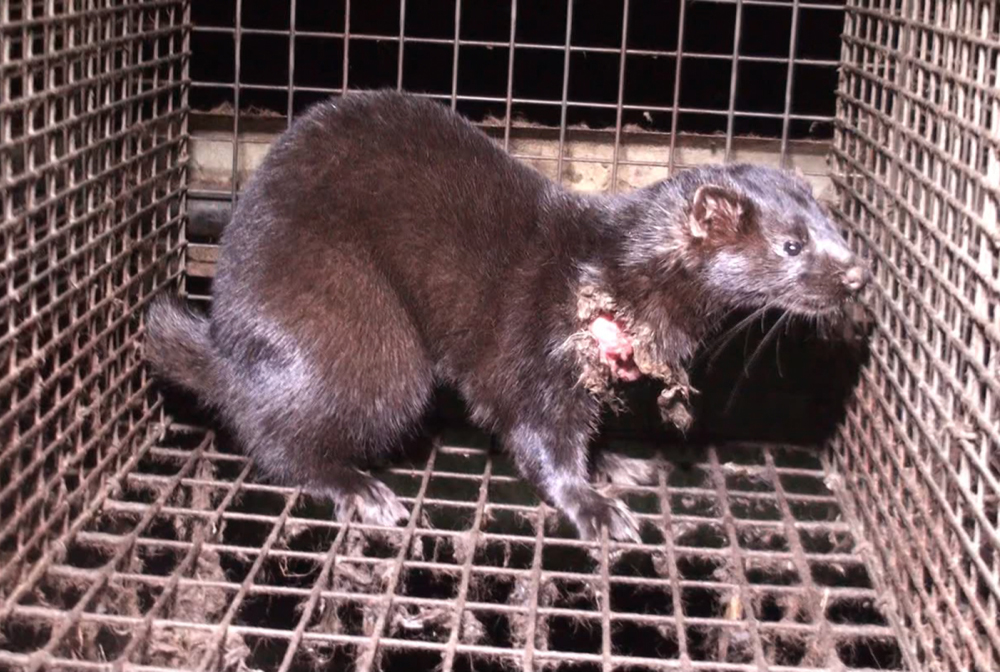
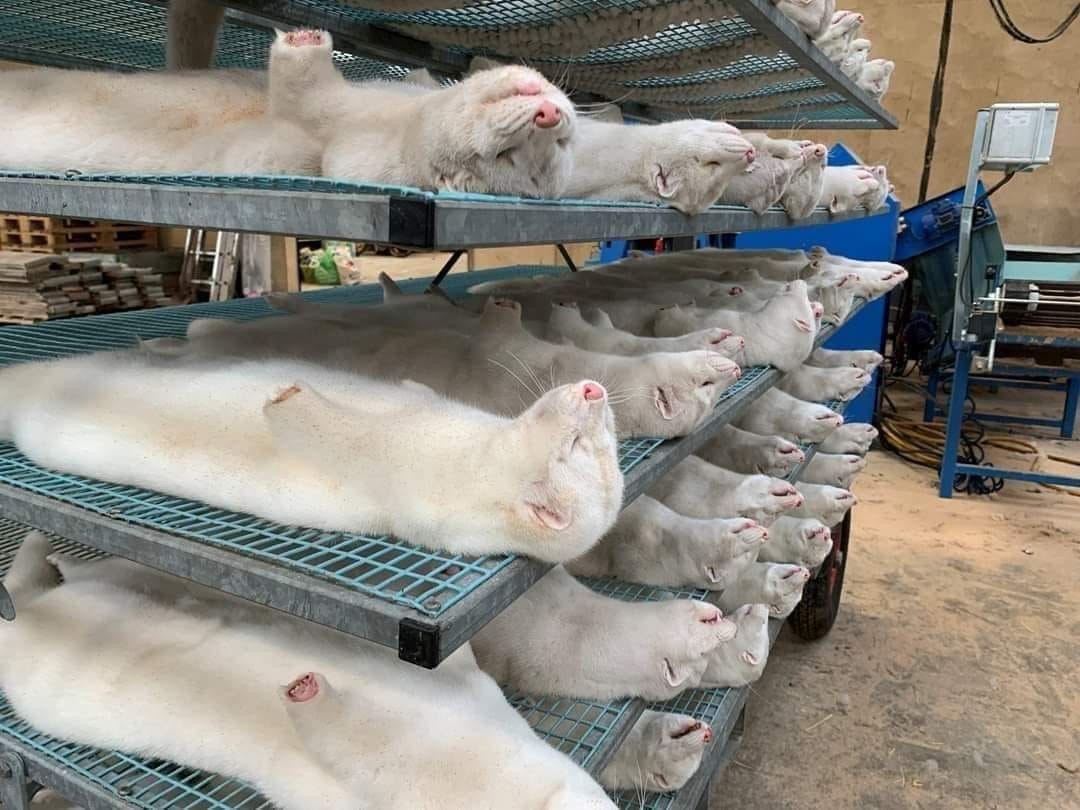
And I mean…When more and more Covid-19 was diagnosed in the animals of Danish mink farms in autumn 2020, the Danish government decided that all 17 million animals of the 1137 breeding farms must die.

A hysterical slaughter began, mass graves were shoveled, and incineration plants were in full swing.

Now the Danish government has opted for high compensation for the mink breeders.
Most breeders should be well taken care of for a long time, and they are already looking forward to their future prosperity.

Fur prices had fallen continuously over the past few years, as the demand for mink kept falling. Therefore, most growers have a huge mountain of debt.

According to calculations by the Ministry of Finance, the average fur breeder has 1.17 million euros at the bank.

On average, each breeder now receives 1.56 million euros in compensation.

With this, he can cover all debts and is still in the plus with over 400,000 euros.

There are also additional bonus amounts: breeders who kill their animals particularly quickly in November also receive a speed bonus averaging around 67,000 euros.

The breeders don’t have to worry about their empty stables either – the state takes care of demolition and disposal.

And as soon as the next Covid mutation affects the minks, we even know what to do.
We’re already very well trained in mass murder.

We still practice fascism against the weaker as in the darkest sides of humanity back then.
And even legally.

My best regards to all, Venus


UN global climate poll: ‘The people’s voice is clear – they want action’.


UN global climate poll: ‘The people’s voice is clear – they want action’

Biggest ever survey finds two-thirds of people think climate change is a global emergency

UN global climate poll: ‘The people’s voice is clear – they want action’ | Environment | The Guardian

The biggest ever opinion poll on climate change has found two-thirds of people think it is a “global emergency”.

The survey shows people across the world support climate action and gives politicians a clear mandate to take the major action needed, according to the UN organisation that carried out the poll.

The UN Development Programme (UNDP) questioned 1.2 million people in 50 countries, many of them young.

While younger people showed the greatest concern, with 69% of those aged 14-18 saying there is a climate emergency, 58% of those over 60 agreed, suggesting there is not a huge generational divide.

Even when climate action required significant changes in their own country, majorities still backed the measures.

In nations where fossil fuels are a major source of emissions, people strongly supported renewable energy, including the US (65% in favour), Australia (76%) and Russia (51%).

Where the destruction of forests is a big cause of emissions, people supported conservation of trees, with 60% support in Brazil and 57% in Indonesia.

Overall, the most popular actions to tackle the climate crisis were protecting and restoring forests, followed by renewable energy and climate-friendly farming. The promotion of plant-based diets was the least popular of the 18 policies in the survey, with only 30% support.

Gender was a factor in some countries, with at least 5% more men and boys saying there is a climate emergency than women and girls in 16 countries. However, in four nations – the US, Australia, Canada and the UK – significantly more women and girls were concerned about global heating.

The UNDP ran the “Peoples’ Climate Vote” in 50 high-, middle- and low-income countries, representing more than half the world’s people. Experts at Oxford University weighted the replies to reflect the population of each nation.

“The voice of the people is clear – they want action on climate change,” said Cassie Flynn, the UNDP’s strategic adviser on climate change.

“If 64% of the world’s people are believing in a climate emergency then it helps governments to respond to the climate crisis as an emergency.

“The key message is that, as governments are making these high-stakes decisions, the people are with them.”

Flynn said the survey connects the climate concerns of people, particularly the young, with governments at a time when accelerated action must be agreed, in particular at a UN climate summit in November. The climate crisis continued unabated in 2020, with the joint highest global temperatures on record.

“We are at a fork in the road and the poll says ‘this is how your future generations are thinking, in specific policy choices’ – it brings a way to envision the future,” she said.

Flynn heads the UNDP’s Climate Promise programme that helps countries take more ambitious climate action.

The poll found the highest proportion of people saying there is a climate emergency was in the UK and Italy, both at 81%. Australia was at 72% and the US at 65%, the same as Russia, and India was at 59%. Even the lowest proportion, in Moldova, was 50%.

The relatively low support for the promotion of plant-based diets may be because there are few plant-based options in some countries or people may have felt that diet is more of a personal choice, said the UNDP. Support was highest in Germany (44%) and the UK (43%).

The reason why more men and boys said there was a climate emergency than women and girls in countries such as Nigeria and Vietnam may be because girls have less access to education in those places.

The poll found that the more education a person had completed, the more likely they were to think there is a climate emergency. Why more women and girls are more concerned in the four English-speaking nations is unclear.

The poll was distributed via advertisements in video games and puzzles, including Angry Birds, Subway Surfers, Sudoku and Words With Friends, and this particularly helped reach younger people.

The idea came to Flynn when she was on the subway in New York City: “I looked around and everyone was on their phones and most were playing games.”

The data was collected between October and December 2020 and, despite the coronavirus pandemic, 59% of the people saying there is a climate emergency also said the world should “do everything necessary and urgently” in response.

Prof Stephen Fisher at Oxford University said: “The Peoples’ Climate Vote has delivered a treasure trove of data on public opinion that we’ve never seen before. Recognition of the climate emergency is much more widespread than previously thought.”

Media and Corona: narratives over facts and never tell the whole story

Wuhan, where Covid-19 was first identified, has now returned to a life resembling that before the virus swept in after China was able to control the outbreak of the disease with strict but necessary lockdown measures.

Seeing Wuhan’s success ought to bring a ray of hope to those around the world facing the worst of their country’s outbreaks; yet, in their annual retrospectives, American media is downplaying China’s successful containment measures and casting them as somehow an attack on core Western values.

The New York Times, MSNBC, CNN, and other outlets have indeed pointed out the fact that life in Wuhan has returned to normal, showing pictures of maskless night clubs, large celebrations, and other functions totally unfamiliar at this point to many across the world.

But, according to these outlets, the measures were harsh and came at a “huge personal cost” to Wuhan residents.

These outlets also went on to lambast a new museum in Wuhan that details the city’s harrowing battle with the virus.

According to them, the museum and other patriotic media reports about the events that took place in Wuhan are part of a “narrative” that the Communist Party of China (CPC) is trying to spin.

New Year’s Eve celebrations in Wuhan ©  REUTERS/Tingshu Wang

China has spent much of the past year trying to spin the narrative of the pandemic as an undisputed victory led by the ruling Communist Party,” the New York Times wrote.

The paper also noted, although, with a different choice of words, that people in Wuhan believe the “narrative” and view early missteps in handling the outbreak with some level of forgiveness after seeing the abject failures of countries like the United States.

When one simply looks at the numbers, there is really no need to “spin” any “narrative” in the first place.

For more…athttps://worldanimalsvoice.com/2021/01/27/medien-and-corona-narratives-over-facts-and-never-tell-the-whole-story/


And I mean...China has been very impressive in its management of the virus.

China has done the right thing against Corona, USA and we are still plaguing and suffer from the same measures that China introduced in the first 2/3 months and kept strict, closed its borders, drastic measures that worked.

That is why the West responds with provocative accusations without reality.

A year ago, British newspapers said China had to pay reparations for the Coronavirus because the virus originated from China.
Today’s’ virus strain comes from Britain.
Wuhan returns to normal whilst the UK variant virus is exported to others.

Regardless of how China treats animals, that China has no animal welfare, practices massive animal testing, wildlife markets, and still operates the world’s worst fur farms … a correct and objective awareness is required so that one stays on the right political side.

My best regards to all, Venus

Beauties of nature -the mandarin duck

The mandarin duck is a species of bird from the duck-bird family that is native to East Asia.

Like the wood duck, it belongs to the genus Aix.

In Europe, there are isolated overgrown park populations that have arisen from captive refugees.
The mandarin duck is one of the “glossy ducks”, whose name comes from the metallic sheen of their plumage.

It is one of the medium-sized ducks and reaches a body length between 41 and 51 centimeters.

The males weigh between 571 and 693 grams.
The females are slightly lighter with a weight between 428 and 608 grams.

The magnificent, colorful drake is easy to recognize by its green-metallic forehead, the chestnut-brown “whiskers”, the large white stripes over the eyes, and the strikingly large orange-colored wing feathers that are set up like a sail.

The gray-brown female is comparatively inconspicuous, has a white eye-ring with an elongated eyeliner, a white chin, and a spotted underside.

Mandarin ducks are very insensitive to cold.

Since they are also very local, they can be kept free in Central Europe.
They look for their food mainly in the country, where they also swallow large seeds such as acorns and beechnuts whole.

In China, the mandarin duck is a symbol of marital fidelity because of its distinctly monogamous way of life, as the ducks only change partners after a year.

In the Qing Dynasty, it was also used as a badge for civil servants of the 7th rank.

Fortunately, this type of duck is relatively seldom hunted because its meat is not considered to be tasty.

According to the IUCN, it is considered not to be endangered.

Text: “Together for the animals”

We very rarely hear that an animal species is not endangered.
And we are very happy about it!

regards and good night, Venus


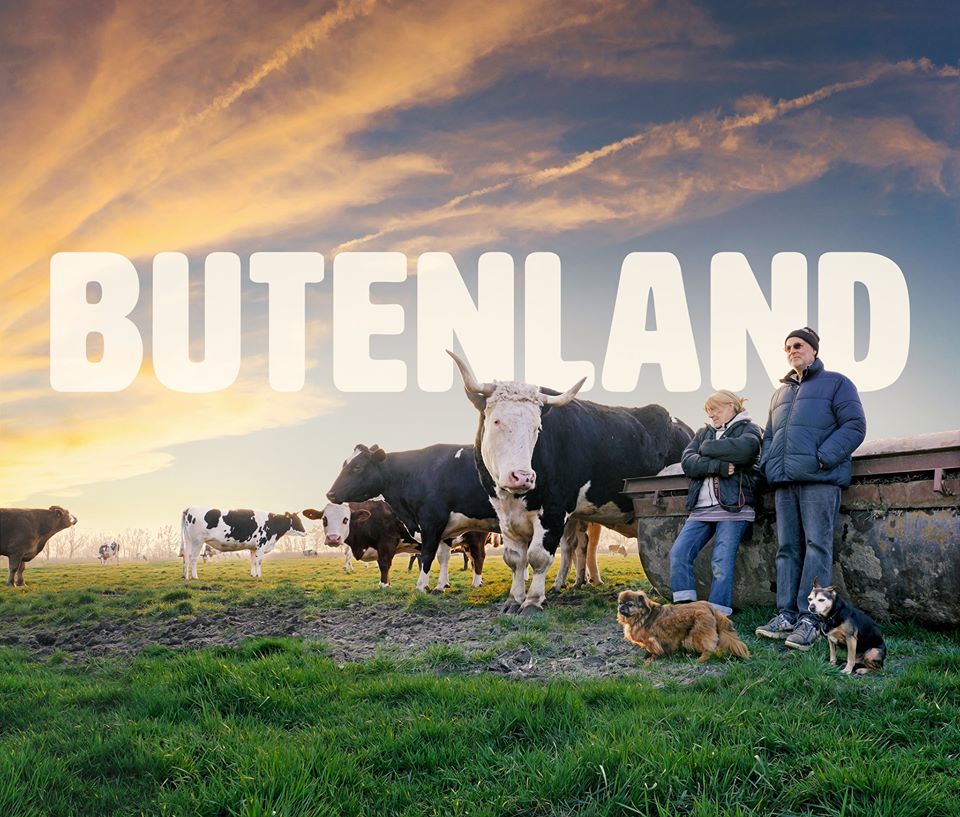
A day in the life of a giant baby

Mattis’s day started normally today with the fact that he and his buddy Dina looked at the weather.

All the uncles and aunts that one could visit are in the same stable or in the immediate vicinity, but that is no reason to neglect beloved rituals during the stable season.


Then it’s off to the cool bathroom under the cow cleaning machine.

A giant baby can hardly fit under there, but hygiene should not be neglected.
Someone simply bends down a bit and takes advantage of the fact that one of these practical devices was attached at the ideal bottom height.

Then the next appointment is with mom, who checks the cleanliness and quickly goes back to the places where
one of them didn’t get there so well himself.

Mummy is just the best!

Now it’s finally time for a round of games and Aunt Chaya even missed a bale of straw.
This is immediately exploited by splitting the thing up and putting up a bold new hairstyle with it.

After all, Mom is not looking at the moment, Ochse has to take advantage of that.

After that, it’s almost time again to go to bed, put on the captain’s pajamas and end another day of adventure happily.

https://www.facebook.com/watch/HofButenland/

And we mean…This is how we want animals to live, and nothing else than that.

My best regards to all, Venus


Tofu Never Caused a Pandemic !

With thanks as always to Stacey at ‘Our Compass’ for sending this over to us.

Our Compass | Our Compass (our-compass.org)

Regards Mark

Source YouTube , Plant Based News

VEGAN 2020 – The Film is sponsored by abillion – where you can find recommendations and review vegan-friendly restaurants near you, food products and cruelty-free beauty items.

USA: Congress’s omnibus package includes big wins for animals

Breaking news: Congress’s omnibus package includes big wins for animals · A Humane World (humanesociety.org)

Breaking news: Congress’s omnibus package includes big wins for animals

The appropriations bill and accompanying coronavirus relief/stimulus package for fiscal year 2021 now advancing through Congress will bring critical and much-needed support to millions of Americans. We are also pleased to report that the package, which funds federal agencies, includes a number of wins for animals, including horses, wildlife, companion animals and animals in research.

We’ve advocated for these and other items throughout 2020. Here, in brief, are key measures in the package that benefit animals:

Horse racing: The package includes the Horseracing Integrity and Safety Act (S. 4547/H.R. 1754) introduced by Sens. Mitch McConnell, R-Ky., Kirsten Gillibrand, D-N.Y., Martha McSally, R-Ariz., and Dianne Feinstein, D-Calif., and Reps. Paul Tonko, D-N.Y. and Andy Barr, R-Ky., to address the widespread doping of racehorses and unsafe track conditions that have been key contributing factors in frequent equine fatalities on American racetracks.

Horse slaughter: It renews the annual provision that “defunds” USDA inspections at domestic horse slaughter plants, effectively preventing those plants from reopening in the United States.

Wild horses and burros: It provides an increase of more than $14 million for the Bureau of Land Management to implement non-lethal management of wild horses and burros, featuring PZP, a humane, reversible fertility control vaccine. It also renews language preventing horses under the care of the BLM and the U.S. Forest Service from being sent to slaughter for human consumption.

Horse soring: It doubles the FY 2020 funding level for the U.S. Department of Agriculture to enforce the Horse Protection Act to $2.09 million to better curb cruel “soring” of Tennessee walking horses and related breeds, and it calls for the agency’s Inspector General to audit the HPA enforcement program. The package makes it clear that the authority of USDA inspectors supersedes that of industry inspectors and urges the agency to reinstate the HPA rule that was finalized but shelved in January 2017. The rule would end the failed system of industry self-policing and use of devices integral to soring.

Wildlife trafficking and Endangered Species Act: It increases investment in key Department of Interior law enforcement and wildlife and biodiversity conservation programs and continues investment in international conservation efforts to combat the transnational threat of wildlife poaching and trafficking and to protect imperiled species.

Live wildlife markets and disease spread: It includes a study on the impacts of wildlife markets on the emergence of new diseases, as well as increased funding to prevent the transmission of diseases from animals to humans (known as zoonotic diseases), through key global health security programs to build the capacity of public health institutions and organizations in developing countries for the prevention, treatment and control of zoonotic diseases..

Trophy hunting: It requires the U.S. Fish and Wildlife Service to provide Congress with the briefing mandated in the FY 2020 appropriations package, which the agency failed to complete, on its current policy for allowing imports of sport-hunted trophies of species like lions and elephants into the United States and to explain how these imports benefit the survival of these imperiled species after Congress expressed doubt due to continuing population declines.

Marine mammals and right whales: It increases funding to protect critically endangered North Atlantic right whales, to sustain the Marine Mammal Commission, a key, independent oversight agency, and to fund a program that coordinates nationwide emergency response for stranded, sick, injured, distressed or dead marine mammals.

Disaster plans: It directs the USDA to start the rulemaking process on lifting the stay on the rule requiring facilities regulated by the Animal Welfare Act, such as puppy mills and roadside zoos, to have emergency response plans for the animals in their care.

Animals in research: It directs the Department of Veterans Affairs to submit a plan to Congress by the end of 2021 on how it plans to reduce or eliminate the use of dogs, cats and non-human primates in its research within five years; encourages the use of non-animal testing methods by the Food and Drug Administration for new drugs; directs that USDA-run laboratories housing animals be inspected for compliance with the Animal Welfare Act; and renews the bar on licensing “Class B random source” dealers, who were notorious for obtaining cats and dogs through fraudulent means such as pet theft to sell them into research.

Domestic violence shelters: It provides $2.5 million—up from $2 million in FY 2020—to expand the PAWS grant program that provides funding for shelter and transitional housing services for survivors of domestic violence and their companion animals.

Slaughter plant line speed: It directs the USDA to review the impacts of waivers granted for increasing line speeds—the speeds at which animals are killed—at slaughter plants and report back to Congress within 90 days. It also requires that the USDA consult with the Occupational Safety and Health Administration on any future line speed increases.

Plant-based protein research: It promotes USDA-funded research into innovations in plant-based protein.

Animal fighting: It provides an additional $500,000 for USDA’s Inspector General to better enforce federal law against dogfighting and cockfighting.

Dog and cat meat: It urges the USDA to move forward with an international agreement to ban the trade of dog and cat meat worldwide.

Equine therapy: It provides no less than $1.5 million in the National Veterans Sports Program for equine therapy to support veterans’ mental health and help reduce PTSD-related anxiety.

Animal Welfare Act enforcement: It directs the USDA to ensure that each AWA noncompliance observed by an inspector is documented on an inspection report, and to make sure, as it restores AWA and HPA records purged from the agency’s website in 2017, that databases are at least as searchable—in function and content—as they were before the purge. It also encourages the USDA to conduct robust enforcement to ensure that online dealers selling dogs have the necessary license under the Animal Welfare Act.

These provisions are a sign of genuine progress in our work to push the frontiers of animal protection, and we are grateful to the members of Congress and our partners who worked with us to ensure they were included in the appropriations package. However, some provisions included in the bill, like one that urges the National Institutes of Health and the Air Force to seek “alternative arrangements for housing” of retired research chimpanzees currently residing on Alamogordo Air Force Base, but does not explicitly require those chimpanzees be transported to sanctuary, highlight that Congressional oversight will be needed to ensure that the right steps are taken for animals as the new administration steps into place. We hope the Biden administration will move more expeditiously to transfer these chimpanzees to sanctuary. And we will work hard to ensure that all these measures are approved this week.

P.S. The Humane Society of the United States and Humane Society Legislative Fund are committed to ending the cruel practice of horse soring. Fortunately, the omnibus/coronavirus package did not include a retrogressive measure on soring that was ill-conceived, ill-timed and ineffectual. Virtually all other stakeholders working to end soring agree with us that this proposal would have seriously set back anti-soring efforts, including the American Association of Equine Practitioners, American Horse Council and its 30 groups, American Veterinary Medical Association, Animal Welfare Institute, American Society for the Prevention of Cruelty to Animals, Friends of Sound Horses and Humane Society Veterinary Medical Association. We and these groups will instead push for the Biden administration to swiftly reinstate the final rule on soring that was put on hold at the beginning of 2017 and which will end the use of devices integral to soring and the conflict-ridden industry self-policing scheme. We will also continue to press Congress to codify those essential reforms and add stronger penalties and even more robust enforcement funding to finally end this scourge.

Sara Amundson is president of the Humane Society Legislative Fund.