Posted on January 1, 2021 by Serbian Animals Voice (SAV)
Desolation, injustice, miserere…
All animal cruelty in this world does not come because we underestimate animals, but because we overestimate ourselves.
That makes people nothing more than a habitual criminal, at every level.
Posted on January 1, 2021 by Serbian Animals Voice (SAV)
At this laboratory, primates are put through conditions so disturbing, “nightmarish” doesn’t even begin to describe it.
Male monkeys are dragged out of metal cages by their necks and locked into restraint chairs. Once strapped in and unable to move, staff bring out electric shocking devices. They lower the devices to the animals’ genitals.
And then, helpless to escape, the monkeys’ penises are shocked over and over and over again until they finally ejaculate.
This sounds like the kind of thing that could not even possibly be real. But it is, and an undercover whistleblower for PETA witnessed these experiments occurring first-hand.
Where could such horrendous types of research possibly be conducted? At a renowned university funded by federal tax dollars — the University of Wisconsin at Madison(UW-Madison).
The experiments described above are only one part of the problem.
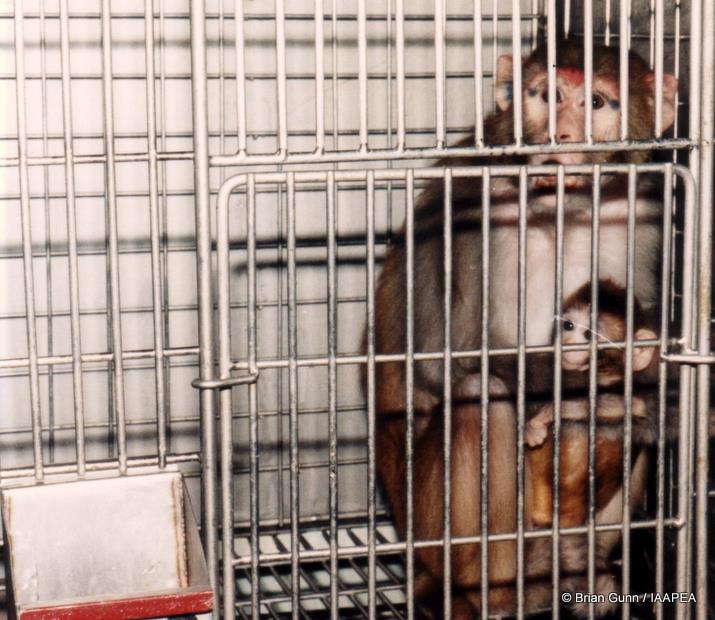
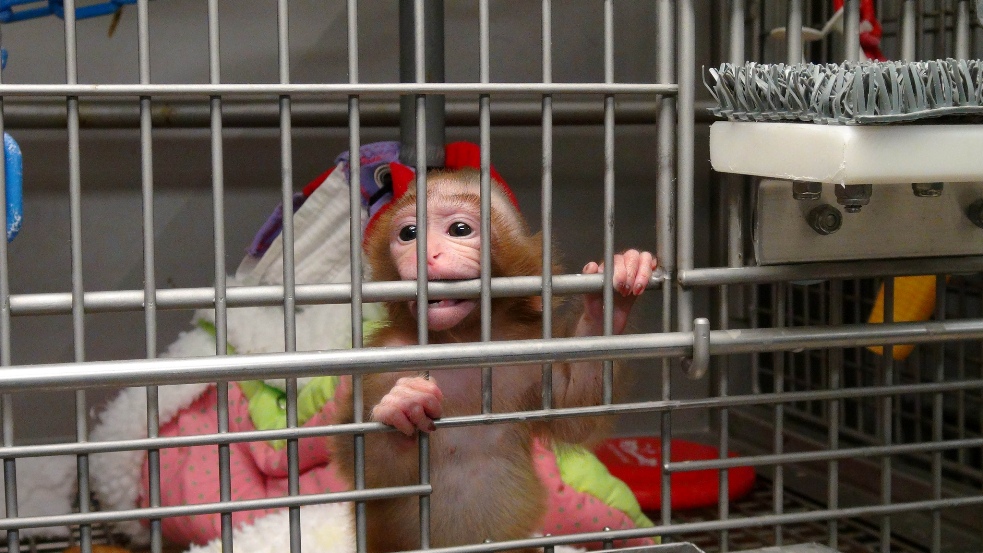
Staff is also extremely numb to the monkeys’ emotional needs, neglecting and tormenting them as a result. The “lab rat” primates are shut away in rooms without windows or natural sunlight, inside metal cages just barely large enough to meet federal regulations. Infants have regularly torn away from their mothers.
Baby monkeys torn away from their mothers are forced to live alone in small metal cages.
Some are put through surgeries performed without proper anesthesia.
In one case, a monkey — still stuck inside his metal cage and screaming to be let out — was run through equipment designed to wash cages at extremely high temperatures. The wailing animal died as a result of this torture.
In another incident, a supervisor confided that one of their staff members was a “bit too … rough” and broke another monkey’s leg.
Still more animals have lost parts of their fingers and toes from amputated injuries, often sustained while they are desperately trying to escape.
Other captive, experimented-upon primates at the lab have taken to self-mutilating.
There is NO EXCUSE for this kind of brutality and callous disregard for animals’ rights. Yet as of now, there are still approximately 2,000 monkeys trapped in this research facility’s premises.
Tell the leaders of the University of Wisconsin — Chancellor Rebecca Blank and Vice-Chancellor Steve Ackerman — that we will not stand this cruelty any longer!
They must close this primate lab immediately!
Sign the petition to demand that the gruesome primate lab at UW-Madison be shut down, now!
Important information on the topic: Since 1989, UW-Madison’s Richard Weindruch has starved caged monkeys—depriving them of an extreme 30 percent of needed calories—to see if this would increase their longevity.
The monkeys have been caged alone and kept perpetually hungry for nearly three decades. Members of the control group in this experiment were fed an extremely high-sugar diet and became morbidly obese.
The experimenters have repeatedly tried to make meaningful claims about the health benefits of caloric restriction, but given the fundamental flaws of this experimental design, it can’t possibly hope to inform us about anything of value.
University of Wisconsin-Madison Archives & Wisconsin National Primate Research Center
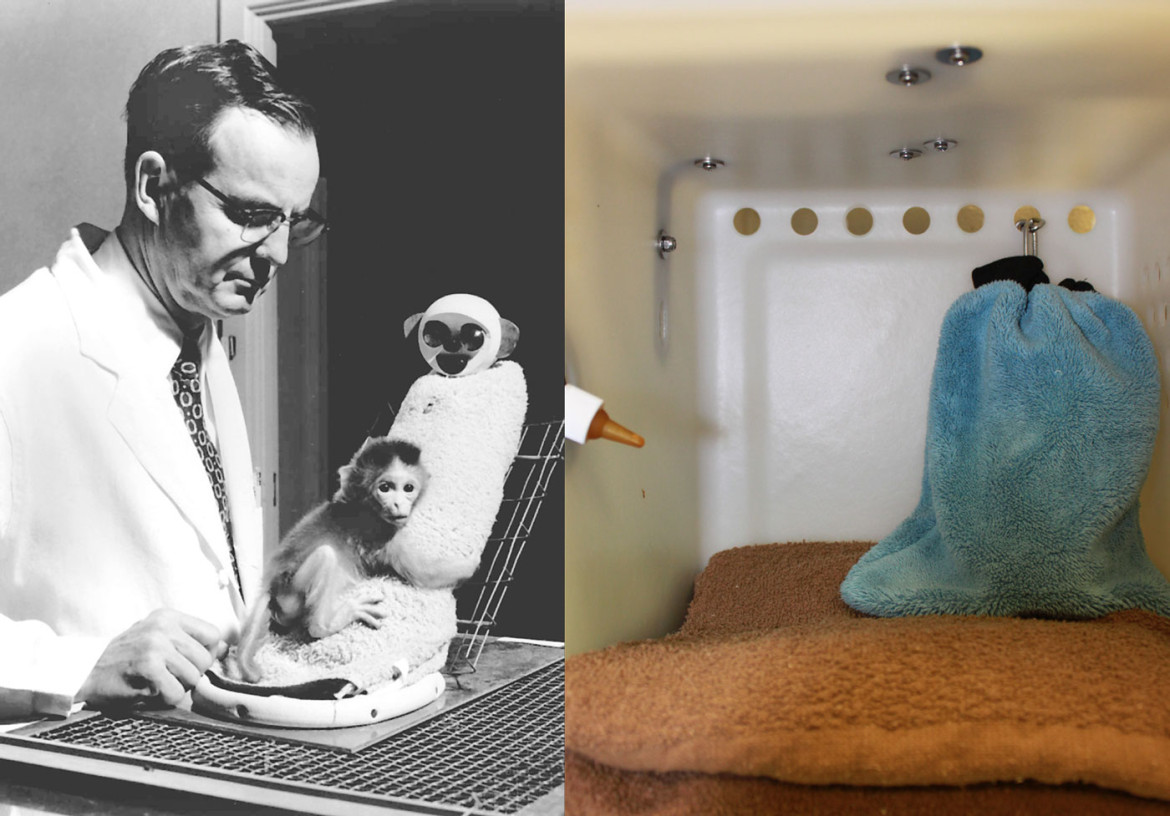
Surrogate mothers, then and now. Left: Harry Harlow, a controversial experimental psychologist who worked at the University of Wisconsin-Madison for more than 40 years, studied the effects of isolation on baby monkeys. Right: When psychiatrist Dr. Ned Kalin’s research into the effects of early adversity on the brain begins, experimental animals will live in this incubator for the first several weeks of their lives.
In 2013 20 rhesus monkeys, as well as another 20 used as a control group, will be given tests intended to provoke and measure anxious behavior. After one year they will all be euthanized and their brain tissue collected for molecular analysis.
“We’re killing baby monkeys,” Streiffersays, Professor of Philosophy and Bioethics, at UW-Madison. “There are other things that have been done that are worse, but that’s not a justification for saying that this isn’t really really bad.”
The public has a right to insist that federal tax dollars not be wasted on unnecessary “terror testing”. Far more useful and painless methods of research are already available that do not involve animal suffering.
Why are we animals still subjecting these hellish experiments?
No one in a common sense would argue that it is okay to separate people from their families, take them overseas, and not subject them to consensual, painful procedures.
So how can we tolerate other living beings?
The answer is only one: animals cannot defend themselves. And that is also the reason why we still experiment on animals and no longer on humans, as we did a few centuries ago.
It has nothing to do with human welfare because animal experiments have no practical relevance!
“I am not interested to know whether vivisection produces results that are profitable to the human race or doesn’t… The pain which it inflicts upon unconsenting animals is the basis of my enmity toward it, and it is to me sufficient justification of the enmity without looking further.”
― Mark Twain
Posted on January 1, 2021 by Serbian Animals Voice (SAV)
Betta fish are vibrant and colorful, but they’re also extremely complex animals.
At Petco stores around the country, they’re confined to tiny plastic cups with scarcely a couple of inches of water inside that are stacked on top of one another.
Thailand: The eyewitness who took the photo saw a bucket of dead and live fighting fish. These animals were considered unprofitable because their caudal fin was damaged. One employee said they would be thrown into a canal or pond.
Scores of customers have complained of finding dead, sick, and injured bettas floating in filthy water on the chain’s store shelves.
PETA’s investigations of the pet industry have uncovered appalling neglect of betta fish even before they reach stores.
They’re often starved for several days during transport and are confined individually to tiny bags that are stuffed into boxes stacked up high in massive wholesale warehouses.
Many fish die before and during transport to retailers, which can take days, as they’re shipped all over the country. Industry insiders have confirmed that this system is a common practice for some retailers.
While some bettas are captured in the wild, the vast majority of those sold in the U.S. come from breeding farms in Thailand and other countries in Southeast Asia, where it’s common practice to keep them in small bottles.
When it’s time to pack them for transport, fish are haphazardly dumped into baskets covered with nets and scooped up into tiny plastic cups. Then, they’re packed up to be sent to the United States.
While workers sorted the fighting fish for transport, the animals were out of the water, writhing and gasping for air.
Segrest Farms, a Petco fish supplier, admitted that it sources bettas from Thailand.
Additional Information: Thailand is one of the world’s most important export countries for fighting fish.
In 2019, an eyewitness from PETA took a look around Thai fighting fish farms that supply the global pet trade – including the German one. What he found was shocking conditions and cruelty to animals.
Many of the animals had died in the breeding tanks and were simply not removed.
At a Petco supplier, the eyewitness came across a bucket full of dead and live fighting fish.
One employee said these animals were not profitable because their caudal fin was damaged. She admitted that they would just dump them in a nearby pond or canal.
The eyewitness looked at a total of 10 establishments
In this company, tens of thousands of fish were kept in tiny, often dirty bottles. Due to the small amount of water, the ammonia produced by the fish’s excretions quickly accumulates and pollutes the water. The bottles were so close together that the employees could walk over them.
For worldwide shipping, fighting fish are packed without any food and sent on a journey of several days by air freight. A staff member told the eyewitness that sedatives would be put into the water to prevent the fish from trying to eat their own caudal fin.
According to an employee, a company that supplies Petco sends100,000 fighting fish to the USA every week.
Up to 1,000 of them die before they reach the dealer.
The company EFS – Zoo buys Betta fish from Thailand from the company Q.P.S. International Aquatics Co. Ltd., which can be seen in this video at minutes 1’41 – 1‘59.
Fish are not decorations, and they should never be forced to live and die in a tiny bowl
There is nothing more perverse than imprisoning animals in a water prison for life and claiming that someone does this out of love for animals!
Every single living being has a specific task, an individual meaning in the entire context of life.
Only the recognition of the individuality of each being can lead to a coherent ethic for our behavior with animals.
Since thinking is part of our life’s tasks, we are morally obliged not to tear other beings out of their living space and use them at will.
This moral principle cannot be discussed. It is a fact!
Posted on December 31, 2020 by Serbian Animals Voice (SAV)
Dear friends,
Another year of cruelty to animals is over and a new year of cruelty to animals begins.
If we honestly and disillusioned draw a balance about the facts in animal welfare for the old year, we should admit that every crime was allowed and every crime was possible again.
So we can safely assume that it will again be a fascist-coordinated dance of death for the animals, led by a disinterested majority of society together with corrupt governments.
And yet we are determined to continue our struggle.
Because of our experience we know: who fights can lose who does not fight has already lost
But in view of the ever stronger and legalized violence from the side of the rulers, tactics, and methods are required and we have to rethink this.
We have to act more courageously, more directly, and more massively.
And there’s one thing we don’t have to ignore: we have to stay united.
I wish that to every one of us for the coming year.
Posted on December 30, 2020 by Serbian Animals Voice (SAV)
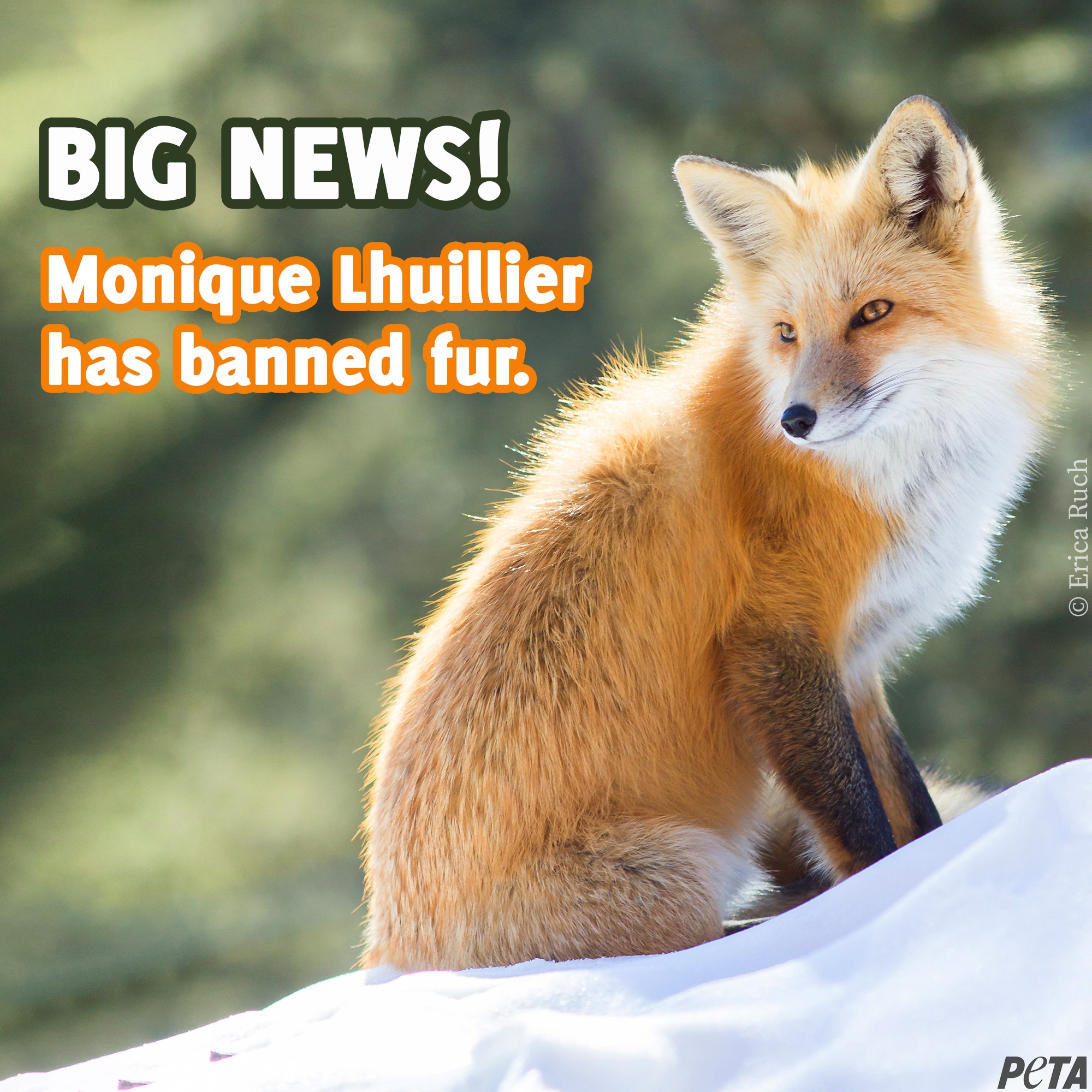
After talks with PETA, designer Monique Lhuillier banned fur
This decision will save countless animals from being confined to cramped and filthy wire cages before being violently killed for their fur. https://peta.vg/30h6
The list of fashion designers who have banned fur from their range is now long.
And therefore makes us happy.
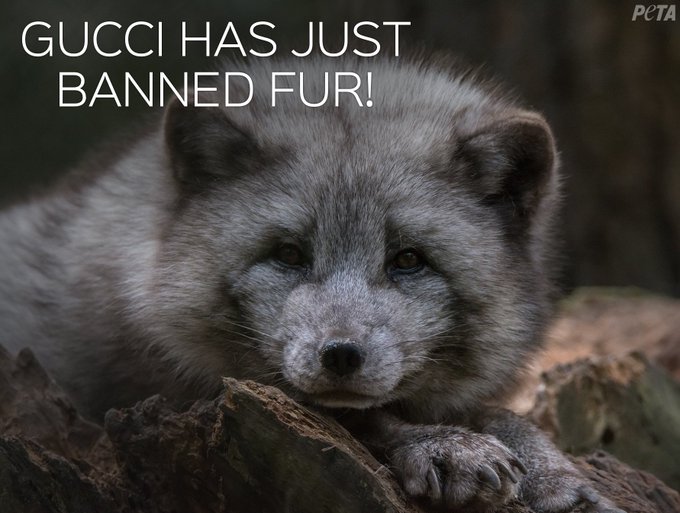
After 20+ years of PETA protests against kangaroo-fur loafers & seal-fur boots, @Gucci finally pledged to join the #FurFree fashion houses.
That was in 2017
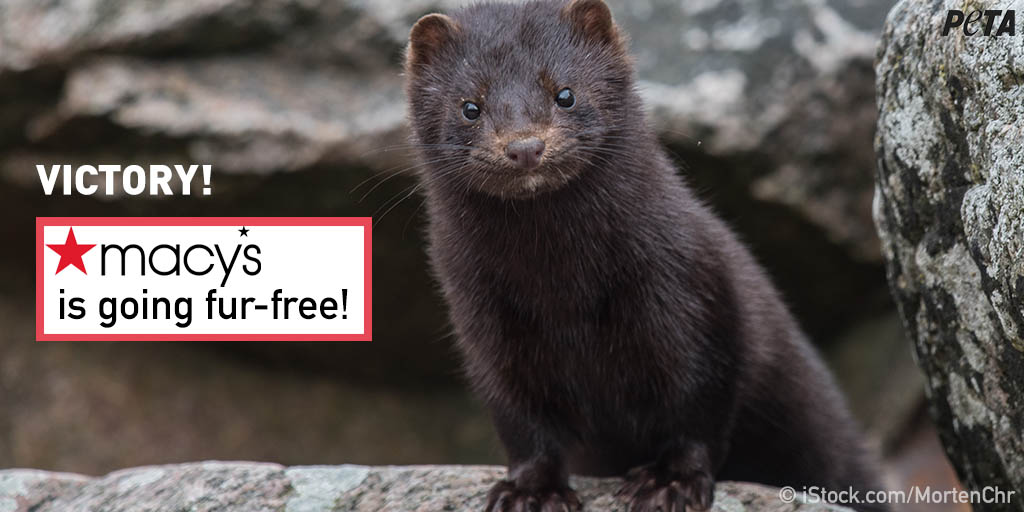
VICTORY! After decades of massive pressure from PETA & activists, the largest US department store @Macys just announced it will stop selling fur!
And I mean...Yes! we can speak of great progress.
Corona has also done a lot to expedite this fur farm elimination process.
Millions of fur animals were cruelly killed despite not self-infecting corona, but many fur farms were closed as a result.
We would like to hope that our struggle on all levels has also contributed to the fact that many people today regard fur as a product of torture and renounce it.
But fur is still sold and carried on because this society does not voluntarily give up the privilege of slave ownership.
Therefore our struggle will continue.
Posted on December 29, 2020 by Serbian Animals Voice (SAV)
Franz Kafka is thought to have uttered these words to fish he was admiring in an aquarium.
The novelist is believed to have been attracted to a meat-free diet for health reasons – and, like many of the great brains who ditched meat – out of respect for animals.
We’re not sure the anecdote is true.
But we are sure of one thing: people who can look animals in the eyes without feeling guilty are getting more and more.
Posted on December 29, 2020 by Serbian Animals Voice (SAV)
Animal Equality has published harrowing footage of chickens suffering on a German farm used by the country’s largest chicken producer, Wiesenhof.
The company’s products are distributed widely, including by major German retailers Edeka and Rewe.
THE DETAILS: During undercover research at a broiler chicken farm in the German state Saxony-Anhalt from February to April 2020, numerous violations of animal welfare regulations were documented.
The resulting material was leaked to Animal Equality and on December 11, 2020, we filed a complaint against the farm with the relevant German authorities. The images captured by activists are disturbing:
– The animals are brutally kicked and aggressively pushed through the hall by the workers.
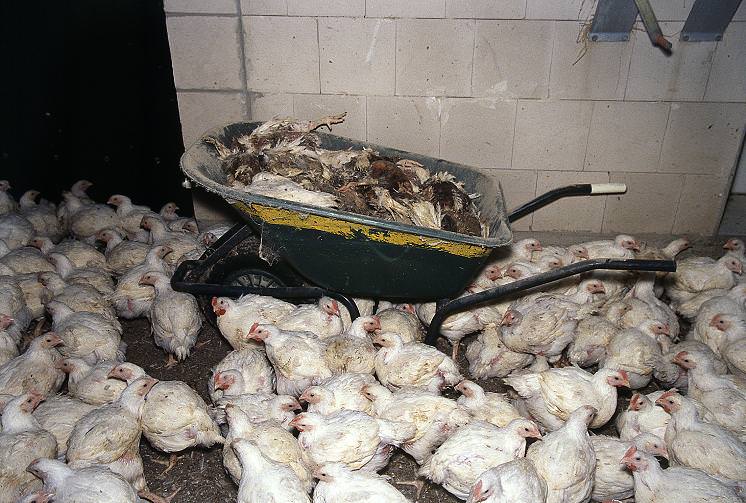
– The workers repeatedly perform so-called emergency kills in violation of regulations and animal welfare. The animals’ necks are twisted, and these attempts to kill them take place without anesthesia. In many cases, the animals are disposed of alive in buckets.
– Many of the animals writhe in pain after the cruel killing attempts, sometimes for several minutes until they slowly die in agony.
BACKGROUND: In this operation alone, approximately 210,000 animals are affected by such cruel conditions.
The PHW Group, which includesWiesenhof, is Germany’s largest poultry breeder and processor and one of the largest companies in the German food industry, slaughtering 354 million birds annually.
Wiesenhof: It is routine practice in the poultry industry to dispose of animals while they are alive.
CREATING BREEDING GROUNDS FOR DISEASE: In today’s world, the impacts of inadequate hygiene measures on farms are more important than ever.
And I mean…Throwing away and cruelty to animals has a long tradition on this farm.
As early as 2010 and after undercover recordings, there were serious allegations against Wiesenhof.
A tenant couple said at the time:
“We were taught to break the necks of animals without anesthesia, without holding a stick. This is exactly how the vaccination team did it and this is exactly how a Dr. Löhren killed the animals. “
After the publication of this first Wiesenhof scandal in January 2010, the regulations were changed.
Previous anesthesia with a wooden club or a rubber mallet is mandatory for all farmers.
Also for the chicken baron Wiesenhof.
And yet ten years later everything stays the same.
Wiesenhof, like other animal farms, has strong lobbyists in politics, which explains a lot in relation to the undisturbed operation of a farm that should have been closed long ago.
If even members of parliament like Johannes Röring and Josef Riefs keep pigs under dire conditions, why should the Wiesenhof be afraid of punishment?
In total, the PHW Group slaughters around 350 million broilers per year under its Wiesenhof label.
Where tens of thousands of animals are housed in a confined space, e.g. B. 27 chickens per square meter, dangerous pathogens multiply at lightning speed. Since not every sick animal can be treated individually, a dose is quickly administered via the drinking water.
This way, the healthy animals get antibiotics right away – practical, because antibiotics are cheap fattening accelerators.
One of the suppliers of the most famous fast-food chain Mc Donalds is the company “Wiesenhof”!
McDonald’s has so far obtained around three percent of the poultry meat it sells in Germany from Wiesenhof.
Measured against the high consumption, this makes up at least 20 tons per week – extrapolated over a year that is more than 1000 tons.
Animal welfare is anything but fair for animals in Germany.
That only protects the crueler.
These documentations prove the fact: Illegal animal cruelty practices are quite “normal” in the meat industry, also in Germany


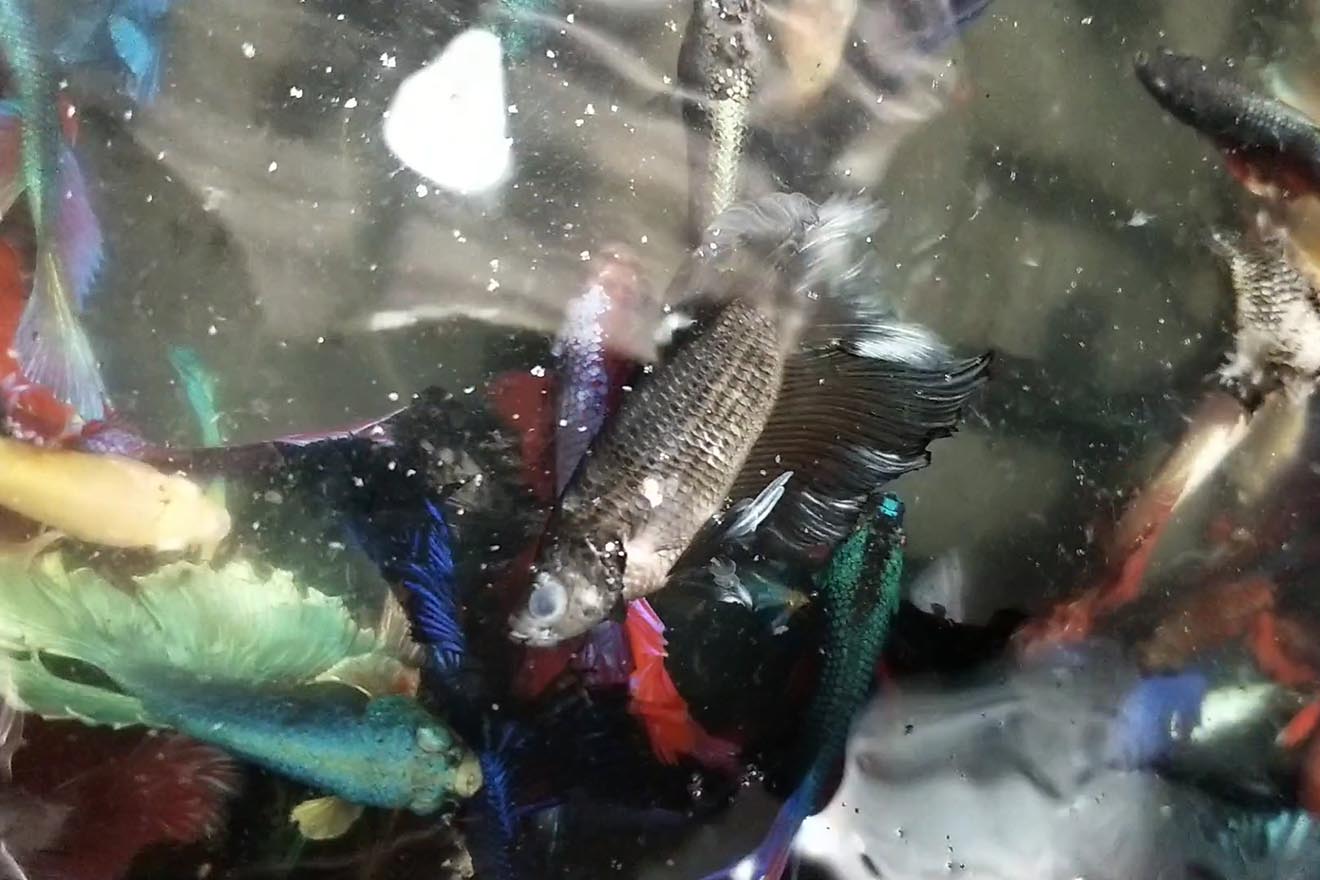 Thailand: The eyewitness who took the photo saw a bucket of dead and live fighting fish. These animals were considered unprofitable because their caudal fin was damaged. One employee said they would be thrown into a canal or pond.
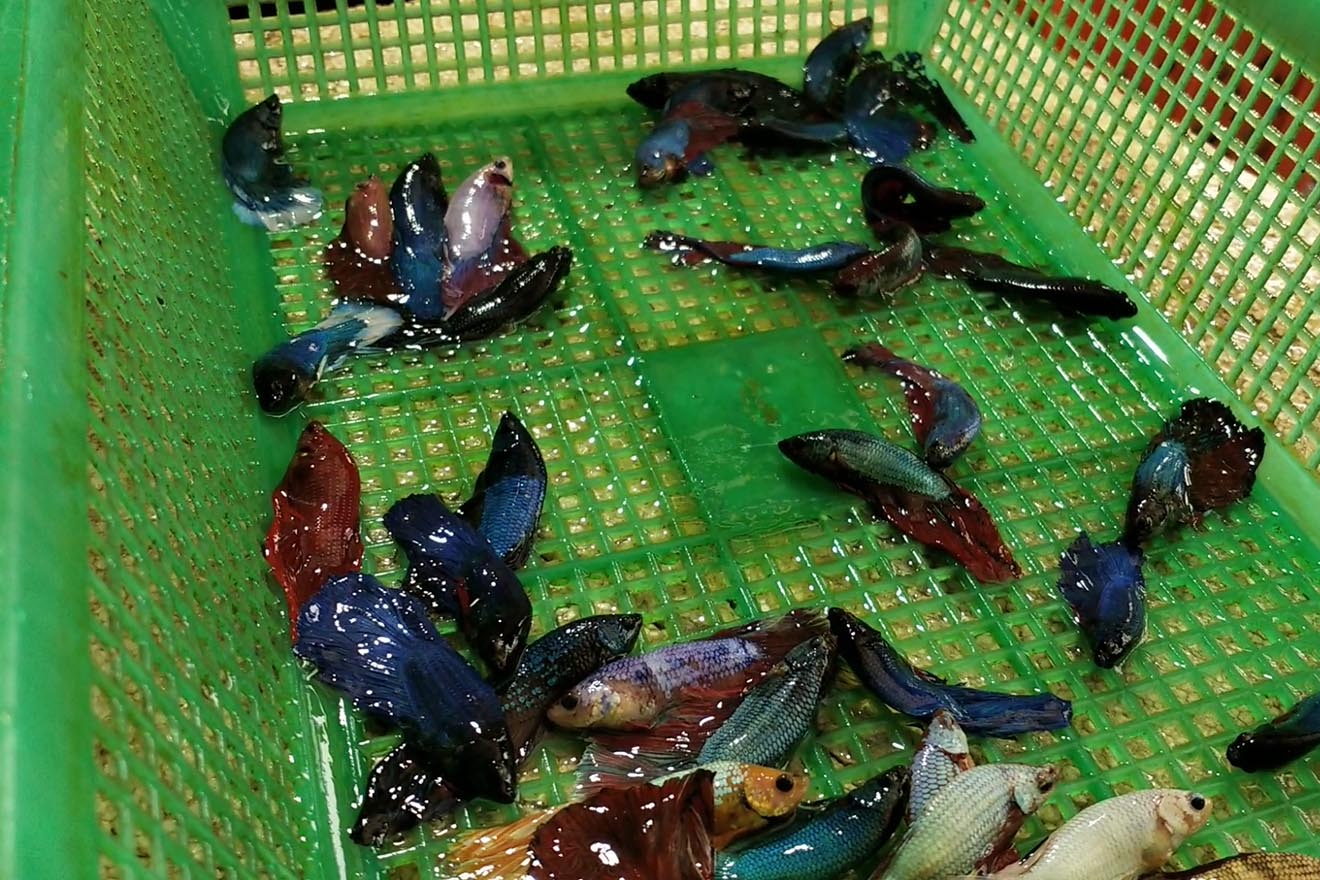 While workers sorted the fighting fish for transport, the animals were out of the water, writhing and gasping for air.
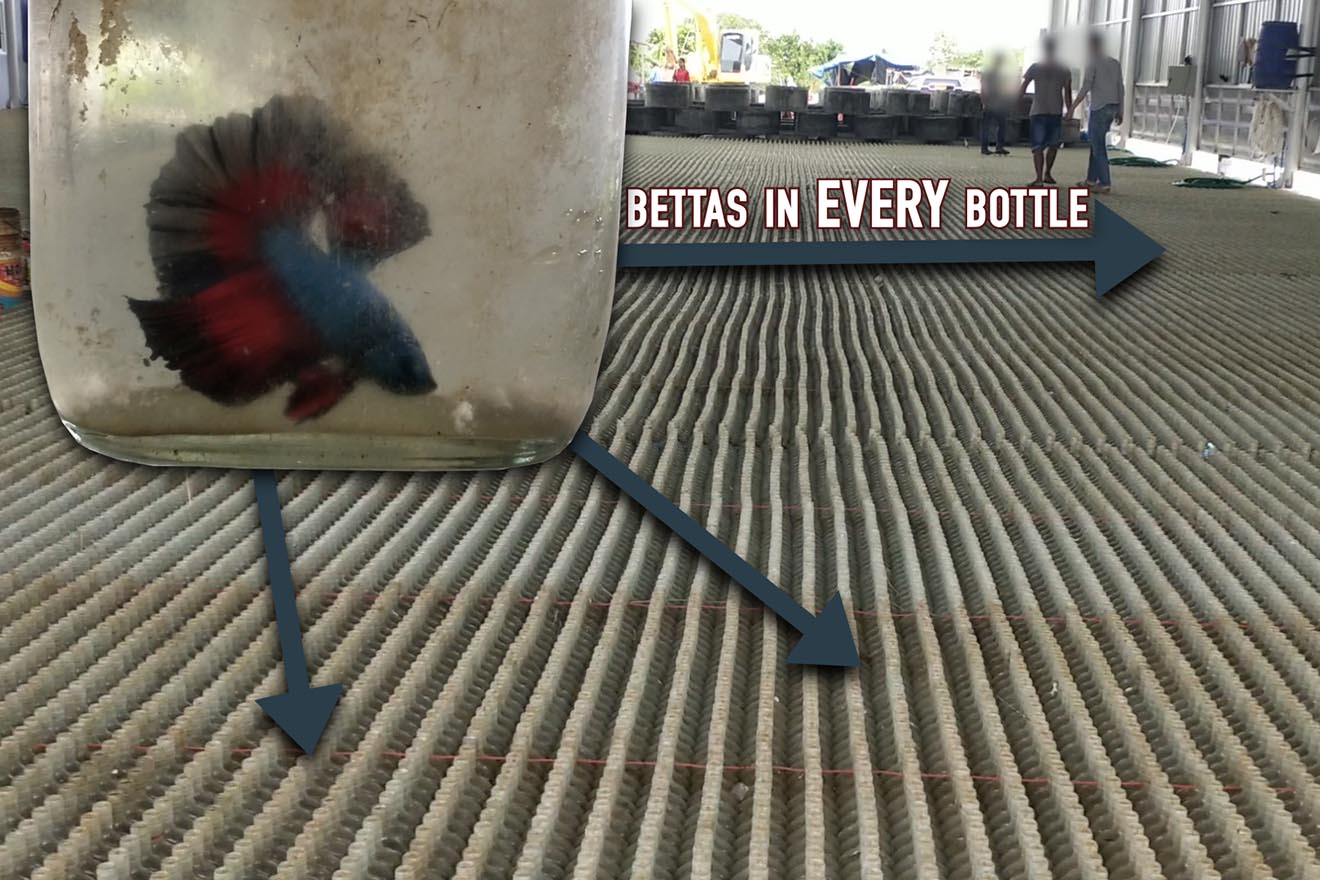 In this company, tens of thousands of fish were kept in tiny, often dirty bottles. Due to the small amount of water, the ammonia produced by the fish’s excretions quickly accumulates and pollutes the water. The bottles were so close together that the employees could walk over them.




 Serbian Animals Voice (SAV)