UK (England): Hunt Sabs Attacked by Hunt Supporters Whilst Saving Foxes – Also Brian May’s ‘SAVE ME’

England

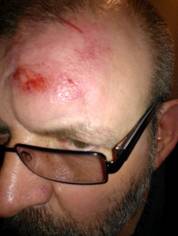
beaten sab

http://hsa.enviroweb.org/index.php/news/press-releases/414-planned-attacks-on-saboteurs-by-essex-a-suffolk-hunt-supporters

Planned attacks on saboteurs by Essex & Suffolk hunt supporters

Hunt saboteurs Association Press Release. 17th March 2013

On Saturday 16th of March as part of a clearly planned attack saboteurs from the Essex and Suffolk group were attacked. Using sticks tipped with metal supporters of the hunt assaulted and beat the saboteurs aiming in particular for the person carrying the video camera, smashing it beyond use. Saboteurs were also kicked and punched in the head in the sustained attacked.

Following this incident the hunt chased a fox to earth into a badger sett and proceeded to dig into the sett in breach of both the Protection of badgers act 1993 and the Hunting act 2004. Saboteurs on the scene were again attacked with spades and multiple assaults were committed, resulting in many injuries such as pictured. Essex police responded to a 999 call with four vehicles and a helicopter and acted on the clearly visible injuries by arresting a saboteur for breach of the peace, although no charges were pressed. On request for action to their assaults they were told by police in attendance to report them to a police station later.

Lee Moon of the hunt Saboteurs Association stated:

“Faced with a clear breach of animal welfare law and numerous assaults to hunt saboteurs, Essex police responded by blaming the victims and ignoring the crimes against wildlife. They seem to be acting in the time honoured stance of turning a blind eye to hunt violence and animal cruelty. It’s about time Essex police started realising that times have changed and the public expects these criminal acts to be treated the same as if they were in the high street on Saturday.”

cameron hunter

Above – UK Prime Minister David Cameron MP – PRO HUNT Supporter and person who prior to election vowed to have a vote in parliament to overturn the anti hunt legislation which is now giving more protection to UK wildlife.

Tories still working for repeal

Tory MPs are “actively working” behind the scenes at Westminster to drum up support for a repeal of the hunting ban before May 2015, a senior Minister has revealed.  Environment Secretary Owen Paterson told the Yorkshire Post he is “absolutely clear” that there will be a free vote on repealing the controversial ban before the next general election – but that, as things stand, the pro-hunt lobby does not have enough support to win. The Coalition Agreement signed by the Conservatives and Liberal Democrats in May 2010 committed the newly-formed Government to holding a free vote on the hunting ban at some stage during the 5-year Parliament. But almost 3 years later, the issue has barely surfaced at Westminster.  In an exclusive interview with the Yorkshire Post, Mr Paterson, a Tory right-winger and passionate advocate of fox hunting, said,

there is “more work to be done” to convince backbench MPs to vote for a repeal.  “We’ve got a pretty busy programme with a lot of other issues,” he said.   “But I’m absolutely clear it’s the right thing to do to have a free vote at the appropriate moment.”  The problem for the pro-hunt lobby is that while many Tories want the ban repealed, the party also has a smaller number of mainly urban-based backbenchers who insist it should remain in place. With many – though not all – Labour and Liberal Democrat MPs opposed to repealing the 2005 legislation, the pro-hunters face an uphill struggle to win a free vote in the Commons. Mr Paterson, who was handed the environment brief in last year’s Cabinet reshuffle, said a group of backbench Tories have been tasked with drumming up support over the coming months.

Yorkshire Post Sat 2 Feb

British Secretary of State for the Depar

Owen Paterson, Conservative MP – Trying to Get Hunting Approved by Parliament once again.

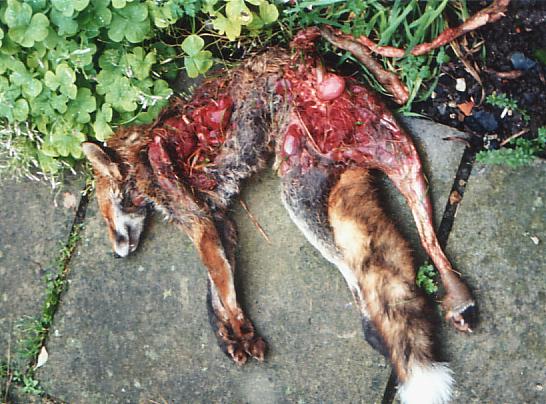
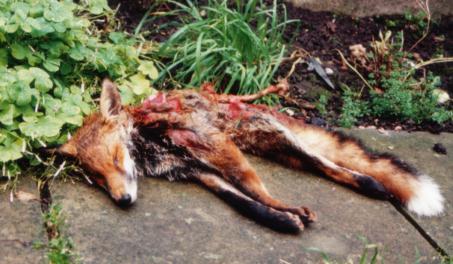
East Kent Murder

East Kent Murder – the REAL side of Foxhunting – Photo: Mark Johnson (SAV) / East Kent Hunt Sabs.

SAVE0131

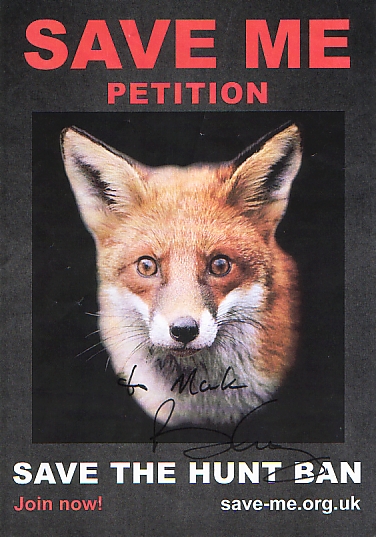
Save Me Signed

Save me pic

brianmay

SAVE ME by Brian May – ‘Queen’ Guitarist

Brian May’s SAVE ME – http://www.save-me.org.uk/


http://www.02infinity.co.uk/save_me/about.html


http://www.02infinity.co.uk/save_me/merchandise.html


Brian May Badgers

Rabies: Why China Needs To Become A 21 Century Nation – And Dog Killing In Nepal – Disturbing Video – Please Take Action.

china

If a person can contract rabies from butchering animals that are infected with the rabies virus or have already died from it, a person can also contract rabies from beating a rabid dog to death  (as in the recent Nepal footage), as blood, saliva and/or brain tissue inevitably goes flying around in the process. This is one very good reason to discourage the public from the all too common practice of beating suspected rabid animals to death.

 A Side of Rabies With Your Dog Meat in China

People in China and other Asian countries are dying of rabies. But
it’s not because dogs are biting them — it’s because they are biting
dogs, eating 18-80 million a year just in China.

“Rabies is a major problem in China. The country’s Ministry of Health
says it has the 2nd highest rate in the world after India.” And it’s
getting worse. Human rabies cases appear to be on the rise in China
based on the most recent numbers available. “In 2007, there were 3302
confirmed human rabies cases in China, nearly 21 times the number
found from the entire period between 1990 and 1996.”

It’s not just eating the meat that causes rabies. Slaughtering,
processing and cooking it may be even more dangerous.
After a rabies
outbreak led to human fatalities in Viet Nam, government officials
“reported that 70 percent of deaths were from dog bites but up to 30
percent were thought to be linked to exposure during slaughter or
butchery.”

“In a 17 Mar [2009 — see comment below] study from Hanoi published by
the PLoS Medicine journal, researchers pointed to 2 cases of human
rabies in Viet Nam where the patients were believed infected while
butchering a rabid animal — in one case a dog, the other a cat.”

“In the 1st patient’s case, he had prepared and eaten a dog that had
been killed in a road traffic accident; rabid dogs were known to
inhabit the neighbourhood. The 2nd patient had butchered and eaten a
cat that had been sick for a number of days.” Other people who ate the
same meat did not fall ill.

According to the Welcome Trust rabies is a very serious — and in
nearly all cases fatal — disease. It is estimated to kill over 30 000
people each year in Asia, and the number of cases in China and Viet
Nam is increasing. Symptoms include agitation, severe spasms, fever,
fear of water and inability to drink liquids, and eventually death.
There is a vaccine for rabies and even a treatment that can [very
rarely] cure the disease after infection, but it must be administered
very quickly after the patient contracts rabies. “Once a person shows
symptoms, the disease is almost invariably fatal.”

[Byline: Piper Hoffman]
Communicated by: ProMED-mail <promed@promedmail.org>

This report cites figures in support of an assertion that rabies
virus infection is increasing in China and wishes to correlate this
with increasing consumption of dog meat in China. In support of this
contention the article cites 2 cases [which actually occurred in 2009
– Mod.CP] in Viet Nam where rabies was contracted by an individual
slaughtering an accident-injured dog [see: Rabies, via dog/cat
butchering – Viet Nam archive number 20090318.1092], and another
slaughtering a cat.

Eating dog meat is common in many Asian countries, but research
conducted as part of the South East Asia Infectious Diseases Clinical
Research Network identified a potentially lethal risk associated with
preparing dog meat. In research published on 18 Mar 2009 in the open
access journal PLoS Medicine, Heiman Wertheim and colleagues from the
National Institute of Infectious and Tropical Diseases and the
National Institute of Hygiene and Epidemiology in Hanoi, Viet Nam,
report on 2 patients admitted to hospital showing signs of rabies
infection. Neither patient was thought to have been bitten by a rabid
animal in the preceding months see: Wertheim H, et al: Furious Rabies
after an Atypical Exposure. PLoS Medicine. 17 Mar 2009 [available at
http://www.plosmedicine.org/article/info%3Adoi%2F10.1371%2Fjournal.pmed.1000044].
It is clearly probable that rabies virus can be transmitted during the
course of slaughtering and butchering dogs and cats, if the person
involved has exposed abrasions or wounds
. However, rabies virus cannot
be transmitted through consumption of cooked meat since rabies virus
(and related rhabdoviruses) are heat sensitive and rapidly lose
infectivity at normal environmental temperature and humidity.

Vaccination and dog licensing are mechanism for controlling rabies
virus infection, not banning consumption of dog meat. – Mod.CP


NEPA0001

doggunhead

PETITION TO SIGN HERE:

http://www.gopetition.com/petitions/stop-cruel-dog-killings-in-nepal.html

(NP) Swift action by animal protectors in Nepal in the wake of botched stray killing

Fri Mar 15, 2013 2:35 am (PDT) .

Posted by: “Lisa Warden” foghorndoghorn

Animal protectors in Nepal were quick to respond when police in Kathmandu engaged in a botched killing of a street dog in the city last month. The killing was filmed and uploaded to youtube (http://www.youtube.com/watch?v=dkUNXTlcVJs).

The footage shows a dog hiding in a drain at the side of the road. The dog is shot and injured by a police officer. The dog then runs out of the drain, and one of the officers eventually manages to club it to death.

The issue was brought to the attention of Animal Welfare Network Nepal (AWNN), a coalition of animal welfare groups and concerned individuals working in the country.

Shristi Singh Bhandari, Communication Director at Animal Nepal submitted the following update to AWNN on March 6, 2103  (certain names have been redacted):

<<Dear all,

I am sending you my follow up on the recent shooting of the stray dog in kathmandu:

1. After receiving the video, I went to talk to the local people who had witnessed the killing about the issue. They told me that the dog had bitten several people and they were scared to walk by the street. SO they called the local police to attend to the matter. The police told them to tie the dog up to observe if he had was rabid, The locals obviously did not agree to do so. They again called the police to take care of the situation, so they came and you know the rest.

2. I went to talk to the nearby police station where they had reported the dog. The officer who was at the station told me that the police officers had been dispatched by the Kamalpokhari police station and not from the local section.

3. I went to talk to Inspector Kunwar from Kamalpokhari branch about the matter. He was very supportive and said that they indeed had make a mistake but the main order had been handed out by xxxx of Hanuman Dhoka district police station. The inspector proposed to work together in future that still needs to be discussed.

4. Then I went to Hanuman Dhoka t o talk to xxxx who was super rude and non cooperative. He said it was an emergency situation and he did what he had to do and that he does not have time to look for animal welfare groups and that he will not dispatch any letters regarding what happened and that we were more than welcome to stage a protest.

5. SO I got in touch with Rana bahadur Chand who is the head of Hanuman Dhoka and told him about the situation. He said he was shocked to find out how xxxx had behaved and that he himself had not seen the video. He said he will be more than glad to release the circular stating an order to contact animal welfare groups to handle such cases in future and a letter to AWNN stating the case. So he has asked to draft a letter for them so that they can sign and send it to everyone necessary. I on the other hand told him that in case he does that we will send a press release thanking him for his cooperation. So we are drafting a letter and will send him that by 2 today and hope to get it back by tomorrow morning.He has called us to work with the police in such matter. Once the strike is over I will be going to meet him with our brochures and information.>>

A letter was drafted to send to the police that they would then issue as an apology for their actions, plus a circular for the police to issue to their officers regarding future handling of suspected rabies cases. AWNN was subsequently invited to attend a still-to-occur gathering of police to sensitize  them about animal welfare issues.

Kudos to the animal protection community in Nepal for swift and effective action.

Lisa Warden

REPLY

Re: (NP) Swift action by animal protectors in Nepal in the wake of botched stray killing

Fri Mar 15, 2013 5:49 am (PDT)

Posted by:  “Lucia Animal Nepal” animalnepal

Thanks Lisa.

Today our team met Kathmandu Police Chief Rana Bahadur Chand, to hand over our petition with 4000 signatures (see http://animalnepal.wordpress.com/2013/03/01/take-action-against-brutal-dog-killing-by-nepal-police/).

He informed us that he has send out a circular to all police offices to not kill dogs but instead inform animal welfare agencies when dealing with an agressive dog.   Chand promised to send a letter of apology to the Animal Welfare Network Nepal.

The chief said he loves animals and that he and a number of colleagues oppose animal sacrifice.

We have also been asked to educate police officers about animal welfare.

This is an encouraging development but much work remains to be done. Poisoning is still the preferred method to ‘limit’ stray dog populations by virtually all municipalities in Nepal. AWNN in August organised a seminar on humane dog management, during which a number of local government promised to stop the poisoning, see
http://animalnepal.wordpress.com/2012/11/14/national_seminar_on_dog_population_management_nepal/

We request international campaigners to continue to be involved in the Nepal situation. With no animal welfare legislation in place, and hardly any humane dog management taking place outside Kathmandu Valley, Nepal really needs encouragement in this area.

Thanks,
Lucia

****************************************

 FROM Animal Nepal website:

Take action against brutal dog killing by Nepal Police

Kathmandu, March 1, 2013 – Animal Nepal today expressed its shock at the brutal killing of a dog by the Nepal police in Baluwatar, Kathmandu. The dog, which reportedly bit two people, was killed brutally with the help of a gun and bamboo sticks, in full view of the public. The killing was recorded by video and uploaded on youtube. 

Animal Nepal today handed over letters to the Inspector of Police, the Chief District Officer and the Kathmandu Municipality, requesting the authorities to take immediate action.

According to Animal Nepal, “the images of ‘man’s best friend’ dying such an agonizing death are heart rendering and deeply traumatizing for children and other members of the public.”

Despite the fact that humane solutions like Animal Birth Control/Anti Rabies have been introduced in Nepal a decade ago, authorities continue to kill dogs inhumanely using strychnine poison, guns or sticks. The incident shows that Nepal badly needs an Animal Welfare Act, to provide protection for canines and other animals.

The campaigners invite all concerned citizens to sign this petition, as well as send emails to the municipality through this link, and to the Nepal police at  info@nepalpolice.gov.np. The CDO can be reached by fax at 009 771 4267619.

Spain: Please Sign The ‘Galgos’ (Hunting Dog) Petition Below.

SPAN0001

galgos1

Bitte Petition unterschreiben und weiterleiten

PLEASE READ, THEN SIGN AND SHARE THE PETITION BELOW.…..

http://www.avaaz.org/en/petition/Stop_the_barbaric_and_cruel_treatment_of_Spanish_hunting_dogs/

100,000 + galgos abandoned at the end of hunting every year – work it out for yourself!…….

People say the figure of 50,000 galgos abandoned every year is exaggerated – usually i…t’s the hunters who say so, of course, as they don’t want the bad press.

Vera of Galgos en Familia, Malaga province in southern Andalucia says, ‘Co-inciding with the end of the hunting season at this time of year, more than 5.000 galgos are abandoned by hunters in our province.
It is estimated that 1,500 galgos are collected each year from the streets of Malaga province and the majority of these from the valley of Antequera, where they are used as tools to capture hares, a hunting activity that is banned in other european countries but is still very much allowed here in Spain.

The galgos, classed as useless and not worthy by the hunters are punished beaten and abused for not doing what is expected of them before being left to their fate on streets, motorways and countryside of Malaga.’  Vera saves many galgos and podencos from Malaga perrera, El Paraiso.

So, 5,000 just from one province in the region of Andalucia. This link, lists the 50 provinces in Spain, including the Canary Islands. Most of the names you will recognise as suffering from abandonment of galgos and podencos.   So, even reducing the number down to, say 30 – that still qives a figure of 150,000 abandoned at the end of hunting every year!
# Galgo news.
www.avaaz.org/en/petition/Stop_the_barbaric_and_cruel_treatment_of_Spanish_hunting_dogs/

galgos2


New Zealand: Way Behind Other Nations – Plans To Undertake Legal High Drug Testing On Animals – Petition and Letter – Please Sign.

NZ

NZ Testing

Petition Link

http://www.change.org/en-GB/petitions/the-new-zealand-house-of-representatives-hon-peter-dunne-leave-animals-out-of-legal-high-testing

Petitioning The New Zealand House of Representatives; Hon Peter Dunne

The New Zealand House of Representatives; Hon Peter Dunne : Leave Animals Out of Legal High Testing

LEAVE ANIMALS OUT OF LEGAL HIGH TESTING

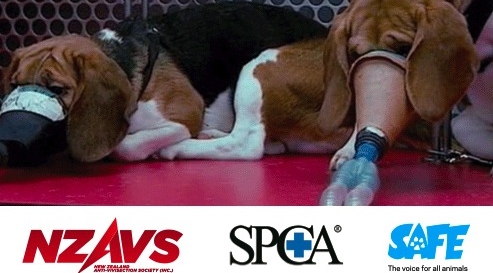
The New Zealand Anti-Vivisection Society (NZAVS) has joined forces with SAFE and the New Zealand SPCA to prevent the testing of psychoactive drugs (“party pills” or “legal highs”) on animals.

These tests would involve suffering and cruelty to both large and small animals (rats and dogs) leading to pain, distress and death. Using animals as the subject of tests for recreational drugs is unethical and unnecessary.

NZAVS, SAFE and the SPCA want the New Zealand Parliament to include a clause specifically prohibiting animal testing in any proposed legislation aimed at the regulation of these substances.

***********************

If you’re in New Zealand email NZAVS at nzavs@nzavs.org.nz for paper petition signature sheets and get your friends, family, workmates and acquaintances to sign them. You can add your signature to both the paper and online petition.

What is the Government planning?

A Bill is being introduced to regulate the sale of low risk psychoactive drugs (“party pills” or “legal highs”) for recreational use. This will require safety testing. The final stage of the testing will require human trials. Some indication of the risk to people needs to be known before that stage. The main proposal the Ministry of Health (MoH) is considering requires four rounds of fatal animal tests to be carried out on both large and small animals (usually rats and dogs). For these tests the animals will be exposed to large doses of the drugs until adverse effects are found (acute toxicity); repeated long term exposure before being killed to allow internal examination; carcinogenicity and toxicokinetic tests (long term fatal tests that look at the drugs’ passage through the body).

Why oppose animal testing of recreational drugs?

Using animals as the subject of tests for recreational drugs is immoral and unethical; and not only that, it is also unnecessary. The UK has banned all use of animals for the toxicology testing of the recreational drugs tobacco and alcohol since the 1990s, Canada requires three toxicology tests for all tobacco products, none of which use animals.

Investigating the potential harm of these drugs does not require the use of animals. The very idea that animals could be used in this way and killed to facilitate the sale of recreational drugs is something to which the majority of New Zealanders are opposed. By signing the petition you can add your voice to this opposition.

What are the other options?

There are many types of tests available that serve the required purpose that do not use animals. Tests using cell cultures, bacteria and advanced computer modelling can provide all the information, and more, that animal tests do. For example, there are long established carcinogenicity tests that are in common use as they give better results than animal tests. There are non-animal tests that have been approved for use by many regulatory bodies internationally, including in both Europe and the US1, that can be used for all four types of tests the MoH is considering.

What else can I do to stop this happening?

Make a submission to the Select Committee considering the Bill. NZAVS is providing information on how to do this to anyone that is interested. For an info pack send your address by email to nzavs@nzavs.org.nz and one will be posted.

You can also email NZAVS for petition signature sheets and get your friends, family, workmates and acquaintances to sign them.

Peter Dunne is the Minister responsible for the legislation; you can let him know what you think about this issue by contacting him via email: peter.dunne@parliament.govt.nz or by post with no stamp required: Hon Peter Dunne / Parliament Office / Private Bag 18 888 / Wellington 6160.

To:
The New Zealand House of Representatives; Hon Peter Dunne

PETITION TO STOP ANIMAL TESTING OF PARTY PILLS

To the House of Representatives

We, the undersigned, respectfully request that the New Zealand Parliament includes a clause specifically prohibiting animal testing in any proposed legislation aimed at the regulation of Psychoactive Substances
(“party pills” or “legal highs”).

Sincerely,
[Your name]

China (Again): Plans To Destroy Cambodian Rainforest By Flooding – Please Take Action (see below).

cambodia

china

Cam forest 1

RAINFOREST ACTION ALERT              PLEASE SEND, SHARE, LIKE, FORWARD!

Massive Chinese Dam Threatens Cambodia’s Cardamom Rainforests

By Rainforest Portal a project of Ecological Internet: http://www.rainforestportal.org/ with John Seed, Rainforest Information Centre: http://www.rainforestinfo.org.au/

March 14, 2013

TAKE ACTION to ensure Cambodia’s Cardamom rainforests remain standing:

  http://www.rainforestportal.org/shared/alerts/sendsm.aspx?id=cambodia_dam

The Areng Valley in the Cardamom Mountains of south-west Cambodia is threatened with flooding by a Chinese hydropower dam. This biodiversity gem – home of the Siamese crocodile and indigenous Khmer Daeum – is to be destroyed for a relatively small amount of electricity. Standing large, connected, and ecologically intact old-growth forests are required for local and global ecological sustainability and well-being.

Please send the following alerts to protect old-growth rainforests as well:

Tell Avon, New Jersey: Old-Growth Rainforest Boardwalks Cause Abrupt Climate Change
http://www.rainforestportal.org/shared/alerts/sendsm.aspx?id=rainforest_boardwalk

Protest Tasmanian Old-Growth Logging in Proposed World Heritage Area
http://www.rainforestportal.org/shared/alerts/sendsm.aspx?id=tasmania_forests

Ecuador Tribe Will “Die Fighting” to Defend Rainforest #IdleNoMore
http://www.rainforestportal.org/shared/alerts/sendsm.aspx?id=ecuador_oil


Please support Ecological Internet’s campaigns to protect and restore old
forests at http://www.rainforestportal.org/shared/donate/
cam forest 2

Germany: Boars Shot By Hunters Are Highly Radioactively Contaminated – How Many Have Been Shot By Hunts During the Last 5 Years and Presented to a ‘Certified Measuring Body’ Before Going Into the Human Food Chain ?

GERM0001

For explanation: the here used term “Swabia” refers to Baden-Wuerttemberg, with Stuttgart as its capital.

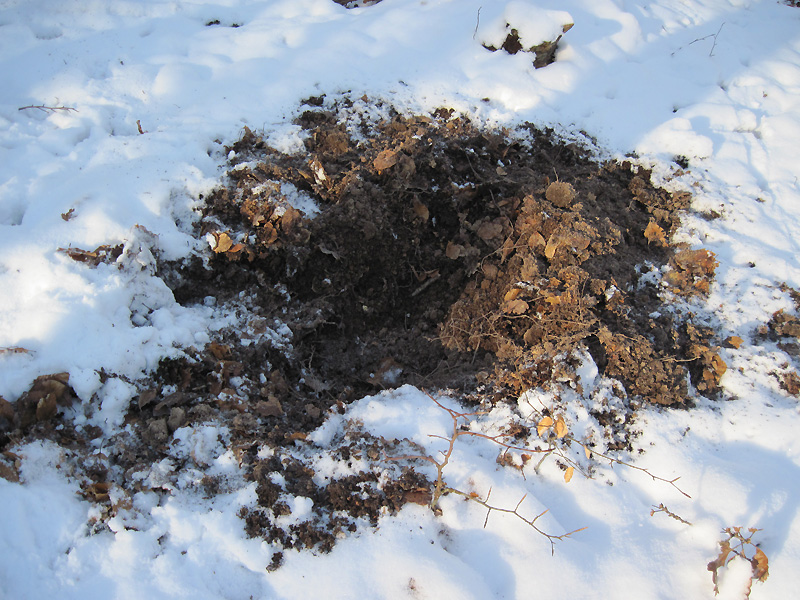
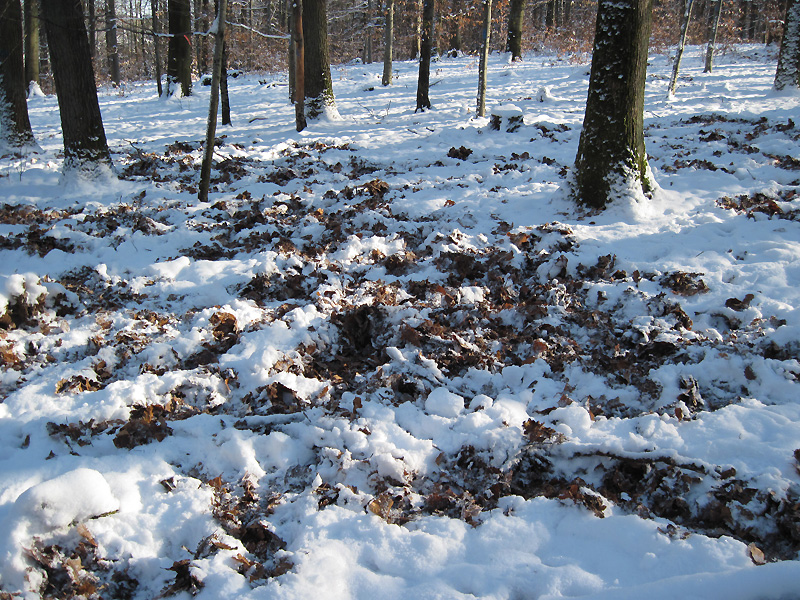
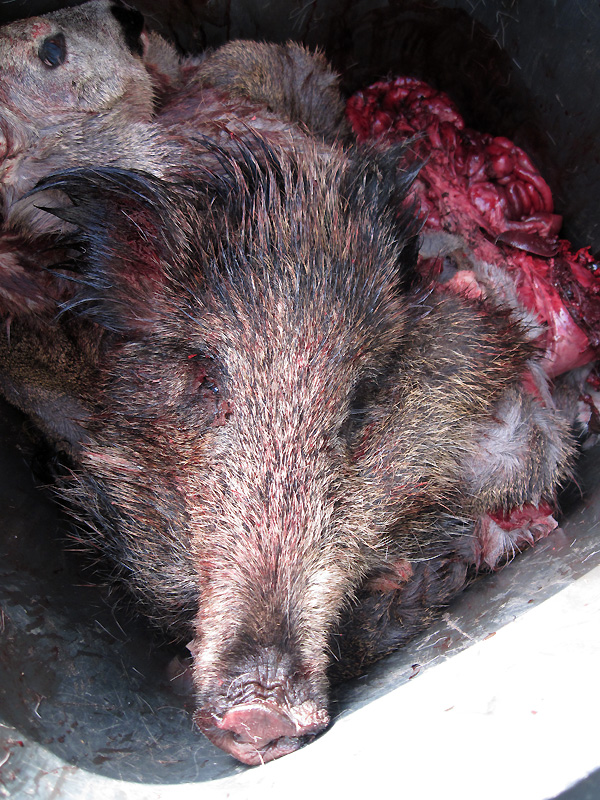
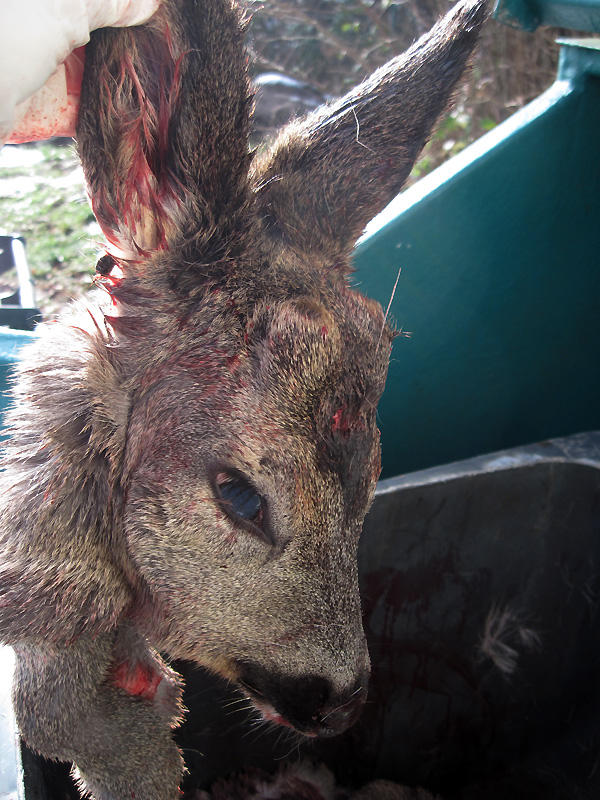
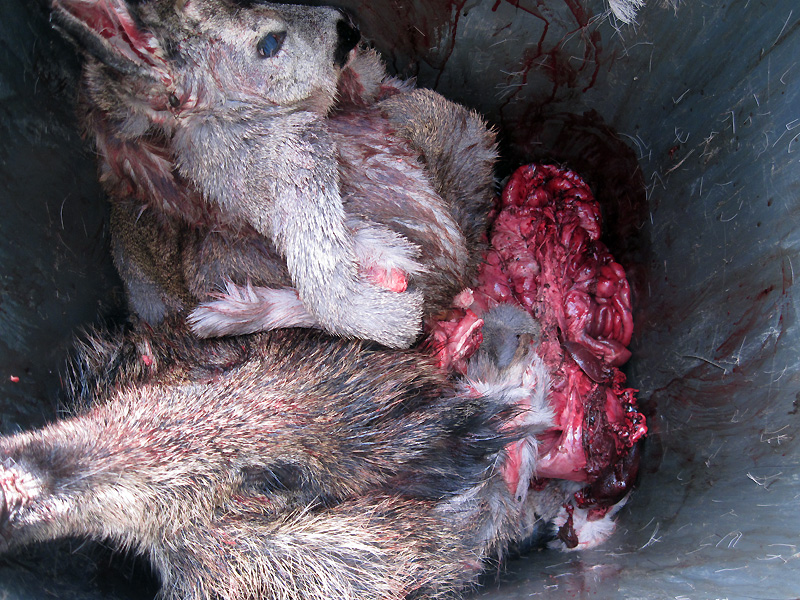
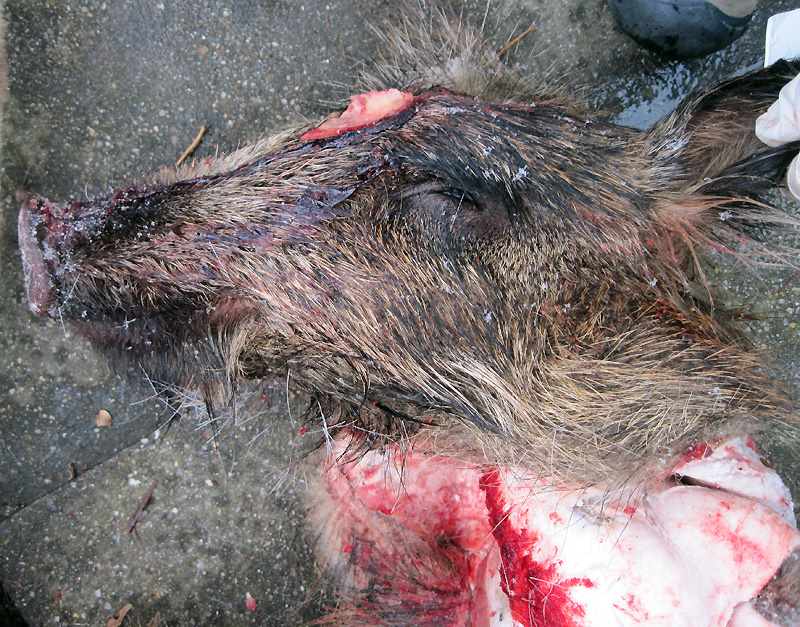
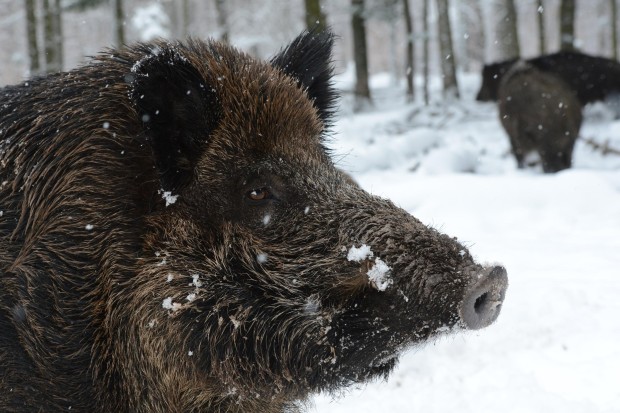
It is interesting to note that there is no mention of other “game”, which is also shot in high numbers in Germany and consumed (except for foxes, where the fur is used) – sold via local shops and in local restaurants. Deer also dig for food at this time of year. The following pics have been taken in the local forest (Southern Germany).

 SAV1

 SAV2

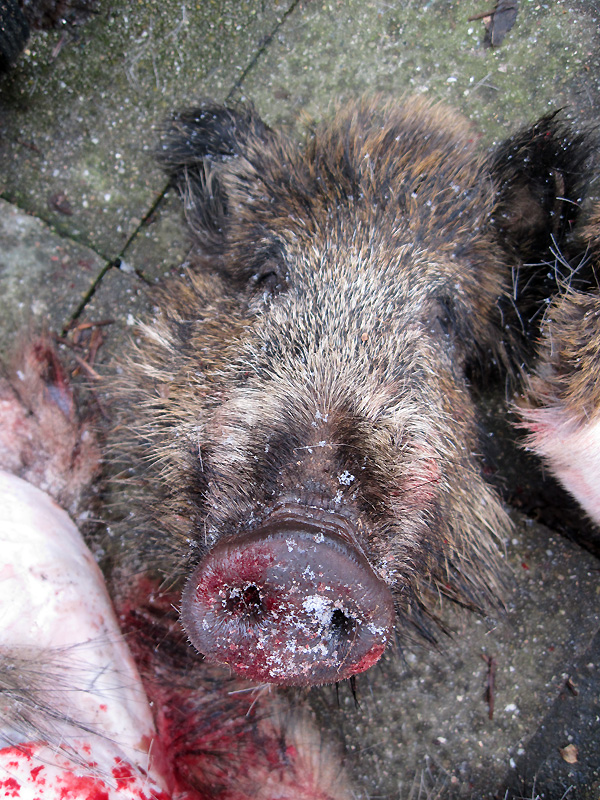
Below – The remains of locally shot boar/deer – Jan. and Feb. 2013.

Normally only the head, legs and skin is discarded in the waste bins.

The meat is sold locally by shops for human consumption and also used in local restaurants.

SAV3

SAV4

SAV5

SAV6

SAV7

http://www.welt.de/regionales/muenchen/article114358170/Ganze-Wildschweinrotte-radioaktiv-verseucht.html

12.03.13

ANIMALS

Entire group of wild boar radioactively contaminated

Even 27 years after the reactor catastrophe at Tschernobyl the effects are measurable.  After a boar hunt near Augsburg all shot animals had to be disposed of: the sows very heavily contaminated.

SAV8

Wild boars in the forest. By foraging for food they plough through the ground. There, especially in mushrooms, a lot of radioactivity is still concentrated.

37 radioactive Swabian wild boar make the Greens feel uneasy. The animals had recently been shot during a “Saujagd” (boar hunt) near the city of Augsburg. All 37 were afterwards disposed of due to a too high exposure dose, said Christine Kamm, with the Augsburg Green party.

The readings came up with Caesium-137 values of 10,000 becquerel per kilogram. From 600 becquerel onwards game is declared unfit for consumption, said a representative of the Augsburg regional environmental authority.

The reactor catastrophe at Tschernobyl in 1986 is still considered the main source for Caesium pollution. The radioactive metered values for the recently shot 37 sows are even higher than those of previous measurements, said Kamm. “The values rise, although the radioactive half-life of Caesium is 30 years”:

The Greens intend to submit an inquiry to the state parliament in order to find out if Swabian sows are a special case and how many radioactively contaminated animals have been shot in the last 5 years. Boars shot during hunts must be presented to a certified measuring body – unless the hunter intends to consume the meat himself.

Radioactivity in the Ground

The high level of contamination of these 37 Swabian boars may also have seasonal reasons. Caesium-37 is measured for the most part in the surface soil of the forest, said a representative of the environmental authority. In years with a good food supply the boars ate mostly acorns and beech nuts. In bad years the boars took to ploughing through the ground looking for mushrooms. “This can lead to fluctuation between years”.

The state authority conducts radioactivity measurements of its own within the framework of the precautionary radiation protection legislation (Strahlenschutzvorsorgegesetz). From 1st of March 2012 to 1st of March 2013 only 12 of 136 examined sows tested positive for elevated radiation. One of the animals came from Swabia, the other 11 from Bavaria.


EU: March 11th 2013 – A Great Day – Cosmetics Testing On Animals In the EU Is NOW BANNED !!

EU AW LOGO

CosmeticsBanner3

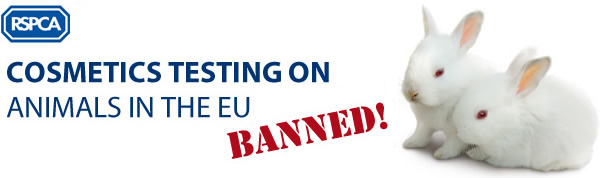
Cosmetics testing on animals in the EU is now BANNED !

http://www.rspca.org.uk/getinvolved/campaigns/laboratory/cosmetics?source=130311_CAMP_Cosmetics&utm_source=Campaigns&utm_medium=email&utm_content=CopyThanks&utm_campaign=130311_CAMP_Cosmetics&spMailingID=5259649&spUserID=MzA4NTgwNDY5OTAS1&spJobID=313744720&spReportId=MzEzNzQ0NzIwS0

The RSPCA has campaigned for ‘cruelty-free’ cosmetics for 30 years and from 11th March 2013, new EU legislation will ban the sale of cosmetics which have been newly tested on animals within the European Union. This means that multinational companies can’t avoid a test ban in the EU by carrying out tests in other countries if their products or ingredients have been newly tested on animals then they cannot be sold in the EU, no matter where in the world testing took place.
This ban is a landmark for animals and we hope it will send the message to other countries, and to companies operating outside the EU, that animal testing in the name of beauty is not acceptable.

Amid pressure from parts of the cosmetics industry to delay the ban, EU Commissioner Borg, who has responsibility for this area did not waiver. This ban will no doubt spare the suffering of many animals, if you would like to thank Commissioner Borg on their behalf, please do so by using the form below…

Please email Commissioner Borg to thank him

From the RSPCA:

Dear Supporter,

It’s finally here! It’s almost 30 years since the RSPCA began campaigning for ‘cruelty-free’ cosmetics. Today (11 March) the ban which prevents the sale within the European Union of cosmetics which have been newly tested on animals, finally comes into force.

The testing of cosmetics ingredients and products using animals can cause significant suffering. The EU recognises that causing animals harm for such a trivial purpose is morally unacceptable. Despite pressure from some parts of the cosmetics industry to delay a sales ban on products tested on animals, the EU Commissioner with responsibility for this area stood firm.

Please email Commissioner Borg to thank him, on behalf of the animals and ethical consumers across the EU.

Many cosmetic companies are multinational but this new legislation means that they can’t avoid a test ban in the EU by carrying out tests in other countries. If their products or ingredients have been newly tested on animals then they cannot be sold in the EU, no matter where in the world the testing took place.

And the good news doesn’t stop there as in response to the EU ban, Israel has introduced its own similar ban, and India has stated their intention to ban the use of animals to test cosmetics. We hope the EU ban will set an example to other countries, and to companies operating outside the EU, that animal testing in the name of beauty is not acceptable.

Thank you for your support!

This ban is brilliant news for the animal welfare but it isn’t the end – there are still many animals being used all across the world to develop cosmetics products that will be sold outside of the EU.

We will soon be taking our message to these countries and companies to ask them to follow the EU lead. We will do our best to keep you posted on this issue.

For the most recent updates and other ways you can help animals, sign up for our campaign updates here. 

Thanks again!