India, Kerala: Signatures Required to Take City to Court Over Dog Killings

Please sign and help Stephanie get the 100,000 signatures needed;

Thank You.

http://godsdogcountry.blogspot.com/

From: Stephanie Engel

Dear Friends,

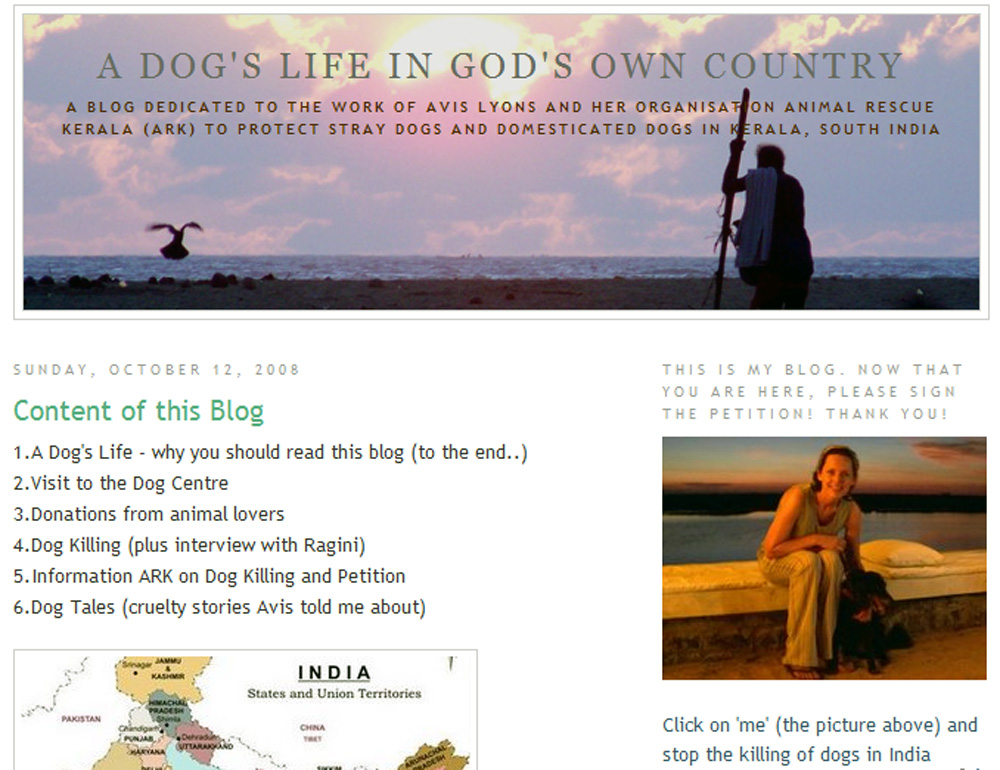
During my three week holiday in Kerala, South India, I did some volunteer work for a local dog center, Animal Rescue Kerala (ARK). This charity trust let by a British woman takes in ill-treated dogs and street dogs to have them vaccinated and sterilised. ARK is the only organisation that implements the ABC/AR (Animal Birth Control / Anti Rabies) Rules; a programme set up by the national government to control the stray dog population and to prevent the spread of rabies.
 
However, their work has been made impossible due to the interference of the City of Trivandrum (capital of the state Kerala) that kills dogs on a massive scale and in a very brutal manner. To help ARK with their fight against the indiscriminate killings and to help them continue their wonderful work rescuing ill-treated or undernourished dogs I created a blog (http://godsdogcountry.blogspot.com/) for them. Please have a look and sign the petition.

A 100.000 signatures are needed in order to take the City of Trivandrum to the Supreme Court in Delhi. They have got just over 20.000, so a mere 80.000 to go.

So, please, go to: http://godsdogcountry.blogspot.com/ and forward this email to as many people as you can!

THANK YOU!
Stephanie

England, Uk: Brilliant Les and the Crew at Tiggywinkles Work to Save ‘Rupert’ the Baby Deer

Here at SAV as you will know, much of our work is very upsetting and testing for all involved.

So, for a change, it was decided to show you the better, brighter side of what animal welfare concerns are about.

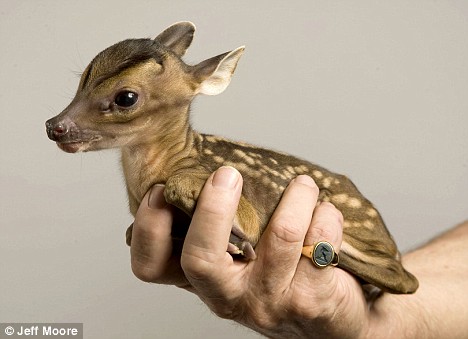
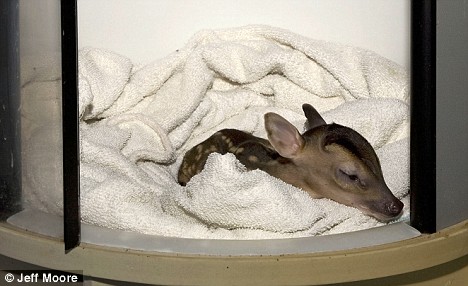
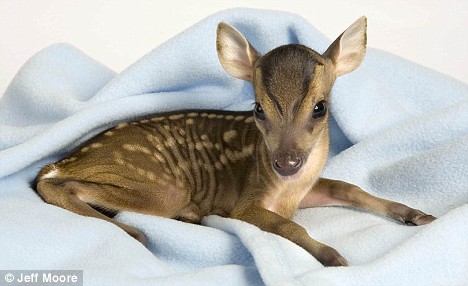
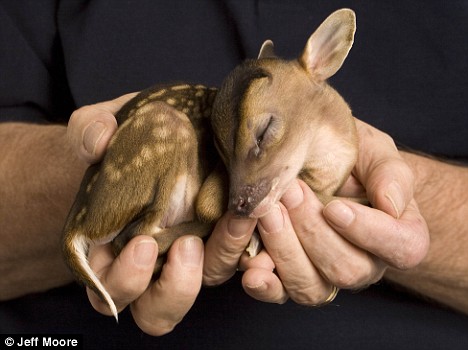
The following is about ‘Rupert’, a baby deer who’s mother was very severely injured in a road accident.  Rupert is now in an incubator in the intensive care unit at Tiggywinkles Wildlife Hospital in Buckinghamshire, England, Uk.


Tiggywinkles do some fantastic work for all British wildlife, attempting to save every injured animal that is ‘lucky’ enough to end up at their hospital / care centre.
You can find out more about Tiggywinkles by visiting their site at

http://www.sttiggywinkles.org.uk/

http://www.sttiggywinkles.org.uk/who.html

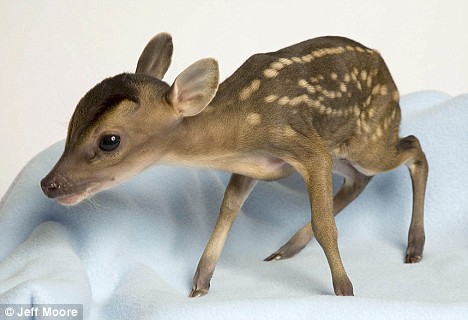
At just six inches tall and weighing just over a pound, Rupert is now in an incubator in the intensive care unit at Tiggywinkles Wildlife Hospital.

 
He has only recently opened his eyes.
  

Les Stocker, founder of Tiggywinkles, said: Rupert’s mother had very severe injuries.   We brought him out and got him breathing and then he went into an incubator on oxygen. He is now being fed by a tube. 
 
 
Dear deer: Rupert pulls a striking pose for the camera

Staff are optimistic Rupert, now five days old, will make a full recovery.
Deer are very, very tricky but this one has spirit.
He’s extremely feisty little guy and quite pushy, Mr Stocker said.

Asleep: Rupert takes 40 winks

SAV send thanks to the brilliant Les and to all the team at Tiggywinkles.

Fight on Rupert ! – Grow, big, strong and majestic !

All photographs – Jeff Moore 


Help Animals Asia to Stop Korean Dogs Being Classified as Livestock, and fit for Human Consumption

Find out more about Jill and the excellent work of Animals Asia at their web site:
Please resend this letter — feel free to write your own, but please be polite or it will fireback.
 
If using this letter, add this statement onto the message:
I fully endorse the letter below.
 
Your full name
Country
 
Sent: Thursday, October 16, 2008 10:54 AM
Subject: Please don’t classify dogs and cats as livestock
 
Mayor of Seoul Mr Oh Se-hoon
Email:
ohsehoon@seoul.go.kr
Address: Euljiro1, Jung-gu, Seoul, 100-744, Korea

Dear Mr Oh Se-hoon,Animals Asia Foundation is an animal welfare organisation working to restore respect to all animals across Asia. One of our programmes is Friends…or Food? through which we work on the ground in China to eradicate the use of dogs and cats as “meat” animals.As such, we are extremely disturbed by the proposal of the Municipality of Seoul released in the Dog Meat Hygiene Management Policy, to list dogs as livestock. As supporters of the Korean Animal Protection Society (KAPS) and the Korea Association for Animal Protection (KAAP), we fully support and endorse their campaign to protest this legislation.

Listing dogs as livestock for human consumption under the Korean national legislation, would make Korea the first country in the world to legalise dog meat, and would also make Korea’s President the first national leader in the world to permit dogs to be used “as food for human consumption”.

Animals Asia believes that to advocate or legislate the slaughter of dogs for consumption would legitimise the practice and undermine the great work of countries like Taiwan, the Philippines, Thailand and Hong Kong that have already outlawed the practice of dog eating. In China, we are seeing a groundswell of change with an increase in pet ownership, and a huge increase in awareness of dogs as companion animals, not livestock.

Animals Asia strongly urges your government to prevent the legalisation of dog eating in your national laws and to prohibit the consumption of dog meat as soon as possible.

Yours sincerely

Jill Robinson, MBE
Founder & CEO
Animals Asia Foundation


World Health Organisation (WHO) EXPERT CONSULTATION ON RABIES

1990 – World Health Organisation (WHO) EXPERT CONSULTATION ON RABIES:

There is no evidence that removal of dogs alone has ever had a significant impact on dog population densities or the spread of rabies. The population turnover of dogs may be so high that even the highest recorded removal rates (about 15% of the dog population) are easily compensated for by increased survival rates. In addition, dog removal may be unacceptable to local communities”.

Alternative approaches, such as the implementation of “soft” population control projects (such as animal birth control) and education on proper health behaviour, responsible dog ownership and proper rubbish disposal, should be studied and, where feasible, their implementation promoted”.

….. AND MOST IMPORTANTLY:

“By maintaining the stray dogs killing the authorities actually acknowledge the incapacity to enforce a policy toward the responsible pet dog ownership, and dog population management”.


http://www.who.int/rabies/rabnet/en/
(mail: rabnet@who.int)
Rabies  a.. Dr A. Wandeler
  Centre of Expertise for Rabies, Animal Diseases Research Institute
  3851 Fallowfield Road, P.O. Box 11300, Station H, Nepean, Ontario K2H 8P9
  CANADA
  Tel: (1.613) 228.66.98 Fax: (1.613) 228.66.69
  Email: wandelera@inspection.gc.ca

Reference Experts and Laboratories


  a.. Dr J. Barrat
  AFSSA-LERPAS, Laboratoire d’études sur la rage et la pathologie des animaux sauvages
  Domaine de Pixérécourt, BP 9, 54220 Malzéville
  FRANCE
  Tel: (33 (0)3) 83.29.89.50 Fax: (33 (0)3) 83.29.89.58
  Email: j.barrat@afssa.fr

  a.. Mme F. Cliquet
  AFSSA-LERPAS, Laboratoire d’études sur la rage et la pathologie des animaux sauvages
  Domaine de Pixérécourt, BP 9, 54220 Malzéville
  FRANCE
  Tel: (33 (0)3) 83.29.89.50 Fax: (33 (0)3) 83.29.89.58
  Email: f.cliquet@afssa.fr

  a.. Dr T. Müller
  Institute of Epidemiology, Friedrich-Loeffler Institut, Federal Research Institute for Animal Health
  Seest. 55, 16868 Wustherhausen/Dosse
  GERMANY
  Tel: (49.33) 97.98.01.86 Fax: (49.33) 97.98.02.00
  Email: thomas.mueller@wus.bfav.de

  a.. Dr Claude Taurai Sabeta
  Onderstepoort Veterinary Institute, Rabies Unit
  Private Bag X05, Onderstepoort 0110
  SOUTH AFRICA
  Tel: (27.12) 529.94.39 Fax: (27.12) 529.93.90
  Email: sabetac@arc.agric.za

  a.. Dr Anthony Fooks
  Rabies and Wildlife Zoonoses Group, Virology Department, VLA Weybridge
  New Haw, Addlestone, Surrey KT15 3NB
  UNITED KINGDOM
  Tel: (44.1932) 35.78.40 Fax: (44.1932) 35.72.39
  Email: t.fooks@vla.defra.gsi.gov.uk

List of centres
Veterinary Medicinal Products

  a.. AFSSA Fougères
  Agence nationale du médicament vétérinaire
  B.P. 203
  35302 Fougères Cedex
  FRANCE
  Tel: 33 (0)2 99.94.78.78/78.71
  Fax: 33 (0)2 99.94.78.99
  E-mail: p.dehaumont@anmv.afssa.fr
  http://www.anmv.afssa.fr/en_anmv
ELISA and Molecular Techniques in Animal Disease Diagnosis

  a.. FAO/IAEA Centre for ELISA and Molecular Techniques in Animal Disease Diagnosis
  International Atomic Energy Agency
  Wagramerstrasse 5
  P.O. Box 100
  A-1400 Wien
  AUSTRIA
  Tel: (43.1) 260.02.83.55
  Fax: (43.1) 260.02.82.22
  E-mail: a.diallo@iaea.org
Animal Disease Surveillance Systems and Risk Analysis

  a.. Centers for Epidemiology and Animal Health
  USDA-APHIS-VS-CEAH
  2150 Centre Avenue, Building B
  Fort Collins, Colorado 80526-8117
  UNITED STATES OF AMERICA
  Tel: (1.970) 494.70.01
  Fax: (1.970) 472.26.68
  E-mail: cristobal.zepeda@aphis.usda.gov
  http://www.aphis.usda.gov/vs/ceah/ceahpage.htm
Diagnosis and Control of Animal Diseases in Eastern Europe, Central Asia and Transcaucasia

  a.. Federal Governmental Institution, Federal Centre for Animal Health, FGI-ARRIAH (1)
  Ministry of Agriculture of the Russian Federation
  600901 Yur’evets, Vladimir
  RUSSIA
  Tel: (7.4922) 26.38.77
  Fax: (7.4922) 26.19.14
  E-mail: mail@arriah.ru
  http://www.arriah.ru (russian version)
  http://www.arriah.ru/portal/en (english version)

Food Safety, Diagnosis and Control of Animal Diseases in Eastern Europe, Central Asia and Transcaucasia

  a.. All-Russian Research Institute for Control(2)
  Standardisation and Certification of Veterinary Preparations
  Ministry of Agriculture and Food
  5 Zvenigorodskoye shosse,
  123022 Moscow
  RUSSIA
  Tel: (7.095) 253.14.91
  Fax: (7.095) 253.14.91
  E-mail: Vgnki-vet@mtu-net.ru
Diagnosis of Animal Diseases and Vaccine Evaluation in the Americas

  a.. Institute for International Cooperation in Animal Biologics
  College of Veterinary Medicine
  Iowa State University
  Ames
  Iowa 50011
  UNITED STATES OF AMERICA
  Tel: (1.515) 294.84.59
  Fax: (1.515) 294.82.59
  E-mail: iicab@iastate.edu
  http://www.cfsph.iastate.edu/iicab/
Food-Borne Zoonotic Parasites

  a.. Canadian Food Inspection Agency
  Centre for Animal Parasitology
  116 Veterinary Road
  Saskatoon, Saskatchewan S7N 2R3>
  CANADA
  Tel: (1.306) 975.53.44
  Fax: (1.306) 975.57.11
  E-mail: agajadhar@inspection.gc.ca
New and Emerging Diseases

  a.. CSIRO, Australian Animal Health Laboratory (AAHL)
  5 Portarlington Road, Private Bag 24, Geelong 3220, Victoria
  AUSTRALIA
  Tel: (61.3) 52.27.50.00
  Fax: (61.3) 52.27.55.55
  E-mail: martyn.jeggo@csiro.au
Training of Official Veterinarians

  a.. Ecole nationale des Services vétérinaires
  1 avenue Bourgelat
  BP 83
  69280 Marcy l’Etoile
  FRANCE
  Tel: (33(0)4) 78.87.25.45
  Fax: (33(0)4) 78.87.25.48
  E-mail: ensv@ensv.vet-lyon.fr
Research and Training in Population Animal Health Diagnosis and Surveillance Systems

  a.. International Epilab, National Veterinary Institute
  Technical University of Denmark
  Bulowsvej 27, DK-1790, Copenhagen V
  DENMARK
  Tel: (45) 72.34.62.43
  Fax: (45) 72.34.60.01
  E-mail: hvi@vet.dtu.dk
  http://www.food.dtu.dk
Biotechnology-based Diagnosis of Infectious Diseases in Veterinary Medicine

  a.. National Veterinary Institute, 751 89 Uppsala
  SWEDEN
  Tel: (46.18) 67.40.00
  Fax: ( 46.18) 67.46.69
  E-mail: sandor.belak@sva.se
Emerging and Re-emerging Zoonotic Diseases

  a.. National Center for Infectious Diseases, CDC
  Division of Bacterial and Mycotic Dieseases
  1600 Clifton Road, Mailstop C12, Room 6034, Building 1
  Atlanta, Georgia 30333
  UNITED STATES OF AMERICA
  Tel: (1-404) 639.38.31
  Fax: (1-404) 639.44.41
  E-mail: nmarano@cdc.gov
Zoonoses in Europe

  a.. Friedrich-Loeffler-Institute
  Boddenblick 5a
  17493 Greifswald
  Insel Riems
  GERMANY
  Tel: ( 49-38351) 7-102
  Fax: ( 49-38351) 7-151
  E-mail: thomas.mettenleiter@fli.bund.de
Training of Veterinary Services

  a.. Centro Buenos Aires para la Capacitación de los Servicios Veterinarios (CEBASEV )
  Avenida Alexander Fleming 1653 Piso 1, CP 1640 – Martinez, Pcia de Buenos Aires
  ARGENTINA
  Tel: (54.11) 41.21.53.53
  Fax: ( 54.11) 41.21.53.60
  E-mail: asilvest@senasa.gov.ar
Information on Aquatic Animal Diseases

  a.. The Centre for Environment, Fisheries and Aquaculture Sciences (CEFAS)
  Weymouth Laboratory
  Barrack Road, The Nothe, Weymouth, Dorset, DT4 8UB
  UNITED KINGDOM
  Tel: (44.1305) 20.66.26
  Fax: (44.1305) 20.66.27
  E-mail: b.j.hill@cefas.co.uk
  http://www.collabcen.net
Wildlife Disease Surveillance and Monitoring, Epidemiology and Management

  a.. Canadian Cooperative Wildlife Health Centre (CCWHC), Department of Veterinary Pathology, Western College of Veterinary Medicine, University of Saskatchewan, 52 Campus Drive, Saskatoon S7N 5B4
  CANADA
  Tel.: (+1-800) 567.20.33
  E-mail: ccwhc@usask.ca
Animal Welfare Science and Bioethical Analysis (Asia/Pacific)

  a.. Animal Welfare Science and Bioethics Centre (AWSBC) at Massey University, Private Bag 11 222, Palmerston North,
  NEW ZEALAND
  Tel.: (+6) 350.48.07
  E-mail: d.j.mellor@massey.ac.nz

—————————————————————————

India, Delhi: Home Needed for Abandoned Pup – Can You Help Please ?

Dear friends,
 
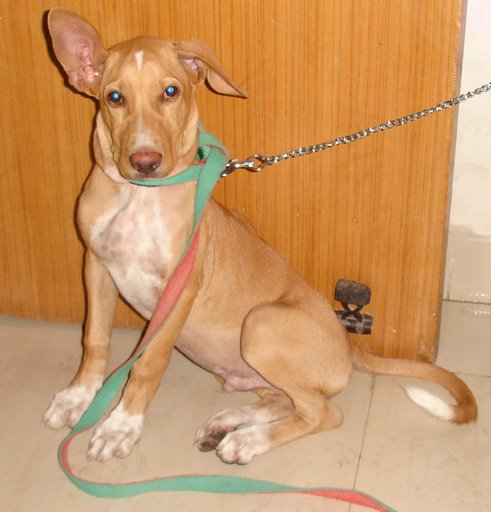
Please see pictures of a pup which is being abandoned by a retired senior IPS officer, who has suddenly lost his love for this dog, once he discovered that the pup is an Indian mix.
 
The pup was always in his home, so is perfectly healthy and is around 5-6 months old.
Male.
The pup is available in Dwarka, Delhi. I am the contact person ( +91 9868881566 ).
This is an exceptional pup and very very playful…so i hope he finds a good home immediately.
Please see his pics at the following link :
 
 
thanks
Rishi Dev
 

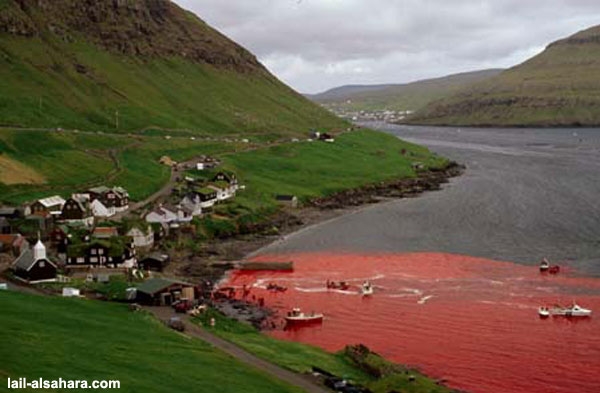
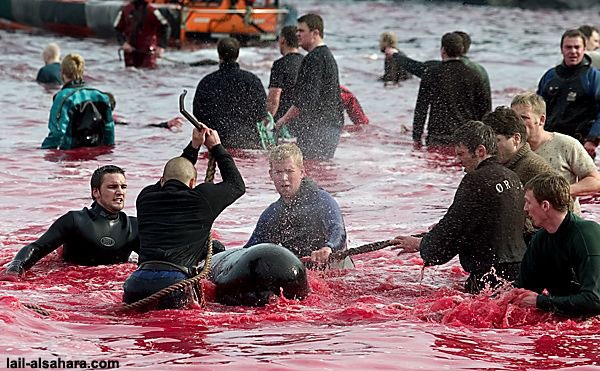
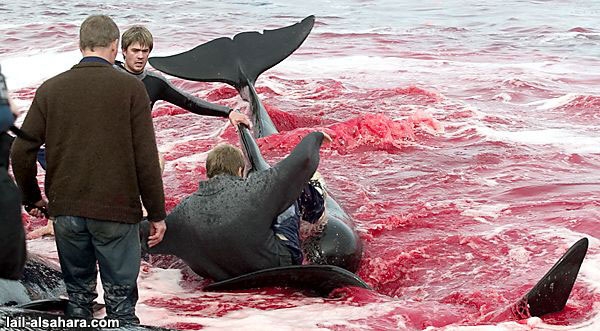
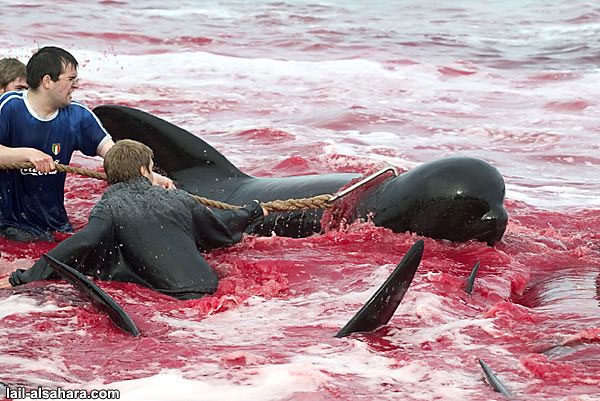
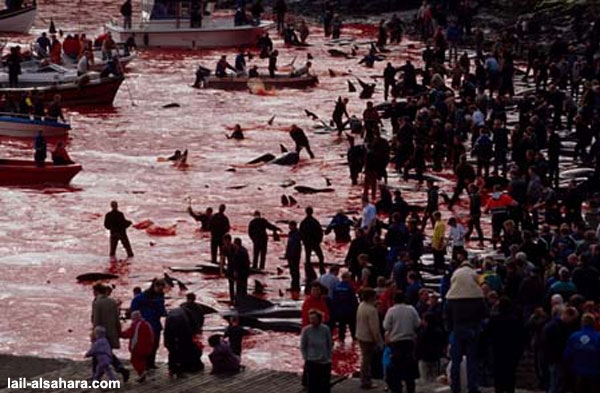
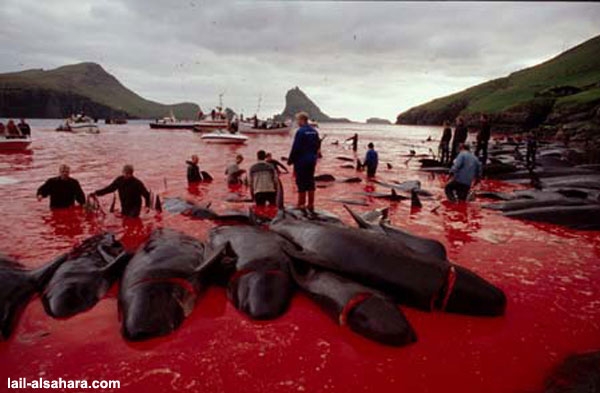
Denmark Disgraces the World With Faroe Islands Whale Slaughter

Please check out the excellent Wikipedia site about the Faroe Islands Whale Slaughter:

http://en.wikipedia.org/wiki/Whaling_in_the_Faroe_Islands

Whaling in the Faroe Islands has been practised since at least the tenth century. It is regulated by Faroese authorities but not by the International Whaling Commission as there are disagreements about the Commission’s competency for small cetaceans. Around 950 Long-finned Pilot Whales (Globicephala melaena) are killed annually, mainly during the summer. The hunts, called “grindadráp” in Faroese, are non-commercial and are organised on a community level; anyone can participate. The hunters first surround the pilot whales with a wide semi-circle of boats. The boats then drive the pilot whales slowly into a bay or to the bottom of a fjord.

Most Faroese consider the hunt an important part of their culture and history. Animal-rights groups criticize the hunt as being cruel and unnecessary, while the hunters claim in return that most journalists do not exhibit sufficient knowledge of the catch methods or its economic significance.

Links to more information and petitions:

http://www.care2.com/find/site

Governor Palin’s Department of Fish and Game Round Up 14 Orphaned Wolf Cubs and Shoot Each One in the Head – A Violation of State Law

A message from Mr. Rodger Schlickeisen
President
Defenders of Wildlife Action Fund

When you promote a grotesque program like Governor Sarah Palin’s Alaska wolf slaughter, you can expect gruesome results.
A startling example: In June, after gunning down 14 adult wolves from a helicopter, officials from Governor Palin’s Department of Fish and Game rounded up 14 orphaned wolf pups and methodically shot each one in the head in clear violation of a state law.[1]


This is a story that needs to be told. Please watch our new video on Palin’s wolf killing record and share it with every animal lover you know.


Warning: This video contains the disturbing truth about Governor Palin’s out-of-control wolf killing efforts.

State law prohibits the targeting of pups — a practice known as denning. Maybe that’s why Palin’s officials tried to cover it up, making no mention of the brutal pup executions in the state’s June 30th press release on the killings.[2] To date, none of the officials involved in the incident has been held accountable.Governor Palin could be just a heartbeat from the presidency.
Do we want a vice president who champions savagery towards animals?