REPORT (by Tamara Popic – a graduated veterinarian) ON OPERATIONS CONDUCTED IN CITY SHELTER FOR ABANDONED DOGS AND CATS
Period between October 2nd and October 10th 2006.
Tamara Popic – representative of Belgrade coalition for animal protection, graduated veterinarian
The first week of my engagement in shelter for dogs and cats in Ovca came down to introduction and follow up of work of Communal zoo hygiene.
My presence was almost passive due to two reasons: 1. time necessary for introduction of manner of their operation, 2. lack of camera which I could use to substantiate my observations.
Even beside obvious positive result in terms of appearance and cleanliness of the facility comparing to previous period, I have to note that operation is mainly not in compliance with prescribed protocol:
- Lack of veterinary checks of dogs and cats admitted to the shelter, as a first aid to injured animals.
- No veterinarian is campusing the facility on daily basis or observing the animals.
- I was not able to understand who makes a selection of animals to be sterilized and in accordance with which criteria or that animal was clinically checked before intervention.
- Transportation of sterilized dogs from operating room to the box is inadequate. Stretchers are not used, and there are no hand barrows for smaller dogs.
- Dogs in post-operative period are laid down to the, often wet, concrete. Waking up from anesthesia is followed by fever. By all means, mats should be provided for utilization during this brief period.
- The question of immunization is also imposed: During the sterilization dogs are receiving an antibiotic with prolonged action; at the same time, they are vaccinated against rabies and proceed with dehelmintization. Likewise, often after dehelmintization diarrhea or softer dropping, increasing chances for infection of post-operative wound with males.
- During the post-operative period, veterinarian is not checking the patients.
- Five sterilized dogs are ill. Only upon my remark, they were given an antibiotic of wide-range effect. Given there was no clinical check, it resulted in lack of an adequate therapy. Do we want sick dogs on our streets? If they are already sterilized, which causes some expenditures, let us give them chance to survive.
- Failure to comply with prescribed post-operative stay in the shelter, 3 days for male and 5 days for female. This information can be verified in charts.
- Lack of clinical check after animal’s release, disregarding of they are to be return to originally habitat, put in homes or submitted to shelter.
- October 2nd: veterinarian Aleksandar Risovic executed 10 sterilizations. According to his own words, he did so under higher body temperature. He works alone, with no presence of a technician.
- October 3rd: veterinarian Dragisa Simic executed 9 sterilizations.
- October 4th and 5th: no sterilizations executed.
- October 6th: veterinarian Snezana Jovic executed 6 sterilizations and was a member of triage euthanasia committee, along Milivoje Lazic and Milan Botic. Something completely unbelievable happens: dogs to be euthanised are nowhere to be found, except for completely exhausted puppies. Given that I’ve observed dogs every day, it is my free estimate that there were four dogs for euthanasia. Other dogs were not subjected to evaluation of age nor had any clinical checks, so there is a great likelihood that there are several dogs not suitable for return to the streets.
- Admission ward is almost overcrowded, and new dogs are arriving. Just 25 dogs were sterilized in five days.
- Collars-ribbons with pendants are completely inappropriate. They are made of satin, easy to untie, rip and come off, resulting in more difficult further treatment of dogs in the following period.
- October 4th: two owners or guardians are returned from the shelter’s gate, because there was no attending veterinarian in charge of chipping of these dogs.
- The shelter disposes of one computer without a database. Its purpose is a complete mystery for me.
- In terms of sanitary and hygiene measures, my only complaints refers to admission ward where protocol procedure is only partially implemented.
- Comparing to previous period, much better treatment of technical staff toward animals is obvious.
It think it is necessary to have a constant presence of at least one clinical veterinarian who is able to monitor entire process, to be in charge for each patient all the way through, disregarding of whether the outcome is sterilization or euthanasia.
I think all of the above mention can be corrected in the following manner:
Better organization of work, protocol conformance, opening new shelters, engagement of association for animal protection on bigger scale in order of promoting faster sheltering of dogs and cats.
Period between October 9th to 13th 2006.
Tamara Popic – represent of Belgrade coalition for animal protection, graduated veterinarian
I will start this report with a question. What is the reason for drafting a protocol for shelter operation if conditions for its operation are not partially satisfied? And what is the essence of protocol existence if it is not obeyed? This question relates to insufficient number of employees in the shelter.
There are two nurses in charge of over 150 dogs, who, in spite good will and best efforts cannot completely fulfill daily obligations, in physical sense.
We also have an issue of alimentation and clinical check of dogs and cats to be admitted to the shelter. Needles to say anything about evaluation of animal’s temper…
Protocol on admission to the shelter clearly states that each animal entering the shelter has to be identified by photographing and detail description of identification tags, if any; same applies to health condition. Already sterilized dog has been opened, meaning no one looked if there was any tattooed number (BB1358), documented with a photo.
There are no clearly prescribed protocol data in the event when owner is submitting his animal.
Upon my remark that the shelter doesn’t dispose of thermometer and stethoscope, only thermometer was acquired. In what manner are the dogs checked? There is also no antihelmintics for puppies.
Up to this week the puppies haven’t been properly fed and watered. Djordje Djokic warned nurse to correct this.
There is no scale in the operating room, resulting in consummation of anesthetic and antibiotic at sole discretion.
During this week, 21 adult dogs and 26 puppies were euthanised.
October 11th: commencement of more serious rounds of sterilized dogs and better post-operative treatment. The same day, one copy of protocol was brought, with instruction to copy it and distribute to employees.
I repeat, it is necessary to have constant presence of attending clinic veterinarian to follow up entire process guided by the protocol and engagement of association for animal protection on bigger scale in order of promoting faster sheltering of dogs and cats.
Period between October 16th to 21st 2006.
Tamara Popic – represent of Belgrade coalition for animal protection, graduated veterinarian
During this week, 42 dogs were returned to their habitats, i.e. locations from which they were removed and about 10 were taken by guardians.
13 adult dogs and 1 puppy were euthanised.
Highly professional sterilization has been executed on about 60 dogs.
Admission of the animals to the facility is still not in accordance with protocol, apart from rough admission triage, immediate euthanasia is executed on very sickand injured animals. Arrival of inspection has been waited before.
I have an objection on the very place of euthanasia execution; it is executed on the very ward, between cages. I think this should be done in separate room. For instance, removal of furnace (out of order) would create a space, and area reserved for cats could be displaced. This would provide sufficiently large room for one small ambulance, where the table would be used for clinical check of animals, give a first aid with minor injuries, and execute euthanasia, if necessary.
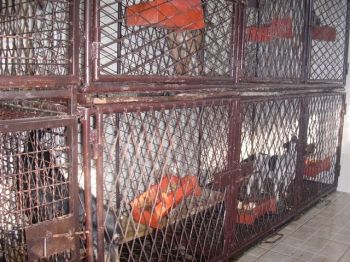
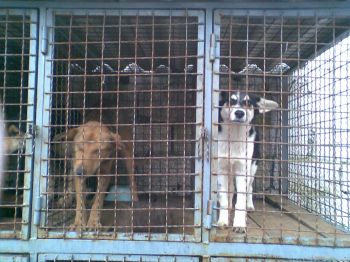
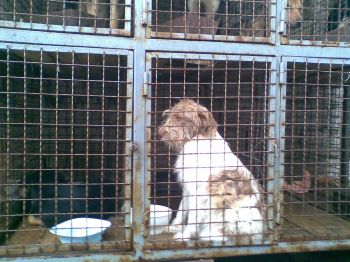
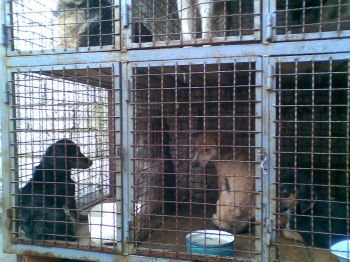
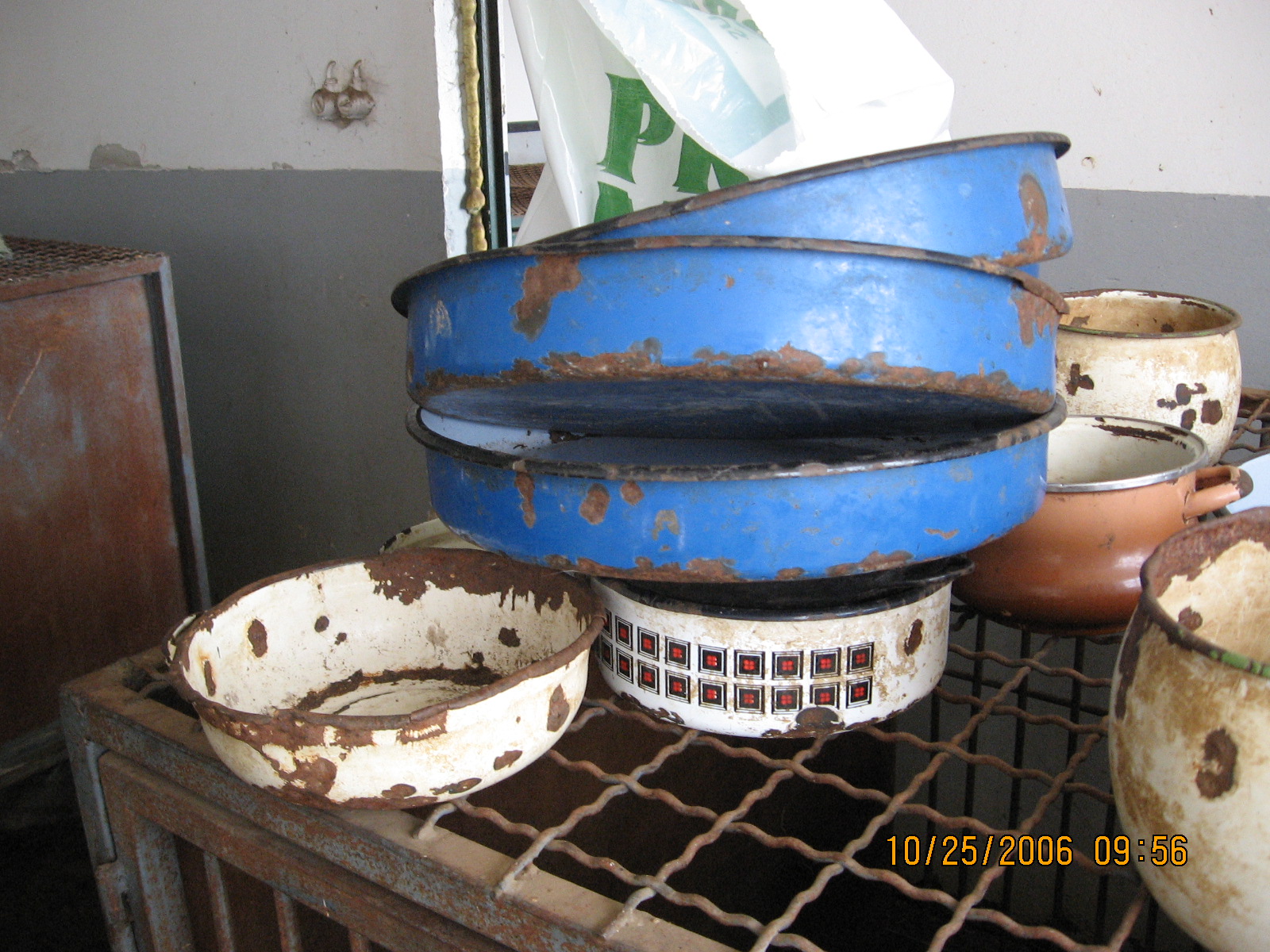
Hygiene of cages on the admission ward is not on satisfactory level, resulting in unsuccessful disinfection, if any. Komanovic is also introduced with this fact. In this part are also inadequate feeder and watering vessels.
Two warn cages were replaced with new ones.
Puppies present a big problem. At this moment, I think that it is not possible to solve a problem without more adequate role of the Association for Animal Protection. It is necessary to organize faster takeover of puppies, if possible.
It is also necessary to provide bigger involvement of associations in finding new locations for releasing dogs taken over from so-called undesired locations, like hospitals, kindergartens and schools.
On Saturday, October 21st I happened to see Milorad Djordjevic and veterinarian inspector Olivera. Something very interesting to me is going on. Given I am a representative of Belgrade coalition for animal protection, accepted by the Veterinary Center Belgrade and City Secretariat, at the same time, a retired person and volunteer, my co-worker practically threw me out reasoning this act as my presence is interpretate as a supervision of her work. It am imposed by the question whether the work of veterinarian inspection is public or secret.
Dated October 21st, number of dogs on admission ward is 26 adult dogs and 18 puppies up to 2.5 months of age and 60 dogs in post-operative section.
Period between October 23rd to October 27th 2006.
Tamara Popic – represent of Belgrade coalition for animal protection, graduated veterinarian
After a month of participating in work of the communal zoo-hygiene in the city shelter for deserted dogs and cats, we witness visible improvements in terms of hygiene and communication, i.e. cooperativeness of employees. There are still several active issues, most certainly solvable in my opinion. Employees have been introduced with my observations and suggestions. The case of a German shepherd taken by Jelena Ilic: dog has been in the shelter for several weeks; it was chipped on the unknown destination. Girl has taken it without discharge documentation. She came to the shelter and phoned several times, and in the end was told to bring the dog to read put the chip. It is my opinion that situations like this are impermissible.
Each admission and discharge of an animal has to be recorded with complete data filled out. I also think that puppies which undergo adoption process have to be chipped, and consequently introduced into the database. It number is not vast, so this might be treated as investment into the future.
October 23rd: sheltering of a female dachshund on which I find non-reabsorbable type of threads. Milorad Djordjevic and Djordje Djokic were notified immediately. Threads were removed with a reasoning that they ran out of reabsorbable threads. It was agreed that works in to be suspended until acquisition of necessary material.
There are also complementaries regarding work and admission in the shelter on part of the citizens. Mrs. Dubravka Lotina, phone+ 381 64 148 49 70 from Visnjicka Banja and Mrs. Ivanka from Banovo Brdo, phone +381 063 779 65 95, are satisfied with admission and work in the shelter.
I think that each adopter has to receive a certificate on vaccination against rabies along with discharge documents, and eventually documents regarding obligations of animal owners drafted in accordance with legal norms of Republic of Serbia, municipality, i.e. city, related to animal’s protection and keeping.
Admission triage is still not operating in accordance with the protocol.
It is necessary to reeducate catchers and drivers about preciseness necessary for filling out catching documents. I have an objection to impreciseness in filling out documents regarding catching or handing dogs over, in terms of exact location, for instance, in vicinity of this and that number, or between this and that. It is not acceptable to name the hospital as a reference point, and that it turns out that this location is in relative proximity of the hospital. In case of dog’s being hand over there are no exact data, i.e. reasons for handing over.
I was told that all unwanted animals are subjected to euthanasia. What are exact reasons of being unwanted, if catching documents are not filled out and there is no correct triage on the admission? Should young, calm and healthy dog be euthanised, and dogs with enlarged livers, peritonitis and internal tumors returned to the street?
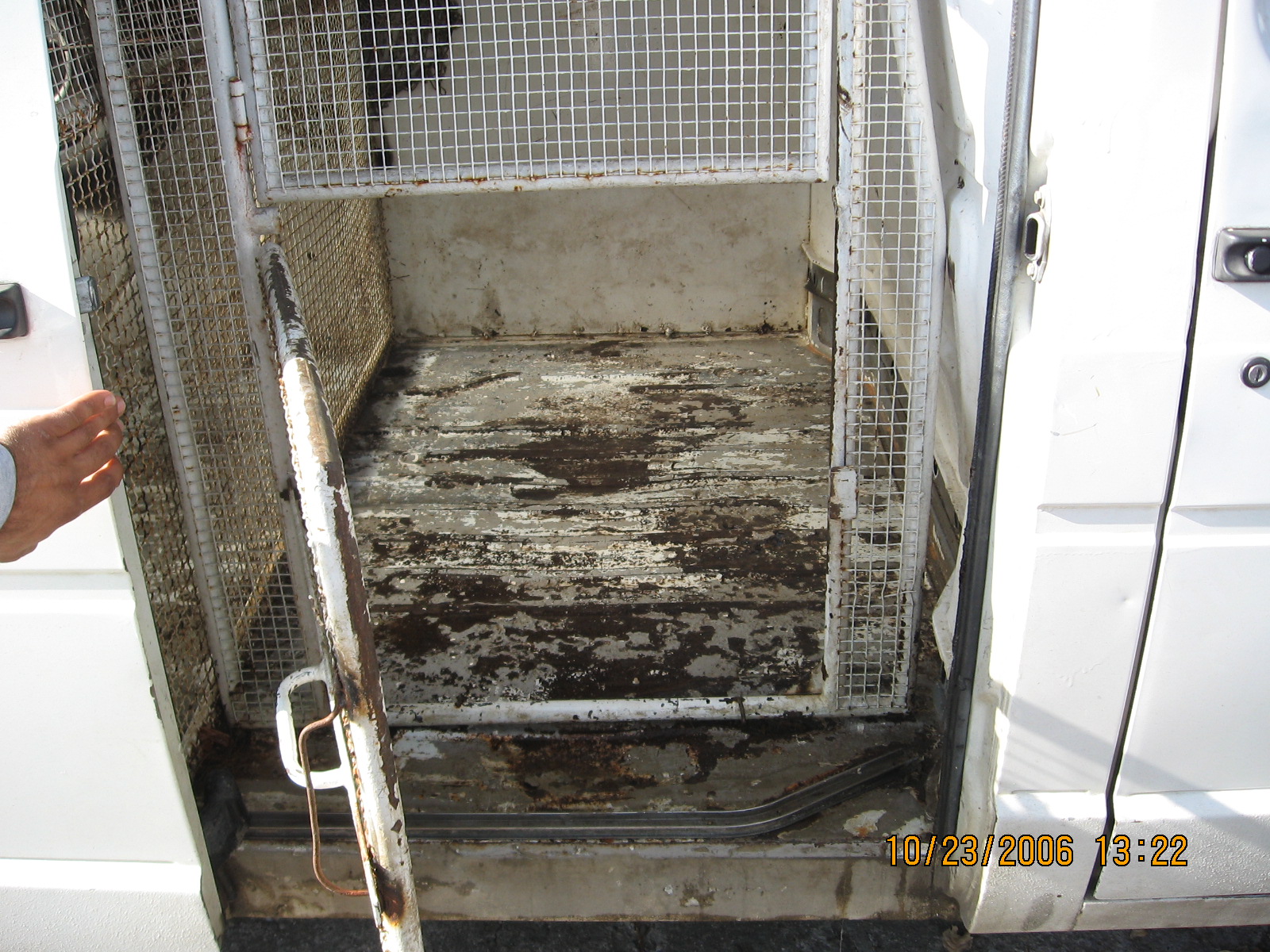
One vehicle has holes in the floor. Komanovic is introduced with this, and promptly intervened to get it fixed. The most disputable questions is simultaneous administration of antibiotics and vaccinations during sterilization. There are cases when it is necessary to use antibiotics in post-operative recuperation. I am not sure of adequate immune response to the vaccination. I still believe that dehelmintization may be performed in the admission facility on animals foreseen for sterilization, and vaccination on departure or immediately before exiting the facility. This would satisfy basic principles of zoo-hygiene in these types of facilities, so-called ”dirty and clean” part.
I still didn’t notice presence and utilization of a stethoscope in the facility.
During this week, 10 dogs and 15 puppies were euthanised.
October 27th: current status on the admission ward of the facility is 13 dogs and 9 puppies, and 48 digs in post-operative section, with total number of 62 dogs. At the end of work day ion admission ward were left 3 dogs (2 rottweilers and 1 chipped pit bull).
Period between October 30th to November 3rd 2006.
Tamara Popic – represent of Belgrade coalition for animal protection, graduated veterinarian
Last two days of October pass in incredible business to reach the number of 255 sterilized dogs. Taking into consideration number of dogs on admission ward, number of sterilizations wouldn’t be so vast if animal lovers didn’t bring their pets to undergo sterilization. Dogs were brought and immediately or day after sterilized.
Factual condition that the capacities of admission ward is small, but this is not a justification for immediate dog sterilization, particularly when shelter is almost empty. Current status on October 31st on admission ward was 10 dogs and one kitten (in quarantine), and 20 dogs were sterilized.
I’ve spoken with Milorad Djordjevic regarding work of Aleksandar Risovic. Risovic´s stitches are not neat and have poorly merged edges. His statement is that his performance is in accordance with amount he gets paid. Djordjevic promised me to agree with Djokic, and in the event that Risovic continues with poor performances, he will take over sterilizations.
In period between November 1st and 3rd there were no sterilizations.
Absolutely upmost impression of this week is taking over 25 sterilized „unwanted” dogs on part of the shelter led by Elena-Magdalena. All 25 adults were transported in Lada Niva to Surcin in one round. The following day the same happened with 30 puppies, one dog, two cats and eight kittens in the same vehicle. I think this should be considered as well.
Period between November 9th to November 17th 2006.
Tamara Popic – represent of Belgrade coalition for animal protection, graduated veterinarian
One of goals stipulated in the Strategy of solving problems of stray dogs on the territory of the city is mass sterilization of the deserted, micro-chipping and vaccination against rabies, due to the stabilization of population and returning to primary habitat. During my short presence in Ovca, the first case was “catch, sterilize and let go”, then insisting on responsible ownership for three central municipalities, Vracar, Savski Venac and Stari Grad, and, in the end, responsible ownership on all municipalities.
What have we done? By agreeing to this, without new shelters and options to take care of the dogs whose guardians are terrified with new situation, it seems as we contributed to euthanasia of 20 young, tamed dogs in one day, because they breached deadline for staying in the shelter. I am afraid that if some sort of solution is not found, this number will increase.
Acute issue is still admission triage. Only progress is that obviously sick and hardly injured dogs are immediately euthanised, it is not pending until arrival of inspection and in this manner, suffer is shorten for dogs.
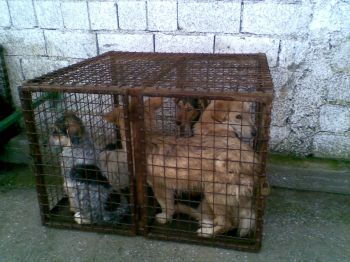
Two female dogs bring forth pups in admission ward. They were not isolated in spite of visible progress of gravid. Each of them was in the cage with three, i.e. four dogs. I can only assume quantity and type of stress they were under.
By inviting citizens who take care of dogs do report or to bring their pets to sterilization (given they have an absolute priority), we reduced chances for dogs whose owners are not able to bring dogs or are afraid of now imposed responsible ownership. It seems as owners mixed breeds are in this.
Since there is no actual admission check, few previously performed sterilizing procedures were detected on surgery table. Meaning, they have been anesthetized in order to take a vaccination shot and to be chipped. They have been reported as sterilized in Ovca.
During this week, 37 adult dogs (number I noticed) were sterilized. This is higher number that in last month.
The only shelter which takes over dogs is shelter led by Elena Magdalena.
I appeal to raise a question of opening at least one shelter, help and expanding capacities of current, and of course, appeal for sheltering and finding homes for dogs, or we are facing dead-end alley.
Period between November 20th to December 1st 2006.
Tamara Popic – represent of Belgrade coalition for animal protection, graduated veterinarian
Visible positive and huge shifts in the shelter, starting from animal treatment, hygiene, relationship with clients, and appearance of the shelter itself. However, there are still some unanswered questions that I am considering to be solvable with a slightly better organization, and they should be corrected now, on the very beginning.
My previous observations are confirmed in the case of death of female dog od Mrs. Nada Prokic: necessity of constantly present one veterinarian; yet, this should not be Aleksandar Risovic due to already familiar reasons. I also think that this death could perhaps be prevented with adequate treatment. If I hadn’t heard from Djokic that this female dogs already had peritonitis, according to Risovic´s account, I would believe that this case belong to minority of cases when dog bites threads during the post-operative treatment and injures the wound. Eventually, there should be some sort of finding, note, ambulance protocol. If she indeed had peritonitis, she also had a temperature. Is animal measured temperature, lungs and heart before the operation? Measure weight? Execute basic actions before operation? I am not sure. In this case, one dosage of Pen-strep depot is not adequate post-operative therapy.
We have one very well designed strategy and very clear protocol, but disobey of its one segment is continuous. The issue of admission triage is still present. Remaining are probably issues in domain of veterinary ethics.
As I stated before, during openings of female dogs there are visible liver and spleen enlargements. These can be signs of severe infections. I am opposing to the idea of releasing dogs into the streets. The solution for this matter should be found. It is necessary to consult with experts!
On November 20th around 13:30 arrives the owner of female dog of American Stafford terrier to arrange term for sterilization of his dog given he heard that he heard from someone whose name he cannot recall that he can do it for free. There is no attending veterinarian. Story is confirmed on the 23rd if the month. I met owners who take out their sterilized Samoyed. The following day, on the 24th, was sterilized Golden Retriever in ownership. In both cases seemed that dogs were taken over from the shelter. And so on, these unfortunate ones on admission ward are breaching prescribed time of stay, which assumes their final fate.
There is a field in lab-charts foreseen for record of whether the dog has been sterilized or not. What happens to dogs who have been sterilized previously? There isn’t this type of field.
The most acute problems are SHELTERS in terms of further accommodation of dogs. Perhaps manner should be drafted for helping current ones, which might with a little help accept part of dogs.
Period between December 4th to December 21st 2006.
Tamara Popic – represent of Belgrade coalition for animal protection, graduated veterinarian
I will make a resume in this report after nearly three months of my presence in the Center.
As we orally agreed I will be present in the Center until the end of month, and I want to confirm this in written. I am at disposal to Belgrade coalition for less stress jobs.
As I have stated earlier, there are visible positive shifts in terms of appearance, hygiene and treatment toward dogs and clients. However, there are actions that I think should be corrected as soon as possible, because this is already kind of a habit. It will be more difficult, but possible.
The protocol is mainly still not obeying: lack of veterinarian check, then observation of dogs and cats admitted to the shelter, resulting in lack of clear description, clinical status, oldage and animal temper. All of the above raises the question of criteria for selection of their further destiny?
How to solve this? During admission of dogs, veterinarian should be always present, describing and checking the animal and entering records into protocol. There is nom scale in the facility so weight estimate is subjective, imposing question of drug and anesthetic dosage.
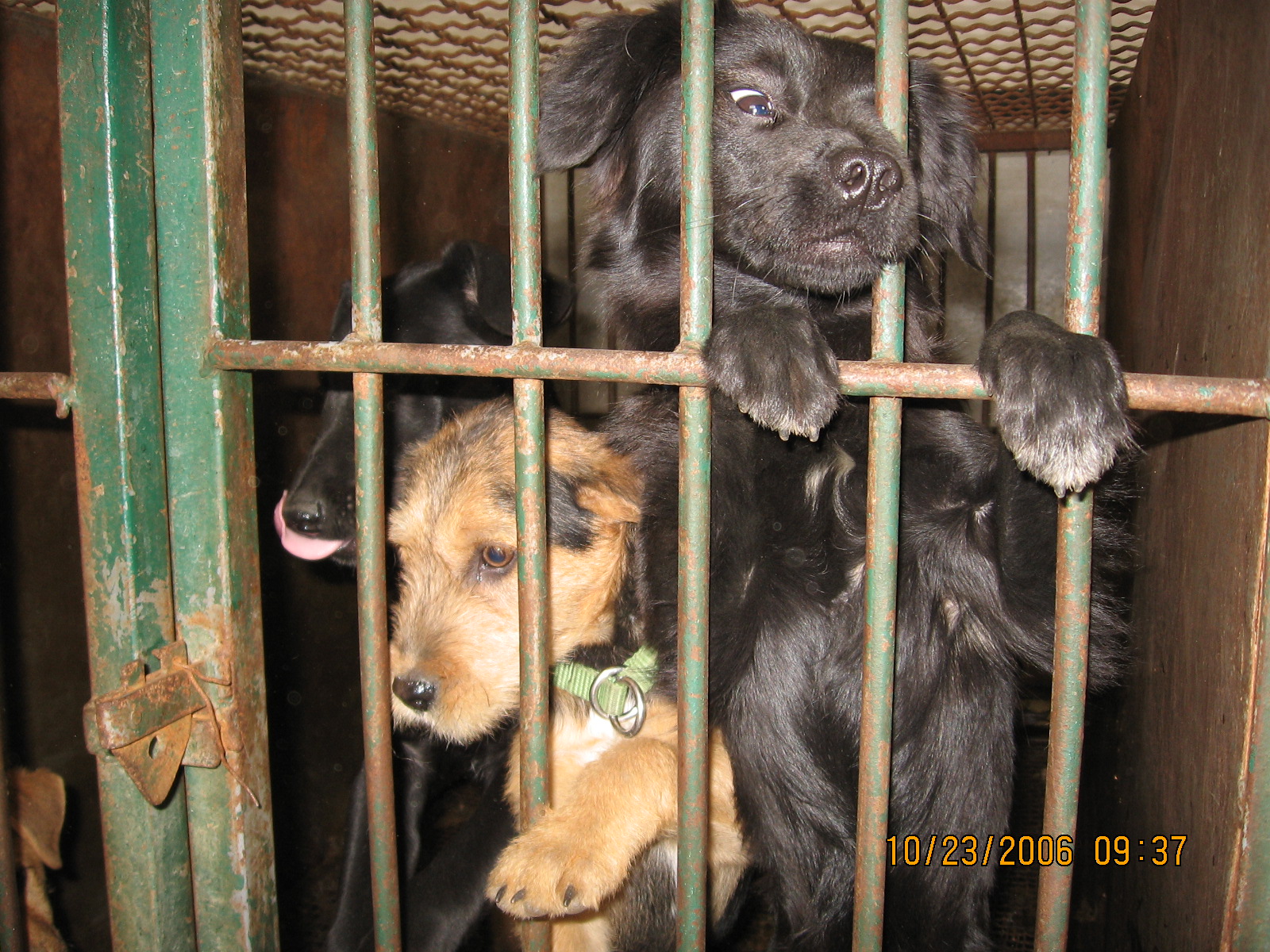
Puppies from different locations should not be mixed. Separate pregnant dogs. It should not be allowed to bring forth puppies in small cage in presence of several dogs.
Take it takes 20 minutes to examine each animal, which is too much; it makes 21 dogs a day. 630 a month? I cant recall the month with this catch. With submitted dogs on part of owners or guardians, perhaps.
Extermination of insects and dehelmintization should be executed in admission ward. In accordance with zoo-hygiene rules this would be unclean or so-called dirty part. Nutrition of puppies – three times a day. In winter conditions, the facility should be heated at night.
Euthanasia is performed on the floor between cages. Other animals are watching and listening. Why am I stating this? In place where noise could be heard always, there is an incredible silence. In cat section which is mainly empty, could be installed one table where everything in range from clinical examination to euthanasia could be performed. Is euthanasia executed in humane way? No, not always. This could be checked by consumption of Ketamidor administered i/m and T61 which should be administered i/v. Should this be performed on the table, both drugs could be administered i/v, which would be more humane and more efficient
Dog sterilization. In many cases dogs don’t stay even 24 hours, and no so rarely directly from the car go to the operating table. This could be verified in documents (input and output).
Lack of clinical check before sterilization. There are no records. Proves that dogs are not checked in here as well is opening of already sterilized dogs who had clear tattooed number on the ear (BB) or double chipping.
Issues of immunization quality imposes, given they receive vaccination, antibiotic with prolonged effect and pass dehelmintization. Is organism in this condition able to give a full immune response?
Medication used in dehelmintization is Tenivet, meaning it is against tapeworms. How many city dogs have been invaded by various types of Tenya? I have personally adopted a 7 month old dog from the shelter. I received accompanying document stating that dehelmintization has been performed among other things. After ten days or so in the house it threw up affected by ascariasis. It is quite well known about the severity of invasion once your dog starts throwing up a bunch of parasites. All of my household members including myself took Mebendazol.
Pathology encountered on the table during the process of opening dogs is shocking. In vats number of cases, liver and spleen are enlarged up to extent of practically penetrating into the pelvic cavity. As I have stated earlier, experts should be consulted (internists and pathologists). It is my opinion that these signs are quite alarming.
It is interesting that no veterinarian asked these questions. It means that it is imperative to execute sterilization on 255 dogs, no matter what.
Post-operative segment. In accordance with zoo-hygienic rules this should be a clear section.
Given that extermination of insects and dehelmintization are not executed before entering into this section, this is out of a question. Veterinarian is entering into this section only if guardian informs him about some problem. Rounds and observations are not present at all. Question raises to what extent is holder qualified and may notice symptoms which would be timely notice by veterinarian?
Post-operative recovery period for males is 3 and females 5-7 days, yet in most cases it is not obeyed. This could be also verified in accompanying documents or protocol of the shelter.
For brief period following waking up from anesthesia when animal is experiencing fever, I maintain the claim that mats should be provided, and not to place them on cold and often wet concrete. This particularly refers to winter period.
Check before discharge also lacks, disregarding whether this is the case of finding home, shelter or returning to the habitat. In majority of cases, age of dog is wildly guessed.
I think that puppies should be by all means marked, enter their records into database. In months to come they will grow up and we don’t have any records on them. This should be investment for the future.
Another interesting question is how to educate technical staff when the bosses are completely uninterested? I haven’t seen any of the bosses, and there is quite plenty of them, engaged or get interested in manner of promoting operations while Mr. Faulkner was here.
What is necessary? Only to obey the working protocol and to assign one person, veterinarian who would be responsible for all actions in the shelter. As long as they are responsible on two or three positions, significant omissions will occur.
It is necessary to obtain more engagement from associations for animal protection in the sense of voluntary work. They could help with socialization of individuals and taking animals into walk.
Shelters are acute problems. It is necessary to help current ones, particularly now in this period before opening new ones.
After almost three months of work another devastating fact, as of December 21st catchers are selling Sedalin pasta. I was contacted by Mrs. Andjelka phone: ……, and informed me that the crew sold her pasta for 800 dinars. Djokic and Djordjevic have been informed about this matter.
Even beside all of the above mentioned, I think it is possible to correct this if timely actions are taken. All it takes is to implement excellent program and to organize operations better.
Filed under: CAMPAIGNS - Global Animal Welfare Issues, OVCA, SERBIA (Central Serbia: Capital - Belgrade) and (Serbia | Leave a comment »




 Serbian Animals Voice (SAV)