Posted on January 11, 2018 by Serbian Animals Voice (SAV)
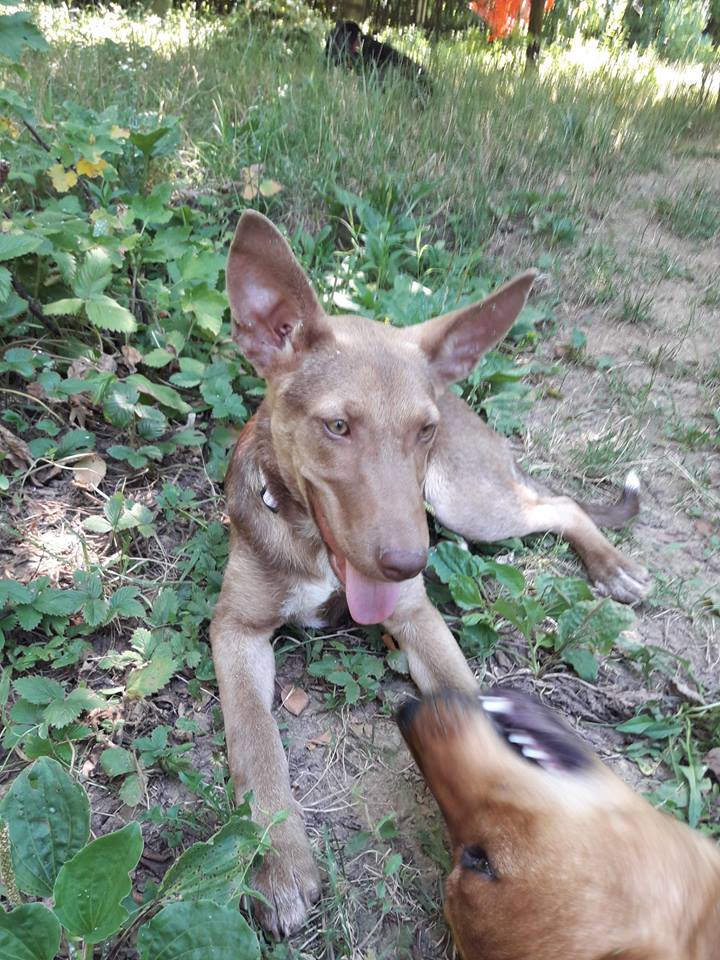
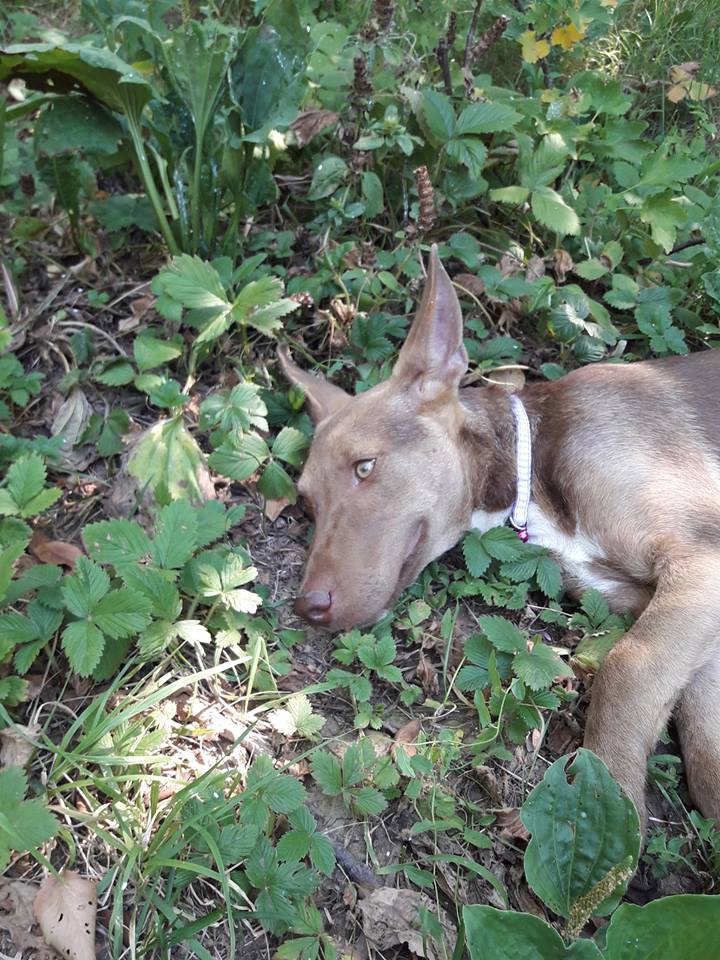
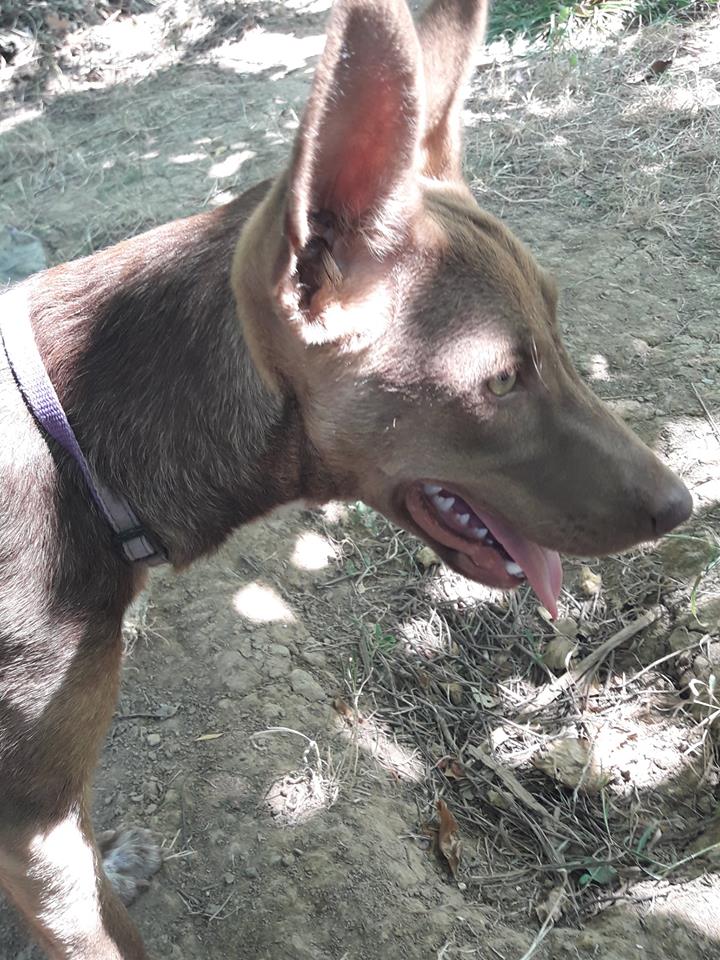
THIS BEAUTIFUL DOG IS MILICA.
She is living on the streets and has nothing and nobody.
One very kind rescuer, Andjelka Matijevic helps her by feeding her and she has had her spayed already to ensure she doesnt end up pregnant to some other street dog bringing more unwanted pups into the world.
But, this gentle quiet dog needs a home. She has no sponsors, nothing.
Maybe because she isnt aesthetically as beautiful as many other cute and fluffy dogs, but this is one very special diamond girl. She loves children, and plays beautifully with them. She adores other dogs, and has no issue at all with any other dog. We have no idea how she would react to cats, but bearing in mind she lives on the streets, Im sure she has learned to live alongside the many cats and other dogs on the streets whilst she seeks out some small pittance of survival.
She is helped with food most days by the very kind Andjelka Matijevic, but she has no chance and never will have unless somebody can offer her a loving forever home. She will spend the rest of her life, whether thats long or short on the street unless she gets a chance of a new life.
A more gentle, affectionate dog you couldnt wish to meet. This is a lovely lovely girl who needs a home. Please think about giving her a chance. Just one little chance is all she needs to turn her very sad abandoned life around
If you can offer her a home, or even sponsorship to be safe in pension and off the streets, its just 50euros per month or £46 UK to keep her safe in a pension every month …
… so she doesnt risk being hit by a car or even poisoned by the public, or caught by the dog catchers.
If you can offer one of the above solutions, please contact the very kind Andjelka Matijevic to let her know you are interested in helping sweet Milica.
Do one good thing this year, help a dog in need if you can.
Prime Minister Theresa May has pledged to eradicate all avoidable plastic waste in the UK by 2042.
The commitment is part of the government’s 25-year plan to improve the natural environment.
Under the government’s plan, supermarkets will be urged to introduce “plastic-free” aisles while taxes and charges on single-use items such as takeaway containers will be considered.
Mrs May said she would put the oceans firmly on the agenda of the Commonwealth Heads of Government Meeting in April.
She said: “Today I can confirm that the UK will demonstrate global leadership. We must reduce the demand for plastic, reduce the number of plastics in circulation and improve our recycling rates.”
Greenpeace said the announcements on plastics were “a missed opportunity”, with a particular omission being no plans for a deposit return scheme for plastic bottles, which the group said was shown to work well.
He (Minister Gove) added that Brexit would not result in a reduction in environmental protection: “I’ve already said that we want to set the global gold standard when it comes to the environment, and for animal welfare.”
SAV Comment –
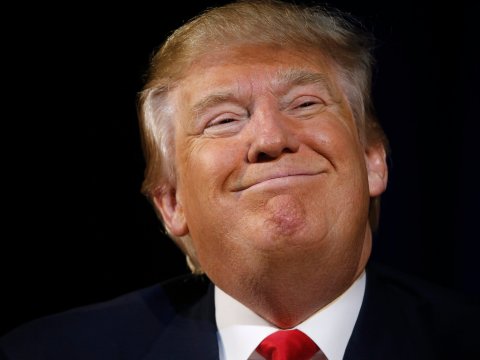
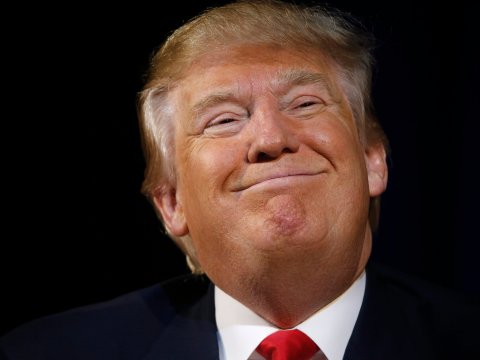
Another issue of the UK doing what the EU does not have the balls to do. As we have said before, after Brexit the UK will enforce even better animal welfare legislation. Can we suggest (pictures below) a few who should look, listen and learn about plastic pollution from what the UK is setting out – money is not the solution to all problems; it probably creates most of them. UK campaigners don’t give up – and they eventually get the changes required. Trump; you can smirk; your future is in doubt now.
Posted on January 10, 2018 by Serbian Animals Voice (SAV)
Above – The Animals In War Memorial – London.
SAV Comment
The following is taken from the UK Politics site. As such, there are no petitions or actions required – it is for a read only. We do not necessarily agree with everything said, but it is quite a good source of past info – dates of welfare campaign groups creation, why they were formed etc. SAV.
The British Angle – What is Animal Welfare?
Animal welfare relates to the general health and well-being of animals and covers a wide range of issues, from the care of family pets to concerns about exploitation and abuse.
Animal rights are hotly debated. Proponents stress the helplessness and vulnerability of animals and campaign for their protection, particularly in areas such as medical research and factory farming. Others take a more pragmatic approach, insisting that the ever-increasing demand for better medicines and more food should take priority over the rights of animals.
However, few in Britain today would argue against the need to protect animals from suffering and there are many organisations which continue to campaign vigorously for animal rights.
Background
Britain could claim to be something of a world leader in animal welfare, having been responsible for the first ever animal welfare legislation and the first animal welfare charity.
In 1822 the ‘Act to Prevent the Cruel and Improper Treatment of Cattle’ was steered through the House of Commons by Irish MP Richard Martin – known as ‘Humanity Dick’ because of his campaigning for both animal and human rights.
The act stated that if any person or persons “shall wantonly and cruelly beat, abuse, or ill-treat any horse, mare, gelding, mule, ass, ox, cow, heifer, steer, sheep, or other cattle” they would be fined a sum “not exceeding five pounds, not less than ten shillings”; failure to pay the fine would result in a prison sentence of up to three months.
Not everyone appeared to take the new law seriously, however, and there were concerns that the legislation was not being properly implemented. Consequently, in order to provide greater protection for animals, Richard Martin, together with the Reverend Arthur Broome and fellow MP and slave trade abolitionist William Wilberforce, founded the world’s first animal welfare charity, the Society for the Prevention of Cruelty to Animals (SPCA), in a London coffee shop in 1824.
The charity subsequently attracted the patronage of Queen Victoria and went on to become the Royal Society for the Prevention of Cruelty to Animals (RSPCA), well-known today as one of the world’s leading animal welfare organisations.
Other animal charities began to be established towards the end of the 19th century and some, like the RSPCA, are still going strong today.
The Mayhew Animal Home, for example, founded in 1886 to protect “the lost and starving dogs and cats of London“, is still rescuing and providing shelter for thousands of animals every year; and the National Canine Defence League (NCDL) set up in 1891 to protect dogs from torture and mistreatment of any kind, today operates as the Dogs Trust and has become the UK’s largest dog welfare charity.
Animal experimentation also became a major issue around that time. Although live animals had been used in research for many years, it was not until the late 19th century that anti-vivisection societies began to organise concerted opposition to the practice.
Five of the societies merged in 1898 to form the British Union, which later became the British Union for the Abolition of Vivisection. Support for the movement grew rapidly and today the BUAV and many other national and international groups are continuing to campaign for an end to all animal experimentation.
The work of the various charities was supported by the introduction of further legislation which was gradually expanded to cover domestic and other animals.
The 1911 Protection of Animals Act was introduced to “consolidate, amend, and extend certain enactments relating to Animals and to Knackers”.
The Act made it an offence of cruelty to “cruelly beat, kick, ill-treat, over-ride, over-drive, over-load, torture, infuriate, or terrify any animal” or permit an animal to be so used; to “convey or carry, or permit to be conveyed or carried, any animal in such manner or position as to cause that animal any unnecessary suffering”; to “cause or assist at the fighting or baiting of any animal”; to “administer, or cause administration of, any poisonous or injurious drug or substance to any animal; and to “cause or permit any animal to any operation which is performed without due care and humanity”.
Any person found guilty of such an offence of cruelty would be liable to a fine “not exceeding twenty-five pounds”; and/or be imprisoned, “with or without hard labour,” for a term “not exceeding six months”.
Further Acts were passed throughout the 20th century. These included the Performing Animals (Regulation) Act 1925; the Pet Animals Act 1951 (amended 1983); the Animal Boarding Establishments Act 1963; the Riding Establishments Act 1964 and 1970; and the Breeding and Sale of Dogs (Welfare) Act 1999, which amended and extended the provisions of the Breeding of Dogs Act 1973 and the Breeding of Dogs Act 1991.
In 2006 the most significant piece of animal welfare legislation was passed. The Animal Welfare Act (in force April 2007) largely repealed and replaced the 1911 Protection of Animals Act, strengthened and updated the provisions of that Act, and consolidated and updated several other pieces of animal welfare legislation.
In addition, the Act introduced a new offence of failing to ensure the welfare of an animal. Any person responsible for an animal must ensure that five specific needs of the animal are met:
(a) its need for a suitable environment,
(b) its need for a suitable diet,
(c) its need to be able to exhibit normal behaviour patterns,
(d) any need it has to be housed with, or apart from, other animals, and
(e) its need to be protected from pain, suffering, injury and disease.
The Act also made it an offence to dock the whole or any part of a dog’s tail, unless that dog is a certified working dog of not more than five days old.
Anyone found guilty of offences under the Act could be banned from owning animals, fined up to £20,000 and/or given a prison sentence.
The Animal Welfare Act also provides for secondary legislation and codes of practice to be introduced to further promote the welfare of animals. The Government has already introduced codes of practice for the welfare of dogs, cats, horses and primates and is continuing to review other areas where similar updates could be made.
European animal welfare legislation is based on the recognition that all animals, from pets to farm animals, are sentient beings – i.e. they have powers of perception and feeling. A legally binding protocol attached to the 1997 Treaty of Amsterdam recognised animals as “sentient beings” and this recognition was strengthened in the Lisbon Treaty of 2009 which included animal sentience as an Article in the main body of the Treaty.
The 1998 EU Council Directive 98/58 on the protection of animals kept for farming purposes set out minimum common standards of protection for animals of all species, including fish, reptiles, or amphibians, kept for the production of food, wool, skin, fur, or for other farming purposes.
The Directive was transposed into UK law via the Welfare of Farmed Animals (England) Regulations 2000 (amended 2007). Although the Community legislation lays down only minimum standards, the EC has said that national governments “may adopt more stringent rules provided they are compatible with the provisions of the Treaty.” Specific rules continue to apply to laying hens, calves, pigs and broilers.
In 2006 the European Commission presented its first Action Plan on the Protection and Welfare of Animals which mapped out the Commission’s planned animal welfare initiatives for 2006-2010.
The EU subsequently published a new Animal Welfare strategy for 2012-2015, which lays the foundation for improving welfare standards during that period and aims to ensure the same high standards are applied and enforced in all EU countries.
According to the EU, the new strategy has “important implications” in that it seeks to improve how Europe’s 2 billion chickens, egg-laying hens and turkeys, and 300 million cows, pigs, goats and sheep, are housed, fed, transported and slaughtered. In addition, it covers animals used for experimentation (about 12 million per year) and animals living in zoos.
However, several animal welfare organisations and individuals remain concerned that animals in other parts of the world do not have the same kind of legislative protection and are supporting a campaign, organised by the World Society for the Protection of Animals (WSPA), to secure a commitment at the United Nations for a Universal Declaration on Animal Welfare (UDAW).
The UDAW would be an international agreement that animals are sentient beings, that animal welfare needs must be respected and that animal cruelty must end. The campaign is reported to have over two million supporters worldwide and the WSPA believes that securing such a commitment at the UN would create the required pressure for governments to put in place firm laws and enforcement for animal welfare.
Controversies
Animal welfare and animal rights seem to attract more controversy than almost any other issues, one of the most obvious examples being the antithetical views of vegans and livestock farmers.
Vegans believe that animals are intelligent creatures capable of feeling pain and are “not ours to eat”. They oppose the use of all animal products and claim that vegan or vegetarian diets are more healthy and nutritious. They also believe that rearing animals for food is bad for the environment and inefficient and suggest that world food shortages could be solved by farming crops rather than animals.
However, vegans and vegetarians are still in a minority in the UK and the demand for meat and dairy products shows little sign of diminishing. Nevertheless there is a growing interest in the way food is produced and the treatment of animals in that process.
This has been largely a response to disturbing reports about the cruel treatment of animals in ‘factory farming’ – one of the most controversial and emotive issues – where the maximum number of animals are crammed into the minimum amount of space, unable to move freely, denied any kind of normal life and reduced to nothing more than products on a factory production line.
Horrific reports of hens trapped in tiny wire cages piled one on top of another forced unnaturally to lay the maximum amount of eggs; thousands of chickens crammed into one small shed, fattened up quickly to obtain the maximum amount of chicken meat; breeding pigs kept in small metal crates etc., have all resulted in more consumers calling for ethically-sourced products, a cause taken up by celebrity chefs such as Hugh Fearnley-Whittingstall and Jamie Oliver.
Relentless campaigning by animal welfare organisations has had some success. The entire European Union is phasing out battery cages by 2012 and several Directives have been issued for adoption by member states in relation to improving the welfare of calves, chickens and pigs, with provision for further measures to be introduced in the future.
Proposals for large-scale dairy farms are also opposed. Following a year of intense campaigning by groups and individuals, a plan for a 3,770 cow ‘mega dairy’ in Nocton, Lincolnshire was finally withdrawn in February 2011 after objections were raised by the Environment Agency.
Farmers, however, are adamant that animal welfare is a priority for them. The National Farmers Union has said that factory farming “is not normal” in the UK and suggests that the Red Tractor assurance scheme, launched in 2000 to raise standards right across the food chain, is “a proven indicator of good animal welfare compliance.”
The Red Tractor kitemark now appears on billions of packs of meat, poultry and dairy products and is intended to reassure consumers that these products have been produced to the highest standards of animal welfare and environmental protection.
Another highly emotive and controversial issue is animal experimentation, whether that involves testing cosmetics and household products on animals, or using animals in medical research. Opponents believe that it is ethically unacceptable for animals to suffer physical or psychological pain during these tests.
They also argue that because of the differences between humans and other animal species, test results can be misleading. The Dr Hadwen Trust for Humane Research claims that “in some instances, reliance on inaccurate animal ‘models’ of human disease have undoubtedly delayed medical progress.”
Proponents, however, insist that animal research has played, and is continuing to play, a vital role in treating and preventing many illnesses and diseases once thought incurable. Nevertheless, research is continuing into finding new ways to further promote the 3Rs scheme – to “reduce, refine and replace” the use of animals in research.
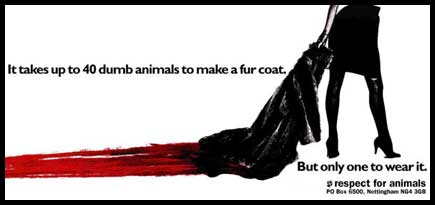
The fur trade is another cause of concern for animal welfare supporters. Although fur farming is banned in the UK, fur products can still be sold here. However, fur coats are no longer the must-have fashion item they once were following an intensive anti-fur campaign by animal welfare groups. Many high-profile celebrities and fashion designers have rejected fur and several stores now refuse to stock fur products.
Nevertheless the fur trade appears to be thriving, with several international designers still featuring fur in their collections. The British Fur Trade Association (BFTA) believes that “wild or farmed, fur is a natural, renewable and sustainable resource that is kind to the environment and respectful of animals’ welfare.” The BFTA is a member of the International Fur Trade Federation (IFTF) which claims to “promote strict codes of practice that meet or exceed established and accepted animal welfare standards for wild and farmed fur.” Both the BFTA and IFTF “strongly condemn cruelty to animals and do not trade in endangered species.”
But Animal Defenders International claims that animals raised on fur farms or trapped in the wild are subject to “very cruel methods”. According to ADI, “what is of paramount concern to the fur farmers is not the welfare of the animals, but the preservation of their fur and through these methods, although incredibly painful for the animals, the fur is kept intact.”
And despite the BFTA and IFTF insisting that they “strongly condemn trade in endangered species”, the ADI remains concerned that threatened species are being illegally poached and traded for their skins, contributing to the extinction of species such as tigers, leopards and ocelots.
These concerns are shared by the International Fund for Animal Welfare and the charity believes that the internet has created new challenges in the fight against trade in endangered species. The IFWA is calling for “robust domestic legislation” and an international action plan to tackle illegal wildlife trade on the internet.
Several organisations are also campaigning for a complete ban on the use of wild animals in circuses, arguing that the conditions in which the animals are kept, the training techniques to which they are subjected, and the tricks they are forced to perform, are demeaning, cruel and inappropriate for animals of this kind.
Following a public consultation exercise in 2010 with animal welfare organisations and the circus industry, the Government decided against a ban, and instead published a “tough new licensing scheme” in May 2011, which Defra said would ensure that any circuses in England wishing to show wild animals “will need to demonstrate that they meet high animal welfare standards” before they are granted a licence to keep those animals.
However, this failed to satisfy campaigners and in June 2011 a backbench business debate tabled by a Conservative MP, which had cross-party support, resulted in a unanimous vote in favour of a ban. Consequently MPs and campaigners are now pressing the Government to reconsider its decision in light of the vote and introduce a ban some time next year.
Animal welfare organisations are equally concerned about domestic wild animals which are often regarded as pests or predators by farmers and land owners. Badger culling to control the spread of bovine tuberculosis is one of the main controversies. Bovine TB is a major problem for farmers, but a recent long-term review has concluded that culling is ineffective and suggests vaccination is a better long-term solution. This view is supported by the Badger Trust which believes that the way forward is an injectable and/or an oral vaccine for badgers and also ideally a vaccine for cattle.
Deer stalking, fox snaring and the trapping of wild birds and mammals are all equally controversial and fiercely opposed by animal welfare organisations. But the British Association for Shooting and Conservation argues that pest and predator control is a necessary and integral part of conservation and wildlife management. However, the BASC also stresses that “it is the responsibility of all those involved in pest and predator control to ensure their methods are legal, humane and carried out with sensitivity and respect for other countryside users.”
Domestic pets, in particular dogs, are often the subject of controversy, the most recent being ‘handbag dogs’ and ‘status dogs’.
The current fashion started by ‘celebrities’ for carrying bichon frise, chihuahuas, shih tzus and other tiny dogs in handbags has been strongly criticised by animal charities who warn that the dogs’ ability to behave normally is being restricted, which can in turn lead to behavioural problems. According to The Blue Cross, the number of miniature dogs given up or abandoned has more than tripled in the past five years.
So-called ‘status dogs’ such as Rottweillers and Staffordshire Bull Terriers are bought to give their owners a tougher image; they are also used for dog fighting and to intimidate other people. In addition to concerns about human safety, the RSPCA reports that these ‘status dogs’ often suffer violence at the hands of their owners and are forced to take part in fights which result in the dogs sustaining serious injuries.
The Dangerous Dogs Act Study Group (DDASG) and Lord Redesdale criticised the Government for what they saw as its part in the ongoing problem of ‘status dogs’ by making them appeal to those wishing to intimidate others and rebel against the existing law.
Lord Redesdale said: “Banning the Pit Bull Terrier in 1991 was a huge mistake. Creating a picture to the general public that certain breeds of dog are dangerous and others not is hugely irresponsible.”
The pictures that PETA published from this pig farm in Günthersdorf (Friedland) are no exception – it is the rule in the German pig farms.
In August 2017, PETA filed a complaint with the competent public prosecutor’s office in Frankfurt (Oder) for violating the Animal Welfare Act.
For many serious violations of the Livestock Farming Ordinance.
In addition, the veterinary office of the Oder-Spree district was informed about the abuses.
But the catastrophic conditions were not turned off.
As we see in Video, (and here, nobody needs translation) the pigs have to live in their own excrement in this farm. Coughing animals were documented because of the ammonia.
Also, tumors, eye infections, injured limbs were documented. Many pigs are bitten and bloodied from other pigs on the tips of their ears, because these intelligent and clean animals permanently suffer from boredom, stress and catastrophic living conditions.
Finally, if the costs in the farm are higher than the “economic value” of the animal, it is not uncommon to kill – legally and illegally. Also in this operation (video) dying and already dead animals were documented.
They will end up in the garbage – after a painful life.
PETA has already documented and published massive animal protection violations in this pig farm in Günthersdorf, Brandenburg.
But nothing has been done by either the policy or the veterinary office.
The pig farm belongs to the farmer AG Neißetal, which was subsidized by the EU in 2016 for more than 888,000 Euros,
– among other things for their livestock husbandry!!!
Please read the petition (I did the translation in English) and sign.
Best regards to all
Venus
The petition (Translation in English)
Signature campaign:
Petition: Please help the pigs in Brandenburg
Dear Prime Minister,
PETA was again able to publish the massive animal suffering in a Brandenburg pig farm. This case clearly shows that the problem lies in the system.
Sensitive and intelligent creatures are adapted to a construct that pursues purely economic interests.
The pictures illustrate how animals will be handled in 2017: ailing, heavily stalled animal houses and dirty feed and water troughs. Sick and dying pigs can be seen, also dead and injured animals can be found in the inventory. Bloody ear tips and completely gnawed ticks are only an indication of the psychological and physical stress the animals have to endure.
It is well known how clean and intelligent pigs are, which is why they cannot be kept close to species in the withered and barren bays. In addition, they often make the hard-slatted floors and the air, which is usually contaminated with ammonia, sick. Controls seem to fail once again – or are such conditions in Brandenburg of economic interest wanted?
I therefore urge you to end the suffering of the pigs in this farm and to take measures so that the torments of all pigs in Brandenburg come to an end.
Posted on January 9, 2018 by Serbian Animals Voice (SAV)
Mark, thank you for donating to the Center for Biological Diversity last year. Every dollar saves lives; every gift goes toward our love of the wild
Here’s what we accomplished together in 2017:LITIGATED: No environmental group sued Trump more than we did in 2017. We’ve filed 46 lawsuits — and counting — to beat back threats to the air we breathe, the water we drink, our climate, wildlife, public lands and public health, and we’re not about to stop now.
ACTIVATED: Through Ignite Change and other grassroots work, we mobilized more than 15,000 people across the country to stand up and speak out every time Trump and Congress try to harm wildlife, weaken pollution laws, destroy public lands or attack vulnerable communities.
ILLUMINATED: We filed more than 500 Freedom of Information Act requests to expose the Trump administration and those in Congress who value profits and pollution over people and wildlife.
PROTECTED: We secured Endangered Species Act protection for eight species. And we successfully defended 750,000 acres of protected habitat for jaguars, 6,500 acres for dusky gopher frogs and 120 million acres for polar bears.
Our promise to you for 2018: We won’t let up.
We’re in the fight of our lives for endangered wildlife and the places they live, and we’re glad you’re in that fight with us.
Kierán Suckling
Executive Director
Center for Biological Diversity
Dear Mark,
The Trump administration is taking its war on wildlife to the oceans.
In its latest bid to sell out our public resources, the Trump administration recently announced its intentions to expose nearly all U.S. coastal waters to dirty and dangerous oil and gas exploration.
A new five-year offshore oil leasing plan, presented last Thursday by Secretary of the Interior Ryan Zinke, puts coastal communities and countless marine wildlife species in real danger.
This administration is blatantly ignoring the lessons of spills like the 2010 Deepwater Horizon catastrophe – and adding insult to injury, this new plan comes just days after a proposal to repeal the offshore drilling safety regulations that were put in place to prevent a disaster like that from ever happening again.
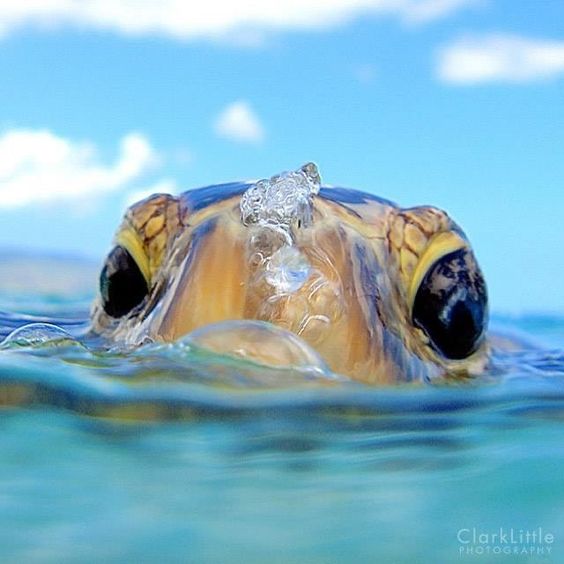
In 2010, the world watched in horror as oil poured into the Gulf of Mexico. Bottlenose dolphins washed up dead on our shores, Kemp’s ridley sea turtles – the world’s most endangered sea turtles – were killed by the thousands and seabirds like laughing gulls sustained losses of nearly 40 percent of their populations.
We can’t let wildlife ever pay that price again.
Drilling in our oceans is a dangerous and dirty business even when there is no major disaster. Seismic blasting can deafen marine mammals like whales and dolphins; small, routine spills poison birds, turtles and other marine life; and undersea pipelines, dumping and drilling infrastructure further contaminate ocean ecosystems.
At a time when our planet needs to reduce its dependence on oil and gas in the face of climate change, the Trump administration is proposing a massive expansion that only increases the risks of climate disasters, contamination and harm to wildlife and coastal communities.
We won’t let our oceans run thick with oil that poisons precious marine wildlife and ecosystems – and we know you won’t either.
Posted on January 8, 2018 by Serbian Animals Voice (SAV)
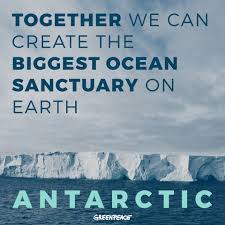
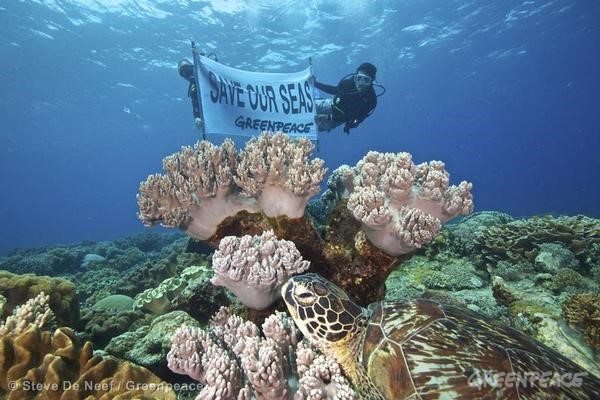
To avoid the worst effects of climate change and protect biodiversity, we need to safeguard more than 30% of our oceans by 2030, so let’s kick this off with the Antarctic Ocean Sanctuary! [1]
Our oceans help us fight climate change by absorbing carbon from the atmosphere, they’re home to incredible marine life and they provide livelihoods for millions of people. By protecting our oceans, we can ensure that the ecosystems which perform these essential services for human life continue to function.
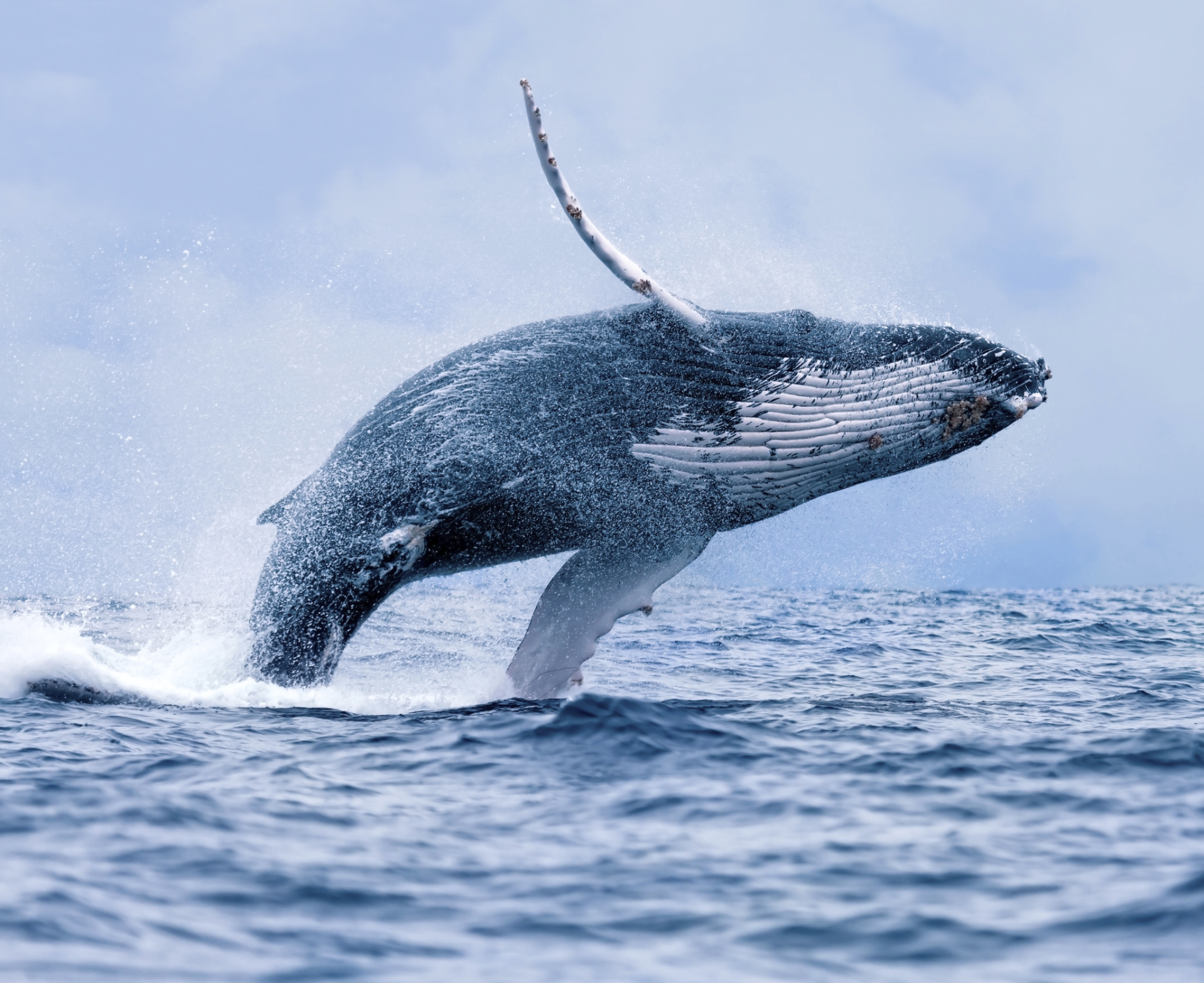
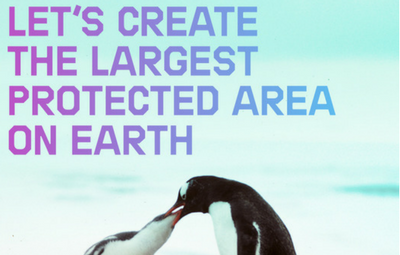
On top of that, we’ll also be creating a safe haven for whales, penguins and even the unbelievable colossal squids who call the Antarctic home – free from the influence of destructive fishing industries.
Add your name now so that we know you’re keen to be a part of the campaign for an Antarctic Ocean Sanctuary!
Imagine being able to tick off ‘Created the largest protected area on Earth’ from your list at the end of the year! That would be an incredible feeling to share together, knowing that we each played a part. And we know we can do it. It’s going to be an exciting campaign, so please let us know if you’d like to be a part of it.
For the Antarctic,
Alix, Andy, Martin, Lucero, Suzy and the whole team at Greenpeace Australia Pacific
Posted on January 8, 2018 by Serbian Animals Voice (SAV)
Above: Mr ‘I can do nothing’ Van Goethem
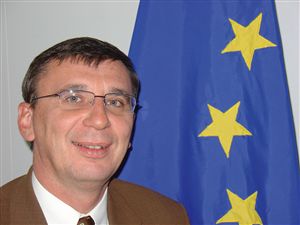
Above -Mr Junker
SAV Comment
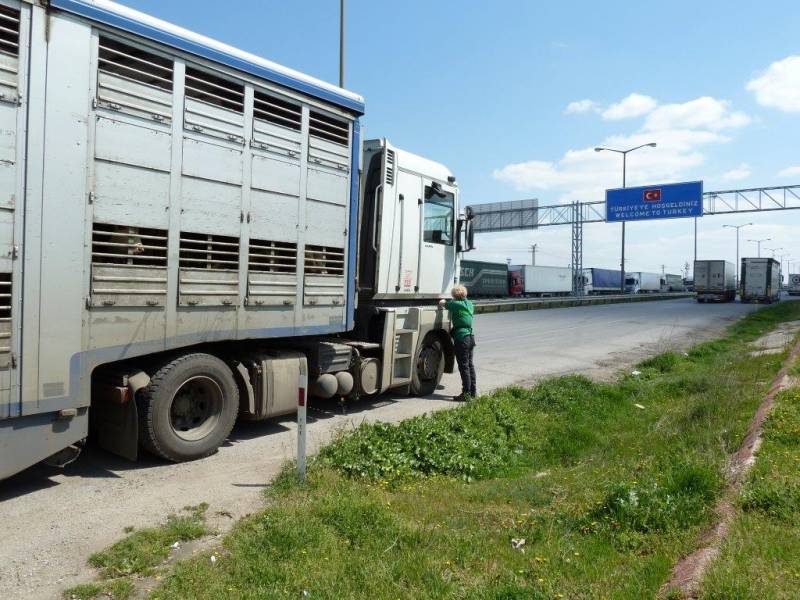
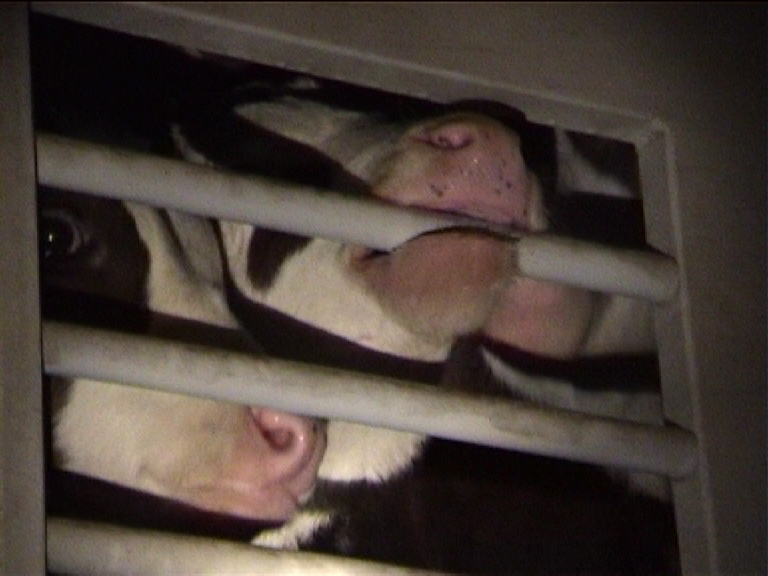
If Junker and his cronies made sure that the EU actually enforced Existing EU legislation rather than ignoring it and not prosecuting, then maybe the UK would have voted to remain in the EU. The cause ?- an ineffective Junker and Commissioners. All talk and no action. Ask the EU animals being transported live to Turkey for example – does EU animals in transport (Reg 1/2005) protect them? – NO. So why should the UK pay all this money when Junker is so useless ?
EU’s Juncker: Don’t believe Brexit won’t happen
European Commission chief Jean-Claude Juncker says he believes Brexit will happen and the EU should tackle its looming budget shortfall.
“Don’t believe those who say that it’s not going to happen and that people in the UK have realised their error… I don’t think that’s going to be the case,” he told a Brussels conference.
The EU budget commissioner said the UK’s departure would leave a hole of about €12-13bn (£11-12bn; $14-$16bn).
The UK’s exit is set for March 2019.
50% spending Budget Commissioner Günther Oettinger said the budget gap would have to be closed with cuts and 50% fresh money. He suggested a Europe-wide tax on plastic products as a source of extra revenue.
The Commission will publish a proposal in May this year and has urged EU leaders to agree a budget deal by May 2019.
Liberal Democrat leader Vince Cable and former Prime Minister Tony Blair are among the prominent voices arguing that Brexit can still be reversed, possibly by holding a new referendum on whatever deal is reached on the UK withdrawal.
The EU is bracing for hard bargaining between the bloc’s net contributors and net recipients for the next budget period, 2020-2026. The UK is currently among the major net contributors.
What do the EU budget figures mean?
By Adam Fleming, BBC News, Brussels
§€1 trillion – Rough amount that will be spent by the EU in 2014-2020, including on agriculture, energy, regional policy and administration
§€12-13bn – Permanent hole left in the budget each year by the UK’s departure, according to the European Commission
§1% – Size of the EU budget as a proportion of the European economy; Mr Juncker wants it to go up
§85% – Size of eurozone as share of total EU economy after UK’s departure – up from 73%, showing a shift of power to the eurozone after Brexit
“There will have to be cuts in some major [EU] programmes – some significant cuts,” Mr Oettinger warned.
UK Prime Minister Theresa May has said Britain will honour its current commitments to the EU budget, until 2020.
The UK is one of 10 member states who pay more into the EU budget than they get out. Only France and Germany contribute more.
According to UK Treasury figures, the UK’s net contribution for 2014/15 was £8.8bn. The total contribution was more, but the UK received a £4.6bn rebate. That annual rebate was won by the late Margaret Thatcher.
In 2014/15, Poland was the largest beneficiary, followed by Hungary and Greece.
On Monday the veteran pro-Brexit campaigner Nigel Farage met EU chief negotiator Michel Barnier in Brussels. “Mr Barnier clearly did not understand why Brexit happened,” he said after the meeting.
SAV Comment – None of them do understand why Nigel – or certainly they will not admit – they want to blame the UK for THEIR FAILINGS. Its called NON ENFORCEMENT OF EXISTING EU REGULATIONS. Aka 1/2005 for the protection of animals during transport – the best joke in the EU.
Junker – ‘I have this vision that someday in the distant future, the EU WILL actually enforce existing EU Regulations – then we can say that we have actually done what we are paid to do’




















 Serbian Animals Voice (SAV)