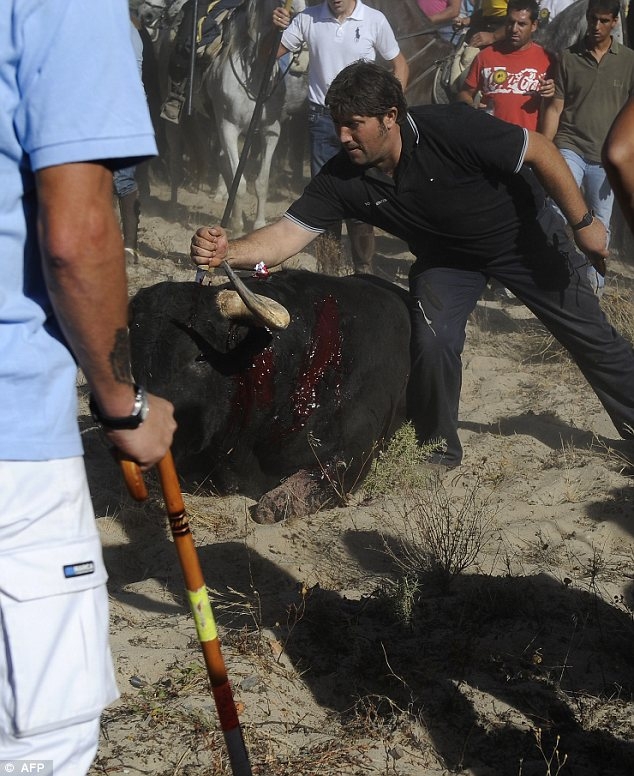
Spain: Tordesillas – Further petition – Please Support and Crosspost.


Please support Samuel with his campaign and support his petition as detailed below:

Thanks – SAV

——————————————-

In the animal rights organization in which I’m volunteer,

we have a too on-line signatures recollection in Change.org (that went to Tordesillas Council, Valladolid Province Government, and Castilla y Leon Community Government):

http://www.change.org/liberaong/petitions/view/help_us_to_end_cruelty_speared_bull_on_spain  

We have went a lot of years to Tordesillas too to make demonstrations against the “Toro de la Vega”

Romania: Stray Dogs Campaign Update 23/09/10 – Authorities Delay Decisions for Another 2 Weeks. Please Keep Up the Pressure Internationally.

Our post of 18th September refers:

https://serbiananimalsvoice.wordpress.com/2010/09/18/romania-like-so-many-authorities-the-romanians-ignore-the-evidence-and-continue-to-try-and-go-for-a-kill-strays-policy-issue-to-be-debated-on-2309-please-act-by-2109/

Firstly, the meeting which was scheduled for Thursday 23rd September was actually moved to the earlier date of Wednesday 22nd.

Many of you who sent e mails on this campaign issue probably had the following message sent through to you:

raspuns engl[1]catei

Well the latest news that we have (23/09/10) is as follows:

There were only 12 persons present out of the 18 necessary for the committee to make a decision. So they postponed the decision for a further two weeks.
The representatives of animal welfare organisations put onto the table a few petitions signed by thousands of people abroad, as well as an explanation of their plans and costs.

The head of the committee, a woman named Sulfina Barbu, avoided to give her actual opinion, but she had to admit the sterilisation is extremely important.

Ideas from opponents were suggested such as impounding and killing the dogs if they are aggressive or form packs – which effectively still leaves the door open to mass killing, which happens at the moment because there is no control and proper reduction in numbers planning.

And of course, animals which are not spayed mean that they normally form packs !

So there was no result from the meeting on 22nd

Carmen made a very good presentation stating that Turkey and Italy have solved many of their street dog problems by spaying animals and not by killing them.

It is necessary to keep up the pressure on this issue and support our welfare friends in Romania.  So please, continue to send in your sample letters as per the information detailed in our campaign link above.

The authorities have had a wide international response about this issue and they know that they are being watched internationally.  Lets keep reminding them up until the next meeting in 2 weeks time that there is only one solution to this issue; and that is to sterilise animals and not to kill them.

Australia: Campaign Update 23/09/10 – Your Actions Help to Now Save the Wild Horses of the Kimberley.


Wild Horses of the Kimberley are Saved !!

Re our original campaign post of May 2010, for the Kimberley horses –

https://serbiananimalsvoice.wordpress.com/2010/05/29/australia-minister-brendan-gills-sponsors-the-deaths-of-5000-wild-horses-act-now-and-tell-mr-death-to-stop/

We have now had the excellent news as follows from our friends at Animals Australia.

Well done everyone who took part in the campaign; here, as with many campaigns, your voice has been heard !

——————————————

Dear Mark,

On behalf of the wild horses of the Kimberleys please accept our sincerest thanks for being one of the 8,146 caring people who joined our recent online campaign to stop the cruel slaughter of these magnificent animals.   Your voice has been heard!

We are thrilled to report that following a massive public outcry, the West Australian Government has called off the planned aerial killing of wild horses at Lake Gregory in the Kimberleys.

If you have been following the updates on our website you may recall that in June we were first able to halt the initial plan to truck these horses all the way to a slaughterhouse in South Australia — only to be faced with the government’s second, and equally unacceptable plan for an aerial kill.

WA’s Indigenous Affairs Minister Kim Hames was inundated with protest letters and emails appealing for a non-lethal solution. He has now called off the helicopters which were set to start the killing in October. Instead, Minister Hames has now advised that an aerial survey will be conducted to provide an accurate count of the horses, then an expert committee will be convened to find non-lethal means to reduce the horse population on the station.

Animals Australia has applauded Minister Hames’ decision to spare the lives of the Lake Gregory wild horses, and of course we hope it heralds some new thinking about the way wild horses and other ‘feral’ animals are managed in the future.

What’s next for the wild horses of Lake Gregory?

Animals Australia will continue to closely monitor the situation at Lake Gregory. Watch our website for updates on the future plans for these horses. In the meantime, you may wish to thank Minister Hames for his compassionate decision:

Hon Dr Kim Hames, WA Minister for Indigenous Affairs
28th Floor, Governor Stirling Tower
197 St Georges Terrace, PERTH WA 6000

E-mail: Minister.Hames@dpc.wa.gov.au

Thank you again for being a voice for animals.

Lyn White
Animals Australia Communication Director

Spain: Tordesillas Photographs and Additional German Newspaper Link.


Further to our recent post regarding the report from Uk jounalist Danny;

https://serbiananimalsvoice.wordpress.com/2010/09/20/spain-eu-funds-supporting-animal-abuse-uk-reporter-journalist-excellent-article-on-the-tordesillas-bull-slaughter/

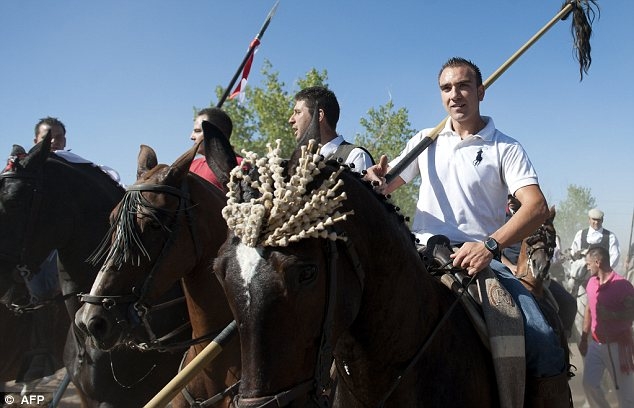
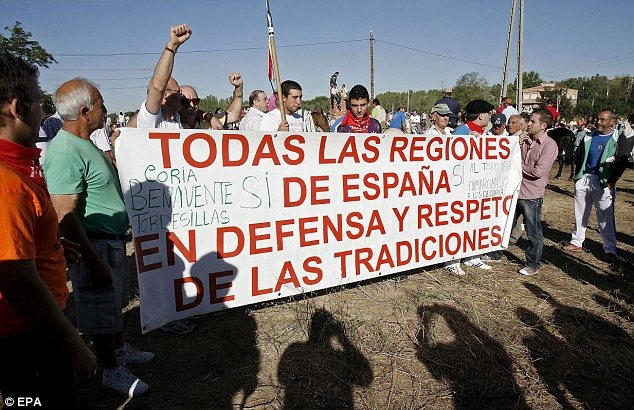
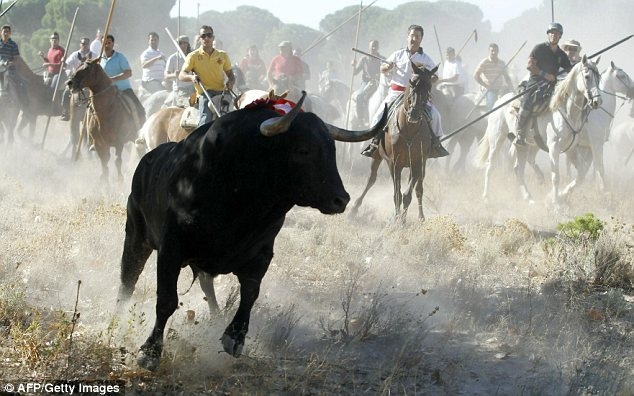
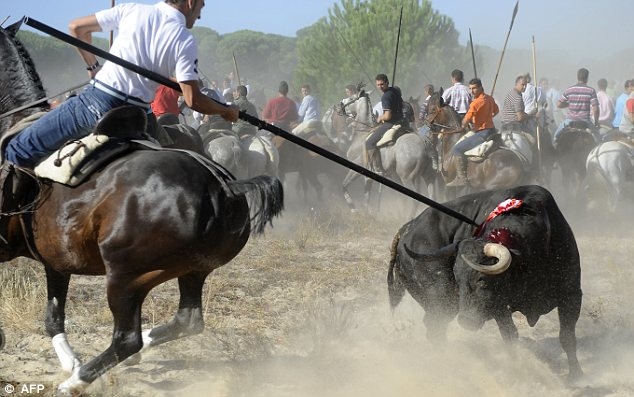
we now have a series of photographs which should be viewed in conjunction with the report.

Tell your representatives in the European Parliament that you DO NOT WANT to subsidize the torture of animals in Spain. To do this please click on the following link to find your own national MEPs.

Also, in the German press:


Spain: EU Funds Supporting Animal Abuse – Uk Reporter / Journalist Excellent Article on the Tordesillas Bull Slaughter.

Our recent post on the events in Tordesillas, including action and campaign information:

https://serbiananimalsvoice.wordpress.com/2010/09/15/sadistic-spain-toro-de-la-vega-update-150910-mayor-maria-del-milagro-zarzuelo-tells-the-world-the-town-hall-had-made-attempts-in-recent-years-to-make-the-fiesta-less-barbaric-in-previous/

Uk journalist and animal welfare campaigner Danny send his report on the events of last week.

An excellent article – please read this before you visit our action link above.

EU citizens – please copy this article / post to your MEP’s, and ask them to give you their stance on Spanish ‘fiesta’s’;

http://www.europarl.europa.eu/members/expert/groupAndCountry.do?language=EN

Who knows where Danny will be investigating animal abuse issues next ?

SAV.

————————————————————-

http://www.dailymail.co.uk/news/article-1313480/Spains-blood-fiestas-make-bullfights-tame-youre-paying-them.html

Daily Mail. 20 September 2010.

Spain’s sickening ‘blood fiestas’ make bullfights seem tame – but the most shocking thing about them is YOU’RE paying for them.

By Danny Penman In Tordesillas

Marcos held aloft the bloodsoaked bull’s ears and bowed deeply to the crowd. Moments earlier he’d sliced them off the young bull, which now lay on one side, blood pooling beneath him.  But the poor creature wasn’t quite finished yet. In a pitiful act of defiance, he mustered just enough energy to raise his
head a few inches off the ground and tried to stare down his attackers. 

Marcos responded by unsheathing a vicious looking knife and stabbing him in the back of the neck for a second time. The bull’s head flopped back into the dust — he was finished and Marcos, the amateur matador, yelled in triumph.  As the official killer of the bull, he had won the right to parade the animal’s coveted ears, tail and testicles around town on a ceremonial spear. He had also been granted permission to eat the bull’s testicles – widely regarded in Spain as the choicest of all cuts of meat and a rare honour indeed. In the eyes of many, Marcos Rodríguez San José was truly king for the day.

Casual brutality towards animals is,of course, well known in Spanish bullrings, but the sights I witnessed last Tuesday, during the annual Toro de la Vega ‘blood fiesta’ in Tordesillas, were as sickening as they were brutal.

What is more, such blood fiestas are far more common than the more famous and well-known sport of bullfighting.  Blood fiestas are not performed for the entertainment of tourists.  They are gruesome traditions that kill thousands more animals than bullfighting — often in the most barbaric ways imaginable. Yet millions of the Britons who visit Spain every year will be unaware of their existence.
The Toro de la Vega is a case in point. It’s a centuries-old tradition in which a bull is chased through the streets by thousands of men who beat it with sticks and pelt it with stones. Although this is chilling to watch, it is only when the bull reaches the meadows outside Tordesillas that the spectacle begins in earnest.  The bull whose brutal death I witnessed had been given the name Platanito (meaning ‘little banana’) by animal welfare officers. I watched as men on horseback tried to skewer it with their eight-foot long spears. Spear after spear sliced open his back. Once his strength began to ebb, the men became increasingly bold and moved in closer. This was the bit they clearly loved most of all — a time when they could begin to play with the bull without serious risk of injury to themselves.

I watched as one horseman impaled the creature and twisted and turned his spear deeper and deeper into him.  This seemed to fatally weaken the animal and he fell onto his front knees snorting and bellowing — his distress apparent.  Within moments, several more spears had pierced his body.  Finally, Marcos stepped forward to deliver the fatal blows to the bull’s heart and neck. It was, mercifully, the end of Platanito’s suffering.  Although the Toro de la Vega is undoubtedly horrifying to witness, what is equally shocking is the fact that we are all helping to pay for it. The European Union spends £37 million a year directly subsidising blood fiestas like the Toro de la Vega and other sports, such as bullfighting. It also ploughs tens of millions of pounds into the towns that host them and has begun renovating dilapidated bullrings.  As if that weren’t bad enough, now some MEPs are campaigning to have bullfighting and blood fiestas officially recognised as part of Europe’s cultural heritage. 

If this should succeed, then not only will the Toro de la Vega be given an official veneer of respectability, it may eventually become eligible for European arts and cultural funding.  ‘We’re all tightening our belts in Britain and yet our money continues to flow into bullfights and blood fiestas across Spain,’ says Jaqueline Foster, Conservative MEP and vice-president of the European Parliament’s Intergroup on the Welfare and Conservation of Animals.

‘The Spanish can support these fiestas with their own money, if they want to, but there’s absolutely no way they should be using ours to do so. I have been unable to find a single good reason why we are being forced to pay for these horrible sports.’

I decided to delve into the EU’s Byzantine bureaucracy to find out why it is spending so much of our money supporting blood fiestas and why it appears resolutely determined to carry on doing so. And, perhaps predictably, it turned into a tale of bungling, patronage and, some might say, corruption. The trail begins 100 miles west of Madrid at Finca Valdeolivas, the farm that bred Platanito. It’s a lavish estate set in beautiful countryside owned by the Gil family.  Judging by the number of expensive cars and pick-up trucks parked in their driveway, they must be one of the richest families in the area. Finca Valdeolivas is in the heart of Spain’s fighting bull country and it’s clear the Gils are taking full advantage of it.  Hundreds of the animals graze contentedly in the long shadows cast by cork and oak trees. Sleek Andalusian thoroughbred horses, raised as the mounts for bullfighting picadores, lie in nearby sun-drenched fields. It is a rural idyll — and one largely funded by northern European taxpayers. 

I tried to talk to Don Miguel Ángel Gil Marín, head of the family that owns the Finca, but he declined to answer my questions. I was, however, able to examine the EU’s accounts and discover that Finca Valdeolivas received at least £139,000 in subsidies last year. It is impossible to say what proportion of this money directly supported the rearing of bulls for blood fiestas, but the farm certainly seems to specialise in breeding them. The majority of the money flowing into Finca Valdeolivas is from the Common Agricultural Policy’s Single Farm Payment scheme.  This pays landowners a fee for managing the land, leaving them free to farm it in any way they choose.

The idea is to reward landowners for farming less intensively and to cut back on the type of over-production that led to the infamous wine lakes and butter mountains.  This scheme encouraged landowners in Britain to progressively switch to more environmentally friendly farming practices such as organic and freerange. In Spain, farmers are using the money to rear animals for blood fiestas and bullfights.  In effect, every bull they rear for a blood fiesta earns them £183 for every year of its life. The EU rewarded Finca Valdeolivas with £915 for breeding Platanito for the Toro de la Vega.
Given that Spain sacrifices at least 40,000 bulls a year, the EU’s annual subsidy to the industry totals almost £37 million.  Since the new subsidy scheme was introduced in 2005, the EU has spent £185 million supporting blood fiestas and bullfighting.

By the end of next year, the total will likely top a quarter of a billion pounds. But even this is likely to be the tip of an iceberg, as the exact subsidy figures are disguised within the EU’s maze of bureaucracy.
Spain receives £4.3 billion in agricultural support every year. Campaigners fear that a significant proportion of this is siphoned off to provide more animals for fiestas across the country.  Spanish towns and cities also receive an array of grants to help them preserve their cultural heritage. The country now
receives £1.1 billion a year from the EU’s Rural Development  Programme, for example, a proportion of which is being used to renovate bullrings. In the towns of Haro, in the province of Rioja, and Toro, in Zamora, the EU is so proud of its support that it has erected big signs outside the bullrings highlighting its contribution. 

It’s virtually impossible to find out exactly how much is funnelled into bloodsports through such grants because the EU cannot, or will not, divulge how it spends its money. Northern European taxpayers are not just helping pay for bulls for blood fiestas but also for cows, goats, chickens and geese,
too.  Up to 15,000 towns and villages sacrifice animals as centrepieces of their fiestas — often out of the gaze of tourists and the media. Some involve hanging chickens upside down by their feet on washing lines while townfolk ride underneath and pull their heads off to win prizes.  Another involves placing chickens in boxes with their heads poking out of the top. Local men and boys then chop off as many heads as possible while blindfolded. In yet another fiesta, birds are sealed inside clay pots and stoned to death.

Although such cruel games are now theoretically banned, they are still common throughout Spain. This may be because the country’s animal welfare laws have one curious exemption: animals may be mistreated so long as it’s necessary for the smooth running of a fiesta. Even if a blood fiesta does not
involve the immediate death of an animal, it can still inflict grotesque cruelty.  Next month, for example, Spain’s fire-bull festivals begin. In these, burning balls of wax and paraffin are attached to a bull’s horns and the terrified animal is chased through the streets. Most survive, but they often suffer horrific injuries. For its part, the European Commission (the executive body of the EU) says it genuinely does not know how much money it is pumping into Spanish blood fiestas.  ‘The member states and our cultural partners are responsible for selecting the projects that we fund,’ said a spokesman for the European Commission.  ‘We do not know, for example, if a bullring that has been renovated with our help is being used to host bullfights or not.’ Perhaps this attitude is not surprising, as the EU’s accounts are notoriously opaque.

Independent auditors have thrown out the EU’s accounts for 13 out of the past 15 years because they failed to provide ‘a true and fair account’ of its spending.  Auditors generally use such phrases to signal either incompetence or corruption — or both.  ‘It’s impossible to say how much money is being siphoned off,’ says Tony Moore, director of the British charity Fight Against Animal Cruelty In Europe.  ‘Blood fiesta organisers certainly think it’s a lot. They tell me that in the past they could only afford to sacrifice one or two animals whereas now they can torture and kill ten.’ He notes that support for the fiestas and bullfighting exists throughout the upper reaches of the EU. 

The Portuguese President of the European Commission Jose Manuel Barroso is a keen supporter. He overturned Portugal’s 76-year-old ban on ‘death bullfighting’ when he was the country’s prime minister.

Animal welfare campaigners fear that if the blood fiestas gain the official European seal of approval then the EU will start pouring even more money into them.  Ironically, just as MEPs are calling for enhanced support for bullfighting and blood fiestas, the Spanish are increasingly turning against them. One recent poll found that 60 per cent of people opposed bullfighting.  Another suggested that only a quarter had any interest in it and that such support is largely confined to older generations. This gradual shift in attitudes came to the fore in July when Catalonia’s regional parliament voted to ban bullfighting.  The ban has shocked many old school Spaniards who are keen to dismiss it as no more than a bid by the independent-minded region to carve out its own distinct identity. They insist that bullfighting and blood fiestas such as the Toro de la Vega are not cruel.  Instead, they claim that it’s a beautiful form of art that is central to Spanish culture.

When I watched Platanito die last week I saw no evidence of the beautiful art and rich culture that Spain is famous for. 

What I saw was a celebration of mob rule, of cruelty, of wickedness, even.

As I watched Platanito’s eyes close for the last time, I felt sick to my stomach to know that I had helped pay for his death with my taxes — just as you had too.

Serbia: The Minister of Agriculture Dreams Up New Dangerous Dog Laws In Attempt to Kill As Many Animals (Illegally) As Possible

Latest news from Serbia.

The Minister of Agriculture now appears to have dreamed up a new regulation (underlaw) which is associated with ‘dangerous dogs’.

With this so called law, any dog which is labelled as ‘dangerous’ will be deemed unfit for socialisation.  There will be only one way that such a labelled animal can be treated, and that will be in the good old fashioned Serbian government routine of killing the animal.

This is an underlaw which has been produced by the Serbian government and authorities as yet another way to kill animals.  But this is an illegal underlaw which will be used to attempt to justify the deaths of many animals.

Once again, the Serbian authorities appear to be very good at implementing these mickey mouse laws when it helps them to kill animals, but they appear very unable to implement their own laws when it comes to protecting animals from the streets; including a public education programme about how important it is for pet owners to sterilise their animals.

Once again, the kill, kill, kill Serbian government and authorities are attempting to kill as many animals as they can, whilst taking care of no animals in their shelters.

This illegal action can and will be abused by the authorities – the animal killer authorities.

Now this information on illegal legislation must go to the Serbian Constitutional Court.

This is the next phase of our actions.

Romania: Like So Many Authorities; the Romanians Ignore the Evidence and Continue to Try and Go for a ‘Kill Strays’ Policy. Issue to be Debated on 23/09 – Please Act by 21/09.


Please find below information which has been supplied by Carmen in Romania.

A debate regarding the legislation associated with stray dog control will be discussed on Thursday 23rd September.

How very disappointing to see that despite the evidence presented so many times throughout the world, some authorities still consider that mass killings of stray animals is the answer to their stray ‘problem’.  As Carmen correctly says below, thousands of animals have been killed in a futile authority attempt to control the situation.  After 10 years, the issue of stray animals is being discussed again.

Does this not tell the authorities that they have no idea about the correct way of addressing this issue, and that simply continually killing stray animals does not work; and IT WILL NEVER WORK in REDUCING STRAY ANIMAL NUMBERS !.

We need to make it clear to the Romanian authorities, and any other authority; that irresponsible PET animal ownership is very often the cause of large stray animal numbers.  Until authorities address the situation of responsible pet ownership, which would include animal sterilisation, the fitting of an identification microchip; to identify the owner, and vaccination of all animals, the ‘stray problem’, as they love to call it, will never go away.

Irresponsible pet owners who do not have their animals sterilised usually let these same animals out onto the streets.  They mate with real stray animals – the result being litters of new ‘strays’ born onto the streets.

Until the authorities accept that responsible pet ownership; AND THAT INCLUDES HAVING YOUR PET STERILISED, is undertaken by owners; in addition to keeping their animals off the streets; then there will NEVER be any reduction in stray animal numbers in any countries which have this situation – be it Romania, Serbia, Macedonia, anywhere there is this issue.

What do we have to do to get the unintelligent authorities to see this ?

People in charge for the welfare of the towns and cities; yet they cannot grasp a simple thing such as what continues to produce yet more strays !

Authoritaries are paid public money for what ? – to make very illogical, incorrect decisions it wouls appear; if this below is anything to go by !

The very sensible and only really effective for the future, as proposed by Carmen, is that under their project, there is an obligation on animal owners to sterilise and microchip identify all of their cats and dogs.

There is an alternative.  If owners do not want to sterilise their animals, then they will have to pay a financial amount to the authorities every year.  This money could be invested into further sterilisation and microchip programmes; thereby reducing costs further for pet owners.

As Carmen rightly declares, strays originate from irresponsibly owned pet animals, and so it is vital – the very first step in the process, that owned animals are sterilised in order to reduce animal numbers for the future.

SAV.

The tax/year it’s about 4 times more than a sterilization costs.

So the people will prefer to sterilize.

Sincerely
Carmen

 —– Original Message —–

From: Carmen Arsene

Sent: Friday, September 17, 2010 10:24 PM

Subject: URGENT! Debating the dog management on Thursday

Dear all,  

Very unexpected; the Committee for Public Administration within the Chamber of Deputies decided to debate the legislative project no. 912 for managing the stray dogs on Thursday (September 23).

Just to have a connection with the following, I mention the form adopted by Senate is (the main line) Sterilization & Return.

There are 4 sets of amendments (main ideas):

1 – mass killing, no control of NGOs – made by prefect of Bucharest (sustained by the president of Committee and other PDL party)

 2 – mass killing – made and sustained by Hungarian party

 3 – amendments that does not affect our project – made and sustained by a deputy from PSD party

 4 – our amendments – sustained by Mr. deputy Sorin Buta (PDL party)

In the final form that was prepared for debating our amendments are not. This means they want to take into consideration only the amendments of killing.

About this and about including our amendments; Mr. dep. Buta will discuss with the president of Committee (Mrs. Sulfina Barbu) on Monday (but this does not mean it will bring so much “plus”.

Therefore please, concentrate as much as you can by sending faxes (till maximum on Tuesday) to the Committee. Tell them on short:

the sterilization project will bring a lot of help from outside but a killing project will bring an immensity of protests and discussing in European Parliament the cruel and ineffective attitude of Romanian authorities etc.

the importance of sterilization; the euthanasia has been applied for 10 years did not have result, the same situation is now, after killing of tens of thousands of dogs

etc.

*** SAMPLE LETTER ***


Dear Sir / Madam;


As someone who continually monitors the situation regarding national authority stray animal management policy across the world, I am very concerned to see that you are still proposing the mass killing of stray animals within Romania in a futile attempt to reduce numbers.


I will be very closely watching the debate on legislative project no. 912 for managing stray dogs being held on Thursday (September 23).


After witnessing the last 10 years of Romania killing thousands of stray animals; with a result of no reduction in their overall numbers, can I suggest to you that this supports the now global view of welfare organisations and many positive thinking authorities that killing stray animals never makes any difference on their population numbers.  But effective sterilisation DOES however.


Can I ask you to dismiss the proposals of certain parties who wish to continue with the mass killing of animals, and instead support the views of the PSD and PDL parties who look towards effective, humane and much more realistic approaches to stray animal population numbers.


 I fully support calls to the project proposed by Romanian animal welfare organisations, that there is an obligation on all animal owners to sterilise and microchip their cats and dogs.  As an alternative;  if owners do not want to sterilise their own pet animals, then they must have to pay a financial subsidy to the authorities every year as a form of compensation; because their un-sterilised animals, when allowed access to the streets, are continually contributing to the production of more strays.


It is a simple equation:


Unsterilised animal + Unsterilised animal = more stray animals.


sterilised animal + sterilised animal = NO more stray animals.


Stray animals directly originate from irresponsibly owned pet animals, nothing else.


So it is vital – the very first step in the process, and one which you should be supporting, is that owned animals are sterilised in order to reduce stray numbers for the future.


I will be watching the results of your actions with interest in this coming week.  Through various international animal welfare NGO’s, the result of your actions will be distributed globally.


In the name of Romania and positive animal welfare in accordance with EU legal standards; I urge you to leave mass stray animal killing and instead move towards a national owned pet sterilisation and public education programme.


Yours;


Name:  ***

Nationality:  ***


***PLEASE NOTE – MAILS AND LETTERS OF COMPLAINT NEED TO BE SENT BY END OF TUESDAY 21ST SEPTEMBER***

Block e mail address contacts to send your protest:

Committee for Public Administration Territorial Planning and Ecological Balance

cp06@cdep.ro,sulfina.barbu@cdep.rocalin.chira@amrbruxelles.eu,office@ansvsa.rosrp@cdep.ro,presa@cdep.ropetitii@mai.gov.ro,amr@amr.roaor@aor.ro,  CJD@bucurestiprimaria.ro ,  procetatean@presidency.ro, prefect@mira.gov.ro,ion.calin@cdep.roioncalin@yahoo.comionel.palar@cdep.romapostolache@cdep.roandras.edler@cdep.roedler.andras@yahoo.commarin.bobes@cdep.rovictor.boiangiu@cdep.roboiangiuvictor@yahoo.comdan.bordeianu@cdep.rocristian.buican@cdep.rosorin.buta@cdep.robogdan.cantaragiu@cdep.rogheorghe.ciocan@cdep.rodusa_mircea@cdep.rorelu.fenechiu@cdep.rovasile.gherasim@cdep.rozmb.gherasim@gmail.comzanfir.iorgus@cdep.roghervazen.longher@cdep.rocostica.macaleti@cdep.roantonella_barbu@yahoo.comantonella.marinescu@cdep.rodan.nica@cdep.roioan.oltean@cdep.rocornel.pieptea@cdep.roneculai.ratoi@cdep.rodenes.seres@cdep.roszilagy@rmdsz.rov_soporan@yahoo.comsoporan.vasile@cdep.roclaudiu.taga@cdep.roclaudiu.taga@gauss.roradu.timpau@cdep.roradub_t@yahoo.comeugen.uricec@cdep.roecu777@yahoo.comlucia.varga@cdep.rovarga.lucia@yahoo.comaurel.vladoiu@cdep.ro, deputat_vladoiu@yahoo.comsorin.zamfirescu@cdep.rozgonea@cdep.ro

Romanian mass media

oradefoc@realitatea.net, monica@mediafactory.ro, martorocular@realitatea.net, andrei.udisteanu@evz.ro, stiri@antena3.ro, crp@pressclub.ro, redactie.online@mediafax.ro, office@rompres.ro, rador@srr.ro, roalertnews@gmail.com, stiri@agerpres.ro, promptmedia@gmail.com, promptmedia@hotmail.com, centrale@agerpres.ro, amos@kappa.ro, redactia@romanialibera.ro, sasevinepresa@b1tv.ro, mihaela@protv.ro, mihaela.gradinaru@tvr.ro, alexandru.cristorian@catavencu.ro, daniel.ruse@radioromania.ro, nasul@b1tv.ro, claudiuruse@yahoo.com, cojocarivitalie@yahoo.com, sergiu.voicu@primatv.ro,

You can fax to:

Committee for Public Administration Territorial Planning and Ecological Balance  

In attention to:           

President Mrs. Sulfina Barbu  

Vicepresident Mr. Calin Ion  

Vicepresident Ionel Palar  

Mrs and Mr. Deputies members  

Fax:  00 40 21 3146934

Parliament of Romania – Chamber of Deputies  

In attention to: President Mrs. Roberta Anastase  

Fax: 00 40 21 3134931

Thank you.

Sincerely  

Carmen Arsene

Dr.chem. CARMEN ARSENE

Scientific Researcher

—————————————–

Institute for Nuclear Research Pitesti

str. Campului no.1

PO Box 78, 115400 Mioveni

jud. Arges, Romania

tel.: + 40 248 213400 ext 590

email: carmen.arsene@nuclear.ro

cmarsene@yahoo.com

www.nuclear.ro