Posted on June 19, 2017 by Serbian Animals Voice (SAV)
SAV Comment – We all know from ‘Eyes on Animals’ investigations how cattle are slaughtered in Turkey. Pity the Irish Farmers Association does not get off its money laden backside and go see exactly how ‘their’ animals are killed. But they wont cos all they are interested in is Money !
Info supplied by export hero Jane.
Further contracts to ship Irish cattle to Turkey expected
7:00 am – June 19, 2017
Further contracts to ship Irish cattle to Turkey expected
Irish suckler farmers are holding on to the hope that further contracts, which would see more Irish cattle being shipped to Turkey, will be agreed this year.
The Turkish market has grown in importance since the first boatload of Irish animals departed for the Middle Eastern market back in the autumn of 2016.
Since the market opened to Irish cattle, some seven boatloads have departed Irish shores. The latest consignment was organised by the Waterford-based exporting company Purcell Brothers.
The exporting company has sent two boatloads of cattle to Turkey this year as part of a 20,000-head contract.
Last year, Viastar shipped more than 19,000 cattle to Turkey. The four shipments included both finished and weanling bulls. In a separate deal, earlier this year another Irish exporter also sent a consignment of 1,564 Irish heifers to Turkey.
And hopes are growing that similar contracts could be agreed this year.
In a statement last week, the Irish Farmers Association (IFA) said exports to Turkey are very strong and it is expected that there will be further contracts as the year progresses.
Nearly 27,000 head of Irish cattle have now been exported to Turkey. And the added competition from exporters is having a positive impact on cattle prices in numerous marts throughout the country.
IFA National Livestock Chairman, Angus Woods, said lighter carcass weights and a strong live export trade will help to negate the impact of higher numbers for the second half of the year.
Predictions suggest that 100,000 extra cattle will be slaughtered in Ireland this year and supplies have climbed by 27,000 head above 2016 levels already this year.
In addition, Woods said, live exports have been very strong this year and are up 35,000 head to reach 116,000. Over 90,000 calves have been exported from Ireland this year, he added.
Posted on June 18, 2017 by Serbian Animals Voice (SAV)
Posted 14th June, 2017
Updated: 15th June, 2017
Author: Eduardo Gonçalves
Elections can be curious affairs. For political junkies, the polling, the projections, and the posturing are their bread and butter – but away from that there is something much deeper. Elections have a way of distilling how a nation feels and what it values.
This was supposed to be the Brexit election, but in the end, that wasn’t a major issue. To everyone’s surprise, it was usurped by a different issue: hunting.
In Conservative manifestos past, the party has committed a free vote on repeal of the Hunting Act. Previously, when only a handful of Conservative MPs supported the ban, this was barely commented on. But we know that prior to this election, more than 50 Conservative MPs supported the ban. More than that, we know that the vast majority of the British public support the ban. So it came as something of a surprise when Theresa May affirmed her own support for hunting, and a repeal of the Hunting Act. What happened next was little short of remarkable.
Like never before, fox hunting became an election issue.
That’s not my just view. Buzzfeed analysed what was being shared online during the campaign. Throughout the campaign, hunting was the fourth most-shared topic, ahead of Brexit. It wasn’t just online that it was making a stir, either. BritainThinks ran focus groups with swing voters in marginal constituencies. After social care, the most commonly mentioned manifesto commitment was the Hunting Act. YouGov said that the words brought up most during the campaign were “social care” and “fox hunting”.
Candidates – both Labour and Conservative – spoke time and time again about how fox hunting repeatedly came up on the doorsteps. Conservative MP Sarah Wollaston said Theresa May’s comments on hunting were a “turning point” in the campaign. Another Conservative MP, Michael Fabricant, said that raising the issue was “very foolish”. The victorious Labour candidate in Canterbury – held by the Conservatives for decades – said it was fox hunting that swung it.
Jim Waterson, Political Editor at Buzzfeed, tweeted that “Anecdotally and based on our most-shared data, I really think fox hunting (& ivory ban) cost the Tories some marginal seats”.
At the same time all this was going on, League Against Cruel Sports supporters were contacting their local candidates as part of the Votes for Vinny campaign. Tens of thousands of emails were sent, and in the days before polling day, thousands of people logged in to the League website to see how their candidates responded to the pledges.
Clearly, hunting is not a party political issue. No party has a monopoly on compassion. Along with those many anti-hunting Conservative MPs, over 70% of Conservative voters support the ban on hunting. Party colour was not the vote loser here – the misjudgement was pandering to a vocal minority who want to see a return to a more ignorant time.
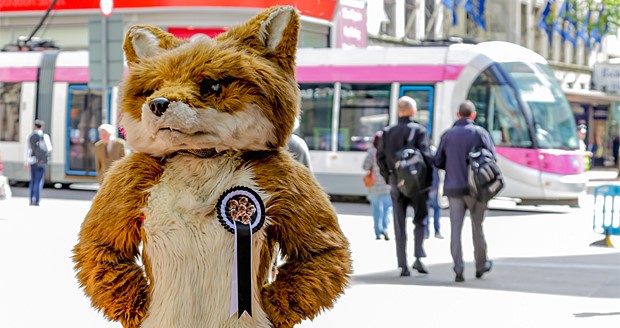
Vinny himself was in cities across Britain, spreading the word about animal cruelty. Candidates from all parties contacted their constituents – and us at the League – to say that they opposed repeal. In the final two weeks of the campaign, an additional 30 Conservative candidates, almost all of whom were elected, said that they would vote against repeal.
So, where do we stand now? Well, it is very difficult to see a repeal vote on the Hunting Act being passed. Former Conservative Party Chairman Grant Shapps says it “stands absolutely no chance” of repeal.
Despite the Conservatives losing seats, the number of Conservative MPs supporting the Hunting Act has increased, and is possibly as high as one third of MPs. The election has made clear how unpopular – not to mention politically toxic – the idea of repeal is.
Yet there is more work to do. The Brexit process may open the door to weakened environmental and animal welfare legislation. That must be stopped. In the last Parliament, good progress was made towards tougher sentencing for animal cruelty. That must be seen through. It is not just politicians that should now be left in no doubt as to how unpopular hunting is. In a couple of months, ‘cub hunting’ – the illegal slaughter of fox cubs – will begin again, and hunting continues under the false alibi of “trail hunting”. Public bodies like the National Trust, the Forestry Commission, and the Ministry of Defence continue to allow this on their land. The British public do not tolerate animal cruelty, and neither should those organisations.
With a hung Parliament, the election may have had an indecisive outcome, but in another way, it was utterly decisive. The idea that the Hunting Act should be repealed has been roundly rejected and the hope now is that we can move on from any notion of repeal or weakening.
The British public believes in compassion and they believe that animals should be protected from persecution. Politicians surely now accept that. It must be time, therefore, that we seek to strengthen and extend those protections.
Many people think of the small Southeast Asian country of Laos as paradise on Earth, but for many of our four-legged friends it is truly nothing but hell.
In a recent report Laos was singled out as one of the worst countries participating in the wildlife farming industry. Where small ramshackle cages filled with tigers and other endangered animals await their fate. Usually that means they will end up on a tourist plate.
You’ll be shocked and appalled to learn about secret monkey shipments on Air France passenger flights that we’ve discovered.
The monkeys were flown 5,979 miles from Mauritius to Paris, where they were held for a further nine hours, before being flown 4,138 miles to Chicago. Their ordeal lasted over 37 hours.
Tragically, the monkeys were destined for Charles River Laboratories, a company that profits from carrying out cruel poisoning tests on animals.
While holidaymakers were enjoying their flight in comfort, they would’ve been totally unaware of the suffering just below their feet. 120 monkeys, torn from their families and imprisoned in small wooden crates, were suffering in the dark and noisy cargo hold.
Air France are the only European passenger airline still transporting monkeys for research. This must stop!
Foie Gras is not allowed to be produced in the UK on animal cruelty grounds, but is imported as a so called ‘delicacy’ by selected stores. The aim of this petition is to demand that the UK bans the importation of all Foie Gras.
Foie gras is a ‘delicacy’ made from the diseased liver of ducks or geese who have been repeatedly force-fed. Animal Equality investigations in France and Spain have revealed the extreme suffering that millions of ducks and geese endure on foie gras farms
Please sign the petition demanding a UK import ban on foie gras.
The President does not want to visit the UK until the public supports him, sources say
Donald Trump has reportedly told Theresa May that he does not want to visit the UK soon for fear of large-scale protests against him.
Ms May invited Mr Trump to Britain seven days after his inauguration. Now he apparently wants to wait until the British public supports him coming.
The US President made the admission in a recent phone call to the Prime Minister, a Downing Street adviser who was present for the call told The Guardian. The aide said Ms May seemed surprised.
Mr Trump – never a favourite among British voters – stoked outcry in recent weeks for attacking London Mayor Sadiq Khan in the wake of terrorist attacks in the city.
The President ridiculed Mr Khan’s calls for calm, and later condemned the Mayor’s “pathetic excuse” for his statements.
The comments drove even Ms May to say that Mr Trump was “wrong”. Some MPs – and Mr Khan himself – suggested she cancel Mr Trump’s visit to the UK.
“Show some bottle please PM,” David Lammy, senior Labour MP, tweeted. “Cancel the state visit and tell Trump where to get off.”
Jeremy Corbyn, the Labour leader, has also expressed his support for cancelling the trip.
A spokesperson for Ms May, however, told Reuters that “the Queen extended an invitation to President Trump to visit the UK and there is no change to those plans”.
British police stopped sharing intelligence with the US about the Manchester terrorist attack after photos of the investigation were leaked to the media.
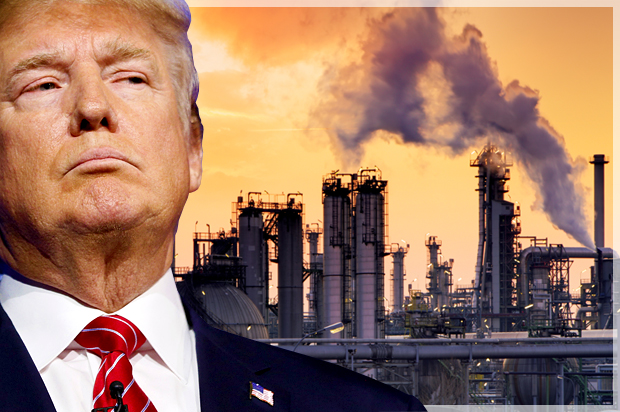
The Foreign Office was also reportedly upset with Mr Trump’s decision to remove the US from the Paris climate agreement.
Mr Trump did not visit the UK on his first foreign trip as President, choosing instead to visit Saudi Arabia, Israel, and the Vatican. He also attended summits in Italy and Belgium. The White House recently announced that his next foreign trip will include a visit Poland.
Businessman Woody Johnson has been named as the new US ambassador to the UK, but the President has yet to formally nominate him.
The Independent has contacted the White House for comment.
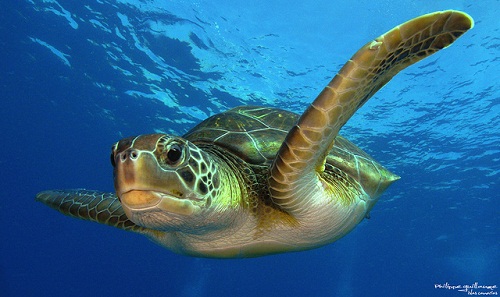
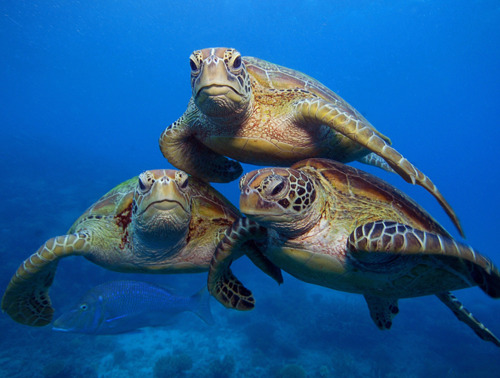
· Oppose “climate mitigation” projects in the Gulf of Mexico that could keep mother sea turtles from nesting beaches, such as the nightmarish Ike Dike, a massive sea wall along our coast that would impact critical Kemp’s ridley turtle habitat.
· Spearhead efforts to re-establish a nesting colony for Hawaiian green sea turtles, creating a second beachhead to guard against sea level rise at their primary nesting site.
· Mobilize thousands of activists to defend national laws that reduce carbon emissions and fight against oil and gas drilling projects in our oceans.
Together over the past 25 years, we’ve stared right into the eyes of some formidable opponents to protect the sea turtles – international trade organizations, powerful governments, and vested fishing interests. And we’ve won real change.
Painted Lady butterflies to grace Alberta with rare migration
Throngs of the soft pink beauties have begun epic trip north
A rare kaleidoscope of painted-lady butterflies will invade Alberta this summer, during an epic migration that only happens every 10 to 15 years.
It’s been a dozen years since the province was last inundated with the dainty insects.
“We get used to migrating birds coming north and south every year like clockwork, but some butterflies are not like that at all,” said John Acorn, a naturalist known as the Nature Nut.
“And the painted lady is a great example.”
The colourful butterflies breed in the southern United States, parts of Mexico and Central America.
Their migration into Canada is dependent on weather conditions and the health of those southern populations, said Acorn, a professor with the department of renewable resources at the University of Alberta.
‘We expect to see our fill’
“As the population grows, the butterfly population becomes more migratory and they just stream north,” Acorn said. “The bigger the population, the stronger the migration.
“We generally see a couple every year, but this year we expect to see our fill.”
The painted lady is easily identified by pointed, salmon-pink wings, with intricate dark markings and row of five eyespots on the outer edges of the hind wing.
“The painted lady is more pinkish-orange but the butterflies that are arriving now are a little bit faded,” Acorn said. “They’ve flown who knows how many hundreds, if not thousands of kilometres, so they’re not looking their best.
“The butterflies that emerge in July will be much snappier looking.”
Taking flight
It’s not known exactly how many of the insects are expected to fly into Alberta this summer. But there will be ample opportunities to catch a glimpse of them before they fly south again or perish in the cold, said Acorn.
The butterflies arriving now will be laying their eggs on thistle flowers in a few weeks.
“I don’t know how long they’re going live, maybe a month or two if they’re lucky,” Acorn said of the butterflies soon to emerge from cocoons.
“There is some suggestion that they migrate south again at high altitudes before winter so it may be that they get out of here before it gets really ugly, although I have seen painted ladies into October and they didn’t seem to get that this is Alberta and they should get out.”









 Serbian Animals Voice (SAV)