Posted on July 5, 2019 by Serbian Animals Voice (SAV)
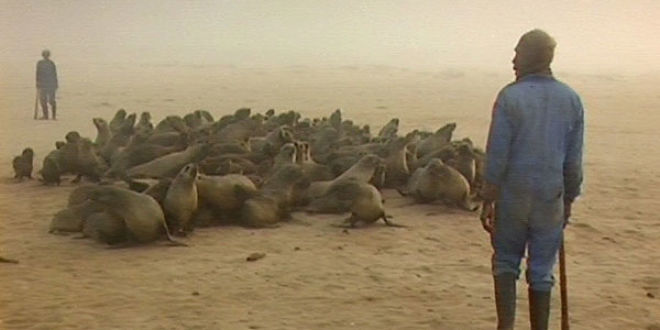
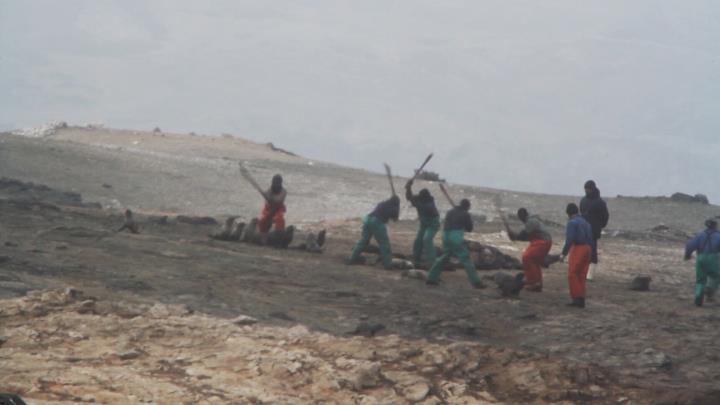
Every year in Namibia, 86,000 Cape Fur Seal pups are butchered to death.
Namibia is the only southern hemisphere country where seals are commercially slaughtered and the only country in the world where slaughter of puppies still nursed by mothers is possible.
The cruel seal hunt is actually known only from Canada.And Canada has also resumed the bloody seal hunt, although demand for seal products has plummeted.
But even on another continent, seals are slaughtered by the thousands. Between 80,000 and 100,000 dwarf fur seals, also known as eared seals, cavort at the Cape Cross on the rocks in Namibia.
Over the next four months, as we learn, thousands of seals living in Cape Cross and Atlas Bay are brutally killed for their fur, oil and genitals. The genitals are exported to Asia.
The terrible bloodshed has already begun. The hunting season lasts 139 days from July to November.
The butcher of Namibia – Hatem Yavuz
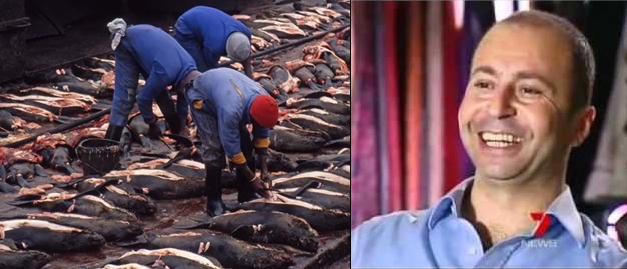
Hatem Yavuz, known as the butcher of Namibia, is the man responsible for the death of hundreds of thousands of seals – both in Canada and Namibia, according to hesealsofnam.org.
Yavuz is an Australian citizen and also has Turkish citizenship.
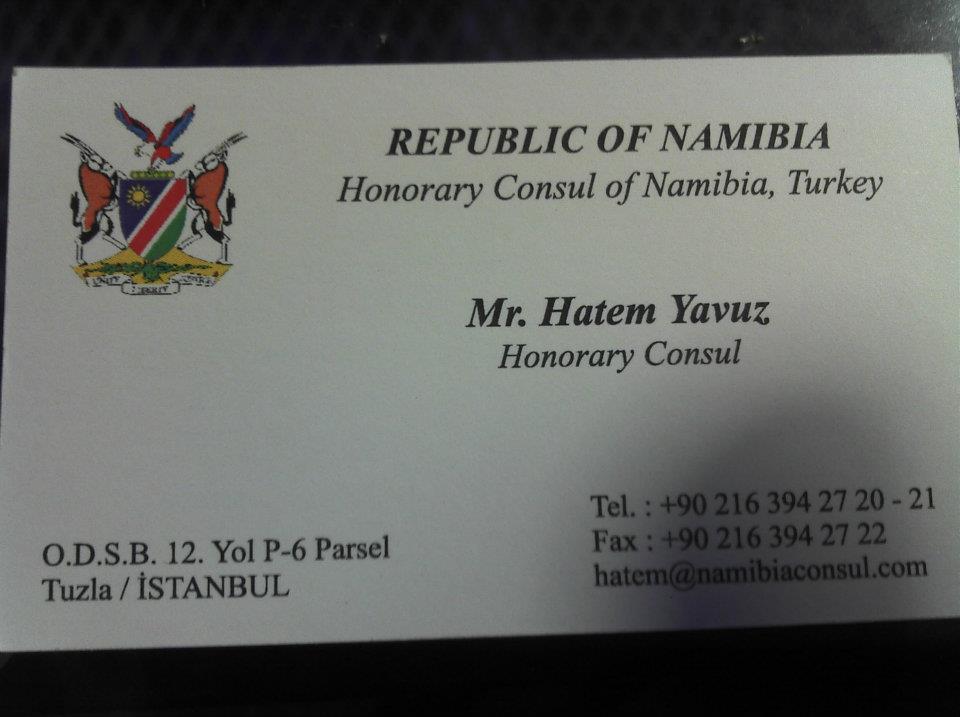
He is honorary consul in Namibia for Turkey and has as a diplomat both a luxury vehicle and offices, which are paid by the Namibian taxpayer. As a Consul of Namibia, he is a government official and benefits directly from the sale of the country’s assets, according to the organization.
The Turkish and Australian based company Hatem Yavuz named after the owner Hatem Yavuz controls roughly 60 percent of the world’s seal market and processes 130,000 seal pelts every year in his Istanbul factory.Yavuz also has a hand in the Canadian seal market and claims to be proud of what he does. In an interview that spurred a flurry of hate mail, Yavuz told “7 News” in Australia that “It’s a job.If I don’t do it, someone else is going to do it.”
My comment: I read in another website that this bloody spectacle is a popular tourist attraction.
If some dull, mentally ill proletarians can find it beautiful, get excited, and enjoy how innocent and utterly defenseless animals suffer and are tortured to death like this, then they are nothing more than pathetic monsters, and they do not deserve anything like their own human rights.
The Government of Namibia allows this. The Government of Australia, Turkey and Canada allows fur trade.
And if the butcher Hatem Yavuz says massacring innocent beings is just a job, then why is he no longer burning witches, or selling slaves? That would be good business too.
For this, all he needs to do is make an offer to the governments that they can not refuse.
Posted on July 4, 2019 by Serbian Animals Voice (SAV)
With heartbreaking new footage from a British dairy farm, today we’re shining a light on the cycle of cruelty that exists in every glass of milk.
Filmed by one of Animal Equality’s investigators, this short non-graphic video is a moving reminder of how the bond between mother and calf is cruelly and routinely broken on dairy farms.
Shortly after a cow gives birth, her baby is taken away from her. Usually, they’ll never see each other again. Much like humans, cows have strong maternal instincts. They will call out for their calf for days or even weeks after they’ve been separated.
The milk this cow produces for her calf will instead be taken from her to be sold. She’ll be forcibly impregnated every year, putting her and her calves through a cycle of cruelty that ends with their slaughter.
We know how much suffering takes place in the dairy industry, but so many people are still unaware. Please, share this video with your friends and on social media, and help us spread the word about the torment cows endure for every pint of their milk sold.
Don’t forget that we also have a ‘Serbian Animals Voice’ Facebook site, which has over 1,250 members and which is a real talk shop for Serbian animal welfare campaigners; many of whom run small shelters and who have rescued animals who are looking for forever homes.
Note that each post has a ‘translation’ option where you can translate into English if you are not proficient at other languages.
There are many animals needing help – see if there is anything you can do for them.
Posted on July 4, 2019 by Serbian Animals Voice (SAV)
“Over 150 million animals are killed for food around the world every day—just on land. That comes out to 56 billion land animals killed per year. Including wild-caught and farmed fish, we get a total closer to 3 billion animals killed.” (Jo-Anne McArthur / We Animals)
There is no other cause or struggle that comes even close in numbers.
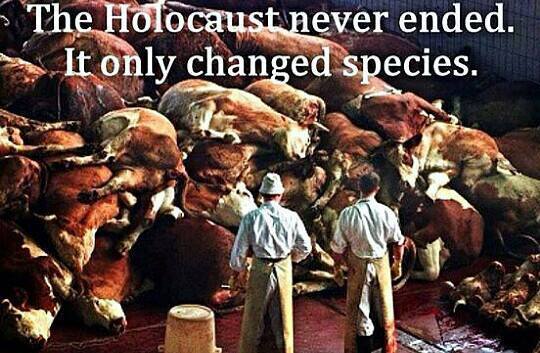
Most victims of the Animal Holocaust do not even have legal means to be defended in courts around the globe. Their voices are not acknowledged. This is the only cause in which the victims are not even recognized as victims by the majority of the human population.
How can we trivialize the magnitude of the massacre and abuse that thousands of millions of non-human animalsare subjected to every week by somehow equating any other tragedy with theirs?
Just trying to include any other cause in the spaces dedicated to animal rights is an anthropocentric gesture—one which only shows selfishness and a false sense of human supremacy.
Attempts to overshadow the animal rights struggle, to not let it exist on its own, and to hide the scale of non-human annihilation at a single species’ hands are just reflections of the internalized speciesism in our society.
The need to create a movement with a unique and specific cause focused on defending the rights of voiceless victims—victims who cannot make use of the human language or legally defend their own lives—originated from that void among justice movements. The goal was to have a movement specifically dedicated to shedding light on the most ignored victims, the most oppressed on the planet, and the most numerous above all: non-human animals.
“I want to make it clear: All around us there is a system of degradation, cruelty and killing that can compete with anything the Third Reich was capable of; indeed it can overshadow it, because our system knows no end, it regenerats itself, incessantly giving birth to rabbits, rats, poultry, livestock, just to kill them.”
Posted on July 3, 2019 by Serbian Animals Voice (SAV)
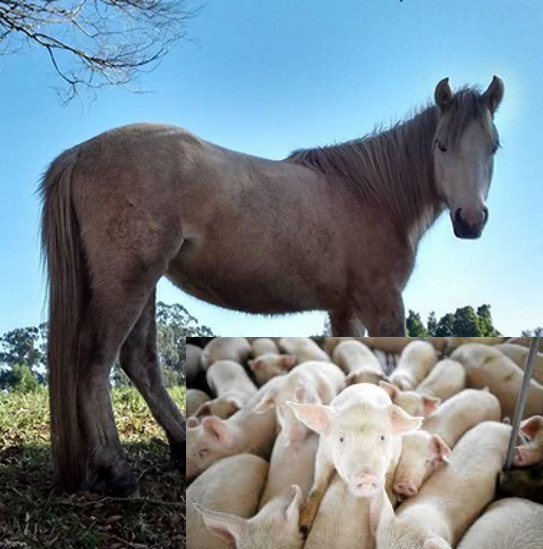
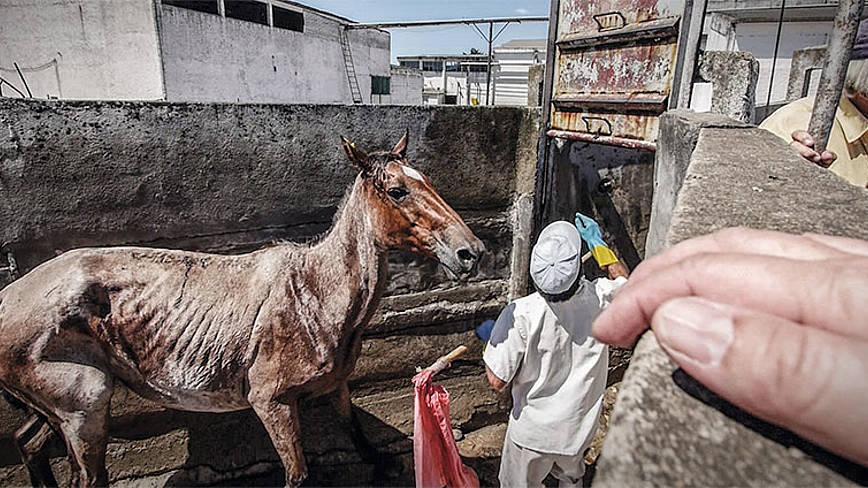
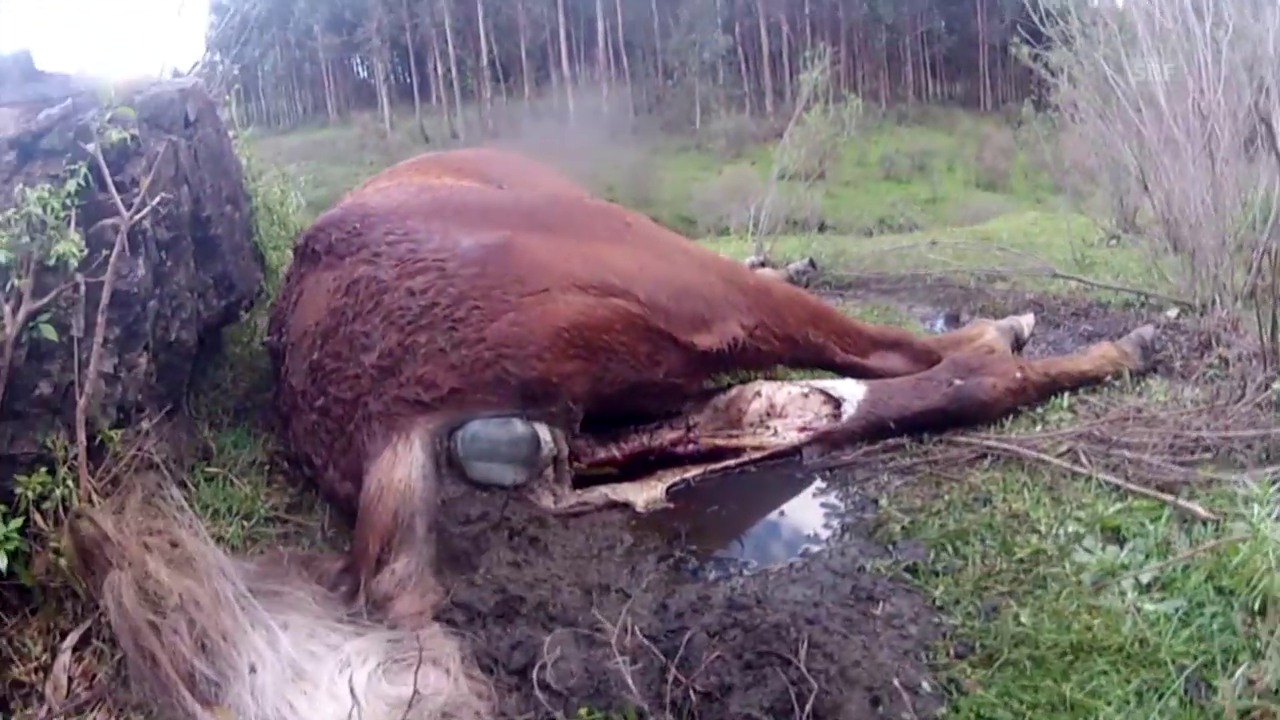
It’s a brutal business: On horse farms in South America, mares are held for one purpose only: to take blood from them. For in the blood of pregnant mares is the hormone PMSG – a popular drug in this country for pig breeding. For years, the grievances are denounced. But almost nothing has changed.
What is the hormone PMSG used for?
In Europe, PMSG ( Pregnant Mare Serum Gonadotropin) is used to synchronize piglet production. This is mainly used in industrial mass production. One wants to prove the mother sows at the same time.
The so-called insemination engineers of the agricultural industry then only need to come once.
Then all are inseminated at the same time and all get their piglets at the same time within a few hours.
That is, you can calculate the exact day and hours.
Of course this makes the handling of the production very easy. The piglets can be exhibited at the same time, be fattened and thus slaughtered at the same time.
The perfect way to clock the whole production!!
The current video footage has made York Ditfurth turn at high risk. After the release of the first images in 2015, the South American “blood farms” had made various promises to improve conditions. So workers should be exchanged and a more animal-friendly handling of the horses be prescribed.
The current recordings show even more catastrophic abuses. They prove that the misery of the mares in South America has not improved. Animal rights activist York Ditfurtis shocked by the scale.
The animal cruelty had never been so detailed in detail.
For 100 grams PMSG be paid around the 850,000 euros. That is a lot of money. If one calculates the cheap acquisition costs and maintenance costs for a mare, money is printed with the blood.
From two and a half liters of blood, two milligrams of PMSG are recovered. At least ten liters are tapped from the mares a week. Eleven weeks long. That’s more than 110 liters of blood in one season.
PMSG is eventually sold to Europe.
Since the mares only produce the coveted hormone until the 130th day of gestation, the foals are aborted manually as waste because they are not needed.Abortion is also extremely painful for the animals: For example, workers simply scratch the uterus of the horses with their hands. The animals are left to themselves and brought back to the pastures. Veterinary care does not exist.
My comment: Guidelines of the OIE and the EU Commission exist only for the meat production, but not for the production of an animal by-product, among which the blood serum falls.
The customers of PMSG, including European pharmaceutical companies, have so far shown no interest in introducing binding legislation.
Because they also benefit from this loophole, and from the dirty business with the life and suffering of the animals, as always.
And so continues the dirty business of suffering and dying mares and foals in the blood farms.
I think that would as well work with the blood of tortured pharmaceutical entrepreneurs who have something to answer, right?
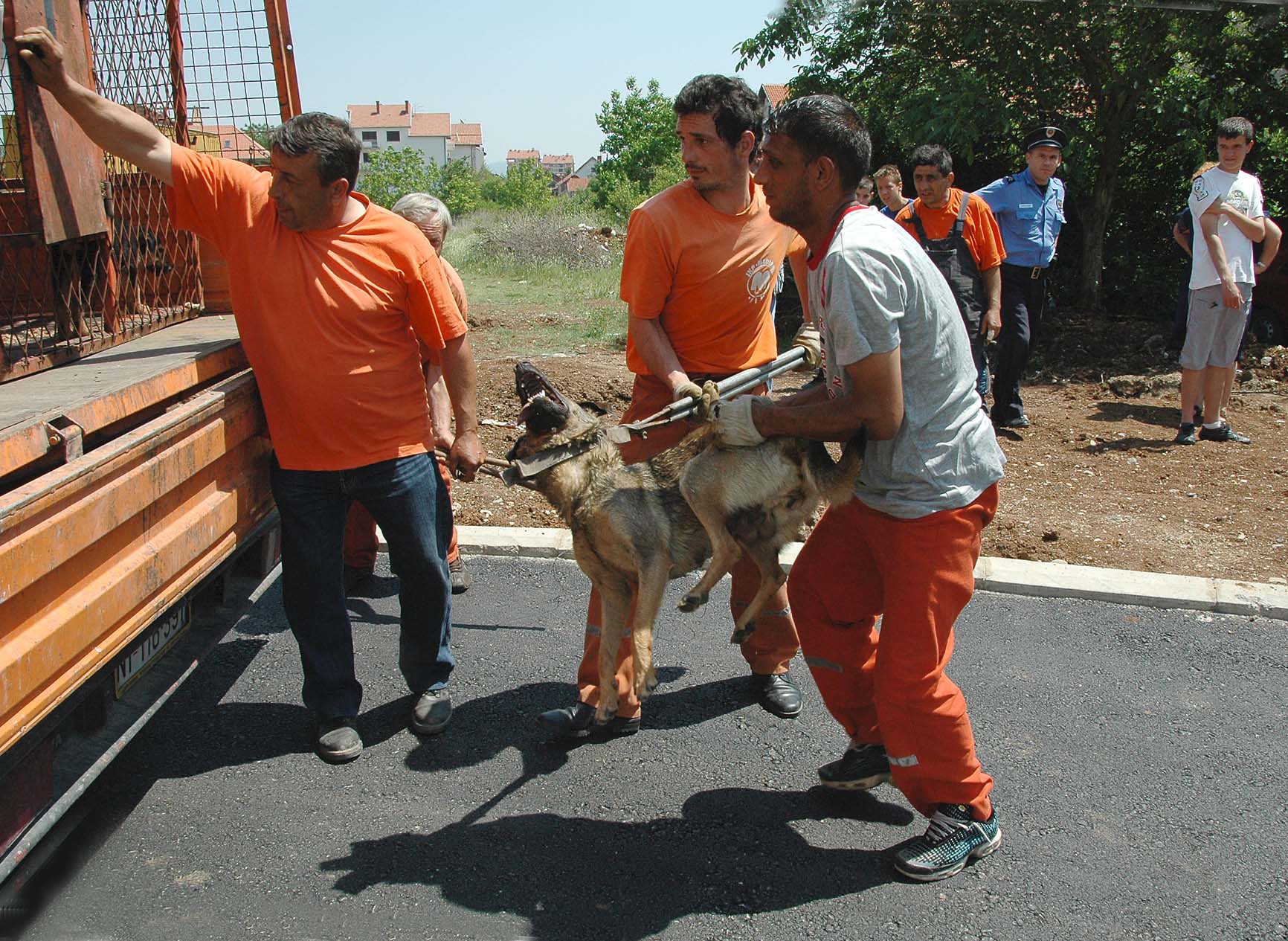
The Gupo dog meat market in Busan, South Korea, has officially been shut down.
Humane Society International announced on Monday that Gupo — known to animal rights organizations as a “notorious” market, infamous for selling chilled dog meat as well as “live dogs killed to order” — had been shut down by South Korean authorities.
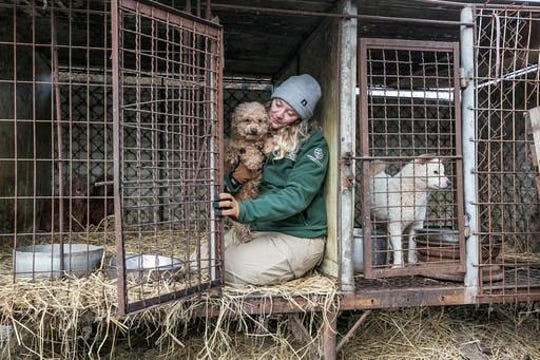
As a result of the closure, over 80 dogs have been saved and are currently being cared for by numerous animal charities, including Humane Society International/Korea, Korean Animal Welfare Association, Korea Animal Rights Advocates and Busan Korean Alliance for Prevention of Cruelty to Animals.
The news comes less than one month after HSI first announced the market would be shut down as the result of an agreement reached by the local Busan authorities and the 19 dog meat sellers operating out of the market.
Once the dog meat market is closed, the government plans to turn the area into a public park as part of an urban planning project, which led to the negotiations for the market’s shutdown.
South Korea’s Seongnam city demolished the country’s largest dog slaughterhouse in November 2018, and also “closed down most of the related dog meat vendors,” according to HSI.
The organization went on to note that the latest closure is the first-ever “where complete agreement has been reached between the vendors and local authorities.”
“I cannot express enough my joy at helping to close down the dog meat shops and slaughterhouse at Gupo market,” Nara Kim, a dog meat campaigner for HSI and Humane Society Korea, said in a statement.
“The closure of Gupo’s dog meat market means the end of a gruesome era in South Korea’s dog meat history, and a sign of the times that law enforcement and local authorities are cracking down on this increasingly unpopular industry that most Koreans want nothing to do with,” Kim continued. “I know we have a long way to go to end the dog meat trade here, but even two years ago I would never have believed we would see such progress. It has been a pleasure to work with the Busan authorities, and especially in being able to save the last remaining dogs we found alive.”








 Serbian Animals Voice (SAV)