Posted on June 27, 2020 by Serbian Animals Voice (SAV)


We are thrilled to share the news that Representative Steve King of Iowa, known in the animal protection world as the “King” of cruelty, has finally been ousted after two decades of toxic leadership!
Since his time in office as Iowa state’s U.S. representative, King took anti-animal positions on virtually every issue.
-
King opposed a federal policy that came in the wake of Hurricane Katrina to help animals in disasters.
-
King opposed federal measures to crack down on horse slaughter.
-
King consistently voted against endangered species protections.
-
King opposed federal measures against dog fighting.
Perhaps King’s most egregious act of all was his proposal of the federal Protect Interstate Commerce Act, which sought to destroy practically every piece of legislation that protects animals on the state level.
In one fell swoop, this disastrous bill threatened hard-won legislation to protect animals suffering in puppy mills, on fur farms, in dog fighting rings, and on factory farms. King repeatedly introduced this bill during multiple congressional sessions and it was defeated only due to the efforts of countless animal protection, environmental, and worker safety groups.
To top it off, King also made statements in support of white supremacy which earned him condemnation from the leaders of his own Republican party. It is unsurprising that a depraved mind that supports animal abuse would be attracted to racist ideas.
Good riddance Steve King, you won’t be missed!
Filed under: GENERAL NEWS - International / National / Regional | Leave a comment »
Posted on June 27, 2020 by Serbian Animals Voice (SAV)

Dutch MPs have voted to close all mink farms by the end of the year and pay compensation to fur farmers
Politicians in the Netherlands have voted in favour of closing the country’s mink farms by the end of the year after several outbreaks of coronavirus led to thousands of the animals being culled.
At least two workers at mink farms in the Netherlands are believed to have been infected with coronavirus in what the World Health Organization said could be the first known cases of animal-to-human transmission of the virus.
Health authorities slaughtered more than 1,500 mink as a precaution this month after coronavirus surfaced in a handful of farms in the southern Netherlands.
The Labour Party and Party for Animals subsequently tabled a vote on banning mink farming, which passed this morning. The motion now has to be approved by the upper house of the Dutch government.
If it passes the new law will hasten the closure of the country’s estimated 128 mink farms, which were due to be phased out by the end of 2023.
The animal rights charity, PETA, described the proposed ban as “common sense” and called on other mink farming nations such as China and Denmark to ban the trade.
“PETA hopes the Netherlands will be the first of many countries to see the writing on the wall and shut down cruel fur farms or risk being the source of the next pandemic,” said the charity’s director, Elisa Allen.
In a statement, Humane Society International urged the Dutch government to pass the motion to ban the country’s mink fur trade: “HSI urges the government to listen to parliament, act now to end cruel and dangerous fur farming for good.”
The Netherlands is not the only country making moves to reduce the trade in animals in the wake of coronavirus. China, where the outbreak began, has since banned the consumption of all wildlife and removed pangolin scales from a list of approved traditional medicines.
Pangolins are the most trafficked mammal in the world and scientists are investigating whether they may have played a role in the virus moving from animals to humans.
Filed under: GENERAL NEWS - International / National / Regional | Leave a comment »
Posted on June 27, 2020 by Serbian Animals Voice (SAV)

WAV Comment – Hunters killing pregnant wolves ? – no, it cant be true; hunters always preach to us that they are the conservationists.
And ‘the pregnant she wolf had killed sheep’. Sad but true; that’s what happens in the wild; especially when pregnant animals need to build up their supplies so that they can provide milk to youngsters when they are born.
The reality here is that a farmer has had a few of his sheep killed by a natural process which involves wild animals looking for food. Thus he cannot sell his sheep and get them loaded onto transporter trucks that go here, there and everywhere whilst evading all the regulations that have been set by the EU to ‘protect the welfare of animals in transport’.
It is great to read that the wolves are going to get more protection; but will it be enough to protect the from the bloodlust psychos who have to shoot everything in sight under the name of ‘conservation’ ?
Hopefully the wolves will live long lives; and the rest ? – I guess farmers want the perfect life of selling each and every one of their animals for terrible slaughter; but hey, who cares ?; as long as they get their cash; and the wolves should just not eat meat; simple as that. Possibly all wolves should now be trained on an orange juice and nut only diet.
Sad world.
Regards Mark
Wildlife conservation: First wild baby wolves for Belgium in 150 years
4 May 20204 May 2020
Wildlife experts in Belgium are getting excited to welcome the country’s first set of wild wolf cubs in more than 100 years.
Adult wolves were spotted in 2018 in the European country for the first time in over one hundred years, and experts have been keeping a close eye on them and hoping for babies.
Now a female wolf named Noella is expected to give birth to cubs very, very soon.
To protect the wolves hunting has been banned and wildlife rangers are out on patrol, making sure the animals are safe.
Wolves disappeared from most of Western Europe because of hunting, growing cities and more factories being built.
That’s why experts in Belgium are now excited and keen to protect the few that have returned.
Latest news 3 days ago
Belgium welcomes first wild wolf cubs in more than a century
Hunters were suspected of killing the last she-wolf to be pregnant in Belgium but authorities changed the law to protect the new cubs
Belgians are celebrating the safe arrival of the country’s first wild wolf cubs in more than 150 years, after introducing some of the strictest protection laws in the world.
The first pictures of the four cubs to parents August and Noella in the Flemish countryside brought a happy ending to the story of the return of the wolf to Belgium, which was marred by tragedy.
Filed under: GENERAL NEWS - International / National / Regional | Leave a comment »
Posted on June 27, 2020 by Serbian Animals Voice (SAV)
Posted on June 26, 2020 by Serbian Animals Voice (SAV)
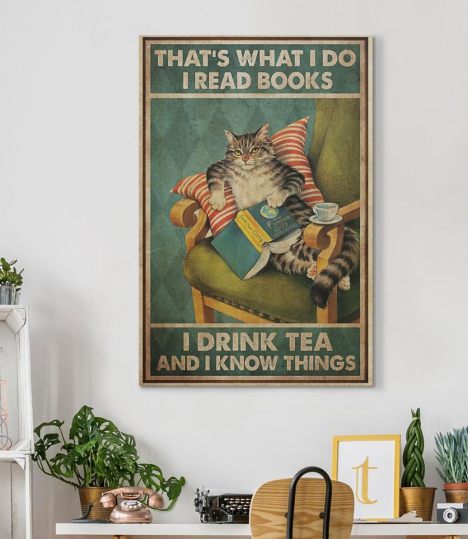
And we also know one thing: lazing is contagious
Regards and a good night from Venus
Filed under: GENERAL NEWS - International / National / Regional | Leave a comment »
Posted on June 26, 2020 by Serbian Animals Voice (SAV)
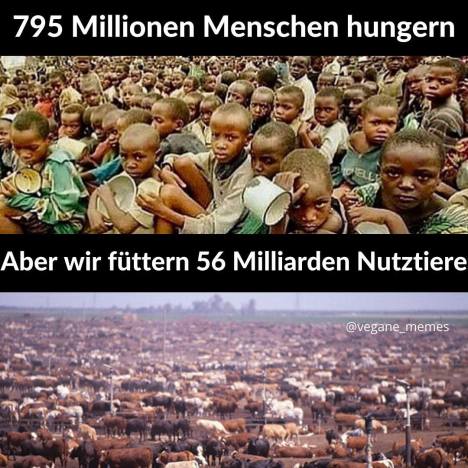
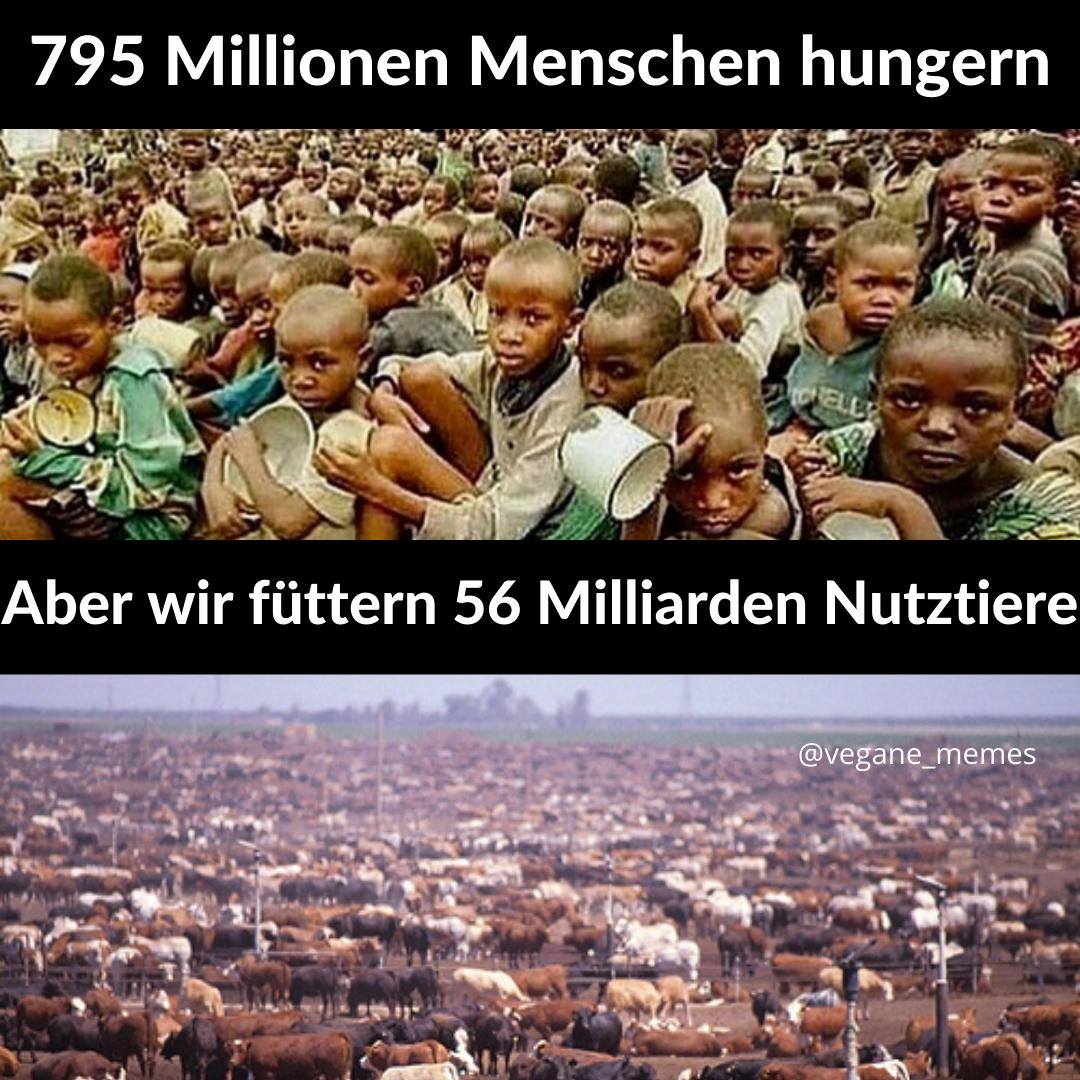
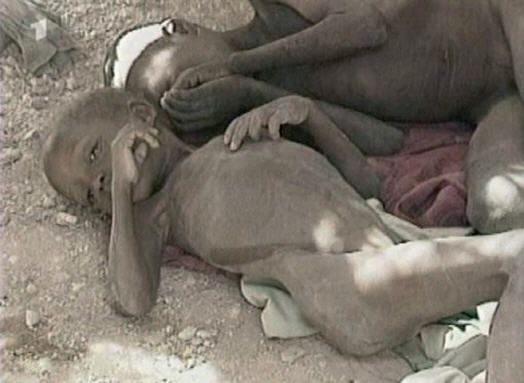
795 million people are starving – but we feed 56 billion farm animals
Food and Agriculture Organization of the United Nations (FAO) says that in today’s phase of developing its production forces, world agriculture could easily feed twelve billion people normally. So almost twice the world population.
At the same time, according to the World Health Organization (WHO), one billion people are overnourished, that is, massively overweight.
THE REALITY: for the production of only 1 kg of beef are used up to 16 kilos of grain or soybeans and 15,400 liters of water – valuable livelihoods that could feed hungry people.
For comparison: 1,300 liters of water are needed to produce 1 kg of wheat, 255 liters for 1 kg of potatoes, and only 131 liters for 1 kg of carrots.
In industrial livestock farming, food is fed in large quantities – corn, soybeans, and cereals – which the hungry people lack in developing countries.
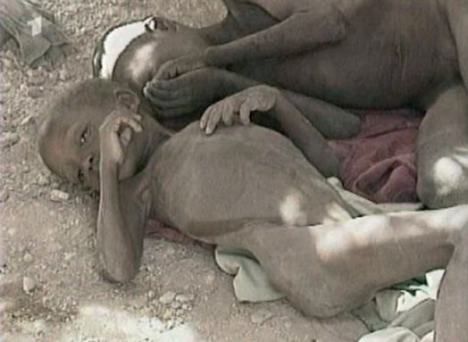
Over 50 percent of the world’s crops are used as animal feed for the livestock of rich countries.
Almost half of the world’s grain harvest and 80 to 90 percent of the soybean harvest go to factory farming.
And the UN is silent. For fear of upsetting the almighty transcontinental private companies. According to the World Bank, the largest transcontinental private groups (all sectors combined, industry, finance, services, etc.) controlled 52.8 percent of the world’s gross domestic product last year.
They have a power that no emperor, king or pope has ever had in history.
They influence the foreign policy of even the most powerful countries. The UN rightly fears its anger.
Do we have hope?
In years of argumentation, demonstrations, actions, and undercover investigations, we have been unable to ensure that people decide against these crimes (for people and animals) and that they no longer cooperate with the meat mafia.
It probably took a long time for the animal rights movement to understand that we have to conduct our struggle politically, that means, that the changes we seek should not be left in the hands of a disinterested, indifferent, irresponsible society, but our goal must be the politicians.
We need sharper and more massive practices to crack the wall.
We have to work on it.
My best regards to all, Venus
Filed under: GENERAL NEWS - International / National / Regional | Leave a comment »
Posted on June 25, 2020 by Serbian Animals Voice (SAV)
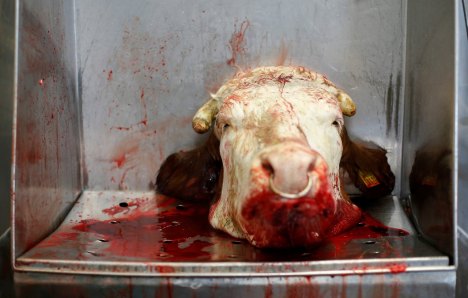
A very good article from ntv
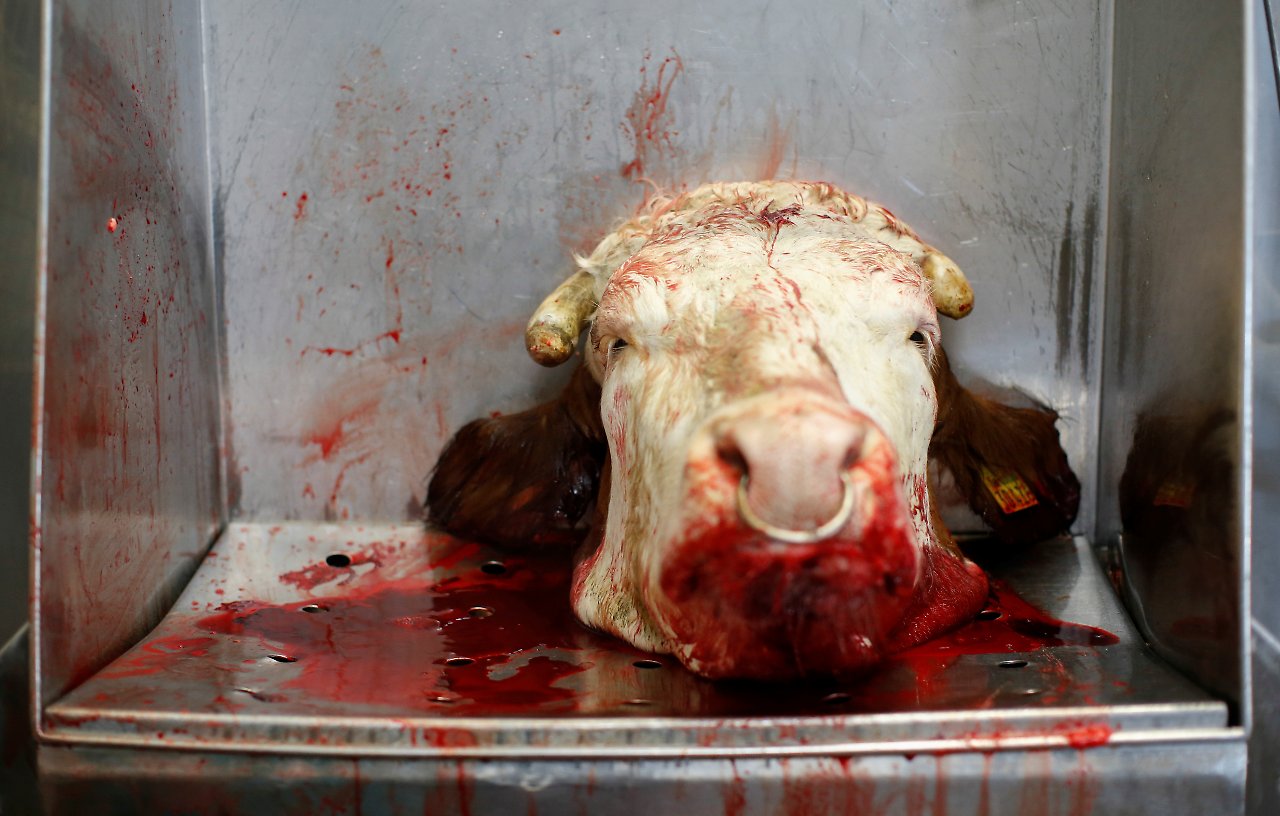
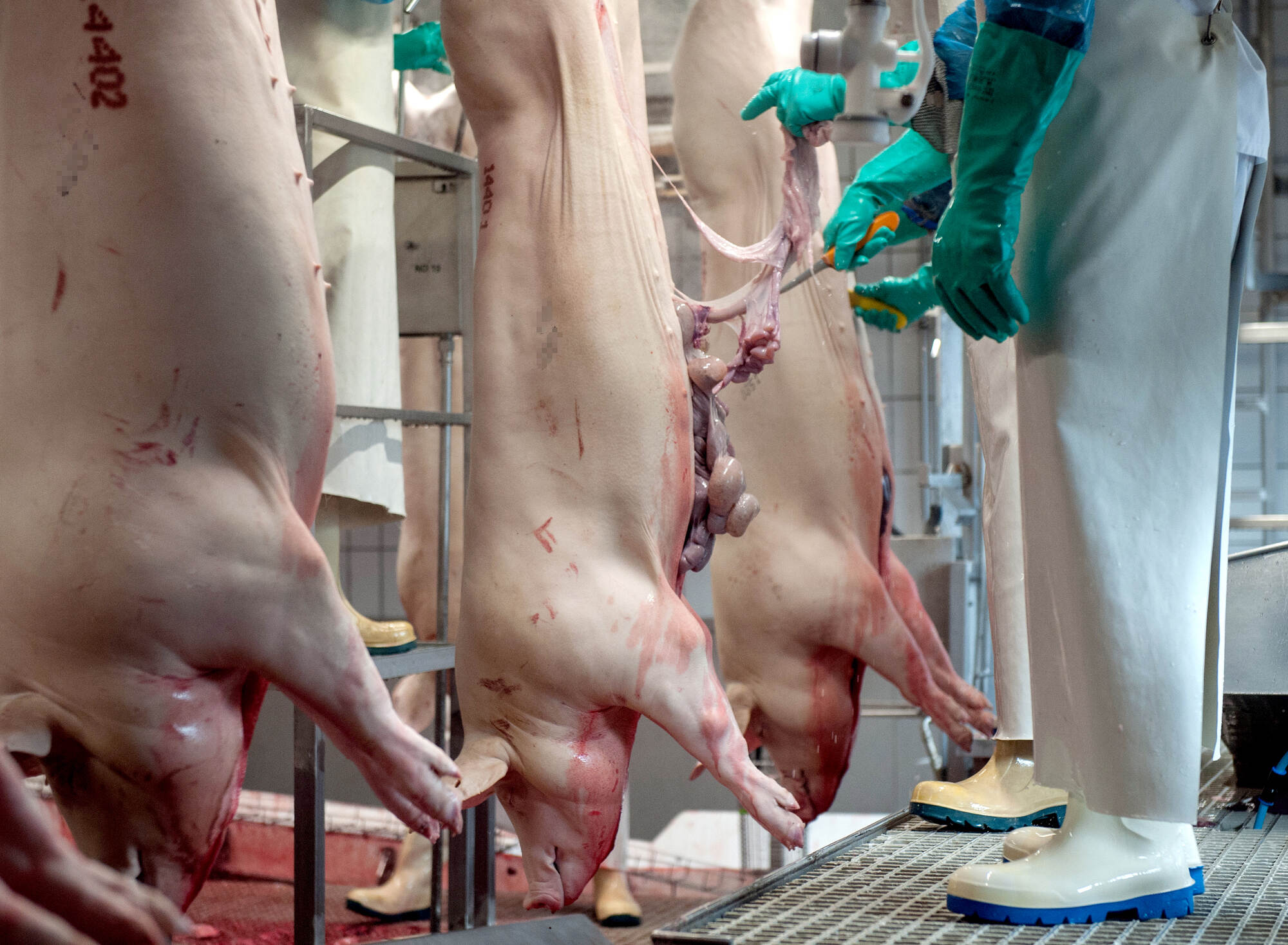
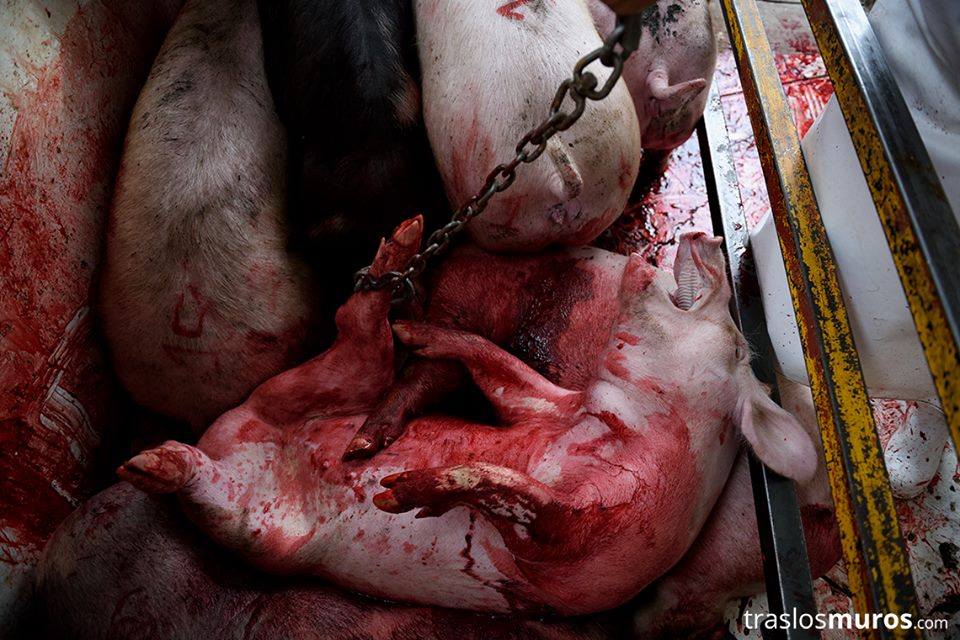
The corona outbreak in a Tönnies slaughter factory in North Rhine-Westphalia, Germany, brought up the pictures that nobody really wants to see.
Animals that just stumbled anxiously over the truck ramp now hang on hooks and bleed from their cutthroats.
The bodies are cut, sorted, and packed on the assembly line. Just as disturbing are the images of people who kill animals for their wages, cut them up, sort innards, and ultimately turn living organisms into cheap food.
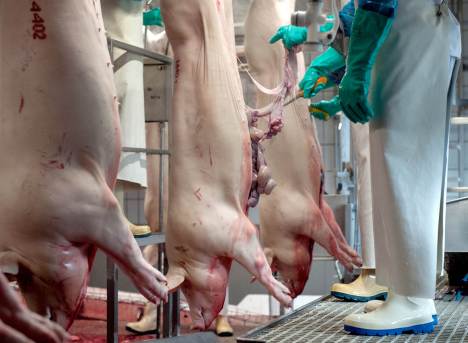
It is literally a job that hits the bones – psychologically and physically – that takes place in halls where there is hardly any daylight, where animal cries can be heard and which smells of blood and guts.
And it is an open secret in the industry that many workers numb their pain with a lot of alcohol after work.
No, nobody wants to see these pictures.
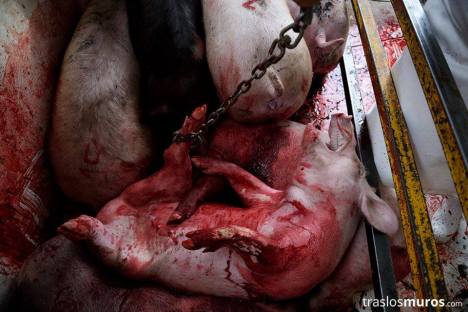
And if they do appear, the guilty parties are quickly found: it is either the slaughtering companies – in the current case, Tönnies, because after all the pictures come from there – or politics, after all, the legislature allows something like that.
Neither is completely wrong. By far the most influential factor is YOU, the consumer.
And I mean…This earth has 7 billion meat-eaters. They live without any moral basis or principle in terms of animal rights: the one lacks knowledge, the other lacks education, the third lacks will, and the majority lacks all these together!
The majority of this society suffers from political apathy and irresponsibility; The average carnivore fears nothing more than changing their habits, despite so much information.
Information is not missing, the action is missing.
On the other side, there is a highly corrupt and well-organized system that works hand in hand with the meat mafia, creating a hard front against our struggle for the rights of the animals.
The meat industry is an oligarch system that governs worldwide; this system is very powerful and very adaptable, its methods are similar to that of the mafia.
Theoretically, it is true that the consumer has the power to beat this system, but this power is weakened by propaganda, false information, and cheap offers.
We should, therefore, be aware that only if we stay united, act together, fight together, we have a chance to abolish animal suffering.
It doesn’t help to say that they are the bad guys, we are the good guys.
It is about developing a common strategy against this structural violence, against this cannibalistic moral system, which sees and exploits animals (and sometimes also humans) as slaves.
Our experience shows that with solidarity in demos, education, direct actions, undercover investigations and systematic confrontation with legal means against this system has brought many times significant changes for the animals.
My best regards to all, Venus
Filed under: GENERAL NEWS - International / National / Regional | Leave a comment »





 Serbian Animals Voice (SAV)