Denmark: Danish Covid-19 mink variant could spark new pandemic, scientists warn.

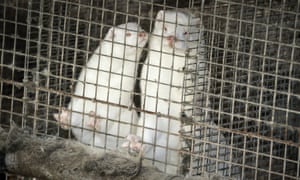
A mink farm in North Jutland

WAV recent past posts relating to this:

Excellent article by the Guardian, London, as always:

https://www.theguardian.com/environment/2020/nov/05/danish-covid-19-mink-variant-could-spark-new-pandemic-scientists-warn?CMP=Share_AndroidApp_Other

Danish Covid-19 mink variant could spark new pandemic, scientists warn

Mutations in mink herds and wildlife such as weasels, badgers, ferrets may pose risk to human health and vaccine development

A Danish vaccine specialist has warned that a new wave of coronavirus could be started by the Covid-19 mink variant.

“The worst-case scenario is that we would start off a new pandemic in Denmark. There’s a risk that this mutated virus is so different from the others that we’d have to put new things in a vaccine and therefore [the mutation] would slam us all in the whole world back to the start,” said Prof Kåre Mølbak, vaccine expert and director of infectious diseases at Denmark’s State Serum Institute (SSI).

He added, however, that the world was in a better place than when the Covid-19 outbreak began.“We know the virus, have measures in place including testing and infection control, and the outbreak will be contained, to the best of our knowledge.”

Advertisement

Denmark, the world’s largest mink producer, said on Wednesday that it plans to cull more than 15 million of the animals, due to fears that a Covid-19 mutation moving from mink to humans could jeopardise future vaccines.

Announcing the cull, the country’s prime minister, Mette Frederiksen, said 12 people were already infected with the mutated virus and mink are now considered a public health risk, based on advice from the SSI.

Prof Allan Randrup Thomsen, a virologist at the University of Copenhagen, went further, telling the Guardian on Thursday that while Denmarkwas not “on the verge of being the next Wuhan” there were risks.

“This variant can develop further, so that it becomes completely resistant, and then a vaccine does not matter. Therefore, we need to take [the mutation] out of the equation. So it’s serious.”

In interviews with Danish media, Thomsen advised shutting down northern Denmark due to the risks from mink farms, a task made easier by the Limfjord, which cuts across northern Jutland.

Although bridges across the fjord remain open, all restaurants, pubs, cafes and sports activities in the area will close shortly.

A Dutch virologist and zoonosis expert, Wim van der Poel, said more research was needed but that even without the mutation, a reservoir of the virus in mink or others of the mustelid family such as badgers and martens was to be avoided.

“It seems the mink-variant mutation is found in the spike protein of the Sars-Cov-2 virus, but we don’t really know. And we don’t know what kind of vaccine we are going to have. So a lot more research is needed,” said Van der Poel.

But even without a mutation, the continuing circulation within mink herds may pose a risk to humans. “We assume [this] is a risk too in the Netherlands, but our fur farming is being phased out already. There’s no more fur production now after the end of this year,” he said.

Van der Poel is currently looking at the effect of Covid-19 spreading to mustelids, a family of carnivorous mammals including weasels, badgers, otters, ferrets, martens and wolverines, among others. “ If that happened, then you have a reservoir in our local wildlife, and we could get reinfected before we even get a good quality vaccine.”

Prof Ian Jones, a virologist at the University of Reading, said: “The idea that the virus mutates in a new species is not surprising as it must adapt to be able to use mink receptors to enter cells and so will modify the spike protein to enable this to happen efficiently.

“The danger is that the mutated virus could then spread back into man and evade any vaccine response which would have been designed to the original, non-mutated version of the spike protein, and not the mink-adapted version. Of course, the mink version may not transmit well to man, so it’s a theoretical risk but Denmark is clearly taking a precautionary stance in aiming to eradicate the mink version so that this possibility is avoided or made much less likely.”

Jussi Peura, research director of the Finnish Fur Breeders’ Association and animal geneticist, was more sanguine. He said he understood the worry in Denmark, but felt the decision to carry out a cull might have been too extreme.

Instead, he suggested continuing with the control measures that were working in Finland.

“Right now we have zero cases in fur farms in Finland. We have a total of about 700 fur farms and of those about 150 are mink, all Covid-19-free so far.”

Sign up for the Animals farmed monthly update to get a roundup of the best farming and food stories across the world and keep up with our investigations. You can send us your stories and thoughts at animalsfarmed@theguardian.com

Indecent Proposal


We got an interesting mail from the Animal Liberation Press Office!

Two men who signed up for the FBI were visiting a well-known animal rights activist and press officer and asked him if he would be willing to work with law enforcement.

They had specific ideas about how this “cooperation” should work

They wanted to somehow protect the animal rights movement of “extremists” so that these ones would not invade the ranks of animal rights groups.

They asked the activists if he would be willing to be a link between law enforcement and the animal rights scene.
In modern language, this is called having an informant, but you don’t spit that out at the first meeting!

The activist said he doesn’t answer questions and certainly doesn’t want to work with law enforcement agencies.
The rest, highly interesting, is in this article.

FBI Visits Animal Liberation Press Officer’s Home (New York)

Obviously, animal rights activism has become so intense and widespread that this system, which is responsible for animal slavery and animal exploitation, is already worrying.

We publish this interesting case preventively.
You never know which “proposal” may come next.
And above all by whom.

My best regards to all, Venus


Everybody asks…

 “Is he gone?”

we hope so!

Regards and good night, Venus


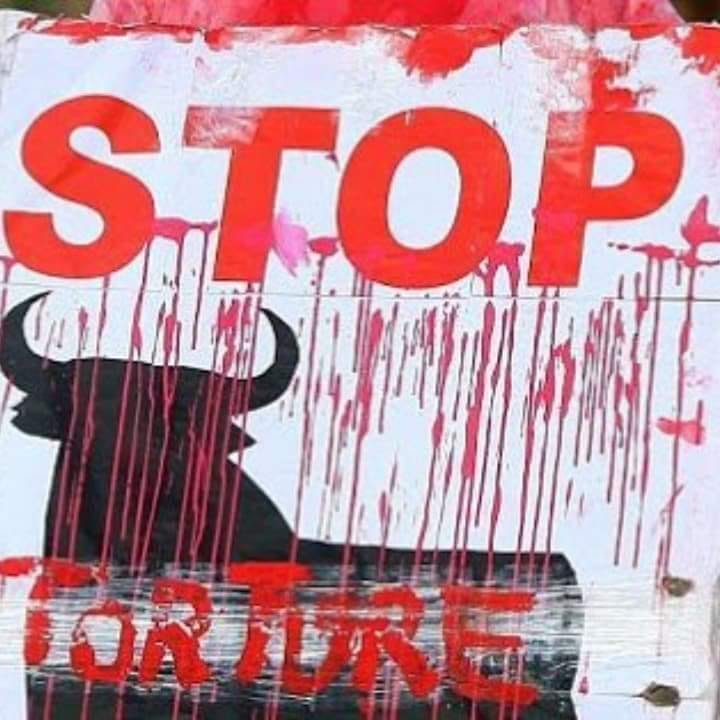
Bullfighting and politicians who support it: a shame for Europe


Spain, PACMA – Partido Animalista

For months, the government has tried to avoid deliberately talking about the aid it would allocate to the bullfighting sector. But, finally, he has decided to support him with public money, as always, yielding to his pressures.

First, already last June, the Minister of Culture and Sports, José Manuel Rodríguez Uribes, announced that workers in the bullfighting sector could avail themselves of the CREA fund, a line of credit of 40 million euros for «professionals of the Fine Arts”(!!!)

And now, when we are still in the middle of unprecedented health and social crisis, and instead of allocating public money to strengthen the health system, the Government decides to include an extraordinary aid for workers in the bullfighting sector of 775 euros per month for three months.

More public money for paid animal abusers.

A government that calls itself progressive should not give aid to bullfighting to desperately try to revive it, but rather work for its definitive ban. In its day, Unidas Podemos promised a referendum on bullfighting, but instead of carrying it out, it gives in to pressure from bullfighting.

As always, PACMA is the only political party that is on the side of the animals, without exceptions or half measures.

We will continue working for the definitive end of bullfighting.


For more…at https://worldanimalsvoice.com/2020/11/05/bullfighting-and-politicians-who-support-it-a-shame-for-europe/


 And I mean…What is Podemos’ promise to hold a referendum to ban bullfighting?

Instead of working to make this mess illegal, the government of PSOE (Socialists) and Podemos are supporting the animal abusers with public money.

In 2007, EU parliamentarians presented a written declaration on an EU-wide ban on bullfighting.
As was to be expected, there were not enough supporters in Parliament at the time.

In November 2013, Spain declared bullfighting as “cultural heritage”, thereby legally protecting the murder in Arenas.

In terms of education, Spain is at the very back of Europe, which is also noticeable in the fact that traditions from the Middle Ages are perceived with enthusiasm and are declared a cultural heritage, which would only deter and disgust any other educated person.

The fact that even children are allowed to watch the bloody spectacle and cruelty to animals shows that only money counts for the bullfighting industry because with it no child can get education, empathy, or humanity.

And that although the majority of the Spanish population is not behind it – only about 14 percent support the senseless bloodshed.

We will not stop fighting this disgrace in Europe.

We won’t look the other way just because some politicians still want to pay protection money to the bullfighting mafia!

My best regards to all, Venus

Denmark announces cull of 15 million mink over Covid mutation fears.

https://www.dailymail.co.uk/news/article-8917015/Danish-towns-lockdown-following-outbreak-mutated-coronavirus-spread-humans-minks.html?ito=push-notification&ci=48139&si=17774922

Denmark announces cull of 15 million mink over Covid mutation fears

Mutated virus infects 12 humans, sparking concerns that effectiveness of future vaccine could be affected

https://www.theguardian.com/environment/2020/nov/04/denmark-announces-cull-of-15-million-mink-over-covid-mutation-fears

The world’s largest mink producer, Denmark, says it plans to cull more than 15 million of the animals, due to fears that a Covid-19 mutation moving from mink to humans could jeopardise future vaccines.

At a press conference on Wednesday, the Danish prime minister, Mette Frederiksen, said 12 people are already infected with the mutated virus and that the mink are now considered a public health risk.

“The mutated virus in mink may pose a risk to the effectiveness of a future vaccine,” Frederiksen said.

She said the army, police, and national emergency service would be mobilised to help farms with the mink cull, which will eradicate the entire Danish herd.

The authorities and breeders have already been culling the animals over the past few weeks in a bid to contain the spread of Covid-19.

Reuters reported that Denmark’s health minister said about half of 783 infected people in northern Denmark, home to a large number of mink breeders, had been found to have infections stemming from the farms.

Denmark is the world’s largest producer of mink fur and has 15 to 17 million animals on about 1,100 farms. According to reports, the latest figures from the Danish Veterinary and Food Administration, say Covid-19 infections have been found on more than 200 mink farms. The figures were confirmed by a Danish police press officer.

Finnish fur auctioneer Magnus Ljung, CEO of Saga Furs, was watching the Danish announcement. “It’s a shock. They will kill all mink in Denmark. They are talking about the risk of Covid-19 mutating in the mink, and going from mink to humans, and potentially affecting a future human vaccine.”

Ljung estimated the value of the 2020 mink population in Denmark to be between €350m and €400m (£270m-£360m).

“They got control of [Covid-19 mink infections] in Holland and there were a few cases in Spain and in Sweden. But it was all kept under control. [The Danish cull] is unexpected, for sure. Yes, it could happen in other countries. But I don’t want to speculate,” said Ljung.

“What we really need to do is end mink farming entirely and retrain the farmers,” said Birgitte Damm, policy adviser and vet with NGO Animal Protection Denmark.

Speaking from Amsterdam, Dr Joanna Swabe, Humane Society International/Europe’s senior director of public affairs, said: “Denmark is one of the largest fur producers on the planet, so a total shutdown of all Danish mink fur farms amid spiralling Covid-19 infections is a significant development.

“Although not a ban on fur farming, this move signals the end of suffering for millions of animals confined to small wire cages on Danish fur farms solely for the purposes of a trivial fur fashion that no one needs. We commend the Danish prime minister on her decision to take such an essential and science-led step to protect Danish citizens from the deadly coronavirus.”

Sign up for the Animals farmed monthly update to get a roundup of the best farming and food stories across the world and keep up with our investigations. You can send us your stories and thoughts at animalsfarmed@theguardian.com

EFSA reiterates that slaughter without stunning should not be practiced.

EFSA reiterates that slaughter without stunning should not be practiced

5 November 2020

A new Scientific Opinion by the European Food Safety Authority (EFSA) identifies many animal welfare problems likely to occur in cattle at the time of slaughter, and propose measures to minimise and prevent them. Eurogroup for Animals calls on the EU Commission to take the assessment into account for the revision of the Regulation 1099/2009.

The killing of cattle for human consumption (slaughtering) can take place in a slaughterhouse or during on‐farm slaughter. A new EFSA assessment identified 40 hazards, most of them related to stunning and bleeding, that impact the welfare of these animals while slaughtered. 

Particularly, EFSA identified 12 welfare consequences the cattle can be exposed to during slaughter: 

  • Heat stress
  • Cold stress
  • Fatigue
  • Prolonged thirst
  • Prolonged hunger
  • Impeded movement
  • Restriction of movements
  • Resting problems
  • Social stress
  • Pain
  • Fear 
  • Distress

This Scientific Opinion acknowledges that proper management plays a crucial preventive role and that 97.5% of the hazards identified have their origin in the lack of skills of the operators.

Methods are also causing animal welfare problems. In this regard, despite the Panel agreeing with the World Animal Health (OIE) list of unacceptable methods and procedures, it also raises concern towards certain practices, such as the unloading or moving of severely injured cattle, the use of painful stimuli to move animals, and slaughter without stunning. 

EFSA reaffirms that “slaughter without stunning should not be practiced”, acknowledging that “pre-cut stunning is the only preventive measure for the welfare consequences connected with cutting”. 

With this opinion EFSA set a list of hazards, welfare consequences and related corrective and preventive measures.

These findings should be used by the EU Commission to address the OIE standards and hopefully to inform the revision of the Regulation 1099/2009:eliminating all the practices assessed by EFSA as detrimental from an animal welfare perspective, and for which preventive and/or corrective measures do not exist.

Canada’s first case of rare swine flu variant found in central Alberta patient.

Canada’s first case of rare swine flu variant found in central Alberta patient

https://www.cp24.com/news/canada-s-first-case-of-rare-swine-flu-variant-found-in-central-alberta-patient-1.5175007

EDMONTON – Canada’s first case of a rare swine flu variant has been found in a patient from central Alberta, but the province’s chief medical officer of health says it seems to be isolated.

Dr. Deena Hinshaw says the Influenza A H1N2v case was detected in mid-October after the patient showed up at an emergency department for medical care.

“This currently appears to be one isolated case,” Hinshaw said at a news conference Wednesday. “It is also the only case of influenza that has been reported so far this flu season.

“Influenza viruses that normally circulate in pigs, including H1N2, can infect people – although this is not common.”

When cases appear in humans, they are called ‘variant’ viruses and a ‘v’ is added to the end of the name.

Hinshaw said it’s the first reported case of H1N2v in Canada since 2005 when reporting became mandatory – and one of only 27 cases globally.

Health Canada said on its website the other cases include 24 in the United States and two in Brazil.

“Based on current evidence in Canada, the risk to human health is low,” it noted.

The federal agency said swine flu viruses don’t normally infect people, but there have been infrequent exceptions. It can be contracted by humans when they breath in respiratory droplets from an infected pig or touch something with the virus on it and then touch their mouth or nose.

“All have been linked to direct or indirect contact with swine and none of the previously reported cases have caused sustained human-to-human transmission,” added Hinshaw.

The Alberta patient, she said, had mild symptoms, was tested for influenza and COVID-19 as is routine in hospitals, and recovered quickly.

“There is no evidence at this time that the virus has spread further,” she said.

Hinshaw said Alberta Health is working closely with Alberta Agriculture and Forestry, as well as Alberta Health Services and the Public Health Agency of Canada, to determine the source of the virus and to verify that no spread has occurred.

“Retrospective testing of central Alberta COVID samples from the past two weeks for influenza is almost complete and no positive influenza samples have been found,” she said.

Hinshaw said Alberta Health Services will offer optional influenza testing to anyone in central Alberta who shows up for COVID-19 testing.

Both she and Dr. Keith Lehman, the province’s chief veterinarian, said they are still investigating the source of the virus.

“At the moment, there are no links to slaughterhouses,” said Hinshaw, who added that they are looking into potential links to some pig farms in the area.

Lehman said the animal health investigation is using information provided by the patient.

“We have identified some potential sources and we are continuing to investigate,” he said.

Lehman added that it’s not unusual to see influenza in swine populations in Western Canada and around the world.

“Within Western Canada, we have routine surveillance that is undertaken for our swine farms and we tend to see anywhere from roughly 10 to 30 cases identified per quarter,” he said. “It is a virus that is not uncommon in our swine populations.”

Lehman said there’s no increased risk to other hog operations because they have strong biosecurity practices to prevent it from spreading. If a pig does contract it, it’s typically a mild illness, he said.

Officials stressed that H1N2 in pigs is not food-related.

“It is not transmissible to people through pork meat or other products that come from pigs and there is no risk associated with eating pork,” said Hinshaw.