Corona madness

Before the virus that caused Covid-19 spread, Lufthansa was a healthy and well-run company.

That is why Germany has taken over the survival of the Lufthansa Group and is secured for the coming years with a 9 billion bonus package.

After all! More than the existing vaccinations

Regards and good night, Venus


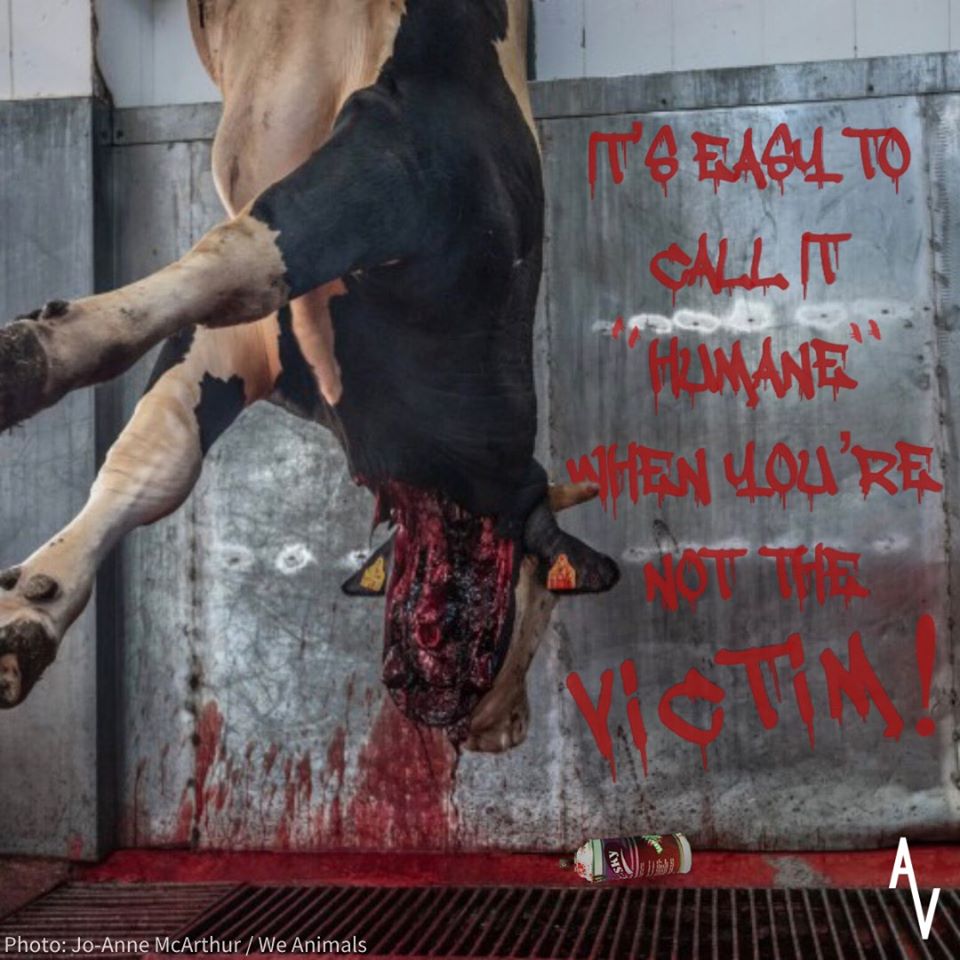
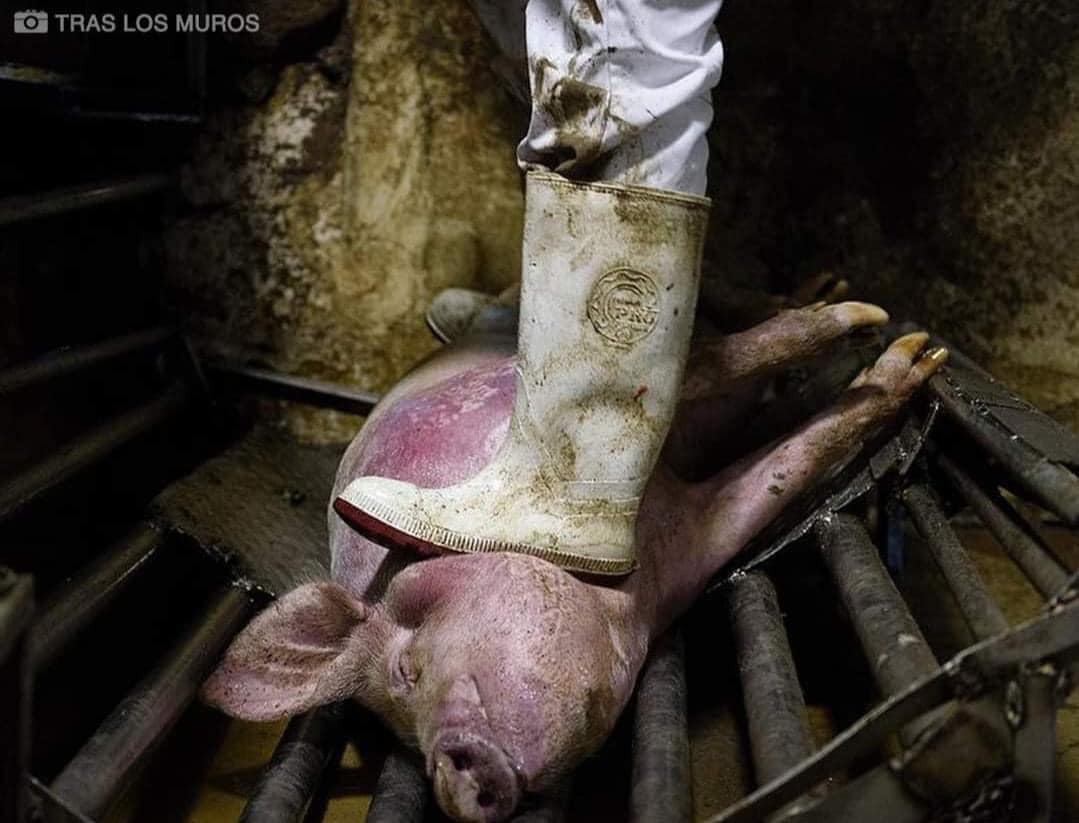
Animal cruelty in german organic slaughterhouses

Beaten, kicked, failed: Animal cruelty in the organic slaughterhouse
Is that how you imagined everyday life in organic slaughterhouse?
Many people turn to organic meat because they think organic stands for animal welfare.

The latest undercover research by the German Animal Welfare Office (Deutsches Tierschutzbüro) uncovered the scandalous conditions at the” FÄRBER” company organic slaughterhouse at the gates of the capital Berlin!

The leaked recordings show cruel animal cruelty through mistreatment and mistreatment of defenseless animals and prove one thing above all:

Whether organic slaughterhouse, trusted butcher, or slaughterhouse giant – all animals fight for their lives, none die voluntarily and their killing is always painful.

After the video material was leaked to the organization, they immediately informed the responsible veterinary office.

The veterinary office and the public prosecutor’s office then received all of the evidence.

The company has now been closed by the responsible veterinary office.
It’s a success! the scandal organic slaughterhouse stops slaughtering!

Bio-Company and Bio Manufaktur Havelland have announced that they have discontinued their cooperation with the horror slaughterhouse.
A great success against cruelty to animals?

But that is not enough: those responsible must be held accountable and given fair punishment.

Please share this video so that everyone can see that only avoiding animal products is an effective protection against animal cruelty.


Geschlagen, getreten & fehlbetäubt – Tierqual im “Bio-Schlachthof”


And I mean: “Enjoy our meat” is the slogan of the FÄRBER company
“For quality, we get down to work every day”!!

http://www.facebook.com/watch/?v=221683049547546

To the video:
Minute 1: 8- stunning area. One can clearly see how brutally animals are treated.

Some of them are even hit with hooks. The electric pliers are used in an uncontrolled manner, which has the consequence that the animals are not completely anesthetized.

Minute 2:15 – The animals can witness the death of the other animals.
In the bleeding area (minute 2:40) the animals show violent movements because they are neither dead nor stunned and suffer hellish agony.

The failure rate is estimated to be 40% at this slaughterhouse, and according to the video recording.
That’s the worst thing you can do to an animal.

The video material clearly shows that neither a follow-up nor a veterinary examination is taking place.
Sick and injured animals are also slaughtered

A clear violation of animal welfare law.

The slaughterhouse FÄRBER is affiliated with the animal welfare initiative and enjoyed a high value as an organic slaughterhouse until the undercover investigation.
The main customer is the Bio Company, and Bio Manufactur Havelland has sent pigs to the FÄRBER slaughterhouse.

The slaughterhouse is now closed.
The video was shown on many TV channels.

But not much will change in the consciousness of meat-eaters.
Animal cruelty is suppressed with the excuse of isolated cases.
And with the reassurance that as soon as the slaughterhouse is no longer in operation, the other slaughterhouses will learn from it and slaughter “humanely”.

The most effective way to distort reality is to deny it.

My best regards to all, Venus


Animal experiments for the tobacco industry

The harmful effects of smoking are known worldwide, and pretty much every smoker knows about them.

Health authorities confirm that animal experiments do not provide any useful results regarding the negative effects of smoking on the human organism.

Nevertheless, they are still being carried out and in a manner that can hardly be surpassed in cruelty.

The majority of cigarette manufacturers are still commissioning contract laboratories in 2021, in which terrible scenes will then take place, to carry out experiments on living and sentient creatures.

In secrecy and well hidden from the public, the researchers torture and practice monstrous things on innocent animals at the request of the merciless tobacco companies.

The People picture of smoking dogs that shocked the nation in 1975

Animals are forced to inhale cigarette smoke continuously for up to 6 hours a day for a period of up to a whopping 3 years.

Animals normally avoid inhaling smoke and so they are forced to do so by draconian means.

Dogs, especially beagles, for example, are connected to hoses and sometimes fixed, as are monkeys.
Rats are squeezed into narrow containers, in which the harmful smoke is pumped directly into their sensitive noses.

Officially abolished, but whoever controls a research laboratory has the hoses attached directly to the necks of dogs and monkeys.
To generate tumors, the skin of rats and mice is exposed directly to the smoke condensate.

Philip Morris, for example, had the effects of additives such as sugar, molasses, honey, plum juice, chocolate, lime oil, coffee extract, and cocoa tested on sensitive creatures.

To do this, thousands of rats were locked in tiny boxes.

Trapped there almost motionless, they were allowed to ingest the smoke for up to 6 hours a day for 90 days by pumping it into their nostrils.


Today

Countless pregnant rhesus monkeys have been horribly tortured at the Oregon National Primate Research Center.

Tubes were surgically implanted into them so that they could permanently inject nicotine into them during the last 4 months of pregnancy.

Shortly before the birth, the fetuses of the expectant mothers were cut out, these “premature babies” were killed and examined.


For more…at https://worldanimalsvoice.com/2021/01/08/animal-experiments-for-the-tobacco-industry/


More Information…The first recorded attempts to artificially induce animal tumors through the application of tobacco products occurred in 1911.

Health officials have known for decades that smoking cigarettes cause disease in nearly every organ of the human body and that animal tests are poor predictors of these effects.

Cigarette packets and another tobacco packaging must include warnings in the same size and format and using the same approved texts (in the appropriate local languages) in all member states of the European Union.

These warnings are displayed in black Helvetica bold on a white background with a thick black border.
Ireland prefaces its warnings with “Irish Government Warning”, Latvia with “Veselības ministrija brīdina” (Health Ministry Warning), and Spain with “Las Autoridades Sanitarias Advierten” (The Health Board Warns).

In member states with more than one official language, the warnings are displayed in all languages, with the sizes adjusted accordingly (for example in Belgium the messages are written in Dutch, French, and German, in Luxembourg in French and German, and in Ireland, in Irish and English).

All cigarette packets sold in the European Union must display the content of nicotine, tar, and carbon monoxide in the same manner on the side of the packet.

Tobacco products and their ingredients are not allowed to be tested on animals in Germany – and there is a good reason for that. Indeed, today tobacco product manufacturers have effective in vitro technologies (i.e., animal-free research methods) and human tissue and cell cultures at their disposal.

In addition, they can fall back on the accumulated knowledge from epidemiological and clinical studies on humans on the health risks caused by smoking.

In Canada, all tests required for tobacco products are carried out as animal-free in vitro tests.

In Belgium, Estonia, Slovakia, and the UK, none of the cruel animal experiments mentioned above would be legal, because animal experiments on tobacco products and their ingredients are prohibited in these countries.

The link between tobacco use and human lung cancer has not been recognized for many years because the results of animal experiments failed to show it.

In a recent article, a tobacco industry consultant reported that the results of years of inhalation studies with cigarette smoke in rats, mice, hamsters, dogs, and non-human primates showed no significant increase in the development of cancerous tumors.

The health authorities have known for decades that smoking cigarettes can cause health damage in almost every organ in the human body and that animal experiments do not provide any useful results with regard to the harmful effects of smoking.

Nevertheless, cigarette manufacturers and the contract laboratories they employ continue to carry out cruel and unnecessary animal testing for both new and existing tobacco products.

It’s not like the experimenters are using animals to find a cure for cancer.

Their goal is to find a new way to keep people hooked on nicotine and keep their profits high to offset the drop in cigarette sales that was felt after the smoking ban.

My best regards to all, Venus

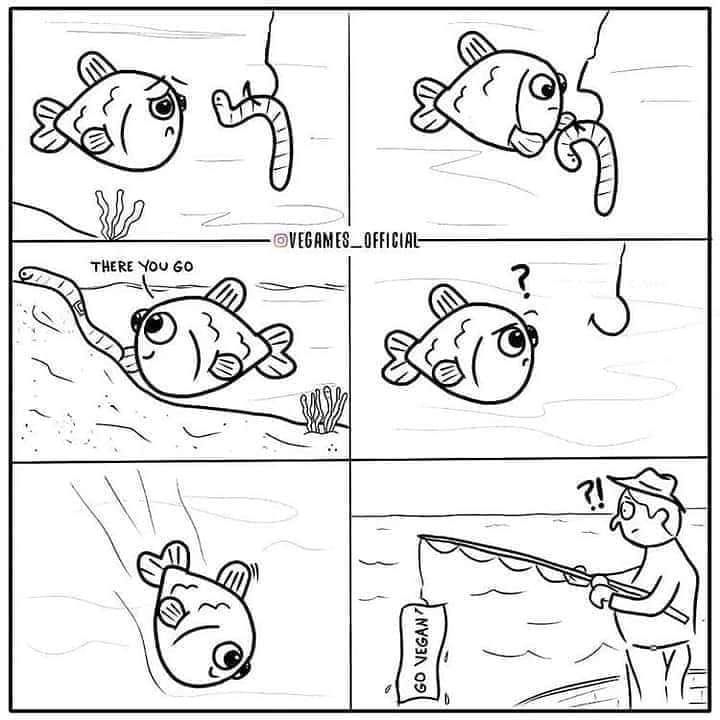
One has to educate…

…some people think they can’t learn anything from fish

regards and good night, Venus

The “lockdown-dogs” – the product of an infantile society

It is fair to say that 2020 was a year full of bad news and everyone, especially in lockdown, was looking for something nice.

For this reason, many people decided to adopt a pet so that the time in their own four walls became a little more bearable.

Because many working from home, they could now take better care of the animals. Some animal shelters were even completely empty after the onslaught due to the high demand.

Unfortunately, the tide has now turned.

While some have thought about adopting an animal for a long time and taken appropriate action, others acted more spontaneously and were not aware of the consequences for the future.

This led to many “lockdown dogs” being given back.

There are more and more ads showing dogs for sale.
The owners want to collect several hundred euros for the animals, even though they only took them in a few months ago.

At that time, however, many were still unemployed or had more time, but can no longer look after the poor animals because the circumstances have changed.

“Unfortunately, due to obligations at work, we can no longer take care of him and give him the love and affection he needs,” said one owner to the Sunday Times who is now offering his 6-month-old Collie Spaniel for sale.

“I got a new job and that changed the situation completely,” says another.

Other owners have given their animals to local charities. The newspaper goes on to say that the animal welfare organization The Dogs Trust received more than 1,800 calls in the past three months because people wanted to get rid of their animals.

Chairman Adam Clowes said that it is primarily because many simply took in an animal during the quarantine without thinking too much.

“All the excitement during the lockdown -” We never have to go back to the office, come on, let’s get a dog! “- we see the consequences of that now,” says Clowes.

This thesis is supported by a survey by The Kennel Club, the umbrella organization of British dog breeders’ associations, which says that two-thirds of the people surveyed said that their dog was a “bright spot in lockdown” and a quarter admitted that they had little before informed and many of the “spontaneous buyers” were unsure what to do with the animal should the quarantine be over.

The animal welfare organization RSPCA has had to take in many abandoned dogs in recent months and fears that more will follow.

“We were concerned that many families who had time due to the lockdown would spontaneously take in a dog,” reports the RSPCA.

“And now, just a few months later, that’s exactly what happened. Many are only now realizing what kind of responsibility a dog entails, have run into financial difficulties or because they have to go back to the office, they no longer have time”

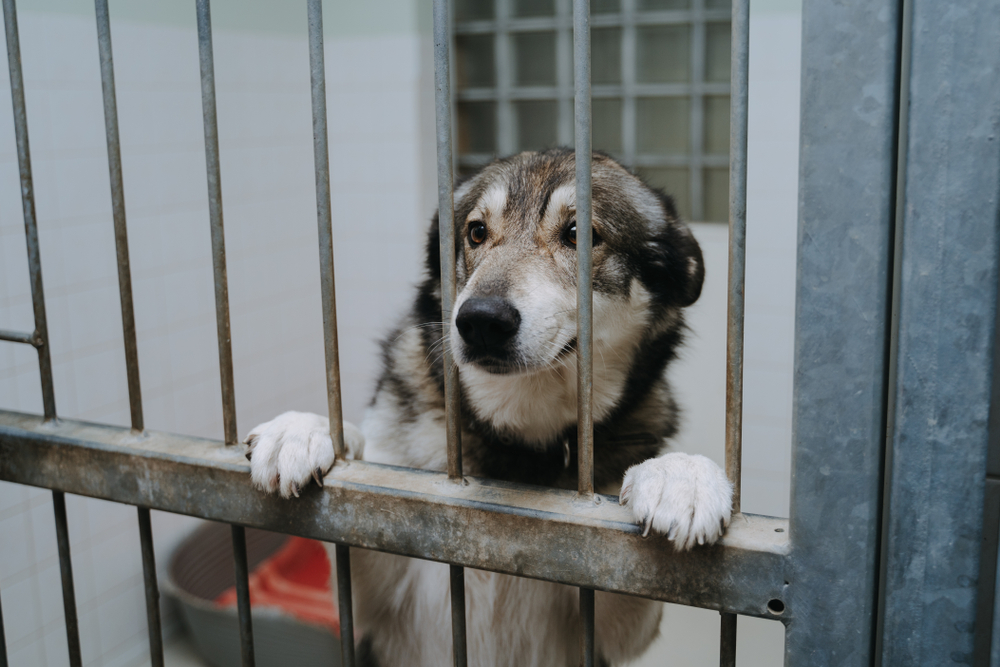
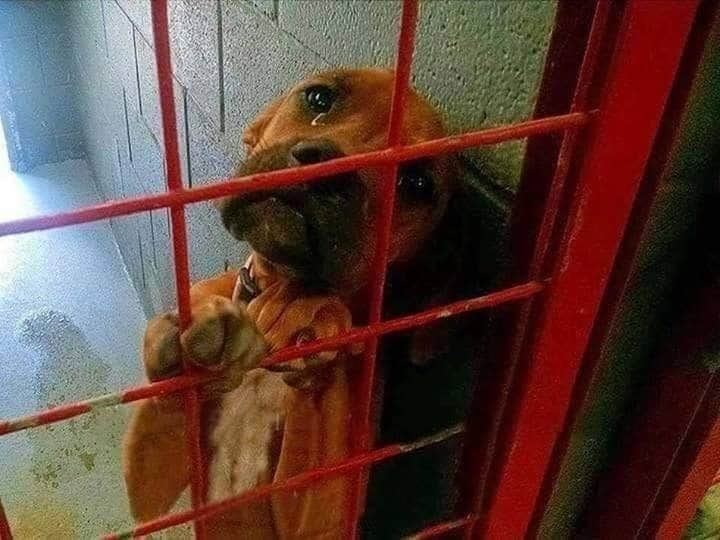
Many dogs in the shelters hope to finally be adopted, but you have to be clear about whether you can take good care of the animal.
We hope these poor lockdown pooches will find a new home soon.

Share this article to remind every animal lover of great responsibility.


Hunderte Hündchen, die während des Lockdowns spontan gekauft wurden, werden jetzt wieder abgegeben


And I mean…There is no sin more miserable than to betray the one who believed you.

The real issue of animal rights here is less that of suffering than that of betrayal.

When existence for one another does not work, and the strongest person decides the fate of the weak.
In the moment of need, of social isolation, the weak gave the traitor consolation and loyalty.

And then the victim stands all alone in an animal shelter, longing for the one who betrayed him.
The betrayal has condemned him to loneliness and sadness.

It is said that man learns only in pain.
The animals experienced it themselves.
Obviously we humans have learned nothing, understood nothing in these difficult times.

I have a simple message: be loyal to the animals, because only one animal will always be there for you

My best regards to all, Venus


THE STARTLING LINK BETWEEN ANIMAL CRUELTY AND HUMAN ABUSE.

THE STARTLING LINK BETWEEN ANIMAL CRUELTY AND HUMAN ABUSE

By Jason Bales | January 6, 2021

In the early 1970s, notorious serial killer Ted Bundy began a brutal killing spree that likely resulted in the death of more than 100 innocent victims. He admitted to the murder of 36 women.

About two decades earlier, Bundy tortured defenseless dogs and cats.

Similar stories are true of Jeffrey Dahmer, John Wayne Gacy, “The Boston Strangler” Albert DeSalvo, and many others. But the connection between early animal abuse and later human abuse isn’t confined to serial killers.

Animal cruelty is linked to all forms of human abuse, from domestic violence to sexual assault.

Despite clear evidence suggesting the connection between animal abuse and future criminal behavior, authorities have failed to treat cases of animal cruelty with the same severity as violence against humans. They allow murderers like Bundy to hone their sadism without consequence.

Until January 2017, the Federal Bureau of Investigation (FBI) filed animal abuse under the “All Other Offenses” category in their National Incident-Based Reporting System.

But then John Thompson, the current deputy executive director of the National Sheriffs’ Association, stepped in.

Thompson, who has close to four decades of law enforcement experience, didn’t initially recognize that harming animals is a strong indicator of future violent crimes against people – what some call “The Link.”

“I spent 35 years in law enforcement and couldn’t have cared less about animal abuse,” Thompson admitted to The Atlantic“I was stupid. No one was educated.”

When he did make the connection, Thompson pressured the FBI’s policy advisory board to create a separate category for filing animal abuse, which the agency did.

That decision may save lives.

It’s worth noting that not every person who abuses animals has committed or will commit another crime. But harming people is statistically more likely when animal cruelty is involved. And animal cruelty must be taken seriously.

ANIMAL CRUELTY AND MURDER

The link between animal torture and the world’s most sadistic serial killers has long been established.

Ted Bundy tortured his pets. Jeffrey Dahmer decapitated dogs and nailed cats to trees. John Wayne Gacy set turkeys on fire with gasoline-filled balloons. Albert DeSalvo stuffed helpless dogs and cats into boxes and shot them with arrows.  Dennis Rader, or the “BTK Killer,” hanged cats and dogs.

All of these heinous crimes occurred during the killers’ childhoods.

Recent studies also have revealed that many school shooters also abused animals prior to turning their guns on people.

Eric Harris and Dylan Klebold, of the Columbine High School shooting, bragged about mutilating animals to their classmates. Kip Kinkel, before his attack on Thurston High School parents and students, blew up cows and decapitated cats. Luke Woodham , who murdered his mother and two schoolmates at Pearl High School, wrote in his journal about setting his dog Sparkle on fire.

Unfortunately, animals are easy first victims for killers.

“Animal abuse is often the first sign of serious disturbance among adolescent and adult killers,” Gail F. Melson, professor emerita of developmental studies at Purdue University, wrote in Psychology Today.

Without severe consequences for animal cruelty, killers will continue to escape the penalty and psychological intervention needed to prevent future crimes.

ANIMAL CRUELTY AND DOMESTIC VIOLENCE

Household pets are often used as a way to control or further harm victims in cases of domestic violence. 

Domestic violence survivors have reported in studies that their abusers threatened to kill, torture, or otherwise harm their companion animals — or actually followed through on the threats — to prevent them from leaving their abusive situations.

Abusers also use animal abuse or threats against survivor’s beloved animals to isolate victims and children, to eliminate competition for attention, and to force the family to keep violence a secret, according to an article published via the Animal Legal and Historical Center.

This cruel behavior is commonplace for domestic violence victims, with more than 85% of women entering shelters discussing incidents of pet abuse in their families.

Another study, published in Violence Against Womenfound that women in domestic abuse shelters were 10 times more likely to report their partner had hurt or killed their pet, compared to a group of women who had not experienced intimate violence. 

The violence toward animals harms more than just the pets; victims of domestic violence also suffer trauma and fear, which makes escaping their abusers. 

ANIMAL CRUELTY AND CHILD ABUSE

In households prone to family violence, animals are often the first victims of abuse, followed by children, according to Cynthia Hodges.

The statistics supporting a direct link between animal and child abuse are staggering:

  • 88% of families surveyed that had incidents of child abuse also had incidents of animal abuse
  • 63% of children entering shelters admitted to incidents of pet abuse in their families
  • More than 80% of families being treated for child abuse reported animal abuse in their homes
  • More than 60% of families with child abuse and neglect also had pets that endured abuse and neglect

But it gets worse: When violence becomes “normal,” some children sometimes push the boundaries of their own desensitization by becoming animal abusers themselves.

More than 30% of pet-owning victims of domestic abuse reported that their children had hurt or killed a pet, according to a survey by the Humane Society of the United States. 

Why do children who are abused, or witness abuse, sometimes become abusers themselves?

A report published by the International Journal of Environmental Research and Public Health posits that severe and prolonged trauma, especially when experienced at a young age, can stunt children’s emotional and social development.  Some children therefore become less empathetic toward animals and more likely to copy the abuse they see in their homes.

Randall Lockwood, the American Society for the Prevention of Cruelty to Animals (ASPCA)’s senior vice president for forensic sciences and anti-cruelty projects, also described how witnessing animal abuse can have a severe psychological impact on children.

Lockwood described how children suppress their feelings toward pets as a coping mechanism for the pain they experience when watching persistent animal abuse. This negatively impacts healthy empathetic development. In certain cases, children kill their pets themselves to gain control over the situation and end the animals’ suffering, Lockwood said.

Animal cruelty must be taken more seriously if this vicious cycle of abuse is ever going to end. 

ANIMAL CRUELTY AND SEXUAL ASSAULT

Bestiality is a taboo subject, but the practice exists and is part of the animal cruelty problem.

According to one study, of the juveniles who admitted to sexually abusing animals, 96% also abused humans. 

“The results suggest that animal sex offending may be linked to other criminal behavior,” the study concluded. 

While reliable scientific data on the prevalence of bestiality is limited, preliminary studies suggest sexual abuse toward animals is a pervasive and underreported issue with infrequent penalties. Complicating the matter is a lack of state and federal legislation prohibiting the inhumane acts.

Engaging in sex with animals is actually legal in four states — Wyoming, Hawaii, New Mexico, and West Virginia — and the District of Columbia. In more than 20 states, bestiality is only a misdemeanor crime.

There are no federal laws against sexual abuse to animals.

The leniency in existing legislation means that people who commit bestiality often go unpunished. Of 456 bestiality-related arrests made over the last 40 years in the United States, less than 40% resulted in prosecution.

The lack of prosecution also means the animal abusers are free to go on to commit crimes against people: More than 50% of animal sex offenders had prior or subsequent criminal records, including human sexual abuse. 

ANIMAL CRUELTY AND NON-VIOLENT CRIMES

Research also shows a positive correlation between animal abuse and nonviolent crimes, like theft and drug use.

One study, published in Between Animal Abuse and Human Violence, found that men who abused animals were four times more likely to have committed property crimes and three times more likely to have committed drug and disorderly conduct offenses.

Another study, on the relationship of animal abuse to violence and other forms of antisocial behavior, published in the Journal of Interpersonal Violencesampled persons ranging in age from 11 to 76 years. Of those sampled, over 40 percent of animal abusers had committed property crimes (compared to about 10 percent of non-abusers), and over 35 percent of animal abusers had committed drug and disorderly conduct offenses (compared to slightly over 10 percent of non-abusers).

ANIMAL CRUELTY IS A HUMAN PROBLEM

Animal cruelty is a serious offense and is predictive of past and future criminal activity, from violent mass murders to minor drug offenses. In this area — as in many others, ranging from  zoonotic disease to combating climate change — helping animals is helping people. 

By taking animal cruelty more seriously, policymakers and law enforcement will save lives. Animal and human victims will be safer. Abusers can receive the psychological intervention necessary to prevent violent crimes in the future. Ultimately, the world will be a more peaceful and compassionate place. 


I do not like animal abusers

Humans are for me one of many living beings on this earth who have the same right to live here as other living beings.

Anyone who abuses or tortures an animal devalues his own humanity.

I am then incidentally a misanthrope, as I don’t like child molesters, sadists, murderers, thieves, liars, and animal abusers.

regards and good night, Venus