No, Elon Musk, there is nothing ‘cool’ about experimenting on animals.

No, Elon Musk, there is nothing ‘cool’ about experimenting on animals

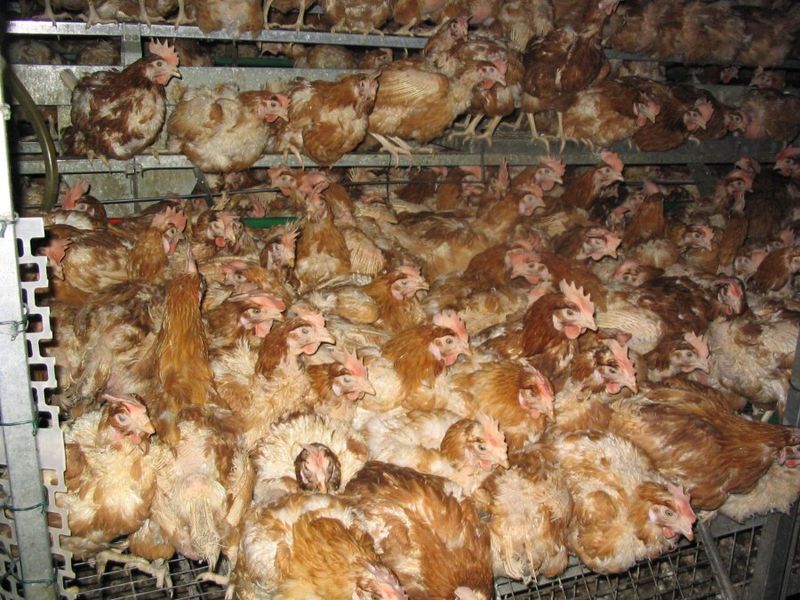
Neuralink Corporation, a company Musk co-founded, has wired up a monkey’s brain with an implant to attempt to make it play video games with its mind – can this ever be acceptable?


Elon Musk, chief executive of Tesla and SpaceX, became the richest person in the world last month, according to Forbes. This week, he bought $1.5bn worth of Bitcoin, causing the price of the cryptocurrency to reach an all-time high. Love him or loathe him, what Musk does matters to millions. 

This is why it was so concerning to hear the news that Neuralink Corporation, a company Musk co-founded, has wired up a monkey’s brain with a tiny implant to attempt to make it play video games with its mind. In a private speech given on the invitation-only social media app Clubhouse, Musk said: “One of the things we’re trying to figure out is whether we can have the monkeys playing mind pong with each other. That would be pretty cool.”

This is not the first time Neuralink Corporation has experimented on animals. The company has previously implanted wireless technologies into the brains of pigs. Musk described this as a “Fitbit in your skull with tiny wires”.

Despite the company’s claims that these experiments could help find cures for spinal cord injuries and neurological conditions, such as Alzheimer’s and dementia, many other scientists are less convinced.

Sadly, Musk’s actions are hardly an isolated incident. They reflect an increase in the number of experiments on animals taking place, despite mounting public concern and a growth in alternative approaches to scientific research. At leading laboratories in the US, experimenting on animals has increased by a staggering 73 per cent in recent years, while more experiments on animals are conducted in the UK than in any other country in Europe. The latest government figures revealed a total of 3.4 million experiments were completed during 2019, with more than half of these performed in universities, often paid for by the taxpayer. 

Take the recent outcry in Edinburgh, where the university was accused of using the widely discredited “forced swim” test to research antidepressants. This is where animals are placed in beakers of water from which they cannot escape, literally giving them the choice of sink or swim. While it’s unclear what provoking a drowning experience in small animals can teach us about the difficulties humans face battling depression, these experiments did raise awareness of some of the creative but barbaric ways we still employ, pushing the limits of animals in the UK. 

The harmful use of animals in experiments is not only cruel but so often ineffective. In fact, 90 per cent of drugs that successfully pass the preceding animal tests fail in human trials. Animals do not get many of the human diseases that people do, such as major types of heart disease, many types of cancer, HIV, Parkinson’s disease, or schizophrenia. Often the symptoms have to be simulated, to then be tested on. As a result, fewer than five per cent of medicines tested on animals lead to approved treatments within 20 years. 

Analysis of 27 “breakthroughs” in the UK also revealed there was a high degree of exaggeration by animal researchers in their findings. Most do not result in anything useful. Sadly, this hasn’t stopped the UK being the second biggest tester of dogs in Europe, including weed killer tests performed on beagles. Beagles are particularly useful to experimenters because they are a very trusting breed towards humans. These tests are unnecessary, cruel and not supported by the British public.


Yet, as we have seen at Neuralink Corporation, animals are increasingly not being used even to test medical or domestic products. Fifty seven per cent of experiments in universities are now believed to be in the area of basic research, much of it driven by the “curiosity” of university researchers. It can be a vicious cycle – many scientists need to perform experiments to be published but the data they are using for comparison is based on animal testing. 

It is obvious we all need to ask questions about the direction we are heading in. There are still too many examples of animal experiments being conducted, even when validated non-animal methods are available that are often cheaper, quicker and in many cases, more accurate.  

Science has performed admirably during the Covid-19 crisis, but whether it is in British universities or Silicon Valley, we can all clearly do more when it comes to achieving human-relevant science without suffering. 

Dr Katy Taylor is the director of science at Cruelty Free International

No, Elon Musk, there is nothing ‘cool’ about experimenting on animals | The Independent

In loving memory of Mike Hill

Hunt saboteur Mike Hill was killed by members of the Cheshire beagles hunt on Saturday 9th Feb 1991.

Mike Hill became the first hunt saboteur to be killed whilst trying to protect wildlife.

Mike was only 18 and for two years lived and breathed animal rights, not just dogs and cats but every living creature. He was a VEGAN, worked at both Heavens Gate Sanctuary and Freshfields Animal Rescue Centre, and was an active sab with Yeovil sabs and Merseyside sabs.

Mike was too nice a person for this world. There was no hurt nor malice in his soul.
He thought good of everyone and everything. He was quiet, unassuming, softly spoken, and gentle.
He lived and died for his beliefs.

No charges have yet been proffered against the two huntsmen.

No one has ever been brought to justice for his death.

The killing of Mike Hill has devastated his family, his friends, hunt saboteur groups all over the country and at Freshfields Animal Rescue Centre and Heavens Gate Sanctuary. His name, his love, affection, caring for all, and dedication to the movement will live on.

He will be in our thoughts forever.💚

The story: On 9. February in 1991, Mike Hill was deliberately run over and killed during a meet of the Cheshire Beagles.
His death came about at the end of the day’s hunting, when huntsman Allan Summersgill, with no-kill under his belt, boxed up the hounds in a small blue trailer being towed by a pick-up truck.

Mike and two fellow Merseyside sabs jumped onto the back of the truck in order to prevent the huntsman from driving to another location to continue hunting. Summersgill sped off down winding country roads for five miles with the terrified sabs clinging onto the back.

It is thought that Mike jumped from the pick-up as it slowed to take a bend. He failed to clear the truck and was crushed between the truck and the trailer. Mike died on the spot.

Despite the thud of Mike’s body and the screams of the other sabs, the heartless huntsman continued driving for a further mile.

The truck only halted when one of the sabs smashed the rear window of the cab. The sab was hit with a whip as he tried to stop the truck.

Once it had stopped one sab ran back to Mike’s prone body while the other ran to a nearby house to call for an ambulance. Summersgill drove off, later turning himself in at a police station.

Despite the details of the case, an inquest improbably arrived at a verdict of “Accidental Death” no charges

http://Jayaseelan TD

And I mean…when such “accidents” occur during hunting sabotage, the hunters are happy.

They think this will bring fear and anxiety to future actions. But to this day there are still hunting sabotages, and many with success.

Most likely the judges of that time were also hunters. Therefore most of them are not interested in finding out the truth at all.

And offenders are declared innocent. Even Hit and run leads to no accusation.

We live in a perpetrator-friendly justice and society

regards and good night, Venus


Who else is interested in WHO?

Today (February 9, 2021), the World Health Organization (WHO) wrapped up its investigation in China into the origins of COVID-19.

According to reports, the WHO’s team of experts from 10 countries concluded that it’s “highly unlikely” the virus leaked from a nearby laboratory, and is most likely to have jumped from a non-human animal to a human.

WET MARKETS: The WHO team spent time researching a particular market in Wuhan, but has not yet determined the specific animal or location where the virus first jumped from animals to humans.

However, judging from the significant role that animal farming has played in the mutation of respiratory diseases in the past decade, it would be no surprise if live animal markets, also known as wet markets, played a role (!!) in the evolution of the virus from animals to humans.

Last year, with the help of local Chinese activists, our investigators went to wet markets in China and documented that, despite promises from the government, many of these live animal markets were still operating business as usual.

Footage reveals living and dead animals in close proximity to humans and in extreme confinement and unsanitary conditions—the perfect breeding ground for zoonotic diseases to emerge.
Now, over half a million people have signed our petition asking the United Nations to call for a ban on wet markets that sell live and dead animals.

Not only are wet markets that sell and slaughter animals extremely dangerous, but they’re also horrific places for the animals who are kept in squalor and killed typically without stunning and in full view of each other.

INDUSTRIAL FARMS: Like wet markets, industrial farms pose a great risk to public safety and are a living nightmare for the animals in them.
While COVID-19 may not have started on a farm, many other infectious diseases developed in humans as a result of animal agriculture, such as SARs, H1N1, Swine Flu, and Q Fever, to name a few.

And just recently, a new respiratory disease was discovered in The Netherlands that could’ve originated in goats. If animal cruelty alone isn’t enough, these deadly outbreaks should be a wake-up call for change.

It’s only a matter of time before the next pandemic originates from a factory farm, and there’s no telling how widespread it will become.

WHAT YOU CAN DO: Whether in China or here in the United States, raising and killing animals for food is a dangerous and cruel business.

The good news is that we all have the power to help stop it.

Every time you choose a plant-based food option over an animal-derived one, you’re doing your part to reduce the demand, and thus reducing the number of animals held in extreme confinement on farms.

Now more than ever, going vegan is the best decision for humans, animals, and the future of our planet.

MAKE A CHANGE BEFORE IT’S TOO LATE.

Try vegan and sign our Petition to close live-animal markets

https://animalequality.org/news/world-health-organization-concludes-covid-19-likely-jumped-from-animals-to-humans

And I mean…So it’s clear the virus did not come from a lab. Did they get any evidence of where it did come from?

Quote from the interview with NPR’s global health correspondent Michaeleen Doucleff in the NPR newspaper: So the team says the most likely hypothesis is that the virus started in a bat, jumped into an intermediate host, like a pangolin or mink, and then into humans. And exactly what animal that is and where that happened is still a big mystery. However, they said the pandemic did not start in the Huanan Seafood Market.

The virus was already circulating before then. And so they’re trying to figure out how the virus got to the market. And one possibility, they said, could be frozen foods “ (we have to stop eating pizza)

The interview ends like this:This investigation has raised more questions than it has answered”.

Therefore we feel enlightened and safe, and we rely on research!

https://www.npr.org/2021/02/09/965966786/world-health-organization-finishes-investigation-into-origins-of-covid-19

Nowadays, anyone who thinks they are well, comprehensively, and diversely informed is sleeping the sleep of the just.
In the medium and long term, a rude awakening is almost inevitable.

My best regards to all, Venus


Sweden: 600 mink were freed from cages

From the Blog of “Animal Liberation Press Office”:

“According to media reports, 600 mink were freed from cages at a fur farm in Tingsryd during the night of January 22.

The same farm was raided by activists in September 2019.

We, Animal Liberation Press Office, have not received a statement in relation to the action, but you can read the report that was released after the action in 2019;

Sweden

In the early hours of September 3, 2019, all of the prisoners on a small mink farm in Hölkemåla, Blekinge, Sweden, escaped from the cages.

In total, about 1500 persons managed to get free.
We gave a helping hand by disassembling the fence of the farm and then opening all the cage doors.

We removed parts of the fence using a wrench to ensure a way out.

Sweden-Mink farm

The fur farm was situated right next to a lake where we hope that as many as possible now get to live.

In a world where freedom exists only in moments of rebellion and insurrection, we still think that the possibility of life in the forest and lake is quite the opposite of that in a cage.

We do recognize that the already destroyed eco-systems and colonized nature is nothing like a dream, but since it is all that we have it is where we will go from our imprisoned existences.

Norway

A passion for freedom is what drove us to this hidden killing facility to increase freedom for all of us.

Our desire to share this moment of freedom with the minks is rooted in solidarity and love as well as anger and hatred towards those who dominate us and try to steal our lives.

We strongly believe that there is no limit to the things we can do, all we need is to make up our minds and pick a target”.

https://animalliberationpressoffice.org/NAALPO/2021/02/01/600-mink-liberated-from-swedish-fur-farm-tingsryd-sweden-2/

And I mean…The Swedish government decided on January 27, 2021, to ban fur farming in Sweden until the end of 2021.

On October 3, 2010, around 18,000 mink were released from a fur farm in Skillingaryd, Sweden. According to media reports, only 4,000 mink were recaptured and around 50 were run over by cars.


Sweden-2010

This means that around 14,000 mink have been given the chance to live in freedom.
Just one day later, on October 4th, another 4,000 mink were released at a facility near Vaggeryd, Sweden.

The action was one of the largest liberation actions in the history of the animal liberation movement.

In the same year, the largest animal liberation action in the history of the animal rights movement took place in Greece, where around 50,000 mink were freed from a farm

Since the Swedish animal rights organization Djurrattsalliansen published extensive research on fur farms in August 2010, the Swedish fur industry has been under enormous pressure, not least because of media interest.

Today, and thanks to Corona, the list of countries that have banned this cruel business is growing every day!

In Austria, Great Britain, Croatia, Slovenia, Bosnia and Herzegovina, Serbia, and Macedonia, fur farms are prohibited by law.
A fur farming ban came into force in the Czech Republic in 2019

In the Netherlands, the second-largest mink producer in Europe that keeps chinchillas and foxes is already banned. The last mink farms should close in 2024 as the farms will close this year due to the coronavirus.

Then came Norway, Denmark …Only Finland persistently does the cruel business in the north.
In Germany, no more animals were kept on the last German fur farm in Rahden (North Rhine-Westphalia) in March 2019

Corona has dealt the last blow to this cruel business for a year.
Before that, however, it was also the economic losses caused by the direct exemption measures in fur farms that also contributed to the death of the fur industry.

Supported by our demos, petitions, and the educational work of the animal rights organizations

We sincerely thank the activists and wish those who have been liberated a long life in nature.

My best regards to all, Venus


Idiots play “clowns” in front of vegan protesters

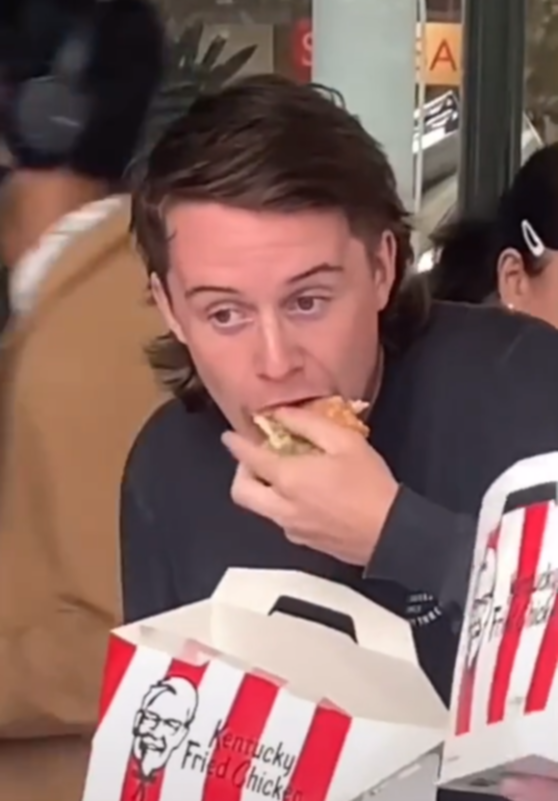
A pair of Melbourne pranksters have been slammed on social media after filming themselves eating KFC in front of vegan protesters.

Nick and Bill, who boast a following of more than 85,000 on TikTok, uploaded the video over the weekend.

As seen in the video above, the duo is seen eating fried chicken pieces and burgers in front of a group of protesters near the Royal Arcade in the CBD.

“Do you want a bite?” one of the boys is heard asking a protester at one point.

Two protesters are seen speaking to the boys in the video, as they scoff down burgers.

“I actually really appreciate these guys being here,” one protester is heard saying, “it’s creating a spectacle”.

The video has since been viewed more than three million times on TikTok, with users slamming the duo as “disrespectful”.

“This isn’t funny or cool, I’m not even vegan but it’s about respecting others,” one person commented.

One of the two clowns

“They’re not disrupting anyone and they were being polite why did (you) go out of your way to buy food and eat it in their face and film it, that’s weird,” another person wrote.

Despite the backlash, some hailed the pair “heroes”, while others said their “respect” for them increased after viewing the video.

But it’s not the first time the duo tried out the stunt.

In a video posted to TikTok in November, the pair were again seen eating KFC in front of protesters at what appeared to be the same location.

https://7news.com.au/news/vic/tiktok-pranksters-nick-and-bill-slammed-after-eating-kfc-in-front-of-vegan-protesters-c-2118997

And I mean…To call someone a hero just because they do the same thing as the other 7.8 billion carnivorous human animals on the planet is ridiculous.
And the carnivorous provocateurs show very little experience in the field.

Because they think that with two or three pieces of dead meat in the bag they can annoy or provoke the experienced demonstrators.

They take themselves very seriously, these flat-foot- carnivores.

My best regards to all, Venus


Paris: City Hall closes the archaic bird market

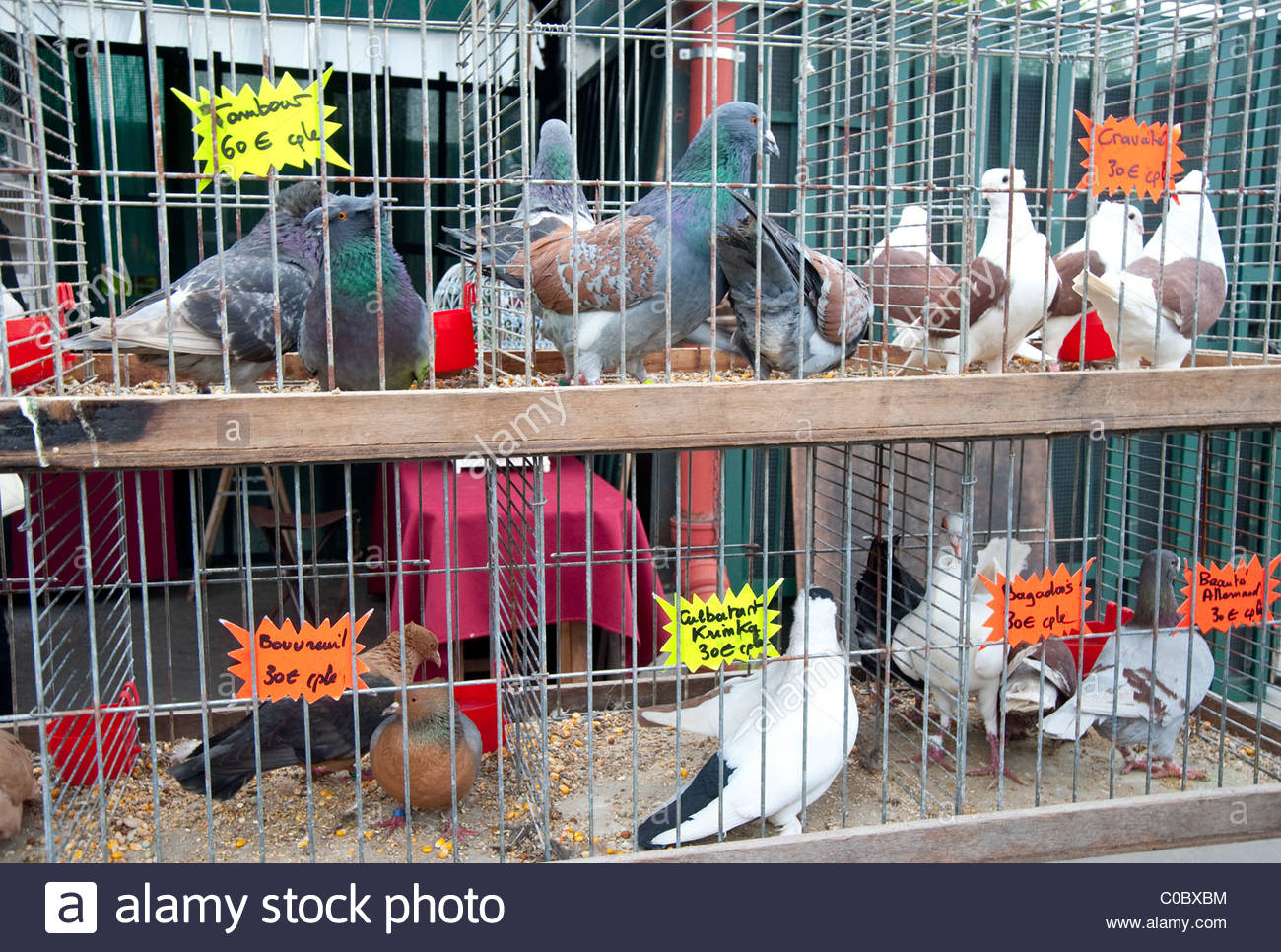
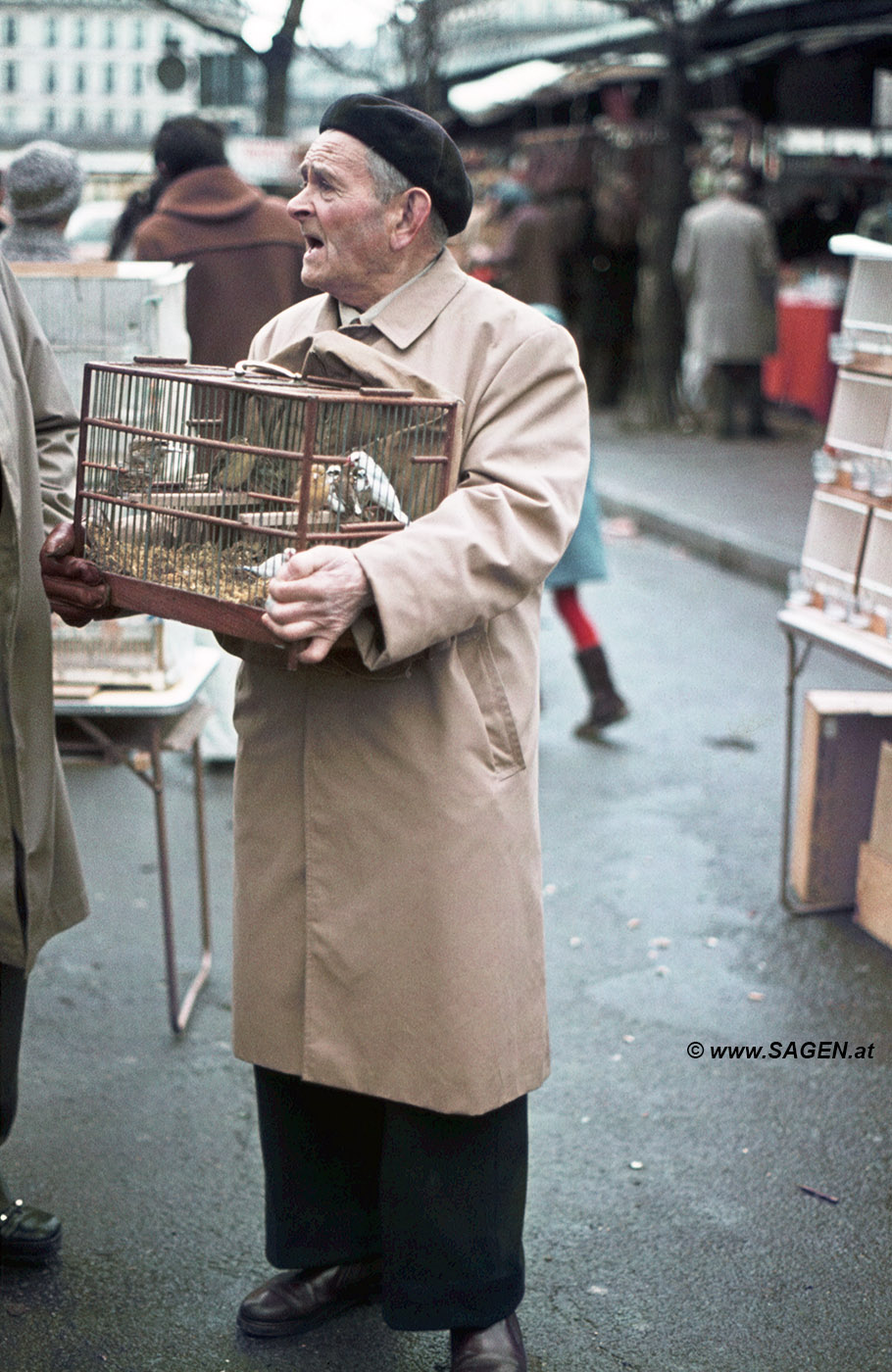
The Council of Paris voted to prohibit the sale of birds and other live animals, as the French capital’s famous bird market near Notre-Dame Cathedral faces closure over animal welfare concerns.

Paris-Bird market

Paris City Hall made the decision as officials felt that the birds were being held in crowded conditions and that the animals’ needs and well-being were not being considered.

There were also concerns that the market, which dates back to the 19th century, encouraged the trafficking of birds.

Currently, 13 companies are licensed to operate at the market, with seven of those stalls selling birds, but city officials found that, in recent years, unlicensed street traders have apparently been using the site to peddle their illegal trade.

Paris-bird dealer

Animal welfare groups such as Paris Animaux Zooplis (PAZ) had called on officials to close the bird market, calling its existence “cruel and archaic”, with one petition securing 2,500 signatures from individuals who believed the animals were deprived “of their liberty and their most elementary behavior.”

The closure decision follows a Council of Paris vote in December that sought to renovate the market and improve its internal regulations, as well as a 2013 investigation by France’s National Hunting and Wildlife Office (ONCFS) that resulted in the arrest of seven people and the seizure of dozens of birds.

Paris-bird market

The market is due to receive €5 million ($6.05 million) between 2023 to 2025 in renovation funds.

The local government in Paris has been working to address animal rights issues in the city, including banning the sale of kittens and puppies under the age of six months in pet shops from 2022 and prohibiting the use of live bait by anglers.

https://www.rt.com/news/515054-paris-city-hall-closes-bird-market/

And I mean…It looks like the animal dealers from Paris have looked at some examples from China.
But a country like France, with such a great history and culture, should no longer use the word “tradition” to justify animal cruelty.

In addition, Paris is not known and desired for its bird market, but for its rich cultural and social life.

The government is to be commended for this decision.
Any market that holds living beings in cages to sell them as goods is a medieval tradition and no longer fits in a civilized society

No matter where it happens in this world.

My best regards to all, Venus

UK: UK Government Rejects Calls For A ‘Meat Tax’ To Fight Against Carbon Emissions.

UK Government Rejects Calls For A ‘Meat Tax’ To Fight Against Carbon Emissions

A senior No10. official has said the meat tax is ‘not going to happen’ – despite the UK’s ‘ambitious’ climate targets…

WAV Comment – We wonder where this pressure has come from ? – all the facts show the British public are changing to a plant based diet in a big way and are very much ‘eco informed and supportive’.  Could it be once again that as always; money talks, and the meat industry will get what it wants regardless ?

The UK government has rejected calls for a ‘meat tax’ as a way to fight against carbon emissions. 

Prime Minister Boris Johnson has been under increasing pressure to up the price of meat due to its environmental impact.

The government has also been told meat and dairy should ‘take their place alongside tobacco, alcohol, sugar, and fuel. All of which are taxed because of their negative impact on human health or the environment’.

‘Not going to happen’

However, according to the Evening Standard, a senior No10. official recently said: “This is categorically not going to happen.

UK Meat tax

Last year, vegan charity PETA urged the UK to implement a meat and dairy tax to ‘lessen the economic fallout after COVID-19 and combat the climate crisis’.

The organization wrote a letter to Chancellor of the Exchequer Rishi Sunak. It suggests revenue from such a tax could ease the burden on the NHS. Moreover, the letter says the move will help farmers transition away from meat and dairy to more climate-friendly arable ventures.

Dawn Carr is PETA ‘sdirector of vegan corporate projects. She said: “We must heed the Committee on Climate Change’s call for meat and dairy consumption to be cut down and act on the United Nations’ recommendation that national governments introduce a tax on meat.

“The resulting tax revenue could be used to help meat and dairy farmers make the transition into healthier, more sustainable crop farming at a time when the plant-based food market is booming.”

UK climate targets

The push for a meat tax comes shortly after Johnson’s pledge to slash greenhouse gas emissions by more than two-thirds in the next decade.

The politician described the targets as ‘ambitious’. However, he says they are necessary to set the country ‘on course to hit net zero by 2050’.

He said, in comparison with 1990, there will be a decrease of 68 percent in annual carbon emissions by 2030.

UK Government Rejects Calls For A ‘Meat Tax’ To Fight Against Carbon Emissions | Plant Based News