EU: Time to change the rules: Eurogroup for Animals launches White Paper on the Revision of the Transport Regulation.

Time to change the rules: Eurogroup for Animals launches White Paper on the Revision of the Transport Regulation

27 January 2021

Today, Eurogroup for Animals presented its White Paper on the upcoming Revision of the Transport Regulation during a high-level online event, bringing together more than 150 stakeholders from EU institutions, Member States, civil society and industry. The White Paper outlines how the new Transport Regulation should adhere to the basic principles of reducing, refining and replacing live transport, whenever applicable.

Since its foundation, Eurogroup for Animals and its members have been advocating to ensure effective protection of all animals transported. In 2007, Council Regulation 1/2005 – also known as the Transport Regulation – entered into force with the aim to avoid any injury or undue suffering during transport. However, over the years, investigations revealed that its implementation and enforcement is very poor; and scientific sources reported that its provisions are often unfit to ensure effective protection for the animals transported.

Today, Eurogroup for Animals launches a White Paper as a response to the European Commission’s stated aims to revise the Transport Regulation “to align it with the latest scientific evidence, broaden its scope, make it easier to enforce and ultimately ensure a higher level of animal welfare”.

Every day, a vast range of animal species are transported within the EU and beyond for commercial activities, yet the current Transport Regulation does not guarantee effective protection to all of them. In principle, the Transport Regulation should apply to the commercial transport of live vertebrate animals. However, the majority of its provisions refer only to the welfare of certain terrestrial farmed animal species: the requirements for the transport of fish, companion animals and equines are less developed; and measures to ensure the welfare of a large group of species transported for scientific purposes are completely absent. Additionally, by definition, invertebrates transported for food production remain out of the scope of the Regulation. This needs to change.

Furthermore, it’s been widely demonstrated that existing gaps in the current legislative framework have a significant negative impact on animals. This needs to be addressed by establishing comprehensive species- and category-specific requirements as well as a more efficient enforcement system. To this end, the White Paper provides the European Commission and EU co-legislators with science based key provisions to be included in the revised legislative text to substantially improve the welfare of terrestrial farmed animals, fish and aquatic invertebrates, equines, companion animals, and laboratory animals during transport.

To further facilitate compliance and systematic data collection, a reporting system based on transparent communication on the animals being transported (species and numbers, animal welfare status, journey route) and any transport-related problems, is outlined. Such a system would increase Member States’ accountability and fully exploit the enforcement power of the European Commission.

Time to change the rules: Eurogroup for Animals launches White Paper on the Revision of the Transport Regulation

27 January 2021

Today, Eurogroup for Animals presented its White Paper on the upcoming Revision of the Transport Regulation during a high-level online event, bringing together more than 150 stakeholders from EU institutions, Member States, civil society and industry. The White Paper outlines how the new Transport Regulation should adhere to the basic principles of reducing, refining and replacing live transport, whenever applicable.

Since its foundation, Eurogroup for Animals and its members have been advocating to ensure effective protection of all animals transported. In 2007, Council Regulation 1/2005 – also known as the Transport Regulation – entered into force with the aim to avoid any injury or undue suffering during transport. However, over the years, investigations revealed that its implementation and enforcement is very poor; and scientific sources reported that its provisions are often unfit to ensure effective protection for the animals transported.

Today, Eurogroup for Animals launches a White Paper as a response to the European Commission’s stated aims to revise the Transport Regulation “to align it with the latest scientific evidence, broaden its scope, make it easier to enforce and ultimately ensure a higher level of animal welfare”.

Every day, a vast range of animal species are transported within the EU and beyond for commercial activities, yet the current Transport Regulation does not guarantee effective protection to all of them. In principle, the Transport Regulation should apply to the commercial transport of live vertebrate animals. However, the majority of its provisions refer only to the welfare of certain terrestrial farmed animal species: the requirements for the transport of fish, companion animals and equines are less developed; and measures to ensure the welfare of a large group of species transported for scientific purposes are completely absent. Additionally, by definition, invertebrates transported for food production remain out of the scope of the Regulation. This needs to change.

Furthermore, it’s been widely demonstrated that existing gaps in the current legislative framework have a significant negative impact on animals. This needs to be addressed by establishing comprehensive species- and category-specific requirements as well as a more efficient enforcement system. To this end, the White Paper provides the European Commission and EU co-legislators with science based key provisions to be included in the revised legislative text to substantially improve the welfare of terrestrial farmed animals, fish and aquatic invertebrates, equines, companion animals, and laboratory animals during transport.

To further facilitate compliance and systematic data collection, a reporting system based on transparent communication on the animals being transported (species and numbers, animal welfare status, journey route) and any transport-related problems, is outlined. Such a system would increase Member States’ accountability and fully exploit the enforcement power of the European Commission.

Time to change the rules: Eurogroup for Animals launches White Paper on the Revision of the Transport Regulation

27 January 2021

Today, Eurogroup for Animals presented its White Paper on the upcoming Revision of the Transport Regulation during a high-level online event, bringing together more than 150 stakeholders from EU institutions, Member States, civil society and industry. The White Paper outlines how the new Transport Regulation should adhere to the basic principles of reducing, refining and replacing live transport, whenever applicable.

Since its foundation, Eurogroup for Animals and its members have been advocating to ensure effective protection of all animals transported. In 2007, Council Regulation 1/2005 – also known as the Transport Regulation – entered into force with the aim to avoid any injury or undue suffering during transport. However, over the years, investigations revealed that its implementation and enforcement is very poor; and scientific sources reported that its provisions are often unfit to ensure effective protection for the animals transported.

Today, Eurogroup for Animals launches a White Paper as a response to the European Commission’s stated aims to revise the Transport Regulation “to align it with the latest scientific evidence, broaden its scope, make it easier to enforce and ultimately ensure a higher level of animal welfare”.

Every day, a vast range of animal species are transported within the EU and beyond for commercial activities, yet the current Transport Regulation does not guarantee effective protection to all of them. In principle, the Transport Regulation should apply to the commercial transport of live vertebrate animals. However, the majority of its provisions refer only to the welfare of certain terrestrial farmed animal species: the requirements for the transport of fish, companion animals and equines are less developed; and measures to ensure the welfare of a large group of species transported for scientific purposes are completely absent. Additionally, by definition, invertebrates transported for food production remain out of the scope of the Regulation. This needs to change.

Furthermore, it’s been widely demonstrated that existing gaps in the current legislative framework have a significant negative impact on animals. This needs to be addressed by establishing comprehensive species- and category-specific requirements as well as a more efficient enforcement system. To this end, the White Paper provides the European Commission and EU co-legislators with science based key provisions to be included in the revised legislative text to substantially improve the welfare of terrestrial farmed animals, fish and aquatic invertebrates, equines, companion animals, and laboratory animals during transport.

To further facilitate compliance and systematic data collection, a reporting system based on transparent communication on the animals being transported (species and numbers, animal welfare status, journey route) and any transport-related problems, is outlined. Such a system would increase Member States’ accountability and fully exploit the enforcement power of the European Commission.

EU fails to strengthen enforcement of sustainable development provisions in EU FTAs.

EU fails to strengthen enforcement of sustainable development provisions in EU FTAs

28 January 2021

While the announcements made by the EU institutions on the revision of the so-called “Enforcement Regulation” on trade disputes foresaw stronger enforcement mechanisms for Trade and Sustainable Development (TSD) provisions contained in trade agreements, the draft text adopted at the European Parliament’s plenary session on 21st January does not reflect the awaited progress.

The long-awaited materialisation of the principle that violations of TSD chapters – in which wildlife conservation and trafficking issues are embedded, alongside deforestation or climate issues – are as important as those perpetrated against market access provisions, remains uncertain from the EP’s first reading of the text released earlier this week. While the text interestingly lays down that the Regulation allows for a suspension of the obligations stemming from EU trade deals – which means the EU could suspend preferential tariffs – in response to breaches of TSD chapters, the concept remains largely aspirational – as it is listed in the recitals which are non-binding, legally speaking.

This outcome is disappointing considering the statements made by the EU institutions back in October 2020 that the EU would “examine breaches in the field of sustainable trade with the same attention as breaches of market access”. As a reminder, the purpose of the Enforcement Regulation’s update was to extend its scope in order to enable the EU to impose counter-measures in situations where EU trade partners violate WTO rules or block the dispute settlement procedures available under WTO rules. This is seen as an interim arrangement in reaction to the legal void left by the “WTO Appellate Body crisis” since December 2019. Considering the weakness of enforcement mechanisms attached to TSD chapters, there was hope that the updated Regulation could also provide new tools to address concerns in this field.

Eurogroup for Animals  thus regrets that  the enacting terms of the Regulation do not include any wording on strengthening the enforcement of TSD chapters contained in EU FTAs.It is also hard to see what the recital listed in the reviewed Enforcement Regulation will add to existing legislation, as the principle that TSD violations could lead to the suspension of the FTA has already been recognised by the CJEU Opinion on the EU-Singapore FTA. ) Back then, we already analysed that this ruling was not a panacea. Suspending the entire agreement in response to the breach of TSD provisions is the equivalent of a “nuclear weapon”. It is thus very unlikely the EU will want to trigger this process. In addition, the aspirational nature of the provisions contained in TSD chapters (which usually list commitments to ‘aim’ or ‘strive’ at ‘promoting’ sustainable development issues) would also make it difficult for the EU to prove failure of commitment from its partner. The recent ruling in the dispute linked to labour rights provisions included in the EU-Korea FTA has clarified that, in their current form, these provisions only impose an obligation of “efforts”, not of “results”. 

In conclusion, this regulation does not add any additional mechanism to strengthen the enforcement of TSD commitments in EU FTAs. All eyes will now be on the new EU Trade Strategy, which should be published on 17 February, to assess whether the EU has succeeded to make its trade policy compatible with the EU Green Deal. 

Leaked documents suggest the EU-Mercosur agreement needs to be renegotiated.

Leaked documents suggest the EU-Mercosur agreement needs to be renegotiated

1 February 2021

The agreement, as it stands now, is a bad deal for animals, nature and people. And it cannot be fixed by simply adding a protocol or a declaration.

Leaked working documents from the French government suggest that for France to consider ratification of the EU-Mercosur agreement, it must either be renegotiated to include new provisions, or new EU legislation must be put in place for instance to impose EU standards to imported products.  

The Commission’s new proposals to solve the conundrum created by the ratification of the EU-Mercosur agreement will only be presented by mid 2021 but several Member States are also preparing a list of “pre-ratification conditions”, as shown by leaked proposals from the French government. The document suggests that the Agreement would either need to be renegotiated, or that new EU legislation should be put in place, before it can be ratified. Among others, the French government proposes: 

The development of “mirror measures”, which means that certain EU health and environmental standards  should apply to imports.

Cooperation against deforestation, for instance through the creation of a traceability system for animal and plant based products in order to identify whether those products are linked to deforestation.

A review of all import tolerances, in order to ensure producers from Mercosur respect the environment. 

The French opposition to the Agreement grew after the release of the French Impact Assessment on the deal which confirmed the threats identified by Eurogroup for Animals: the deal, if implemented, will lead to an increase of EU’s imports of beef and chicken from Mercosur countries, creating further pressure on  EU animal welfare standards. French Prime Minister Jean Castex confirmed in September 2020 that France will oppose the ratification of the EU-Mercosur trade deal in its current shape.  Yet, the proposals made by the French government in the leaked working document do not address our concerns related to the impact of the agreement on animal welfare. For instance, animal welfare standards should have been added to the list of standards that the EU should impose on imported goods. 

In this context, Eurogroup for Animals still calls for a reopening of the negotiations, which should include amongst other: 

A review of the market access offer to further limit the volume granted in tariff-rate quotas (TRQs) for animal based products, especially for bovine and chicken meat.

Animal welfare conditions for all trade preferences granted to animal products. 

The clarification that provisions on marking and labelling do not pre-empt the EU from adopting a method of production label that would apply to imports.

A recognition of the precautionary principle in the field of food safety.

Proper monitoring mechanisms to assess the impact of the implementation of the trade deal on the animals, the environment and the people, and the introduction of tools that would allow to revert the negative impact that could be detected by these mechanisms. This could be done by strengthening the TSD chapter and its enforcement mechanisms.

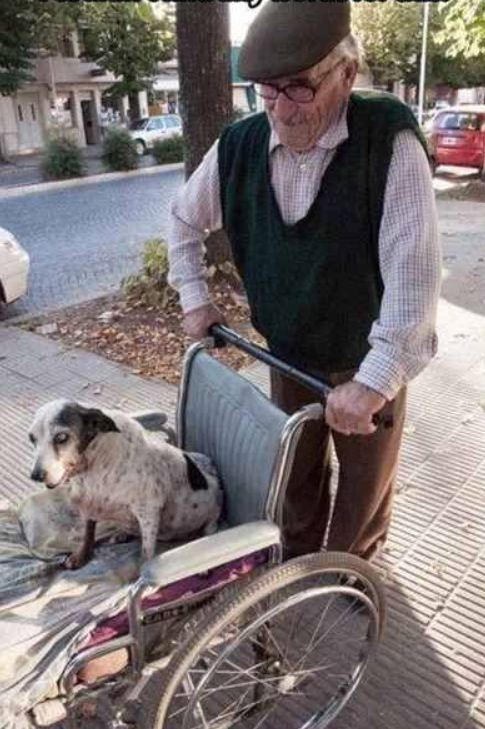
That’s love

It’s nice when you get respect and care in your old age…

regards and good night, Venus


Flanders ban the cruel “Ponny Carousells”- Super!

Action alliance – animals do not belong to the circus

A BAN IN ALL BELGIUM APPLIES FROM 2023

A “wild animal ban” has been in effect in circuses in Belgium since 2014.

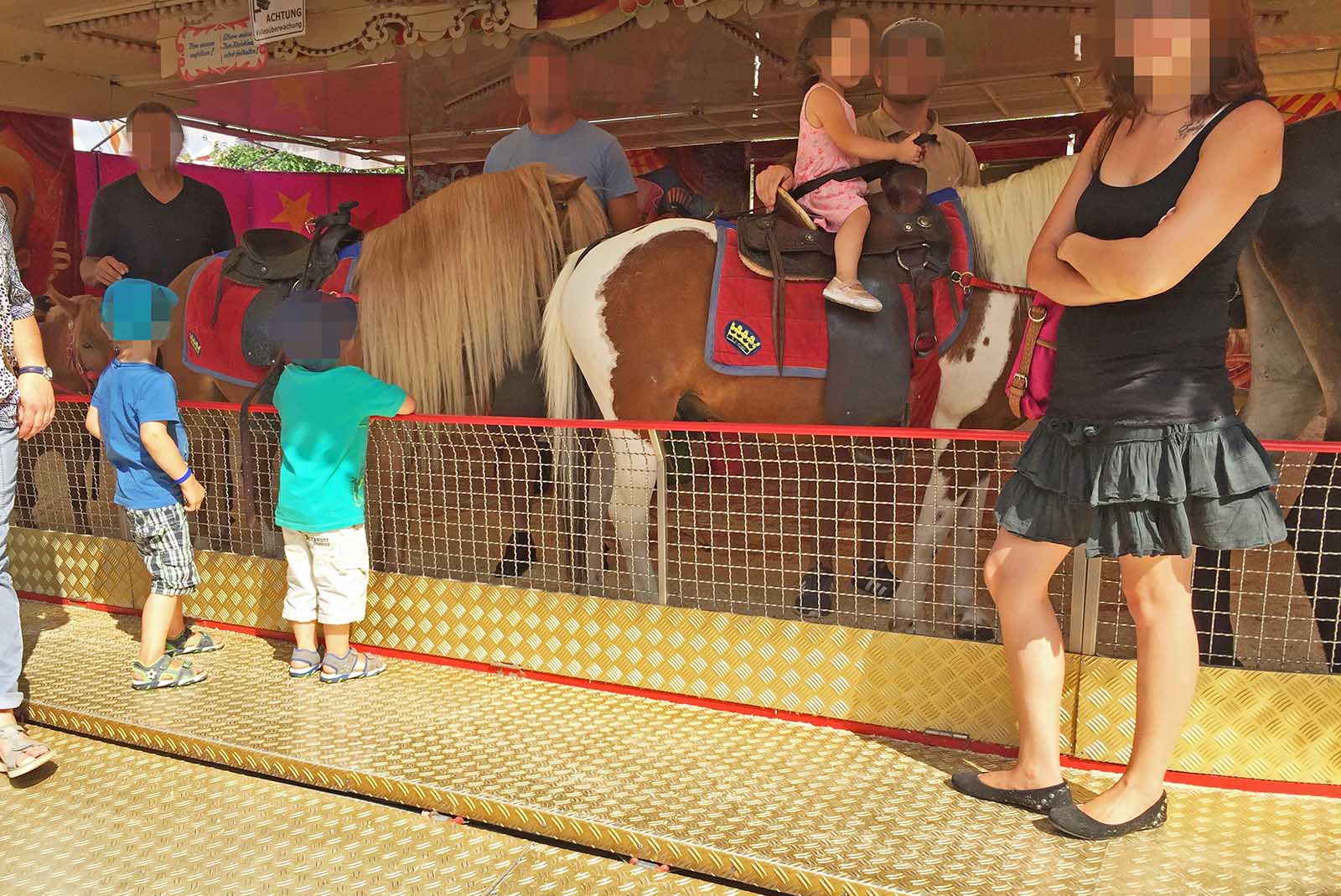
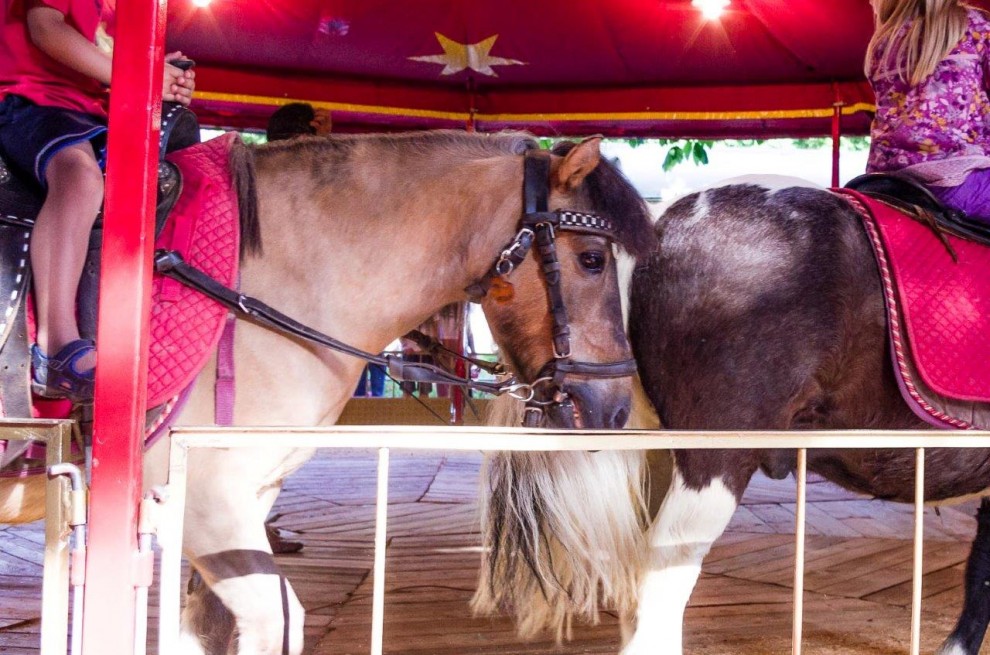
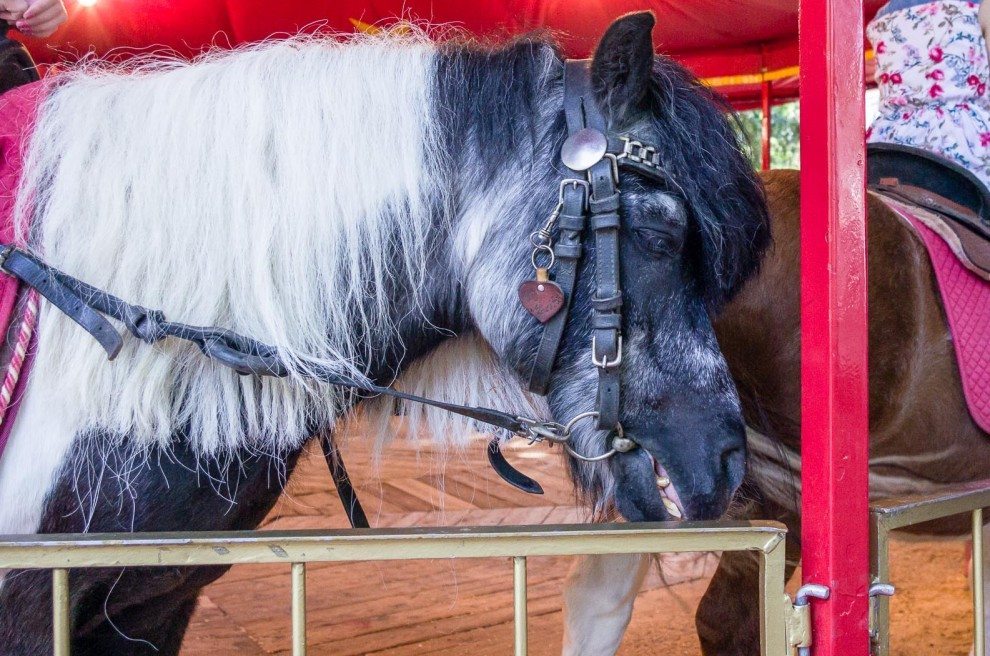
Now the “fun” on the back of little horses that have to go around in circles for hours will soon come to an end.

After the Brussels and Wallonia regions, Flanders has now also banned pony riding at trade fairs and annual markets

This means that this old-fashioned “attraction” will be banned across Belgium from 2023 after a corresponding transition period.
The operators of the pony carousels are to receive compensation.

It is time to sensitize parents and children to the quiet suffering of animals and to show that there are species-appropriate ways to show children the “happiness of the earth on horseback” – with respect for animals.

The pony carousel is not an authentic riding experience anyway. Parents who want to give their children an authentic experience of the horse are certainly better advised to visit a pony farm. With the prospect of it, many a whining child can be distracted from the pony carousel.

https://www.facebook.com/Aktionsb%C3%BCndnis-Tiere-geh%C3%B6ren-nicht-zum-Circus-596627783718726/

And I mean…Pony carousel! the underrated cruelty to animals.
According to the guideline, the animals are allowed to do their stupid, monotonous laps for four hours.

No, they are not allowed, they have to!
If someone talks about love for animals, he has to learn the term again.

An anachronistic entertainment genre that not only means immense suffering for the animals circling for hours on end and circling to the point of complete exhaustion, but also makes people insensitive and teaches children disastrous things about animals.

These circling child slaves – “riding ponies” run in circles for hours, usually even at high temperatures, and are treated with violence and brutality by their slave owners.

And German? it keeps sleeping!

Not only wild animals are still allowed in the circus, but we also still use pony carousels as an attraction.

A year ago there was an online petition to stop pony riding at a Christmas market – over 27,000 people signed up.

Without success, because the veterinary office allowed pony riding, the petition was hopeless.

It is a shame that animals are still allowed to be abused for dull entertainment in this country.

My best regards to all, Venus


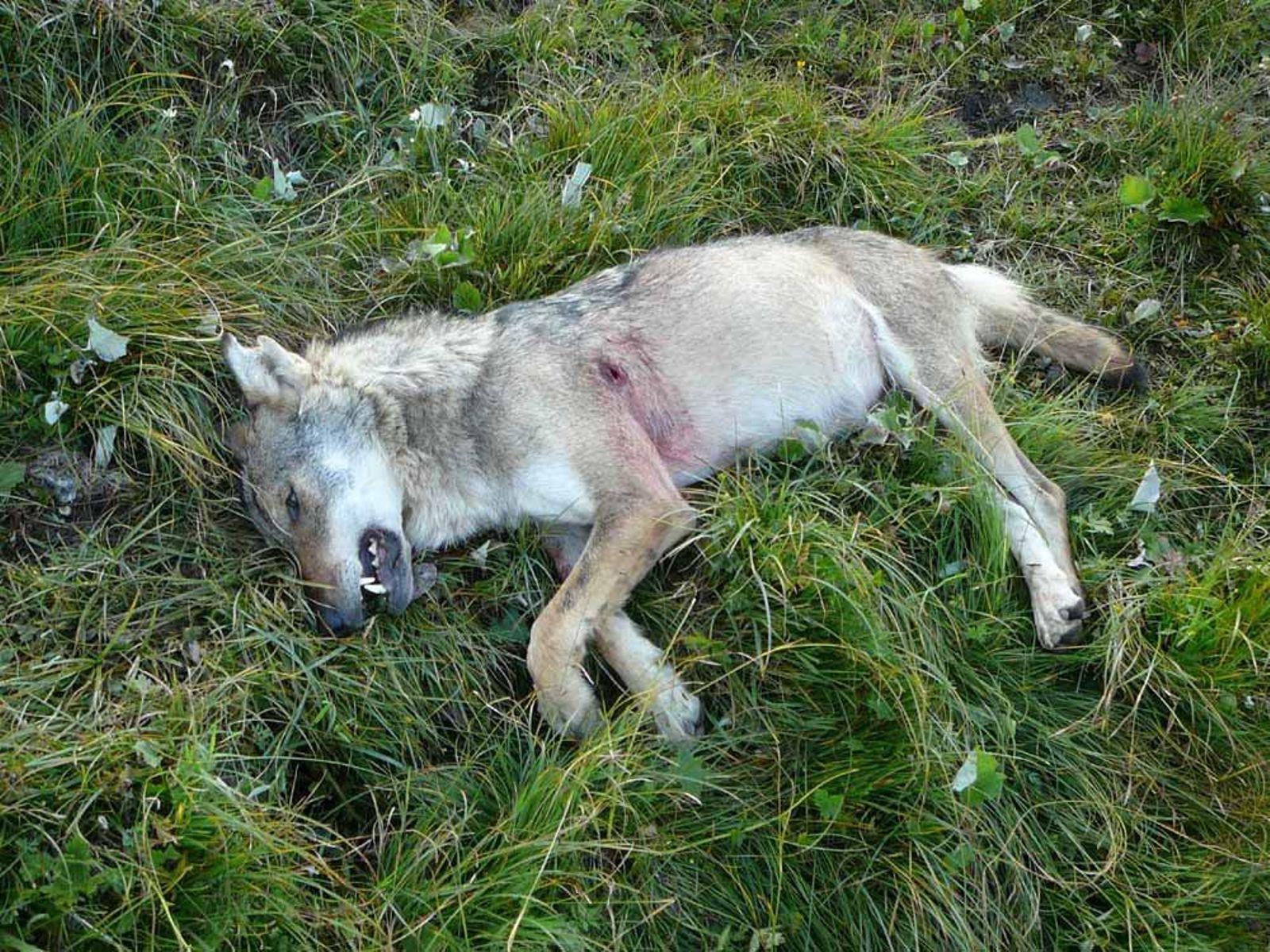
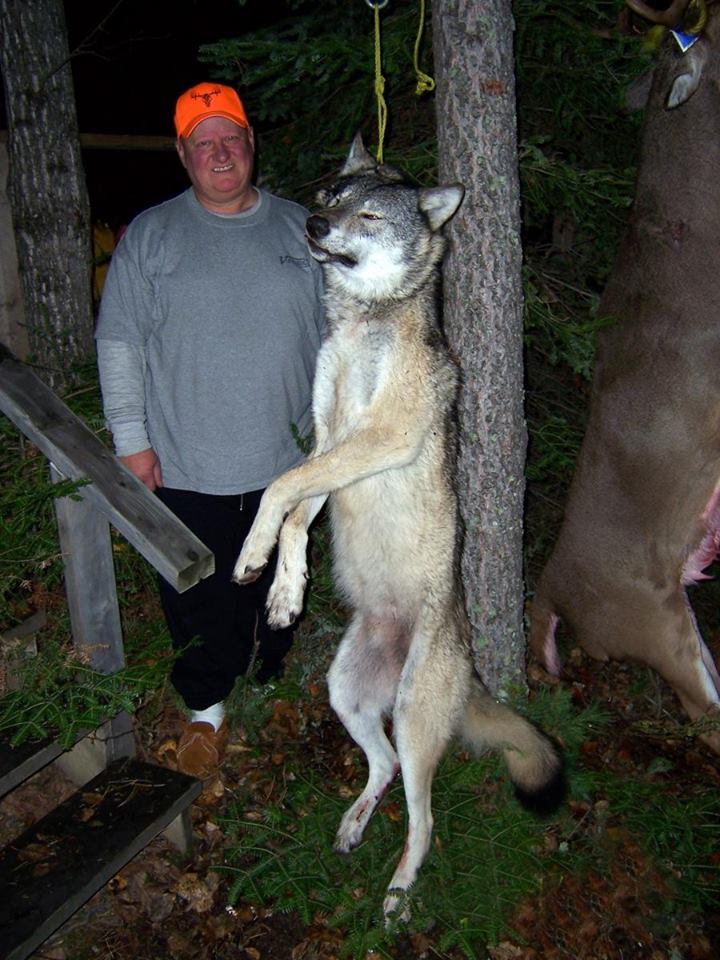
Finland: Wolf killers on the go

A TRAGEDY IS LAID DOWN IN THE HIGH NORTH – FINLAND PLANS TO REDUCE ITS WOLF STOCK TO 25 PACKS!

Wolves have always had a difficult time globally.
They are feared and persecuted and the hatred of these wonderful animals has developed into a veritable witch hunt, similar to the fox.

Nowhere is this useful top preacher welcome.

Finland is currently planning the next chapter in the book of cruelty against this pitiful species.
For the winter season 2021/22, an ethically reprehensible and terrible model for wolf management was presented in the icy land in the north.
Among other measures, the population is to be reduced to only 25 wolf packs, i.e. the execution of many of this species is planned, despite massive opposition from nature and animal rights activists, and thus wants to make it equal to neighboring Sweden, where these wonderful animals are already regulated.

A working group was set up by the Ministry of Agriculture to determine the best conservation status for the wolf and this questionable “SOKO Wolf” came to the number of 25 packs.

According to Agriculture Minister Jari Leppä, the legal requirements have been regulated and the massacre is planned for winter 2021/22.

The stock hunt should take place during this time.

This represents an ethical catastrophe and probably only pleases the over-anxious farmers who hate the wolf and the hunters who are already “sharpening their knives” or oiling the barrels of their deadly shotguns.

Please also sign all of these petitions to put an end to the hunt for these wonderful creatures across Europe:
https://www.thepetitionsite.com/de/376/238/344/?TAP=1732

For more…at https://worldanimalsvoice.com/2021/02/01/finland-wolf-killers-on-the-go/

Gemeinsam für die Tiere- (Together for the animals)

And I mean…… 150 billion animals are slaughtered worldwide every year, that’s 4756 every second …
As a competitor to this daily massacre, the wolf cannot keep up.

Wild animals make up just 3% of the total biomass of terrestrial vertebrates on earth!
The rest is “use” animals + people!

In 2016, the Norwegian government made a similar shameful decision on the wolf issue
To protect the livestock population (especially sheep), they released 47 wolves to be shot.

That was two-thirds of the population in the whole country.
This is how hunters and their lobbyists regulate life in the forest.

Apart from that: The predators do not practice environmentally damaging factory farming, they eat what is there or starve to death.

Farmers keep thousands of animals in stable, tightly packed, without movement, occupation, or daylight.
The animals stand on slatted floors in their own shit, which is then collected as liquid manure.

Farm animal keepers are crueler. If I’m not crueler, then I don’t use them for my economic interests either.
Animal breeding alone is torture because the animals are bred for maximum performance and have physical problems

No farmer has the right to portray the wolf as a danger
Others are the criminals in livestock farming!

My best regards to all, Venus