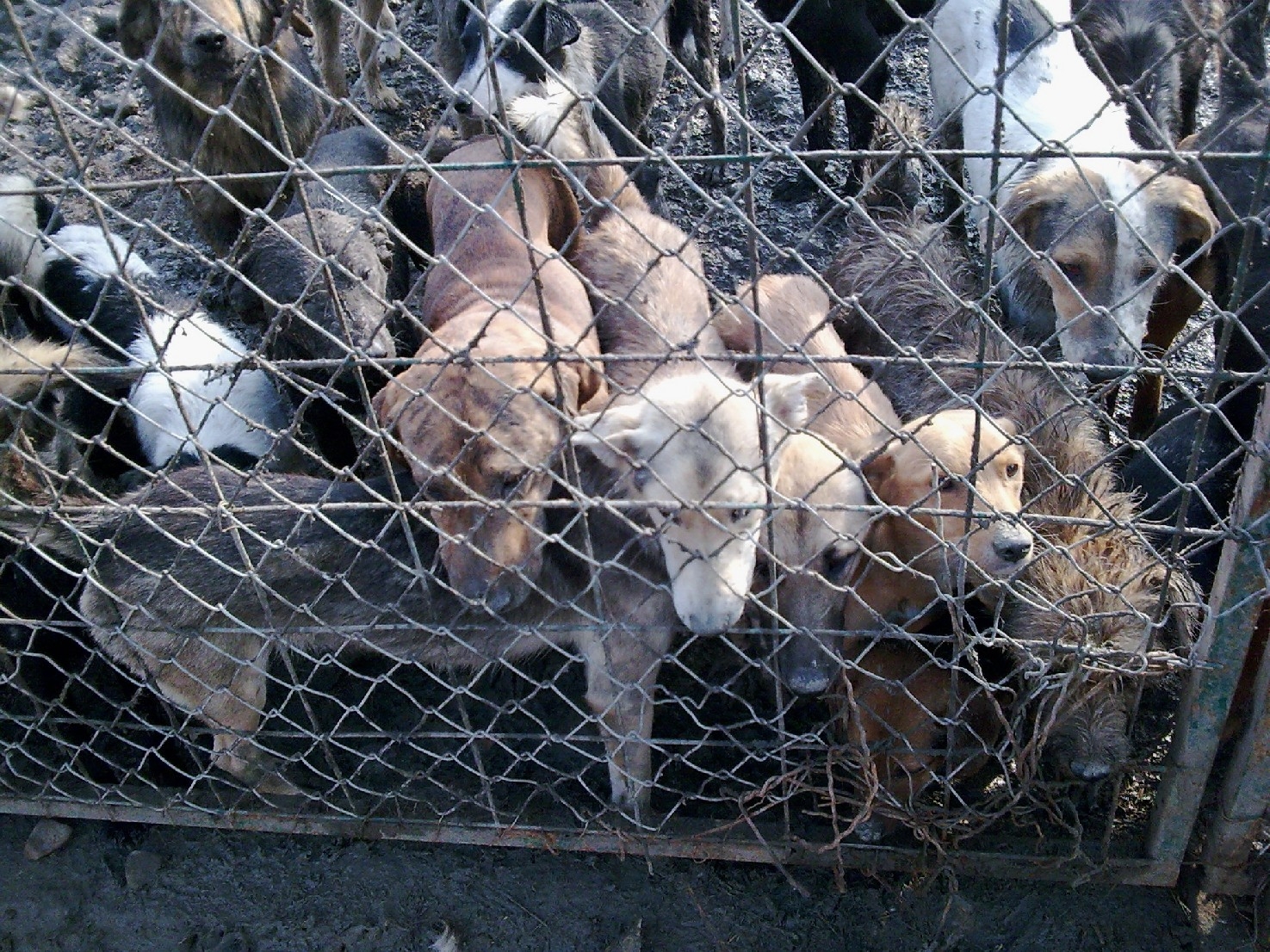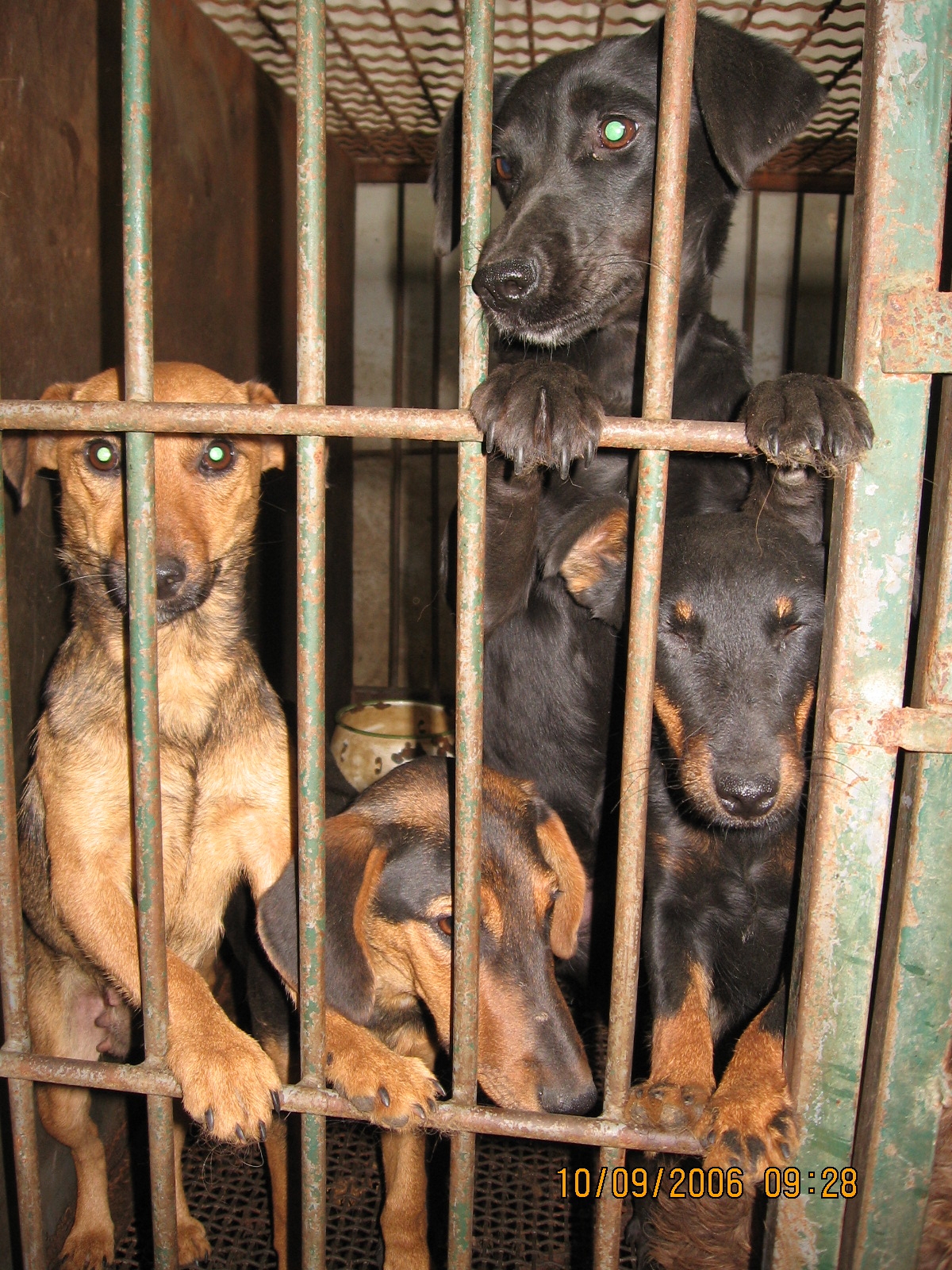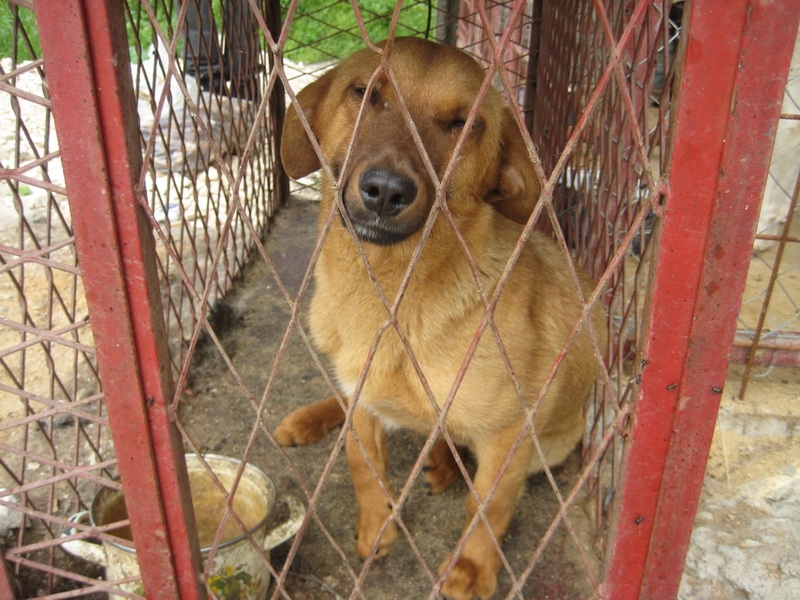

Romania: Delegation of the European Parliament come face to face with the actual reality of the dog shelters in Romania.

EU AW LOGORMNA0001

Delegation of the European Parliament come face to face with the actual reality of the dog shelters in Romania.

English and German text

——————————————————————-

 January 28 – Delegation of the European Parliament to Romania,

face-to-face with the reality of the Dog Shelters owned by City Halls

 After thousands of petitions addressed to the European Parliament from across Europe, which included, in addition to protests against the new law on killing dogs, claims of incidents of abuse against stray dogs and dogs living in deplorable shelter conditions, a delegation of the European Parliament came to Romania to investigate this issue.

 The first visit, on December 4, 2013, was aimed at finding out the opinions of authorities on the situation of the stray dogs in Romania. Thus, during the meetings with representatives ANSVSA (and also with the Mayor of Bucharest), the delegation members were assured, among others, that the law on dog management was a law on “adoption, not on “euthanasia” and the citizens had access to public shelters which were totally transparent and complying with the law!

 On Tuesday, January 28, 2014, the Delegation of the European Parliament consisting of Janusz Wojciechowski, MEP deputy and vice president of the AGRI Committee, Dr. Karolina Tomaszewski , veterinarian and animal welfare consultant, and Magdalena Majerczyk, ECR Political Consultant, returned to Romania in order to inform themselves on the situation directly on site and they also included in their agenda some visits to dog shelters .

 Unfortunately the weather in Romania during the last few days, with heavy snowfall and blizzard, caused the cancellation of some flights, therefore the time available to the delegation was reduced by half a day and only part of their planned agenda was possible; however, their shortened visit did reveal some of the realities of the dog industry.

 The Delegation of the European Parliament was faced with the reality of the dog shelters owned by City Halls.

 At 10:00 a.m., in the public dog shelter located in the village of Saracesti and owned by Slatina City Hall, on whose gate was abusively written “Private Property. Access denied”, there was no caring staff but a gatekeeper who had received orders not to allow anyone to enter.

 To hide what could still be hidden from the European officials, the representatives of the City Hall acted in a more aggravated manner, rather than revealing that the situation behind the locked gates was cruel and illegal. They were embarrassed about sending a representative to the shelter (without whom the entry to the shelter was not allowed). Furthermore, they were embarrassed when I asked if the shelter belonged to the City Hall or was a private shelter. Probably all the interlocutors from the City Hall and the State Patrimony Administration did not know what would be appropriate to answer, so they spoke confusingly and finished with the eternal “I don’ know”.

Finally, we found out from the vice mayor, who was not in a position to say “I don’ know”, that the shelter belonged to Slatina City Hall.

 The dog shelter of Slatina City Hall is managed by the same company, “Iberia Velvet”, the constant partner of the City Hall, charging exorbitant prices settled by Slatina City Hall from the public money.

 However, the “Shelter” which does not meet the minimum legal requirements, where dogs die in starvation, holds a sanitary and veterinary certificate issued by DSVSA (Sanitary- Veterinary and Food Safety Department) of Olt county!

 The lamentable condition of the dogs sheltered there could be deduced even from the gate. Around a special cage where they kept a “protected” purebred dog, the snow was 1 m high and intact, meaning that in the last few days nobody had gone to that dog to feed it.

This is the usual situation if we recall the personal observations and also the statements of those who have visited this “shelter” so far, whereby they noted that, except for exhausted dogs lacking water and food, the cages had nothing, not even water bowls! This cruelty applied to animals, which is shown in statements and photographs, was the reason of the criminal complaint made by FNPA in 2013 against the City Hall and also against Iberia Velvet SRL.

 Moreover, the adoption of a dog from the shelter of Slatina City Hall seems to involve winding steps, without any effective result. In theory, adopting a dog would have been possible if you had first addressed to the City Hall, then to the State Patrimony Administration, where they asked you to fill in a lot of papers, and then you had come to the shelter, accompanied by a representative of the City Hall, to choose a dog.

 The Delegation found that there was a major discrepancy between what the authorities had told them during their first visit and what they found on site during their second visit.

The shelters owned by the City Halls are tightly closed, the animals are in distress and adoptions are made difficult if not impossible.

 The Delegation will prepare a full report on the things observed, which they will submit to the European Parliament and to the European Commission and will also made it public.

 You can find below the letter written by the two MEPs, Janusz Wojciechowski and Andrea Zanoni , containing the conclusions of their first visit from December 4.


Letter MEPs Janusz Wojciechowski, Andrea Zanoni about visit 4 December in Romania (1) 

 Letter MEPs Janusz Wojciechowski, Andrea Zanoni about visit 4 December in Romania (2)Letter MEPs Janusz Wojciechowski, Andrea Zanoni about visit 4 December in Romania (3)

28. Januar – Delegation des Europäischen Parlaments, in Rumänien,

konfrontiert mit der tatsächlichen Lage der Hundelager der Rathäuser

 Infolge abertausender Gesuche, welche dem Europäischen Parlament aus sämtlichen europäischen Ländern geschickt wurden, wodurch, zusätzlich zu den Protesten in Verbindung mit dem neuen Gesetz über die Tötung der Hunden, auch die Misshandlungen der Straßenhunde und der erbarmslose Zustand der Hunde in den Tierheimen der Rathäuser angezeigt wurde, hat eine Delegation des Europäischen Parlaments Rumänien in Verbindung zu diesem Thema besucht.

 Zielsetzung des ersten Besuchs, der am 4. Dezember stattfand, war die Feststellung der Meinungen der Behörden in Zusammenhang mit der Lage der Straßenhunde in Rumänien. Demzufolge wurden die Mitglieder der Delegation im Rahmen der Gespräche mit den Vertretern der Nationalen Sanitär-, Veterinär- und Lebensmittelsicherheitsbehörde – ANSVSA (aber auch mit dem Bürgermeister der Großstadt Bukarest) unter anderem versichert, dass das Gesetz über die Verwaltung der Hunde die “Adoption” und nicht die “Euthanasie” bezweckt, dass die Einwohner Zugang zu den öffentlichen Heimen haben, dass diese vollständig transparent sind und, dass selbstverständlich die gesetzlichen Voraussetzungen eingehalten werden!

 Dienstag, der 28. Januar, hat die Delegation des Europäischen Parlaments, bestehend aus Janusz WOJCIECHOWSKI, europäischer Abgeordneter, stellvertretender Vorsitzender des AGRI – Ausschusses, Dr. Karolina TOMASZEWSKA, Tierarzt, Berater für das Wohlbefinden der Tiere, und Magdalena MAJERCZYK, politischer Berater im Rahmen der ECR, erneut Rumänien besucht, um unmittelbar Informationen vor Ort zu erfahren, wobei auf der Agenda in diesem Zusammenhang auch Tierheimbesuche standen.

 Leider hat die Lage in Rumänien in den letzten Tagen, als das Land unter Schnee und Sturm vergraben war, zu Flugausfällen geführt. Aus diesem Grund hatte die Delegation nur einen halben Tag zur Verfügung, so dass nur ein Teil des Programms umgesetzt wurde. Dennoch wurde bei diesem Anlass ein Teil der Realität in der Hundeindustrie festgestellt.

 Die Delegation des Europäischen Parlaments konfrontiert mit der Realität in den Tierheimen der Rathäuser

 10:00 Uhr, in öffentlichem Hundeheim des Rathauses Slatina, gelegen im Dorf Saracesti, auf dessen Tor abusiv „Privateigentum. Zugang verboten” stand, waren keine Betreuer, sondern nur ein Wächter, der beauftragt war, NIEMANDEM den Zugang zu erlauben, anwesend.

 Um vor den europäischen Beamten zu verbergen, was noch verborgen werden kann, haben die Vertreter des Rathauses die Lage verschlechtert und erneut nachgewiesen, dass hinter den gesperrten Toren die Situation gesetzwidrig und grausam ist. Sie waren nicht imstande, einen Vertreter zum Tierheim zu schicken (nur in seiner Anwesenheit war der Zugang zum Heim möglich). Sie waren nicht imstande, eine eindeutige Antwort zu geben, als wir gefragt haben, oder das Heim dem Rathaus gehört oder, ob dieses ein privates Heim ist. Sämtliche Vertreter des Rathauses und der Vermögensverwaltung wussten nicht, welche die beste Antwort dazu war, so dass sie stotterten und letztendlich zur ewigen Antwort „ich weiß nicht” kamen. Letztendlich haben wir vom stellvertretenden Bürgermeister erfahren, dass das Heim dem Rathaus gehört, wobei dieser nicht mehr sagen konnte, dass ihm die Antwort auf diese Frage nicht bekannt ist.

Das Hundeheim des Rathauses Slatina wird durch das gleiche Unternehmen – Iberia Velvet SRL, das als stabiler Partner des Rathauses auch in anderen Bereichen tätig ist und übermäßige Kosten, welche durch das Rathaus aus den öffentlichen Geldern abrechnet, in Rechnung stellt, betrieben.

Das „Heim”, in dem die Hunde vor Hunger sterben und die minimalen Gesetzvorschriften nicht eingehalten werden, wurde durch die Sanitär-, Veterinär- und Lebensmittelsicherheitsbehörde des Kreises Olt aus sanitär-veterinärem Standpunkt zugelassen!

 Der erbarmslose Zustand der Hunde in diesem Heim konnte auch vom Zaun festgestellt werden. Der 1 Meter hohe Schnee um einen Sonderstand, wo ein „geschützter” Rassenhund war, wies nach, dass niemand darin in den letzten Tagen war, um den Hund zu füttern. Unter Berücksichtigung der persönlichen Feststellungen, aber auch aufgrund der Erklärungen der Besucher dieses „Heimes” im Laufe der Zeit, woraus hervorgeht, dass die Hunde abgeschwächt sind, ohne Wasser und Futter leben, wobei auch keine (Wasser-) Näpfe vorhanden sind, ist eindeutig klar, dass diese Lage ganz üblich ist! All diese Grausamkeiten gegen die Tiere, nachgewiesen durch Erklärungen und Fotos, stellten die Grundlage für die Strafklage, welche durch FNPA im 2013 gegen das Rathaus und das Unternehmen Iberia Velvet eingereicht wurde, dar.

 Auch die Adoption eines Hundes aus dem Tierheim des Rathauses Slatina scheint ein besonders schwieriges Verfahren, ohne konkrete Ergebnisse, zu sein. Theoretisch wäre die Adoption eines Hundes nach einem ersten Besuch beim Rathaus Slatina, danach bei der Abteilung für Vermögensverwaltung, gefolgt durch das Ausfüllen der notwendigen Unterlagen und durch Rückkehr zum Heim mit einem Vertreter des Rathauses und Auswahl eines Hundes, möglich.

 Die Schlussfolgerung der Delegation ist, dass ein wesentlicher Unterschied zwischen den mündlichen Erklärungen der Behörden im Rahmen des ersten Besuchs und den Feststellungen aufgrund der zwei Besuche vor Ort vorhanden ist. Die Tierheime der Rathäser sind hermetisch verschlossen, die Tiere leiden und die Adoptionen sind fast unmöglich.

 Die Delegation wird einen vollständigen Bericht mit den entsprechenden Schlussfolgerungen erstellen, wobei dieser Bericht dem Europäischen Parlament, der Europäischen Kommission und der Öffentlichkeit vorgelegt wird.

Als Anlage der Brief der zwei Europaabgeordneten – Janusz WOJCIECHOWSKI und Andrea ZANONI, in Zusammenhang mit den Schlussfolgerungen des ersten Besuchs vom 4. Dezember.


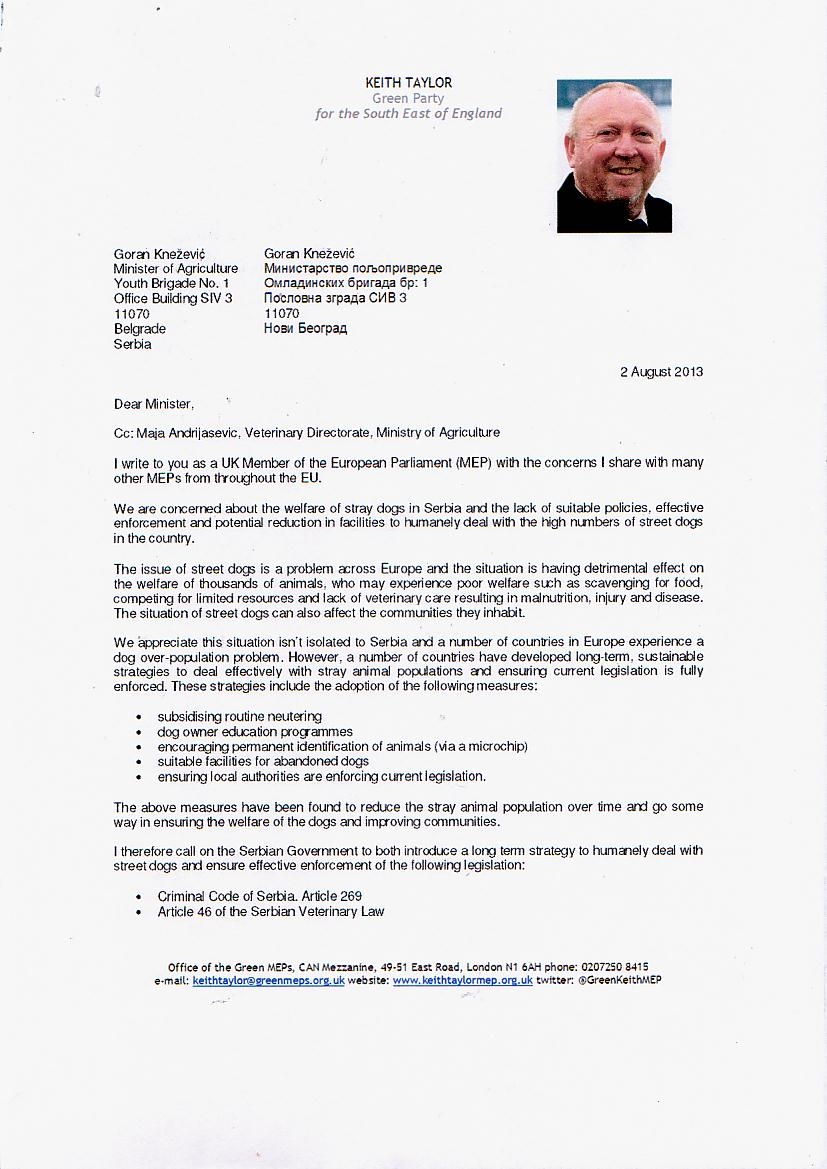
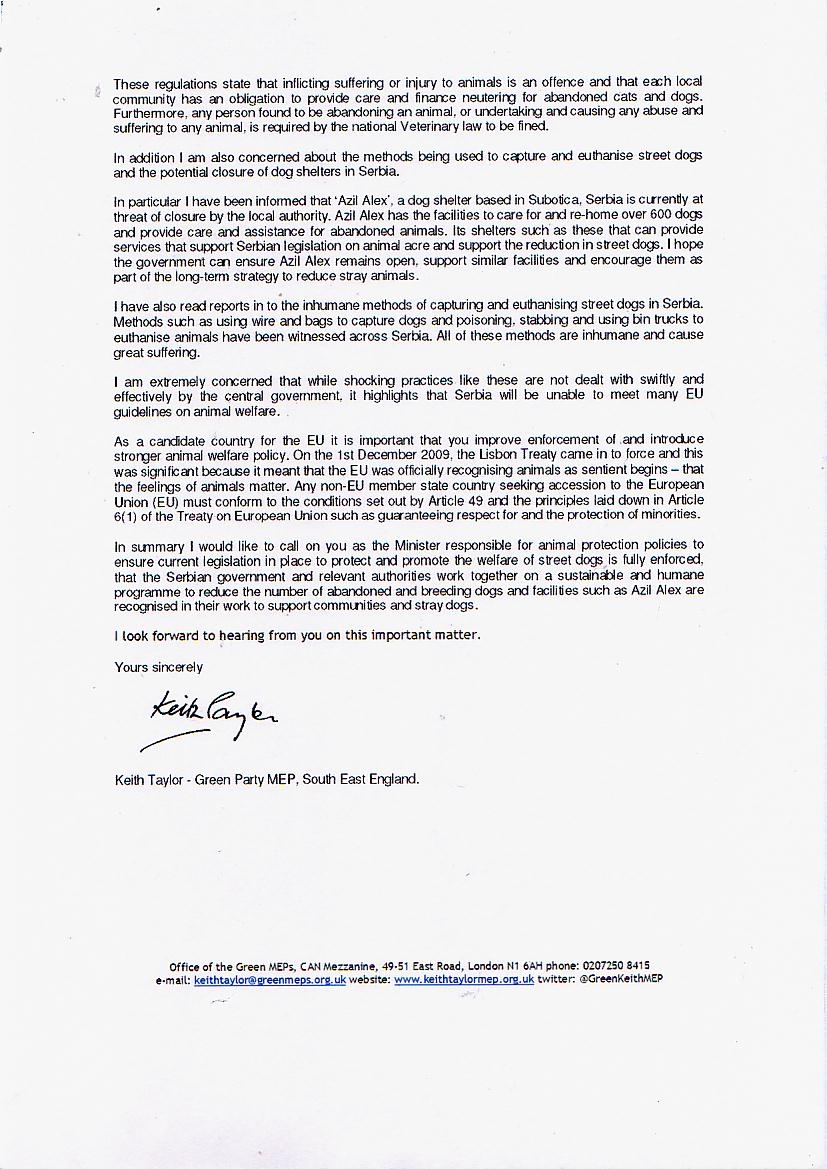
16/10/13: With NO Response From the Serbian Government To His Letter of 2/8/13; (UK Green Party) MEP Mr. Taylor Continues To Work With SAV and Serbian Campaigners For Further Action Helping Stray Animals in Serbia.

Serbian  Flag

Please read our previous post on the dedicated work of Mr Keith Taylor MEP; for South East England,  who has worked with SAV and Serbian campaigners to obtain further information about the situation for Serbian stray animals. – Read our post of 7th August by clicking on the following link:

https://serbiananimalsvoice.com/2013/08/07/england-uk-sav-works-with-very-supportive-english-green-party-mep-to-ask-serbian-authorities-about-serbian-animal-welfare-especially-shelter-azil-alex/ 

A copy of the letter sent by Keith to the Serbian government is provided below.  You can also see a copy by accessing Keith’s web site which can be found via the following;

http://www.keithtaylormep.org.uk/2013/08/08/keith-calls-for-action-on-street-dogs-in-serbia/ 

http://www.keithtaylormep.org.uk/wp-content/uploads/Letter-to-Serbian-Agriculture-Minister_Dog-shelters_01082013.pdf 

Keith Taylor MEP letter to Serbian government Pg 1Keith Taylor MEP letter to Serbian government Pg 2

Keith says – “As a candidate country for the EU I am urging the Serbian government to improve enforcement of and introduce stronger animal welfare policy.” –

See more at: http://www.keithtaylormep.org.uk/2013/08/08/keith-calls-for-action-on-street-dogs-in-serbia/#sthash.rJv2bgut.dpuf 

Keith’s letter to the Serbian government was sent on 2nd August 2013.  Over the past few weeks we have been corresponding with Keith’s team regarding further news and updates.  We can confirm that as of 16th October 2013 (16/10/13), Mr Taylor has still not had any response from the Serbian authorities regarding his letter of 2nd August.

As a candidate country seeking membership of the EU, failing to respond to the documented requests of an MEP in the EU Parliament for well over 2 months is not exactly the best way forward for the Serbian governmentPossibly it is that know, like us, that they are breaking the Serbian laws, but they do not wish to show this in a response to Mr. Taylor; and so they refuse to respond.

With all our recent campaign experiences within Romania (already an EU member state); we are continuing to promoter the fact that like Romania, Serbia should not be allowed to join the EU until is has become compliant with the EU membership requirements and shown full compliance with its own (Serbian) legal legislation – the rule of law.  Proving that this is being complied with is a fundamental requirement for any nation wishing to obtain EU accession (membership).

As Romania is also corrupt with its political system, we have no hesitation in calling for a full EU investigation into the current Romanian situation regarding where all the EU money for stray dog and cat management has gone.  We are happy to call for Romania to be removed from the EU is its government do not change and invest the money provided by the EU into animal population management rather than into the back pockets of politicians who then pass laws which allows a frenzied mass killing of all stray animals in the country.

If necessary, we will work with EU MEP’s to ask for a full review to be undertaken regarding the situation in Serbia prior to any EU accession.  As our good friends and fellow campaigners in Serbia are informing us, there is no change to the way stray animals are being treated by the government, despite there being laws which should provide them with protection.

Animals caught by shinters are being kept for just a short time in non adequate city ‘shelters’; which are anything but in reality.  There, animals often kill each other.  Animals are killed in the shelters by the use of T-61 which causes respiratory paralysis – the animals suffocate to death as they cannot breathe.  Public garbage firms continue to take money from the public taxes for catching stray animals – they kill them with no management or population control policy.  It is a very big and profitable business for some to be in, and this includes politicians – who wish to pocket money for animal management programmes and just keep on killing which is now against Serbian national legislation.

There are 25 regions in Serbia each with republic veterinary departments.  They all work on behalf of the Ministry of Agriculture.  Not one of these 25 regions in Serbia has any lawful programme for the humane control and population management of stray dog and cat populations.  Government corruption overrides the welfare of animals as we have seen in some other EU states.  At present, Serbian campaigners are waiting to obtain a verdict from the Constitutional court re the matter of Subotica’s (one of the Serbian regions) programme, or non existent programme for stray animal management.  Any non existent programme is in direct violation of the existing Serbian legislation for stray animal management – Articles 7 and 15 of the Serbian animal welfare laws.

We will inform you of further news when it happens.

Links to just some of our recent past Romanian / EU campaign:

https://serbiananimalsvoice.com/2013/09/30/romania-30913-get-romania-out-of-the-eu-video-sample-letter-to-copy-and-send-to-the-european-parliament-additional-petition-at-end/ 

https://serbiananimalsvoice.com/2013/10/01/romania-11013-sample-letter-to-send-to-euro-contacts-and-lots-more/

https://serbiananimalsvoice.com/2013/10/12/swedish-mep-carl-schlyter-honorary-president-of-the-eu-animal-welfare-intergoup-talks-about-mass-dog-killings-in-romania/

https://serbiananimalsvoice.com/2013/10/07/eu-romania-this-woman-is-an-insult-to-the-name-eu-animal-welfare-intergroup-we-want-her-out/

As we say, welfare campaigners in Serbia have now written to the Ministry of Agriculture requesting that they be sent a full listing of / documentation associated with all cat and dogs shelters within Serbia; and as with the requirements of the new legislation, information of the condition of each of these shelters.

It will be very interesting to see what, if any, response, is given back to the campaigners by the Ministry.

https://serbiananimalsvoice.com/2013/08/27/serbia-27813-campaigners-now-ask-agriculture-ministry-for-full-listing-of-serbian-cat-and-dog-shelters-in-accordance-with-the-law/

In the meantime, we are (as of 16/10/13) now moving further with MEP Mr. Taylor, providing him with updates of the current situation in Serbia.  Ashe has had no response from the Serbian government in two and one half months to his original letter, we can thus say that the Serbian government must have something to hide – hence we consider they should not be allowed EU membership until they come ‘fully clean’ on their approach to stray animal management.

Mr. Talor MEP will with our help, will be further writing to the Serbian government on this issue. 

This time, Mr. Taylor will be able to give representation and names of many other MEP’s in the EU who now want to see exactly what is going on for stray animals in Serbia.  We will continue to work with our elected politicians in the EU to find out what we can about the full stray animal situation within Serbia.  At some point, the Serbian government will have to respond or face pressure to keep them out of the EU.  The choice is theirs.

SAV have an obligation to expose corrupt governments who are not protecting stray animals; be it in Serbia, Romania, or anywhere else where we can obtain information.

Mr. Taylor MEP is today (16/10/13) being provided with additional information of the current Serbian government inactivity; something he now knows well due to not having any response to his official letter of 2nd August 2013.

We wish to thank Keith for all his hard work on the issue of Serbian stray animals.

As Serbia is not currently an EU member state, Keith does not have to work on this issue; but he does, as like us, he wishes to see a fair deal for stray animals wherever they may live.

Thank you Keith !

smed5

Diana2

Netherlands: Excellent Investigation Reports Into Chicken Welfare During Loading and Transport By ‘Eyes on Animals’ (NL).

Netherlands

Great friend Lesley, Director at ‘Eyes on Animals’ (EoA) in the Netherlands – http://www.eyesonanimals.com/ was recently invited to Dublin by the EU Commission regarding welfare problems for chickens during transport.

Here is the link to the EoA web site report on this as well as a summary of the event:

http://www.eyesonanimals.com/index.php?option=com_content&view=category&layout=blog&id=135&Itemid=285&lang=en_US.utf8%2C+en_US.UT&limitstart=3

Eyes on Animals was invited by the EU Commission to present their findings on chicken-welfare problems during transport, and possible solutions, at their Congress held in Dublin.

The focus of the meeting was to show enforcement successes and failures of the EC legislation protecting animals during transport. EoA showed photos and short videos illustrating how the design of the transport containers for layers and broilers were often not within the scope of the EC 1/2005 requirements.

EoA also gave examples of how improvements to the design could be put into place, and talked about the workgroup they had formed in Benelux with various stakeholders open to the idea of taking action. EoA nevertheless made it clear that proper enforcement by the authorities is necessary to put an end to the 2% Dead On Arrival rate tolerated so far in the poultry world (with this not taking into account the other birds arriving alive but with serious fractures to their wings and legs).

Over two hundred participants were at the Congress- from Chief Veterinarian Officers to highway-police to industry stakeholders. Several welfare organizations were also present and supported the argument Eyes on Animals made- that there is still lots to do to create an environment where the rules are clearly set for everyone, so the welfare of the animals can be seriously protected.

EoA received a lot of positive feedback from people throughout Europe – it was clear that many people agree that the ways we collect and transport poultry are in need of reforms.

EoA have produced two excellent investigation reports regarding chicken welfare investigations during transport – it is recommended that they be reviewed.

One investigation is on the loading of spent hens into transport crates at a farm in the Netherlands, destined for a slaughterhouse in Belgium.

Link:

09.04.2013_Loading of spent hens_NL 

The other is a report on the transport of spent-breeding hens and roosters to a slaughterhouse in Poland.

Link:

Trailing of spent breeding hens and roosters from the Netherlands to a Polish slaughterhouse


If you are able, please help the continuing investigative work of EoA by giving a donation.  Click on the following:

http://www.eyesonanimals.com/index.php?option=com_content&view=article&id=371&Itemid=312&lang=en_US.utf8%2C+en_US.UT

For much more on the investigation work of EoA both on the road, at markets and in slaughterhouses, please click on:

http://www.eyesonanimals.com/index.php?option=com_content&view=category&layout=blog&id=135&Itemid=285&lang=en_US.utf8%2C+en_US.UT

Thanks – Mark – SAV.


Serbia: Constitutional Court Declares That Subotica City Is Killing Dogs and Cats Illegally – Setting A Possible Change Across All Cities In Serbia.

Campaigners in Serbia have very recently been informed of some very good news.

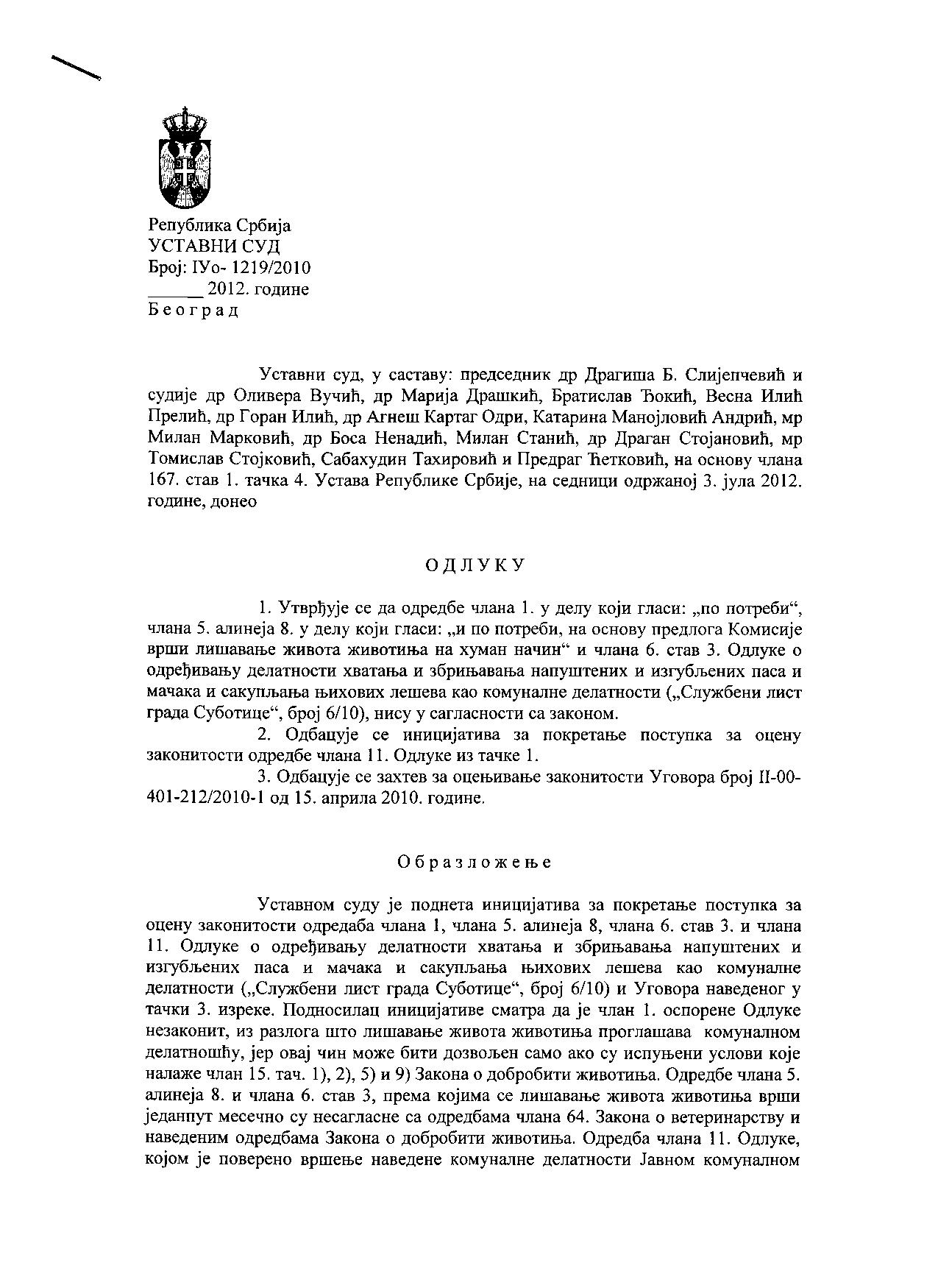
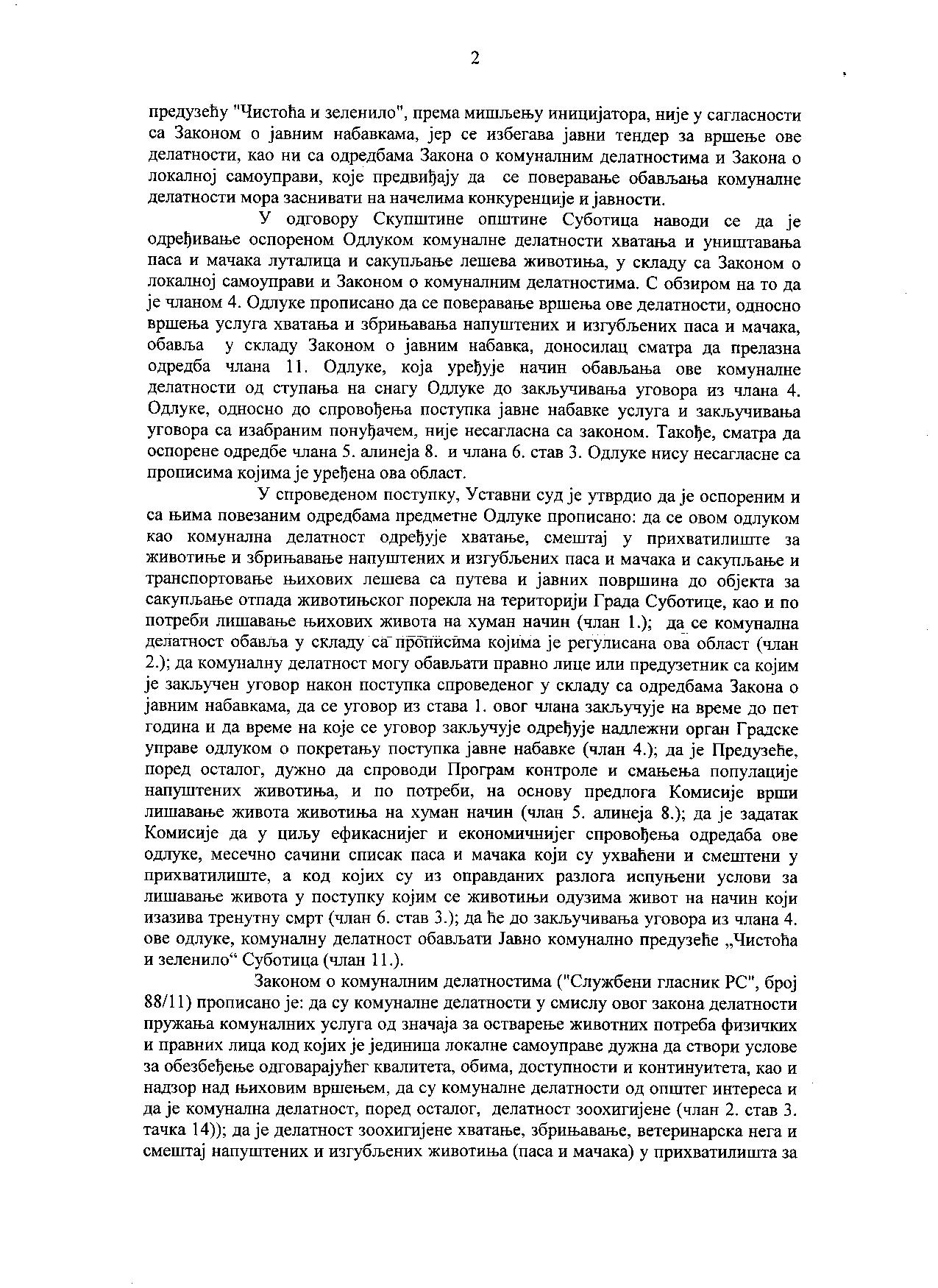
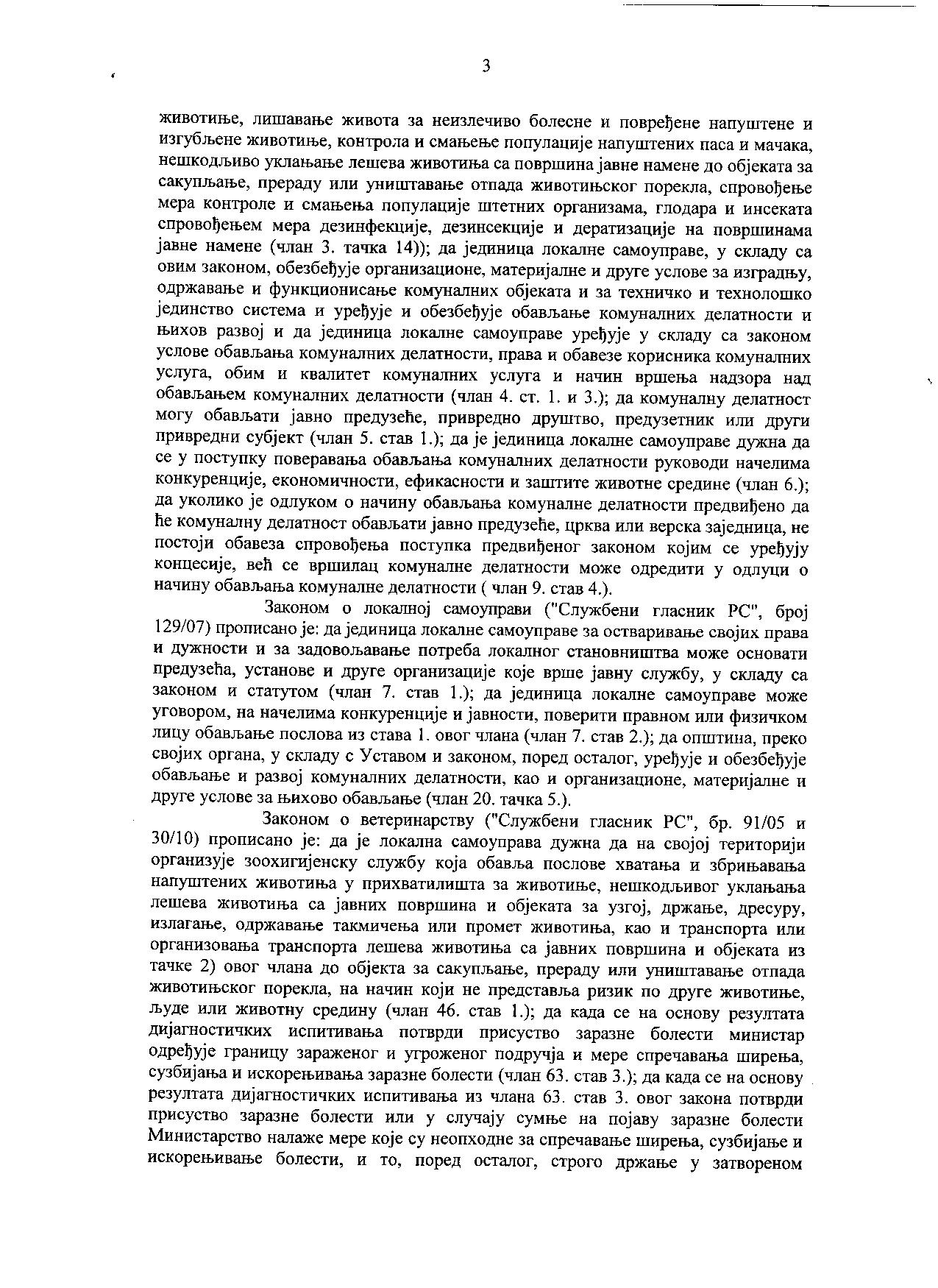
The Constitutional Court of the Republic of Serbia – comprising 15 judges, made a verdict that the 3. Community document of Subotica (town in Serbia) regarding the matter of the treatment  stray dogs/cats is illegal; it is unlawful and it must be changed.

This is what The Constitutional Court of Serbia has now demanded.

It is the same in all 170 cities in Serbia; but in every individual case for each and every city, it is necessary that the information be supplied to the Constitutional Court.  If this is undertaken, then changes will have to be made for stray dogs and cats in every city.

What this basically means is, that the Subotica city government,  in the period covering 2003 to the present day, some 9 years had  been undertaking illegal actions.

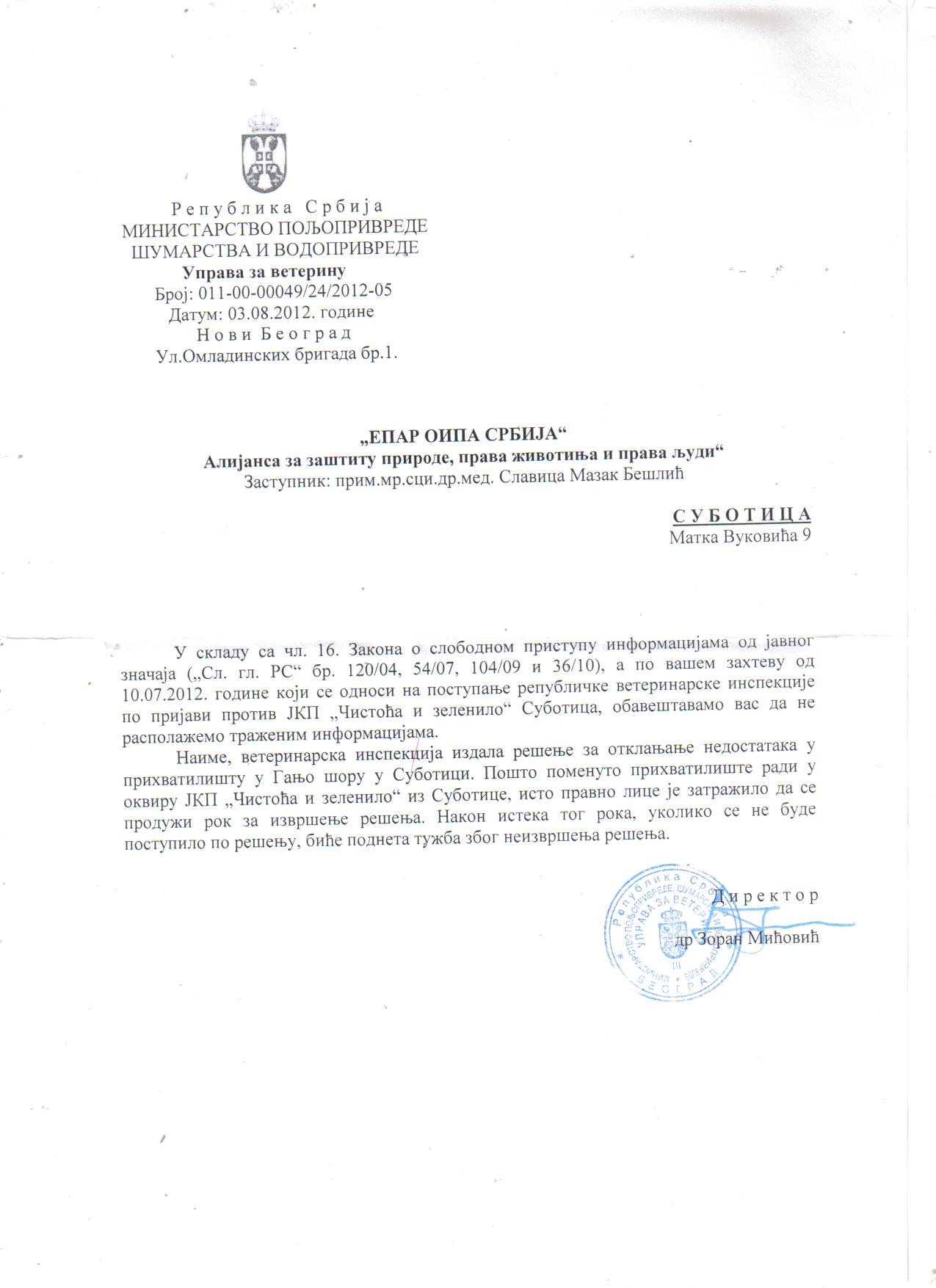
Slavica, on behalf of EPAR, made a request to the Constitutional Court saying that in Subotica city, the city is acting on unlawful  public documents relating to the treatment  of stray dogs and cats.

As we understand it, the regulations made by the local government  (Subotica city) must be in agreement to the legislations made by the Parliament of Serbia.

The Constitutional Court has declared for the third time that the methods used by the city for the killing of dogs and cats is illegal; and that the methods used for numbers (population) control is illegal, because euthanasia should only be used for animals which have an incurable illness or which are in the final stages of any disease that cannot be cured.

The following shows the letter sent by Slavica to the Constitutional Court regarding the existing policy of animal control in Subotica, followed by the letter from the Constitutional Court (6 pages) declaring the view of the court, that Subotica is acting unlawfully at this current time.

This is excellent news, and now gives every city in Serbia the opportunity to make contact with the Serbian Constitutional Court to present them with the information on how dogs and cats are being treated in (their) city.  Who knows, there may be 170 cities throughout Serbia who are currently killing dogs and cats in an unlawful way; a way not upheld by the laws of Serbia.

Congratulations to Slavica for leading the way with the issues in Subotica city.

Click on the following link to see the letter sent by Slavica:

EPAR oipa letter
Below is the formal response letter of the Constitutional Court of the Republic of Serbia:

Serbia: Investigation Exposes Veterinarian Paid 1.5 Million Dinars for Killing 1,148 Dogs in Just ONE City – Nis. No Wonder There is No Enthusiasm for a ‘No Kill’ Strategy !


SAV are pleased to inform of a major new investigation which has been undertaken by Serbian campaigners.

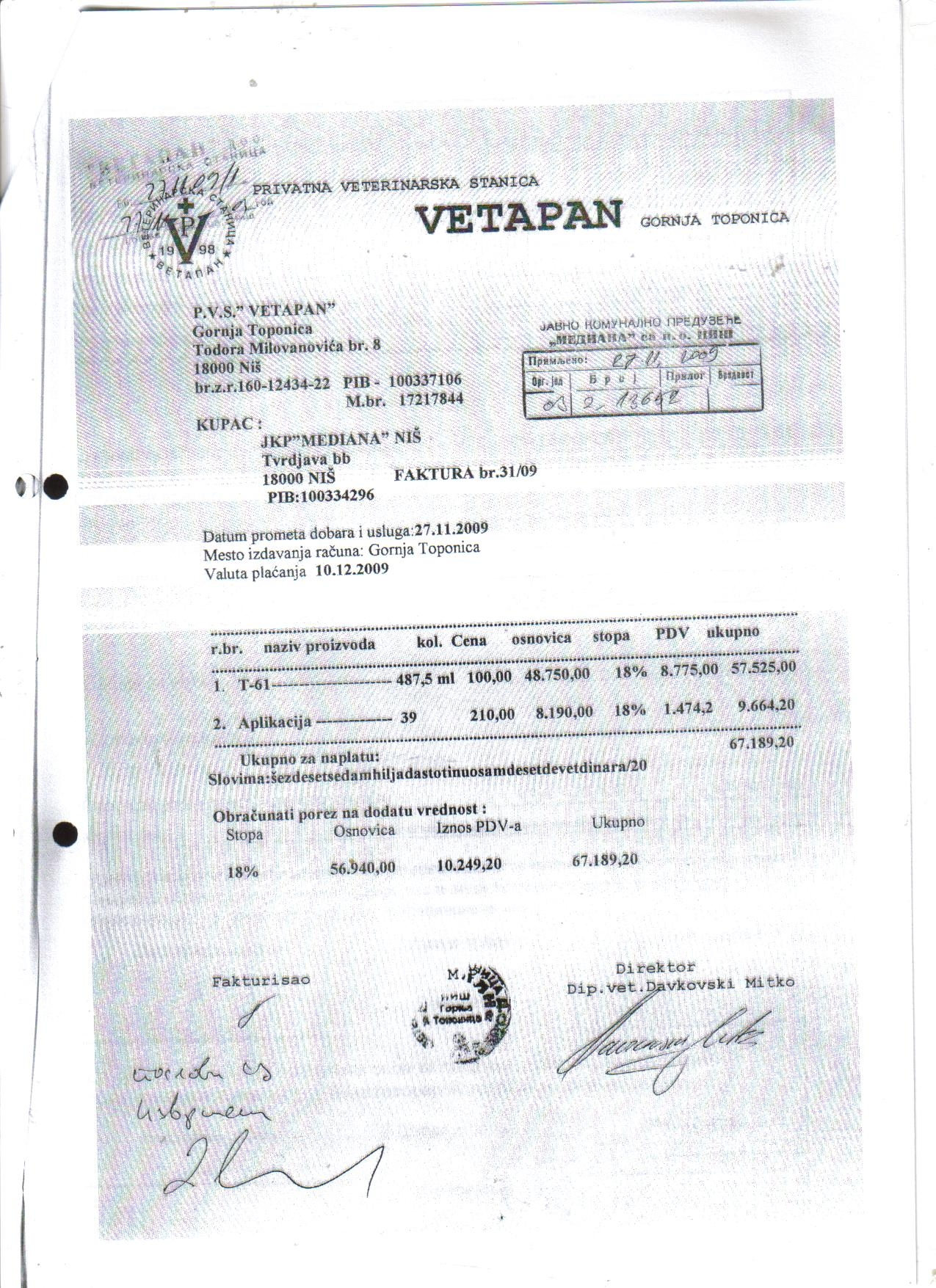
EPAR have now sent criminal charges to the Public Attorney of Nis city, to the police of Nis and also to the republic veterinary inspectors relating to the illegal activities of a city vet named ‘Davkovsi’ and also those of city garbage firm JKP`Medijana`.  Both the veterinarian Davkovsi’ and also JKP`Medijana’ have acted in direct opposition to the Constitutional laws of the Republic of Serbia.

They have been killing animals in Nis city in direct opposition to the veterinary laws of Serbia.

Now we have documented proof to support what we say, and this data is provided below.

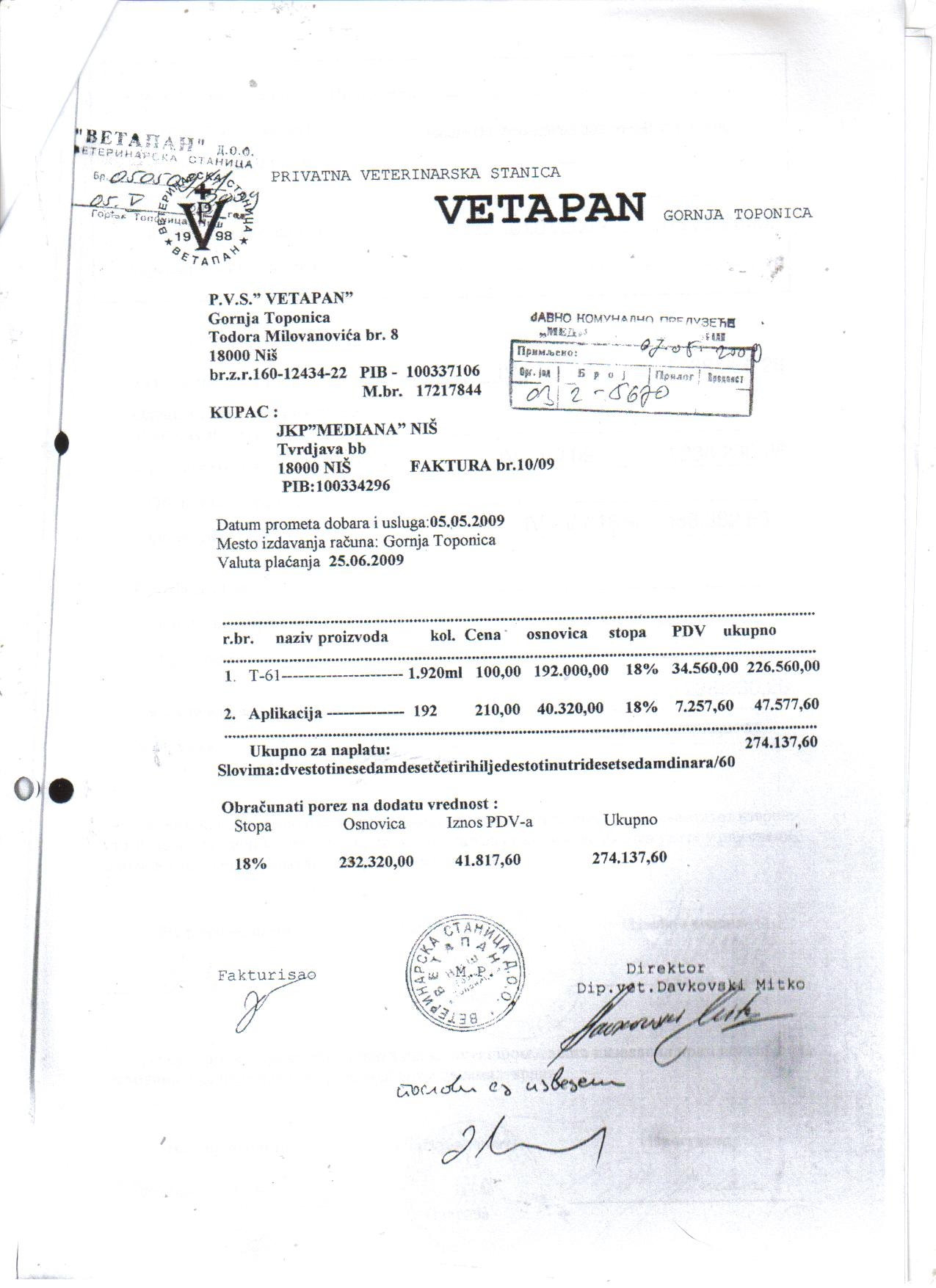
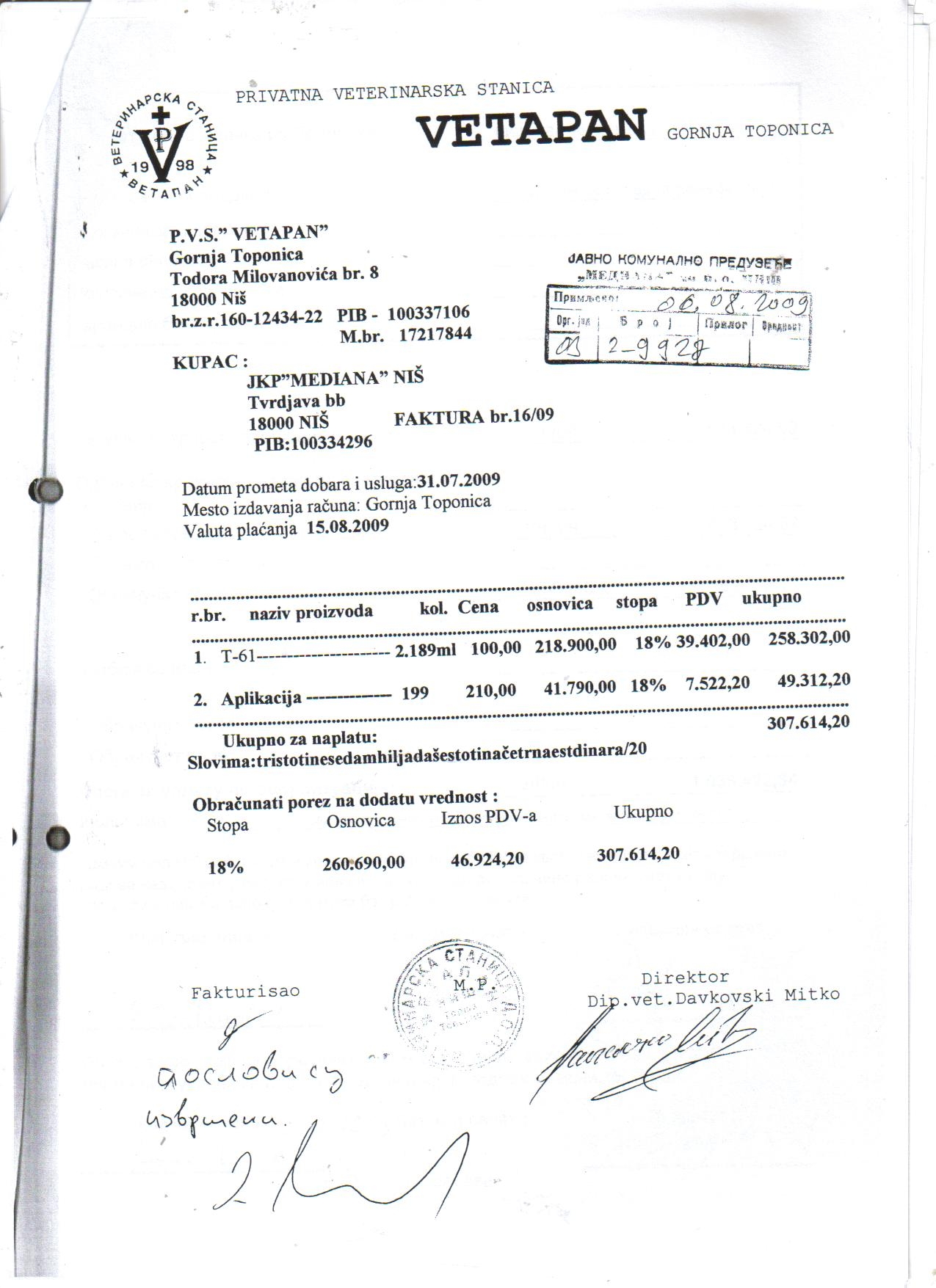
The following wording is used on the documentation samples given.  An English translation of terms used on the documentation are as follows:

1.      Shows the amount of T-61 which has been purchased to kill the dogs.

2.      ‘Aplikaciaja’ means the number of dogs that have been killed.

3.      `Ukupno za naplatu` is the cost that veterinarian Davkovsi’ charges for him to kill the animals.  It should be noted that this continues for months, as can be seen in the investigation paperwork following.

All the costs detailed in the paperwork shown here have been paid to vet Davkovsi’ by Nis city garbage firm JKP`Medijana`. 


Ref to FigureShown below DatesOf killingsBy Veterinarian Davkovsi’ Ukupno zanaplatu – Veterinary Cost per monthly kill Aplikaciaja – Number of Dogs Killed  T-61 used for killings Exchange: Dinar=Dollar/Pound/Euro
1 31/05/09 –25/06/09 231,270.00Dinars 187 1,920ml $ 2,855.9855£ 1,785.9956

E 2,042.8349 

2 05/05/09 –25/06/09 232,320.00Dinars 192 1,920ml $ 2,868.9521£ 1,794.1042

E 2,052.1097 

3 30/06/09 –25/07/09 164,990.00Dinars 119 1,400ml $ 2,037.4845£ 1,273.9865

E 1,457.3759 

4 31/07/09 –15/08/08 260,690.00Dinars 199 2,189ml $ 3,219.2972£ 2,012.9419

E 2,302.7052 

5 31/08/09 –25/09/09 171,610.00Dinars 131 1,441ml $ 2,119.2358£ 1,325.1022

E 1,515.8512 

6 30/09/09 –25/10/09 180,780.00Dinars 138 1,518ml $ 2,232.4774£ 1,395.9092

E 1,596.8508 

7 31/10/09 –25/11/09 187,330.00Dinars 143 1,573ml $ 2,313.3643£ 1,446.4856

E 1,654.71 

8 27/11/09 –10/12/09 56,940.00 Dinars 39 487.5ml $ 703.1600£ 439.6674

E 502.9577 

TOTALS   1,485,930.00 Dinars 1,148 Dogs killed   $ 18,346 £ 11,469

 E 13,119 E = Euros


Exchange Rate:

1,000.00 RSDinars = 12.3491 USD ($)

1,000.00 RSDinars = 7.72256 GBP (£)

1,000.00 RSDinars = 8.83312 EUR (Euros)

http://www.xe.com/ucc/convert.cgi?Amount=1%2C000&From=RSD&To=GBP&image.x=43&image.y=14  – 16 and 17/10/09

Rather than paying a veterinarian to undertake the killing of 1,148 dogs during 2009, we suggest that Nis city would have been much wiser if they had invested the same money into a program of animal sterilisation.  The current rate for male (dog) sterilisation is around 1,200 – 1,800 dinars.  Sterilisation of a female (bitch) is approximately 3,500 – 4,000 dinars.  Using the top rate figure in each case, if the same money paid to the vet for killing had been put into stray animal sterilisation, then approximately

945 MALES or 425 FEMALE dogs could have been sterilised.

The top end figures have been used here, but for mass numbers such as this, actual costs could have been reduced even more.  We suggest that around 1,000 male dogs or alternatively, 500 female dogs could have been sterilised for the same money paid to vet Davkovski for the killing of 1,148 dogs during 2009.

But further, we suggest that actually addressing the ‘problem’ of stray animal numbers in Nis city through a sterilisation programme is not to either the authorities or the vets benefit.  They need to rob the city taxpayers of money continually whilst making themselves look as if they are constantly dealing with the problem of stray animal numbers.  When you are a vet and you are being paid over one and a half million dinars every year to ‘deal’ with (ie. Kill) unwanted stray animals, why would you support an alternative scheme which really addresses the numbers and works towards a long term numbers reduction programme ?

The answer is that some vets and some of the city authorities make lots of money out of continually killing stray animals.  It is NOT in their financial interests to look at alternative methods to reduce animal numbers long term or to save the city taxpayers money by investing into such schemes as sterilisation.

The Veterinarian Oath:

“Being admitted to the profession of veterinary medicine, I solemnly swear to use my scientific knowledge and skills for the benefit of society through the protection of animal health, and to adhere to a code of conduct that ensures the relief of animal suffering,”

So much for veterinary oaths in Serbia !!!

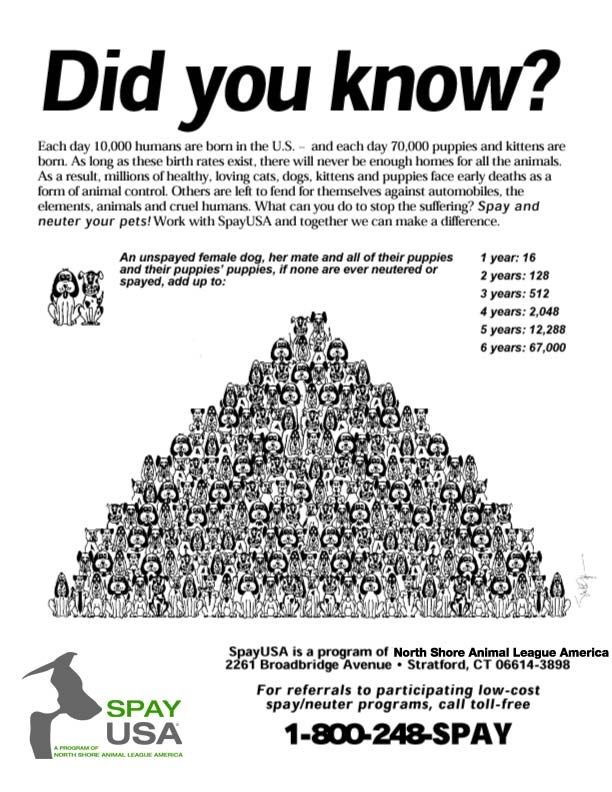
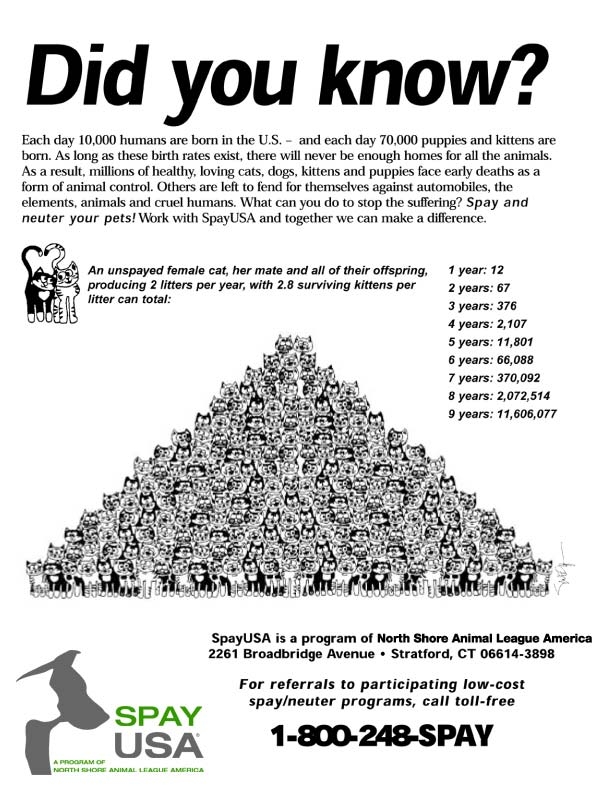
Food for thought – From data provided by ‘SPAY USA’ we have the following:

One unspayed dog and her offspring can lead to 67,000 dogs in six years.

One unspayed cat and her offspring can produce 400,000 cats in seven years.

And so by putting taxpayers money into a city sterilisation scheme rather than a vets pocket, 945 MALES or 425 FEMALE dogs could have been sterilised in Nis city for the money paid to just one vet in 2009 to kill 1,148 dogs in Nis city.

Is this Nis City taxpayers money well spent ? – we suggest it is probably NOT !.

Further to the above cost table, despite being ordered to provide cost data evidence by the legal Commissioner, JKP`Medijana` have still not provided their information for the periods covering February to April 2009.  The costs associated with these months has still not been seen.

Serbian campaigners have undertaken obtaining all the information provided here through the correct and legal requirements of the Serbian constitution.  Information which they have a right to request and a right to be given.  JKP`Medijana` appear to be the people who are not now providing all the data / information that they have been ordered to.  Why is this we ask ? – have they something to hide ? – has the time now arrived when the actual financial costs of sticking to a killing programme for the city strays rather than investing into a long term and effective sterilisation programme now coming to the surface for everyone to see ? – including the money being made by some institutions for retaining their ‘kill’ and no alternative policy ?

The animals which have been killed over the years by the financial lust of some operators can never be returned.  They are unfortunately a part of a system in history which places money before the retention of life. 

We trust that this expose will contribute to showing the system operated in some Serbian cities and that most importantly, the taxpaying general public will learn from it; and learn that their money should be invested into ‘No Kill’ sterilisation programmes for strays; including the establishment of long term shelters for strays, as required by the (Serbian) law.

This information will be provided to the EU Enlargement Commission asking them to take account of the data provided.  We trust that SAV EU supporters will copy and send this post link to their MEP’s in order that they can understand more about what happens in Serbian politics.

Finally, we understand that veterinarian Davkovski  who has undertaken all these animal killings is a (Serbian) Democracy Party member.  His brother who we also understand is a veterinarian, is the chair of some authorities in the Nis municipality.

Veterinarian Davkovski is also involved with the catching and killing of many animals in cities outside of Nis also.  It would appear that this is quite a lucrative business for him.  Negotin city is one such place, where we understand that more than 10,000 Dinars have been paid for just one days work catching and killing strays.  It is alleged that veterinarian Davkovski said that strays had been returned to the streets, but when documented proof about the microchip numbers of these returned to street animals in addition to further information about them, nothing could be provided.

Only one conclusion can be drawn from this; that is that the very lucrative killing of stray animals continues throughout many Serbian towns and cities.  A business which is very lucrative to some sectors of the veterinary profession.

Now what was the wording of that veterinary oath ? :

“I solemnly swear to use my scientific knowledge and skills for the benefit of society through the protection of animal health, and to adhere to a code of conduct that ensures the relief of animal suffering

……….. and pigs might fly !!!

Reference Data:

The Veterinary Law – Article 168 and 46“The kiling of strays is forbidden – they should be provided with care and not killed”.

Campaigners have now heard from the (Constitutional) Court in writing, and they say that no analysis of the case is necessary for Pravilnik 29/94 as it has been replaced by the new Veterinary Law Article 168 (02/10/2005).  This is exactly what the campaigners had said, ie. that the old ‘underlaw’ (extra law) of Pravilnik 29/94 was still being used when it fact it has been overwritten by the new Veterinary Law Article 168 of 02/10/2005.

In addition, Article 46 of the new Veterinary Law (02/10/2005) states that the killing of stray cats and dogs is forbidden and that instead they should be provided with care.

In effect, from 02/10/2005 under the Serbian Constitutional (law) Court, animals should be provided with care and not be killed.

Full Article: 

https://serbiananimalsvoice.wordpress.com/2010/01/25/serbia-constitutional-court-of-serbia-says-that-the-killing-of-stray-dogs-and-cats-in-serbia-is-forbidden-from-02102005/

The Veterinarian Oath:

Being admitted to the profession of veterinary medicine, I solemnly swear to use my scientific knowledge and skills for the benefit of society through the protection of animal health, and to adhere to a code of conduct that ensures the relief of animal suffering, the conservation of animal resources, the promotion of public health, and the advancement of medical knowledge.

I will practice my profession conscientiously, with dignity, and in keeping with the principles of veterinary medical ethics. I accept as a lifelong obligation the continual improvement of my professional knowledge and competence.

T-61: What is it ?

“the use of T-61 is totally unacceptable. T-61 is mixture of three drugs,” Vallentine explained. “It contains a local anesthetic, a barbiturate derivative that renders the animal unconscious, and a chloroform-like agent causing muscle paralysis.

Death results from asphyxia following paralysis of the respiratory muscles. If T-61 is administered without prior analgesia, or too quickly, intense pain may result due to paralysis before loss of consciousness. 

“Because of this risk,” Vallentine elaborated, “there is disagreement amongst the veterinary community as to the acceptability of T-61. It is not accepted by the American Veterinary Medical Association and Humane Society of the U.S., and is no longer produced or licensed in the United States.

Source:  http://www.animalpeoplenews.org/07/7/t61debateserbia7_07.html

Associated Links;

https://serbiananimalsvoice.wordpress.com/2010/10/13/serbia-nis-city-garbage-firm-jkp-medijana-illegally-kills-1300-dogs-in-nine-months-during-2009-information-now-provided-to-constitutional-court-of-serbia/

https://serbiananimalsvoice.wordpress.com/2010/03/19/serbia-nis-city-190310-dogs-drowned-and-then-hung-from-tree-newspaper-translation-and-protest-letter-to-mayor-of-nis-city/

https://serbiananimalsvoice.wordpress.com/2010/03/12/serbia-120310-illegal-spring-clean-of-stray-dogs-by-government-and-authorities-nis-city-dogs-hung-from-trees-whilst-shinters-go-killing-more-dogs-in-other-cities-and-towns/

THE PROOF – THE DOCUMENTATION

 May – June 2009.


 May – June 2009.


 June – July 2009.


July – August 2009.


August – September 2009.


September – October 2009.


October – November 2009


November – December 2009.


EU Citizens – A Call for Immediate Action for Animals – Must be Done In the Next Week

We ask campaigners across EU nations to please act immediately and contact your MEP’s with regard the following.  This needs to be acted on within the next week as time is short.

It concerns the Written declaration on the welfare of pets 0026/2010, a document which will be used to try and convince the European Union to use their powers of influence concerning a clear written policy concerning the welfare of animals.

Only when 50% of ALL MEP’s from the entire EU put their name to this declaration does it have a chance of moving forward to the agenda stage.

The following link gives national information on all current MEP’s within any EU member state.  To find yours simply click on your country of residence and go from there.

http://www.europarl.europa.eu/members/public/geoSearch.do?language=en

MEP’s for all regions of that (each) country are then listed – divided into the region of the country which they represent. Click on your region and you will then be provided with a listing of MEP’s for your region.  Then click on each MEP by name to find their direct e mail contact details.

English and German sample letters are provided below, as well as a copy of the declaration (in several languages – simply scroll down).

vertaling%20engels[1]

Bescherming pets

brief_europarlement[1].doc-duitse%20vertaling[1]

We ask anyone please who represents an animal welfare organization especially to please put their organizations name at the end of the letter.  Please ensure that you add your name to the sample letter and the region of (your) the country that you live in.

This is important for animals in Europe – please find time to take part.

370 MEP signatures are required by July, so time is short.

IMPORTANT TO CONSIDER:

Normally, MEP’s will only respond to requests by citizens from within the region of the country which they represent.  Therefore it is essential to attempt to get as many citizens from all regions across each country to contact their (regional) MEP’s. 

ie. Northern German MEP’s will not normally respond to requests from Southern german citizens; but Southern german MEP’s should !

This is the same for any EU state – please only contact your REGIONAL MEP’s.

Thanks – SAV.

EU: SAV Presents Concerns Regarding Existing EU and EU Accession State(s) Stray Animal Welfare Issues. We Need A Voice Across Europe For Stray Animals !


SAV has today (23/06/10) submitted a written response to ‘EUPAW’ – the Evaluation of the EU Policy on Animal Welfare.

EUPAW – what is it ?

Background

Within the last 30 years the EU has adopted a series of legislation concerning the protection of animals. The scope of this legislation includes the protection of animals kept for farming purposes, during transport and at the time of killing. It also includes the protection of animals used for scientific purposes. Furthermore the welfare of wild animals is part of EU legislation through a directive on zoo animals as well as initiatives prohibiting the trade in seal products from commercial seal hunts and establishing trapping standards. The EU has also banned the importation and intra-community trade of cat and dog fur.

The EU adheres to the principle that, beyond specific objectives, people have an ethical duty of taking care of animals which are under their responsibility. EU legislation in those fields reflects the increasing importance given by the public on the ethical dimension of economic activities dealing with animals. The intervention of the proper care of animals is sufficiently significant as to affect the functioning of the internal market.

In 2006, the Commission adopted the first EU Action Plan on the Protection and Welfare of Animals 2006-2010 (later called ‘Action Plan’) where strategic lines and future actions were described. The Action Plan was the first document grouping in a single text the different aspects of the EU policy on animal welfare.

These terms of reference now envisages an evaluation as to establish a follow-up programming beyond 2010.

EUPAW – Introduction

GHK Consulting Ltd and ADAS UK Ltd have been commissioned by the European Commission, Directorate General Health and Consumers (DG SANCO), to evaluate the EU Policy on Animal Welfare (EUPAW) with reference to farm animals, experimental animals, pet animals and wild animals which are kept in captivity or submitted to a treatment which is controlled by humans.

The evaluation covers four types of EU action (legislation, research, communication and international activities) and is concerned with EU animal welfare actions over the 2000-2008 period only.  An overview of EU animal welfare policy is available at:  http://ec.europa.eu/food/animal/welfare/index_en.htm.

As part of the evaluation we are keen to hear the views of stakeholders and are therefore requesting stakeholders to complete this on-line survey to assist us with the evaluation.

The survey is short and easy and can be completed in 15 minutes but allows you to spend longer and give more detailed explanations if you wish. When processing the results to the survey, all responses will be treated as confidential and not attributed to individuals or organisations.

The survey will remain open and online until Friday 31st July 2010.

For further information about the evaluation please visit the project website www.eupaw.eu

——————————————————————————- 

Whilst we at SAV are aware that primarily, EUPAW evaluation (through the on line questionnaire) covers four types of EU action, we consider that this is an ideal opportunity to once again present information to the EU regarding our concerns for:

  • Stray animal welfare in the Balkans states
  • Stray animal welfare within the EU
  • EU accession criteria and responsibilities for nations wishing to gain membership of the EU, including implementation of the rule of law; something we do not see at all from within Serbia; even though the (Serbian) Veterinary Law of October 2005 says otherwise.  This has been backed by recent actions at the Serbian Constitutional Court.

And so today, 23/06/10, SAV has submitted lots of data and evidence to EUPAW, asking that the current illegal killing policy undertaken by many Serbian authorities be seriously considered for future EU membership by Serbia.

Serbia is not enforcing its own ‘rule of law’ with regard animal welfare for stray animals – enforcement of the law which must be shown to be implemented by Serbia if it requires EU membership.

A copy of the SAV letter to the EUPAW dated 17/06/10 can be viewed by clicking on the following link:

EUPAW data submission 17 June 2010

As you can see, within this letter we have included many links to the SAV site which show animal suffering through illegal activities within Serbia.  We have also included many links to the situation in Skopje, Macedonia, as well as links covering stray animal abuses in Turkey, Greece and Romania.

As Greece and Romania are already existing EU member states, we feel that the time is due for the EU to introduce an EU wide policy / legislation relating to the treatment of stray animals.  It is hoped that our letter of today makes this clear to the EU authorities.

We are well aware through our many EU contacts that there are many organisations / NGO’s throughout the EU who are also making representations to EUPAW about the situation for stray animals both within EU member states and EU accession states.  We hope that by presenting a combined front of evidence to the EU on the treatment of stray animals in all parts of Europe, the EU has no choice but to consider this issues further.

The general animal welfare survey is open to both EU and non EU citizens and can be completed by visiting the following link:

http://www.ghkint.com/surveys/EUPAW/

The survey is short and easy and can be completed in 15 minutes but allows you to spend longer and give more detailed explanations if you wish. When processing the results to the survey, all responses will be treated as confidential and not attributed to individuals or organisations.

The end of the survey allows contributors to give further details of issues which are of concern to them regarding animal welfare.  We hope that all contributors will make special comment here regarding the lack of EU legislation FOR STRAY ANIMALS both within the EU and in nations seeking EU membership.

We hope that our response letter (see the link above) will give contributors an overview of what we would like contributors to say.

The survey will remain open and online until Friday 31st July 2010.

If you are an EU citizen, this is an ideal opportunity to be a real voice for future actions for stray animals right across Europe, both in existing EU and non EU member states.

If you can do nothing else, please complete the survey.  We have a huge opportunity here to be a voice for animals and we must not let it pass us by.

Thank you – SAV.

Important Note – the survey can also be completed by NON EU participants.

For anyone who wishes to provide additional evidence and / or reports to the EUPAW evaluation team, please email them directly via the following link:

eupaw@ghkint.com

Again, we ask that if you do mail, you please demand that the EU produces legislation for the protection of all stray and roaming animals throughout the European Union.  Please also comment that you are disgusted by the reports which are being given to you of stray animal cruelty in the Balkans states.  If an accession  nation requires membership of the EU, such as a balkans state, then it must comply with its own national legislation – the rule of law; which is NOT being done regarding animals in Serbia.  In addition, the EU is failing stray animals who have no legislation to protect them; therfore the EU needs to act, and act now !!

We have included one of the pdf files detailed in our written submission in the following link.  For security reasons we do not provide all.

To Hutchinson