EXPOSED: An investigation has just uncovered that drinks giant Coca Cola is lobbying against deposit return schemes in the UK. [1]
In the UK alone we use 35 million plastic bottles every day and as many as 16 million of these go un-recycled – ending up on our beaches, in landfill and in our oceans.
Please sign to show your support for bottle deposit return schemes:
Deposit return schemes are not a new idea, but they can take us a step closer to tackling the unprecedented problem of ocean plastic pollution. The concept is simple – when you buy a bottled drink you pay a little bit extra, and when you return the bottle, you get your money back. The more bottles returned, the more can be reused or recycled – reducing the amount that end up polluting our oceans.
Similar schemes in other countries have been shown to boost the amount of bottles that are collected to a whopping 98% – so we know they can have a huge impact. Plastic is killing our oceans
– please sign the petition to show your support and help fight back against plastic pollution:
Indonesia’s Bandung Zoo is again under fire aftershocking videofootage allegedly captured inside the facility surfaced showing underweight captive sun bears—their ribs protruding—begging tourists for food. Monitored for months, hungry bears forced to live in the same exhibit have even been filmed eating their own feces, possibly because of a lack of proper sustenance.
Bandung Zoo has a long, sordid history of animal abuse, and hundreds of the animals it imprisons are known to suffer from physical and mental health problems. Last year, Yani, a neglected Sumatran elephant, died at the zoo after she was left lying on the hard ground without veterinary care for more than a week.
The Indonesian government must stop turning a blind eye and shut down this hellhole. PETA urges everyone who opposes cruelty to stay well away from facilities that rob animals of meaningful lives and lock them up, condemning them to despair for the sake of an archaic and inhumane form of entertainment.
Take a Stand for Exploited Animals
Whether you’re at home or on a trip to the other side of the world, it’s important—and possible—to make compassionate, conscientious choices to prevent animal suffering. Did you know that an estimated half-million exotic animals are enslaved worldwide in the tourism industry? From selfies with tigers to elephant rides, these activities may be hurting living beings more than you know. If you’re planning a vacation to Indonesia (or any other country), make sure that the activities you participate in don’t involve captive wild animals.
Vote with your feet. Stay away from all tawdry, run-down roadside attractions that profit from the misery of animals. Just like the underweight sun bears seen in the video above, bears kept right here in the United States are locked in barren concrete pits and forced to beg tourists for food.
Dear Mark — Founder ‘Serbian Animals Voice’,
We did it: Mexico, just this week, passed a nationwide ban on dogfighting!
This is a fantastic win for animals and we’re proud of our team in Mexico City who took this on last summer in a big way, just after establishing our new office there. In fact, it was one of their first major campaigns.
But they didn’t accomplish this alone. Because you and thousands of compassionate people cared enough to take action, Humane Society International/Mexico gathered more than 200,000 signatures on its petition calling for a federal law to stop these bloody competitions, which they delivered to the government.
And you were heard.
This reform mandates that the Mexican Federation, the Federal States, and Mexico City penalize dogfighting within one year.
Learn more »
The ban is a big step in the right direction, but the battle isn’t over. Humane Society International will continue to push for criminal penalties, which we expect soon. We hope you’ll continue to stand with us.
Please share this good news with family and friends:
On behalf of countless dogs who do not have a voice, I thank you for lending yours.
Sincerely,
Andrew Rowan
President and CEO
Humane Society International
Well done everybody – you see, sometimes simple petition signs bring great results ! – SAV.
Posted on January 26, 2017 by Serbian Animals Voice (SAV)
Take action for Tashi Wangchuk
Write to your embassy about imprisoned language advocate
The Tibetan language advocate Tashi Wangchuk could face trial at any time following the conclusion of a second investigation into his case this month. If found guilty he faces up to 15 years in jail.
Tashi Wangchuk has been in detention since January 2016 and has been charged with “inciting separatism”. China has provided no evidence that he has committed any crime.
He has had little access to family and his lawyers have only been able to visit him twice. There is a high risk of him facing a trial that is neither fair nor transparent.
We continue to push for Tashi Wangchuk’s release, but it is also vital that if he does go to trial, international observers are there. Call on your embassy in China to urgently raise Tashi Wangchuk’s case with the authorities, and to send observers to any trial that he faces.
Join us tomorrow to support Tashi Wangchuk
This Friday 27 January marks one year since Tashi Wangchuk was arrested. Free Tibet will join with other UK-based Tibet organisations at the Chinese embassy in London to call for his release
The demonstration will take place between 6pm and 8pm, outside the Chinese Embassy, at 49-51 Portland Place, LondonW1B 1JL. Free Tibet will be there, along with Students for a Free Tibet, Tibetan Community UK and Tibet Society.
Tashi Wangchuk has spent a year in detention and now faces up to 15 years in prison.
His arrest in 2016 followed his peaceful campaign to encourage China’s authorities to ensure that the Tibetan language is taught throughout Tibet. He has not committed any crime and China’s constitution guarantees Tibetans the right to use and develop their own languages.
After the completion of a second investigation into his case, the way is now clear for him to stand trial on charges of “attempting to split the Chinese state”. Tibetans detained for such state security crimes are often tried in secret under conditions that do not meet international standards of fairness or transparency. China must be put under international pressure to ensure that Tashi Wangchuk receives a fair trial, and that if there is no evidence against him, that he is immediately released from detention.
Please fill in your details below and the email will be sent directly to the United Kingdom’s Embassy in China. You can also amend the title and text of the email, to write a message in your own words.
You can find out more about Tashi Wangchuk’s casehere.
SAV Comment – Lets have so glimmer of faith in the new band of experts which has been formed under the EU ‘Platform For Animal Welfare’ as we describe in the following post. This is the first real and very important test to actually see if the EU IS LISTENING to its citizens; or once again, even with the new reports and facts and figures, are we going to be ignored ? – We are watching very closely.
Today (25th January), Members of the European Parliament’s Agriculture Committee have voted in favour of a report that may pave the way for the protection and improvement of the welfare of Europe’s 320 million* farmed rabbits.
A key opportunity to improve rabbit welfare
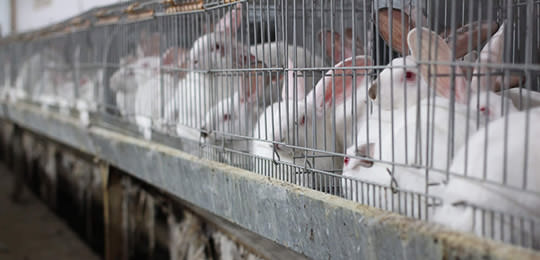
Currently, over 99% of rabbits farmed for meat in the EU spend their lives confined in tiny, barren cages, unable to express their natural behaviours. This vote is the closest we have come to securing new legislation for Europe’s farmed animals in over a decade.
Unfortunately, the amendment that includes legislation did not pass at this stage. However, we will continue to push for species-specific legislation in the Plenary session in a few weeks.
We have been working hard for many years to improve the welfare of rabbits farmed for meat across the EU. In 2012 and 2014, we exposed their terrible plight through undercover investigations and achieved mass media coverage of both investigations, helping to raise awareness of this cruel trade.
Last May we presented our 600,000 signature-strong petition to Europe’s Agriculture Ministers, calling for an end to the farming of rabbits in cages and recently asked children throughout the EU to send in rabbit drawings of how they believe rabbits should be kept. We delivered these drawings to MEPs, ahead of today, urging them to vote in favour the report. We are pleased that many MEPs have listened and taken action on a number of the amendments that will improve farmed rabbits’ welfare.
Emma Slawinski, our Director of Campaigns, says: “Today we have overcome the first hurdle on the path to ensuring higher welfare conditions for rabbits.
“It is encouraging that the majority of MEPs voted in favour of the report presented by MEP Stefan Eck (GUE), recognising the need to move away from the obsolete cage system for rabbits – bringing rabbit farming into the 21st century.”
Ending the cage age for Europe’s rabbits
Following today’s Committee vote, the report – which is backed by many scientists – will be voted on in the Plenary session of the European Parliament in a few weeks.
It is essential that MEPs vote in favour of the report – proving that they do listen to the calls of citizens, and not special interest groups that wish to maintain existing cruel standards for rabbits. We remain hopeful that they will vote for an amendment in favour of the introduction of legislation to improve welfare for rabbits.
Our CEO, Philip Lymbery says: “This is a major step forward for the rabbits of Europe and has brought farmed rabbits to the forefront of the public and political agenda.”
Posted on January 25, 2017 by Serbian Animals Voice (SAV)
Dear Mark — Founder ‘Serbian Animals Voice’,
On lion farms across South Africa, lions are bred to be killed and exploited.
The cubs are used in a tourist trade of “eco-petting” and “lion walks” to support these breeding centers. When the cubs outgrow their “cute and cuddly” stage, they’re killed — either in “canned” hunts for trophies or for their hides and bones.
South African officials want to provide a stamp of approval by issuing an export quota for 800 lion skeletons every year.
The crushed up bones of various big cats are in high demand in Asia, where they are used to make tonics such as “tiger wine.”Consumers mistakenly believe this cures pain and disease, or works as an aphrodisiac, but no scientific evidence supports these claims.
The lions caught up in this cruel industry never experience being lions. They’re confined behind fences, in tiny camps often in completely abnormal social groups, for their entire lives. They’re often malnourished and forced to live in small spaces littered with their own waste.
Not a single captive-bred lion has ever been successfully released into the wild. These poor animals are then shot and killed for profit. You only have a short amount of time to act.
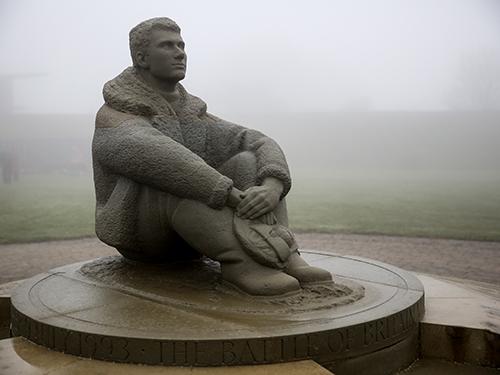
SAV Comment – Kent is our home county – the air battles took place above Kent and in the English Channel. British and German air pilots were shot down over the Goodwin Sands which lies off the Kent coast. The sands are a massive maritime burial ground, with thousands of ships and their crews buried under the sands there. We must NOT allow the sands to be dredged for profit – this area is a war grave – keep it like that ! (SAV).
————————————
To reject the licence application by Dover Harbour Board to dredge marine aggregate (sand and gravel) from the Goodwin Sands for their Dover Western Docks Regeneration project
Why is this important?
The Goodwin Sands are a string of sandbanks some 25 square nautical miles in size lying 5 miles off the Kent coast in the English Channel. They are a unique marine environment with a heritage to match.
But this precious habitat is under threat and time is not on our side!
Dover Harbour Board want to extract the marine aggregate from the Goodwins (as they are known locally) because it is cheaper. The purchase price from the Crown Estate who own the seabed is less than from commercial sites, but they are further away. DHB cite the carbon footprint as a reason to take the aggregate from the Goodwins but in reality this is a smoke screen which can be mitigated in other ways.
DHB have now applied for their licence from the Marine Management Organisation. The first public consultation period ended in July but the Environmental Impact Assessment raised so many questions that a second one is now in place. This will run until 16th November 2016. A decision whether or not to grant the licence will be made any time after this, depending on the reactions received.
The Goodwins are home to a colony of 350 grey seals and the resting place of some 2,000 shipwrecks. Many of the ships were lost with all hands. They are also the spawning and nursery grounds of a variety of local fish and shellfish. The Thornback Ray which is listed as ‘near threatened’ under the Wildlife and Countryside Act 1981 has frequently been sighted there.
The colony of grey seals use areas adjacent to the proposed dredging zone as their ‘haul out’ sites i.e. where they rest on land at low tide. The noise and vibration from the huge dredgers will disturb them in their natural habitat; there is also the possibility of them being injured by collision with the dredgers and propellors as they are naturally inquisitive creatures.
The sands provide shelter to ships in bad weather (in an anchorage known as The Downs) and to the Kent coastline by absorbing the waves’ energy as they pound in from the North Sea. At low tide a large proportion of the sands are exposed and waves can be seen crashing onto them from the shore.






















 Serbian Animals Voice (SAV)
