Posted on February 28, 2016 by Serbian Animals Voice (SAV)
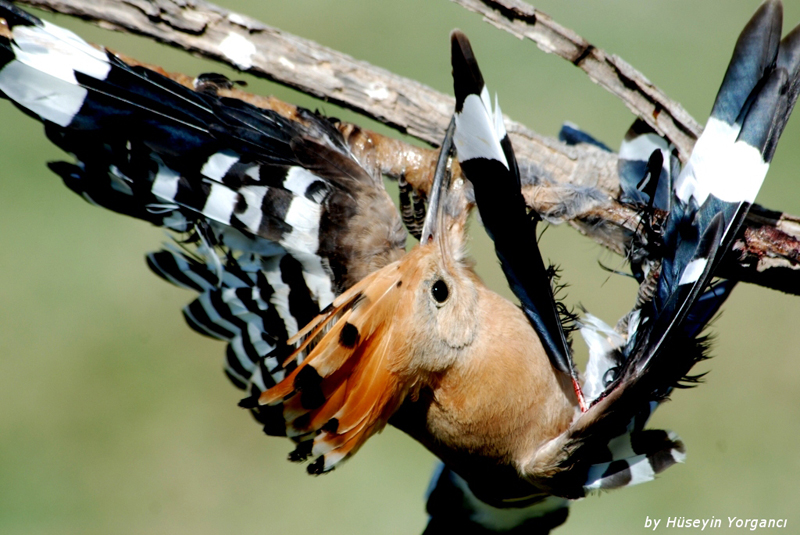
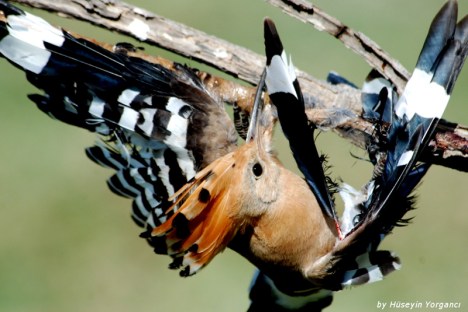
Emptying the skies
Bird killing in Southern Europe
Note that there is a poll included on this site – please vote NO.
Filed under: GENERAL NEWS - International / National / Regional, GLOBAL PETITIONS - Anything Animal, Anywhere ! | Leave a comment »
Posted on February 27, 2016 by Serbian Animals Voice (SAV)


———————————
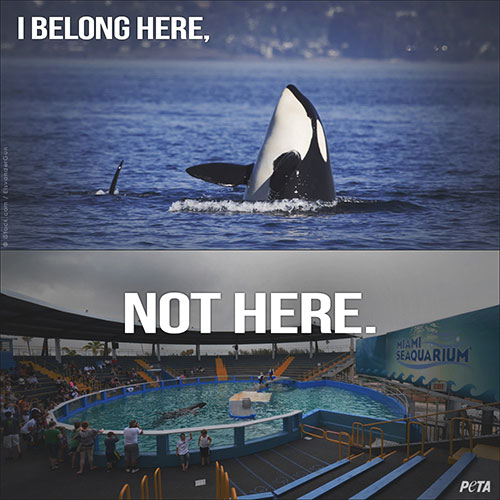
What SeaWorld Won’t Tell You About Dawn Brancheau’s Death
February 24, 2016
The following is a summary of the Seaworldofhurt / Peta report which can be seen with lots more pictures at
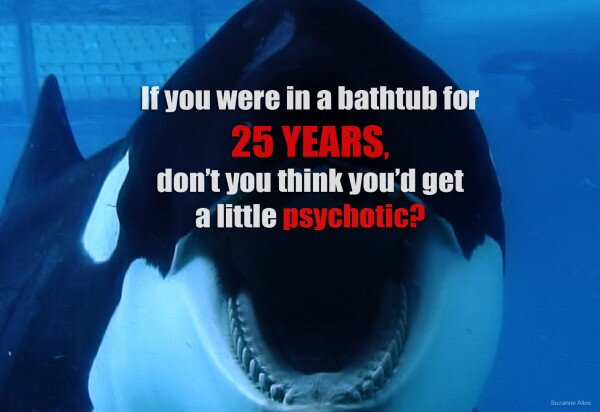
SeaWorld trainer Dawn Brancheau began her Dine With Shamu show on February 24, 2010, just as she had many times before, but this particular show included a gruesome finale that left Brancheau’s body without her left arm or part of her scalp, among other injuries. Dawn Brancheau was declared dead shortly after the show, but still, six years later, SeaWorld claims no responsibility for the vicious attack. So just how did one of SeaWorld’s most experienced and celebrated trainers end up crushed and drowned by the jaws of the marine park’s largest attraction?
“We don’t know for sure what motivated Tilikum. But there’s no doubt that he knew exactly what he was doing. He killed her.”
A Killer Whale Is Born
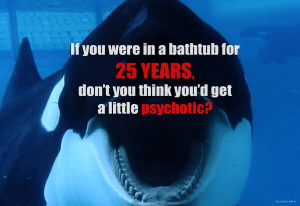
Former SeaWorld trainer Jeffrey Ventre blamed Tilikum for Brancheau’s death, but the truth begins with the wild orca’s capture near Iceland in 1983. At just 2 years old, he was torn from his mother and their ocean home and sent to the rundown marine park Sealand of the Pacific. Food was withheld from him as a training technique, and he endured attacks from the two dominant female orcas, whom he was forced to live with. After years of performing eight shows a day, seven days a week, Tilikum dragged Sealand trainer Keltie Byrne to the bottom of the pool, where he and the other orcas stripped her of all her clothing and left bite marks and bruises on her skin. It took nearly two hours to retrieve her body. Not long after Keltie’s death, Sealand closed its doors, and its orcas were purchased by SeaWorld.
My understanding of the animal’s past was very limited. In fact, there had been 30 incidents between killer whales, and trainers prior to my being hired at the park. And I didn’t know about any of them until after I left SeaWorld. So I think that’s a serious mistake on SeaWorld’s part that they weren’t letting people know the history of all the animals.”
History Repeats Itself
As Dawn Brancheau lay next to Tilikum, petting him in just a few inches of water, she likely had no reason to suspect that she was about to be torn apart. According to one of SeaWorld’s own employees, the event was unpredictable and the orca gave no indication that he was about to grab her. Even if Brancheau had spotted signs that Tilikum might act aggressively, would SeaWorld’s star performer have done anything differently? Maybe not—trainers were expected to continue performances, regardless of any signs that an orca might act out.
In one case, trainers ended a show after an orca began to ignore signals, swim rapidly, and grab at one of the trainer’s arms. In response, SeaWorld’s vice president for animal training criticized their actions in a two-page document claiming that the show should not have been ended early because it brought unnecessary attention to the incident. He argued that the trainers should have used other resources before canceling the show, despite SeaWorld’s official position that trainers could end a show at any time if they felt uncomfortable.
Why were SeaWorld trainers being forced to interact so closely with these enormous wild mammals? This was precisely the issue at the center of the Occupational Safety and Health Administration’s (OSHA) investigation. The agency cited SeaWorld for multiple violations and demanded that the company stop putting trainers at risk by making them interact with orcas during shows.
The Truth Comes Out
SeaWorld finally gave up on appealing its violations, but not before OSHA presented damning evidence that seems to imply that SeaWorld may be responsible for its own trainer’s death. OSHA found that in the 20 years leading up to Brancheau’s death, the park generated 100 reports of aggression and precursors to aggression—including 12 incidents resulting in the injury or death of a trainer—and according to SeaWorld’s own corporate curator for zoological operations, there were times that the company didn’t document incidents at all, which can be evidenced by SeaWorld’s failure to generate an incident report for Dawn Brancheau’s death and for a third death that Tilikum may have previously been involved with.
More than six years after the “accident,” there are still concerns about Dawn Brancheau’s last day as a SeaWorld trainer that have grave implications. Why did the marine park wait for 27 minutes to call for paramedics after Tilikum pulled Brancheau into the water? Was the park using this time to remove witnesses whose accounts didn’t match the story that SeaWorld was trying to create to make it seem as if her ponytail had triggered Tilikum’s reaction? Perhaps most importantly, why did SeaWorld’s then-owner try to blame his own orca trainer for her death—even after the OSHA investigation uncovered that the same safety measures and recall signals that had failed to prevent Dawn Brancheau’s death had been failing for years? And why did SeaWorld continue to rely on those failed measures?
“Let’s face it, in these types of incidents, I don’t recall any whale responding to any hand slap, food bucket, or any other distraction we tried to implement.”
The evidence in the judge’s decision seems to indicate that SeaWorld tried to downplay the risks and dangers that its trainers would encounter while working with captive orcas and to cover up its own failures in the incident that led to Dawn Brancheau’s death. SeaWorld wasn’t even willing to put the life of its own star trainer before profit, so why should anyone trust that it would ever put the well-being of its captive animals first?
To help all animals held captive by SeaWorld, please never buy a ticket, visit the parks, or support SeaWorld in any other way, and urge the marine park to stop raping orcas!
Filed under: GENERAL NEWS - International / National / Regional, VIDEOS | Leave a comment »
Posted on February 27, 2016 by Serbian Animals Voice (SAV)

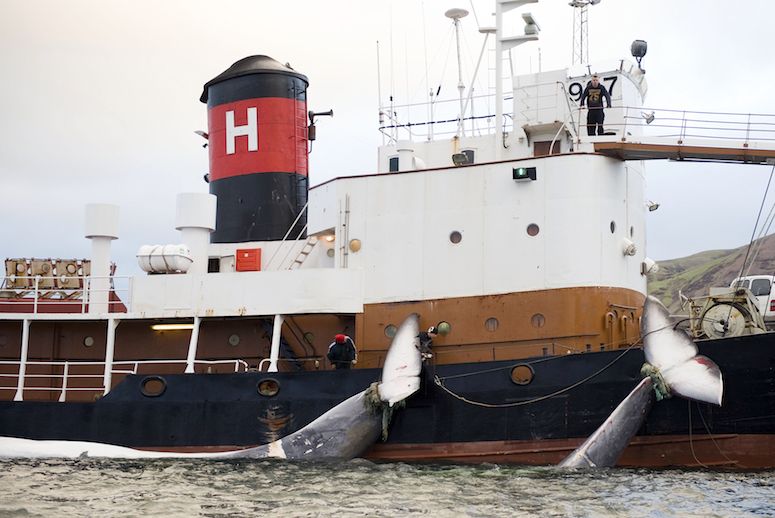
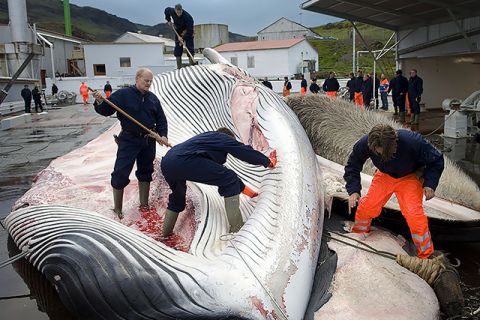
Iceland Cancels Whale Hunt
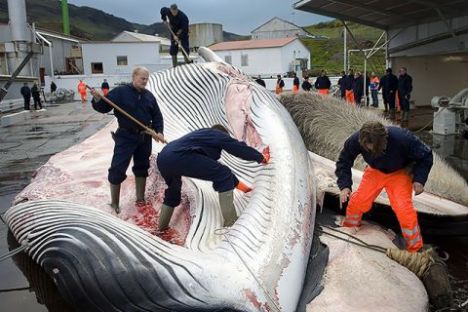
An Icelandic whaling company says strict Japanese regulations prevent it from selling contaminated meat from endangered fin whales.
Endangered fin whales in the far North Atlantic Ocean have received a reprieve from being hunted—at least for now.
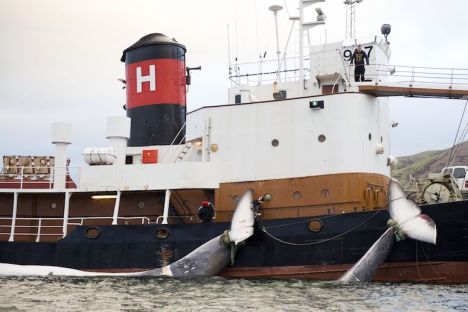
On Thursday, the Icelandic company Hvalur hf said it will cancel this summer’s hunt for fin whales, the world’s second-largest animal. The company, Iceland’s leading whaling outfit, had planned to kill up to 155 whales this year. Most of that meat was to be exported to Japan.
Iceland’s whale hunt is conducted in violation of the International Whaling Commission’s global ban on commercial whaling.
Fin whales are listed as endangered throughout their range under the United States’ Endangered Species Act.
Kristján Loftsson, managing director of Hvalur, blamed Japanese import regulations for making sales of whale meat in that country difficult, if not impossible.
“Our problem with the Japanese is that they are analyzing for PCB contaminants in the blubber of the whales, using methods that are 40 years old and very inaccurate,” Loftsson said. “We have to give up because we don’t know what will come out of this analysis.”
Loftsson said Japan is the only country not to use updated methods for testing whale meat for PCBs, as established by the United Nations Food and Agriculture Organization.
But Kate O’Connell, a marine wildlife consultant for the Animal Welfare Institute, said Loftsson’s claim was “misleading.” She said Japan previously blocked whale meat imports from Hvalur because of contamination with pesticides and that the regulations on pesticides do not apply to marine mammal meat.
“In 2013, a shipment of Hvalur whale products was tested and found to contain levels of [the pesticides] aldrin and dieldrin above the Japanese food safety limits,” O’Connell said in an email. “As a result, Japanese officials have stated that they require testing of whale shipments both prior to and following import due to concerns about contaminant levels.”
Japanese food-safety laws are among the strictest in the world, O’Connell said. “The ‘permissible’ levels of aldrin and dieldrin in Japanese foodstuffs are lower than what would be considered acceptable in many other countries,” she said. “Their methodologies do require more lengthy and in-depth testing and take longer, but I imagine consumers in Japan are grateful for this.”
Whatever the reason for Hvalur’s decision, wildlife conservationists applauded the move.
“This is fabulous news that Mr. Loftsson, who is the driving force and individual behind the Iceland hunts, has decided he’s not going to hunt whales this year,” said Phil Kline, senior oceans campaigner for Greenpeace.
Vanessa Williams-Grey, senior whaling campaigner at Whale and Dolphin Conservation, said in a statement, “Harpooning fin whales and shipping their meat halfway round the world to Japan has always been as crazy as it is cruel.”
“It is well documented that whale meat contains high levels of toxins, and much of the meat exported by Loftsson’s company sits, unwanted, in frozen stockpiles,” Williams-Grey added. “It seems that Kristján Loftsson has finally realized that his fin whaling has no future. The end of commercial whaling has moved a step closer today.”
Although Japan has rejected whale meat from Iceland in past years because of high toxin levels, Kline said that was not the only reason for Hvalur’s decision.
“They are under pressure in multiple other ways,” he said. “The U.S. government has maintained diplomatic measures against Iceland in the past couple of years, which has been bothersome to politicians who have to discuss whales when meeting with U.S. officials.”
Kline added that Icelandic whale meat had been blocked from entering some European ports in the past and that some major shipping lines have refused to transport the product.
It is not clear whether Hvalur will resume hunting fin whales.
“We should remember that Loftsson stopped whaling before in 2011 and 2012, yet resumed whaling in 2013,” O’Connell said.
Loftsson said if the Japanese “change their attitude, we’ll start again. But if they don’t, we will not do anything.”
He added that his decision had nothing to do with international pressure against whaling.
“I don’t care about these people, this anti-whaling movement,” Loftsson said. “They are against everything. You name it, they don’t support it.”
Even if Hvalur permanently cancels its fin whale hunt, other Icelandic companies still slaughter minke whales for their meat.
“It’s predominantly consumed by people visiting Iceland,” Kline said. “But if tourists would go there to greet the whales rather than eat them, [the Icelanders] would no longer hunt them.”
SAV Comment – Taiji dolphins contaminated with Mercury; contaminated whales as we read here – good old man; gradually destroying everything and killing this beautiful planet ! – what about destroying the human species and trying to put things right again ?
Filed under: CAMPAIGNS - Global Animal Welfare Issues, GENERAL NEWS - International / National / Regional | Leave a comment »
Posted on February 26, 2016 by Serbian Animals Voice (SAV)
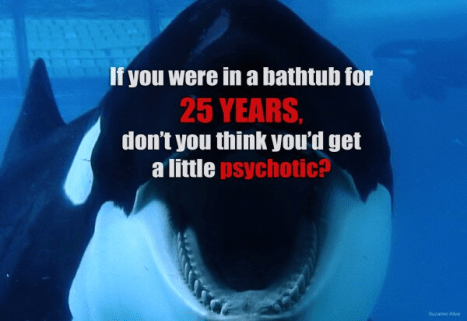
SeaWorld Admits It Infiltrated an Animal Rights Group
The company’s board has ordered employees to stop posing as activists to obtain information on groups like PETA.
On Thursday, SeaWorld chief executive Joel Manby told investors the theme park operator had employees pose as activists to infiltrate People for the Ethical Treatment of Animals.
This admission comes months after PETA accused SeaWorld employee Paul McComb of working for the animal rights group under the alias Thomas Jones. PETA claimed McComb attended anti-SeaWorld meetings and protests, asked for insider secrets from other protesters, and encouraged aggressive and illegal tactics during demonstrations.
At the time, SeaWorld officials denied the claims but put McComb put on temporary leave. He has since returned to the company, according to Manby.
“Following the completion of an investigation conducted by independent outside counsel, the board has directed that the company’s management team end a practice in which certain employees posed as animal rights activists in connection with efforts to maintain the safety and security of company employees, customers, and animals in the face of credible threats that the company had received,” SeaWorld said in a statement issued after Manby discussed the issue with investors during a conference call Thursday.
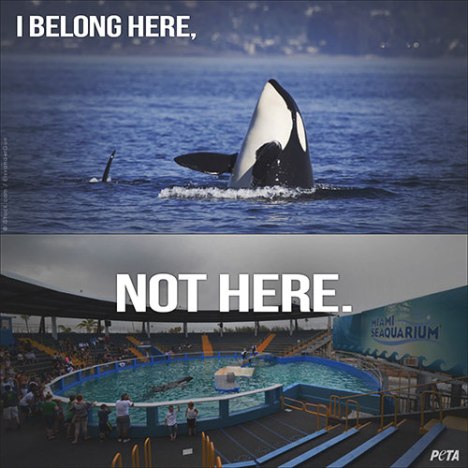
The move didn’t placate PETA. “If SeaWorld had business savvy or common sense, it would modernize its business with coastal sanctuaries and virtual reality displays instead of building more dolphin prisons,” the organization said in a statement.
RELATED: Former SeaWorld Trainer Reveals Mistreatment of Killer Whales
Manby has worked to reshape the SeaWorld image since he took over as chief executive last April. The company is still recovering from the fallout from the 2013 documentary Blackfish, which focused on mistreatment of captive killer whales at SeaWorld parks. Manby has ordered an end to orca shows at SeaWorld San Diego and approved the construction of exhibits and rides to increase park attendance.
Though SeaWorld’s 2015 revenue rose to $268 million—up 1 percent from the previous year—net income was down 1.6 percent to $49 million.
PETA suggested SeaWorld address larger problems. Since November, an animal has died every month at the company’s San Antonio park.
Filed under: GENERAL NEWS - International / National / Regional | Leave a comment »
Posted on February 26, 2016 by Serbian Animals Voice (SAV)


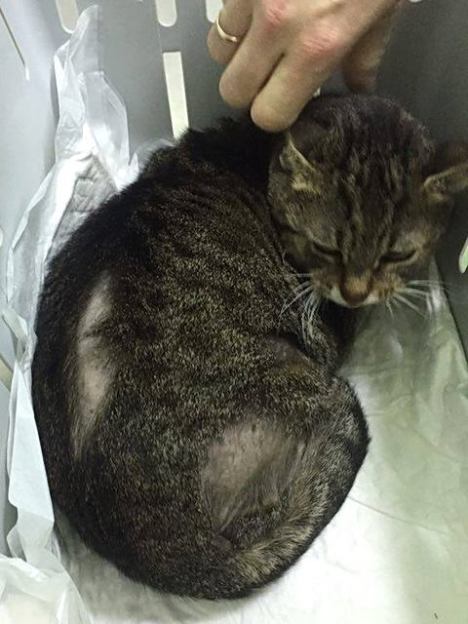
See more about Celeste, including photos; on our post of 21/2/16:
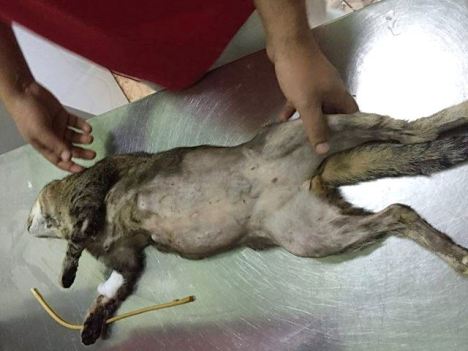
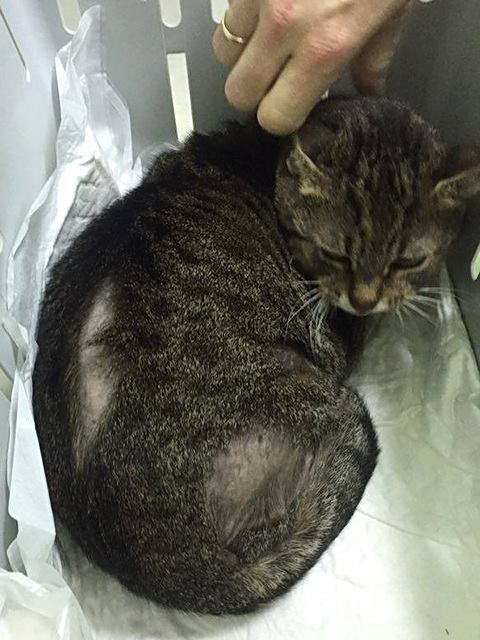
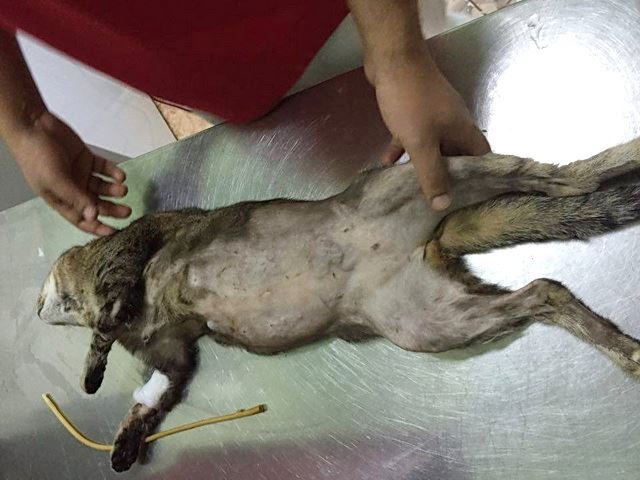
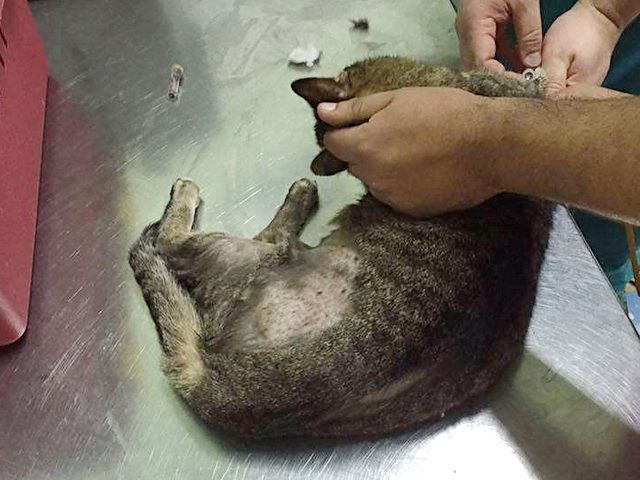
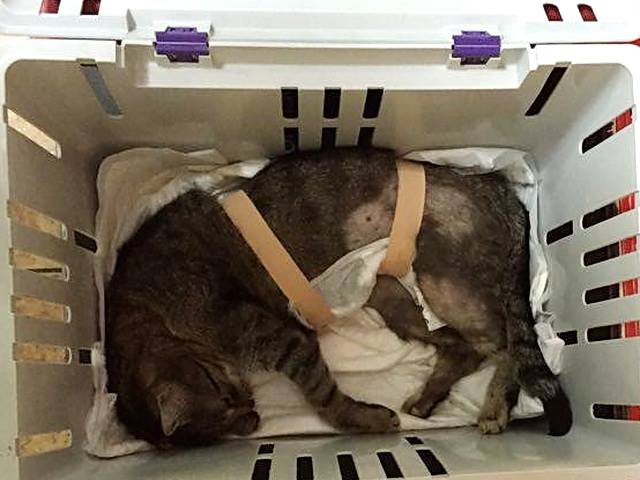
Celeste was operated on two days ago and it’s turned out that she was in a lot worse shape than we expected. She was initially supposed to have only a spay surgery, but she had multiple mammary tumors which should always be regarded as potentially malignant and the only thing the vet could do was to completely remove both of the mammary gland chains and associated lymph nodes. Celeste endured the massive surgery surprisingly well, but during the night she tore up the gauze bandages and we feared that she would rip out the stitches as well, so off to the vet we went again.
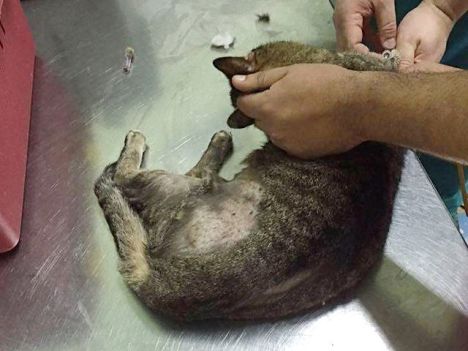
Luckily, she hasn’t tried to take off the bandages since; she is being given antibiotics and painkillers and she began to eat yesterday evening. The bad news is that the long-term prognosis for a cat with mammary tumors is guarded, as up to 65% of surgically removed tumors reoccur within a year. Most of the kitties survive less than a year after being diagnosed with this life threatening disease, although there are always some fortunate ones which are able to fully recover and never have any additional problem.
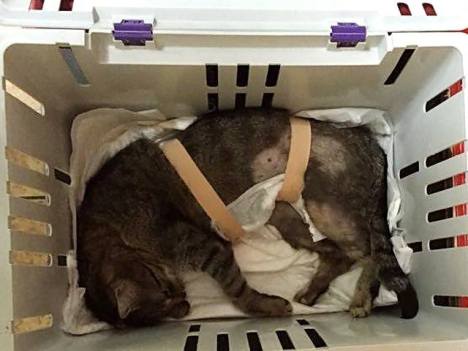
We’ll certainly do everything we can to help her overcome her ordeal, but only time will tell about the outcome. And it could have all been avoided had she been spayed in time… One way or the other, Celeste’s long and winding journey to happiness has just begun.
Please, help us make the rest of her life, which hasn’t been exactly an awesome one so far, as great as possible! https://www.youcaring.com/cat-shelter-felix-512392
Filed under: Animals Requiring Adoption or Homes - Worldwide, GENERAL NEWS - International / National / Regional, SERBIA (Central Serbia: Capital - Belgrade) and (Serbia, SHELTER - Information | Leave a comment »
Posted on February 25, 2016 by Serbian Animals Voice (SAV)
We have worked with Lesley at EoA several times in the past to attempt to highlight to national and EU officials the importance of access doors which need to be fitted along the entire length of the transporter.
Here is on link to our past posts on this –
This crash in Germany supports our evidence yet again that vehicles are not now manufactured to a suitable standard for access to animals should an emergency like this arise.
On January 21st 2015 a Danish-platted livestock- truck with 420 pigs on board tipped over on the highway in northern Germany.
The truck was one of these “newer” models: completely closed sides with automatic ventilation. There were no proper access doors on the side or large openings. When the truck tipped over, the automatic ventilation system naturally stopped and inside it was pitch black. The pigs inside were in complete panic and due to the lack of air, began to suffocate.
The police had to call in the fire brigade to come as quickly as possible to drill holes in the side of the truck just to get air to the pigs trapped inside.
150 pigs died.
By-standers report that the pigs were really suffering inside. Accidents involving livestock trucks are always very unfortunate for the drivers and the animals, but in this case, the suffering was even more unbearable because these new models of trucks do not offer any access to them, and make them literally prisoners inside when something goes wrong.
Eyes on Animals has for years been warning the Member States that permit the manufacturing of such types of livestock trucks (mainly the Netherlands and Denmark) that this model does not fulfill the EC 1/2005 requirements which state that one must be able to access the animals on board and provide first aid as soon as possible and one must be able to easily inspect the animals on board.
We urge the phasing out of these sorts of “closed” trucks as soon as possible. To read our report on the importance of access during transport, click HERE.
To read German newspaper articles about this accident, please see HERE.
Filed under: CAMPAIGNS - Global Animal Welfare Issues, GENERAL NEWS - International / National / Regional | Leave a comment »
Posted on February 25, 2016 by Serbian Animals Voice (SAV)

Stopping long distance lie animal transport is an issue that we feel very strongly about and have campaigned against for over 25 years. See more about this in ‘About Us’ which is tabbed at the top of the page.
25/2/16 update
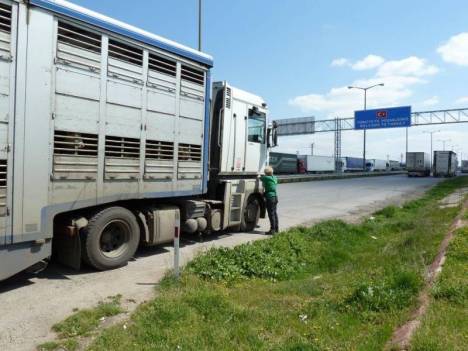
As well as completing contact and supply of the EU / Turkish video to all of the UK MEP’s today, we have also sent copies of the video to the European Parliament’s Press Service, which comprises a team of press officers whose job it is to assist journalists and provide them with information on what is going on in Parliament. Each press officer specialises in a particular area, official language or member state, so as to ensure comprehensive coverage of all of Parliament’s activities and to provide information to journalists from all Member States.
The video or issue of non EU animal exports is not currently being discussed by Parliament, but we have made the Press Service aware of the UK referendum in June; which we know they will be interested in. We have outlined that many UK voters will be influenced by the video.
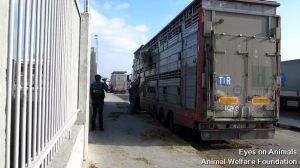
We have today (25/2/16) written to:
-
the Director for the Media and European Parliament Spokesman
-
the Head of Press Unit and Deputy Spokesperson
-
the Head of the Media Services Unit
And the 4 members of the Press Unit – Spokespersons Service
We flagged the message and have already had confirmation back from almost everyone that they have read the mail (which contains the video link).
We hope that even though the issue is not currently being discussed by the Parliament, the UK referendum and the release of the new video may work its way through to some EU journalists.
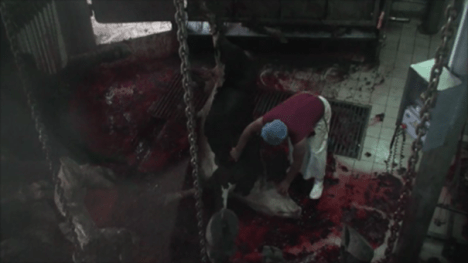
Above – A Turkish Slaughterhouse.
Video Link –
SAV post links associated with this issue:
Filed under: CAMPAIGNS - Global Animal Welfare Issues, DOCUMENTS, GENERAL NEWS - International / National / Regional, The "Serbian Animals Voice (SAV) ALLIANCE, VIDEOS | Leave a comment »