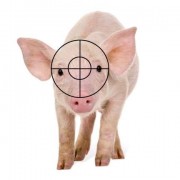



Germany / USA: US Military in Germany To Use Live Pigs and Goats in Trauma Training at German US Facility – Petion to Sign


** PLEASE CROSSPOST **

Dear all,

could you please join this protest ?

http://albert-schweitzer-stiftung.de/tierschutz-aktiv/petitionen/protest-tierversuche-us-militaer

The US military in Germany has now confirmed (the plan was challenged a few
weeks back – but now permission has been granted) they will use live pigs
and goats for trauma training
in a German US facility.

(“Dear Sir or Madam,
I’m joining the Albert Schweitzer Foundation for our Contemporaries in
expressing my deepest concerns over using animals in your training programs
for medics and I urge you to use animal-free alternatives. The U.S. army
should take pride in being the most advanced armed forces in the world. This
should include modern and sophisticated training programs that don’t rely on
scientifically and ethically questionable methods.”)

Please enter your details as follows (field with a * are mandatory)

Anrede – Mr. (Herr), Mrs/Ms (Frau)
Titel – not required
Vorname – first name
Nachname – family name
Straße und Hausnummer – street and number
PLZ – postcode
Ort – City
Land – country
E-Mail Adresse – E-mail address
E-Mail Adresse Wiederholung – repeat E-mail address
Eigenen Kommentar anfügen – your own comment (English is fine)

then click:
“Aufruf unterzeichnen” (sign protest)

You will then receive a confirmation mail with a link to click on to
confirm.

Thanks.

Diana

Uk: Oscar the Amputee Cat Is Given Two New Legs by A Uk Vet – Video to Watch


“I can’t tell you how good it feels to keep him alive !”

 After the terrible news about BP, we want to share some excellent news from the Uk about  Oscar the cat and the Uk vet who saved his life.

Please click on the following link to watch the very moving video.

http://news.bbc.co.uk/1/hi/science_and_environment/10404251.stm

 Uk residents can watch a special programme about Oscar and his new legs on the BBC 1 at 2245 BST on Wednesday 30/06/10.

We at SAV very much hope that this shines new light in hope for progress for two special animals who have suffered terribly at the hands of mans cruelty in recent months:

https://serbiananimalsvoice.wordpress.com/2010/03/29/bulgaria-dog-has-all-four-legs-cut-off-with-an-axe/

https://serbiananimalsvoice.wordpress.com/2010/04/01/latest-update-on-mima-good-news-see-below-for-video-footage-link/

https://serbiananimalsvoice.wordpress.com/2010/04/05/bulgaria-after-mima-has-legs-cut-off-bulgaria-says-it-will-do-something-we-watch-with-interest/

https://serbiananimalsvoice.wordpress.com/2010/04/05/germany-bulgaria-mima-latest-050410-appeal-for-funds-to-help-her-recovery-and-buy-new-leg-braces/

https://serbiananimalsvoice.wordpress.com/2010/04/06/060410-update-mima-appeal-paypal-donations-now-possible-see-below/

https://serbiananimalsvoice.wordpress.com/2010/04/11/international-lots-of-news-videos-petitions-alerts-extras-please-review-and-select/

https://serbiananimalsvoice.wordpress.com/2010/04/23/serbia-after-mima-in-bulgaria-now-we-have-mila-another-dog-which-has-had-all-its-legs-chopped-off/

https://serbiananimalsvoice.wordpress.com/2010/04/23/mima-latest-230410-things-looking-good-considering-her-recent-suffering-please-sign-the-petition-and-pass-on/

Article story:

A cat that had its back feet severed by a combine harvester has been given two prosthetic limbs in a pioneering operation by a UK vet.

The new feet are custom-made implants that “peg” the ankle to the foot. They are bioengineered to mimic the way deer antler bone grows through the skin.

The operation – a world first – was carried out by Noel Fitzpatrick, a veterinary surgeon based in Surrey.

His work is explored in a BBC documentary called The Bionic Vet.

The cat, named Oscar, was referred to Mr Fitzpatrick by his local vet in Jersey, following the accident last October.

Oscar was struck by the combine harvester whilst dozing in the sun.

The prosthetic pegs, called intraosseous transcutaneous amputation prosthetics (Itaps) were developed by a team from University College London led by Professor Gordon Blunn, who is head of UCL’s Centre for Biomedical Engineering.

Professor Blunn and his team have worked in partnership with Mr Fitzpatrick to develop these weight-bearing implants, combining engineering mechanics with biology.

Mr Fitzpatrick explained: “The real revolution with Oscar is [that] we have put a piece of metal and a flange into which skin grows into an extremely tight bone.”

“We have managed to get the bone and skin to grow into the implant and we have developed an ‘exoprosthesis’ that allows this implant to work as a see-saw on the bottom of an animal’s limbs to give him effectively normal gait.”

Professor Blunn told BBC News the idea was initially developed for patients with amputations who have a “stump socket”.

“This means they fix their artifical limb with a sock, which fits over the stump. In a lot of cases this is sucessful, but you [often] get rubbing and pressure sores.”

The Itap technology is being tested in humans and has already been used to create a prosthetic for a woman who lost her arm in the July 2005 London bombings.

“The intriguing thing with Oscar was that he had two implants – one in each back leg, and in quite an unusual site,” Professor Blunn told BBC News.

He said that the success of this operation showed the potential of the technology.

“Noel has some brilliant ideas,” he added. “And we’re continuing to work closely with him to develop new technologies.”

The Bionic Vet is on BBC 1 at 2245 BST on Wednesday

 —————————–

SAV Comment:

German, Bulgarian and Serbian campaigners – please provide hope for Mila and Mima – pass this info on to your veterinary contacts.

BP burning rare sea turtles alive while blocking rescue efforts


Subject: BP burning rare sea turtles alive while blocking rescue efforts
From: “NaturalNews” <insider@naturalnews.com>
Date: Fri, June 25, 2010 1:46 am

http://www.naturalnews.com/029074_sea_turtles_Gulf_of_Mexico.html
—————————————————————

Seize BP Week of Action
Demonstrations across the country
Thursday, June 3 – Thursday, June 10
http://www.authorsden.com/ShortStoryUpload/3598.doc

http://www.huffingtonpost.com/2010/06/02/bp-media-clampdown-no-pho_n_598119.html

—————————————————————–

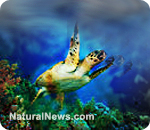
(NaturalNews) By now, almost everyone is aware of the out-of-control oil spill down in the Gulf of Mexico that seems to be getting exponentially worse with each passing day. But what people may not know is that BP’s efforts to control the oil by burning it are actually burning alive a certain rare and endangered species of sea turtle.

For several weeks now, rescue crews have been feverishly trying to save Kemp’s Ridleys sea turtles, as well as four other endangered varieties, from being caught in the oil corral areas that are being intentionally burned by BP, but according to Mike Ellis, one of the boat captains involved in the project, BP has now blocked all such rescue efforts from taking place.

“They ran us out of there and then they shut us down, they would not let us get back in there,” he explained in an interview with Catherine Craig, a conservation biologist.

According to Dr. Brian Stacy, a veterinarian with the National Oceanic and Atmospheric Administration, there are five different endangered sea turtles living in the Gulf that are all at risk, but the type being found “dead or covered in oil” the most is the Kemp’s Ridleys variety, which is the rarest species of them all.

So why would BP intentionally block rescue efforts aimed at protecting and saving wildlife and other endangered species from being burned alive in controlled burning pits? For starters, the Kemp’s Ridleys sea turtle is listed in the Endangered Species Act, which means there are severe penalties for those who harm or kill them.

According to the law, harming or killing even one animal on the endangered species list can result in a fine of up to $50,000 and may include prison time. This means that the hundreds, or even thousands, of endangered sea turtles being burned alive by BP are going to cost the company a lot of money, not to mention the prison time its executives might have to serve.

At this point, it is difficult to determine exactly how many sea turtles are being, or have been, destroyed by BP because access to the pits has ceased, but crews are doing what they can to keep track of the animals they do know of to be sure that BP is held responsible in the end..___

———————————————–

When we last left Mother Jones’ reporter Mac McClelland, she was in the Gulf Coast region, caught up in the surreal tangle of media roadblocks that were being erected by British Petroleum to keep reporters at bay. How have things done since then? Not well, as it turns out!

Indeed, when I ran into some [cleanup workers] packing up on the Grand Isle beach twenty minutes later, I asked them only if they were done working for the day, and they refused to tell me. One woman said, “I can’t talk to you,” and then another worker ran up to her and grabbed her arm and said, “Just ignore her, ignore her,” and the whole interaction was unsettlingly rude and sort of sad. The workers who were staying next to me in my Grand Isle motel last week told me that when BP (not, in this case, and for the record, a subcontractor) had instructed them that they couldn’t talk to the press, it’d involved a warning that media organizations would go so far as to dub audio propaganda over their videotaped commentary, putting unflattering words in their mouths.

The New York Daily News‘ Matthew Lysiak is also in Grand Isle, where he was the fortunate beneficiary of a “surreptitious tour of the wildlife disaster unfolding in Louisiana.”

“There is a lot of coverup for BP. They specifically informed us that they don’t want these pictures of the dead animals. They know the ocean will wipe away most of the evidence. It’s important to me that people know the truth about what’s going on here,” the contractor said.

“The things I’ve seen: They just aren’t right. All the life out here is just full of oil. I’m going to show you what BP never showed the President.”

A dead dolphin, stuffed with oil, figures prominently in the account. It’s all very sad, and not a little bit enraging. As Allison KilKenny puts it: “In a sane world, a company guilty of gross negligence that resulted in the deaths of 11 workers would be under criminal investigation, and not be parading around the coast, telling the media where they can go and who they can talk to, while forbidding their clean-up crews from wearing protective gear.”

Meanwhile, remember BP CEO Tony Hayward, who this past Sunday said that he “wanted his life back?” Well, he’s very sorry about how that must have sounded, to humans:

“I made a hurtful and thoughtless comment on Sunday when I said that “I wanted my life back.” When I read that recently, I was appalled. I apologize, especially to the families of the 11 men who lost their lives in this tragic accident. Those words don’t represent how I feel about this tragedy, and certainly don’t represent the hearts of the people of BP – many of whom live and work in the Gulf – who are doing everything they can to make things right. My first priority is doing all we can to restore the lives of the people of the Gulf region and their families – to restore their lives, not mine.”

Naturally, that bit of flackery was emailed to reporters and posted on the BP America Facebook page, in keeping with BP’s tradition of keeping anything too troubling as far away from cameras as possible.

Link:  Ridley Sea Turtle –    http://en.wikipedia.org/wiki/Ridley_sea_turtle

EU Citizens – A Call for Immediate Action for Animals – Must be Done In the Next Week

We ask campaigners across EU nations to please act immediately and contact your MEP’s with regard the following.  This needs to be acted on within the next week as time is short.

It concerns the Written declaration on the welfare of pets 0026/2010, a document which will be used to try and convince the European Union to use their powers of influence concerning a clear written policy concerning the welfare of animals.

Only when 50% of ALL MEP’s from the entire EU put their name to this declaration does it have a chance of moving forward to the agenda stage.

The following link gives national information on all current MEP’s within any EU member state.  To find yours simply click on your country of residence and go from there.

http://www.europarl.europa.eu/members/public/geoSearch.do?language=en

MEP’s for all regions of that (each) country are then listed – divided into the region of the country which they represent. Click on your region and you will then be provided with a listing of MEP’s for your region.  Then click on each MEP by name to find their direct e mail contact details.

English and German sample letters are provided below, as well as a copy of the declaration (in several languages – simply scroll down).

vertaling%20engels[1]

Bescherming pets

brief_europarlement[1].doc-duitse%20vertaling[1]

We ask anyone please who represents an animal welfare organization especially to please put their organizations name at the end of the letter.  Please ensure that you add your name to the sample letter and the region of (your) the country that you live in.

This is important for animals in Europe – please find time to take part.

370 MEP signatures are required by July, so time is short.

IMPORTANT TO CONSIDER:

Normally, MEP’s will only respond to requests by citizens from within the region of the country which they represent.  Therefore it is essential to attempt to get as many citizens from all regions across each country to contact their (regional) MEP’s. 

ie. Northern German MEP’s will not normally respond to requests from Southern german citizens; but Southern german MEP’s should !

This is the same for any EU state – please only contact your REGIONAL MEP’s.

Thanks – SAV.

Italy: A Terrible Tragedy – 2 Activists Killed Helping Animals

I am a member of LIPU http://www.lipu-uk.org/  which is a registered British charity helping birds in Italy.

Today I received their summer newsletter and read that Paola Quartini, LIPU activist from Genoa and Elvio Fichera, volunteer of the Association for Abandoned Animals, both animal welfare workers, went to the home of Renzo Castagnola accompanied by two police officers.  They went to serve a warrant on Castagnola for cruelty to animals.  He kept several dogs, belonging to others, in terrible conditions.  He had been visited before.  The dogs were to be confiscated.

After an inspection, Castagnola made an excuse to go into his house to find a pen and when he reappeared he was armed.  Castagnola fired several shots at Paola and then at Elvio, killing them outright.  He then injured his wife before turning the gun on himself taking his own life.  The victims had no chance to defend themselves, escape or for the police to intervene.

The two animal welfare volunteers had spent years dedicating their lives to helping animals and wildlife.  They had a wealth of experience in animal and environmental issues in the area. 

Paola was 54, was most active and was very knowledgeable on many matters, including the law.  She was very animal-focused.

The wildlife and animals have lost two caring and devoted people.  They lost their lives for an ideal they cherished.  They will be missed by many.

Sharon

EU: SAV Presents Concerns Regarding Existing EU and EU Accession State(s) Stray Animal Welfare Issues. We Need A Voice Across Europe For Stray Animals !


SAV has today (23/06/10) submitted a written response to ‘EUPAW’ – the Evaluation of the EU Policy on Animal Welfare.

EUPAW – what is it ?

Background

Within the last 30 years the EU has adopted a series of legislation concerning the protection of animals. The scope of this legislation includes the protection of animals kept for farming purposes, during transport and at the time of killing. It also includes the protection of animals used for scientific purposes. Furthermore the welfare of wild animals is part of EU legislation through a directive on zoo animals as well as initiatives prohibiting the trade in seal products from commercial seal hunts and establishing trapping standards. The EU has also banned the importation and intra-community trade of cat and dog fur.

The EU adheres to the principle that, beyond specific objectives, people have an ethical duty of taking care of animals which are under their responsibility. EU legislation in those fields reflects the increasing importance given by the public on the ethical dimension of economic activities dealing with animals. The intervention of the proper care of animals is sufficiently significant as to affect the functioning of the internal market.

In 2006, the Commission adopted the first EU Action Plan on the Protection and Welfare of Animals 2006-2010 (later called ‘Action Plan’) where strategic lines and future actions were described. The Action Plan was the first document grouping in a single text the different aspects of the EU policy on animal welfare.

These terms of reference now envisages an evaluation as to establish a follow-up programming beyond 2010.

EUPAW – Introduction

GHK Consulting Ltd and ADAS UK Ltd have been commissioned by the European Commission, Directorate General Health and Consumers (DG SANCO), to evaluate the EU Policy on Animal Welfare (EUPAW) with reference to farm animals, experimental animals, pet animals and wild animals which are kept in captivity or submitted to a treatment which is controlled by humans.

The evaluation covers four types of EU action (legislation, research, communication and international activities) and is concerned with EU animal welfare actions over the 2000-2008 period only.  An overview of EU animal welfare policy is available at:  http://ec.europa.eu/food/animal/welfare/index_en.htm.

As part of the evaluation we are keen to hear the views of stakeholders and are therefore requesting stakeholders to complete this on-line survey to assist us with the evaluation.

The survey is short and easy and can be completed in 15 minutes but allows you to spend longer and give more detailed explanations if you wish. When processing the results to the survey, all responses will be treated as confidential and not attributed to individuals or organisations.

The survey will remain open and online until Friday 31st July 2010.

For further information about the evaluation please visit the project website www.eupaw.eu

——————————————————————————- 

Whilst we at SAV are aware that primarily, EUPAW evaluation (through the on line questionnaire) covers four types of EU action, we consider that this is an ideal opportunity to once again present information to the EU regarding our concerns for:

  • Stray animal welfare in the Balkans states
  • Stray animal welfare within the EU
  • EU accession criteria and responsibilities for nations wishing to gain membership of the EU, including implementation of the rule of law; something we do not see at all from within Serbia; even though the (Serbian) Veterinary Law of October 2005 says otherwise.  This has been backed by recent actions at the Serbian Constitutional Court.

And so today, 23/06/10, SAV has submitted lots of data and evidence to EUPAW, asking that the current illegal killing policy undertaken by many Serbian authorities be seriously considered for future EU membership by Serbia.

Serbia is not enforcing its own ‘rule of law’ with regard animal welfare for stray animals – enforcement of the law which must be shown to be implemented by Serbia if it requires EU membership.

A copy of the SAV letter to the EUPAW dated 17/06/10 can be viewed by clicking on the following link:

EUPAW data submission 17 June 2010

As you can see, within this letter we have included many links to the SAV site which show animal suffering through illegal activities within Serbia.  We have also included many links to the situation in Skopje, Macedonia, as well as links covering stray animal abuses in Turkey, Greece and Romania.

As Greece and Romania are already existing EU member states, we feel that the time is due for the EU to introduce an EU wide policy / legislation relating to the treatment of stray animals.  It is hoped that our letter of today makes this clear to the EU authorities.

We are well aware through our many EU contacts that there are many organisations / NGO’s throughout the EU who are also making representations to EUPAW about the situation for stray animals both within EU member states and EU accession states.  We hope that by presenting a combined front of evidence to the EU on the treatment of stray animals in all parts of Europe, the EU has no choice but to consider this issues further.

The general animal welfare survey is open to both EU and non EU citizens and can be completed by visiting the following link:

http://www.ghkint.com/surveys/EUPAW/

The survey is short and easy and can be completed in 15 minutes but allows you to spend longer and give more detailed explanations if you wish. When processing the results to the survey, all responses will be treated as confidential and not attributed to individuals or organisations.

The end of the survey allows contributors to give further details of issues which are of concern to them regarding animal welfare.  We hope that all contributors will make special comment here regarding the lack of EU legislation FOR STRAY ANIMALS both within the EU and in nations seeking EU membership.

We hope that our response letter (see the link above) will give contributors an overview of what we would like contributors to say.

The survey will remain open and online until Friday 31st July 2010.

If you are an EU citizen, this is an ideal opportunity to be a real voice for future actions for stray animals right across Europe, both in existing EU and non EU member states.

If you can do nothing else, please complete the survey.  We have a huge opportunity here to be a voice for animals and we must not let it pass us by.

Thank you – SAV.

Important Note – the survey can also be completed by NON EU participants.

For anyone who wishes to provide additional evidence and / or reports to the EUPAW evaluation team, please email them directly via the following link:

eupaw@ghkint.com

Again, we ask that if you do mail, you please demand that the EU produces legislation for the protection of all stray and roaming animals throughout the European Union.  Please also comment that you are disgusted by the reports which are being given to you of stray animal cruelty in the Balkans states.  If an accession  nation requires membership of the EU, such as a balkans state, then it must comply with its own national legislation – the rule of law; which is NOT being done regarding animals in Serbia.  In addition, the EU is failing stray animals who have no legislation to protect them; therfore the EU needs to act, and act now !!

We have included one of the pdf files detailed in our written submission in the following link.  For security reasons we do not provide all.

To Hutchinson
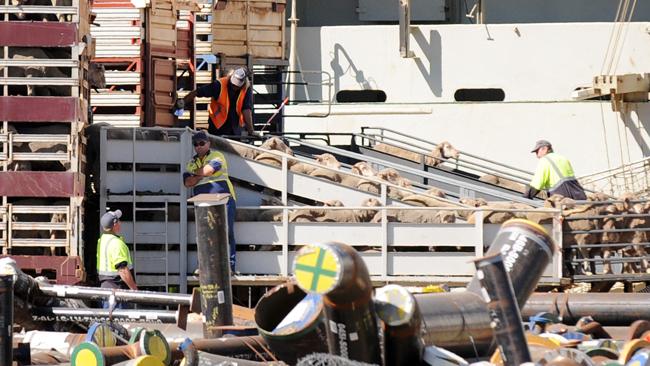
Australia: Campaign follow up – Freemantle City Votes to END Live Sheep Exports

We now have a very positive follow up to our post of 31st May regarding our request  to support the city of Freemantle in their call / meeting for live animal exports to be stopped at the port.

The great news is that the city council has now voted to end live sheep exports !

Many thanks to everyone who joined the call and who sent mails of support to the city council – your voice has been heard !

Our previous post:

https://serbiananimalsvoice.wordpress.com/2010/05/31/australia-please-support-see-below-the-city-of-fremantle-has-called-for-live-animal-exports-to-be-phased-out-during-the-next-five-years/

News article from Perthnow:

http://www.perthnow.com.au/business/fremantle-council-votes-to-end-live-sheep-exports/story-e6frg2qc-1225871875456

Article reads:

Fremantle council votes to end live sheep exports

  • From: PerthNow
  • May 27, 2010 7:18AM

FREMANTLE has adopted a policy aimed at putting an end to live sheep exports from the port.

A historic decision was made last night by the City of Fremantle to support a phase out of live exports.

More than 80 per cent of the nearly 4 million Australian sheep exported in 2006 were loaded through the port of Fremantle.

Fremantle Council has now joined Greens Member for South East Metropolitan, Lynn MacLaren, and Federal Labour Member for Fremantle, Melissa Parke, in opposing live exports on the grounds of cruelty.

Fremantle Mayor Brad Pettitt said the time had come for the “cruel and unnecessary live sheep trade to be phased out and replaced with a trade that supports local jobs”.

“This motion is not designed to move the trade south from Fremantle to Kwinana. We want it stopped all together and replaced with the less cruel and better economic outcome of frozen meat,” Mr Pettitt said.

Stop Live Exports campaign manager Jodie Jankevics said: “We welcome Fremantle Council taking this strong stance against live exports. There are many animal welfare concerns with this trade, and despite industry claims, very little improvements to animal welfare have been made.

“Not only are live exports cruel, but they don’t make economic sense either.

“Recent reports released show that a sheep processed domestically is worth 20 per cent more to the Australian economy than one exported live, due to the capacity to value add in Australia.

“Added to that, many West Australians are losing their jobs in the processing sector. Live export are sending animals overseas that would normally be processed here.”