Posted on August 20, 2019 by Serbian Animals Voice (SAV)
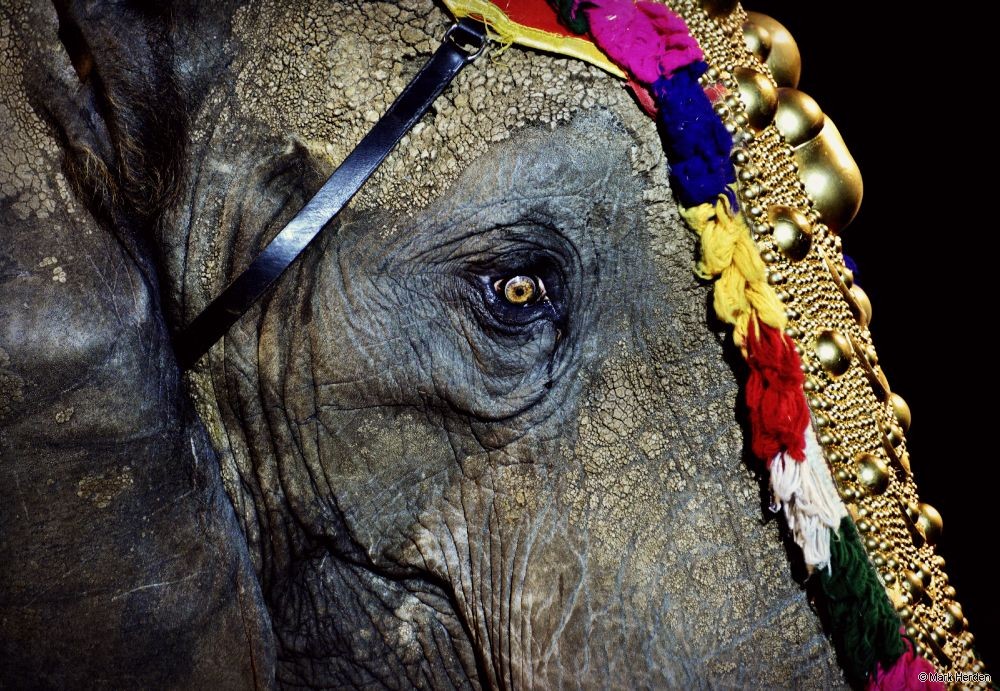
Tyke was a female Elephant born 1974 and died August 20, 1994 after being shoot by the police 87 times.
It took nearly 2 hours for her to die there on the street in terrible pain, lonely and afraid…
Tyke was trapped and taken away from her family when she was a baby. She was shipped to the circus. There, she was confined to a concrete room and beaten over and over, to break her spirit. Circus trainers hit her repeatedly with a sharp metal “bullhook,” which made her cry out in pain. They struck her in her most sensitive areas: behind her ears, on top of her toes, in back of her knees, and around her anus. They wanted to hurt her and frighten her so she would be obedient.
She spent most of her time in chains, doing nothing. Her bones ached from no exercise. Her diet was monotonous. She stood in filth and excrement. She was deprived of every aspect of normal elephant life.
The day she died she was as usual performing for Hawthorne circus which have a long record of animal cruelty violations. In 1988, according to USDA (United States Department of Agriculture) documents, Tyke was beaten in public to the point where she was “screaming and bending down on three legs to avoid being hit.” The trainer said he was “disciplining” her…
By April of 1993, she had enough. She tried to escape during a circus performance. She didn’t make it. In July she tried to escape again; she was unsuccessful. Hawthorn should have retired her right then and there, as she was an obvious threat to the public. But they didn’t.
Only God knows what punishment she received when brought back to the Circus.
For the next year she performed in the circus and lived in a barren concrete barn, chained, between shows. The bullhook beatings continued. She vacillated between terror and boredom.
In August of 1994 Tyke reached a breaking point. She had been in the circus nearly 20 years. She was tired of being beaten, whipped, and kicked. She could no longer take the pain and the confinement. She was angry and wanted to be free. At an afternoon performance at the Neal Blaidsell Center in Honolulu, it all came to a head.
At some point during the show, she veered from the script. Circus staff tried to beat her back, but no bullhook or whip could stop the rage that had been building inside her for two decades. She crushed her trainer, Allen Campbell. She attacked two other people. She panicked the crowd.
She ran into the streets. It was rush hour. She was disoriented and no idea where she was. She charged at bystanders and smashed cars as she made her way through several city blocks. Onlookers screamed. The police were called out and started shooting at Tyke with rifles.
She slowly fell over, then awkwardly stood back up. The police kept firing. Her head swayed, and her legs buckled. She got up again. The spray of bullets continued.
She rocked her head violently from side to side.
Her legs gave way once more. She was on her knees and could not right herself. Her eyes were fully open and confused. The shooting went on for several more seconds.
Finally, she fell, very slowly, onto her side.
This was Tyke’s final performance. The price of freedom from the circus was steep. She was shot 87 times!!!
…This is the two-class justice that protects the fascist law of the stronger, the ruler, the offender.
We respect animal rights only if they use our rights, that is, only if we remain the victors in the end.
We will not forget Tyke.
And we will continue to fight so that animals no longer have to serve as slaves the circus business.
Posted on August 20, 2019 by Serbian Animals Voice (SAV)
Rich Hardyhas been an undercover investigator and ‘visual evidence gatherer’ in the animal protection movement for 20 years. His upcoming book, ‘Not As Nature Intended’, follows his journey, telling the stories of the animals he’s met, and the people behind their suffering.
We spoke to him about the power of story-telling, the importance of visual recording, and what it’s like to be close enough to see everything, but just far enough away not to be noticed.
You call yourself a “visual evidence gatherer” rather than a photographer. Can you describe the nature of your work?
Rich Hardy: I learnt to use cameras as a way of gathering evidence for animal protection groups in my role as an undercover investigator. I think a ‘visual evidence gatherer’ is a more honest appraisal of what I’ve done.
The focus of my assignments has been to document systemic problems, law-breaking and to show what animals have to endure when farmed for food, bred for fashion, trapped for science or held captive for entertainment. Capturing images has been a big part of it, but it was also about gathering insider information to bolster campaigns. The resulting documentation has been used as evidence to create new laws, to support prosecutions, or has been released as part of media exposés to the press.
For nearly two decades I committed myself to go undercover for animals. The work varied, depending on the assignment. A project could be trailing live animal transport trucks across Europe for several days, or a week of surveillance at a circus, filming from the boundary of a hedgerow.
But my main specialisation was infiltration and getting close enough to the people and industries who are responsible for the cruelty animals endure that they would share their secrets with me.
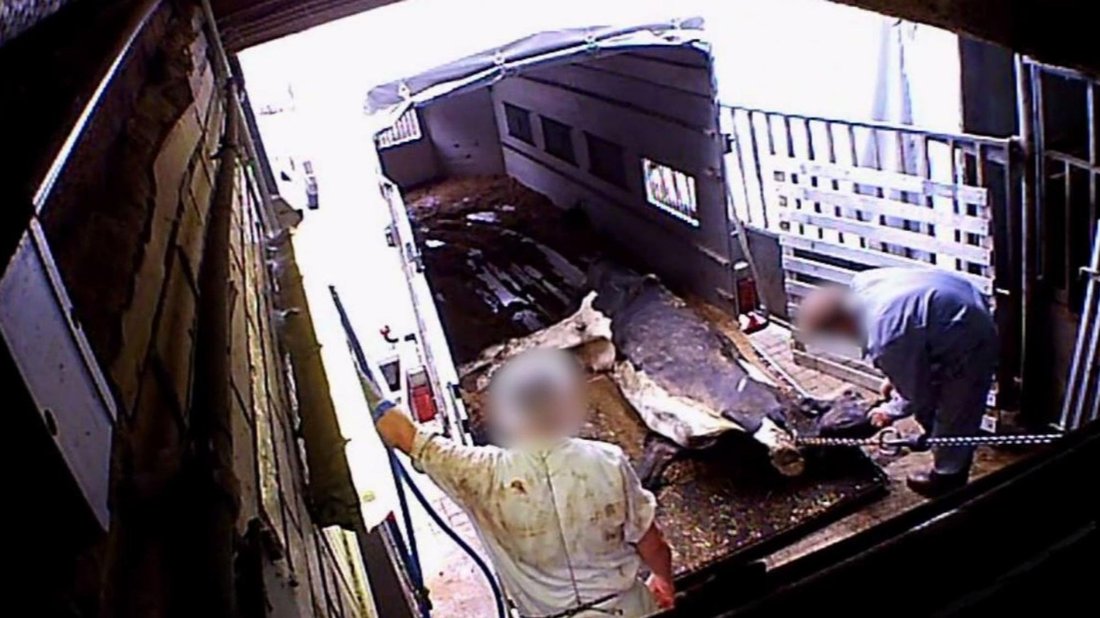
Image, Rich Hardy: Left to die. A factory farm in Italy.
What do you enjoy most about your work? What do you find most challenging?
RH:There’s not much to like during the projects. At times I felt pretty powerless swallowed up in situations of immense suffering.
During these moments, I just had to put those feelings aside, and focus on the task that had been asked of me. The natural instinct is to want to intervene when you see an animal suffering, but on investigations, particularly those that put you in direct contact with the people that own them, you have to take a step back.
I guess in some ways it’s a bit like theatre. You’re watching the cast perform, and you’re sitting in the front row of the audience. You’re out of the spotlights, but only just. Close enough to see everything, far enough away to not be noticed.
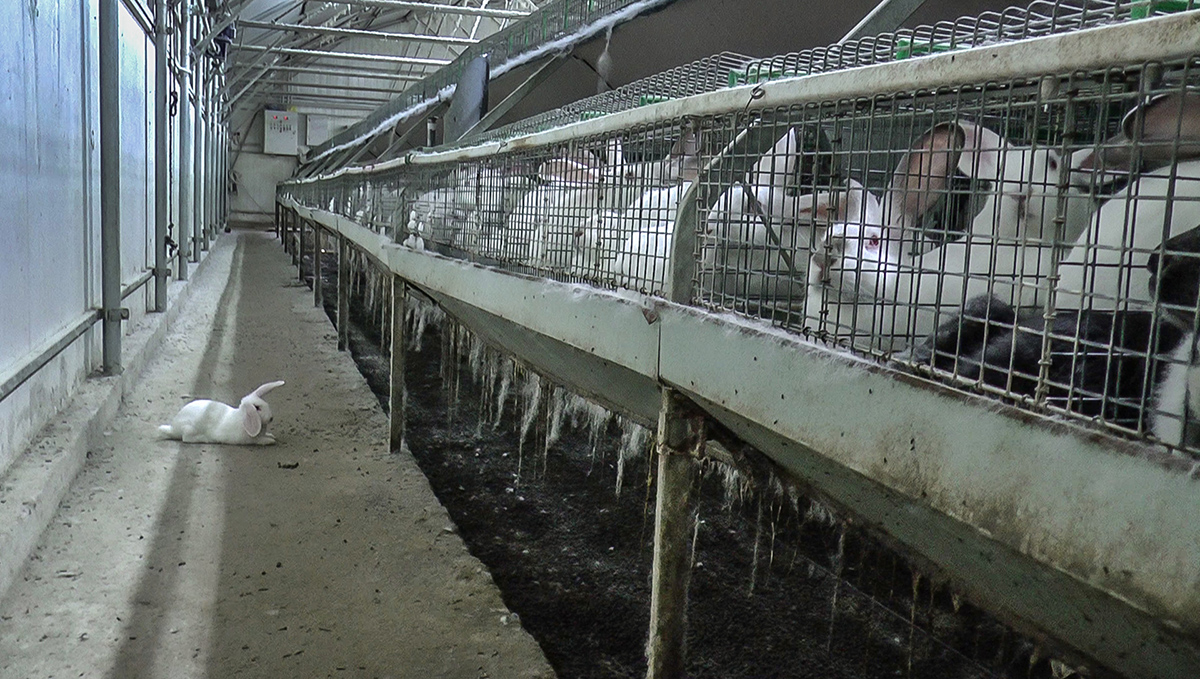
Image, Rich Hardy: Out of the cage but always a prisoner.
I don’t think I’ve ever enjoyed any of this work. I never expected to do it for so long either. I never set a timeline for how long I was going to do it, so perhaps that’s why it’s gone on so long.
I just kept answering the call when it came, and putting regular life on hold.
Does anyone need a comment about it?
No! We sincerely thank Rich Hardy for his courageous and well-planned investigative work that brings to light the suffering of the animals and the unscrupulous animal industry that produces it.
Posted on August 19, 2019 by Serbian Animals Voice (SAV)
World Orangutan Day
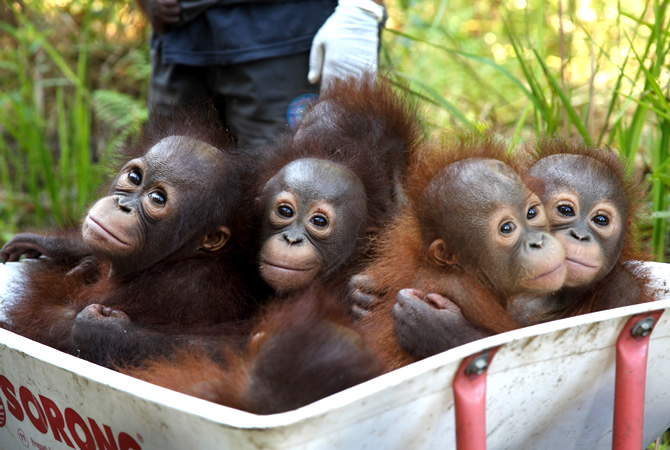
Mark – did you know that over 100,000 Bornean orangutans were lost between 1999 and 2015 mainly due to deforestation and poaching? And now these orangutans are critically endangered.
To help prevent further habitat loss, WWF Malaysia led a project in Sarawak to provide a sustainable habitat for orangutans as well as create a stable income for the local communities living alongside these great apes.
The Gaharu Tree
At the centre of this project is the Gaharu tree – a native plant to Sarawak that traditionally provided valuable wood to the local people. It was then discovered that the tree leaves could be made into a tea which can be farmed and sold.
Great news for both the local people and the orangutans, as the tree no longer needs to be cut down and can continue to grow with only its leaves being trimmed for the tea.
Because of this, the Menyang Taih people planted 8,000 Gaharu trees on empty and degraded land which prevented further deforestation – and with the help of WWF volunteers a further 3,000 trees were planted.
Encouraging tree planting means that the orangutan habitat can be protected and hopefully orangutan populations will grow and thrive in Sarawak.
This has changed for the positive within the last 24 hours.
The following is from Viva! who undertook the investigation and have been campaigning against conditions and treatment of animals at Hogwood for years.
First – the good news;
Mon 19/8/2109 – Tesco drops one of its biggest pork suppliers after animal rights campaigners release footage of shocking abuse at pig farm including animals being kicked and hit with metal rods
Tesco banned meat from Hogwood Farm in Warwickshire after an exposé
Activist group Viva! filmed images they claim expose ‘systematic animal abuse’
Campaigners released shocking footage of pigs screeching in terror as farm workers kicked them, slammed gates on them and hit them with metal rods
Viva! – before the announcement – This is their words:
Against all odds, we return to Hogwood pig farm to expose shocking conditions at Tesco-approved hell hole for the third year running.
You probably know the story – we’ve told it twice before. Back in June 2017, I went inside one of Britain’s largest pig farms: Hogwood. The horrors that my team and I filmed were impossible to forget.
This year, we left hidden cameras.
Just last month, we went back – this time armed with hidden cameras to capture round-the-clock surveillance. What we discovered was shocking: pigs ruthlessly kicked by farm workers and struck with metal riding crops and hand tools.
We filmed a farm worker slamming a metal rape rack onto a confined sow – she screamed as he administered a painful injection, then she was hit over the head.
Hogwood: The Story
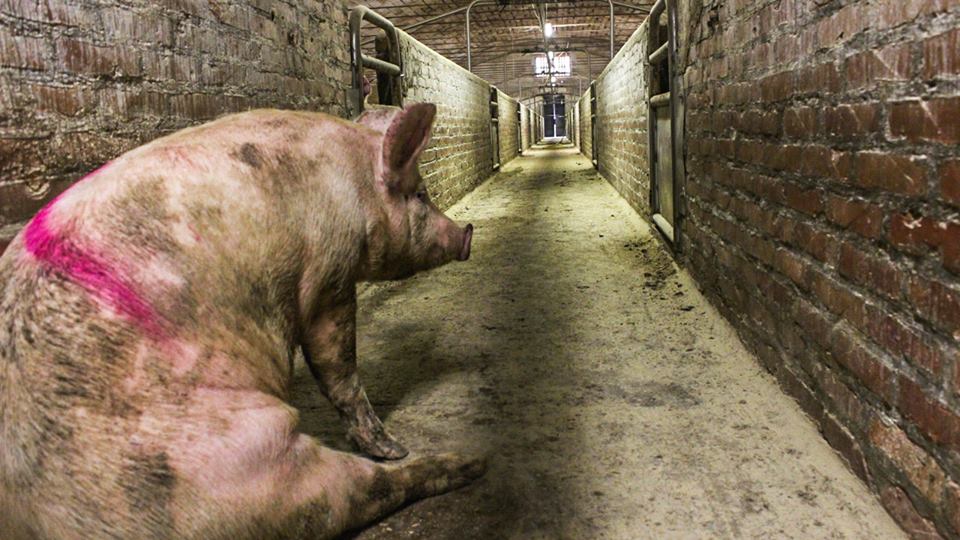
It was June 2017 when I first went into Hogwood Farm – and it’s a farm I’ve since come to know well. A huge industrial unit in Warwickshire, Hogwood houses over 16,000 pigs and supplies Tesco.
We have submitted official complaints to the RSPCA, Animal and Plant Health Agency, Red Tractor and Tesco – none of it resulted in action being taken to protect these pigs. All we received were worthless assurances.
Big business and the meat industry don’t care about the distress and misery at Hogwood farm. We need you to stand up and help us expose this horror.
Posted on August 19, 2019 by Serbian Animals Voice (SAV)
Germany is the largest milk producer in Europe. More than 33 million tons give our cows a year. Lots of milk, yoghurt, cheese – all at low prices.
Cows have to give more and more milk. That makes most animals sick. According to BR24 research, more than one and a half million dairy cows are “sorted out” nationwide each year.
Veterinarians and scientists speak of torture.
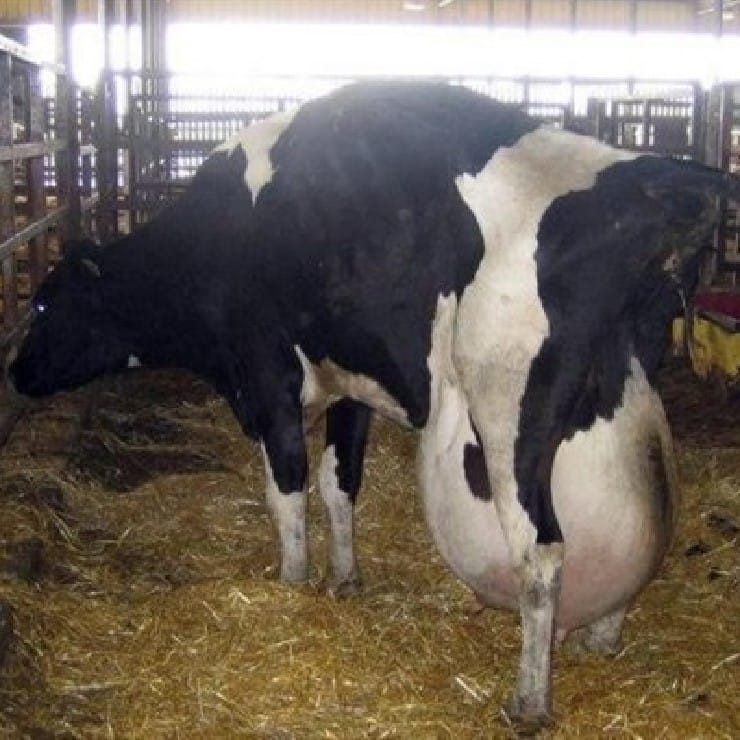
On average, a cow today has to give twice as much milk as in the 1970s. This means an increase from 4,000 kg to 8,000 kg per animal. The high performance has its price, says the agronomistMatthias Gau ly of the University of Bolzano:“We have problems with animal health and, accordingly, with animal welfare, and that’s something we urgently need to change.”
“The higher the performance of the animals, the sooner animals go off.”
Every year 1.7 million dairy cows are sorted out
According to research by the bavarian broadcasting, according to the latest figures, around 1.7 million dairy cows are sorted out each year, ie slaughtered or disposed of in animal carcass disposal. Most because of injuries, illnesses or too low milk yield. This resulted in a query in associations of the dairy industry in all 16 federal states.
Torment breeding: the cows are milked to death!
What does it mean for a cow to perform well? This great animated film from the news channel BR24 makes it clear to us in a short and realistic way. The film is also very suitable for children.
The translation follows below.
…bloody milk…
Dairy cows are bred to perform well.
They give up to 50 liters per day
To produce a lot of milk, the cow has to give birth regularly
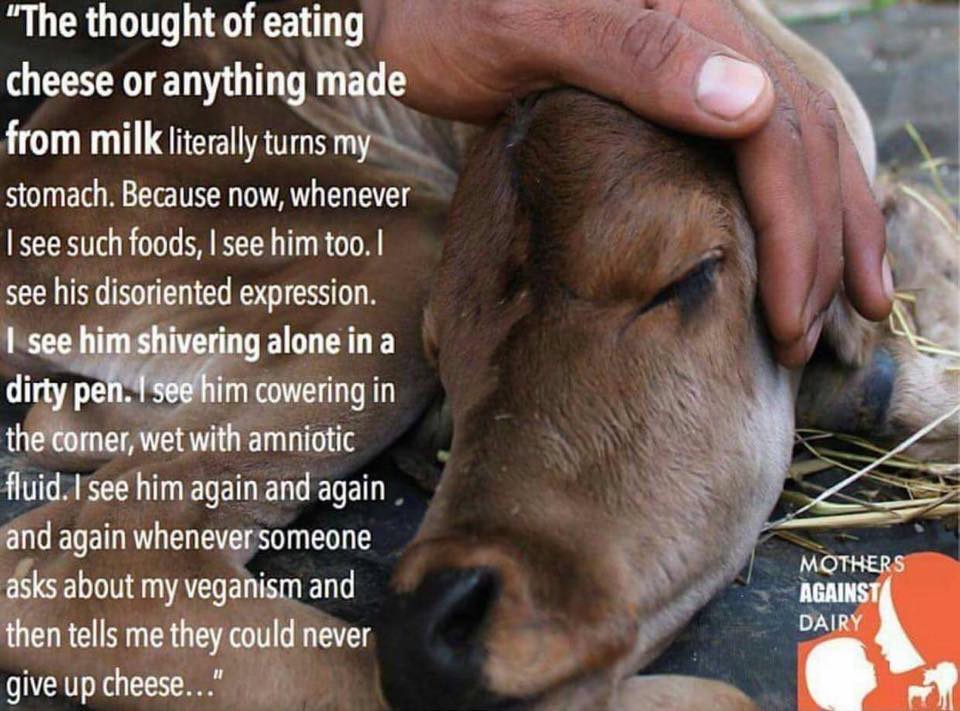
Usually the calf is then removed from the mother immediately
Because the mother’s milk is to be sold
Female calves later become dairy cows themselves
Male calves are a waste product to be fattened and slaughtered there
Irene Weiersmüller, Animals Angels: “Often the calves are not weaned, that means they are used to milk, not to hay or cold water, and the trucks can not give that to the animals
unsupported animals and calves die on the streets …
Animal rights activists and veterinarians have been observing such ills for years
But even the adult high-performance animals suffer, giving viuel milk makes the cows ill:
mastitis
Metabolic problems
Claw and joint diseases
This causes veterinary costs and more effort in the stable”
Matthias Gauly, agricultural scientist: “There are many farmers who are overwhelmed with the high-performing huh, because they can no longer afford this balancing of keeping, feeding and care of the animal”
Sick animals become unprofitable in this system, they often come too young in the slaughterhouse
Lots of milk, a lot of animal suffering. Does Germany have an animal welfare problem?
My comment: Animals are tortured until they get sick.
The milk of the sick animals makes people sick.
And the unhealthy milk from the sick animals is still advertised as healthy and given subsidized by the state as school milk in the schools to the children.
And the environment and climate are also ruined by animal feed, liquid manure and methane.
A shick, criminal system that only ministers, farmer associations, abattoirs, animal transport industry, and stupid human carnivores, the victims of advertising want that.
Can someone else want that? If so, who?
2018 marked the 20th anniversary of the first We Animals photo and a year of tremendous achievement in the world of animal photojournalism.
Photography: Jo-Anne McArthur
Film: Kelly Guerin, 2019
Narration: Jo-Anne McArthur
We Animals Media Mission
We Animals Media recognizes the invisibility of animals in our world and seeks to give their lives and stories a place in the public conscience.
Through compelling photography, journalism, and filmmaking, We Animals Media illuminates the lives of animals used for food, fashion, entertainment, work, religion, and experimentation. We are committed to telling these stories through an empathic lens – collectively widening our circle of compassion to include all animals.
We Animals Media also seeks to mentor the next generation of media makers, create bridges between social movements, and inspire solutions that will result in a kinder and healthier world for all.
Thousands of photographs and videos are available to individuals, organizations, and media outlets around the world via our We Animals Archive.






 Serbian Animals Voice (SAV)