Posted on September 14, 2019 by Serbian Animals Voice (SAV)
EU: Over 1.5 million people want to see the end of cages for farmed animals
The End the Cage Age European Citizens’ Initiative (ECI) has closed with over 1.5 million signatures asking the EU to put an end to the confinement of farmed animals.
With the largest European petition ever for farm animal welfare ending at 23:59 last night, today is one of the most significant days for farm animals that the world has ever seen. At the time of writing, more than 1,500,000 people have signed, with the final total still being counted as paper petitions continue to pour in from the public.
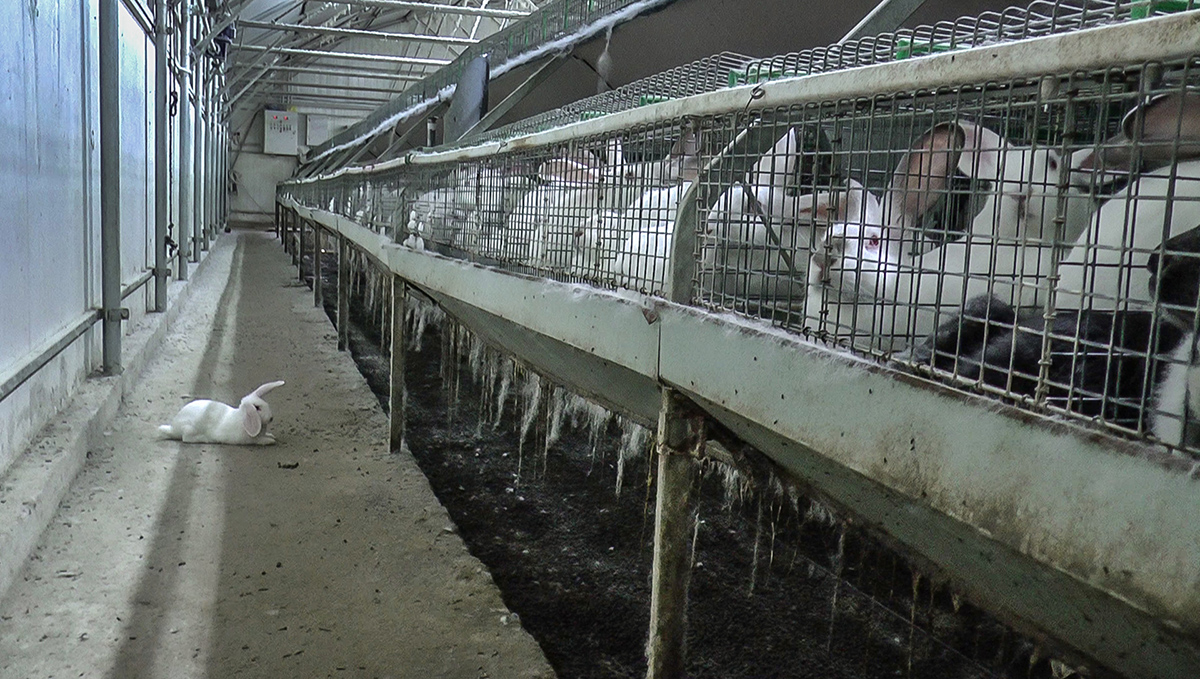
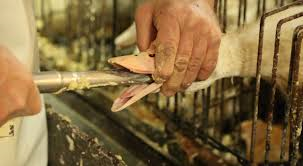
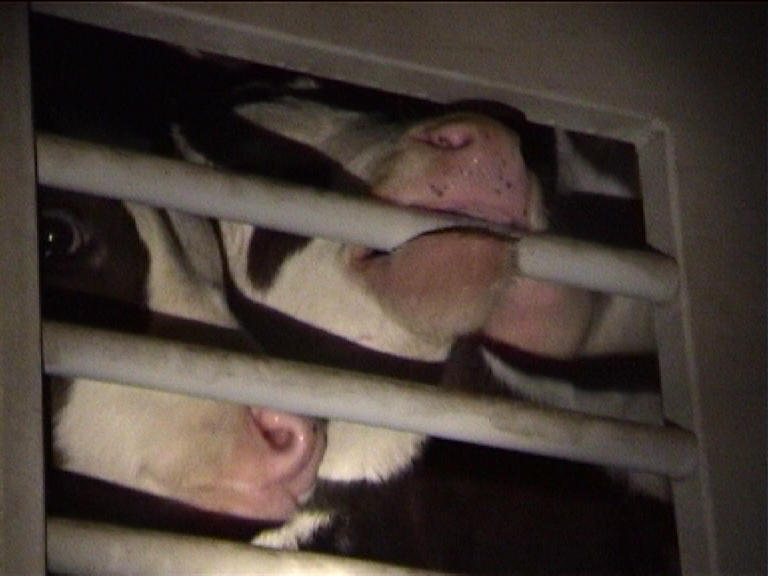
Over 300 million pigs, hens, rabbits, ducks, quails and calves across the EU are still reared in cage systems that are designed to cram in the highest number of animals possible for the sake of maximising production. But such systems deny sentient creatures the most basic of freedoms, such as the space to move; and science and even practice have shown that cages are outdated and obsolete.
The End The Cage Age European Citizens’ Initiative was launched in September 2018 by Compassion in World Farming in partnership with Eurogroup for Animals and over 170 other animal welfare and environmental organisations across the EU – the largest ever coalition in the name of farm animal welfare.
To hit the 1 million signature target – the official number needed for a successful ECI – the campaign held events throughout the EU, collaborated with influential MEPs and celebrities, launched undercover investigations into the caged farming of calves, rabbits and sows and unveiled a new digital campaigning platform that allowed the public to build their own signature collection pages. These actions and activities helped to unite a continent against cruel cages.
“Of all the terrible ways we control animals, the cage is one of the most primitive and barbaric,” says Reineke Hameleers, Director at Eurogroup for Animals. “With this tremendous backing, the key decision makers EU Commission and Council have to understand just how important this matter is to EU citizens, and start the ball rolling towards this seismic shift in our food and farming systems.”
Few ECIs ever reach the required one million signatures, so today’s count represents a monumental step on the path towards sparing animals the enormous suffering they experience now in barren, overcrowded cages, and even towards ending factory farming. Within three months of receiving the signatures today, EU Commission representatives must meet the organisers, adopt a formal response spelling out what action it will propose in response to the citizens’ initiative, if any, and the reasons for doing so – or not doing so.
Because this is an official EU initiative, each signature goes through a verification process – which can make or break the ECI. A total count of signatures may include up to 20% of invalid data, such as duplicates, incorrect ID numbers or dates of birth, the wrong resident status or even illegible handwriting, so a buffer of at least 300,000 signatures was needed.
With more than 1.5 million signatures so far, End the Cage Age’s success should be more than enough to persuade the European Commission to start the legislative procedure to end the use of cages for farm animals across the continent.
“Today we have crossed the finish line in the biggest political push in farm animal welfare history. But the fight to get animals out of cages isn’t over yet,” says Reineke Hameleers. “Now it’s time for the Commission to make the changes that the citizens demand and bring us closer to the day when cages are relegated to the history books.”
Many years back; 20 or more; the live animal export trade from the UK via English ports such as Dover, was at its peak. I used to travel down to Dover and other ports several times a week and do (undercover) monitoring of the (live animal export) trade. There were several of us at Dover and we all got together to wait for the livestock truck carrying ship(s) to arrive at the harbour late in the evening. They were special ships which had to be chartered because we had made some massive wins in getting the normal ferry companies to stop taking live animals to the continent. Animal transporters were banned from normal passenger ferries – people did not want to share their holiday crossing experience with animals going to their deaths; so those same people spoke out and the ferry companies buckled. That was a big win; but the trade did not stop entirely. The industry was forced to charter its own ships to take the trucks; along with the financial overheads that came with it.
The special (livestock transporter) boats usually arrived late in the evening; like 11pm or midnight. From our vantage points on the cliffs, we watched them arrive a few miles off the harbour at a section of the English Channel which is known as ‘The Downs’. From there they had to get a pilot to bring their ship into the harbour; that was fine with us – ship charter; paying for a pilot etc; all extra costs to the industry involved with live animals.
So late at night we (campaigners) congregated in a region up on the famous Dover White Cliffs which overlooked the harbour; at a place known as ‘Langdon’. We watched the ship come into the harbour under pilot control until it berthed at the far end (left pier) of the harbour. You can see the kind of view we had from the cliffs in this video:
At night, with all the lights in the harbour, it was impressive to say the least. A sort of ‘Close Encounters’ situation. Once the ship had docked on its usual left hand pier; we then had to hang around and wait for the rear doors on the ship to open and the ramp be lowered. Then was the first real signs of the nights trade for us – how many empty livestock trucks were going to discharge from the ship and make their way up to the local lairages to collect the animals; which had been specially brought down to these farms ready for export. Usually, most nights, we counted somewhere between 6 and 9; sometimes more, sometimes less.
One of the local farms (or ‘lairages’) where the animals were kept ready for export was also operating a business on the side as a caravan park. So, what do you do in such situations ? – you buy a caravan and place it in the farm caravan park; right next to the old pathway which the trucks used to get down to the animals sheds. With people there having a great nights caravanning !; and the use of mobile phones and a kettle for a cup of tea ; we could keep each other informed exactly of the trucks, their registration numbers; haulier, and type of animals they were carrying. Observers literally within a few feet of the transporters as they arrived empty, and left loaded with animals. It was a well organised arrangement; livestock trucks monitored from the minute they arrived at the harbour on the ship; all the way up to collect the animals at the lairage; and then still monitored at all times on the to their return to the harbour; where they were always greeted by a ‘reception group’ even at 2 or 3 in the early hours of the morning; who had been informed who exactly was on their way down. We never let up; they were monitored and tracked from the moment they arrived until the moment they left. Our system was good; very good.
Eventually, and to get a good view of the loading of the trucks onto the ship, we returned from our reception duties at the docks to Langdon up on the cliffs. Up there it was wild, dark and bleak; with the forever Dover cold wind blowing in off the English Channel. We kicked around; talked, drank hot tea and waited for all the trucks to load back onto the ship ready to head over to France and god knows where else. Sometimes the odd ‘lady of the night’ would appear and offer her services to some of the blokes. They were never taken up as we were decent folk and there was much more important things to do !
The whole exercise from unloading the empties off the ship, to driving up to the lairages, loading, and then getting back to the harbour to load the full animal transporters that had come back from the lairage usually took about 3-4 hours. It was always in the darkest of dark times of the night; the trade did not want to be seen by the general public – but they were; we watched their every move; and we always followed up with reports and publicity on what was happening in those ‘dark hours’.
Once all the full livestock trucks had loaded back onto the same ship that they arrived on; we sat and watched as the rear ramp and doors closed up; the signal that the ship was ready to leave the harbour once again with all the innocents on their final trip to god knows where.
Watching the loaded ship sail out of the harbour destined for France with what, 6, 8, 10 animal transporters loaded was always a difficult time for me personally. We had done everything we wanted to do each night; gathered the information and let the industry know that even at that time we were around; but for me also, we had failed the animals by allowing them to sail away to their deaths. Saving and stopping all the trucks was impossible; we knew it; but witnessing the situation always made you feel like you had let the animals down by not saving them. I was quite a big ‘U2’ fan at the time; and I always sat in my car up on the cliffs and played ‘Exit’ from the ‘Joshua Tree’ album – the haunting Bass and a time of real despair; as I watched the ship sail out of the harbour with its cargo of death. The music; the experience yet again; everything seemed to come together at that moment in time.
Music has a real power – often to be the right track at the right time to hold memories –‘Exit’ was right for the betrayal of animals that I witnessed so regularly at those cold, dark; upsetting nights at the docks. Even now; 20+ years later, that track (Exit) always takes me back to those cold and windy nights up on the cliffs watching the livestock carrier departing for France. That track always brings back that situation to me of being there and witnessing the suffering for a few pennies more. Sometimes I would stay on longer and watch – from high on the cliffs you could watch the ship sail across most of the Channel almost until it had arrived in Calais; what, some 23 miles away. Sad times, bad times, but in the end we stopped it completely at Dover. It felt good to be of the crew that did that !
Posted on September 12, 2019 by Serbian Animals Voice (SAV)
For years, eyewitnesses have reported the neglect and deaths of horses used for packing tourist gear along the Havasupai trail in the Grand Canyon. The latest complaint describes a dead horse simply discarded in the middle of the trail in August 2019.
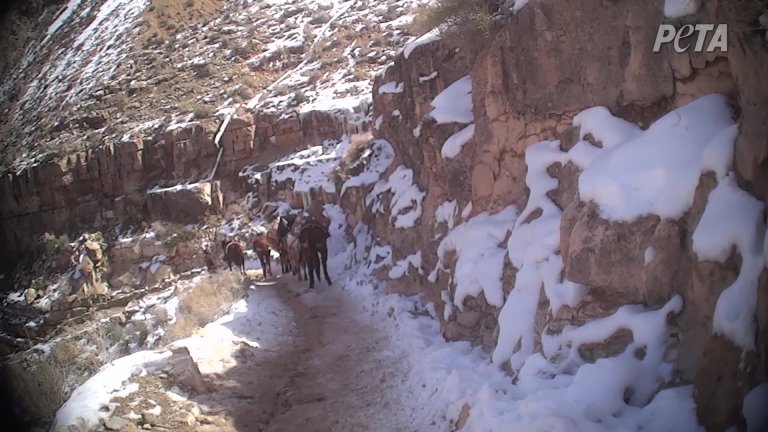
New PETA eyewitness footage shows that this is systemic abuse. Animals were seen being forced to carry heavy loads up and down steep trails—at as much as a 19-degree incline—in all weather extremes, sometimes slipping and even reportedly falling over the edge.
PETA eyewitnesses saw horses whipped and mules slipping on the icy, muddy trail, and many animals were left sweating and panting from the arduous journey.
And I mean...If you are looking for adventure and want to explore nature, you have to move your ass yourself and carry your own baggage.
That will be some fat nature lovers do well anyway, because only so can burn some calories. Enjoy nature on suffering and blood of other beings is not a nature adventure, it is bloody sport! That means a sports variety for brain-sick and mentally weak proletarians.
Posted on September 12, 2019 by Serbian Animals Voice (SAV)
This frantic mother dog’s love of her puppies has her digging with paws, biting at stones and tearing at the rubble to free her buried babies who are trapped after a house collapsed in the rain.
When Animal Aid’s rescuers arrived, they feared the puppies might not be alive, but their Mama must have been able to hear them or sense that they were still alive and she was determined to tell us so.
Every minute was precious and she seemed to realize that they could suffocate at any moment. You’ll never forget this incredible portrait of a blissful rescue and a mother’s unstoppable love.
For a mother, nothing is more important than the safety of her children.






 Serbian Animals Voice (SAV)