Posted on October 20, 2019 by Serbian Animals Voice (SAV)
Germany faces the biggest farmer protests in decades. The demands represented there are so far to the right that they are supported by the AfD (right-wing radical party) as the only federal party.
The initiative “Land creates connection”writes on its website: “We organize ourselves, we are under no association, no organization, no institution. We are simply farmers “.
But! In an internal Internet chat of the demo initiative, whose protocol is the “taz”, writes the vice president of the Schleswig-Holstein regional association, “the farmers’ association has supported this action all the time”.
The appearance of independence is important to the movement because it increases its credibility.
The point is that this will not be the demonstration of politicians, as has been the case for decades, but of “farmers who want to take their destiny into their own hands,” as the initiative writes, inspired by the Dutch peasant protests and the Internet education.
Thus, the Facebook group of the same name has won more than 14,000 members in about two weeks.
The farmers advertise for themselves now with such stupid gibberish posters! half english/ half german, who should take it seriously?
In terms of content, however, the initiative with the farmers’ association is in line: Both reject the “agricultural package” of the Federal Government.
The Cabinet wants to prohibit the weed killer glyphosate, which is suspected of causing cancer, from 2024 onwards and all weed killers as well as particularly harmful insecticides in most nature reserves – especially in order to reduce insect killing.
In addition, more agricultural subsidies, which have so far been paid mainly for land ownership, are intended to finance environmental projects by farmers. “The agrarian package endangers peasant family farms,” said the initiative.
Because less pesticides and area payments mean economic losses.
The Federal Agriculture Ministry replies to such allegations that pesticide bans are limited to certain arable crops and 158,000 hectares of arable land.
Well, the demo initiators are also turning against the planned tightening of the fertilizer ordinance. The plants would then get too few nutrients.
The Ministry of Agriculture replied that the groundwater was too heavily contaminated with harmful nitrate in several places.
The substance comes mainly from fertilizers. Germany must reduce the burden, because otherwise it would have to pay a penalty for years of violations of the EU Nitrates Directive.
The demo organizers also criticize “the permanent negative sentimentalism, the peasant bashing” by politics and non-governmental organizations.
And now it`s be funny: the organizers, however, have a problem with the Federal Association of German milk farmers. When they pointed out in a press release on the demo, the organizers demanded in harsh YouTube videos that the group withdraws its statement.
Finally it was planned that no federations participate. Unlike the demo initiators, the dairy farmer association has acknowledged “the need for significant change” in agriculture.
The German milk farmers demanded that “the anti-competitive market superiority of the buyers of our products should be limited in order to be able to obtain prices for our products which correspond to their high value”.
But the demo organizers do not want to know about “fair prices.” In a chat, they issued the rule: “no posters with fair prices,” etc.
As in the AfDmilieu (right-wing party of Germany), the mistrust of “the media” and environmentalists is great, even among the demo organizers.
In an official code of conduct, the group requires participants to: “Do not participate in discussions with activists” and: “Refer the media as much as possible to the visible and appointed persons (press spokesman) of the organization.”
The organizers expect next Tuesday- in Bonn alone- according to police with 8,000 to 10,000 participants and 700 tractors.
My comment:- German farmers have made howling a profession:
– They express their solidarity with the far-right party of Germany.
– They also want to be free for using of pesticides, glyphosate and nitrate toxins in nature reserves without control
– They practice miserable domestic conditions for “useful” animals
– They poison our groundwater
-They have not suggested solutions, just leave everything as it was, and then … – they howl !!!
No word about it, how do they see the climate catastrophe? How do they see the mass extinction, what contribution does agriculture make to this?
How do they think this can be reduced?
They want to ban the dialogue with animal rights activists during the demo, because for the farmers it is inconceivable that people do something good out of conviction.
They play the victims, they are the oppressed, the discriminated, the exploited … in international competition, the German farmer is always there and ahead.
It has to end someday, it is sick!
Posted on October 18, 2019 by Serbian Animals Voice (SAV)
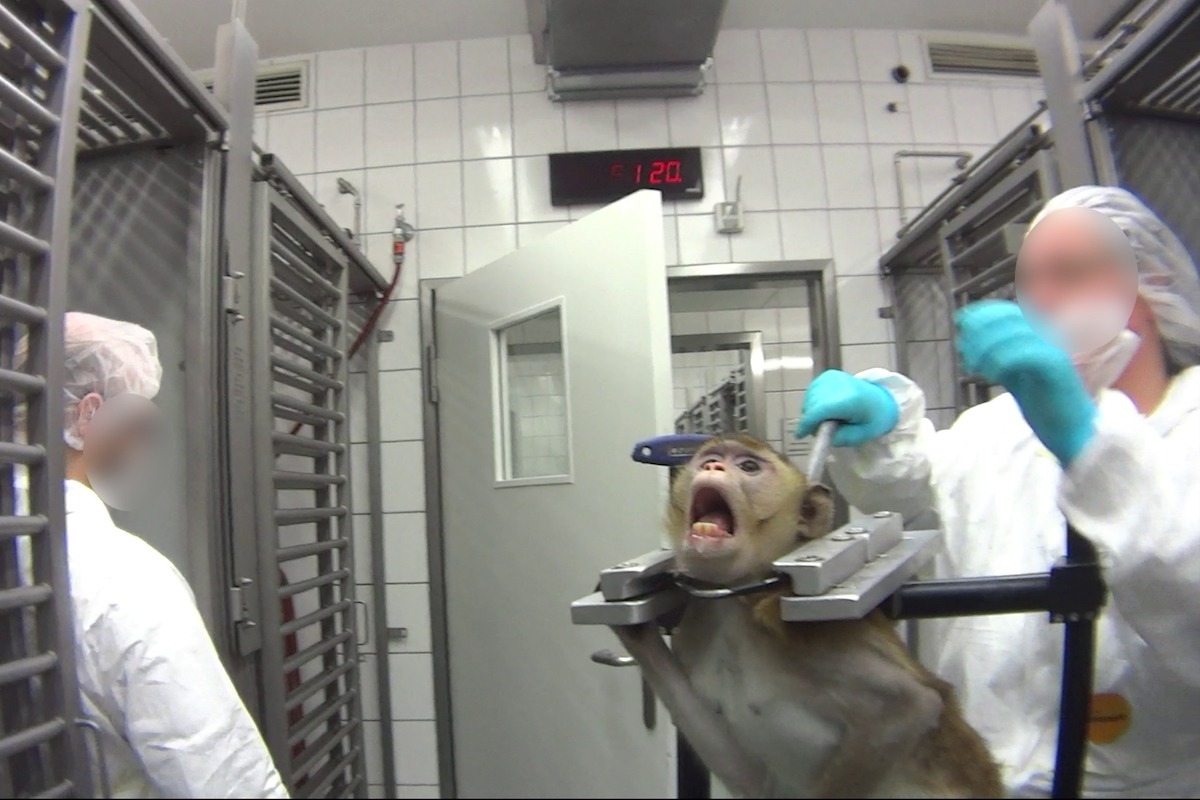
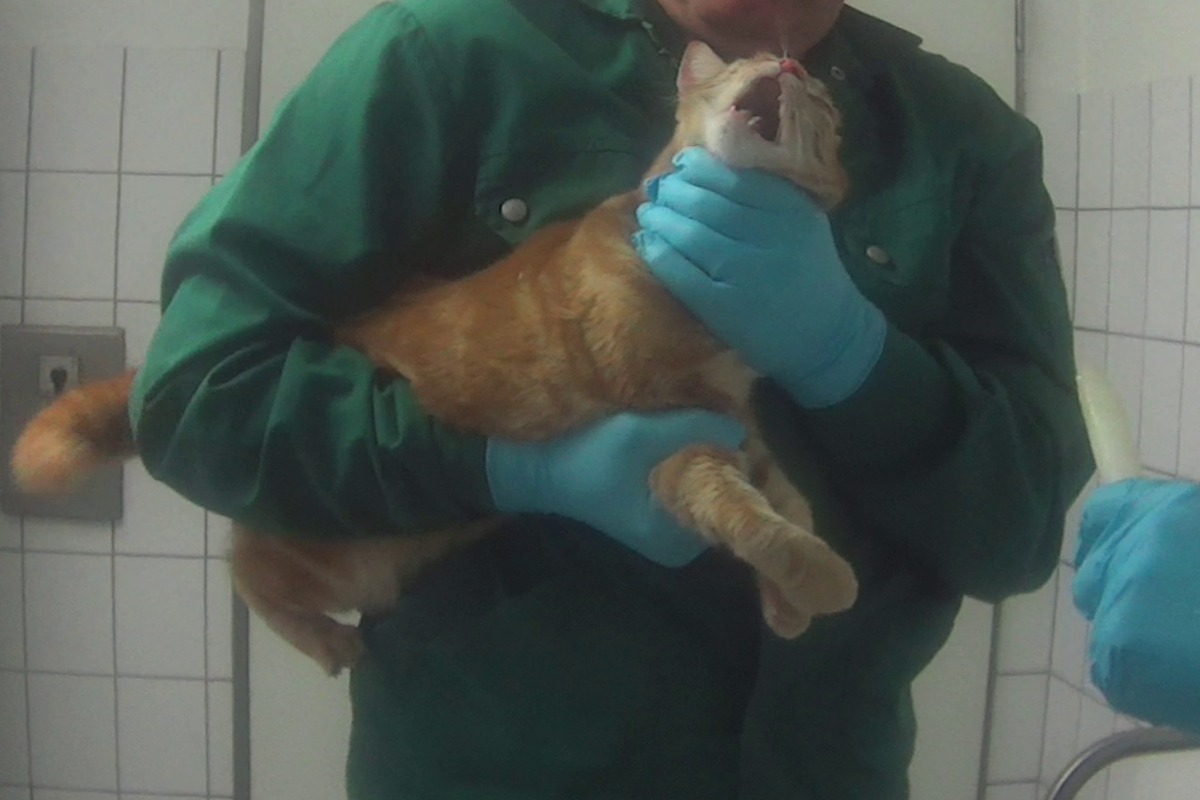
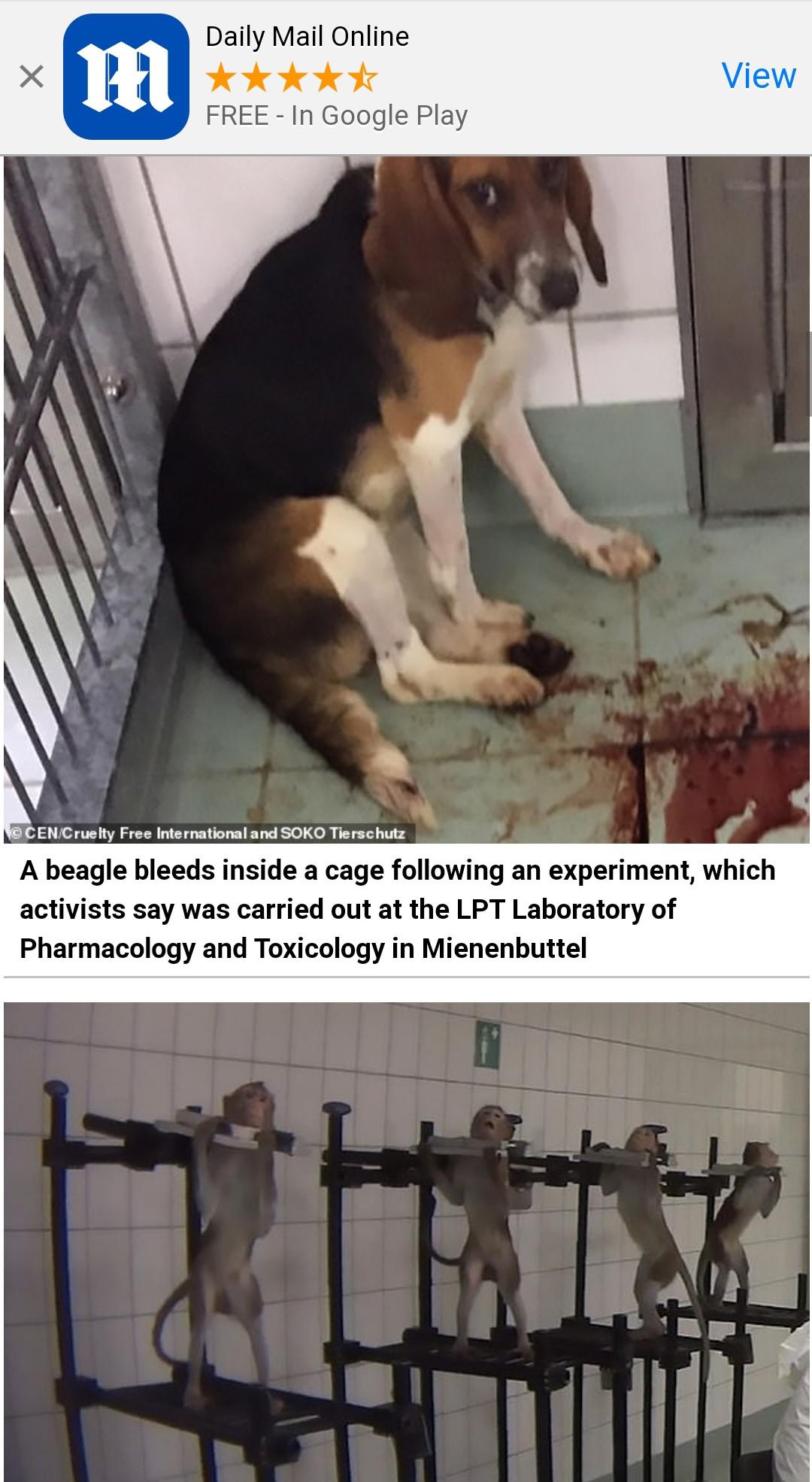
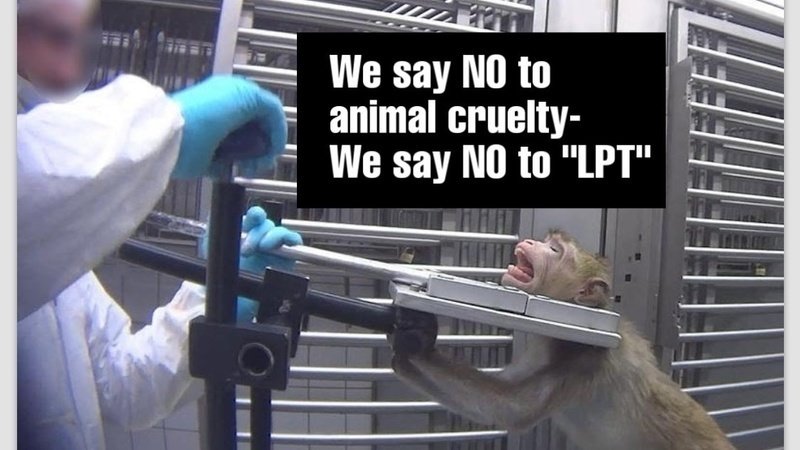
The animal rights organizations SOKO Tierschutz and Cruelty Free International have published disturbing video recordings from the inside of the animal laboratory LPT(Laboratory of Pharmacology and Toxicology GmbH & Co. KG) in Mienenbüttel near Hamburg (Germany).
The pictures show bleeding dogs that are left to their fate and die miserably. The cages of the animals are sometimes much too small. Individual employees are filmed in sadistic behavior. An activist was smuggled in via a job ad and was able to report undercover from the lab for a long time. He made extensive video footage.
In hardly any other European country are so many animal experiments made, as in Germany – and many laboratories and their employees do not follow the rules. The now shows an undercover research of SOKO animal protection from the LPT laboratoryin Mienenbüttel (Hamburg).
The images show, among other things, the monkey attitude of the laboratory.
Brisant: An animal had a different number according to a tattoo than on the cage. Several co-workers reported that this monkey was replaced.
The old animal had died, according to their statement.
According to the announcement of SOKO Animal Welfare, this death seems to be due to the failure of the laboratory staff.
These were then instructed to conceal the new monkey’s number and continue using the old monkey’s number. Until the killing of the exchange monkey, this practice was maintained. The employees later reportedly commented that the number after the section simply exchange again.
The fact that this procedure falsified the study simply because the animal was exchanged did not seem to bother anyone.
It shows how much we can rely on the results of our lab tests, and on which filthy hands and sick brains our health lies.
If the acute suspicion confirms that a huge primate study has been manipulated in this way in the LPT, that all questions, and the laboratory must immediately be revoked the operating permit.
This not only means torment for animals, but also a drug for people whose development is based on misappropriated data and a falsified course of studies.
The founder of SOKO Animal Protection Friedrich Mülln said:
“If the acute suspicion confirms that a huge primate study has been manipulated in this way in the LPT, that all questions, and the laboratory must immediately be revoked the operating permit. This not only means torment for animals, but also a drug for people whose development is based on misappropriated data and a falsified course of studies.
That means: It is not only about the situation of the animals in the experiments, but also about the fact that a foreign company may carry out experiments in German laboratories.
Friedrich Mülln criticizes, the orders came from all over the world, the animals too.
This absurd and at the same time criminal situation poses some questions:
-Who is behind it?
-In whose order do such crimes happen?
-Under what law is it foreign companies conducting experiments in German laboratories?
And nobody wants to know anything about it!
As LPT is confronted with the subject of animal cruelty, it said:
“the Veterinary Office had nothing to complain about” !! Although it is confirmed that the veterinary authority has not helped the suffering animals.
They are the ones who claim that “we were just following orders”.
Josef Mengele would be proud of his countryman’s!!
Could not we have taken our useless politicians for that?
The UK’s Centre for Environment, Fisheries and Aquaculture Science is due to publish a study according to which pulse trawling, also known as electric fishing, kills off more than half of the seabed species, while traditional fishing methods only impact 21%. EURACTIV’s partner le Journal de l’Environnement reports.
The Centre for Environment, Fisheries and Aquaculture Science (Cefas) compared two British fishing areas of similar size, ecosystem and sediment composition, and analysed the quantity and condition of the fish species.
The only difference between the two fishing areas is that only one of them has electric beam trawlers operating in it.
“This is the standard methodology for studying the impact of fishing gear on ecosystems. It is the same protocol that Cefas followed when it documented the impacts of the classic otter trawl,” noted Didier Gascuel, a professor of fisheries ecology at Agro Campus Ouest.
57% of benthic species have disappeared
The study showed that the area in which electric fishing had been practised had much less biodiversity, as the zone lost 57% of its species. Conversely, in the other fishing area, which did not have pulse trawlers operating, only 21% of the species had gone extinct.
“This study is important because it is the first of its kind to assess impacts in the field,” according to Didier Gascuel.
By sending electric shocks into sediments, beam trawlers caught flatfish more easily. But in the process, this destroyed half of the organisms which lived at the lowest level of the body of water, also known as ‘benthic species’.
Soles also disappeared
The researchers said that 17 benthic species observed in the reference area have vanished from the area where pulse trawlers had been active. And all the species present were strongly affected.
There were 2.6 times less common soles, while half the thornback rays had disappeared. This might be explained by the inability of electric trawlers to fill their sole fish quota last year.
An entire ecosystem at risk
On the other hand, this area is home to a growing number of fragile brittle stars, similar to starfish, as well as hermit crabs, a scavenger species.
“This shows that benthic species are highly impacted. The invasion of these [scavenger] species is a sign that the entire ecosystem, which is losing biodiversity and resilience, is more generally at risk,” Gascuel explained.
A total ban for July 2021
Banned in Europe by the Regulation of 30 March 1998, electric fishing still benefits from derogations granted “on an experimental basis” to 5% of every member state’s fleet of pulse trawlers.
This gap was mainly filled by the Netherlands (84 vessels in 2018), but also by Germany (which also has six Dutch-owned sole-fishing ships), the United Kingdom and Belgium.
And all their fleets operate in the southern parts of North Sea.
Last February, the EU took a stricter stance by finally banning this fishing practice in all European waters from 1 July 2021 onwards. This was in part thanks to the mobilisation of Bloom, an environmental NGO.
However, the Netherlands decided to challenge this ban before the European Court of Justice on 9 October.
Many Dutch trawlers catch bottom-dwelling fish with bursts of low-voltage electricity, sparking fears from other fishing nations and some environmental groups.
Ton Koene/picture-alliance/dpa/AP Images
Tensions flare over electric fishing in European waters
In a surprise outcome, the European Parliament voted today to ban a type of electric fishing that has demonstrated environmental benefits, as part of legislation to reform Europe’s fisheries.
The proposed end to “pulse trawling”—in which short bursts of electricity get flatfish out of the sediment and into nets—is a major disappointment to Dutch fishing companies, which have invested heavily in the technology; they claim it’s less damaging to marine ecosystems than traditional bottom trawling and saves energy. But some environmental groups applaud the parliament’s decision.
Many observers had predicted European Parliament would only recommend scaling back pulse trawling. “I’m baffled, to be honest,” says Marloes Kraan, an anthropologist at Wageningen Marine Research in IJmuiden, the Netherlands. “We had prepared ourselves for a bad outcome, but a ban was totally unexpected,” says Pim Visser, director of VisNed, a trawling trade group in Urk, the Netherlands.
group in Paris that has led a campaign to stop pulse trawling, declared the vote “a tremendous victory for the ocean, for artisanal fishers and Europe.” BLOOM worries that pulse trawling harms nontarget marine life; fishing groups in other EU countries, meanwhile, are increasingly angry about competition from the Dutch pulse trawlers. Other nongovernmental organizations, however, including Greenpeace Netherlands, say pulse trawling has promise to increase sustainability and that ending it now would penalize the fishing industry for innovating. “We call upon the fishermen not to be discouraged to embrace further innovation,” the North Sea Foundation said in a statement about the “unfortunate” outcome.
The vote is just the first step in negotiations with the European Commission and member states over the large package of fisheries reforms.
We call upon the fishermen not to be discouraged to embrace further innovation.
North Sea Foundation
Most bottom trawlers drag a net, held open by a wide metal beam, across the bottom to catch shrimp or fish. Trawlers targeting flatfish, such as sole or plaice, also use dangling iron chains to scare them out of the sediment. The beam and chains disturb or kill many bottom-dwelling organisms, the nets catch unwanted species, and all the tugging requires a lot of diesel.
Pulse trawlers, by contrast, barely touch the bottom because they use bursts of low-voltage electricity to catch flatfish, particularly Dover sole. After the current briefly cramps their muscles, they try to flee, and many end up in the net. Because sole are more susceptible to electricity than other species, pulse trawling reduces bycatch. And the gear is lighter and can be towed slower, so the boats burn half as much fuel and impact less area. “We catch with a lesser environmental impact and greater economic returns,” Visser says. He credits the gear with saving many fishing companies from bankruptcy.
Sea bed A charged approachMany Dutch fishing vessels have adopted electric pulse trawling, but competitors and some environmentalgroups object. In pulse trawling, a wingshaped beam glides above the sea bed trailing strings ofelectrodes that are located above the mouth of the net. Electricitycauses flatfishto leave thesediment. Net doesn’ttouch the seabed, causingless damage.
ALTOUNIAN/SCIENCE
Encouraged by initial studies, the Dutch government in 2006 successfully lobbied the European Commission to allow 5% of each country’s fleet to use pulse trawling, exempting them from the European Union’s 1988 general ban on electrical fishing. By 2009, Dutch companies had embraced the opportunity. As demand grew, they received additional licenses for reducing bycatch or research with the condition that they provide detailed data on their catches. Now, 75 vessels, about 28% of Dutch trawlers, use pulse gear. Fishing companies outside the Netherlands fish for sole, too, but don’t specialize in it; as a result, few have invested in the expensive technology.
BLOOM argues that the research and bycatch licenses are illegal and a guise for commercial fishing, and that pulse trawling puts small-scale fishing at an even bigger disadvantage than conventional trawling does. BLOOM advocates catching flatfish with gillnets, stationary curtains of netting that have a much lower bycatch rate than either kind of trawling and do less damage to the sea floor. “There shouldn’t be any use of electric current,” says Director Claire Nouvian. “We’ve got enough evidence to know this is nonsense.”
Scientists have so far found little evidence that the electrical currents cause serious harm. Last year, a working group with the International Council for the Exploration of the Sea (ICES) highlighted harm to large cod and whiting as the only known irreversible effect. Although not many cod are accidentally caught by pulse trawlers, about 10% of them suffer vertebral fractures and hemorrhages when their muscles overcontract from the shocks. Initial laboratory research on other organisms has not shown lasting, serious effects, but the ICES group says questions remain, for instance about the effects on sharks and rays.
Nevertheless, “We know enough to continue with pulse trawling in the present context,” says Adriaan Rijnsdorp, a fisheries biologist at Wageningen Marine Research and a co-chair of the ICES working group. But he says a decision on the future of pulse trawling should wait until 2019, when a 4-year, EU-funded research program on ecological impacts, which he coordinates, is due to wrap up.
There shouldn’t be any use of electric current. We’ve got enough evidence to know this is nonsense.
Claire Nouvian, BLOOM Association
Any decision will have to be agreed on by the European Parliament, the commission, and member states, in this case represented by their fisheries ministers. The commission has proposed removing the cap on licenses in the southern North Sea, where pulse trawling now occurs; other areas could follow after further studies. The ministers, by contrast, would de facto remove licenses beyond the 5% limit of a country’s fleet, which would force most Dutch vessels to give up pulse trawling.
A compromise in which the technique is greatly curtailed is the most likely outcome, says Irene Kingma, director of the Dutch Elasmobranch Society in Amsterdam, which promotes the study and conservation of sharks and rays. “There might be carnage within the Dutch fishing sector,” Kingma says. “And if they change back to beam trawling, we have all the environmental problems from that.”
Posted on October 17, 2019 by Serbian Animals Voice (SAV)
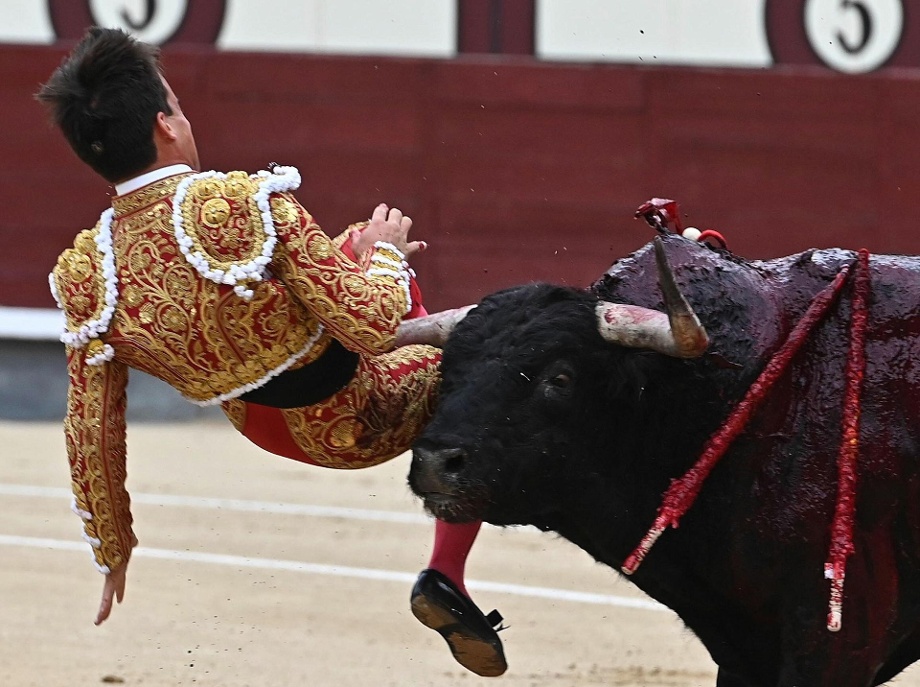
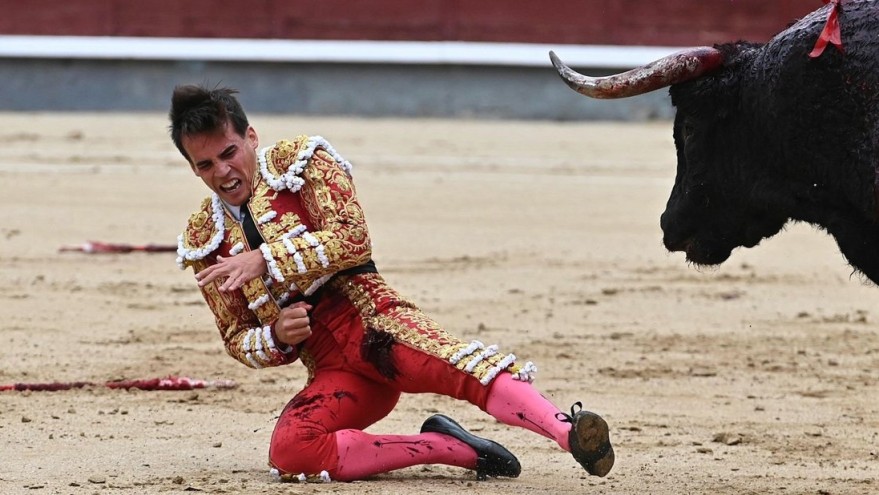
The horns hit the artery in the left thigh: In Madrid, a bull seriously injured a bullfighter. The man had to be operated on in the arena.
A well-known bullfighter was fatally injured in a bullfight in Madrid on the Spanish national holiday. A bull met the 27-year-old Gonzalo Caballero with his horns on his left thigh, said the organizers on Saturday by tweet. The femoral artery had been severed.
The horns hit the artery in the left thigh: In Madrid, a bull seriously injured a bullfighter.
The injured man under general anesthesia was operated on site, and then taken to hospital. Madrid’s bullring has two operating rooms where injured bullfighters can be treated.
The Spanish press had already reported in May that Caballero had suffered a severe injury to his left thigh there. It is also said that Caballero is in a relationship with Victoria Federica, a niece of Spain’s King Felipe VI.
Yes !!! It seems that the budding murderer will not grow old!
On the other hand, he is fortunate enough to get a potentially powerful uncle, which means he can always get another, decent job.
But he has to hurry, because after his failure – and especially on the Spanish national holiday – can lose not only his leg, but also his royal bride.
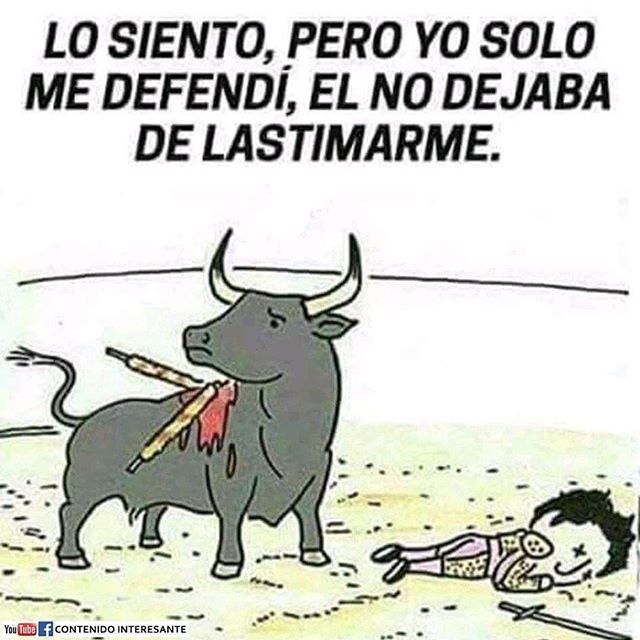
I’m sorry, but I just defended myself, he hurt me again and again
Emergency Bear Rescue from an Illegal Farm in Tam Duong
16 October 2019
At about 2pm Vietnam time Tuesday, we received an urgent telephone call from local police alerting us to the imminent confiscation of a bear from an illegal farm in Tam Duong just under 20km from our Vietnam Bear Rescue Centre in Tam Dao National Park.
Our team sprung into action for what was to be the 210th bear rescued by our Vietnam team and brought to our sanctuary. Upon loading up the trucks, the team was swiftly on their way to the farm. What they found there was heartbreaking.
In a tiny cage whose floor was covered in faeces, we found a portly bear who had for the last 15 years — what amounts to almost his entire life — never set foot on the ground, only walking on the bars of the cage that was his prison. He had no visible food or water and was surrounded by the sounds of loud squealing pigs from the pig farm where he was held. The team on the ground decided to call the bear Tuan in honor of our fearless and pioneering Vietnam Director Tuan Bendixsen, especially given the fact that for the first time ever Tuan could not join the rescue. Tuan also means ‘handsome’ and this big bear is certainly a handsome boy.
The farmer said that he didn’t know that the bear needed to be microchipped and so he was handing him over to the authorities who were confiscating the bear. Due to our hard work over the decades, funded by supporters around the world, we have built a great working relationship and trust with the local authorities and police which is why we were able to act so swiftly in responding to this urgent rescue.
Our Vietnam Vet and Bear Team Director Heidi Quine reported:
“The farmer has had Tuan for fifteen years, since he was a five kilo cub which is very young. That’s a bear that should have been with his mother in the wild.”
After Veterinary Nurse Kat Donaldson used honey on a stick to calm and distract Tuan, our Senior Veterinary Surgeon Shaun Thomson anaesthetised him, making it safe for the team to use bolt cutters to remove the lock on the farm cage and remove Tuan for an initial health inspection.
The brief health check indicated that Tuan was in a fit state to be transferred to the sanctuary with the main areas of concern being his very soft paws and his excessive weight, probably brought on by being fed the same feed as the pigs on the farm.
Senior Veterinary Surgeon Shaun Thomson said:
“The anaesthetic for him when it finally set in went very smoothly. The health concerns we’ve found for him are mainly his weight and his pads on his feet, which are very soft from standing on cage bars for so long. They’re probably going to get a little bit sore and may crack before they get better as they dry out and he starts to use them, but with all the medications and equipment in the rescue centre we can manage that no problem.”
Soon after the health check, Tuan was transferred to the transport cage and the team was on the road again.
Slowed only by a herd of local cattle in the roadway, Tuan arrived back at the sanctuary just after sunset at around 6pm. He was placed in quarantine where he will be treated to a 45-day programme of enrichment to stimulate his body and mind after 15 years of cruel, damaging confinement. Although he is a big bear he is not strong so building his muscle mass will be a top priority for the team.
Our Vietnam Vet and Bear Team Director Heidi Quine, who was there throughout the rescue, said:
“Now that he’s back at the sanctuary, his quarantine begins and really a lifetime of care. And we need your help to do that. It takes a lot of resources, a lot of time, a lot of love and a lot of money to rescue these bears and make them better. It can be up to 30 years of care. We can’t do it without you and I really want to thank you. Thank you for supporting our work and thank you for anything you can generously give to help Tuan and his rehabilitation. We’ll keep you updated every step of the way.”
Over the next few months we’ll be keeping a close eye on Tuan and giving him all of the necessary health checks and treatment as well as a carefully balanced diet to help him to recover from his ordeal that has come to an end, thanks to our Vietnam team and all of our supporters across the world.
Shaun added:
“He’ll get a full health check in the next couple of months. It’s been such a privilege bringing him here today. Thanks for helping us do the job we do and getting Tuan home.”
Our new bear’s namesake our Vietnam Director Tuan Benedixsen had the final word:
“My colleagues on the ground chose to name this gentle giant, our 210th rescued bear in Vietnam, after me. I am of course, humbled to share my name with such a special bear.
“This is just the beginning. Tuan is deeply traumatised. After all, he’s known nothing but misery and abuse his entire life. I’m so grateful to the local authorities who have entrusted us with this bear, to the Vietnamese government for working with us hand in hand to end bear bile farming by 2022, and to you for supporting us in our work to give these bears the fresh start they so dearly deserve.”










 Serbian Animals Voice (SAV)