Posted on November 21, 2019 by Serbian Animals Voice (SAV)
At these time, Christmas time, it was a bid from the meat lobby that meat must be subsidized so everyone can afford it.
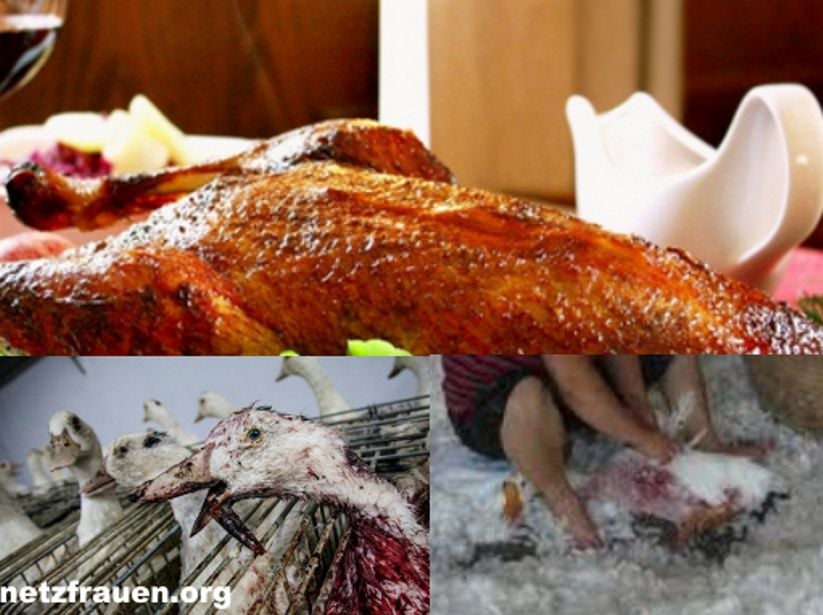
Advent used to have the character of a Lent, but now it is the time when supermarkets and discounters offer cheap meat, including the “Christmas goose”.
So the traders made their way from Germany, to the country, that is called Poland, so that they should find cheap geese there.
The EU had fed Poland with billions of euros to produce cheap poultry meat.
And when the merchants were there, the time came for the geese to be slaughtered.
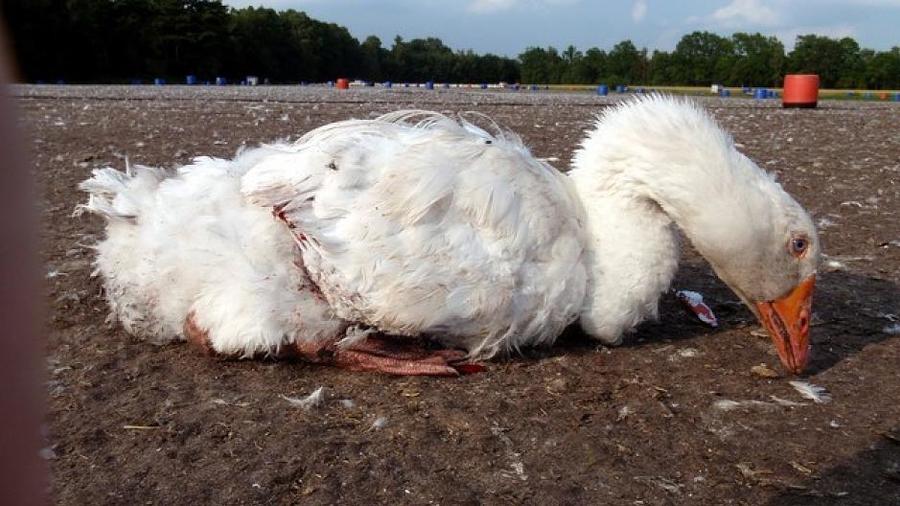
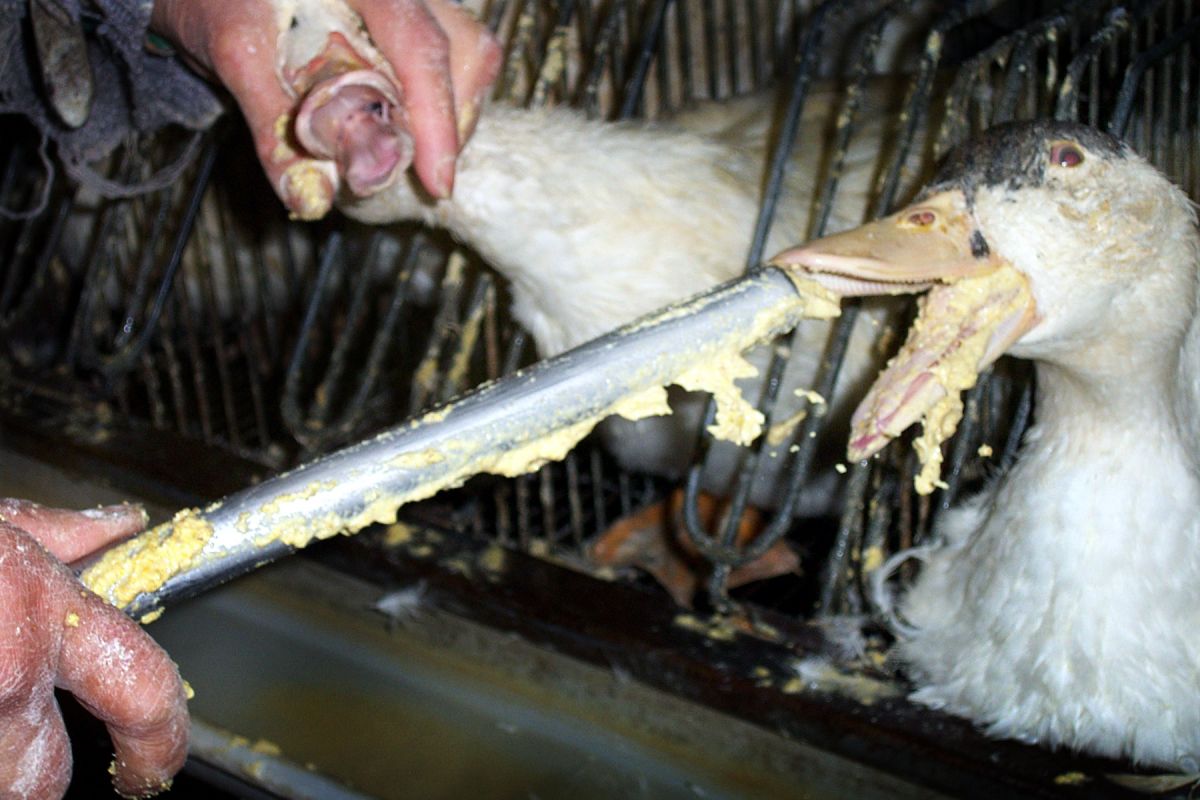
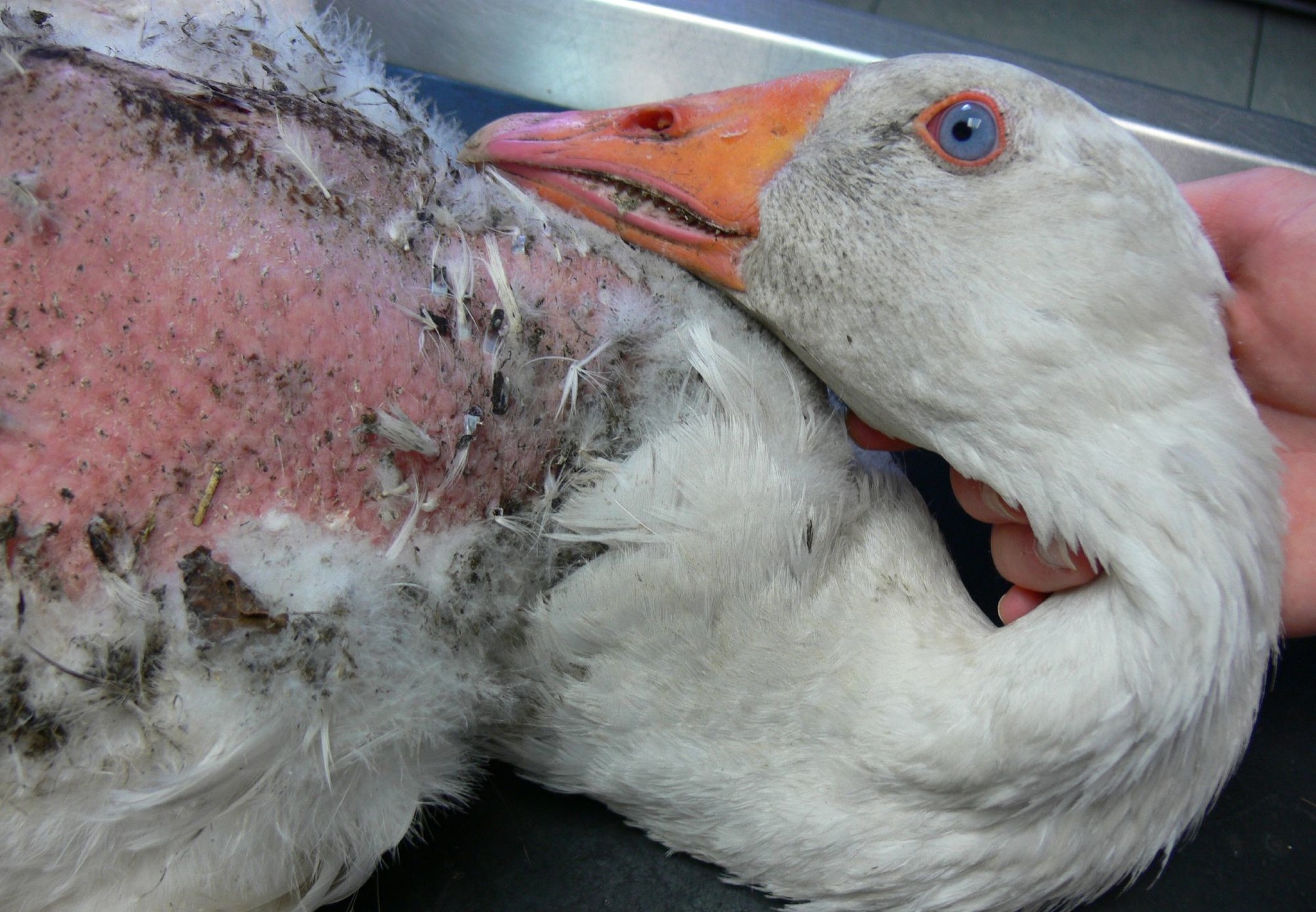
The geese looked terrible, the feathers had been plucked alive for down jackets, and hoses had been stuffed into their beaks to produce a magnificent goose liver, also known as foie gras.
They got a place in a stable where they were prepared for the well-traveled traders.
When the geese were slaughtered by modern slaves, they were also packaged in plastic by modern slaves.
Then they were frozen by truck as a special offer under 10 euros in the many shops and landed, where consumers waited pleasurably!
And the angel said to them, “Fear not! Behold, I proclaim to you great joy that will befall all the people; because you were given cheap geese.
Their downs ended up in down jackets and their liver was sold as foie gras. In addition, you still get dangerous germs incl. ”
And everyone was happy, but they did not see the unspeakable suffering of the geese – only cheap it had to be.
And when you’ve read this Christmas story, spread the word these geese have written to you.
And I mean…Until the last useful idiot of our society realizes that consuming meat and animal products is a crime against animals, the animals are still treated like slaves, and especially at Christmas time, when everyone wants to produce himself as a good guy and out of religious duty wants to decorate the festival of love with abundant animal blood.
Oh! Human beings, this disgusting pack!
How can the slaughter, the maltreatment of millions of innocent animals, be combined with love, humanity and peace in Christmas?
That alone, provides us with the justification why religions should be banned: they have brought the evil into this world.
Posted on November 20, 2019 by Serbian Animals Voice (SAV)
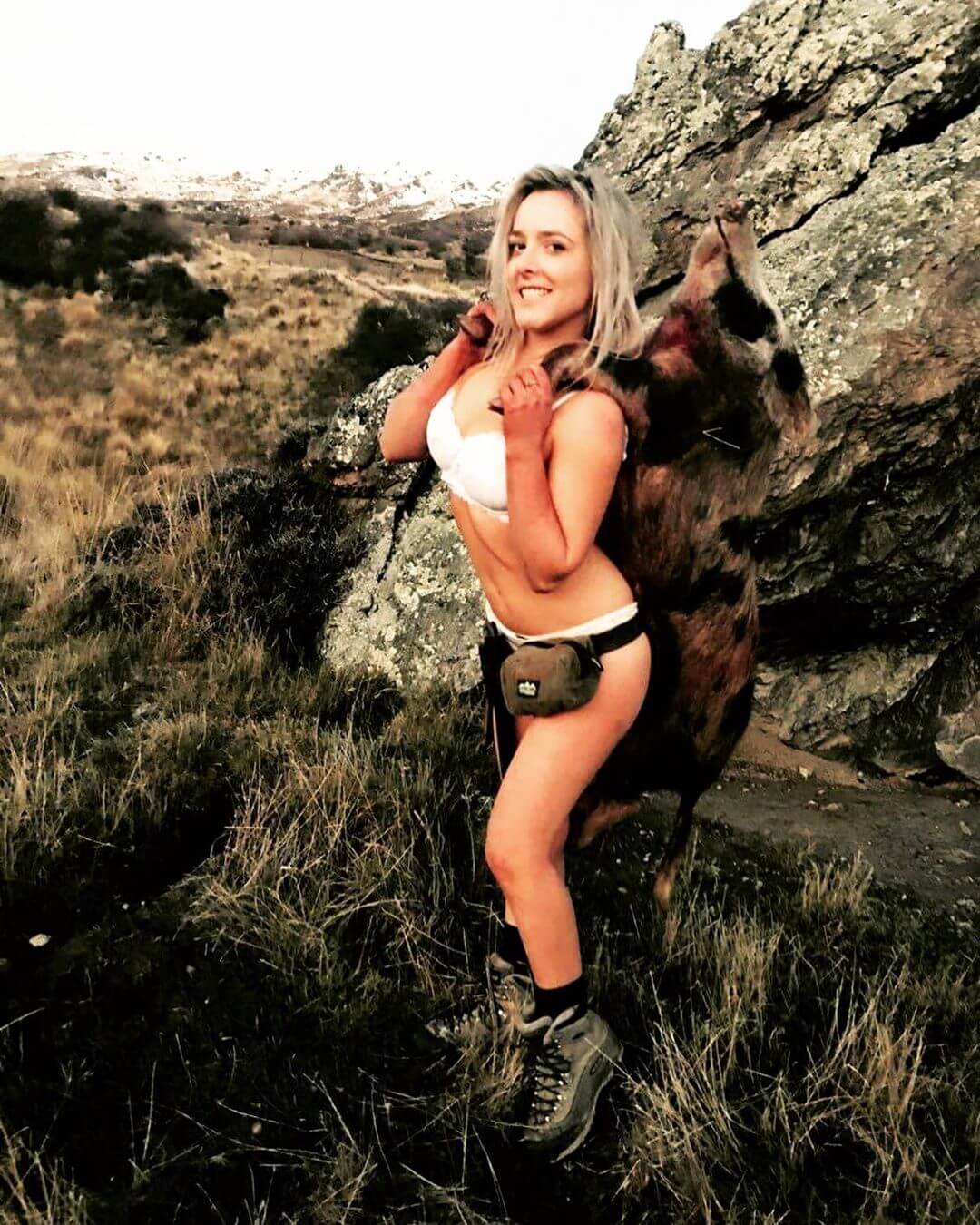
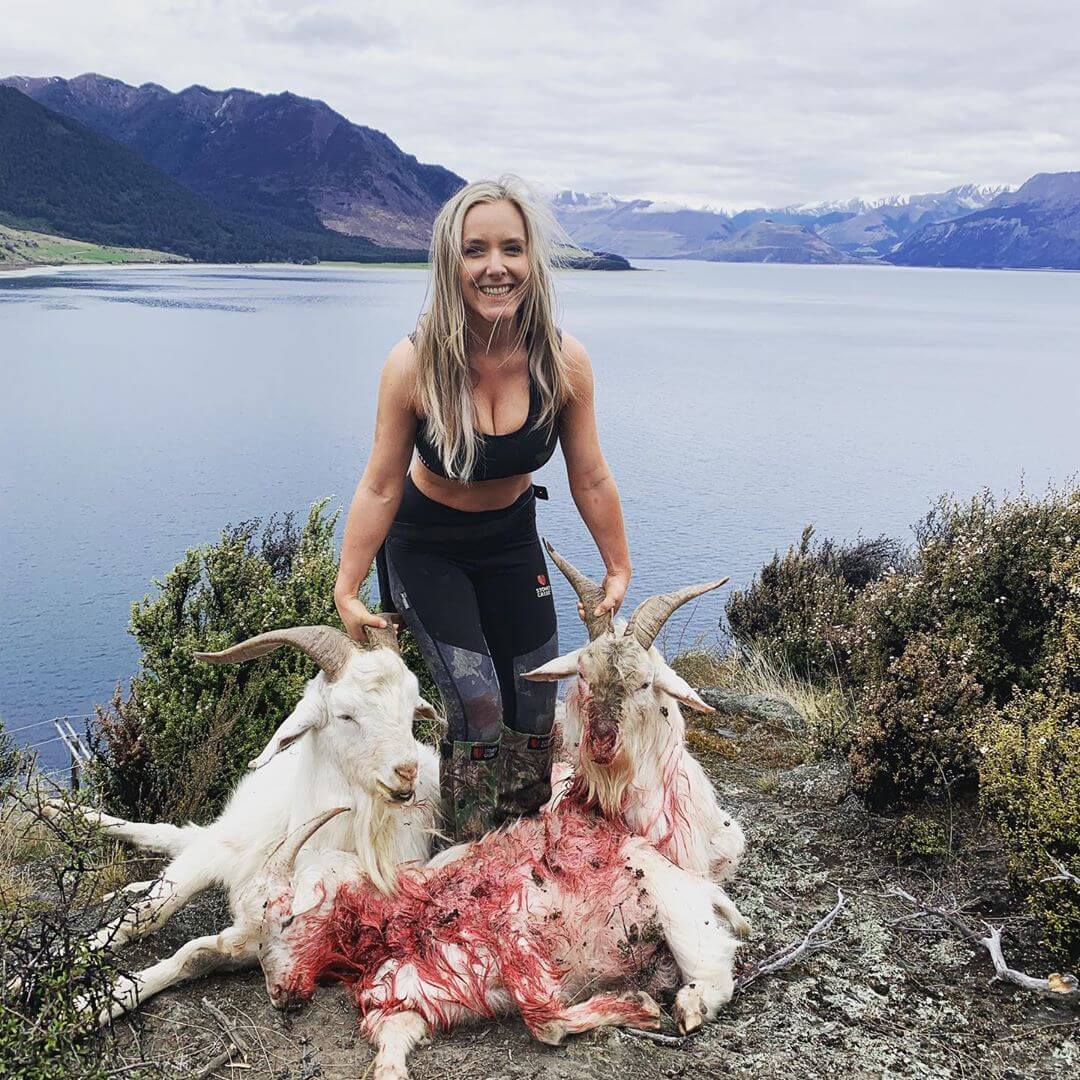
Hunters like to claim that they don’t get perverse pleasure out of killing, but these “sexy” hunting photos strongly suggest otherwise. Lucy Jaine, a hunter from New Zealand, seemingly enjoys killing animals and then posing for provocative photo shoots with their dead bodies, often with their blood smeared on her.
Jaine and her partner say that they go hunting five to eight times a month and take their three young children. They commonly kill pigs, deer, chamois, tahrs, goats, rabbits, and wallabies before she apparently strips down for bloody, nearly naked photo sessions.
The couple appears to use dogs as if they were mere hunting tools and frequently shoots animals but will also stab them to death. “If it’s a pig hunt, we bring the dogs and when we get to the spot we collar them up and follow them in,” she said. “We then stick the pig or shoot it, gut it then carry it out.”
It certainly doesn’t appear that she hunts because of some absurd sophistry about not wanting animals to suffer. All the evidence suggests that she does so for the same reason all hunters do: She enjoys killing. And she clearly enjoys attention.
And I mean: Both the serial killer and the violent hunter think he’s involved in something important. Conspicuously, brain anomalies are detected in serial killers.
Violence leaves traces in the brain after a short time.
It’s time for us to recognize hobby hunting as what it really is: a pastime for psychopaths with low moral hygiene.
Posted on November 20, 2019 by Serbian Animals Voice (SAV)
PETA’s motto is in part: animals are not there to entertain us or exploit them in any other way.
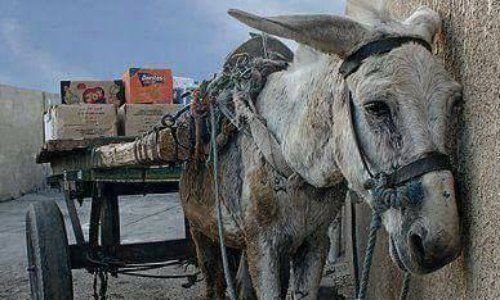
A video released today by PETA shows that donkeys and mules are still abused on the Greek holiday island Santorin as “donkey taxis”.
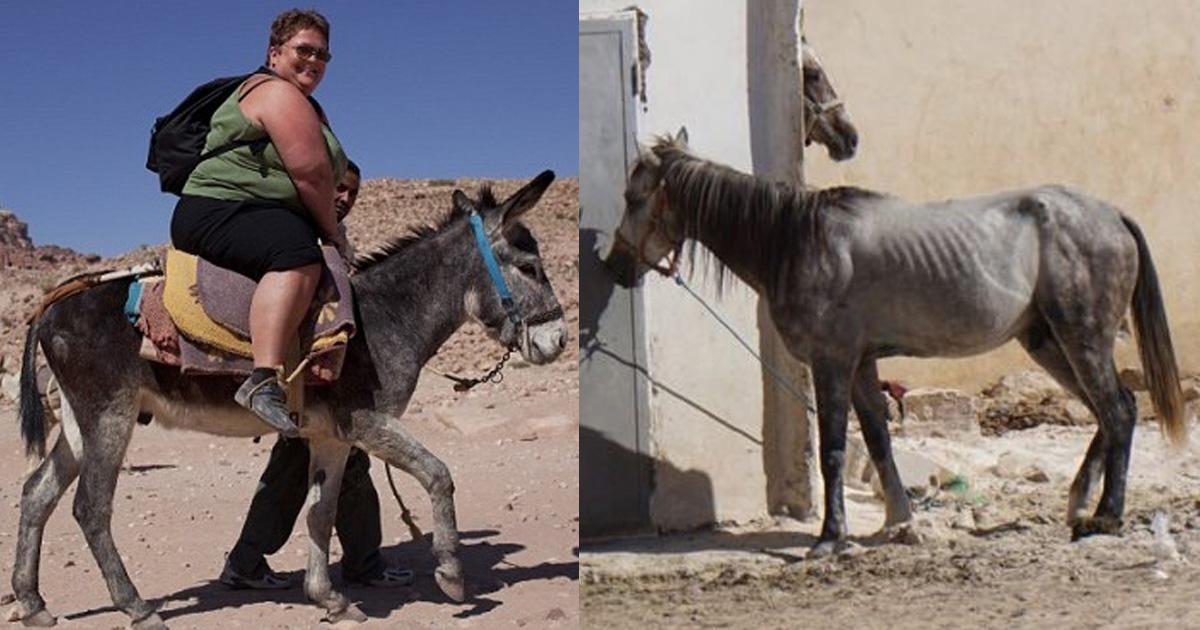
Although the Greek Ministry of Rural Development banned rides -after PETA’s appeal- last year for tourists weighing over 100 kilograms, the animals still have to carry some heavyweight people.
Despite international protests, media reports and publications, the holiday island still sticks to its “animal tradition”. The four-legged animals are often brutally beaten with sticks and maltreated by inexperienced riders.
On the pictures from September this year, it can be seen that some animals – sometimes driven by whistle-blowers by the donkey guides – stumble and thus also become a danger for walkers; in part, tourists fled to wall projections to avoid them.
The animal rights organization is now calling on the responsible Greek politicians with an online petition to prohibit tourist donkey riding altogether.
“In Firá exhausted donkeys and mules with bloody wounds are still driven up and down the steep, slippery steps from morning to night. But even for humans, this stupid tourist attraction is dangerous: Again and again, strollers were pushed aside, and also PETA’s eyewitness had to avoid the partly unattended animals several times, so as not to be injured.
We appeal to the legislator to act responsibly and finally ban these ride. ” said Sylvie Bunz, Special Project Manager at PETA.
Peta also criticized that the donkeys on Santorini do not rest even at night: they are used early in the morning to carry heavy garbage bags.
This is also recorded on the video-recordings.
Worst of all, if the donkeys are too weak and no longer fit, they are often abandoned and left to their own devices.
Although the ascent with the cable car is possible, about a year later several hundred donkeys and mules need to be taken several times a day suffer with stupid tourists on their backs who have to overcome more than 500 steps to the city of Firá.
Although the Greek Ministry set a weight limit, PETA’s new research shows that the donkey leaders do not abide by the scheme and that there are no controls.
n addition, many tourists are visibly overwhelmed with the animals: they rammed their heels into their flanks to make them go, or they pull down the stairs.
Bad saddles and provisional girths made of plastic hoses scrub on the sensitive skin of donkeys and mules. Most of the animals have skin lesions ranging from sores to open, bloody wounds under the abdomen and at the tail. Some quadrupeds have eye injuries.
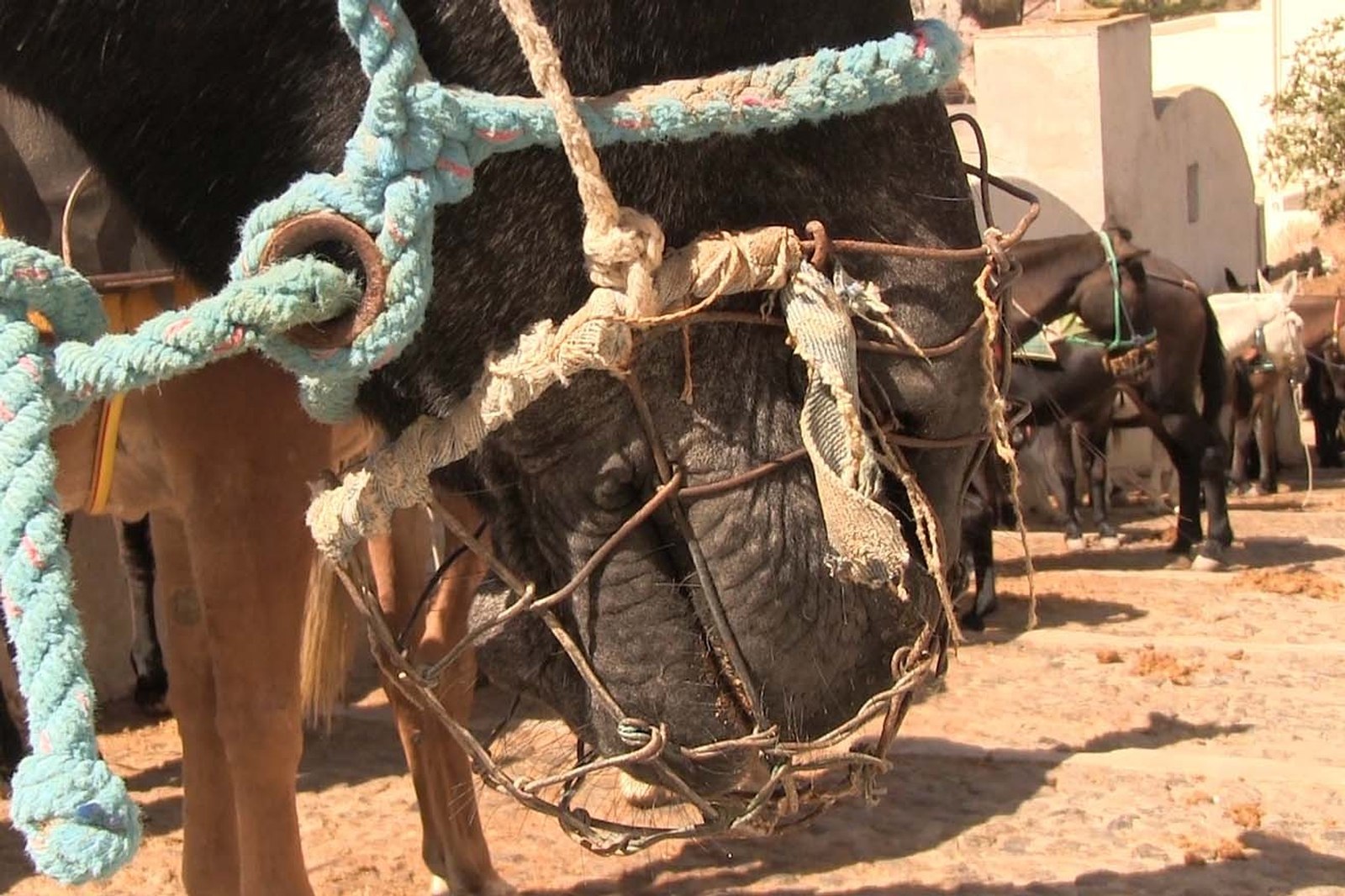
Others put on tight “muzzles” that cause injury to humans and animals through pointed wire ends.
While the animals persevere in the Mediterranean sun and have to wait for the next tour, the owners refuse to give them essential items such as water, shade or weather protection.
The Europe-wide renowned horse expert and non-fiction author Ingolf Bender wrote for PETA an “animal welfare expert opinion”on the problem; He criticizes the consistently poor equipment and considers it as “gross animal welfare” to use the animals for several hours without food and water. “We appeal to all travelers to distance themselves from supposed attractions with animals and to make their journey animal-friendly,” said Bender.
Santorini: The donkeys have open wounds where flies settle
In contrast to horses, signs of pain, anxiety or illness in donkeys are difficult to recognize. When faced with a potential danger, root their feet on the ground to analyze the situation.
Often, this behavior is considered “stubbornness,” although donkeys are in fact simply scared at such moments.
My comment: What did the greek government expect?
That donkey riders weigh the fat tourists before they get on the animals?
Or that the pet traders are waived on a taxi round for a monster body, if no one controls them?
This law was so incomplete and offered many tricks and shorts right from the start, so that only one who has never been to Greece would believe it could work.
Animals as a tourist attraction – which country does not have it? a pure torture!
The dirty media network is full of photos with “nostalgic” animal memories, but the truth behind the beautiful pictures is cruel: Animals are chained, penned, maltreated, hunted and – if not useful – killed.
Posted on November 19, 2019 by Serbian Animals Voice (SAV)
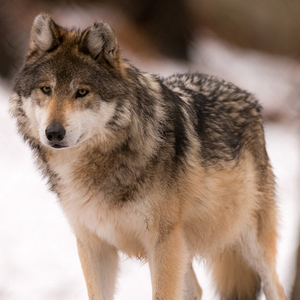
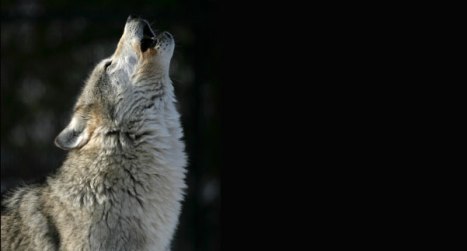
Member States should protect their wolves, says the European Court of Justice
The Court of Justice of the European Union has confirmed the strict protection of the wolf in Europe, saying that hunting permits should be delivered only in exceptional cases, and as a very last resort after non-lethal measures have been adequately implemented and have failed.
This good news for the species came last week when the EU Court of Justice (EUJC) delivered its decision on the permits granted by the Finnish Wildlife Agency to kill wolves – a seriously endangered species in Finland, with only around 200 individuals left – to prevent poaching and harm to hunting dogs.
The decision stresses that the wolf is a strictly protected species, and that the provisions of the EU Habitats Directive must be interpreted in light of the precautionary principle in Article 191(2) TFEU. In other words, if there is any risk (due to a lack of scientific data) that a hunting permit will adversely affect the conservation of the wider wolf population, then it should not be granted.
“The EUCJ decision is great news for wolves, and provides clear guidance on how derogations according to the Habitats Directive should be delivered. Member States’ efforts should focus on preventing conflicts and ensuring coexistence with the wolf and other strictly protected species, instead of calling for hunting permits,” says Reineke Hameleers, Director of Eurogroup for Animals. “We call on the European Commission to take into consideration these important EUCJ conclusions when updating the guidance document on the strict protection of Animal Species of Community Interest under the Habitats Directive.”
Posted on November 19, 2019 by Serbian Animals Voice (SAV)
No European money for Ukrainian poultry company
Faced with strong opposition, MHP, the main Ukrainian poultry meat company exporting to the EU, has withdrawn its application for a grant from the European Bank for Reconstruction and Development (EBRD).
Our message was clear: the loan must respect the rules of the EBRD, which means that the grantee’s operations must follow animal welfare standards equivalent to those applied in the EU. This was not – and still has not – been proven for MHP.
The discussions at the EBRD were postponed several times after the European Commission, through Trade Commissioner Cecilia Malmström and Agriculture Commissioner Phil Hogan, expressed its opposition to the EBRD granting such a loan to MHP. The EBRD had even published a recognition of the numerous concerns voiced by stakeholders and indicated that they would carry out a proper assessment of whether their environmental and social criteria – including animal welfare – were respected.
The announcement by the Ukrainian company that it has finally withdrawn its request for a loan is a victory. Faced with strong opposition from not only the animal welfare movement, the environmental NGOs and the European poultry sector, but also from the EU institutions themselves in the context of difficult EU-Ukraine trade discussions, the company has opted for another way to finance its acquisition of a Slovenian poultry producer, avoiding thus more scrutiny.
Eurogroup for Animals welcomes that no additional European money will fund unsustainable agricultural practices carried out by the Ukrainian poultry giant. In addition, considering the steep increase in animal products imported by the EU from Ukraine, we call on the EU and its Member States to encourage Ukraine to fulfil its commitment to align with EU animal welfare rules faster.
Posted on November 19, 2019 by Serbian Animals Voice (SAV)
Revealed: The horrible fate of French animals exported alive to third countries
Suspended by their legs while still conscious, tied up and with their necks cut halfway through: a new investigation by Animals International reveals the fate of French animals exported alive to Morocco and Lebanon.
Today in France, Welfarm, Fondation Brigitte Bardot, L214, CIWF France and La Fondation Droit Animal, Ethique et Sciences are releasing footage filmed by Animals International’s investigators in slaughterhouses in these countries.
Every year, France exports live animals to other EU and non-EU countries. When it comes to animals transported outside the EU territories, the majority of animals are destined for countries in which the slaughterhouses do not have the infrastructure and equipment required to comply with the standards established by the World Organisation for Animal Health (OIE) in regards to slaughter.
In 2018 alone France exported 83,914 sheep and cows, mainly to Algeria, Morocco, Tunisia, Lebanon and Israel. Hanging the animals by their paws, pushing fingers into their eyes, slashing their throats, binding them, slicing their tendons, and letting to struggle with their heads half cut off are common practices in slaughterhouses in North Africa and the Middle East, where Animals International has been investigating for 10 years.
Confronted with this evidence, Welfarm, Fondation Brigitte Bardot, L214, CIWF France, La Fondation Droit Animal, Ethique et Sciences and Animals International, together with Eurogroup for Animals, have sent a letter to the French Minister urging him to stop the export of live animals and to shift to a meat and carcasses trade.











 Serbian Animals Voice (SAV)