Surge have launched a brand new campaign Dismantle Dairy, featuring 18 months of undercover footage obtained from inside UK dairy farms. Independent investigators placed hidden cameras in dairy farms around the UK, as well as obtaining HD footage during visits. The footage revealed widespread incidences of physical and emotional abuse of mothers and calves.
Surge found repeated incidences of punching, kicking, excessive tail twisting, swearing/shouting, beating with sticks, separation of calves from their mothers, force-feeding of calves and the disposal of calves. Investigators also recorded HD footage during visits, capturing harrowing scenes such as dead cows and calves left to rot outside for days.
However, rather than draw attention to individual farms and create the impression that these are isolated cases or “bad eggs”, the campaign seeks to expose the dairy industryas a whole, revealing how even standard practices such as separation at birth and removal of calves is abuse. Violence on dairy farms is ubiquitous and occurs in all farms, including those associated with high ranking officials within the industry.
This is not about one “bad farm”, or one “bad farmer”, Dismantle Dairy is about the foundations the dairy industry is built upon. Standard, legal dairy industry practice involves (but is not limited to):
This particular farm is owned by Guy Smith, Deputy President of The National Farmers’ Union, the largest organisation representing farmers in the UK. What we found on the farm was so horrific, so brutal, that The Independent couldn’t show all of it in their press video; however, it is available to watch below:
Take PETA’s Cruelty-Free Shopping Guide along with you next time you head to the store! The handy guide will help you find humane products at a glance. Order a FREE copyHERE
Searching for Cruelty-Free Cosmetics, Personal-Care Products, Vegan Products, or more? Click HERE to search.
Want to do more than go vegan? Help others to do so! Click below for nominal, or no, fees to vegan literature that you can use to convince others that veganism is the only compassionate route to being an animal friend:
The 🎄Christmas season is high season for the 🐎Vienna Fiaker. Regardless of whether it is icy cold or the risk of slipping when wet, the horse-drawn carriages are always on the go. One carriage after the other travels through the tourist crowds in downtown Vienna. For the horses this means anything but a “contemplative time”. Vienna has so much more to offer than animal suffering.
Sad but true: the Vienna Fiaker tours are not missing from any travel guide, which are listed as a “must”. Numerous pictures of the horses stretched in front of the carriages can be seen. This should convey the right Vienna flair and make you want to visit the Danube metropolis. But traveling is different in the 21st century. Animals are sentient beings who feel suffering as much as we humans.
And the animals suffer.
Education is important to draw attention to the suffering of horses. Because many don’t know that
➡️ horses have a high risk of falling and injury due to the uneven and slippery floor.
➡️ they need constant access to roughage, which is hardly possible in the city.
➡️ the horses suffer from traffic stress, noise and hustle and bustle in the city center.
In spring 2019 we asked the publishers of the largest travel guides as well as a city tour provider and a large travel platform what the level of awareness of the suffering of the Fiaker is and whether they are willing to no longer advertise the Fiaker as an attraction or to present it more critically. We have observed the main editions of the travel guides:
Big Bus Vienna = romantic carriage ride
Dumont = a must
Lonely Planet = best city tour
Marco Polo = expensive, but great pleasure
Polyglott on Tour = tourist icons
Trip Advisor = Recommendations by users possible And under “Animal Welfare Problems ?” there is an outrageous X!!
Cause for concern
Not only from an animal welfare point of view, but also from a safety point of view, fiasco tours are extremely questionable. It becomes clear here how great the risk potential is in the city center. The driver himself says that it is not always possible to control the animals.
This is also proven by the frequent accidents in downtown Vienna.
From an animal welfare point of view, it is unacceptable to say that the drivers do not feed the animals in the city, but “only at night in the stable”. Horses need continuous access to roughage, everything else is cruelty to animals. The animals’ digestive system should always get small portions of hay, because it is not suitable for long feeding breaks. These can lead to serious health problems such as painful stomach ulcers and colic.
That is also a fact, of course: last year, the Inner City district itself estimated the annual repair costs of the road surface as a result of the horse-drawn carriage rides at 750,000 euros.
With your petition you send a protest email prepared by us to Lonely Planet, Polyglott, Marco Polo, Dumont and TripAdvisor. This email will be sent from your (private) email address.
By sending the email, you give your consent for the companies mentioned above to receive mail from your email address.
Sign our petition now and call for better living conditions for the Fiaker horses.
My comment: 12 hours in scorching heat or freezing cold, these animals have to pull a massive, heavy carriage behind them, loaded with people who care a shit about the obvious animal suffering.
Because how else could one understand that people pay a lot of money for this primitive pleasure of a carriage ride, even though they have two horses in front of their eyes, with blinders and very often with earplugs, because otherwise they would not be able to stand the noise of the carriages and the traffic?
Without a doubt, these people know instinctively that standing of the horses for a long time at the horse-drawn carriages is a great challenge for their tendons and joints, because they are escape animals, accustomed to movement;
Then there is the pulling of the load on asphalt-like ground. Many of these workhorses suffer from hoof diseases and joint complaints, which will be massive with increasing age.
And even in their ‘free time’ – if we can even speak of ‘free time’ for carriage horses – they usually live a lonely and completely unnatural life.
365 days a year, the official ‘working time’ (of course without calculating the arrival and departure) in winter from 10 a.m. to 4 p.m., in summer from 10 a.m. to 9 p.m.
The horses are often the reassured-medium Sedalin administered.The animals become apathetic to their environment, they have a reduced sensation of pain and can be easily manipulated.
From August 2017, the Viennese Fiaker may no longer drive at 35 degrees in summer.
Anyone who does not follow this can expect fines of up to 3,500 euros.
But high, low temperatures, less or a lot of work, that’s not the point.
The exploitation of animals for tourism must stop in general and in principle.
Animals are not a tourist attraction, they are not our slaves and they are not our pleasure.
Something like this belongs no longer to a civilized society, and everyone who has not yet understood it, is a primitive, underdeveloped person who deliberately ignores the suffering of animals for a romantic horse-drawn carriage.
Or make money with it, like the politicians who promote it.
My best regards to all, Venus
Latest info: I got a good reaction to my mail! right now:
Dear Ms. Venus …,
Thank you for your email and your critical feedback about our Vienna travel guide.
The welfare of animals is also very important to us and we will pay even more attention to animal welfare when choosing the “attractions” in the future. Our authors are informed and corresponding recommendations will be avoided in the future, i.e. deleted in the next issue.
Yours sincerely
GRÄFE UND UNZER VERLAG GMBH
Your reader service team
Box 86 03 13
81630 Munich
Tel: 00800- 7 23 73 333 *
Fax: 00800 – 5 01 20 544 *
Email: leserservice@graefe-und-unzer.de
It works!
Please keep on writing your protest emails!
Posted on December 16, 2019 by Serbian Animals Voice (SAV)
Mark,
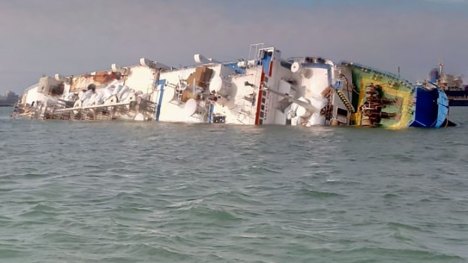
I wanted to get in touch with an update about the capsized live export ship disaster in Romania. Last time I emailed, I asked if you could help us call on the Romanian Government to save the survivors stranded in the upturned ship out on the ocean.
Thank you for taking that action, Mark. Your voice, alongside thousands of our other dedicated supporters, helped save 180 lives. These gentle sheep are now safe. Thank you.
Your determination — in unity with rescuers and thousands of other caring people globally — provided the beacon of hope amidst the overwhelming tragedy.
The rescued sheep are currently under the care of the Romanian veterinary authority, and the Prime Minister of Romania has given his word that he will do everything he can to ensure the sheep will soon be transferred to sanctuaries where they can live their lives in peace.
But your advocacy goes beyond the immediate situation to save the survivors. You’ve directly contributed to a kinder future for all sheep who face live export in Romania. Since you and others so strongly encouraged the country’s Prime Minister to take urgent action, a bill to end live export has been put forward in the Romanian Parliament.
The Prime Minister himself has acknowledged the need for this cruel trade to end. Romania is Europe’s biggest exporter of live animals — this is historic, and such progress could very well have taken years. But ending live export is now firmly on the political agenda there.
While we still have a long way to go, Mark, I can tell you with certainty that without your action on behalf of these animals, these historic steps forward simply couldn’t have been achieved.
As I know you understand, this disaster has again highlighted the needless cruelty at the heart of all live export. You helped save those who could be saved, but together we will never forget the tens of thousands onboard who perished, for nothing other than profit. I know we are now only more committed to ending live export globally, for good. Heartfelt thanks for providing such crucial support towards that goal, now and in the future.
Posted on December 14, 2019 by Serbian Animals Voice (SAV)
At the beginning of the Christmas shopping season PETA publishes for the first time a report about the Russian fur trade. The video material taken by PETA Asia’s eyewitnesses shows atrocities from five different farms.
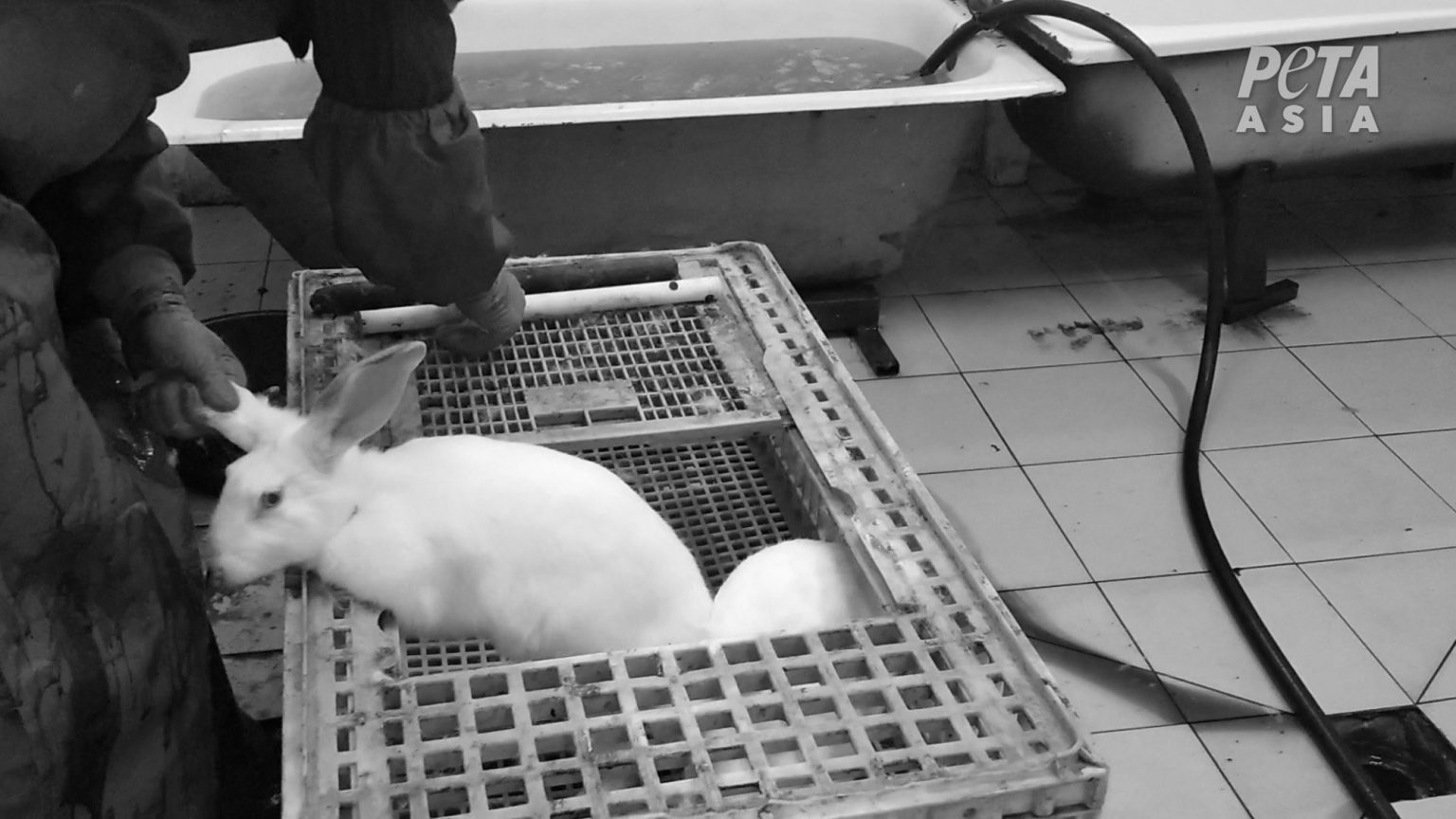
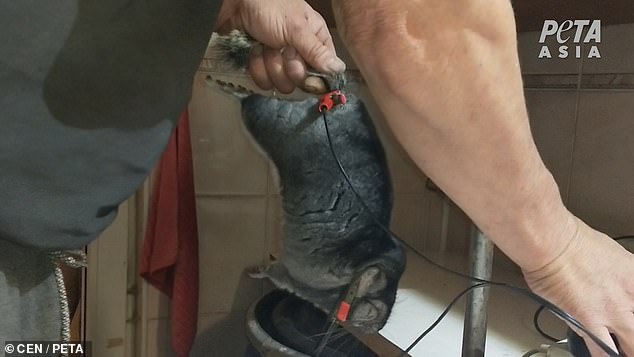
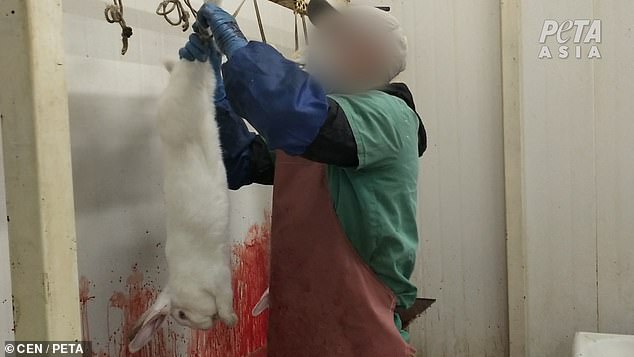
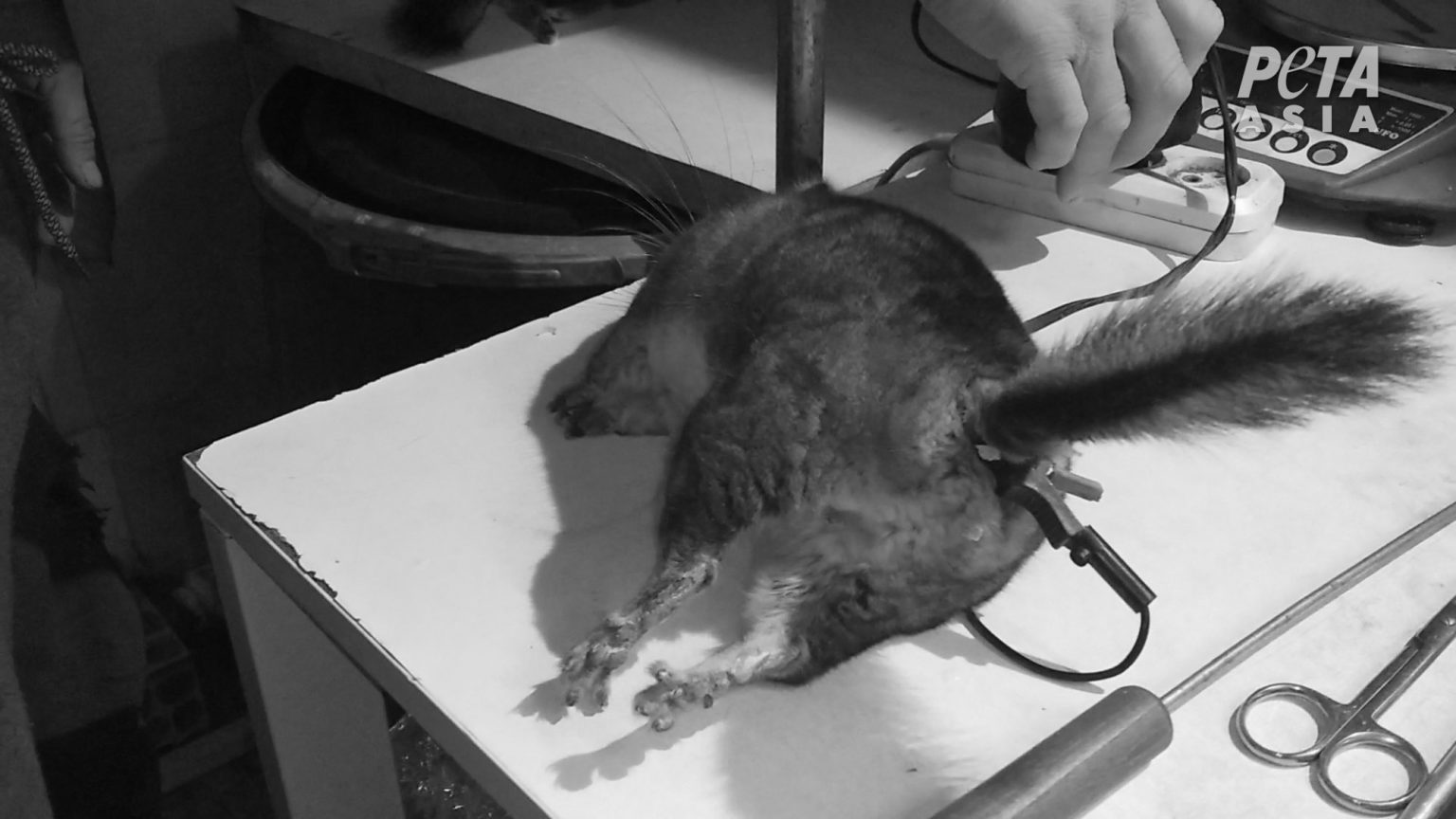
These shocking images taken show a Russian fur farm where rabbits have their heads hacked off and chinchillas are electrocuted and have their necks snapped.The images come from PETA’s first expose of the fur trade in Russia and were reportedly taken across five farms in the country.
In the video, animals can be seen being kept in tiny cages when a worker takes a white rabbit and hits it on the head with a metal pipe.
A worker can then be seen slitting a white rabbit’s neck while it was reportedly still conscious.
A chinchilla electrocuted to death at a Russian fur farm
A rabbit is hung upside down before being decapitated at a Russian fur farm in images taken from PETA’s first exposure of the fur trade in the country
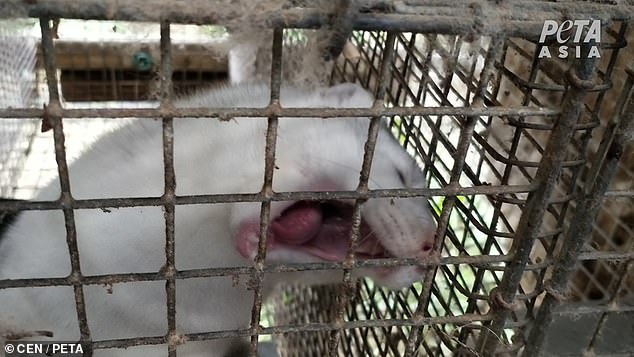
The clip then shows a chinchilla being electrocuted before its neck is snapped. Animals including foxes, minks and sables can be seen in tiny wire-mesh cages.
PETA report one chinchilla was seemingly blind but still forced to breed. The report adds that one worker at the farms said that animals are killed if they relieve themselves in the “wrong” area of the cage as “any animal must be clean, if you produce not clean skin, you’re losing a lot of price.”
A caged mink at a Russian fur farm. The shocking images were taken during a PETA sting into the Russian fur trade and shows chinchillas having their necks snapped
The investigation was carried out in October 2019 and a worker reportedly told the eyewitness that the farm they work on sells 30 percent of their product to Kopenhagen Fur.
Kopenhagen Fur is an auction house which sells animal skins to companies throughout the world.
PETA Senior Vice President of International Campaigns Jason Baker said: “Every compassionate shopper should keep firmly in mind that behind every fur coat, collar, or cuff is a filthy wire cage, a shrieking animal, and a blood-soaked slaughterhouse floor.
This holiday season, PETA is urging everyone to help give some peace to these tormented animals by going fur-free.”
The report states that the regulation of animal welfare in Russia is practically “non-existent” and added that the country does not have any laws to protect farmed animals.
PETA asked consumers, designers and retailers to join other fur-free designers and retailers such as Zara, H&M, Giorgio Armani, Ralph Lauren, Stella McCartney, Versace, Gucci, and Michael Kors.
Mick Madsen, director of communications for Fur Europe, a company which represents the fur sector in Europe, said: “It is mistake to claim chinchillas and rabbits produced in Russia are sold at European auction houses, and it is mistake to believe PETA’s ideological campaigning provides a reliable image of animal welfare in fur farming.”
PETA alleged that another facility it investigated supplied furs to Saga Furs, a Finnish fur auction housethat markets itself as aresponsible and ethical source for fur, describing itself on its website as having “a reputation as the world pioneer in responsible fur breeding.”
A Saga Furs spokesperson told Newsweek: “Any allegations that Saga Furs is provided fur from farms in Russia which treat animals unethically is denied in full. Saga Furstakes the ethical treatment of animals very seriously and at all times requires farms used to comply with strict criteria and regulation.
We have received no evidence or substantiation to suggest that any farms providing fur to Saga Furs have been the subject of PETA’s alleged investigation.”
My comment: As soon as something becomes public, nobody wants to appear as collaborator of the Russian fur industry.
And despite the demonstrable, documented torture in the Russian fur farms, the Finnish Saga Furs company wants to tell us that it takes animal ethics very seriously!!
But the animal Dachau of this world take only money and profit seriously, they know no ethics and no inhibitions in the torture of animals.
Perhaps the Russian fur Dachau are no better and no worse than any other fur Dachau in the world.
But that’s not why we shouldn’t report it.
Fur farms are concentration camps and no longer have a right to exist, nowhere in the world.
Target: Henrik Studsgaard, Secretary of Denmark’s Ministry of Environment and Food
Goal: Revise rapid replacement breeding methods that prematurely end pigs’ lives.
Half a million sows face slaughter annually in Denmark: an estimated half of the country’s total pig population. Of these slaughtered sows, only about 15 percent will be killed because of sickness. Instead, the majority of pigs are seemingly put down because they can no longer pump out enough young piglets to satisfy Denmark’s profit-rich, welfare-impoverished pork market.
This market fuels the agriculture-driven economy of Denmark, and it is heavily subsidized by the government. These heavy investments have led to sows birthing as many as 35 piglets per year. While these numbers soar past global averages, they often prove devastating to the sows’ health and well-being.
Denmark also leads the way in sow mortality rates. Over 10 percent of the animals essentially either drop dead in their pigsties or must be euthanized because they are too incapacitated to function. Even when they do survive this grueling existence, slaughter still awaits the poor sows after they have given birth to two or three litters… and apparently outlived their usefulness. Perhaps worst of all, Denmark’s supposedly ‘superior’ methods for pig production are being ramped up and exported to other countries.
Sign this petition to urge government officials to honor their oath in making animal welfare a central part of this unforgiving, often abusive process.
PETITION LETTER:
Dear Mr. Studsgaard,
“I am ready to welcome the aim of producing twice as many pigs in Denmark if we can handle both animal welfare and the environment.” The facts are clear: Denmark has not met the benchmark envisioned by your predecessor. Upwards of 500,000 sows lose their lives prematurely every year because of “fertility” or “mothering” issues. Thousands of others apparently drop dead from the wear and strain imposed on them. In regards to animal welfare, Denmark has not offered much in the way of “handling.”
The “rapid replacement” philosophy not only leaves hundreds of thousands of animals subject to unneeded slaughter, but it also undermines any claims of production efficiency. This country is summarily killing half its pig population every year. In many cases, you discard more than you produce. Humane breeding and production methods may hinder profits in the short-term, but long-term gains would make the commitment more than worthwhile.
Please end rapid replacement breeding and implement human standards for pigs, for the longevity of your agricultural sector and, more importantly, for the health and well-being of these living beings entrusted to your care.
Posted on December 14, 2019 by Serbian Animals Voice (SAV)
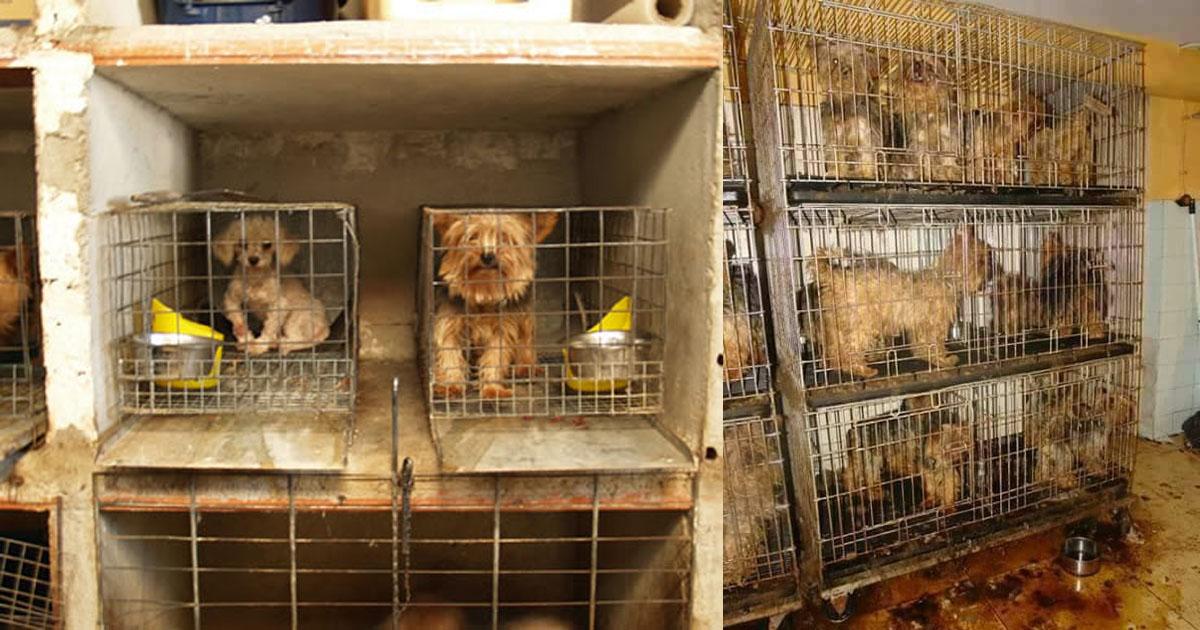
Hatchery dogs are constantly mistreated and live in the worst way, and also encourages the abandonment of animals.
ADOPT, DO NOT BUY!
Prohibit the sale of pets in Spain
Addressed to: Government of Spain
We arrive at that time of year when many people think of giving a dog to their children for Christmas, a dog that will surely be abandoned when the child gets bored. This happens every year, as in the holidays, so we have so many dogs abandoned in the streets. But that is not all abuse, since those puppies they sell come from hatcheries where their parents live constantly being mistreated.












 Serbian Animals Voice (SAV)