Australia: The Al Kuwait Has Set Sail With 35,000 Suffering Sheep. Take Action Now (see below) and Let the Trade and Politicians Know How You Feel About It.

australiapg


demo 1

https://worldanimalsvoice.com/2020/06/17/australia-the-al-kuwait-is-under-way-with-35000-suffering-sheep-take-action-now-to-show-your-feelings-see-actions-list-below/

WAV Comment:

As with Animals Australia, the RSPCA Australia, and (here) the crew at Stop Live Exports.org, we are united in our support for everyone who is fighting this disgusting trade in sentient beings.

Below; in ‘What to do now’; SLE have given a series of things which you can do to follow up the Al Kuwait shipment which took place yesterday. The vast majority of good people are against the abusers who undertake this business; and they know public opinion is against them vastly.

We currently are still fighting live animal exports here within the EU and there is also the case of live calves being exported by the Scottish, via the English port of Ramsgate.

Decent people around the world are wholeheartedly against this abusive trade in live animals. We are proud to be pert of the team and do what we can to support the innocent animals that need us more than ever.

Please take actions as detailed in the ‘what to do now’ links below. Phone, e mail, anything, but please do something. The sheep are on the way to terrible deaths in a foreign land now; and sadly there is nothing much which can now be done to help them. But politics is politics; and politicians need your votes and your support. Please don’t support any political parties or politicians who support this trade – and let them know it ! – they can run but they cannot hide. They will always be remembered as abusive supporters of an abusive trade.   Get them our of their positions; and soon.


Regards Mark

Dear Mark;

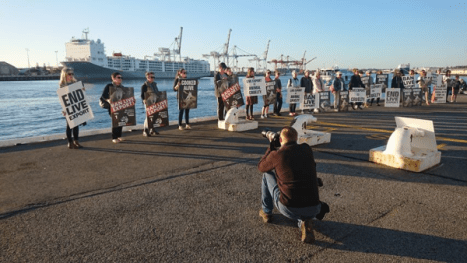
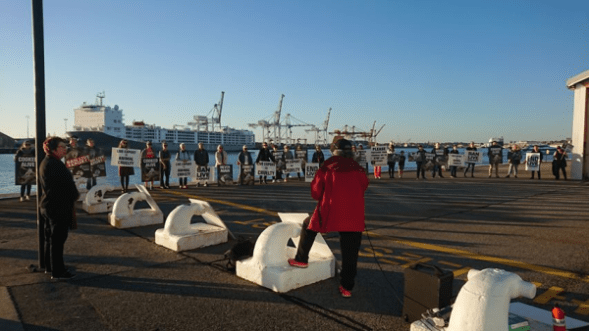
As you may or may not be aware, we held a flash protest down at the port yesterday evening as the Al Kuwait loaded 35,000 sheep bound for Kuwait, 17 days after the 1 June deadline. If you were able to make it down there to join us, thank you. If the notice was too short or you didn’t hear about it (or you’re in another state or territory), we’re sorry – due to the CoViD19 restrictions, we had to apply for a police permit and were also awaiting the results fo Animals Australia’s federal court action to apply for an injunction to stop the ship loading.

All pictures – Renee Denys
demo 2

On 2 June, an exemption to the Northern Summer Trade moratorium was denied to Emanuel Exports’ sister company, Rural Export & Trading WA (RETWA), by Tina Hutchence, Assistant Secretary to the Live Export branch of the federal Department of Agriculture (the branch that acts as the “Independent” Regulator of the trade). A second application was received by RETWA, and on Saturday 13 June, an exemption was granted by David Hazlehurst, Deputy Secretary of the federal Department of Agriculture, Water and the Environment (DAWE).

How this all came about and the legislation and rules for exemptions is a long and convoluted story I won’t go into here, but needless to say, the federal government legislated the northern summer ban to offer some protection to sheep being sent into the Middle East, with a ban on shipping sheep there from 1 June to 14 September inclusive. They then proved that legislation useless, by granting an exemption to RETWA’s parent company, Kuwaiti Livestock Transport & Trading (KLTT), despite there being no exceptional circumstances to merit such an exemption.

WHAT TO DO NOW ?

At the rally, we asked you to do six things:

1/ Email Tina Hutchison who denied the exemption, and say THANK YOU for upholding the legislation and looking after the welfare of the sheep by denying the original application for an exemption:

tina.hutchison@agriculture.gov.au

2/ Email David Hazlehurst and let him know what you think of his decision, and what a mockery it has made for the Summer Trade Ban Order 2020. Be firm, honest, but please do not use threats or physical violence or resort to name-calling.

35,000 sheep will be heading out of 21 degrees Fremantle and into 45+ degree Kuwait to have their throats cut whilst fully conscious after it had already been found ELEVEN days ago that exporting them after the deadline posed significant risks to their welfare:

david.hazlehurst@agriculture.gov.au

3/ Have a chat with David Littleproud. Whilst it was his decision to grant the exemption, and it was under his watch the more restrictions to the trade were introduced, we feel he should know how the public feels about this horrendous decision by the Deputy Secretary:

Parliamentary Office: (02) 6277 7190

David.Littleproud.MP@aph.gov.au 

He also has THREE electoral offices in Queensland:
(07) 46622715
(07) 4622 7166
(07) 4661 2494

4/ Email the CEO of the Australian Livestock Exporters Council (ALEC), Mark Harvey-Sutton.

ceo@livexcouncil.com.au

Tell him to get a real job that doesn’t involve subjecting animals to pain and suffering.

5/ Leave feedback on the DAWE website. Oops – that page has been removed since this yesterday… we wonder if the phone number still works. Call 1800 900 090

6/ Contact your local federal MP and all 12 WA Senators (or Senators in your state or territory). Go HERE,
scroll down and enter your postcode. That will bring up your local MP and all your Senators – click on the email icon, or call them if you prefer that.

Let them know what you think – they are elected to represent YOU.

Thank you for your ongoing support, and if you are not a member or donor yet, you can make a one-off, weekly, monthly, quarterly or annual donation via GiveNow by credit card or direct debit and the fees are about 1/10 of PayPal. Regular small donations are of the greatest assistance to our campaign. Any donation over $25 in a year counts as membership and we’ll send you some stickers if you’re a new member.

https://www.givenow.com.au/stopliveexports

Help us help them.

Katrina Love
Campaign Manager
Stop Live Exports
demo 3

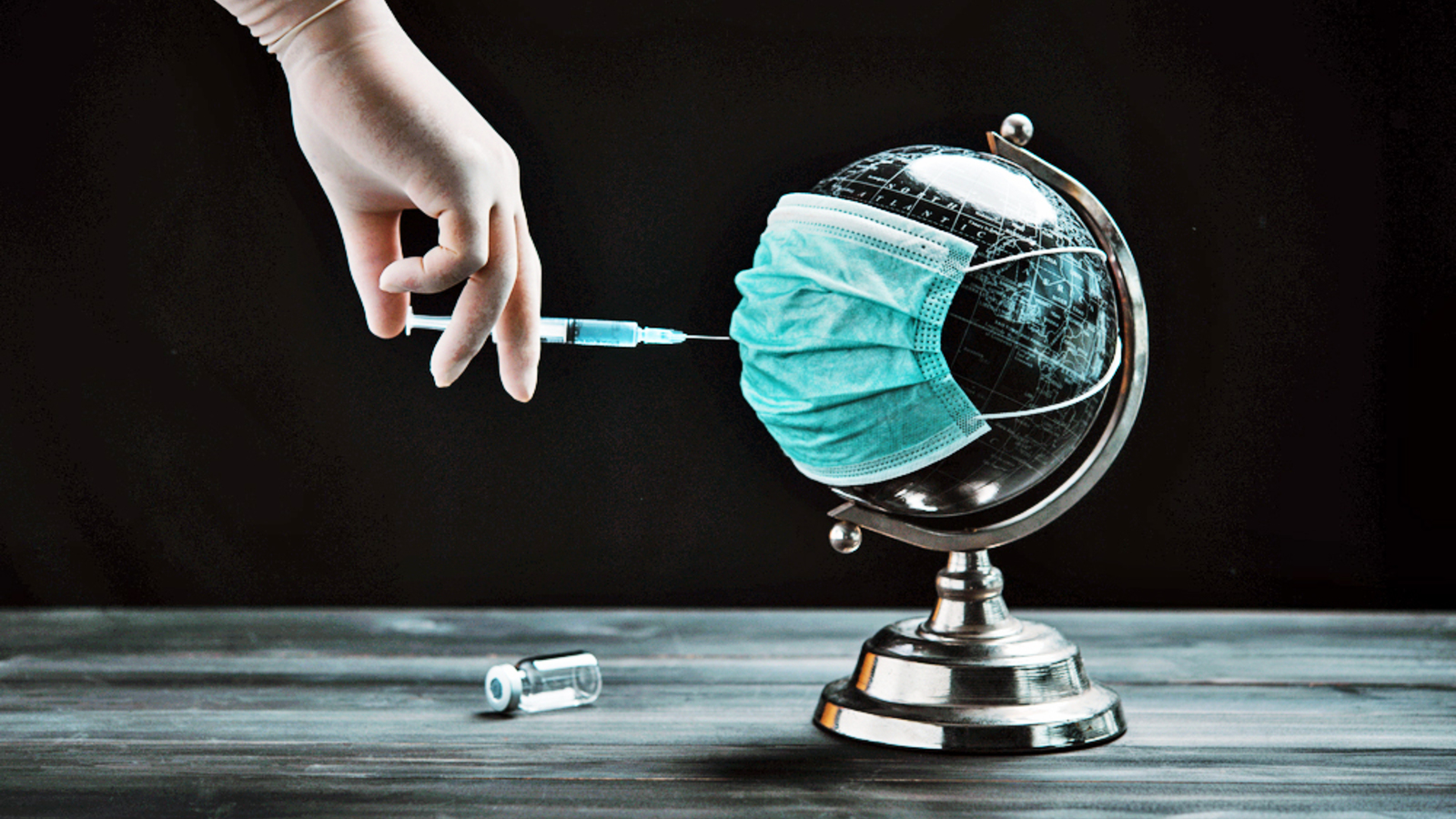
The world dictatorship is coming

At least 2 billion people, especially caregivers, senior citizens, and high-risk patients, are to be vaccinated with a genetic vaccine against Covid-19 that is already in production.


The pharmaceutical industry saves the world at the speed of light – so fast that you can hardly keep up with the reporting.

At a record pace and neglecting all previously applicable rules and requirements for clinical studies, two billion vaccine doses against Covid-19 will be available by the end of 2020.

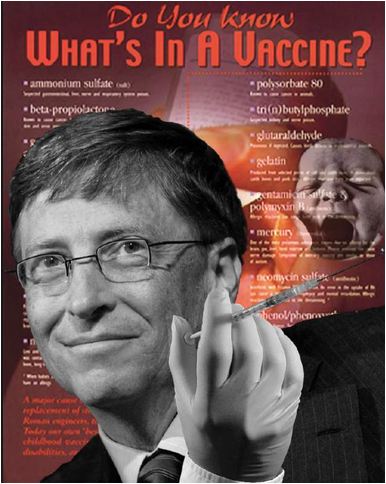
Alongside Bill and Melinda Gates, only the best of the best are at the top of the frenzied saviors of humanity.

On June 6, 2020, the British pharmaceutical company “AstraZeneca” announced that the company plans to produce 2 billion vaccine doses of the genetically modified adenovirus vaccine ADZ1222 by the end of the year and guarantees that it can already deliver 300 million of them.

For this, “AstraZeneca” received a $ 750 million budget increase from GAVI and CEPI.

AstraZeneca (AZ) said it had already produced a billion vaccine doses last month – although it is clear that it will not be possible to deliver these doses unless the studies produce the desired results.


For more…at https://worldanimalsvoice.com/2020/06/16/the-world-dictatorship-is-coming/

My comment: The German media said today: “Germany, France, Italy, and the Netherlands have signed a contract with the pharmaceutical company AstraZeneca to secure up to 400 million doses of corona vaccine for the EU countries”.

So we buy a vaccine that doesn’t yet exist!!

The German Minister of Health said: “The rapid, coordinated action of a group of member states creates added value for all EU citizens in this crisis. Together with the EU Commission, we want to become even faster and more negotiating in the future (…) Not everyone will be vaccinated anyway, it will be nurses and medical staff first. As well as old people and risk groups”.

Aha! Those who cannot show all these “qualifications” will have to wait..

If you still have questions about who could be the global organizer of this show, you should read our previous blog posts. The usual suspects have already been mentioned many times, which is why we do not repeat them.

My best regards to all, Venus


The world dictatorship is coming

Scotland: Calf Exports – Scotland Applies for a Delay In Justice for Calves. Scotland Betrays the UK Animals With Their Actions.

scot


Another live exports campaign day.

Very bad news for Australian sheep – see the very recent post at:

https://worldanimalsvoice.com/2020/06/16/australia-animals-australia-lose-court-case-sheep-will-be-exported-to-kuwait-in-extreme-heat-legal-commitments-were-made-only-to-be-broken-laws-enacted-only-to-see-exemptions-granted-to-those/

In the UK from CIWF London):

YOUR JUDICIAL REVIEW – LATEST NEWS

A HUGE thank you to everyone who has donated or taken action in response to our legal fight against the export of young calves from Scotland.

The court hearing for our Judicial Review has now been set for 4th August. But, yesterday,

The Scottish Government applied for a delay.

We want to stop animals suffering NOW. So we’ve submitted an objection to this outrageous attempt to play for time – and the court may decide for or against a delay in the next few days.

In the meantime, let’s keep up the fight for justice for calves. If you haven’t already done so, please take action here.


Take action now and e mail the Scottish Government:

https://action.ciwf.org.uk/page/61498/action/1?ea.tracking.id=email-enews&supporter.appealCode=STEM_UK0620a&utm_campaign=transport&utm_source=email-enews&utm_medium=email&ea.url.id=4768304&forwarded=true

BAN LIVE EXPORTS: INTERNATIONAL AWARENESS DAY

Thank you to everyone who took a stand on Sunday for the 5th annual International Awareness Day against live exports. Not least to Compassion’s fantastic patron and stalwart animal welfare campaigner, Peter Egan, who led our UK day of action.

Social media was awash with #BanLiveExports, and policy makers around the globe felt the heat of public opinion against this appalling trade. See how the world united for animals on 14th June.

A DAMNING REPORT ON EU LIVE EXPORTS…

In a new report about the export of EU animals by sea, the European Commission documents sub-standard vessels, inadequate checks on ships and poor legal accountability. It also identifies illegally high temperatures in trucks, and under-reporting of animals who are unfit to travel.

Compassion, and other NGOs, have been raising these concerns for years. Now, finally, the Commission has acknowledged that this trade is failing to protect animals. Find out more here.

… AND PRESSURE IS BUILDING

40 MEPs have now joined Compassion and over 35 other NGOs to campaign for an immediate halt to EU live exports during the COVID-19 pandemic.

Meanwhile, due to concerns about legal compliance, the Dutch Agriculture Minister has stopped all live exports where a 24-hour rest stop outside the EU is required. Exports will only restart if transporters can guarantee animals will be rested.

This follows persistent campaigning by CIWF Netherlands and other organisations. It sets an important precedent, and adds to the pressure for urgent European Commission action against live exports.


Animals Australia LOSE Court Case to Get Live Sheep Exports to Kuwait Stopped In Extreme Heat. Good Betrayed by Scum.

australiapg


Mark, I so wish I was contacting you with better news…

Despite the extraordinary efforts of our legal team, who worked day and night over the past three days, we were unable to get the exemption granted to ship 50,000 sheep to Kuwait overturned by the Federal court.

I know how you will be feeling at this news. The deepest sense of injustice, of betrayal. The northern summer ban that was introduced to ensure exporter interests were never again put before the welfare of animals, has failed at its first test.

As you know, commitments were made, only to be broken. Laws enacted, only to see exemptions granted to those laws. Sheep who should be spared, will now be shipped into the extreme heat of a Middle East summer.

I’m sure you may be wondering, how did things go so fundamentally wrong? The answer to that question will start a conversation that animals desperately need us to have.

It would be easy to blame the regulator or the government or the exporter — but their actions are based on and influenced by one underlying factor — a legal system that denies animals raised for food the same compassion, moral consideration and legal protection as other animals in human care.

As a result, vulnerable beings who feel fear and pain are decreed property, items to trade, lives to be bought and bartered, warm bodies to be brutalised.

This cannot be allowed to continue. For when profits have the power to impair our compassion — it is not only animals who suffer, our own humanity is violated and diminished.

Throughout history there have been ‘moments in time’; occurrences that are so at odds with our truth, with our humanity, with our potential, that we are forced to look within and ask, ‘how did we come to this place?’ Inevitably, the answers sought and found fuelled needed transformation.

Let us commit to making the decision to grant this exemption and ship these sheep to Kuwait one of these ‘moments in time’. Let it be the catalyst for a conversation that as a society we need to have — as to how deeply and profoundly programmed we are to think about animals raised for food differently — and the consequences animals bear as a result.

These sheep were not considered by authorities for who they are — vulnerable beings whose well-being is dependent on human kindness and consideration. They became numbers on applications and on spread sheets.

In the granting of this exemption, we will never see a more striking example of the legacy of an inherited belief system that deems animals who are eaten as less deserving of our care and protection.

My commitment to these animals and to you today Mark, is to work even harder to create the shift in human thinking needed to bring all animals into our circle of compassion.

While today has been a difficult day, it makes me ever more grateful for your faith and support, for your presence in this world, and for the compassion and kindness that resides in your heart.

We can and will pave that pathway to a kinder world together.

Onwards dear friend.

For the animals,

Lyn White AM
Director of Strategy


Scottish Government Defends Illegal Live Calf Exports In Court. Days of Reckoning to Come.

PMAF Inv 7

PMAF Inv 5


https://worldanimalsvoice.com/2020/06/15/scottish-government-defends-illegal-live-calf-exports-as-court-battle-looms/

WAV Comment

I (Mark) have personally been involved with live calf exports from the UK for around the past 30 years. You can see more about this at https://serbiananimalsvoice.com/about-us/

Like ALL live animal exports it is a disgusting trade which is operated by people who are even more disgusting. Ten years ago I produced a formal report on the calf trade from the UK to Europe, which you can review via the above link.

Here is the link to just one of the undercover investigations taken at that time; and which formed one part of the investigation report which was presented to the EU. As you can see; clear evidence that the ‘rules’ for ‘protecting’ the calves was being blatantly ignored; information which was presented to the EU, who; as always; did nothing about it.

Link – https://serbiananimalsvoice.com/wp-content/uploads/2016/02/jh-04-03-2010_report-on-non-compliance-with-resting-times-in-relation-to-controlpost-at-f-heauville.pdf


Nothing much has changed ten years later; the EU disregards all the evidence presented to them, whilst drumming on about how good they are for ‘welfare’. Don’t believe it; they are useless and will do whatever they can to delay and postpone making changes that are beneficial to the animals. For the EU the facts are simple; it is financial gain well ahead of animal welfare; despite all the yukspeak that comes from their lips.


In the past I worked a lot with a great friend and CIWF employee – John; who very sadly died a few years ago. Here is a link associated with John – https://worldanimalsvoice.com/2019/04/25/england-another-terrible-loss-john-callaghan/


We battled at Dover to stop the calf exports for so long; wonderful people fighting at the right, compassionate end of the cause; I was glad to know them all and to be able to call them all true friends; and to be united in fighting the disgusting trade of animal abuse. More recently (as you can read in the article); the calf trade changed from Dover just round the coast to Ramsgate. It has been operated there by a Dutchman named ‘Onderwater’; who operates an ex Soviet battle tank carrier called the ‘Joline’ to get the animals across to the port of Calais in France; from where they continue their miserable journey South within Europe.

Here is a picture of the Joline – ex Soviet battle tank carrier now turned into a live animal transport ship !

Jol 2


When we get news about the Scottish court case you will be the first to hear. I want this to be a welfare victory for so many reasons; I cannot even start to describe. I also want the victory for John; who fought for so long against this vile and disgusting business.


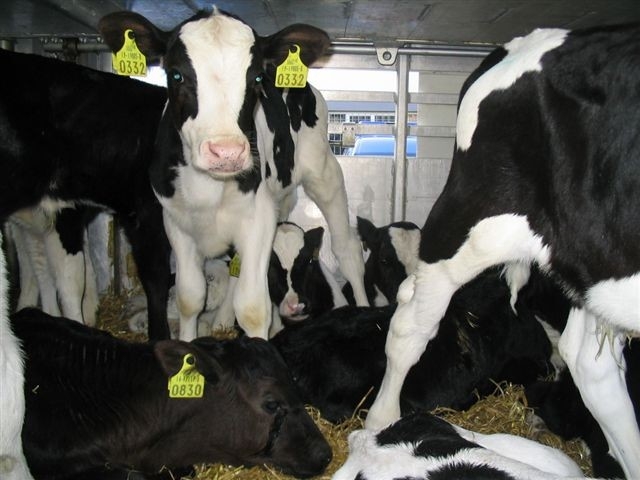
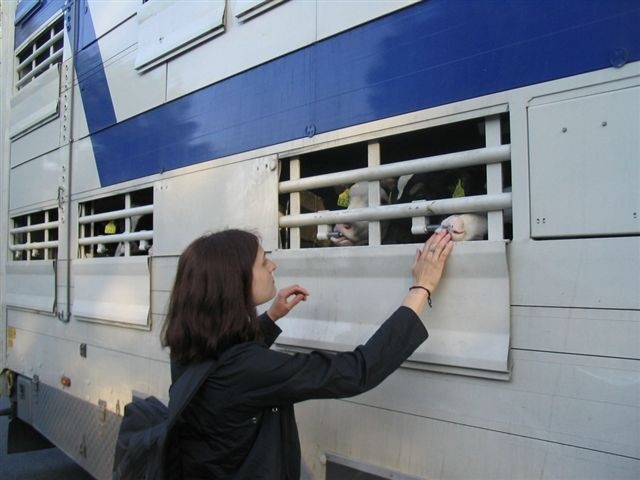
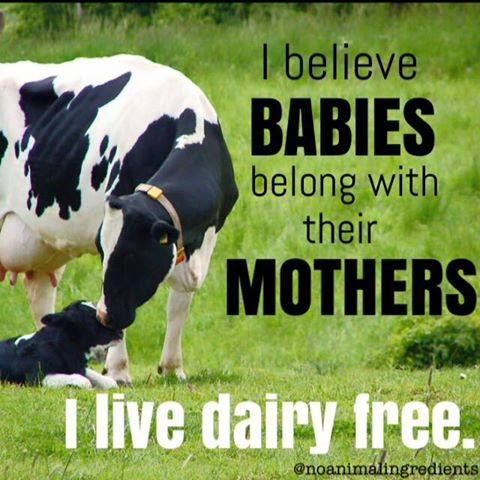
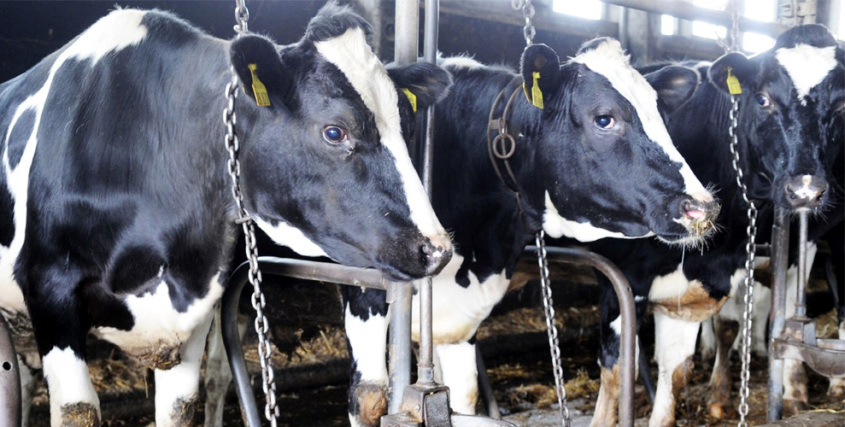
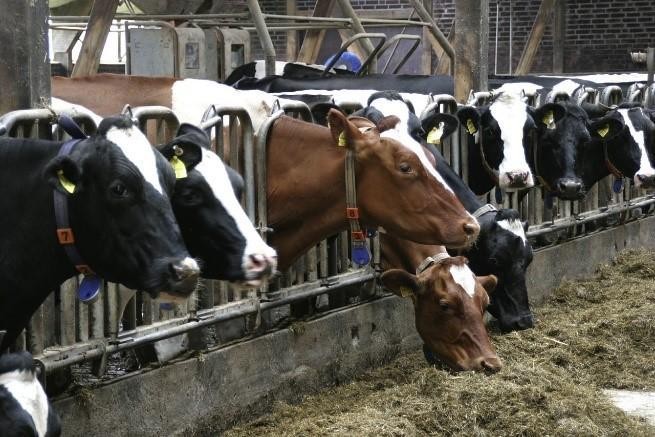
By supporting the dairy industry – milk, cheese, cream etc; you are supporting this kind of animal abuse. Young male calves, of no use to the industry as milk machines; ripped from their mothers side at just a few hours old; crammed onto trucks and exported for hours and hours to die in a foreign land. It is a sick business, and the sooner you distance yourself from everything that is involved with t, the better. Baby cows should be with their mums – simple as that.


Regards Mark


mark 3


———————————————————-

https://www.independent.co.uk/news/uk/home-news/scotland-live-exports-ban-calves-boris-johnson-brexit-a9564981.html

Scottish government defends ‘illegal’ live calf exports as court battle looms

The Scottish government is going to court to defend the practice of sending live baby calves to Europe, even though Boris Johnson has previously backed a ban on live exports after Brexit.

Experts say Scotland’s calf exports are illegal because journeys breach an eight-hour time limit, and they have launched a court battle to try to halt the exports.

It comes as the findings of an investigation suggest paperwork on last year’s shipments submitted to authorities was misleading. Opponents of the trade suspect it was an attempt to evade a potential future ban.

About 5,500 very young male calves discarded by dairy farmers each year are sent abroad, particularly to Spain and even north Africa, where they are fattened and slaughtered as beef or veal.

By law, journeys over eight hours are not permitted for unweaned calves unless, after nine hours of travel, they are given a one-hour break for rest, water and “if necessary”, food.

In practice, the animals – still dependent on their mothers’ milk – are not unloaded after the first nine hours, according to campaign group Compassion in World Farming (CiWF).

Instead they are transported from Scotland to northern France through the port of Ramsgate for up to 23 hours without food – in breach of the law on journey limits, it’s claimed.

CiWF has launched judicial review proceedings against the Scottish government, saying that if it wins, British live calf exports could not continue in their current form, which “could spare thousands of unweaned calves every year from suffering on exhausting journeys”.

But live exports form a large source of income for Scottish farmers, and Holyrood is fighting back, trying to get the case dropped.

The UK government’s Department of the Environment, Food and Rural Affairs (Defra) is also thought to be planning to defend live exports if the case goes ahead.

The prime minister has previously condemned live exports, having pledged – before the Brexit vote – that leaving the EU would allow the UK to ban the trade, which European law did not permit.

In 2018, Mr Johnson condemned the trade as “barbaric”, writing in The Sun of the “nightmare” journeys animals endure: “They are terrified. They slip and slide in their own excrement as the boats buck in the swell. They travel for more than 100 hours in conditions of such extreme discomfort that campaigners have been protesting for decades.

“The animals know they are going to die – and they are going to die far from home.”

The Scottish parliament has previously debated banning exports of live A spokeswoman said: “It is most unlikely that breeding is the reason for more than 3,400 two- to six-week-old male calves being exported, given the numbers being exported per sailing, the conditions in which they are exported, and the age of the calves in question; these calves are clearly not of breeding age.

“We are worried that the decision to begin classifying these exports for ‘breeding’ may be an attempt to evade any potential future ‘fattening’ or ‘slaughter’ export ban.”

In a reply to CiWF, seen by The Independent, rural economy minister Fergus Ewing wrote: “I can assure you that there was no intention to mislead and that officials will sense-check any future data of this kind.”

He added: “Our knowledge of the trade permitted us to deduce that the likely purpose was fattening.

And the 2019 Conservative election manifesto promised to end “excessively long journeys for slaughter and fattening”.

But CiWF has discovered that official logs on every sailing last year bar one listed the purpose of the export as “breeding” – so the shipments would be exempt from any ban.

A spokeswoman said: “It is most unlikely that breeding is the reason for more than 3,400 two- to six-week-old male calves being exported, given the numbers being exported per sailing, the conditions in which they are exported, and the age of the calves in question; these calves are clearly not of breeding age.

“We are worried that the decision to begin classifying these exports for ‘breeding’ may be an attempt to evade any potential future ‘fattening’ or ‘slaughter’ export ban.”

In a reply to CiWF, seen by The Independent, rural economy minister Fergus Ewing wrote: “I can assure you that there was no intention to mislead and that officials will sense-check any future data of this kind.”

He added: “Our knowledge of the trade permitted us to deduce that the likely purpose was fattening and production, although the possibility remains that certain of the transported calves may have been later used for breeding.”

The Independent has approached the Scottish government for a comment.

A spokesman for Defra said the government would be launching a public consultation in due course on “excessively long journeys for slaughter and fattening” – which it pledged at the election to end.

The government held a call for evidence in 2018 on controlling live exports for slaughter and to improve animal welfare during transport after Brexit, but Defra says the new consultation will be wider in scope.


USA: I Worked Undercover at Several Slaughterhouses.

american-flag-120402148

With thanks to Stacey at ‘Our Compass’ for sending this over. Mark.

https://our-compass.org/

Source The Doe
By Alan G, Activist / Progressive / Millennial

A scathing look at the animal cruelty inside a slaughterhouse, from an investigator, vegan and activist.

“I can’t save any of them.” That’s what I reminded myself, day after day, as I looked upon the faces of the animals who would soon be slaughtered. “Just do what you came here to do,” I would add, locking my eyes forward to concentrate on the task at hand. There’s no time to stop and be sentimental.

At a slaughterhouse, there’s always work to be done.

During the years I was an undercover investigator, I worked at three slaughterhouses in three different states—on behalf of a national farmed animal protection organization. While working, I used hidden camera equipment to document the painful reality of what animals endure on the last day of their lives.

I often asked myself how I ended up where I was. Like a lot of people in the vegan movement, I would call myself an animal lover. When I was young, I only had a few career goals. After seeing Jurassic Park, I wanted to grow up and study reptiles. Then, after consuming copious comic books, I wanted to be a hero. I combined these goals and eventually earned a master’s degree in ecology, with the goal of doing conservation research to protect wild animals. But, while I was in school, I learned about the suffering of farm animals through a labmate, the first vegan I ever knew in real life.

You probably guessed this already, but after a lengthy process, I became a vegan as well. Why wouldn’t I? Not only is meat production cruel, but it’s also notoriously bad for the environment, in terms of land use and emissions. So, it appealed to me as someone interested in conservation. In fact, I was so entranced with veganism and its benefits that I decided to keep my career options somewhat open. I wanted to either end up in field research or in activism. The non-profit I continue to work for today was the first to respond to my resume, which eventually brought me to those slaughterhouses.

I ended up working at chicken, pig and lamb slaughter facilities before I retired from fieldwork. I saw cruelty everywhere I went: some intentional and some as a result of companies trying to maximize speed (and, therefore, profits).

The Chicken Slaughterhouse: Animal Cruelty Bordering on Torture

My first job undercover was at the poultry plant, working live hang. Our one job was to pull chickens off a conveyor belt and wedge their legs in shackles passing by at eye-level. We were supposed to handle 24 chickens per minute, an impossible timeframe for anything even resembling “humane.” The birds would struggle; they would flap their wings or defecate out of fear, releasing feathers, blood and feces everywhere. The other workers seemed unconcerned with their plight. They would tear feathers off to throw at one another, or press the bodies of chickens against the metal conveyor belt in retaliation against their struggling. Sometimes, the workers at the head of the line would take a few steps back and hurl the birds at the shackles like they were baseballs. Often, the birds would successfully end up in the shackles after these pitches. It was easy to see that the workers had practiced this method.

The Pig Slaughterhouse: Inhumane Methods of Killing

My second position was at a slaughterhouse supplying a household name in pork products. I ended up working two different jobs there, one of which was on the kill floor. Part of the job was herding the animals through chutes and pens until they reached the stunner. Afraid and/or injured, sometimes they wouldn’t want to move—or simply couldn’t. And when the pigs weren’t moving, the workers started to become violent.

We had “rattle paddles” which look like oars with the flat end filled with noise-making beads. Workers would raise these paddles above their heads and bring them down on the heads or bodies of pigs. Several times, I was admonished by others for not doing this. “Hit them! Hit them!” they would yell at me. We also had access to electrical prods, which other workers would use on animals multiple times, sometimes in the face or near the genitals. The sick ones would be pulled by their tails or shoved out of the pens. We were supposed to use a sled to do that, but a supervisor told me they just didn’t have the time.

When the animals got past the chutes, a worker would use an electrical stunner on them. The hogs would go rigid and fall down a slide to a conveyor belt below. There, a worker would cut their throats. If the cut wasn’t done correctly, the animal wouldn’t bleed out enough to kill them before the stunning wore off, so I documented several pigs returning to sensibility and attempting to right themselves while they were hanging upside down, bleeding from the gaping hole in their throats. Workers were supposed to stop the line to re-stun the animal, but in one instance I witnessed, they didn’t bother, leaving the animal to suffer as the shackle took him slowly towards tanks of scalding water. I remember a choice quote from one worker: “If USDA were around, they could shut us down.”

The Lamb Slaughterhouse: Processing Contaminated Meat

My final investigation was at a slaughterhouse for one of the largest lamb producers in the U.S. I spent a few months working in a refrigerated room all day. The supervisor would tell workers to change the “best by” date labels on older products to falsify their freshness. He would help people avoid putting product through the metal detectors to save time, risking contamination of the meat with metal shavings. And when I finally got a position that would help me observe the slaughter process, we discovered that after having their throats cut open, 90 percent of the lambs would move in response to having their tails cut off later on the line, indicating they were potentially still sensible. What we saw was so egregious we decided to file a False Claims Act against the company, which resulted in a historic intervention from the Department of Justice, a settlement and mandated changes to their slaughtering practices.

Slaughterhouse Workers Suffer, Too

Slaughterhouse practices don’t just cause suffering for the animals. Meatpacking plants are notoriously dangerous for workers, with two amputations occurring in the U.S. per week. Most of my jobs were basically assembly line jobs, with workers performing the same action hundreds or thousands of times per day. Injuries are common, especially those caused by the repetitive motions on the line. I remember my hands aching every minute while I was employed in live hang, my knuckles red from holding the bony legs of thousands of chickens.

In another job, I wore a back brace on top of another because I spent all day carrying boxes filled with lamb meat. I cut myself on knives and metal hangers at the pig plant. More than once, I cried in my car before a shift, anticipating the mental and physical anguish I would endure for the next 12 hours. (And, now, during the coronavirus pandemic many Americans are painfully aware of how disease can spread like wildfire inside of these facilities.)

Though all of that is behind me now, it is still the reality for the billions of animals who are slaughtered every year. While I’m retired from undercover work, I’m still very much an activist for animals. As part of my job, I work with footage from other investigators and witness the same cruelty I saw firsthand. But it’s worth it, because I want people to see what I saw, as hard as it can be to watch. Despite the efforts of investigators like myself, there are still so many people who have no idea where their “food” comes from, and what horrible atrocities they’re paying into by buying animal products. My hope is that everyone who is even a little curious about what I went through can take the time to watch some of the footage brought back from these facilities. As someone who was on the inside, I hope the reality of the plight reaches you.

Click HERE to go Dairy-Free

Take the Dairy-Free Challenge HERE

Learn about eggs HERE

Order a FREE vegan kit: http://www.peta.org/living/food/free-vegan-starter-kit/

Take PETA’s Cruelty-Free Shopping Guide along with you next time you head to the store! The handy guide will help you find humane products at a glance. Order a FREE copy HERE

Searching for Cruelty-Free Cosmetics, Personal-Care Products, Vegan Products, or more?
Click HERE to search.

Click HERE to find out How to Wear Vegan!

Want to do more than go vegan? Help others to do so! Click below for nominal, or no, fees to vegan literature that you can use to convince others that veganism is the only compassionate route to being an animal friend:

PETA: https://www.petaliterature.com/

Vegan Outreach: https://veganoutreach.org/order-form/

Get your FREE Activist Kit from PETA, including stickers, leaflets, and guide HERE

Have questions? Click HERE


We need an agricultural revolution

Vegans are often accused of destroying the rainforest with their soy consumption. But vegan products are mostly made from regional soy, the rainforest soy is mainly found in pet food.

The soybean industry is booming. Global soybean production has more than doubled since 1997.
This is due to the growing demand for feed for the production of meat and dairy products.

This rapid expansion threatens some of the most biodiverse habitats on earth, including the Amazon rainforest, the Cerrado, and the Gran Chaco in South America, which drives the climate crisis and is at the expense of public health.

In 2017, according to a Greenpeace report, 48% of soy was produced worldwide in Brazil and Argentina alone, with 95% genetically modified, resulting in high levels of herbicides and other dangerous chemicals.

After China, the EU is the second-largest soy importer in the world with around 33 million imported soy products, and 87.4% of the soy imported by the EU is used for animal feed.

Soy, which is mainly used as animal feed, has accounted for almost half of the deforestation associated with imports in the past.

An estimated 87% of imported soy is used for animal feed, almost 50% of it for chickens (broilers for meat and egg-laying chickens), followed by pigs (24%), dairy cows (16%) and beef cattle (7%).

The rest (4%) is used for farmed fish and for the production of other meats.

Almost three-quarters of the EU’s agricultural land is used to feed farm animals – not humans.

For more…at https://worldanimalsvoice.com/2020/06/15/we-need-an-agricultural-revolution/


My comment:  Mass meat production for almost 8 billion people can no longer be sustained; at least not without massive animal suffering, climate crisis, and pandemics.

It is time to leave the Stone Age and stop producing animal suffering and climate destruction.

Instead of moving from pandemic to pandemic and producing multi-resistant germs, we should take advantage of the possibilities of the 21st century: The final exit from industrial livestock farming !!

When will we learn from our mistakes?
We are the only animal species that cannot.

My best regards to all, Venus