


“Is he gone?”
we hope so!
Regards and good night, Venus
Filed under: GENERAL NEWS - International / National / Regional | Leave a comment »

Filed under: GENERAL NEWS - International / National / Regional | Leave a comment »




Filed under: GENERAL NEWS - International / National / Regional | Leave a comment »

Mutated virus infects 12 humans, sparking concerns that effectiveness of future vaccine could be affected
The world’s largest mink producer, Denmark, says it plans to cull more than 15 million of the animals, due to fears that a Covid-19 mutation moving from mink to humans could jeopardise future vaccines.
At a press conference on Wednesday, the Danish prime minister, Mette Frederiksen, said 12 people are already infected with the mutated virus and that the mink are now considered a public health risk.
“The mutated virus in mink may pose a risk to the effectiveness of a future vaccine,” Frederiksen said.
She said the army, police, and national emergency service would be mobilised to help farms with the mink cull, which will eradicate the entire Danish herd.
The authorities and breeders have already been culling the animals over the past few weeks in a bid to contain the spread of Covid-19.
Reuters reported that Denmark’s health minister said about half of 783 infected people in northern Denmark, home to a large number of mink breeders, had been found to have infections stemming from the farms.
Denmark is the world’s largest producer of mink fur and has 15 to 17 million animals on about 1,100 farms. According to reports, the latest figures from the Danish Veterinary and Food Administration, say Covid-19 infections have been found on more than 200 mink farms. The figures were confirmed by a Danish police press officer.
Finnish fur auctioneer Magnus Ljung, CEO of Saga Furs, was watching the Danish announcement. “It’s a shock. They will kill all mink in Denmark. They are talking about the risk of Covid-19 mutating in the mink, and going from mink to humans, and potentially affecting a future human vaccine.”
Ljung estimated the value of the 2020 mink population in Denmark to be between €350m and €400m (£270m-£360m).
“They got control of [Covid-19 mink infections] in Holland and there were a few cases in Spain and in Sweden. But it was all kept under control. [The Danish cull] is unexpected, for sure. Yes, it could happen in other countries. But I don’t want to speculate,” said Ljung.
“What we really need to do is end mink farming entirely and retrain the farmers,” said Birgitte Damm, policy adviser and vet with NGO Animal Protection Denmark.
Speaking from Amsterdam, Dr Joanna Swabe, Humane Society International/Europe’s senior director of public affairs, said: “Denmark is one of the largest fur producers on the planet, so a total shutdown of all Danish mink fur farms amid spiralling Covid-19 infections is a significant development.
“Although not a ban on fur farming, this move signals the end of suffering for millions of animals confined to small wire cages on Danish fur farms solely for the purposes of a trivial fur fashion that no one needs. We commend the Danish prime minister on her decision to take such an essential and science-led step to protect Danish citizens from the deadly coronavirus.”
Sign up for the Animals farmed monthly update to get a roundup of the best farming and food stories across the world and keep up with our investigations. You can send us your stories and thoughts at animalsfarmed@theguardian.com
Filed under: GENERAL NEWS - International / National / Regional | Leave a comment »

EFSA reiterates that slaughter without stunning should not be practiced
5 November 2020
A new Scientific Opinion by the European Food Safety Authority (EFSA) identifies many animal welfare problems likely to occur in cattle at the time of slaughter, and propose measures to minimise and prevent them. Eurogroup for Animals calls on the EU Commission to take the assessment into account for the revision of the Regulation 1099/2009.
The killing of cattle for human consumption (slaughtering) can take place in a slaughterhouse or during on‐farm slaughter. A new EFSA assessment identified 40 hazards, most of them related to stunning and bleeding, that impact the welfare of these animals while slaughtered.
Particularly, EFSA identified 12 welfare consequences the cattle can be exposed to during slaughter:
This Scientific Opinion acknowledges that proper management plays a crucial preventive role and that 97.5% of the hazards identified have their origin in the lack of skills of the operators.
Methods are also causing animal welfare problems. In this regard, despite the Panel agreeing with the World Animal Health (OIE) list of unacceptable methods and procedures, it also raises concern towards certain practices, such as the unloading or moving of severely injured cattle, the use of painful stimuli to move animals, and slaughter without stunning.
EFSA reaffirms that “slaughter without stunning should not be practiced”, acknowledging that “pre-cut stunning is the only preventive measure for the welfare consequences connected with cutting”.
With this opinion EFSA set a list of hazards, welfare consequences and related corrective and preventive measures.
These findings should be used by the EU Commission to address the OIE standards and hopefully to inform the revision of the Regulation 1099/2009:eliminating all the practices assessed by EFSA as detrimental from an animal welfare perspective, and for which preventive and/or corrective measures do not exist.
Filed under: GENERAL NEWS - International / National / Regional | Leave a comment »

EDMONTON – Canada’s first case of a rare swine flu variant has been found in a patient from central Alberta, but the province’s chief medical officer of health says it seems to be isolated.
Dr. Deena Hinshaw says the Influenza A H1N2v case was detected in mid-October after the patient showed up at an emergency department for medical care.
“This currently appears to be one isolated case,” Hinshaw said at a news conference Wednesday. “It is also the only case of influenza that has been reported so far this flu season.
“Influenza viruses that normally circulate in pigs, including H1N2, can infect people – although this is not common.”
When cases appear in humans, they are called ‘variant’ viruses and a ‘v’ is added to the end of the name.
Hinshaw said it’s the first reported case of H1N2v in Canada since 2005 when reporting became mandatory – and one of only 27 cases globally.
Health Canada said on its website the other cases include 24 in the United States and two in Brazil.
“Based on current evidence in Canada, the risk to human health is low,” it noted.
The federal agency said swine flu viruses don’t normally infect people, but there have been infrequent exceptions. It can be contracted by humans when they breath in respiratory droplets from an infected pig or touch something with the virus on it and then touch their mouth or nose.
“All have been linked to direct or indirect contact with swine and none of the previously reported cases have caused sustained human-to-human transmission,” added Hinshaw.
The Alberta patient, she said, had mild symptoms, was tested for influenza and COVID-19 as is routine in hospitals, and recovered quickly.
“There is no evidence at this time that the virus has spread further,” she said.
Hinshaw said Alberta Health is working closely with Alberta Agriculture and Forestry, as well as Alberta Health Services and the Public Health Agency of Canada, to determine the source of the virus and to verify that no spread has occurred.
“Retrospective testing of central Alberta COVID samples from the past two weeks for influenza is almost complete and no positive influenza samples have been found,” she said.
Hinshaw said Alberta Health Services will offer optional influenza testing to anyone in central Alberta who shows up for COVID-19 testing.
Both she and Dr. Keith Lehman, the province’s chief veterinarian, said they are still investigating the source of the virus.
“At the moment, there are no links to slaughterhouses,” said Hinshaw, who added that they are looking into potential links to some pig farms in the area.
Lehman said the animal health investigation is using information provided by the patient.
“We have identified some potential sources and we are continuing to investigate,” he said.
Lehman added that it’s not unusual to see influenza in swine populations in Western Canada and around the world.
“Within Western Canada, we have routine surveillance that is undertaken for our swine farms and we tend to see anywhere from roughly 10 to 30 cases identified per quarter,” he said. “It is a virus that is not uncommon in our swine populations.”
Lehman said there’s no increased risk to other hog operations because they have strong biosecurity practices to prevent it from spreading. If a pig does contract it, it’s typically a mild illness, he said.
Officials stressed that H1N2 in pigs is not food-related.
“It is not transmissible to people through pork meat or other products that come from pigs and there is no risk associated with eating pork,” said Hinshaw.
Filed under: GENERAL NEWS - International / National / Regional | Leave a comment »
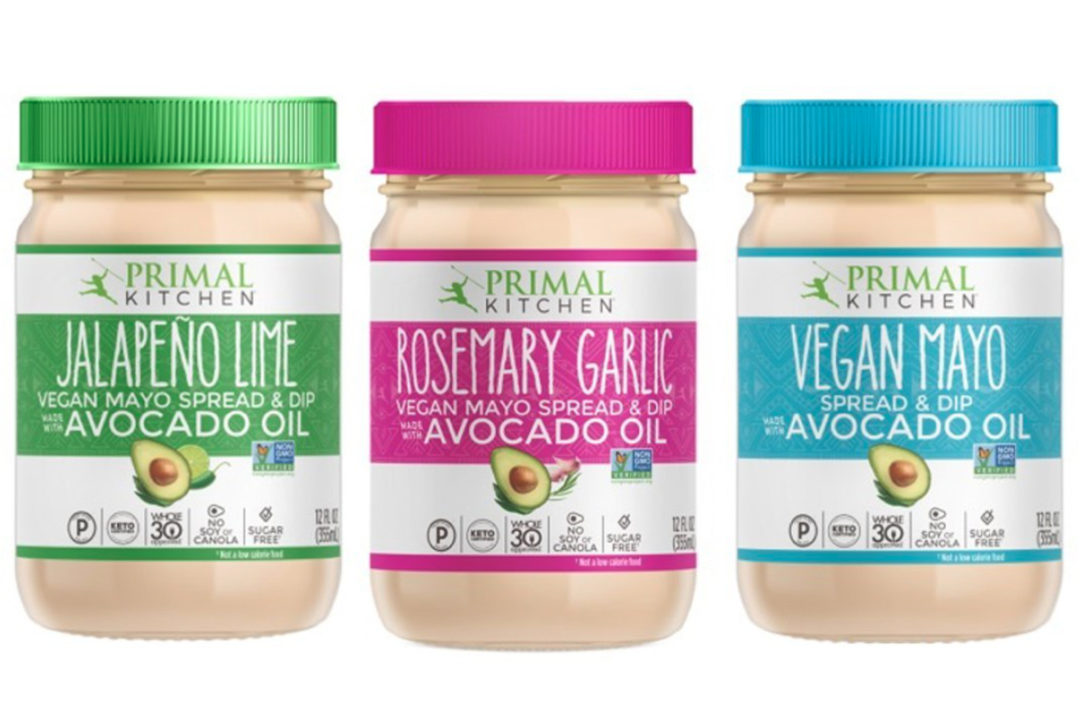
OXNARD, CALIF. — Primal Kitchen, a subsidiary of Kraft Heinz Co., is launching a line of vegan mayo dips and spreads made with avocado oil.
The Non-GMO Project verified product is a plant-based, egg-free mayo containing no canola oil, soybean oil, grains or sugar. Certified gluten-free, Whole30 Approved and keto friendly, the mayo is available in three varieties: original, rosemary garlic and jalapeño lime.
“Our Vegan Mayo uses potato protein, a functional ingredient, for emulsification,” said Mark Sisson, founder of Primal Kitchen. “This unique differentiator makes our line paleo-friendly and Whole30 Approved, without using a legume-based emulsifier like pea protein or chickpea water. There really isn’t another vegan mayo out there that checks all the boxes and has a creamy, uncompromisingly delicious flavor.”
Primal Kitchen Vegan Mayo is set to hit refrigerated shelves at Whole Foods Market and Natural Independent Grocers this month and additional retailers nationwide throughout 2020. Each 12-oz jar retails for $9.99.
Filed under: GENERAL NEWS - International / National / Regional | Leave a comment »

 Serbian Animals Voice (SAV)
 Serbian Animals Voice (SAV)