Sweden: Promoting Seal Killing

2/1/21

Hans has been in contact with us direct from Sweden.

There is a situation now where seals (3 species) can be shot and killed – and this ‘service’ is being snapped up by organisations who are trying to get trophy hunters to pay and kill.

We are repeating the info from Hans below; complete with the links which have some graphic photos on them.  Note there is also a petition site link if you want to sign against this.

Thanks go to Hans for drawing this issue to our attention, which we are putting out for the world to know about.


Un edited info from Hans:


Here in Sweden, they are now letting people shoot and kill thousands of seals of 3 different species, information here:


https://www.thepetitionsite.com/sv/253/746/017/stoppa-s%C3%A4ljakten-nu-demand-and-end-to-the-seal-hunt-now/

Precisely, the killing quota is 3300, and they are also inviting trophy hunters, Swedes as well as foreigners, to pay for hunts. Here is an example of seal trophy hunting in Sweden for sale, containing many grisly images of satisfied customers:
https://www.sealhunt.se/viner/

The price is, 5500 Swedish kroner for a hunt without training, and 3500 Swedish kroner for a hunt with training, it can be done from rocks, islands and even boats. The images contains both male and female customers who paid to shoot these seals in Sweden in 2020. Its everything from baby seals to fully grown adult seals. This is perfectly legal in Sweden and the EU because the products are not commercially sold. Its legal to kill, but not to sell the byproducts of the kill. However on this website you can pay 500 Swedish kroner for someone to preserve the skin so you can bring it home as a trophy.

More images from the same website where the hunts are sold:
https://www.sealhunt.se/var-berattelse/

Thanks for highlighting it!

The ban is on seal products, what many don’t know is that there is not a ban on killing seals as such, for any reason including sport! The authorities justify it with the exact same argument as Canada and Namibia, that the seals eat the fish. 

Out of the 3300 quota, there is a quota of 2000 grey seals, and here you can follow the hunt updates live by the Swedih EPA (Environmental “Protection” Agency)

https://www.naturvardsverket.se/Stod-i-miljoarbetet/Rattsinformation/Beslut/Beslut-om-jakt-och-vilt/beslut-sal/Sal/

So far for the 2020/21 season, the quota has been half filled. The regions reporting most kills are Gävleborg (154), Kalmar (141), and Stockholm, yes, Stockholm the Swedish capital (104).

Furthermore, Sweden is trying to repeal the EU seal products ban, possibly to remove it entirely, or to at least have an opt-out from it. Here you can see an official document from Swedish authorities to the EU. They claim that seal hunt is a long lasting Swedish tradition since well, the last ice age. This is NOT something Sweden proudly boast about very often in international relations. Without the UK being in the EU, it could be considerably easier to repeal the EU seal products ban now. 

https://ec.europa.eu/environment/biodiversity/animal_welfare/seals/pdf/factsheet/Annex%20to%20Sweden%20report%20-%20Comments_from_Sweden_on_the_EU_seal_regime.pdf

Quote from first part of the document, you can follow the link and read the rest:

“Seal hunt has been a part of Swedish culture and history since the repopulation of the region after the latest ice age. Hunting for seal was a way of getting meat, skin and bones for tools, jewelry and weapons. For the more modern day small scale coastal fisheries the seal has been an important source of meat and skin and a way to get an extra income. The ban on trading with seal products implies large problems for the coastal fishery in Sweden. With the ban fewer people hunt for seal while an increasing population has caused fishstocks with parasites, competition for the fish and the destruction of fishing gear. Aspects raised by national agencies

A key concern highlighted by the Swedish Environmental Protection Agency is the effect of the current seal regime through its trade ban which prevents the use of the seal as a resource. The Agency moreover stresses that seal hunting is an integrated part of the Swedish game management and that the way the EU Seal regime works could prevent the effective management of the game population with decreased interest in seal hunting as a result. In particular, this could have a damaging effect on small-scale coastal fishing which depends on hunting and where a proper manegement of the population is key in order to prevent serious damages to catch and equipment.

The Swedish Agency for Marine and Water Management welcomes a revision of the ban on trade with seal products as this could help to increase the general public acceptance of an increased seal population.”


Veganuary Expects More Than Half a Million Participants Worldwide in 2021.

Veganuary Expects More Than Half a Million Participants Worldwide in 2021

Every year, nonprofit organization Veganuary encourages people to choose plant-based food for January and beyond. For 2021, the group aims to attract more than half a million participants around the world!

The COVID-19 pandemic has only highlighted the urgency of plant-based eating, as raising animals for food can promote the creation and spread of dangerous diseases. Consumers are growing more aware of this connection, with sales of plant-based meat jumping 35 percent from April to May 2020. Tofu is also flying off the shelves. According to Nielsen, tofu sales in the first half of 2020 were a whopping 40 percent higher than last year. And Google searches for tofu recipes have nearly doubled since March. Actor and Veganuary supporter Alec Baldwin said:

During the pandemic, we have cooked all our meals at home and have moved to a completely plant-based diet in this house. When you prepare your own food, it’s interesting how your tastes change. And any animal products become less appetizing when you prepare them, from start to finish, yourself.

Last year, Veganuary expected 350,000 participants and ended up with more than 400,000 from 192 countries! Among participants were rock legends Brian May and Meat Loaf. Veganuary also launched the first-ever vegan advertisement for mainstream U.K. television.

Since Veganuary was founded in 2014, over a million people have participated. Of those surveyed, 47 percent said they were committed to staying vegan, while 77 percent of those not committed said they were “very likely to try veganism again.”

People who take the Veganuary pledge get support through emails, social media content, and membership in a Facebook group. Veganuary also encourages brands, manufacturers, and retailers to expand their plant-based options. In fact, several huge companies, including Yelp, Mendocino Farms, Tofurky, Follow Your Heart, and Violife, have agreed to offer Veganuary promotions, giveaways, special menu items, and more.

Programs like Veganuary are a powerful way to introduce people to plant-based eating. Get started on your New Year’s resolution by taking the pledge, and order a FREE Vegetarian Starter Guide for recipes and tips!

how ugly is the world we have built…

Desolation, injustice, miserere…

All animal cruelty in this world does not come because we underestimate animals, but because we overestimate ourselves.
That makes people nothing more than a habitual criminal, at every level.

Regards and good night, Venus


The gruesome primate lab at UW-Madison must be shut down, now!

At this laboratory, primates are put through conditions so disturbing, “nightmarish” doesn’t even begin to describe it.

Male monkeys are dragged out of metal cages by their necks and locked into restraint chairs. Once strapped in and unable to move, staff bring out electric shocking devices. They lower the devices to the animals’ genitals.

And then, helpless to escape, the monkeys’ penises are shocked over and over and over again until they finally ejaculate.

This sounds like the kind of thing that could not even possibly be real. But it is, and an undercover whistleblower for PETA witnessed these experiments occurring first-hand.

Where could such horrendous types of research possibly be conducted? At a renowned university funded by federal tax dollars — the University of Wisconsin at Madison (UW-Madison).

The experiments described above are only one part of the problem.

Staff is also extremely numb to the monkeys’ emotional needs, neglecting and tormenting them as a result.
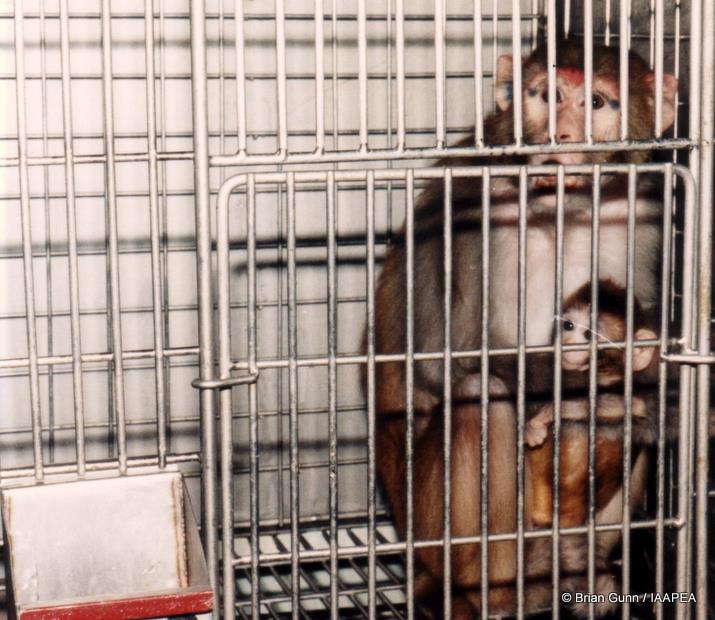
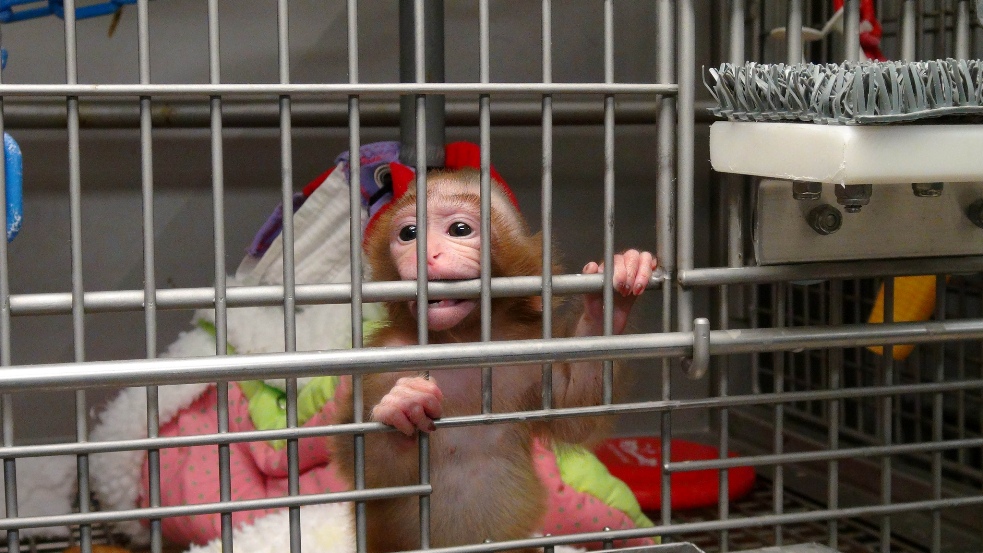
The “lab rat” primates are shut away in rooms without windows or natural sunlight, inside metal cages just barely large enough to meet federal regulations. Infants have regularly torn away from their mothers.

Baby monkeys torn away from their mothers are forced to live alone in small metal cages.

Some are put through surgeries performed without proper anesthesia.

In one case, a monkey — still stuck inside his metal cage and screaming to be let out — was run through equipment designed to wash cages at extremely high temperatures. The wailing animal died as a result of this torture.

In another incident, a supervisor confided that one of their staff members was a “bit too … rough” and broke another monkey’s leg.
Still more animals have lost parts of their fingers and toes from amputated injuries, often sustained while they are desperately trying to escape.

Other captive, experimented-upon primates at the lab have taken to self-mutilating.

There is NO EXCUSE for this kind of brutality and callous disregard for animals’ rights. Yet as of now, there are still approximately 2,000 monkeys trapped in this research facility’s premises.

Tell the leaders of the University of WisconsinChancellor Rebecca Blank and Vice-Chancellor Steve Ackerman — that we will not stand this cruelty any longer!

They must close this primate lab immediately!


Sign the petition to demand that the gruesome primate lab at UW-Madison be shut down, now!

https://www.thepetitionsite.com/de/takeaction/845/554/294/

For more…at https://worldanimalsvoice.com/2021/01/01/the-gruesome-primate-lab-at-uw-madison-be-shut-down-now/


Important information on the topic: Since 1989, UW-Madison’s Richard Weindruch has starved caged monkeys—depriving them of an extreme 30 percent of needed calories—to see if this would increase their longevity.

The monkeys have been caged alone and kept perpetually hungry for nearly three decades. Members of the control group in this experiment were fed an extremely high-sugar diet and became morbidly obese.

The experimenters have repeatedly tried to make meaningful claims about the health benefits of caloric restriction, but given the fundamental flaws of this experimental design, it can’t possibly hope to inform us about anything of value.

University of Wisconsin-Madison Archives & Wisconsin National Primate Research Center

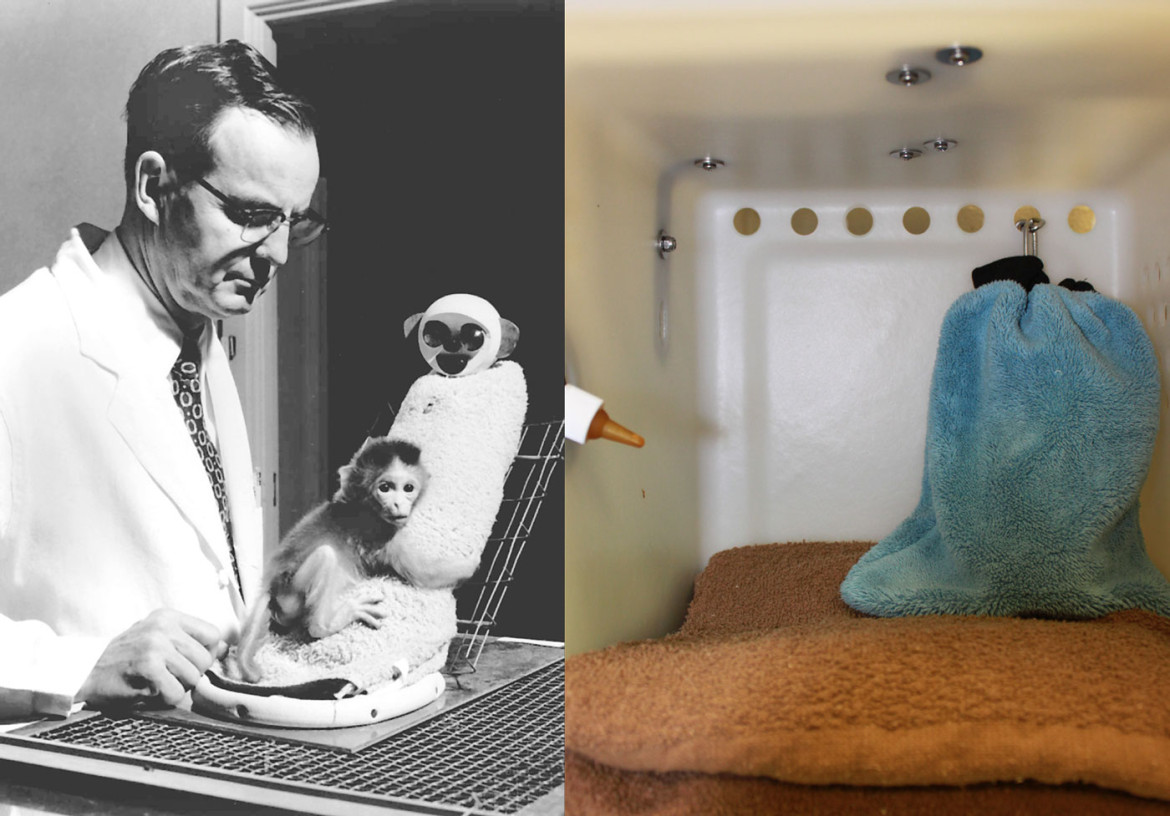
Surrogate mothers, then and now. Left: Harry Harlow, a controversial experimental psychologist who worked at the University of Wisconsin-Madison for more than 40 years, studied the effects of isolation on baby monkeys. Right: When psychiatrist Dr. Ned Kalin’s research into the effects of early adversity on the brain begins, experimental animals will live in this incubator for the first several weeks of their lives.

In 2013 20 rhesus monkeys, as well as another 20 used as a control group, will be given tests intended to provoke and measure anxious behavior. After one year they will all be euthanized and their brain tissue collected for molecular analysis.

“We’re killing baby monkeys,” Streiffer says, Professor of Philosophy and Bioethics, at UW-Madison. “There are other things that have been done that are worse, but that’s not a justification for saying that this isn’t really really bad.”

The public has a right to insist that federal tax dollars not be wasted on unnecessary “terror testing”. Far more useful and painless methods of research are already available that do not involve animal suffering.

PETA Undercover Investigation: Workers Pry Baby Monkeys Away From Their Mothers, Electroshock Penises, and More in Deranged Lab

Why are we animals still subjecting these hellish experiments?

No one in a common sense would argue that it is okay to separate people from their families, take them overseas, and not subject them to consensual, painful procedures.

So how can we tolerate other living beings?

The answer is only one: animals cannot defend themselves. And that is also the reason why we still experiment on animals and no longer on humans, as we did a few centuries ago.

It has nothing to do with human welfare because animal experiments have no practical relevance!

I am not interested to know whether vivisection produces results that are profitable to the human race or doesn’t… The pain which it inflicts upon unconsenting animals is the basis of my enmity toward it, and it is to me sufficient justification of the enmity without looking further.”
Mark Twain

My best regards to all, Venus


Betta fish-the gruesome delivery from Thailand

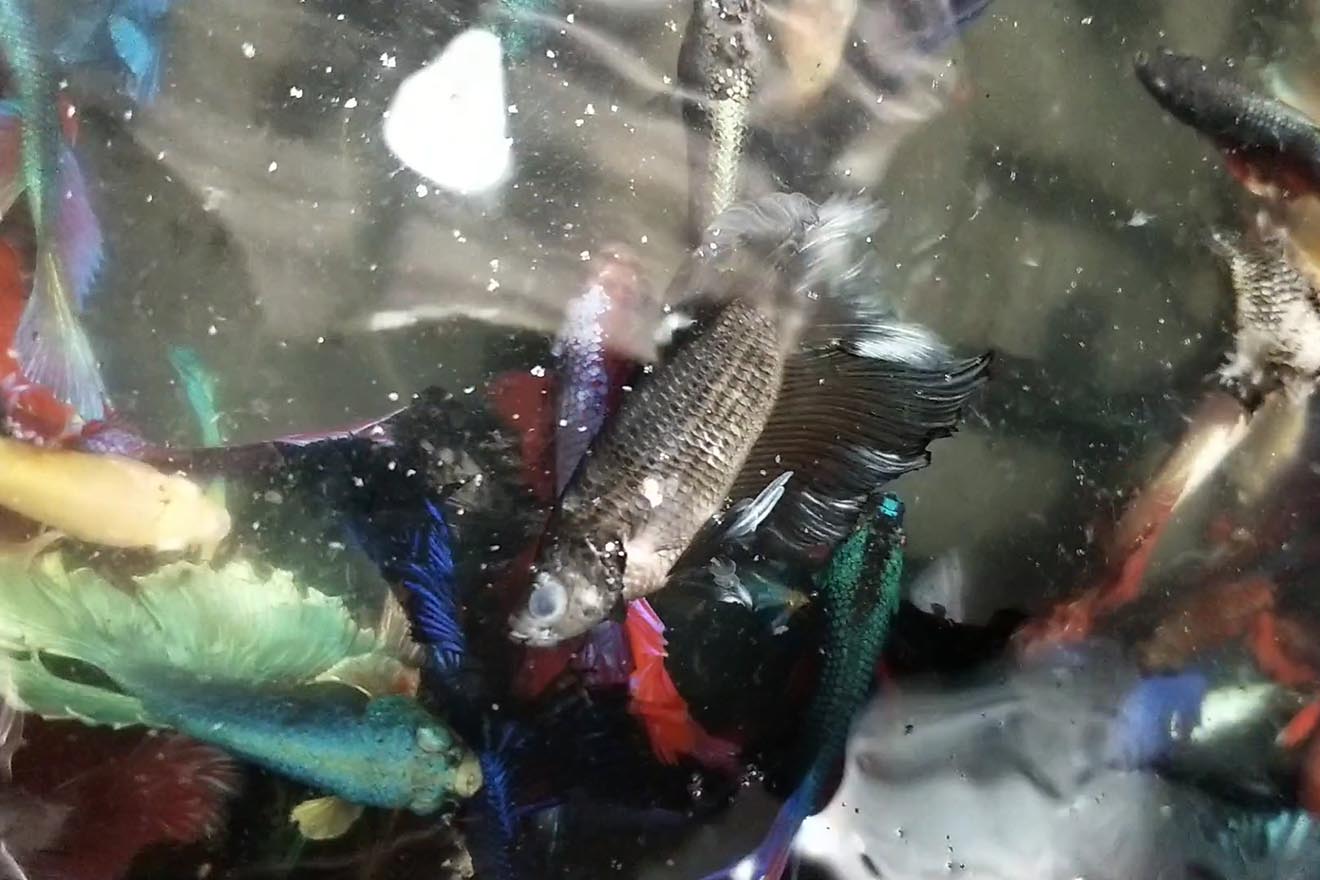
Betta fish are vibrant and colorful, but they’re also extremely complex animals.

At Petco stores around the country, they’re confined to tiny plastic cups with scarcely a couple of inches of water inside that are stacked on top of one another.

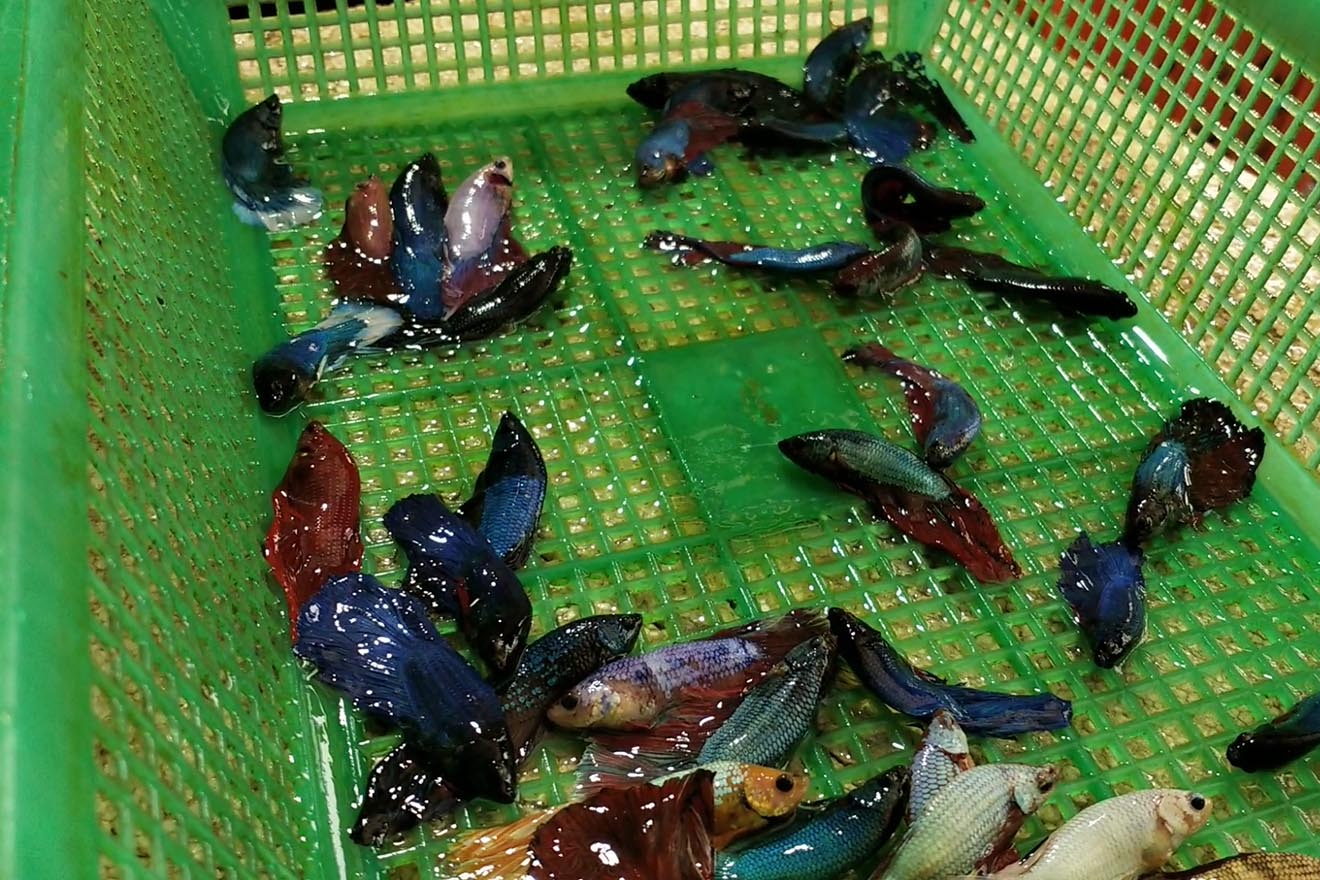
Thailand: The eyewitness who took the photo saw a bucket of dead and live fighting fish. These animals were considered unprofitable because their caudal fin was damaged. One employee said they would be thrown into a canal or pond.
Scores of customers have complained of finding dead, sick, and injured bettas floating in filthy water on the chain’s store shelves.

PETA’s investigations of the pet industry have uncovered appalling neglect of betta fish even before they reach stores.

They’re often starved for several days during transport and are confined individually to tiny bags that are stuffed into boxes stacked up high in massive wholesale warehouses.

Many fish die before and during transport to retailers, which can take days, as they’re shipped all over the country. Industry insiders have confirmed that this system is a common practice for some retailers.

While some bettas are captured in the wild, the vast majority of those sold in the U.S. come from breeding farms in Thailand and other countries in Southeast Asia, where it’s common practice to keep them in small bottles.

When it’s time to pack them for transport, fish are haphazardly dumped into baskets covered with nets and scooped up into tiny plastic cups. Then, they’re packed up to be sent to the United States.

While workers sorted the fighting fish for transport, the animals were out of the water, writhing and gasping for air.
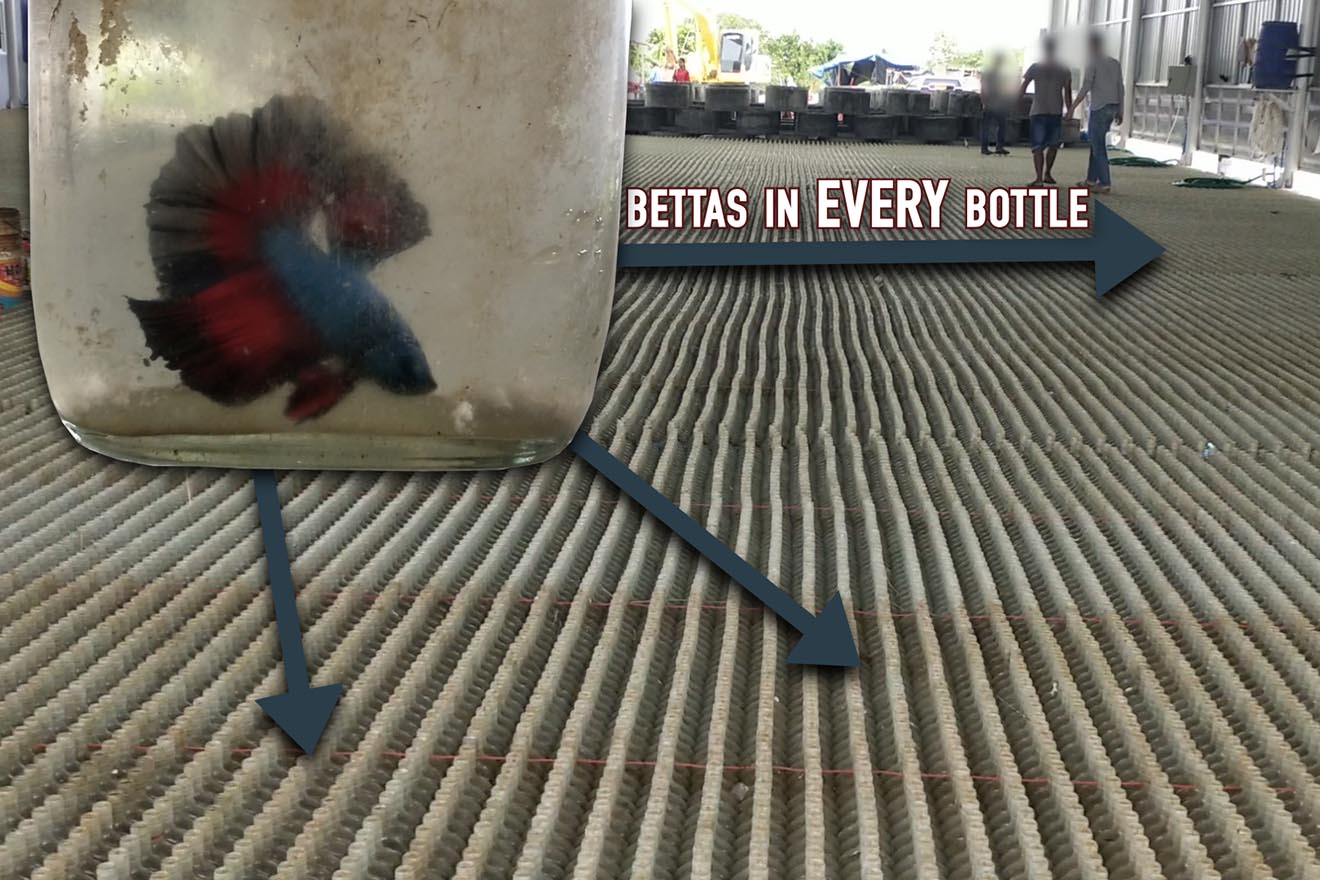
Segrest Farms, a Petco fish supplier, admitted that it sources bettas from Thailand.

For more…at https://worldanimalsvoice.com/2021/01/01/betta-fish-the-gruesome-delivery-from-thailand/


Additional Information: Thailand is one of the world’s most important export countries for fighting fish.

In 2019, an eyewitness from PETA took a look around Thai fighting fish farms that supply the global pet trade – including the German one. What he found was shocking conditions and cruelty to animals.

Many of the animals had died in the breeding tanks and were simply not removed.

At a Petco supplier, the eyewitness came across a bucket full of dead and live fighting fish.

One employee said these animals were not profitable because their caudal fin was damaged. She admitted that they would just dump them in a nearby pond or canal.

The eyewitness looked at a total of 10 establishments

In this company, tens of thousands of fish were kept in tiny, often dirty bottles. Due to the small amount of water, the ammonia produced by the fish’s excretions quickly accumulates and pollutes the water. The bottles were so close together that the employees could walk over them.

For worldwide shipping, fighting fish are packed without any food and sent on a journey of several days by air freight. A staff member told the eyewitness that sedatives would be put into the water to prevent the fish from trying to eat their own caudal fin.

According to an employee, a company that supplies Petco sends 100,000 fighting fish to the USA every week.

Up to 1,000 of them die before they reach the dealer.

The company EFS – Zoo buys Betta fish from Thailand from the company Q.P.S. International Aquatics Co. Ltd., which can be seen in this video at minutes 1’41 – 1‘59.

Fish are not decorations, and they should never be forced to live and die in a tiny bowl

There is nothing more perverse than imprisoning animals in a water prison for life and claiming that someone does this out of love for animals!

Every single living being has a specific task, an individual meaning in the entire context of life.

Only the recognition of the individuality of each being can lead to a coherent ethic for our behavior with animals.
Since thinking is part of our life’s tasks, we are morally obliged not to tear other beings out of their living space and use them at will.

This moral principle cannot be discussed. It is a fact!

My best regards to all, Venus