Sea Shepherd in Calapagos Archipelago

About 960 kilometers from the coast of Ecuador is the Galapagos Archipelago, world-famous for its unique flora and fauna.

Sea Shepherd has always considered the Galapagos Islands to be one of the last remaining untouched wilderness areas on earth.

But even in this remote part of the world, human intervention is taking a heavy toll on this fragile ecosystem.

In this short film, which was produced in 2011, we introduce you to the work we have done so far to protect the Galapagos Marine Reserve and the life it contains.

This is the first time the film has been released online and we hope that the incredible work Sea Shepherd is doing is appreciated by all of our supporters.

Because this work is only possible thanks to your generous and ongoing support.

In South America, Sea Shepherd uses a variety of tactics to combat illegal fishing and poaching within the Galapagos National Park.
When the National Park Service first invited us in 1999 to help protect the Galapagos Marine Reserve, our presence had a powerful impact.

Among other things, we have helped arrest poachers, provided the local authorities with important equipment to improve their work, helped convict poachers and smugglers and set up the first specially trained dog squadron to discover illegal animal traffickers in Latin America.

Our work is an everlasting fight against the ever-changing techniques used by poachers and smugglers in the Galapagos Marine Reserve, where the aim is always to stay one step ahead of the criminals.

In Video you can see our work on site.

We thank the warriors of the seas and support them as we can

regards and good night, Venus


EU: The Intergroup on the Welfare and Conservation of Animals is calling to replace live export with a trade in meat, carcasses and genetic material.

The Intergroup on the Welfare and Conservation of Animals is calling to replace live export with a trade in meat, carcasses and genetic material

16 April 2021

In view of the announced revision of the Council Regulation (EC) No 1/2005 (Transport Regulation), Members of the European Parliament (MEPs) joined forces and set up the Animal Transport Working Group within the Intergroup on the Welfare and Conservation of Animals.

The working group has been very active recently, with its members joining NGOs missions in the field and taking steps when confronted with the two animal welfare crises involving the livestock vessels Karim Allah and Elbeik

There is a growing concern around the sustainability of live transport from animal health and welfare, environmental, societal and economic perspectives.

Taking stock of all the violations to the current animal transport legal framework, as well as the evidence about the unfitness of such a system, MEPs decided to publish a Manifesto to outline the main changes that should be translated into law. 

Among others, the MEPs are calling for:

  • Trading meat, carcasses and genetic material instead of live animals, with non-EU countries Setting up species specific journey times for the intra-EU trade, within a maximum journey time of 8 hours for adult mammals
  • Introducing species-specific requirements for the commercial movements of fish and invertebrates, laboratory animals, equidae, cats and dogs
  • Effective monitoring and enforcing mechanism to foster legal compliance

The Manifesto follows up on the recommendations made by Eurogroup for Animals in its White Paper on the revision of the Transport Regulation, published in January 2021.

Read the Manifesto here.

https://www.eurogroupforanimals.org/news/intergroup-welfare-and-conservation-animals-calling-replace-live-export-trade-meat-carcasses

Regards Mark

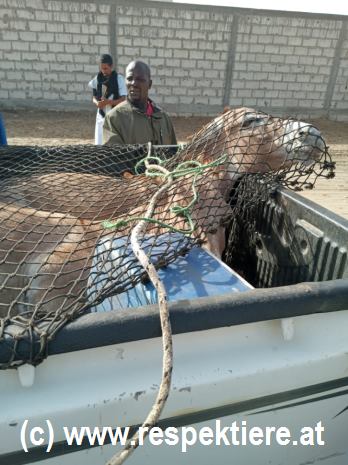
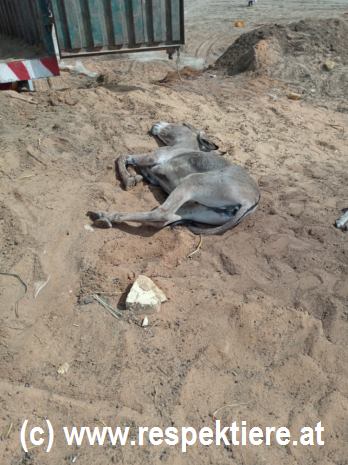
Donkey transport in Mauritania- the unbelievable tragedy in the shadow of the world public

Report of the Austrian association “Respect animals” (www.respektiere.at)

It is one of the least known tragedies in dealing with animals, which nevertheless happens every day and for that reason alone is all the more shocking – the transport of donkeys from Mauritanian villages in the south and east of the country to the capital! It goes over distances of up to 1200 kilometers, mostly on slopes and through deserts, mind you.

Terrible things happen in each case, and very few people even know about it.

Photos: Donkey transport on the PickUp loading area – unbelievable!

That is why we wanted to accompany such a mode of transport as early as 2019, but this could not take place for various reasons; Postponed to 2020, the pandemic intervened and once again made it impossible to act.

Now we sincerely hope that the project can finally be implemented in 2021 …

Our team watches the arrival of the donkey again and again – incredibly sad moments are the order of the day, death is a constant companion of them. Squeezed in almost to the point of immobility, many of the animals are unable to cope with the ordeal of the up to 2-day journey at temperatures often well over 40 degrees.

Again and again, the dying is unloaded or already rescued dead. They are the unmourned creatures of the planet, their demise is a hardly registered, hardly recorded one.

‘Highway to hell’, at least from the donkey’s point of view, this is how one would have to rename the famous ‘Road of Peace’ to the east – to where many of the youngsters come from …

Continue reading

USA: POTUS Joe Biden Urged To Shift To Plant-Centered Food System To Combat Climate Change.

POTUS Joe Biden Urged To Shift To Plant-Centered Food System To Combat Climate Change

The politician is under pressure to transform the US food system leading up to his first ever climate summit as President on Earth Day

POTUS Joe Biden Urged To Shift To Plant-Centered Food System | Plant Based News

POTUS Joe Biden is being urged to shift to a plant-centered food system to ‘combat climate change‘.

To mark Earth Day (April 22) the politician is hosting his first climate summit as President. There, he will discuss the ‘urgency of stringer climate action’ with 40 world leaders.

POTUS Joe Biden

Biden has also announced a $2 trillion proposal to ‘strengthen infrastructure while also tackling climate change’.

However, the plan does not include the promotion of animal-free food or support farmers in transitioning from traditional animal agriculture to plant-based production.

As a result, non-governmental organization ProVeg International has created a petition, calling on the politician to shift to a plant-centered food system.

At the time of writing, the petition has garnered more than 1,500 signatures already. 

‘A terrifying prospect in climate change’

Moreover, Michael Webermann is the US Executive Director of ProVeg International. In a statement sent to PBN, he said: “To discuss environmental crises without centering food production is to wilfully avoid the facts.

“What we eat affects not just climate change, but the biggest issues facing the planet, including pandemic risks, deforestation, antibiotic resistance, and food insecurity. 

“For instance, the FAO tells us that if 40 percent of all crops produced for feeding animals were used directly for human consumption, we could feed nine billion people by 2050. One has to ask when policy will reflect the urgency of this situation?”

Webermann then concluded: “We’re facing a terrifying prospect in climate change, but in diet change lies a real solution. 

“Plant-centered diets, if adopted by many, could be the key to this crisis. We have scientific consensus. Biden’s plans must reflect it.”

You can sign ProVeg International’s petition here

Action – Tell Atlas Air to Stop Shipping Horses From Canada to Japan to Be Slaughtered.

Tell Atlas Air to Stop Shipping Horses From Canada to Japan to Be Slaughtered

It seems almost too preposterous to be true: Every year, more than 6,000 live horses in Canada are packed into transport crates and sent on harrowing flights halfway around the world to be slaughtered in Japan.

PETA’s video investigation reveals what happens in Japan to horses who are no longer wanted.

PETA went inside Japan’s largest horse slaughterhouse and captured footage of the horrifying final minutes of a horse formerly used for racing. PETA’s eyewitnesses watched as he was doused with water before being moved onto the kill floor. The terrified horse panicked, slipping out of his halter and escaping, only to be caught—and killed—minutes later.

Now, a recent exposé by Canada’s Global News shows that live horses are crammed into wooden shipping crates before being loaded onto cargo planes destined for Japan. Horses are often deprived of food and water and packed so tightly that they’re unable to stand naturally for the duration of the 16- to 18-hour flight. Numerous horses have died during landing accidents or “due to a combination of a substantial delay, the large size of the horses, and significant stress levels in the animals.” One horse, on a flight out of Calgary, was discovered dead and upside down in a crate.

The Canadian Food Inspection Agency (CFIA) is supposed to ensure that horses are segregated based on height and compatibility. But Dr. Maureen Harper, a former veterinarian with the CFIA, revealed a different reality: “They’re being shipped unsegregated. I was just horrified. They’re basically stuffing them in like a can of sardines.” She further explained that it’s impossible for any veterinarian to separate the horses adequately, stating, “The CFIA is knowingly not enforcing their own regulations. No veterinarian, on the ground, on the spot, can decide which horse is compatible with which horse at the time of loading. There’s no way.”

Some of these horses may come from the U.S. In 2012, PETA eyewitnesses followed a trailer from a meat buyer’s property in Iowa to a slaughterhouse in Québec and observed that the 33 horses onboard endured this 36-hour ordeal in subfreezing conditions and were never given food, water, or a chance to unload.

Your voice is needed today. Join us in urging Atlas Air, Inc., a New York-based company, to stop shipping horses to Japan, where they’ll be slaughtered.

TAKE ACTION

Tell Atlas Air to Stop Shipping Horses From Canada to Japan to Be Slaughtered | PETA

New Zealand: Will BAN ALL Live Export – Victory !

14/4/21 – WAV Comment:  We have some great news to share with you all today, and that is that New Zealand ‘s government has announced that they will END ALL live exports by sea; including the export of mother cows from the dairy industry.  I personally want to thank everyone who supported our efforts to get the NZ government to stop this abusive business – now you have achieved that;  Success !

From Animals Australia:

This is an incredible win for animals. New Zealand’s government has just announced that they will end all live animal exports by sea, including the export of mother cows from the dairy industry. When I heard this breaking news, I immediately thought of you.

It’s because of you all taking action to contact New Zealand’s decision-makers that they have heard that animals deserve so much better. And it’s thanks to people like you — including the tireless advocates at SAFE For Animals NZ — that hundreds of thousands of cows and their unborn calves will be spared the terror of the live export industry.

New Zealand hasn’t exported live animals for ‘meat’ for many years, since the Cormo Express disaster in 2003. But a legal loophole meant that hundreds of thousands of vulnerable pregnant dairy cows could still be exported — condemning them to lives of deprivation and suffering in destination countries and subjecting them to the unavoidable risks of sea transport. These dangers made global headlines last year with the tragic sinking of the Gulf Livestock 1, which saw thousands of dairy cows and 41 human crew members perish at sea.

As NZ Agriculture Minister Damien O’Connor said in his announcement of this decision this morning, “The fact is, once animals leave New Zealand by sea we have very limited ability to ensure their wellbeing before they reach their destination … that is an unacceptable risk to New Zealand’s reputation. We must stay ahead of the curve in a world where animal welfare is under increasing scrutiny.”This is the inherent risk of live export for any animal, from any country. And it’s why we will continue as fervently as ever to convince our government and others around the world to replicate the NZ decision and prioritise the wellbeing of animals over commercial interests.

Thanks to this courageous and compassionate leadership, New Zealand’s legacy for animals has again set a precedent for the rest of the world to live up to.

The New Zealand government would not have made this decision had they not recognised that human consciousness is shifting. That old traditions that have seen cattle and sheep as food and commodities are being replaced by a deep understanding of their sentience and the desire from an ever-growing collective of people to also protect them from harm.

Thank you for being one of those leaders, Mark, and for being one of the key people propelling this shift in human thinking.

Today is a good day. Thank you for caring so deeply, for your commitment to living and being the change and for helping to inspire the NZ government to reach this historic decision.

For the animals,

Lyn White AM
Animals Australia

From PETA Australia:

It’s the news we’ve all been waiting for: New Zealand will finally end its live export trade

The country, which currently sends around 3 million live farmed animals every year on horrific voyages around the world to be used as “breeding stock”, will phase out the industry over the next two years, the government announced on Wednesday. 

Of course, we wish the ban was immediate, but it’s nice to have a confirmed end date to this ghastly business which tosses animals about on rough seas, sees them trampled by their shipmates, suffocated by their own faeces, and dying of dehydration, starvation, and illness. 

The New Zealand government has made a historic and compassionate move. 

Now, all eyes are on Australia to follow suit. 

Please join us in calling on Agriculture Minister David Littleproud to end this disgusting, dangerous trade at last:

TAKE ACTION – demand the Australian government do the same:

Demand an End to Cruel Live Export | PETA Australia

Thank you for your compassion for animals.

Sincerely,

PETA Australia

And finally from SAFE in New Zealand, who have worked so hard to get this victory:

Kia ora Mark

We did it! Together we have once again made history for animals.
 
This morning the New Zealand Government announced a ban on all livestock export by sea.This is a huge win for animals and sets an international precedent for other countries to follow.

It is your tireless commitment to animals that has made our decision-makers take positive action to uphold the spirit of the Animal Welfare Act.

You took action for animals, and it mattered.
More than 57,000 people directly pleaded with our Prime Minister and Minister for Agriculture, asking them both for a ban on cruel live export. They have heard your voice.

 Thank you.

Thank the government for taking this action by clicking on:

Government moves to ban live export – SAFE | For Animals

We’re hopeful that today’s decision to ban livestock export by sea is the beginning of more positive change for animals in New Zealand. While this is a historic step forward, we are concerned about the tens of thousands of animals that will continue to suffer for the next two years during phase-out, as well as the animals that continue to be exported by air.
 
SAFE will continue to call for an immediate ban on all live animal export, and we need your help.

Today’s victory for animals is yours.
 
You were with us in 2019 when an ABC News exposé revealed the shocking reality that faced New Zealand cows exported to Sri Lanka.

More than 30,000 caring New Zealanders signed SAFE’s petition demanding government accountability and forcing an official review of cruel live export.

For more than a year we waited together for the Government review to be released. In September last year we watched in horror as the Gulf Livestock 1 disaster unfolded, and appalling footage from the ship came to light. Our Government was silent as 5,867 cows and 41 crew members, including two New Zealanders lost their lives.

You refused to remain silentWe know you will continue to take action for animals until our Government announces a complete and immediate ban on all live export.

Your voice and actions have made a difference again today. We know you’ll stand with us as we continue to be a voice for all animals and demand an immediate ban on all live export.

For the animals,

Debra Ashton
Chief Executive Officer

COVID-19: World Health Organisation calls for ban on sale of live wild mammals in food markets.

COVID-19: World Health Organisation calls for ban on sale of live wild mammals in food markets | World News | Sky News

COVID-19: World Health Organisation calls for ban on sale of live wild mammals in food markets

The statement comes after a WHO team visited Wuhan in China to investigate the origins of COVID-19.

The sale of live wild mammals at food markets should be suspended as an emergency measure, the World Health Organisation has said.

The statement comes after a WHO team visited Wuhan in China to investigate the origins of COVID-19.

The most likely scenario is that the virus originated in bats, was spread to another unidentified animal, and then passed on to humans, a WHO report said in March.

Live COVID updates from across the UK and around the world

The organisation said in a separate report on Tuesday that animals, “particularly wild animals”, are the source of more than 70% of emerging infectious diseases in humans.

They added many of these are caused by novel viruses – a virus that has not previously been recorded.

The report states: “Wild mammals, in particular, pose a risk for the emergence of new diseases. They come into markets without any way to check if they carry dangerous viruses.

“There is a risk of direct transmission to humans from coming into contact with the saliva, blood, urine, mucus, faeces, or other body fluids of an infected animal, and an additional risk of picking up the infection from contact with areas where animals are housed in markets or objects or surfaces that could have been contaminated with such viruses.”

The WHO said “traditional markets play a central role in providing food and livelihoods ” around the world.

It added that banning the sale of live wild animals would help to protect the health of both shoppers and workers.

The closest-related viruses to COVID-19 have been found in bats in southwest China.

The intermediate host is more elusive: mink, pangolins, rabbits, raccoon dogs and domesticated cats have all been cited as a possibility.

The WHO team said that a theory the virus was leaked from a lab was “extremely unlikely” but it has not been ruled out.

The call for a ban of the sale of wild animals comes as the the WHO said the global coronavirus pandemic is at a “critical point”.

It added that people need a “reality check” as restrictions are eased.

Dr Maria van Kerkhove, head of the WHO’s technical response, told a news conference vaccinations alone are not enough to combat COVID-19.

Coronavirus restrictions were eased in parts of the UK on Monday, with shoppers returning to high streets and drinkers visiting pub gardens in England, and non-essential retailers reopening in Wales.

Dr van Kerkhove, speaking on Monday afternoon, urged caution, saying: “We need headlines around these public health and social measures, we need headlines around the tools that we have right now that can prevent infections and save lives.

“We are in a critical point of the pandemic right now, the trajectory of this pandemic is growing.”