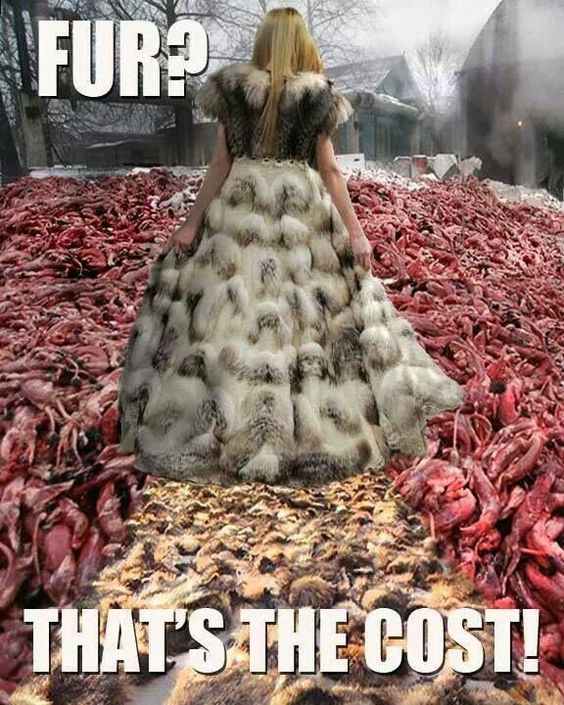
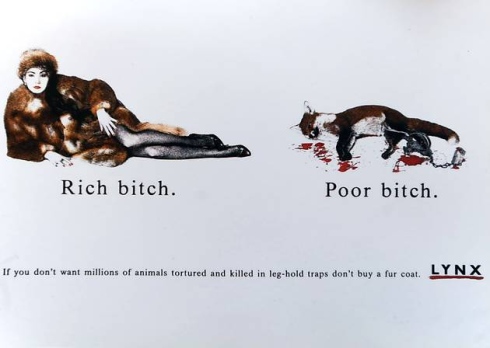
Finally, you can now order campaign resources through our website. We support many grassroots groups across the country, if you have a local group or want to set one up, then let us know! We’d love to help you out any way we can. The anti-fur campaign depends on grassroots, compassionate activists.
Posted on January 26, 2018 by Serbian Animals Voice (SAV)
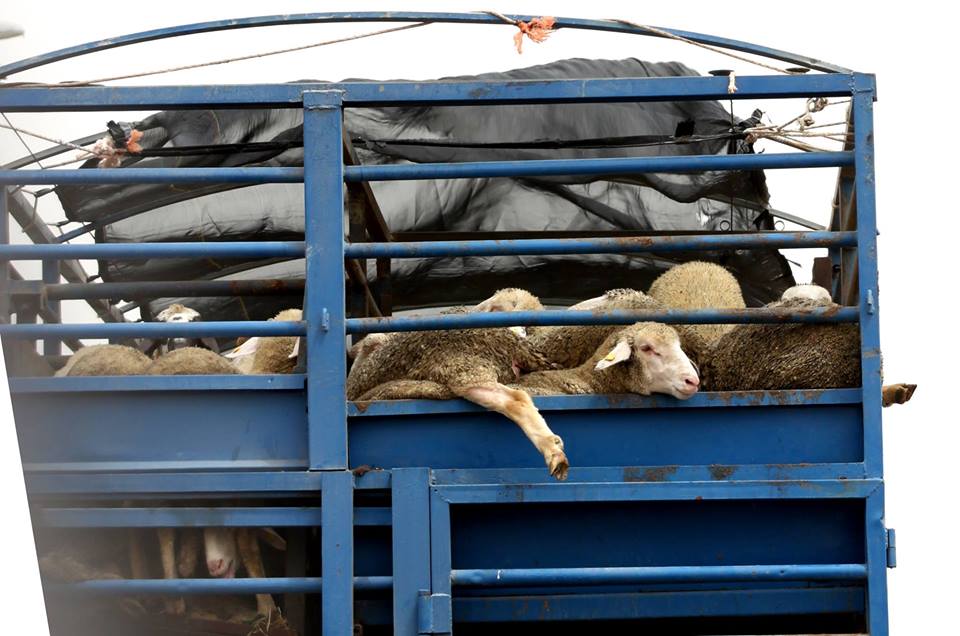
Animals at the port of Rasa, Croatia – an EU member state since July 2013.
From the video it is obvious that the people involved in handling the animals are complete and utter incompetents – how so often we are witnessing this now – representatives of the EU and its alleged ‘high animal welfare standards’ !
The careless use of electric goads, tail twisting and abuse to get animals to move – all signs of incompetents who do not have a clue about handling animals.
And then one escapes and takes a tour of the port; pathetic incompetence regarding ensuring that all access routes / gates are secured. What a joke to have to witness the efforts of idiots to try and bring the animal back under control and to get it back loaded onto the ship.
The sad part about all this is that once they reach Turkey; no doubt more clowns will be responsible for the unloading; and the eventual ritual slaughter of the poor creatures.
EU Pathetic Incompetents – From the very top down.
Croatia joined the EU in July 2013.
Watch the video above to see the high standards of animal welfare within Croatia – EU member state !
To really put the icing on the cake; we have also had today contact from the EU telling us how wonderful everything is regarding animal welfare.
Here is their message:
Animal welfare: the Commission adopts a report on the impact of animal welfare international activities
Today the Commission has adopted a report on the impact of animal welfare international activities on the competitiveness of European livestock producers in a globalised world. The report reviews the main international activities carried out by the Commission in the last decade and evaluates their outcomes in promoting animal welfare standards globally as well as in contributing to ensure a level playing field between EU and non-EU operators.
Animal welfare international activities are a long-term investment, based on awareness raising, capacity building and funding. The report highlights that the Commission, together with the Member States, has played a prominent and decisive role in raising global awareness on animal welfare, leading to significant results both at bilateral and multilateral level. The issue of animal welfare is now included in the dialogue with non-EU countries, inspiring a number of voluntary initiatives in this area. The document also stresses that the global promotion of EU standards on animal welfare contributes to the long term objective to improve animal welfare in the world and reduce unfair trading practices, by valorising the added market value of products obtained under such standards.
Posted on January 21, 2018 by Serbian Animals Voice (SAV)
Dear Mark,
I am sending you good news concerning the further ban on fox hunting in Luxembourg.
I got this just today by mail, from the “Wild Animal Protection Society of Germany”.
Best regards to you and all
Venus
Luxembourg extends hunting ban on foxes
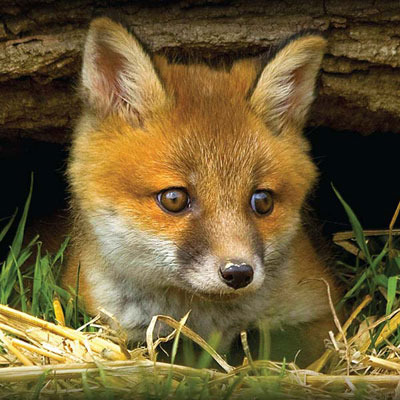
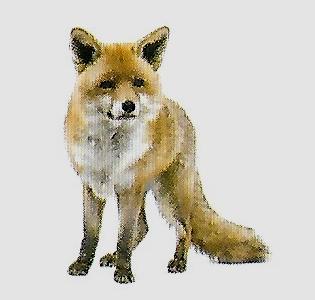
The Luxembourg Government Council has just renewed for another year the prohibition on fox hunting introduced in 2015. The protection of foxes is a successful model: the fox populations are stable; the predicted “stock explosion” by hunters in the run-up to the hunting ban has failed to materialize. A study now shows that the protection of the fox also reduces the risk for humans to contract the fox tapeworm.
“Action alliance Fox”, an initiative of more than 40 German animal and nature conservation organizations, to which “Wild animal Protection Germany” also belongs, calls on the Federal Government to follow the example of Luxembourg.
The Luxembourg Ministry of the Environment banned fox hunting in 2015 because there was no reason to kill several thousand foxes a year. Hunting associations had repeatedly warned against sprawling fox populations by the hunting ban. In addition, they repeatedly tried to exploit the fear of the fox tapeworm in order to overturn the regulations.
Hunting increases the risk of infection by the fox tapeworm
However, there are no signs of higher fox numbers to this day. In addition, a study published in France in November 2017 shows that hunting increases the risk of infection from fox tapeworm.
While the foxes’ infection rate increased from 40 percent to 55 to 75 percent as a result of heavy hunting, it remained constant in a hunting-free control area. Franck Boué, one of the authors of the highly regarded study, presents the results in a lecture on 29.1.2018 in Luxembourg City.
Fox stands need no “regulation” by humans
Again and again, both studies and practical experience in various fields show that foxes need no “regulation”. Hunting losses, for example, increase birth rates and increase immigration from neighboring areas, quickly compensating for losses.
On the other hand, experience from hunting-free areas shows that fewer fox pups are born there and that there is no mass propagation. “Birth control instead of mass misery,” commented the biologist Erik Zimen.
Ban on fox hunting: pointing the way for the whole of Europe
The ban on fox hunting in Luxembourg sets the trend for the whole of Europe: the right decision has been made against the massive pressure of an influential lobby on the basis of verifiable scientific facts. “It is high time that even political decision-makers in Germany stop bowing to the interests of the hunting lobby,” says Lovis Kauertz, co-founder of the “Action Alliance Fox”. “The example of Luxembourg shows that prohibiting fox hunting not only prevents the often painful deaths of thousands of foxes, but is also a model of success for citizens, animal and nature conservation.”
Past SAV posts relating to fox hunting in Germany – many graphic pictures show the reality of this barbarism:
Posted on January 20, 2018 by Serbian Animals Voice (SAV)
Please Help – Any Donation Welcome;
No Matter What Size – SAV.
Thank you Deborah Maxwell for your amazing donation !
well on the way to the target now; but not there yet.
Also thanks to Debbie Hill for giving.
Extra donations still required to reach deadline amount.
Please give anything you can. Thanks – SAV.
The Story
33 Dogs & 10 Cats on site and numerous street cats
= 340 Euros Month Rent for land behind fence = 40 Euros Month
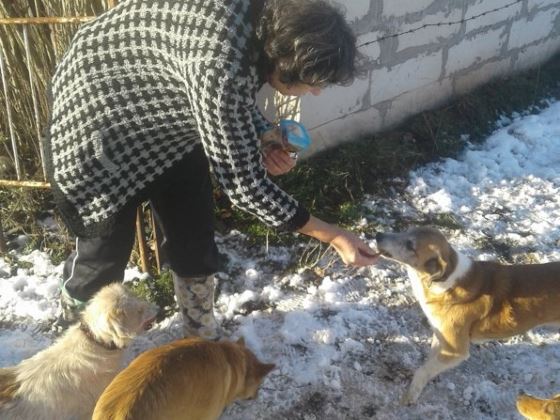
Small Shelter NIS, Serbia otherwise known as SSNS; A private shelter located in Niš, Southern Serbia, Founded in 2006 run by Slađana Stojković ( https://www.facebook.com/sladjana.stojkovic.9) with the help of Goran and Olja, whom we rent a small piece of land (450 square metre) behind the fenced area, costing 40 Euros a month.
There are currently 33 dogs and 6 cats on-site, costing 330 Euros a month to feed. We try and raise funds for food and vet care monthly through our BUY IT NOW Page, however we struggle to raise the funds we truly need to provide for the dogs and cats, therefore we are so grateful for any direct donations.
Although the majority of the dogs have lived at the Shelter long term over the last year (2016-2017) we have had an influx of abandoned puppies; seven in total which has stretched our funds to the limit. Slađana accommodates as much of the dogs behind the fenced area as she can taking into account the dogs’ individual personalities and has spilt the fenced area into individual areas to accommodate the dogs’ that do not get on so well with others.
The dogs have a dog house to call their own some like to share and some still like their old “dilapidated” homes and refuse to move into new accommodation, certain dogs usually the smaller ones have shelter inside Gorans property. It is regrettable that we do not have the “network” or funds to have our dogs adopted out with Serbia.
Animal welfare not being top of the agenda in the “balkan states”, coupled with the area being very poor makes adoption or fostering near impossible.
Therefore the dogs have a permanent home at the Shelter.
Not an ideal situation however they receive an abundance of love and enjoy daily walks by the river located next to the Shelter and with donations are fed, provided vet care and are as happy as they can be not knowing any other situation.
Our long term dogs receive their re-vaccinations every November by our trusted vet, and our “new arrivals” receive as and when by their “in-take” date, all are micro-chipped, recorded on “passports” required by law and are spayed/neutered.
The Shelter is very primitive, no electricity and water is provided via a pump onsite. We have no proper storage facilities for food therefore food is delivered every couple of days via wheelbarrow to the Shelter as there is no direct road. However as this is a very poor region stockpiling food could attract theft which we discourage.
Slađana is passionate about animal welfare and even if she cannot provide a permanent home at the Shelter, finding an animal in distress will ensure that vet care is provided helping the animal recover with the help of other rescues in the area. Slađana is also involved in feeding numerous street cats providing either breakfast or lunch when donations allow and checking on their welfare. She also gives shelter to an adorable ginger disabled cat who resides in the basement of her property with the consent of her neighbours.
Posted on January 19, 2018 by Serbian Animals Voice (SAV)
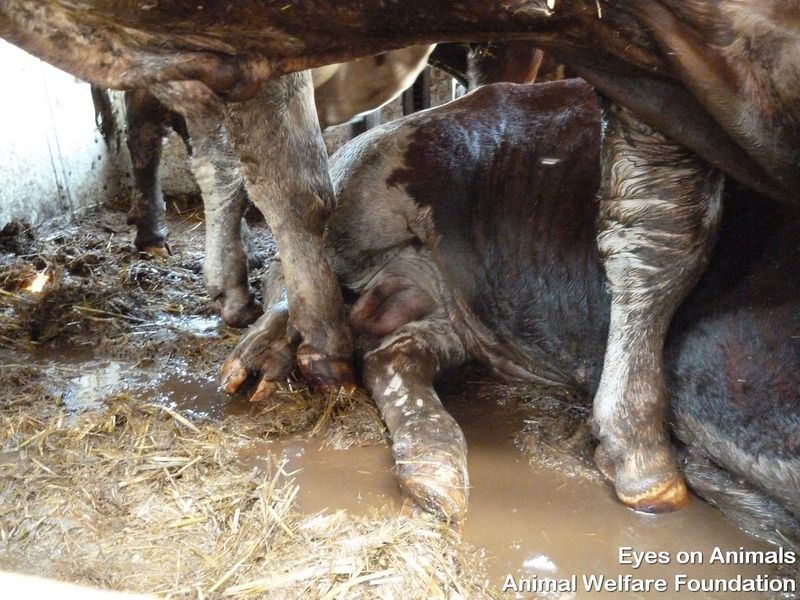
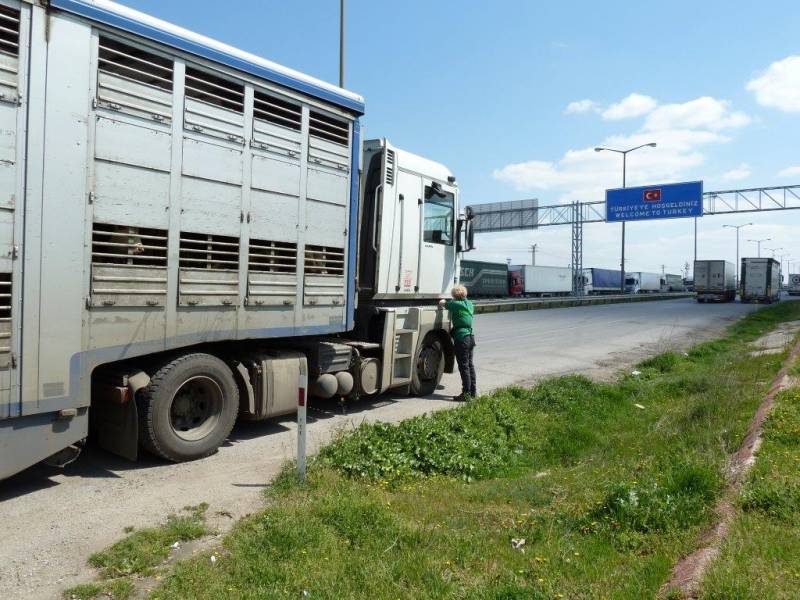
Photo – EoA
This second part on live animal transport is intended primarily to give EU campaigners (and others) an insight into what information is available; with the hope that you can further research and follow up with your own national authorities if you think necessary. We also outline current work we are undertaking, which is still on going.
So lets get started
– we will try to be as helpful as we can on this. All information is available via the web; but unless, (like us); you really need to get as much info as possible; this data remains hidden from campaigners and observers who may not know of its existence or the large amount of live animal transport info that exists in the ‘hidden depths’.
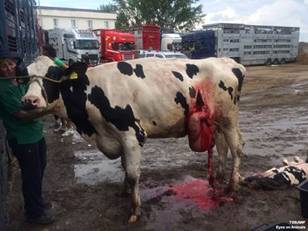
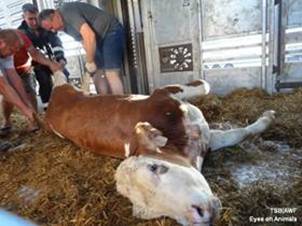
To start with, we will give links to videos made by friends at ‘AWF’, ‘TSB’ and ‘Eyes on Animals’ regarding their investigations into live EU animals being exported to Turkey; a non EU ‘Third Nation’.
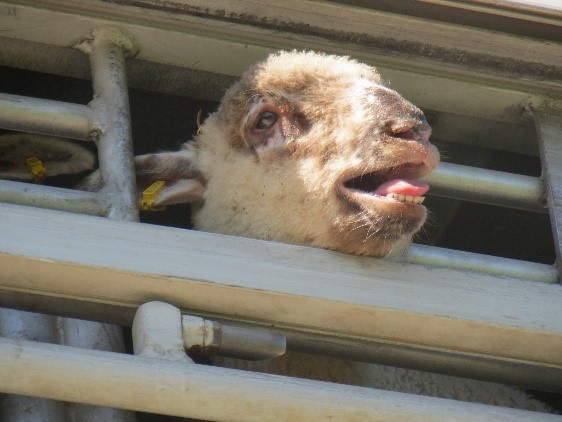
Many visitors will find the videos extremely disturbing and upsetting. They are; and for us also. Unfortunately, they show the real, daily side of what the live animal export trade is about. It happens everywhere around the globe; this is just one snapshot of what happens in one location every day. The same can be said for many global locations all the time. Despite the cruelty which is severe and obvious, this is what makes us, as campaigners, go on investigating. We have to show the world the immense cruelty of the live trade, with the hope that people will act against it.
In addition, and to supplement the videos relating to exports to Turkey, we also suggest that the excellent investigation report by EoA (NL) on the same subject is also read as further evidence of non compliance tor EU animals being transported by road. The report can be accessed via the following link:
The EU animal transport industry from some particular EU member states have routinely been shown to ignore the animal welfare requirements of Regulation 1/2005. It is the norm that certain EU member states do not bother to apply them; and the EU Commission which is the called / supposed to be the ‘guardian of Treaty enforcement’ does nothing as a follow up, even when presented time and time again with evidence such as the videos and report detailed above.
If you wish to have a look at the full version of EU Regulation 1/2005 on the protection of animals during transport, then here below is the link. Note – The information is provided in several formats and all languages of (EU) member state nations. This may make it easier for EU citizens who do not use English as their prime language.
The European Commission, DG Sante project aims to improve animal welfare around transport. The project will develop and disseminate Guides to Good and Better Practice for animals transported within Europe and to third countries for slaughter, fattening and breeding. Guides will be developed for cattle, horses, pigs, poultry and sheep transport. The project started in May 2015 and will finish by the end of 2018.
The project is divided into 5 tasks:
Task 1: Collection
Collect and collate appropriate best practices implemented and supported by scientific evidence
Task 2 and 3: Development
Develop practical guidelines with those that will use it
Task 4: Dissemination
Disseminate these guidelines through the networks of the main European stakeholder groups involved
Task 5: Verification
To verify if the new transport guidelines reached the end-users
Also; something that is very hidden by the EU from anti export campaigners. Now we expose very useful information.
Inspection reports from EU countries
Article 27 of Council Regulation (EC) No 1/2005 on the protection of animals during transport requires the Member States to submit an annual report to the Commission of their inspections of the transport of live animals and to provide an analysis of the major deficiencies detected and an action plan to address them.
Annual reports can be seen in the following link. This site allows access to reports and analysis for the years 2007 through to 2015. As the Animal Transport Guidelines Project started in 2015 and is due to finish in 2018; we can only assume that this is why there is no information available for years 2016 and 2017.
If you select any year via the following link, you should then click on the year of interest.
Lets say we are interested in 2015.
So the first thing we do is use the following link to access all the years:
Next, we then (for example) click on the year of interest; which in our case is 2015.
The year then automatically breaks into 2 sections – namely ‘Report’ and ‘Analysis’.
If you click on the word ‘Report’; you then get automatically directed to pdf for each member state of the EU.
Lets take ‘Bulgaria’ for example; as live EU animals going to Turkey are exported via Bulgaria.
So we click on the link for the pdf file associated for Bulgaria; and we get information as shown in the following link. This data is usually provided in a tabulated form and shows things like:
The animal type when inspected
The number of inspections undertaken within Bulgaria
The number of animals inspected
The number of non compliances with the Regulation (1/2005).
Our example for Bulgaria can be viewed via this link:
This provides us with information relating to an analysis for the animal transport situation for Bulgaria in 2015. Lots of useful and very hidden information !
Important – as we have said, this type of information is available using the links provided for EVERY member state of the EU; and for the years for 2007 through 2015. The information in the reports and analysis may prove to be very useful to many campaign groups involved with fighting the live animal trade in their (EU) country.
SAV Comment
As we said at the start, this information and ways of getting through it are guides which we hope will allow any anti export campaigner within the EU to find out a lot more about the live transport situation in ‘their’ nation, and other EU states for years 2007 through 2015.
I hope this normally hidden data is now exposed for many more campaigners to see and use. There is nothing secret or hidden about this; it is available on ‘normal’ web sites; you just have to know where to go and how to get the info you want.
I hope and trust this data can be used by many to fight the disgusting trade of our day – live animal exports.
Happy info gathering and happy campaigning !
Regards Mark.
For all animals suffering in unnecessary transport.
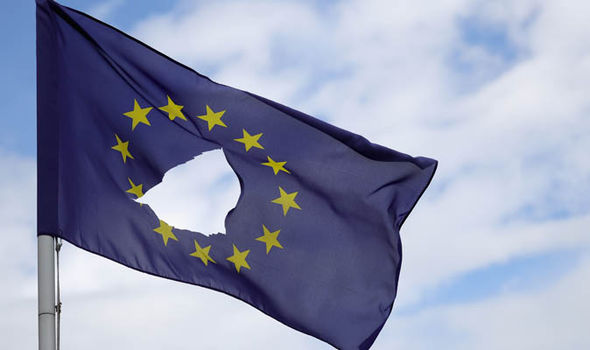
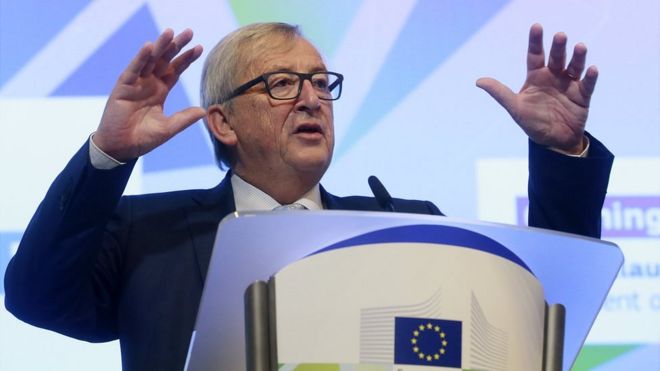
JEAN-CLAUDE JUNCKER made another plea to the British people to reconsider leaving the European Union after a chorus of fresh calls for a second Brexit referendum.
The President of the European Commission said the European Union’s hands were “outstretched” to welcome Britain back into the bloc.
Speaking in European Parliament, he said: “When it comes to Brexit I am sure that there will be no winners from this situation.
“This is a lose-lose situation, it’s a lose-lose situation both for the British and for the members of the European Union.
“I continue to feel that the exit of Great Britain is a catastrophe.
“It is a defeat that we all have to deal with the consequences of but the causes of the British decision run much deeper.
“As Mrs May has said the British have never felt entirely comfortable with the European Union so the guilt lies upon many shoulders.
“Mr Tusk said that our hands remain outstretched.
“The British people, the British government may wish to find a different way out of the Brexit situation, we’re very much willing to deal with them.
“We are not throwing the British out, we would like the British to stay and if they so wish they should be allowed to do so.”
Mr Juncker also addressed outrage by Brexiteer’s over the EU’s attempts to bring Britain back into the fold on Tuesday.
He said: “I did note that in London, there was a rather irritated response to this proposal.
“Note that even if the British leave, according to Article 50, then Article 94 would allow them to exit again.
“I would be happy to facilitate that so I certainly wouldn’t want to push anyone into a corner.”
SAV Comment – No Thanks – Penny Dropping with you now is it ? – should have listened to the people of the UK and the rest of the EU years ago. Here is just one reason why !
THE POUND is “very, very” undervalued and could make some major gains against the dollar this year as more clarity about Brexit emerges.
The pound could rocket in 2018 as Brexit uncertainty clears up, Peter Kinsella, senior FX and rates strategist at the Commonwealth Bank of Australia said.
Speaking to CNBC about which currency would make the biggest gains against the dollar in 2018, he said: “It’s a toss up between sterling and the euro.
“I think sterling’s very undervalued, I’ve thought that for quite some time.
“The initial optics when we get to the beginning of Brexit negotiations in March will probably be poor for sterling.
“Because I think what you’ll find is the European Union negotiators as they said, slaughter a few unicorns, and I think that was the term they used.”
Kinsella said this might have a negative impact on the pound in the short term but that clarity around Brexit will push sterling up by the end of the year.
He said: “I think short-term that will be poor for sterling but over the medium term, sterling is very very undervalued.
“If we get some kind of a trade deal I think that will be good news for sterling.”
In a note on Monday, ING FX strategist, Viraj Patel, who sees sterling above $1.50 this year, said: “Judging by GBP’s rally since late November, which has continued in the first few weeks of the new year, a reassessment of the Brexit political games looks to be underway.
“But we feel there is more upside to come – especially if a transition deal were to be signed, sealed and delivered in 1Q18.”
The pound rose 0.4 percent against the euro to 1.1289 at 12:57 in London.
Sterling was little changed against the dollar at 1.3786 at 12:57 in London.













 Serbian Animals Voice (SAV)