Serbia: The Story of ‘Himel’ – Saved by EPAR Shelter

The Story of ‘Himel’


Slavica has sent us the story of ‘Himel’.


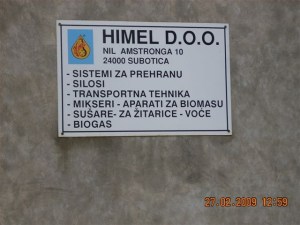
This little dog was named Himel because the owner of a private company named ‘HIMEL’, near to Subotica, telephoned Slavica on the 27th February saying that there was a stray dog which had been in a field near to his company for many days.


himel1


The Company Sign – HIMEL D.O.O.

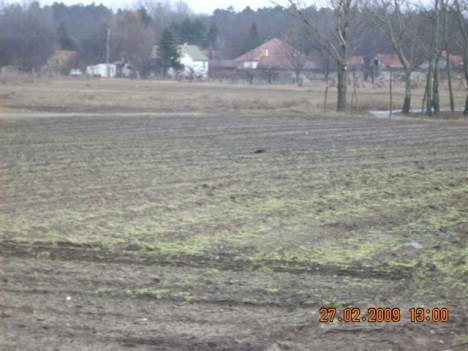
himel21A Dog is reported in the field – you can just see him at the centre of the photograph.
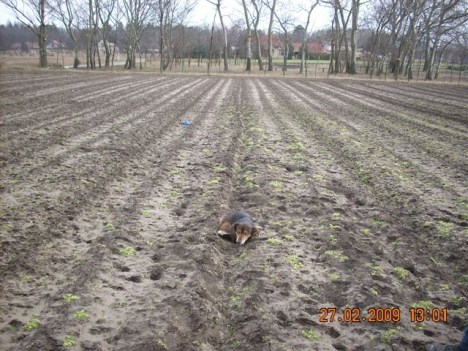
Slavica was asked if she wanted to come and take the dog, otherwise the company owner was going to call the local Shinters who would take him away and kill him.

Of course Slavica would come and take the dog !


himel51

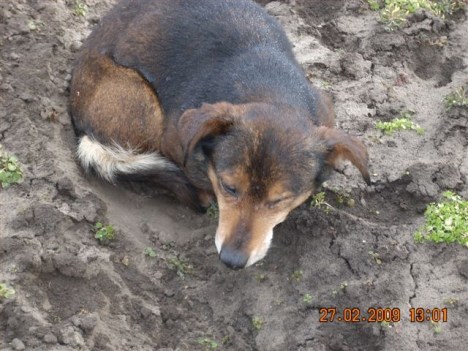
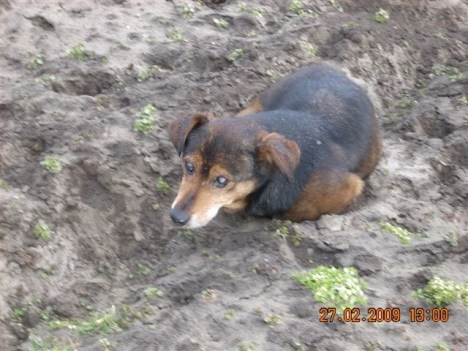
And so the little dog was collected from the field; he was alone and without any hope.  He was an old dog but very sweet. 

 himel32

And so it was decided that he should be called ‘Himel’ after the company that telephoned about him.

 himel42

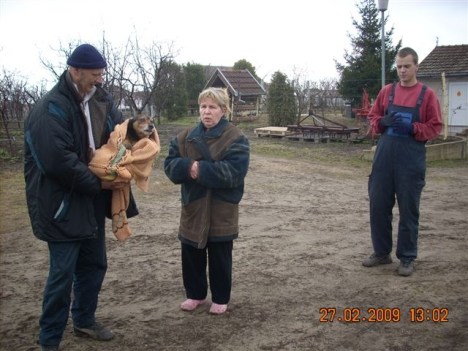
In the last photograph you can see Himel arriving at the EPAR shelter; finally in safe hands and away from the cold, barren field where he lived for many days.


himel61 


Another rescue by EPAR Shelter – Himel is safe !

If you would like to donate to EPAR Shelter, please see the following:

USA: Sara Lee Corporation Turkey Suffering Exposed

usa1

In 2007, two animal advocacy organizations – Animals’ Angels and United Poultry Concerns – called upon the Sara Lee Corporation to cover its trucks taking turkeys to slaughter in freezing weather.

Our campaign grew out of an investigation by Animals’ Angels on January 25, 2007 when investigators followed a truck loaded with turkeys on the road for four hours to the Sara Lee slaughter plant in Storm Lake, Iowa.

The truck was uncovered, exposing the turkeys to bitter cold and icy winds. Snow and ice stuck to the metal transport cages in which the turkeys were huddled.

Read more about this investigation…

Upon arrival at the plant, the turkeys sat for another two hours in frigid 16 degrees Fahrenheit temperatures. Evidence of the investigation was presented to Sara Lee with the recommendation to start using tarps or insulated panels to protect the company’s turkeys from the cold. UPC and Animals’ Angels issued a press release, and our campaign was covered by the Des Moines Register and the Storm Lake Pilot Tribune.

Sara Lee told Animals’ Angels and UPC: “Sara Lee and its suppliers use insulated panels on trucks to protect the animals during colder weather.” However, insulated panels were not in use during the 2007 investigation. In 2008, UPC and Animals’ Angels decided a follow-up investigation was warranted. The aim of the February 2009 investigation was to find out if any improvements had been made.   

Animals’ Angels investigators documented conditions at the plant on February 3-4, 2009. Inside the fenced premises, they saw two barns with open fronts. The sides and the back of these barns were covered with tarps that protected the turkeys – caged in trailers parked inside the barns – from the weather. When the trailers were moved from the barn to the slaughter plant entrance, the turkeys were exposed to the elements for 1-2 minutes. 

On all loaded turkey trucks that arrived at the plant the cages were covered with insulated panels. Trucks backed up to the barns, dropped off the trailers with the turkeys inside, picked up empty trailers and left. Threatened with arrest by police for “harassing trucks,” Animals’ Angels terminated the investigation with intent to file a complaint, noting the investigators weren’t illegally interfering, just watching the plant and the trucks.

Read more about this investigation…

Based on the observations, it appears Sara Lee has responded to the recommendations of Animals’ Angels and UPC, since during the investigators’ unannounced visit, significantly improved weather protection was provided for the turkeys slaughtered at the Storm Lake plant on February 3-4, 2009.

What Can You Do? 

Tell Sara Lee you appreciate the company’s apparent response to pleas that it protect its turkeys from exposure to freezing weather by equipping its transport trucks with insulated panels – and closing the panels – enroute to the company’s slaughter plant in Storm Lake, Iowa, as documented on February 4, 2009.
 
Say you are glad that, instead of the turkeys being forced to sit outside the slaughter plant entrance in the freezing cold – as the were forced to do in January 2007 – the turkeys in February 2009 were held in a covered barn.
 
Urge Sara Lee to adopt a companywide policy at the national and international level requiring that all birds trucked to the company’s slaughter plants be afforded protection from cold weather in the form of insulated panels like those observed by investigators in Storm Lake, Iowa in February 2009. Request a written response to your letter.  

Contact:
 
Brenda C. Barnes, Chairman, CEO
Sara Lee Corporation
3500 Lacey Road
Downers Grove, IL 60515
Phone: 630-598-6000
Fax: 630-598-8653
 
You can also leave a message for Sara Lee at:

Please support the work of Animals Angels


Sonja Meadows

Executive Director

Animals’ Angels USA

410-848-3153

www.animals-angels.com


Animals’ Angels is a 501 (c)(3) non profit organization incorporated in Maryland. All donations are greatly appreciated and tax deductible. 


Thank you!

USA: Hormel Foods (“we ensure animal welfare”) Pig Abuse Exposed

usa


On their website, http://www.hormelfoods.com/responsibility/process/default.aspxhttp://www.hormelfoods.com/responsibility/process/default.aspx  Hormel declare that they ensure animal welfare:

“Hormel Foods is committed to reducing the impact our day-to-day operations have on the environment and ensuring animal welfare.

This year we recognized the need to formalize how we report our responsible business practices. While we have always operated in a responsible way, we formally established our focus on:

  • Energy
  • Solid waste
  • Water
  • Air emissions
  • Animal welfare
  • Animal husbandry”

As you are intelligent people, we suggest you view the footage on the following link and then decide:

http://www.metacafe.com/watch/1755841/hormel_supplier_caught_abusing_mother_pigs_and_piglets/?cd=44fe83cba1a99834b71e76a0141270c900500002346868usa

…………………………………………………………………………………………………………………


Hormel worker caught abusing mother pig and piglets on tape!!!


http://www.metacafe.com/watch/1755841/hormel_supplier_caught_abusing_mother_pigs_and_piglets/?cd=44fe83cba1a99834b71e76a0141270c900500002346868usa


Indeed, this is what the brutal pork industry is all about!  It is happening at every factory pig farm and slaughter house in the country; there is no such thing as humane slaughter, organic meat, or killing with compassion.  Pigs are animals with a higher intelligence than dogs.  And how horrified are we about those in other countries who treat dogs and cats this way? These animals are aware of their surroundings; they are sentient beings who experience emotional as well as physical pain and suffering.  The abuse and cruelty to which they are subjected is unconscionable, perverse and outrageous!!!  And we call ourselves civilized?


Many of the people who work in slaughterhouses and on factory farms are sadistic perverts who consider these animals as unfeeling, degraded objects of scorn; in fact it is clear that many who work in such places actually enjoy the opportunity to brutalize, to maim, to torture… and you can be sure, these individuals do not leave those tendencies at the slaughter house when they go home.  


Our language is filled with expressions denoting the view we have of these intelligent animals: “dirty pig”…which denotes sexual as well as physical filth; “to pig put”, “eat like a pig” (an entirely human quality, expressing gross over-indulgence, and so forth and so on), all of which project human failings/”sins” (gluttony) on these unfortunate animals.  For just a few moments of gustatory pleasure, we are complicit in and willing to subject other living beings to pure Hell and to take away their precious lives.  Can you live with that thought? Are you able to eat the flesh of another living being that has endured such suffering, with a clear conscience? Every time you swallow that mouthful of flesh you are ingesting the Karma and all the sadness and misery that the animal has endured. The animals’ flesh is moreover, filled with hormones, anti-biotics, and drugs to prevent illness and promote growth…and that’s what the consumer is eating.  Any wonder why cancers, heart disease and other “life-style” illnesses are on the increase, in spite of all the medical advances?


But for the sake of some little mouthful of flesh, we deprive a soul of the sun and light, and of that portion of life and time it had been born into the world to enjoy.

~Plutarch, C.A.D. 46-C


And so, it is not just Hormel that we need to boycott, but the entire industry, one that systematically engages in the abuse of intelligent, living, feeling beings and also destroys our environment by contributing to greenhouse gasses and polluting our waters and air with the waste from this hideous cruelty.


There are acceptable vegan substitutes for every pork and other animal product on the market…and no reason whatsoever that could ever justify the hideous and inhumane treatment of these unfortunate creatures. Remember, if you don’t eat it, they won’t kill it!

PLEASE everyone, boycott Hormel and every other product resulting from suffering and slaughter!!!!

http://www.metacafe.com/watch/1755841/hormel_supplier_caught_abusing_mother_pigs_and_piglets/?cd=44fe83cba1a99834b71e76a0141270c900500002346868usa


India: Beautiful Lab and Pom Requiring New Homes

inda0001


From: SHAMPA DASGUPTA


Hi,

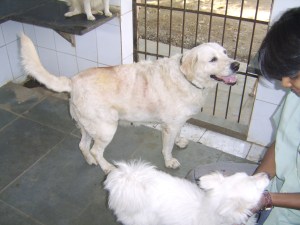
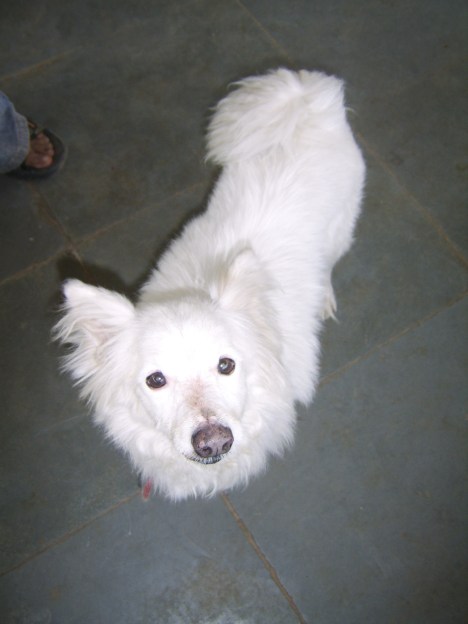
These are pictures of a Labrador (female) and a Pom (male) that have been abandoned by their families and are now with us.

They desperately need homes.  

ida1


ida2

The female Lab is a very pleasant natured (with a very small healing wound on her back). She was carelessly left on the road by her guardian. 
 
The pom is traumatized after having to leave his home as a new baby had arrived in the family.  Very handsome with a lovely coat but still very sad.

Please try to find homes for them, and forward this email to your family and friends.

Thanks and regards,

Sudnya Patkar

Hon. Secretary

In Defense of Animals, India

email: info@idaindia.org

website: www.idaindia.org


my personal email: mysamoo@hotmail.com


International: Save the Honey Bees Petition

honey-bee

Save the honey bees

http://www.petitiononline.com/Bees/petition.html


To:  World Governments

Something is killing honey bees, and even as billions are dropping dead across the world, researchers are scrambling to find answers and save one of the most important crop pollinators on Earth.

What is called “colony collapse disorder” hit bee keepers all over the world including half of the US last spring. Now it has spread to all but a handful of states.

Hives can go from healthy and active to dead and gone.

“In the Australian story, researchers have dissected bees that have died, and they have found that their immune systems have “totally gone to pieces”.

As the global collapse of honeybee populations threatens the sustainability of the world food supply, some European organizations are at least trying to do something about it. Today, Britain’s largest agriculture co-op announced it would ban eight pesticides thought to be causing colony collapse disorder. (One of them is called imidacloprid.)

In Germany’s Baden-Württemberg state, 500 million bees died in Spring 2008, due to the insecticidal seed treatment agent clothianidin. Another example is the case of a Swabian beekeeper, who destroyed his whole honey harvest because it contained pollen of the GM corn MON810, after an administrative court declared the honey as ‘non marketable’.

So far, there are few answers, but there is a long list of possibilities, which include pesticides and genetically modified crops, also known as GMOs or GMs.

However, I have been learning that not much is known about the accumulating impact of pesticides on insects, animals and even people when you consider, in this modern world how many combinations of pesticides are used. One pesticide by itself might not destroy honey bees, but what happens when farmers spray herbicides, fungicides, insecticides and rodenticides on land that also has genetically modified crops with pesticides built-in?
The United States grows nearly two-thirds of all genetically engineered crops. Last year about 130 million acres were planted with GMs. Much of the soy, corn, cotton and canola have had a gene inserted into their DNA to produce pesticides systemically throughout the plants created and patented by Monsanto. Monsanto also produces genetically modified crops designed not to die when herbicides are sprayed on them. In a perfect biotech world, only the weeds would be killed. But Mother Nature has a way of outwitting human designs. So, now the weeds are becoming resistant to the herbicide sprays and frustrated farmers are putting on more and more poisons.

What this genetically engineered trait does is allow a farmer to spray the herbicide right on the crop, which would have killed the crop, would kill the soybeans, prior to introduction of this gene. The gene comes from a type of bacteria that is found in the soil and it makes the plant immune to the herbicide.

The consequence of this is that glyphosate and Roundup, which is sold by Monsanto – the same company that also sells the seed of the type of soybeans that are immune or resistant to the herbicide – that herbicide has become the most widely used herbicide in the world. The consequence of that is you have one particular herbicide used on a tremendous amount of acreage in the U. S. and elsewhere, especially Argentina and Brazil.

As any biologist would expect, when you have such tremendous pressure on weeds to try to survive this herbicide, some of the weeds that are resistant are selected for and all their competition is killed off. The resistant weeds then proliferate and can no longer be controlled by glyphosate. Then you have a situation where the use of this herbicide has gone up, and on probably millions of acres, other herbicides are having to be used as well as glyphosate in order to control the resistant weeds.

So, what we’ve been seeing in the past few years is that the overall level of herbicide use is increasing, and it will almost inevitably continue to increase. In this case, it’s causing the rise of these resistant weeds and the increased use of herbicides and potentially, may be harming amphibians to boot.

The active ingredient in Round-up is the isopropylamine salt of glyphosate. Glyphosate’s mode of action is to inhibit an enzyme involved in the synthesis of the amino acids tyrosine, tryptophan and phenylalanine. It is absorbed through foliage and translocated (moves through plant sap) to growing points. Weeds and grass will generally re-emerge within one to two months after usage. Because of this mode of action, it is only effective on actively growing plants. Round-up is not effective as a “pre-emergence herbicide.” Monsanto also produces seeds which grow into plants genetically engineered to be tolerant to glyphosate which are known as Round-up Ready crops. The genes contained in these seeds are patented. Such crops allow farmers to use glyphosate as a post-emergence pesticide against both broadleaf and cereal weeds. Soybeans were the first Round-up Ready crop, which was produced at Monsanto’s Agracetus Campus located in Middleton, Wisconsin. Current Round-up Ready crops include corn, sorghum, cotton, soybeans, canola and alfalfa.

So here we have it: GMO’s Round-up and other pesticides are killing our Bee’s, without them the whole world will face starvation!

It is the big pharmaceutical companies that need to be stopped. In the end, they will not only be killing bees, they will be killing us.

Its time we do something!
Kill the poison, save the Bees!

Sincerely,

The Undersigned