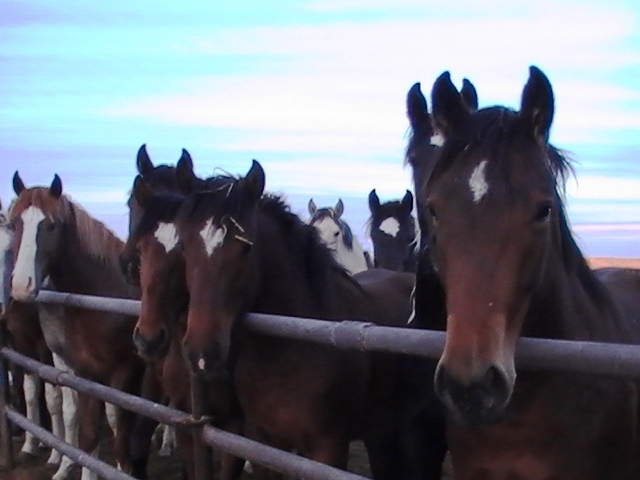
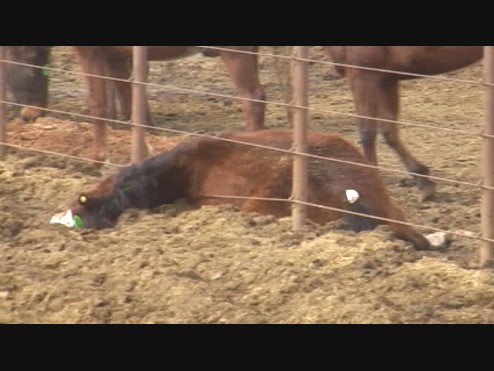
The AA report documents available veterinary care withheld from horses severely injured or near death. Undercover investigators were routinely told, ‘That horse is going to slaughter anyway,’ or the horses are ‘just passing through.’Treatment of horses designated for slaughter ranged from beating horses and jabbing them in the eyes, to using a cable winch to drag downed horses with a wire wrapped around a back leg. Investigators observed horses being injured or killed after being forced into dangerously crowded pens where they were kicked or trampled. Others were found frozen to the ground after overnight temperatures dropped well below freezing. Young and small horses, as well as horses injured or weak were trampled to death in trailers crowded with 40 horses. Workers failed to separate stallions, ensuring fierce fighting in close quarters during transport.Making conditions worse is the issue of stolen horses, according to Debi Metcalfe, founder of Stolen Horse International, Inc., a non profit that operates www.NetPosse.com, a horse theft recovery network that averages 80,000 unique visitors per month. “We have dealt with cases where horses were stolen,” said Metcalf. “We later found out that these innocent pets had been slaughtered.”
At both Canadian and Mexican slaughter plants investigators discovered horses left in bloody “kill boxes”, used to restrain horses as they are being killed, during lunch breaks. According to the report, the horses were “shaking violently as if [they] might fall down.” Plant management told investigators the horses ‘aren’t bothered by it.’
AA investigators documented injured and dead horses at every stop along the horse slaughter pipeline. At feedlots and export pens horses had no food and water troughs were empty. An export facility veterinarian informed investigators horses too weak for transport would be left behind to die in the pens.“The public has been duped into thinking horse slaughter has ended, but it just moved a few hours further down the road,” Meadows pointed out. “It hasn’t somehow changed it into something it is not. It is the same terrible suffering it was in 2005.”
“By the time the horse finally stands in the kill box at the slaughter plant, it is often not the worst thing that has happened to it since this dreadful journey began,” said Meadows
For a copy of the investigative report, click here.
For the PR WEB PRESS RELEASE, click her.
To review the USDA documents, click here.
What can you do?
Please urge your representatives and senators to support the Prevention of Equine Cruelty Act H.R.503 / S.727!
Animals’ Angels is a 501 (c)(3) non profit organization incorporated in Maryland with fulltime investigators working in the United States and Canada. We work with law enforcement and government agencies to end animal cruelty and to improve conditions for farm animals. We are in the field every week, trailing livestock trucks, visiting markets, collecting stations and slaughter plants. |





 Serbian Animals Voice (SAV)
 Serbian Animals Voice (SAV)
Leave a comment