


VIVISECTION NEWS

USA: Harvard to shut primate centre
Harvard University announced that it would shut down its primate research centre and move the 2,000 rhesus macaques and cotton-top tamarins to other research facilities throughout the country. Harvard cited “financial uncertainties” as the cause of the shutdown, neglecting to mention that this research facility has been cited for violations of animal welfare by both governmental and private organizations.
The facility was called out last January by the Dept of Agriculture for 5 direct violations, including the deaths of multiple monkeys as well as poor treatment of other monkeys–one cage was too small, others showed signs of psychological distress. Of the deceased monkeys, the one that jumps out is a cotton-top tamarin, a very small New World monkey that was euthanized after it was discovered that its watering system had malfunctioned, leading to severe dehydration.
It is not clear why the facility decided that euthanizing was the best solution to dehydration. Harvard claims the decision was solely based on economics, and researchers at the facility expressed disappointment that research would have to end. Popsci. 25 April

China: China Southern Airlines –
Following the ban on primate transports imposed by China Eastern Airlines last month, and the subsequent clarification from Hainan Airlines, we can now confirm that China Southern Airlines are the last transporter of primates destined for the research industry from China to the US and Europe.
Gateway to Hell Campaign.
Big pharma cares ????
GlaxoSmithKline has been accused of paying 3 generic firms to delay the release of cheaper copies of one of its key anti-depressant drugs in a bid to protect one of its best performing products. The Office of Fair Trading has said it had found evidence that the FTSE100 pharmaceutical giant made “substantial payments” to Alpharma, Generics UK and Norton Healthcare.
And
The U.S. government filed a civil fraud lawsuit against Novartis AG on Tuesday, accusing a unit of the Swiss drug maker of causing the Medicare and Medicaid programs to pay tens of millions of dollars in reimbursements based on fraudulent, kickback-tainted claims.
And
As many as 2,644 people, called subjects, died during the clinical trials of 475 new drugs on human beings in last 7 years and only 17 of the medicines were approved for marketing in India.

UK: Horrific expose at Imperial College London
An undercover investigation carried out by the BUAV has exposed appalling suffering and wrong-doing inside one of the UK’s leading universities, Imperial College London, ranked as one of the best in the world. Despite Government and industry claims that the UK has strong regulations in place, the BUAV has uncovered a catalogue of suffering and wrongdoing.
Behind the closed doors of this ‘world-leading’ university, the BUAV investigator discovered a nightmare world for animals used in experiments: animals who suffered even more than was allowed by the experiment because of staff incompetence and neglect; a failure to provide adequate anaesthesia and pain relief; breaches and lack of knowledge of UK Home Office project licences and the shocking way in which animals were killed. The harrowing experiments carried out at Imperial College during the investigation involved the deliberate infliction of major organ damage, surgical mutilation and invasive head surgery to implant cannulas (tubes) so that substances could be directly injected into the brain.
Some animals were forced to run on treadmills to exhaustion to avoid electric shocks, others were restrained while a long tube was forced down their throats and substances injected directly into their stomachs. This investigation has shed new light on the daily reality for animals in laboratories and the ordeal they are forced to endure.
“Thanks to public scrutiny, the UK has some of the highest welfare standards in animal research in the world.” (Principal of the Faculty of Natural Sciences, Imperial College 22 October 2012) Their suffering was often severe and could include a high degree of pain, distress, weeping or bleeding head or abdomen wounds, diarrhoea, lethargy or hypothermia. Many animals died during or after the surgery; and others had to be killed because the level of their suffering was so great. In the researcher’s own words: “Because I am doing feeding studies, I want to make sure that I don’t crack their teeth (laughs) …. …sometimes if you tighten it their teeth break and that’s not really useful when you’re doing feeding studies.” – A researcher puts a rat into a device ready for brain surgery.
Often with the radio blasting continuously in the research facility, rats and mice were subjected to a range of distressing and painful experiments and tests, often causing them severe suffering. Again In their own words: “I culled one because I made a mistake (laughs) I left the clamp in the tummy and I stitched up and I was looking for the clamp – ‘where is it?’ – and I realised – oh my god there’s a clamp in the mouse tummy” Even those individuals with special responsibilities under the UK legislation to ensure good animal welfare care and practice – the Named Animal Care and Welfare Officers (NACWO) and the Named Veterinary Surgeons (NVS) – failed the animals at Imperial College.
In Oct 2012, 8 out of 20 rats died in one experiment. The researcher said: “A couple I had to kill because their cannula wasn’t in the right place and then we’ve lost 6 so quite a lot.” One researcher even raised concerns about the competence of a colleague: “I think you should keep an eye on XXX because he makes many mistakes.” The researcher in question wrongly blamed a heat box for the death of one rat recovering from surgery and, on another occasion, claimed there was a problem with the anaesthesia when one rat woke up during brain surgery while he was injecting a substance into the brain. Out of 4 rats the researcher carried out surgery on 24th July 2012, one woke up during surgery and one died at the end of the surgery.
On 23rd July, one researcher worked on 2 mice simultaneously. When asked whether she always did it like this, , she replied: “Yeah because otherwise it takes forever.” The surgery involved clamping the blood supply to one of the kidneys of 6 mice. She laughingly reported that she had made a mistake and one mouse had to be killed. She had left a clamp still attached to one kidney and then sewn up the mouse.
One of the disturbing things the BUAV investigation uncovered was the lack of knowledge that researchers had about their project licences, in particular the severity limits and endpoints. Each project licence is graded ‘unclassified,’ ‘mild’, ‘moderate’, or ‘substantial’ depending on the level of pain and suffering inflicted on the animals. Not knowing the severity levels and endpoints is no laughing matter; as a result, animals can be subjected to even more pain and suffering than was permitted by the licence.
The BUAV is calling on the Home Secretary to revoke Imperial College’s Establishment Licence, stopping them from carrying out further animal research, and launch a full and independent inquiry in the concerns raised by the BUAV investigation. The RSPCA too is supporting this call.
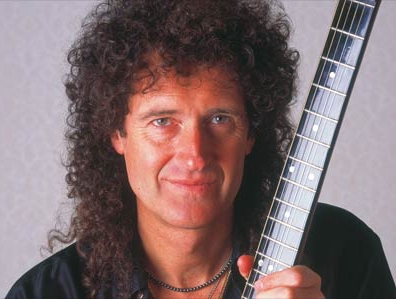
Brilliant Animal Advocate and Former Imperial College student and Queen guitarist Dr Brian May (pictured above) has spoken out against the university and backed our call for an independent inquiry:
“I am shocked and saddened to see these revelations. And ashamed that it could have taken place in the University of my own training, in which I have had so much pride.
I can only fully support the work of BUAV and the RSPCA in conducting a full inquiry. And I hope the result will be that this appalling cruelty will never be allowed to happen again.
Research on animals is an outdated concept – unethical, and unsupportable now that it is known that it yields false results. There is now, in every case, a better alternative.
Experimentation on animals must now come to an end, and I urge Imperial College to use this opportunity to put all cruelty in the past, by eliminating animal experimentation, and thereby set an example to the world.”
Watch the investigation film and find out more about the investigation: http://licensedtokill.buav.org Sign the petition at: http://tinyurl.com/c57qb2w

Japan: No animal test but it still worked
A research team from Kyoto Prefectural University of Medicine has come under suspicion of treating a heart attack patient with stem cells in a clinical trial in 2004 without animal testing to confirm the safety of the treatment.
The trial was conducted under the direction of Prof Hiroaki Matsubara, who resigned at the end of Feb this year. Matsubara informed the university about the process during a university inquiry into alleged improprieties in research papers.
He stressed that he referenced animal testing with a chronic heart condition. However, the patient in question had an acute condition, which was different. “From the perspective of medical ethics, it’s possible there were serious problems with the process,” the university’s investigation committee stated in a report.
The clinical trial was apparently conducted on Feb. 14, 2004, after passing screening by the university’s ethics committee. Researchers extracted blood vessel-forming stem cells from the blood of a male patient in his 40s who had suffered an acute myocardial infarction, a kind of heart attack. To regenerate blood vessels in the heart, they injected stem cells directly into a coronary artery through a catheter inserted into him from his foot. The same day, the researchers held a news conference stating that they had conducted the first clinical trial of its kind in the world.
They said they had confirmed the effect of the process in advance in experiments with pigs. The patient is said to have been released from hospital about 2 weeks later. According to a paper published in Japanese Circulation Society’s journal in 2007, clinical tests were performed on a total of 18 people. It concluded that the process was effective and that no problems occurred.

Australia: Baboons killed in pointless research
Animal activists say the “pointless” killing of 8 baboons used in a Sydney study highlights the need to end animal experimentation.
In the study, reported in the Journal of Bone and Joint Surgery, surgeons from Royal North Shore Hospital cut the shoulder tendons of the baboons and then undertook tendon-to-bone repair of the rotator cuff of each animal to study healing rates.
The ageing female baboons were killed in the course of the research, which was approved by the University of NSW Ethics Committee and the Central Sydney Area Health Service Animal Welfare Committee.
Humane Research Australia’s CEO Helen Marston said the study, published in 2010, highlighted the plight of lab animals during Global World Week for Animals in Laboratories. The baboons had died in a “pointless and cruel surgery experiment”, she said. “The final conclusion was a recommendation that excessive tension on the repair site should be avoided for at least 12 weeks, hardly a new revelation, and one that is already well known and documented by orthopaedic surgeons around the world,” Ms Marston said. World News Australia. 23 April

Russia: Animals launched into orbit
An unusual crew of 45 mice, 8 Mongolian gerbils, 15 geckos and a few other species of animals were launched into orbit aboard the Russian Bion-M1 space capsule to undergo a month-long experiment to study the effect of space travel on them.
A Russian Soyuz rocket took off from Kazakhstan with the animals on board.
The scientists are confident the animals will return to Earth alive.
BBC News. 19 April
Filed under: GENERAL NEWS - International / National / Regional |


 Serbian Animals Voice (SAV)
Leave a comment