Posted on November 15, 2016 by Serbian Animals Voice (SAV)
Dear all;
as we are working a lot on live animal transport issues at the moment, we are leaving the 8 hour campaign to Ch. Merkel and the petition to the EU as the header posts for a few days.
But we are also publishing other things/issues/actions at the moment, which you can find at ‘Recent Posts’ which is located on the right hand side. This is always a good place to visit as it has our very latest issues.
So although the main header page may not look as if it has changed much, you can find other recent/more up todate actions at ‘Recent posts’.
Regards SAV.
Filed under: CAMPAIGNS - Global Animal Welfare Issues, GENERAL NEWS - International / National / Regional | Leave a comment »
Posted on November 14, 2016 by Serbian Animals Voice (SAV)

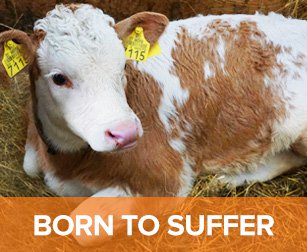
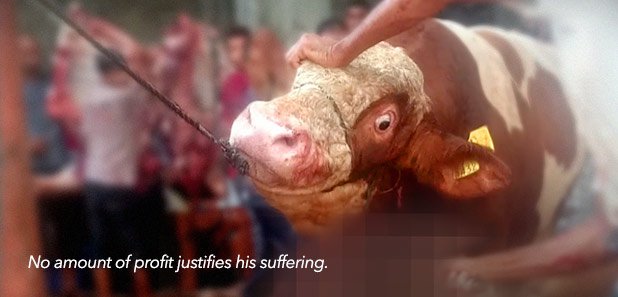
In a new investigation led by our international arm — Animals International — we’ve uncovered a devastating global trade in baby animals. They’re the live export industry’s littlest victims.
Unwanted Romanian dairy calves are being taken from their mothers and shipped to the Middle East. These confused and frightened babies are destined to be fattened before suffering the most violent of deaths.
And last night in a major television exposé in Romania, we gave these calves an unprecedented voice.
As you know, when it comes to extreme cruelty, the live export trade knows no borders. Where an animal is from, how much they suffer through being uprooted and shipped to foreign lands, matters little when profit is the end goal.
But there’s a reason why all these animals — whether from Europe or Australia — matter to us. Because each and every one of them is a pawn in an unconscionable global trade in animal cruelty and suffering.
After a decade of investigating and exposing this industry, you’ve helped us get animals out of some horrific situations. There are now layers of regulations around the Australian live export trade that make this cruel business less attractive and less profitable. And as a result, fewer Australian animals are being exported than ever before.
But as we continue our relentless efforts to end live export from Australia, there is a frightened Uruguayan bull in Egypt who needs someone to care about him. There is a curly-horned Romanian sheep in Jordan, and a petrified Thai steer in Vietnam who equally deserve to have someone fighting for them.
We know that if we help one, we help them all.


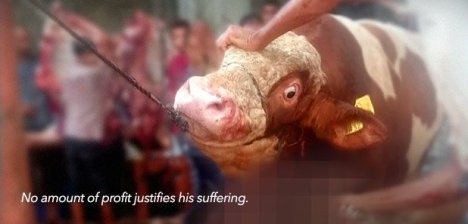
Ending live export from Romania will not only help animals like him — it is a critical step towards ending live export cruelty globally.
Because every time we expose live export cruelty, we take up the fight for the animals who, for far too long, have been regarded as nothing more than food. Every time we expose live export cruelty, recognition increases that these sensitive animals share our ability to suffer, and therefore deserve better from us — that our circle of compassion should be extended to them as well.
Every time we expose live export cruelty we get ever closer to the day when animals will be valued for who they are, not for the meat or milk they produce.
The strength of any action taken for animals on the back of our latest investigations will depend on the strength of the public response. Feedback from our colleagues in Romania after the program was that ‘our nation is weeping’. For the first time, Romanian politicians are being flooded with demands to end live export.

It is because of your generosity, that we have been able to give voice to animals in need wherever they may be, or wherever they may be from. In this the most difficult and challenging area of our work on behalf of animals, thank you for your faith in us, in our strategy and in our vision for a ki nder world.
For the animals,
Animals Australia.
 P.S. Through our global arm — Animals International — we’ll soon be taking the results of our European investigations to the European Commission. If you’d like to support our work to end the global trade in live animals, we’d deeply appreciate any assistance you can give. Thank you.
Filed under: CAMPAIGNS - Global Animal Welfare Issues, GENERAL NEWS - International / National / Regional, GLOBAL PETITIONS - Anything Animal, Anywhere ! | Leave a comment »
Posted on November 13, 2016 by Serbian Animals Voice (SAV)


We are combining with German anti export campaigners to continue pressing for a one off 8 hour MAXIMUM journey time for all animals in transport.
This will be very much to the benefit of all animals, who currently endure the un- monitored and rather pathetic EU Regulation 1/2005 for animals in transport, which is the EU standard. Under this existing EU Regulation, journey times are:
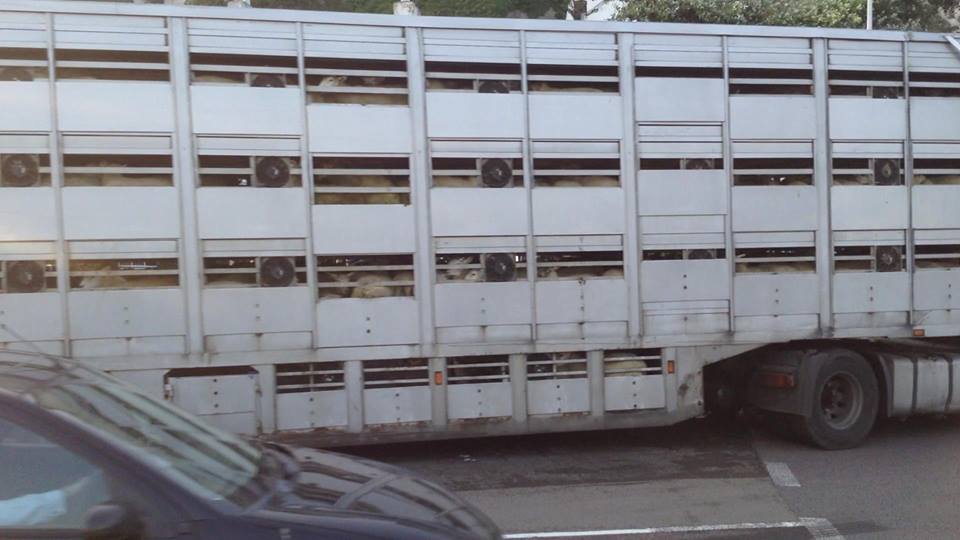
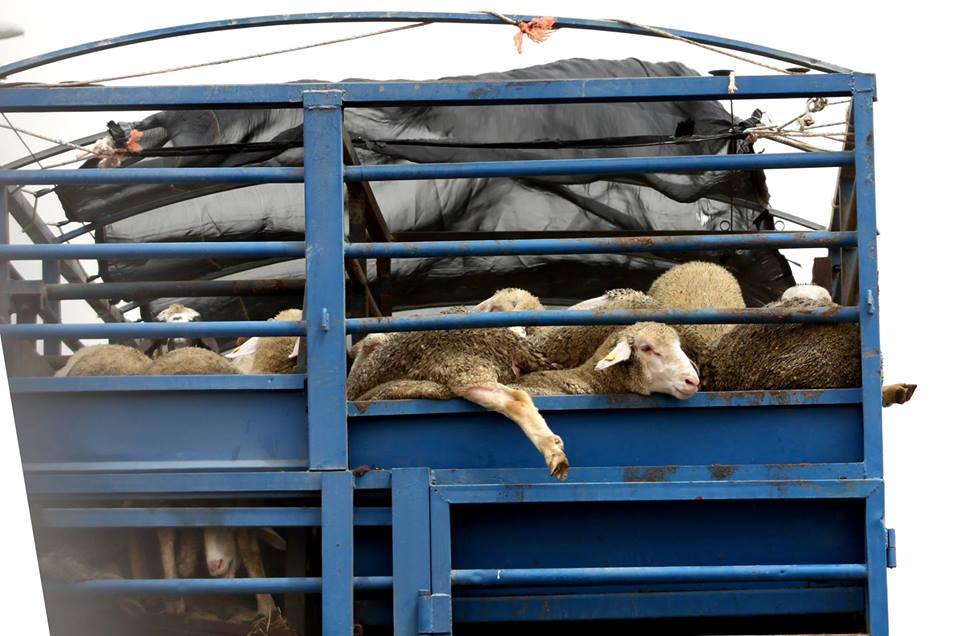
Un-weaned Calves, Lambs and Foals – 9 hours of transport – followed by a minimum 1 hour break; with then another 9 hours of transport. Total time – 18 hours on the road with a minimum 1 hour rest period, which is taken ON the vehicle.
Pigs – 24 hours transport in a single journey. Animals should officially have access to water throughout then journey, but we very much question if this is often the case.
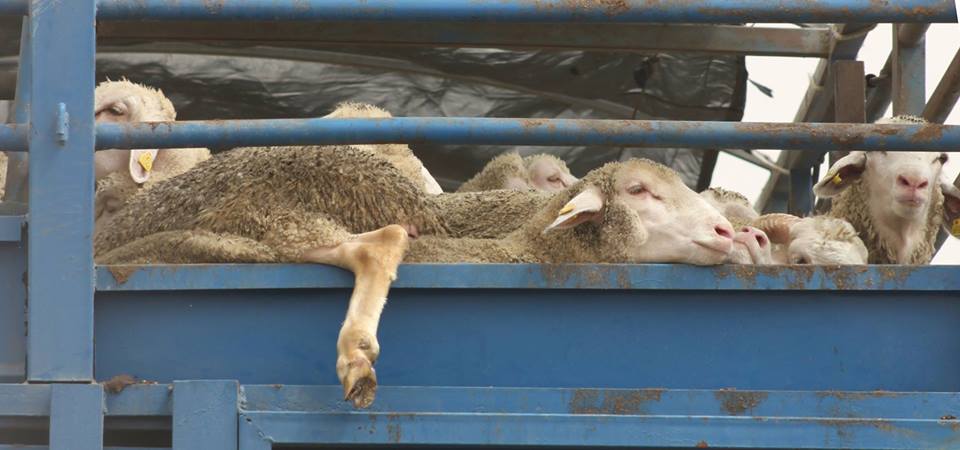
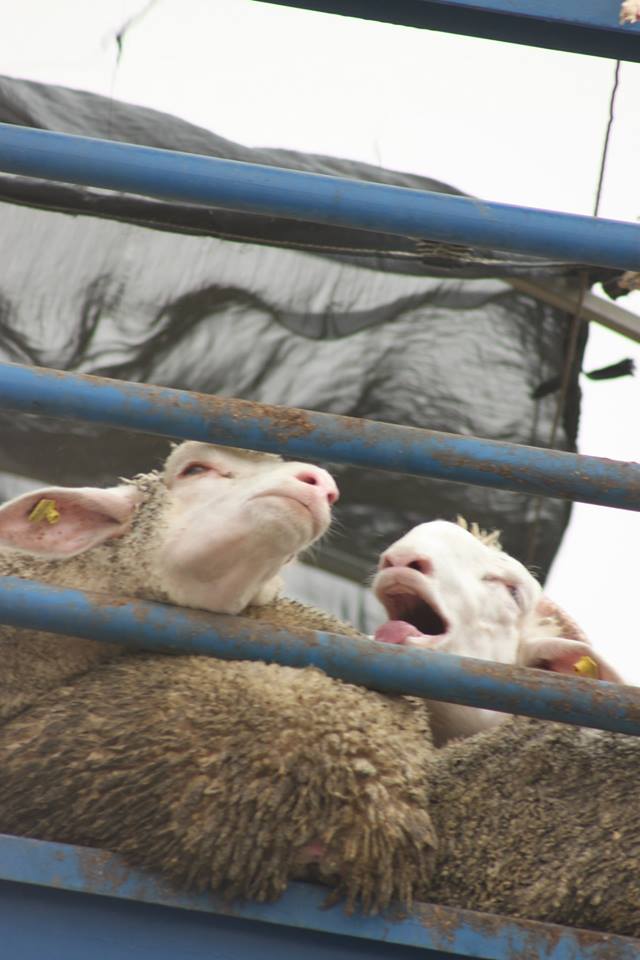
Cattle, Sheep and Goats – 14 hours of transport – followed by a minimum 1 hour break; with then another 14 hours of transport. Total time – 28 hours on the road with a minimum 1 hour rest period, which is taken ON the vehicle. Animals officially to be fed and given liquids during break if necessary, but we very much question if this is often the case.
Horses – except registered horses – can be transported for a maximum period of 24 hours. Must officially be given liquids, and if necessary fed every 8 hours; but we very much question if this is often the case.
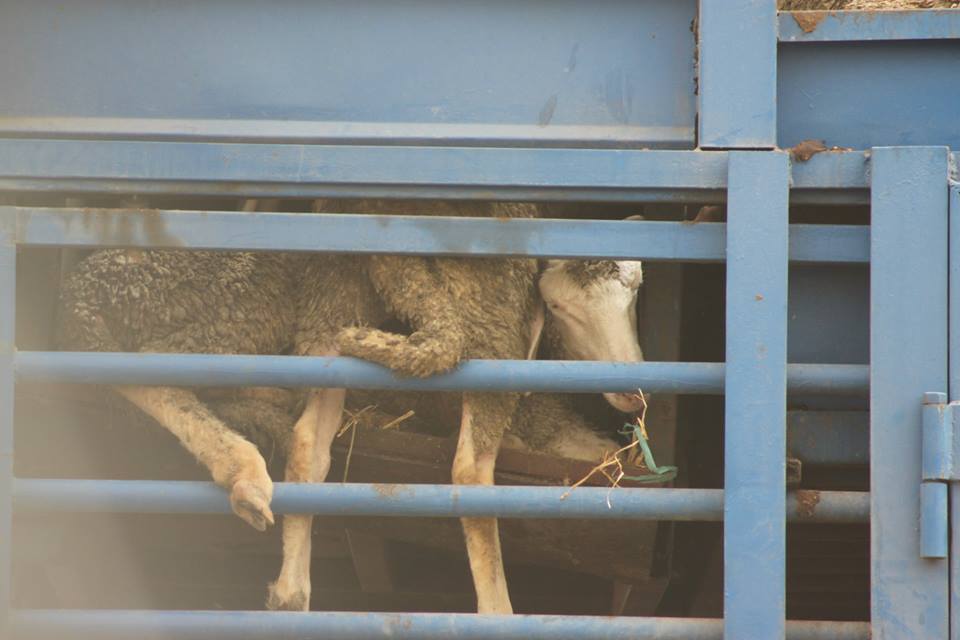
Note in all cases above the ‘rest period’ is officially 1 hour minimum. There is NO maximum; but animals normally take the rest period STILL LOADED ON the vehicle. So you could have an example where cattle can be officially transported for 28 hours on the road. The rest period could be 1 hour but it could also be, for example, say 8 hours. There is no maximum rest period; but the rest period is normally taken with the animals remaining ON the vehicle. Hence for this example you get 28 hours on the road with say an additional 8 hours rest still on the vehicle. This would mean that animals are confined on a truck for a minimum of 36 hours, which we consider is outrageous.
We and others are calling for a ONE OFF MAXIMUM journey time of 8 hours or less.
We are mailing German Chancellor Merkel to ask her to put pressure on the EU to reduce animal journey times to a one off 8 hours maximum. She has influence at EU level; but also has German elections next year – she needs votes ! – we want something in return.
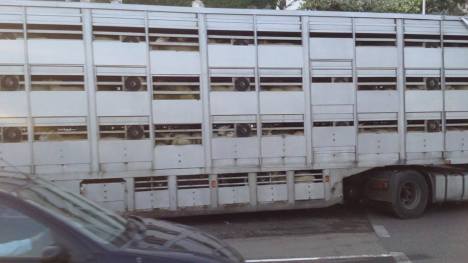


Below you will find a sample letter which you can copy and then send to chancellor Merkel.
E mail your copy of the sample letter to the following address:
You can of course use the sample letter as a guide and amend it to your own requirements.
Here below is the Sample Letter – we provide both English or German versions for you to select; copy and send.
SAMPLE LETTER
German Version
Sehr geehrte Bundeskanzlerin Frau Dr. Merkel,
im Rahmen der 8hours Kampagne im Jahr 2012 haben mehr als 1,2 Mio. Bürger die EU-Kommission aufgefordert die langen, qualvollen Tiertransporte mit lebenden Tiere auf acht Stunden zu begrenzen.
Jedes Jahr leiden Millionen von Tieren im Fernverkehr in ganz Europa.
Sie sind für Tage oder sogar Wochen in überfüllten LKWs oder Schiffen eingepfercht und extremen Temperaturen ausgesetzt.
Zudem erhalten sie nur sehr wenig Nahrung und Wasser – häufig werden auch die gesetzlich erforderlichen Ruhepausen ignoriert.
Es ist unfassbar, dass die EU-Kommission die Anforderung dieser 1,2 Mio. Bürger, Tiertransporte auf max. acht Stunden zu begrenzen, völlig ignoriert hat.
Laut EU-Verordnung Nr.1/2005 gelten für/und während der Tiertransporte folgende Richtlinien:
-
Tiere müssen frei von Hunger und Durst
-
Tiere müssen frei vom Schmerz, Verletzungen und Krankheiten,
-
Tiere müssen frei von Angst und Stress sein
Darüber hinaus ist es verboten, ihnen unnötige Schmerzen oder Leiden zuzufügen.
Dies sind nur einige der Punkte gegen die bei diesen lang andauernden Transporten verstoßen wird.
Leider existieren diese Anforderungen für einen humaneren Tiertransport oft nur auf dem Papier. Wirklich respektiert und eingehalten werden diese Anforderungen gerade bei Tiertransporten über acht Stunden nicht.
(Dies können Sie auch dem beiliegenden Video entnehmen.)
Export of sheep from England to Germany by J. Onderwater (NL).
Alle Gespräche, die die Organisation EyesonAnimals mit den Herren Andriukaitis und Bernard van Goethem geführt hatte, endeten mit der enttäuschenden Antwort: “We cannot do anything“.
Somit sind die verantwortlichen EU-Kommissare lange untätig geblieben.
Laut Lissabon-Vertrag, können eine Million Menschen, die aus mehreren Mitgliedsstaaten kommen, mit Hilfe der Bürgerinitiative die Europäische Kommission auffordern, neue politische Vorschläge unterbreiten.
Diese 1,2 Mio. Menschen konnten die EU-Kommission bisher nicht dazu bringen das Elend der Tiertransporte über acht Stunden zu beenden.
Deshalb fordern wir Sie nun auf, sich dafür einzusetzen, dass diese Transporte zeitlich auf max. acht Stunden begrenzt werden. Bitte machen Sie Ihren Einfluss geltend, damit die Gesetze zu Durchführung der Tiertransporte endlich angepasst werden.
Vielen Dank!
——————————————————————
English version

Dear Chancellor, Dr. Merkel,
In the context of the 8hours campaign in 2012, more than 1.200.000 citizens have asked the EU Commission to limit the long, painful livestock transportation to 8 hours. Every year millions of animals are suffering from long-distance transport across Europe.
They are confined for days or even weeks in overloaded trucks or ships and exposed to extreme temperatures. In addition, they receive only very little food and water – often the legally required rest breaks are also ignored.
It is inconceivable that the EU Commission has completely ignored the requirement of these 1,2 million citizens to limit animal transports to max. eight hours.
According to EU regulation no. 1/2005, the following bids apply during transports:
• Animals must be free from hunger and thirst
• Animals must be free from pain, injuries and diseases,
• Animals must be free from anxiety and stress
These are just some of the points that are being breached in these long-lasting transports.
All this is up to now only on the paper, it was never really respected, as you can see from the enclosed videos.
Export of sheep from England to Germany by J. Onderwater (NL).
All the talks conducted by the organization Eyes on Animals with Mr Andriukaitis and Bernard van Goethem ended with the disappointing answer: “We cannot do anything”.
Thus, the responsible EU commissioners have remained inactive for a long time.
According to the Lisbon Treaty, one million people who have to come from several Member States can use the citizens’ initiative to ask the European Commission to submit new political proposals. These 1,2 million people have not yet been able to stop the misery of the transport of animals over eight hours.
Therefore, we are asking you to make sure that these transports are timed to max. eight hours.
Please state your influence, so that the laws on the implementation of the animal transports are finally adapted.
Thank you
………
Here below are 3 video links from our friends and fellow campaigners at ‘Eyes on Animals’ (NL) which show a typical day with animal transport investigations. After watching the videos, which are also included in the sample letters above, we hope you will agree with us campaigners that EU animal transport regulations at the moment are very wrong, and you will add your support to the call for a one off 8 hour maximum journey time by sending the sample letter to Chancellor Merkel at the e mail address we have given earlier.

3 Videos (by Eyes on Animals)
Note these video links are also included in the sample letters given above:
Export of sheep from England to Germany by J. Onderwater (NL).
For the animals – please act; thank you.
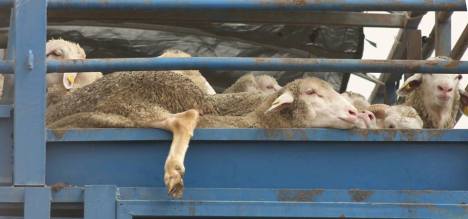
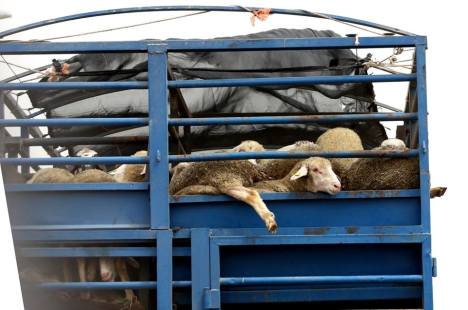
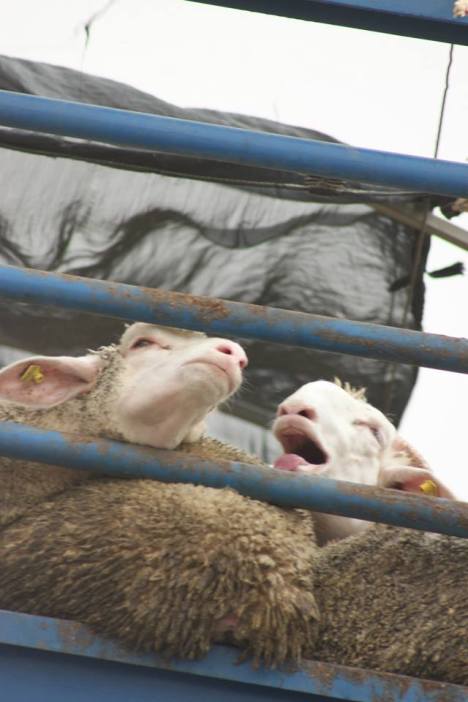
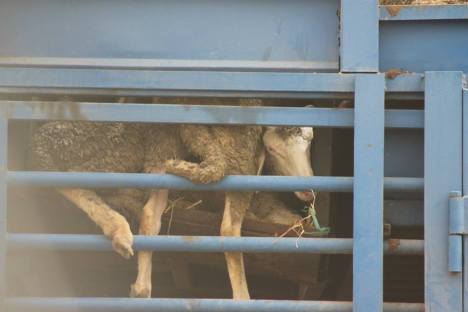
Above photos – SAV.
Filed under: CAMPAIGNS - Global Animal Welfare Issues, DOCUMENTS, GENERAL NEWS - International / National / Regional, GLOBAL PETITIONS - Anything Animal, Anywhere !, LETTERS, PHOTOGRAPHS - **WARNING** (Animal Suffering), SUPPORTERS, The "Serbian Animals Voice (SAV) ALLIANCE, VIDEOS | Leave a comment »
Posted on November 12, 2016 by Serbian Animals Voice (SAV)
Defra (UK Government) balls up as always when it comes to Bovine TB !! – Must make it look to voter farmers that we are doing something – even if killing badgers is the utterly wrong thing. It needs to be farmers who should improve their actions. See below.
Bovine TB not passed on through direct contact with badgers, research shows
Contact comes through contaminated pasture and dung, with significant implications for farming practices
Badgers and cattle never came into close contact during a new field study examining how tuberculosis (TB) is transmitted between the animals.
Most TB in cattle is contracted from other cattle but some infections come from badgers. The new research indicates that the disease is not passed on by direct contact, but through contaminated pasture and dung, with potentially significant implications for farm practices such as slurry spreading.
It also suggests why TB in cattle is so hard to control even when cattle and badgers are culled, as the bacteria can survive in fields for months. Eradicating TB will require addressing this risk, the new research implies.
TB is a serious problem for farmers, with 36,000 infected cattle slaughtered in Britain in 2015 at a cost to the taxpayer of about £100m. One key element of the government’s control programme, England’s controversial badger cull, is set to expand.
But the UK’s foremost experts say this “flies in the face of scientific evidence” and that the cull is a “monstrous” waste of time and money. The new research has not changed their conclusion.
The new study, carried out on 20 farms in Cornwall, aimed to shed light on how TB is transmitted between badgers and cattle, a route estimated to be directly responsible for about 6% of herd infections. “We know badgers can give TB to cattle but we have never known how,” said Prof Rosie Woodroffe, at the Zoological Society of London, who led the new research. “It is really difficult to track the movement of what is invisible – the pathogen.”
The breakthrough came thanks to new technology: a GPS collar small enough to be worn by badgers. The researchers tracked more than 400 cattle when they were in the territories of 100 badgers, with the total number of tracked days coming to more than 8,000.
“We detected nothing [in way of interactions],” said Woodroffe. Just once in 65,000 observations did a badger get within 10 metres of a cow and they preferred to be 50m away. In contrast, they are thought to need to be within 1.5m of a cow to directly transmit TB. “It looks most likely that the badgers are avoiding the cattle,” she said, although close contact has been seen on rare occasion in the past.
“Badger-to-cattle and cattle-to-badger transmission is therefore most likely happening through the environment,” said Woodroffe. “That raises the possibility that some cattle to cattle transmission is happening through the environment. That is an important issue as TB isn’t seriously managed as though the environment is infectious.”
When TB is detected in a herd, the infected cattle are isolated and sent for slaughter. “But the pasture they are grazing and the slurry or manure they contributed to isn’t treated as if it is contaminated. That can still be squirted all over the environment, as slurry is spread widely,” she said, adding that this might explain how closed herds can be infected from neighbouring farms.
The researchers, whose study was funded by the Department of Environment, Food and Rural Affairs (Defra) and is published in Ecology Letters, are now sampling the fields to see exactly where the TB is harboured. This will help farmers understand which biosecurity measures – such as fencing off badger latrines or raising water troughs – actually work.
“There is this mass of measures that farmers are supposed to do, but no-one knows if they really work,” said Woodroffe. “In trying to eradicate a disease, you are trying to nail every transmission route.”
Prof Alastair MacMillan, veterinary adviser for Humane Society International/UK, said: “The suggestion by some that TB is spread by frequent nose-to-nose contact between badgers and cattle has now been completely dismissed.”
“It is much more likely that contamination by cattle of fields and yards by [TB bacteria] is the cause of repeated TB herd breakdowns,” said MacMillan, a former Defra scientist. “It’s clear that the government must divert the substantial resources being used needlessly to cull badgers and instead improve farmer education and biosecurity on farms.”
A Defra spokeswoman said: “Tighter cattle controls and good biosecurity are a key part of our comprehensive strategy to beat bovine TB, and a number of measures are in place to prevent the spread of infection.”
“These include frequent testing and rapid removal of infected cattle, pre- and post-movement testing and wildlife proofing of high risk units,” she said. “To reduce the risk of cattle to cattle transmission from contaminated environment, farmers are required to carry out cleaning and disinfection and to keep cattle out of fields grazed by [infected cattle] for two months after their removal. There are also rules about the use of manure and slurry on infected farms to mitigate the risks.”

Badger cull expansion ‘flies in face of scientific evidence’
Experts call on new prime minister Theresa May to halt ‘failed’ policy, calling it ‘risky, costly, and inhumane’
Woodroffe said the new research has not changed her opinion that the current badger cull should be halted, but she said it could explain why only a slow reduction in TB was seen in earlier, scientific culls: “The feeling has always been with badgers that you kill an infected badger and the infection is gone, but it’s not.”
She warned: “The benefits of badger culling accrue really slowly but the harmful effects [such as spreading TB more widely] happen really fast.”
Filed under: CAMPAIGNS - Global Animal Welfare Issues, DOCUMENTS, GENERAL NEWS - International / National / Regional, The "Serbian Animals Voice (SAV) ALLIANCE | Leave a comment »
Posted on November 11, 2016 by Serbian Animals Voice (SAV)



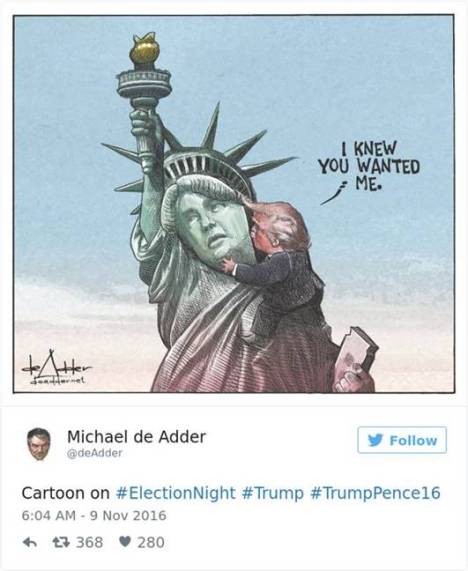
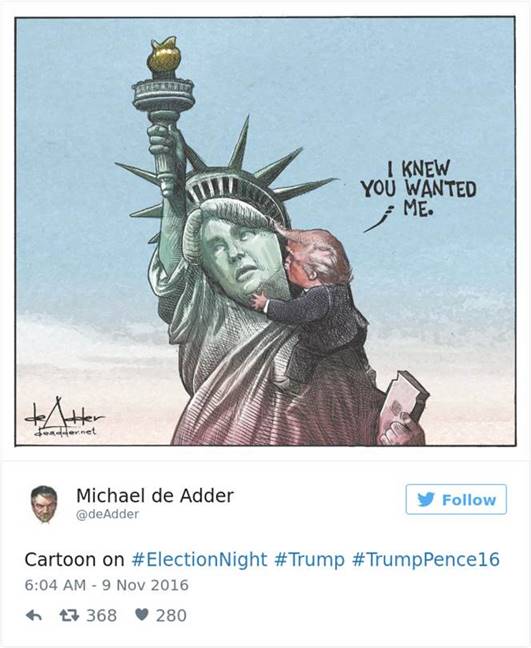
Above – sad day for all – except billionaires !

We are an animal rights / welfare group who also have concerns about the environment etc. Some may call us ‘tree and bunny huggers’, but that is fine with us. We feel that anything we publish is based on fact or substantial evidence.

We ask others, like those who voted for Mr. Trump this week, to consider the fact regarding the environment.
So, being tree huggers, we have looked a little more into this, educating ourselves more just like the Trump voters. We have found the following regarding the Paris climate agreement, signed up to by over 190 of the worlds nations, and now something which Trump says he is going to pull the US from.
Regarding Paris and environmental agreement, international law requirements are somewhat complicated. One of the reasons President Obama helped usher the deal into force early this year is because that meant that any country that was a party to the agreement couldn’t leave until it completed a four-year withdrawal process.
Michael Wara, an environmental law professor at the Stanford Law School, said Trump could use his office to issue an executive communication removing the United States from Paris, but even if he did that, the United States would still be a party for four years and could be subject to its legally binding procedural commitments.
The United States could take a shortcut and exit the UNFCCC, a move that could be likely, given Trump’s criticisms of the U.N. body. That could be done in one year rather than four, and would result in leaving Paris, as well. Or Trump’s administration could send observers to monitor negotiations but not participate in them and refuse to carry through on Obama’s nationally determined contribution pledge to cut carbon dioxide emissions 26 to 28 percent compared with 2005 levels by 2025.
The United States is poised to miss that target anyway without additional action, which will be a hard sell now that Republicans are in control of the legislative and executive branches of the federal government.
The United States and other parties are called upon to submit new nationally determined contributions for 2030 by 2020, and Wara said Trump could put forward a “business-as-usual” placeholder to stay on the right side of international law.
But it seems unlikely that the bombastic president-elect would opt for quiet underachievement over a grand exit.
Ebell has said he hopes Trump will submit the deal to the Senate, or that the upper chamber will vote on its own initiative. Doing so would “make it clear where the United States stands,” he said in a recent interview.
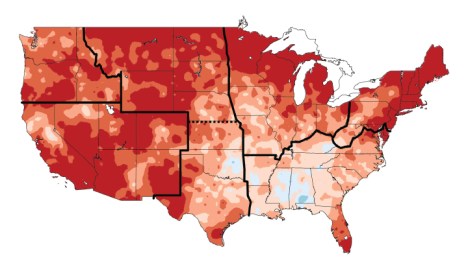

Departing Paris has consequences
Greens at home as well as those attending the Marrakech conference said they still hope Trump might not pull out of Paris, despite having spent more than a year saying he would. They note that he’s not a seasoned politician.
“There’s no history of how he would move from the campaigning arena to the governing arena,” said David Waskow of the World Resources Institute.
Several observers note that Trump has seldom articulated clear policy plans, which they said leads them to believe he might reconsider his campaign positions once in office.
Wara said Trump didn’t seem to realize, for example, that his stated support for U.S. oil and natural gas development was at odds with his pledge to prop up the domestic coal industry, which has been undermined by cheap and abundant gas.
Climate advocates also say Trump shouldn’t walk away from Paris, because doing so could undermine his ability to interest other leaders in issues that are higher on his to-do list.
“If a President Trump were not to honor U.S. commitments under the Paris Agreement, it will negatively impact his ability to get the cooperation of world leaders on other issues he cares about, such as trade and terrorism,” said Alden Meyer, director of strategy and policy at the Union of Concerned Scientists, at a briefing in Marrakech.
Frank Maisano of Bracewell LLP said Trump’s ascension doesn’t undermine Paris, because it’s “symbolic.”
“This is only a blow to global efforts in the form of the U.N. process, which continues to be a difficult and often broken process,” Maisano said.
He added, “Clean energy and technology issues will continue to play a significant role in international efforts to reduce emissions,” echoing a theme environmentalists are also voicing in the wake of the election.
“Look for nations who aren’t enamored with the details of how to meet the Paris Agreement to use this as a reason to raise new concerns,” Maisano said.
At a briefing yesterday with U.S. climate advocates in Marrakech, a reporter for a New Delhi-based outlet asked if poor countries can “count on the moral obligation of the next U.S. president” when it comes to climate finance pledges.
The Trump victory makes it unlikely that the United States will make good on the $2.5 billion it still owes to the U.N. Green Climate Fund, and the new administration is likely to curtail foreign aid overall.
We have looked into the facts; have Trump voters ?
Filed under: CAMPAIGNS - Global Animal Welfare Issues, DOCUMENTS, GENERAL NEWS - International / National / Regional, LETTERS, The "Serbian Animals Voice (SAV) ALLIANCE | Leave a comment »
Posted on November 10, 2016 by Serbian Animals Voice (SAV)

Enjoying life free from the bile farm at an AA sanctuary – Please help with the special rescue below – and let the bears there be free like this
– see Donation link below.
He’s rescued hundreds of bears from bile farms but, for Animals Asia Vietnam boss Tuan, those still caged and suffering never leave his thoughts.
In 2011, an Animals Asia team was in Vietnam’s Gia Lai province to rescue a sun bear from a bile farm. As is always the case with bear bile farms, the animal, now known as Nelson, was kept in appalling conditions.
Animals Asia’s Vietnam Director Tuan Bendixsen remembers the tiny, rusting cage that had held Nelson for his entire life (pictured below).

Bear farms take their toll in myriad ways. Nelson’s teeth were shattered and infected from desperate attempts to chew through the iron bars, while the surface of his eyes were scratched affecting his vision.
Over 11 years rescuing bears from the bile industry, Tuan has no shortage of bad memories. He knows better than anyone what bear bile farming looks like: hopeless, fearful eyes, balding skin, open wounds, malnourished bodies and shattered teeth.

Tuan said:
“I’ve rescued over 150 bears in Vietnam and I’ve never yet seen a bile farmed bear held in conditions that are anything other than deplorable. Five years ago in Pleiku for Nelson’s rescue it was the same. I’ve lost count of how many farms I’ve been on, but they never fail to fill me with dread.”
So when local Forest Protection Department (FPD) officials told Tuan there were more bears being held in the province, he knew he had to act to spare them the horror he had seen repeated elsewhere so many times.
That day he made them a promise: if you can convince farmers to give them up, we can save the bears – anytime and we’d be back.
That pledge was vital. Vietnam’s Forestry departments are woefully under funded. If they were to find evidence of bear bile extraction they would most likely be forced to turn a blind eye. They simply have no facilities to care for confiscated bears.
Tuan’s promise changed all that. It empowered the FPD to go after those farmers, watch them closely for any mistakes and convince them every day that there is no future in the cruelty of bear bile farming.
This month, more than half a decade later, that pressure looks to have paid off as hopes grow that these bears (pictured above) can finally be saved.
DONATE NOW –
Tuan added:
“For five years I’ve known these bears were suffering unimaginable torment. Underfed, unable to stretch their bodies, sickness, pain and mental agony. We’ve seen it all before, but I know when I set foot on those farms it’ll be as horrific as the first time. The disgust of bear bile farming never dulls. The bears you can’t rescue, haunt you – they’re never far from your thoughts.
“Now we just hope we can rescue these bears and start to turn their lives around. We can’t give them back the years they’ve lost but we can make them free from pain. If we can get them back to our sanctuary we can give them sunshine, open air and bear friends to play with.”

Filed under: CAMPAIGNS - Global Animal Welfare Issues, GENERAL NEWS - International / National / Regional, PHOTOGRAPHS - **WARNING** (Animal Suffering), SHELTER - Information, The "Serbian Animals Voice (SAV) ALLIANCE, VIDEOS | Leave a comment »
Posted on November 10, 2016 by Serbian Animals Voice (SAV)
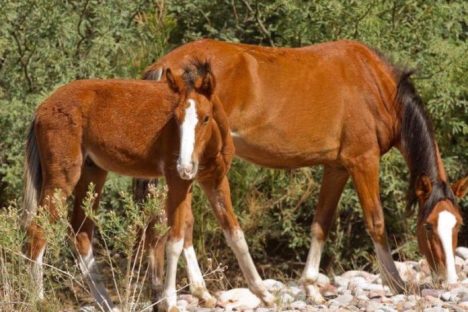
Reward for Finding Salt River Wild Horse Killer Soars to $25,000!
The reward fund for information leading to the arrest and conviction of the person who shot and killed a baby Salt River wild horse and wounded two other young horses soared to $25,000 thanks to a matching offer from Animal Recovery Mission a non-profit organization based out of Florida.
Immediately after the shooting, the Salt River Wild Horse Management Group (SRWHMG), an Arizona non-profit organization and the American Wild Horse Preservation Campaign (AWHPC) offered a reward for information leading to the arrest and conviction of the perpetrator, and the Humane Society of the United States and Schill Law Firm quickly added to the reward. In addition the public has contributed to the reward and rescue fund as well in a Gofundme account. As of November 7th the total reward fund had added up to $12,500. Any member of the public wanting to contribute to the reward can visit this link; http://wildhor.se/2epCqhn
However to date, no tips leading to the suspect’s apprehension have been received. This week, ARM Investigations, which is closely tied to the fight to protect the Salt River Wild Horses as a coalition partner of the Salt River Wild Horse Management Group, decided boldly to match the existing reward fund.
ARM is in the business of fighting extreme animal cruelty and was created to investigate, expose and derail some of the most untouchable animal cruelty in America today. ARM’s investigations have brought hundreds of illegal animal slaughter operations to their knees. The organization also focuses on conservation programs, including the protection and preservation of wild horses and burros.
Richard ‘Kudo’ Couto, ARM Founder and President stated, “In our experience, in cases that have become stagnant, we found that offering an extremely large reward often succeeded in bringing a crucial tip forward. These kind of despicable acts upon animals, in this case the innocent and cherished Salt River wild horses, are unacceptable and taking a stance is a moral and societal obligation to do the right thing; in addition, we hope it will discourage and any future heinous acts against the Salt River wild horses”.
“The coward who shot these innocent and beloved wild horses needs to be brought to justice,” added Simone Netherlands, President of the SRWHMG. “We are so thankful to our coalition partners and to Sherrif Joe Arpaio and MCSO and are hopeful that this spectacular amount of reward money will bring forth and encourage the tip that leads to the shooter’s arrest and conviction. Somebody knows exactly what happened, and that person can ensure that justice is served while receiving a financial reward at the same time.”
On Friday, Oct. 21 at about 6 p.m., according to MCSO, a witness saw a man wearing black shorts and a dark green shirt shooting three Salt River wild horses. The witness saw one of the horses flailing in the river, and observed two other horses get hit with rounds from a rifle or shotgun. The suspect chased after the horses as they fled. Two other individuals are believed to have been with the person who shot the horses.
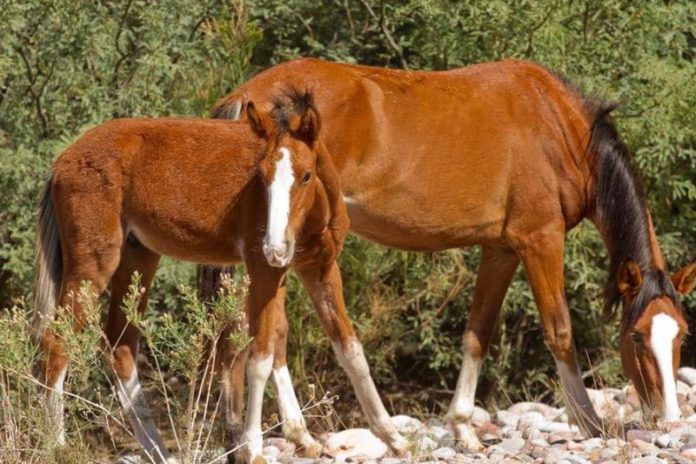
On Saturday, Oct. 22 the Salt River Wild Horse Management Group found a Salt River wild horse, – a 6-month foal named Kai – dead, with gunshot wounds to the side of his neck and head. In a bizarre and sickening twist of events, Kai was also found mutilated of his genitals. Two other horses in the same family band appeared to have possible small bullet wounds but survived and are recovering on their own.
The two horses who were also shot at, are currently being monitored closely and have been acknowledged as incurring wounds, possibly from the bullet ricochets. The SRWHMG and their volunteers are on the Salt River daily to ensure their safety and determine if they will need to be brought in to be treated.
This is not the first time that the wild horses of Salt River have been shot at and injured. In-fact, volunteers of the (SRWHMG) who are on the river daily, suspect that these majestic horses are being hunted. Ironically, almost a year ago to this shooting, a wild horse by the name of ‘Dotty’ was found dead from three shots to the head and one shot to the shoulder. Two other horses also met the same fate and a pattern appears to be emerging given the hunting season period. It is important to note that prior to the Salt River wild horses garnering media attention, 1-2 horses a year were reported shot and killed.
The SRWHMG is dedicated to protecting, monitoring and studying the Salt River wild horses. The SRWHMG has been spearheading the effort to secure lasting protections for this iconic and beloved wild horse herd in the Tonto National Forest.
The public still has a chance to add to the reward by doing to the Go Fund Me page, which ARM will then match.
Whilst the Maricopa Sheriff’s department has been working hard to find the culprit, no strong leads have surfaced to date.
Anyone with information about the shooting can call either the Salt River Wild Horse Management Group at 480-868-9301 or the Maricopa County Sheriff’s office at 602-876-1011.
Filed under: GENERAL NEWS - International / National / Regional | Leave a comment »

















 Serbian Animals Voice (SAV)