

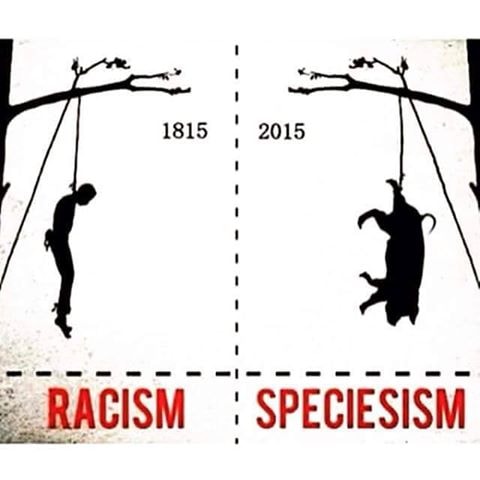
cruelty to any being is the same
the only difference is the victim
regards and good night, Venus
Filed under: GENERAL NEWS - International / National / Regional | Leave a comment »

Filed under: GENERAL NEWS - International / National / Regional | Leave a comment »
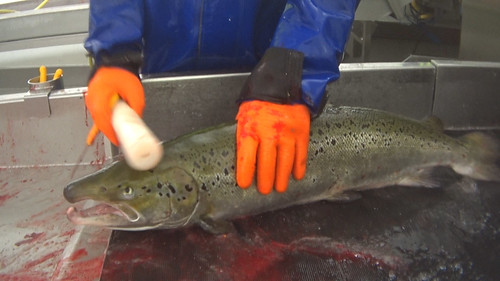
Despite a stunning device being in place in this facility, numerous salmon displayed consciousness at the time of slaughter, evidenced by flapping, wriggling, and grasping motions.

Many salmon’s gills were cut when they were still conscious, causing them to be in agony for up to several minutes as a result.

Some salmon were stunned with a club after their gills were cut, causing their blood to spray out. In some instances, conscious animals were clubbed as many as seven times.
Filed under: GENERAL NEWS - International / National / Regional | Leave a comment »

Filed under: GENERAL NEWS - International / National / Regional | Leave a comment »



Filed under: GENERAL NEWS - International / National / Regional | Leave a comment »


Filed under: GENERAL NEWS - International / National / Regional | Leave a comment »

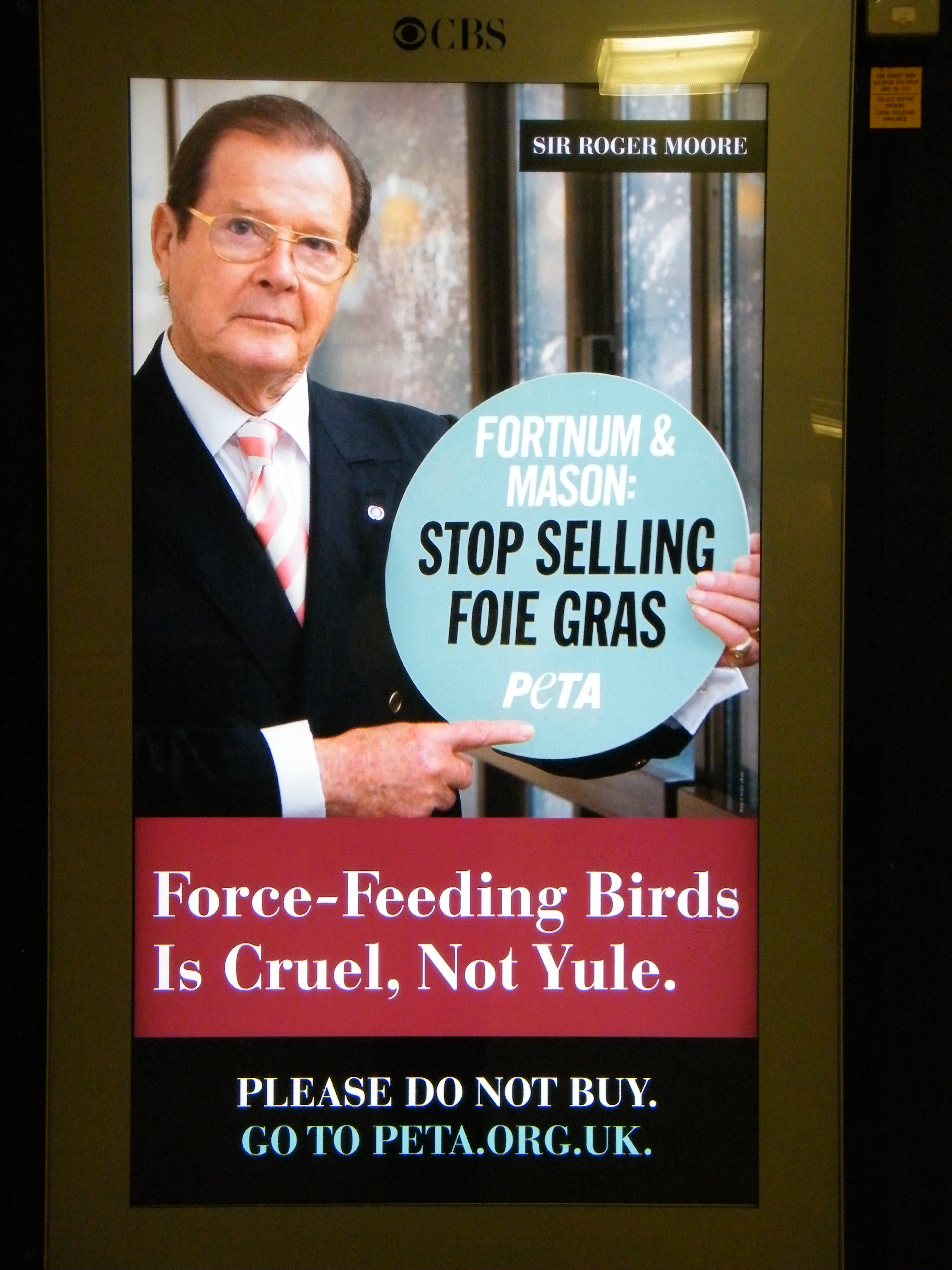
WAV Comment –Lady Moore, widow of Sir Roger Moore, said the James Bond star would have been “delighted” that his campaign finally bore fruit.
She said: “My late husband, Sir Roger Moore, was a staunch advocate for animal rights, and foie gras production was one of the many issues he took a stand against.
This is really brilliant news. We know that despite being ‘James Bond’ and everything that went with it; the real Roger Moore was a staunch animal rights advocate; and for years campaigned hard with regard Foie Gras and the use o animals in British circuses. Very sadly, Sir Roger is no longer with us to celebrate this wonderful news; but we will always remember his respect for, and his involvement in the animal rights movement.
Celebrate today and respect the work on this campaign by Sir Roger.
Regards Mark


Some of our past posts:
This news comes as the government considers a ban on the product now we have left the EU
For over a decade, Fortnum & Mason has stood against the pressure to stop selling “torture in a tin” as it remained one of the last great department stores to sell foie gras.
It has long been a contentious issue between those who see the product as a traditional luxury, and those who balk at the idea of force-feeding a duck or goose for human consumption. But now, the landmark London shop has given into campaigners and is phasing it out.
Celebrities including the late Sir Roger Moore, Twiggy, Joanna Lumley, Bill Oddie and Ricky Gervais have for years been part of a campaign by People for the Ethical Treatment of Animals (Peta) to picket the shop.
Lady Moore, widow of Sir Roger Moore, said the James Bond star would have been “delighted” that his campaign finally bore fruit.
She said: “My late husband, Sir Roger Moore, was a staunch advocate for animal rights, and foie gras production was one of the many issues he took a stand against. For years, he joined Peta in urging Fortnum & Mason to stop selling this product of horrific cruelty. I know he would have been delighted to hear that the retailer has finally made the compassionate decision to remove foie gras from its shelves.”
Defra minister Lord Goldsmith has joined campaigners in the crusade against the goose liver product, and the government is now considering a ban on the product.
A spokesperson said: “The Government has made clear that the production of foie gras from ducks or geese using force feeding raises serious welfare concerns, and the practice is rightly banned in the UK.
“The Government is considering the further steps it could take in relation to foie gras.”
Fortnum & Mason confirmed to this newspaper that they have stopped buying in the product and are now selling off the rest of their stock. Once it runs out, foie gras will no longer be on the department store’s shelves.
A spokesperson said: “This decision was made last year as part of an ongoing focus on the way we do business.”
The last few tins are still being sold on its website, which reads: “Our foie gras is produced by just two farms carefully selected for their excellent welfare standards; smooth and creamy, it is the simplest way to transform a meal into a banquet.”
This has often been a contentious issue for department stores which wish to cater to their more well-heeled clientele without sparking mass protest by animal rights activists. Selfridges stopped selling foie gras in 2009 – but customers were so keen to get their hands on the luxury item that the butcher sold it “under the counter”. In 2012, he was caught and swiftly fired. Harrods still sells the product.
Joanna Lumley has long campaigned against foie gras CREDIT: Heathcliff O’Malley
Fortnum & Mason previously maintained that it would not bow to pressure from activists, arguing that demand for it was “very strong”. He and the store had “many thousands of customers” who wanted to buy “what is essentially a very traditional product”.
Campaigners celebrated the news.
BBC presenter Chris Packham said: “The world is changing, every more rapidly, in its regard to the way we treat animals. They are not there for us, they and we are part of a world that should support them. And we are waking up not the fact that what was acceptable yesterday is no longer tolerable today. Hats off to Fortnums, this is a timely signal that time are changing, and for the poor abused geese in France, they will be changing for the better.”
Lorraine Platt, the co-founder of the Conservative Animal Welfare Network, the influential network of which Prime Minister’s fiancée Carrie Symonds is a member has been part of the protests.
She said: “I campaigned for Peta outside Fortnums just before we launched Conservative Animal Welfare Foundation to protest against the sale of foie gras in the store wearing a mask of Sir Roger Moore- who was leading the campaign for Peta back then. I was fortunate enough to be invited to a very private dinner with Sir Roger Moore and his family and had the opportunity to thank him face to face for all he was doing at the time to press Fortnums to stop selling the grotesque product.”
Peta Vice President Mimi Bekhechi added: “From boardroom meetings to being force-fed outside the doors of the famous store by Steven Berkoff, our campaigning activities ran the gamut.
“Although it took far too long, we’re thrilled that the penny has finally dropped and Fortnum & Mason is joining the extensive list of iconic British institutions that reject this torture in a tin.”
To produce foie gras, ducks and geese are force-fed several times a day until their livers become diseased and swollen. By the end of their lives, many birds have trouble breathing because their enlarged livers compress their lungs, which is why the EU’s Scientific Committee on Animal Health and Animal Welfare recommends “that force-feeding of ducks and geese should stop and this could be best achieved by the prohibition of the production, importation, distribution and sale of foie gras.”
Exclusive: Fortnum & Mason to stop selling foie gras after campaign by celebrities (telegraph.co.uk)


Filed under: GENERAL NEWS - International / National / Regional | Leave a comment »

French president Emmanuel Macron has said Europe should grow its own soy and that to depend on Brazilian soy “would be to condone deforestation of the Amazon”. The EU is the second largest importer of Brazil’s agricultural products after China, and Brazil is seeking to expand exports with a trade deal with the EU. More than 1m tonnes of soya used by UK livestock farmers to produce chicken and other food could be linked to deforestation, according to Guardian reports last year.
Outbreaks of bird flu continue to be reported across Europe, with hundreds of cases in poultry in France, Germany and Poland. Sweden was reported to be planning to cull about 1.3 million chickens after bird flu was found on a farm. There have been more than 20 bird flu cases on commercial poultry farms in the UK with all birds, including free-range ones, now required to be housed indoors. In Asia, South Korea is reported to be culling 19 million poultry to control bird flu outbreaks in the country.
Denmark is offering more than £2bn in compensation to mink farmers following its decision to cull millions of animals over fears that a Covid-19 mutation moving from mink to humans could jeopardise future vaccines. Denmark had been the world’s largest exporter of mink fur, but has now suspended farming of the animals until 2022. Sweden has also paused mink fur farming for a year, and there have been calls to ban the practice in Spain. A Covid-19 vaccine for mink could, however, soon be available to breeders. In the US, officials have recommended workers on US mink farms to be given the vaccine as a priority.
New strains of the deadly pig disease, African swine fever (ASF), have been discovered in China. The disease has destroyed a large chunk of the pork industry in the country since 2018, although it is reportedly recovering quickly. One beneficiary of the shortfall has been Spain, which reported a rise in pork exports to China in 2020. ASF has continued to spread in Europe, with 30,000 pigs culled after an outbreak on a farm in Romania.
Yellow mealworm, a maggot-like insect, has been approved as safe for human consumption by the EU food safety agency. Insects are seen as a source of protein with comparatively low associated greenhouse gas emissions. The biggest potential market is expected to be as animal feed for chickens, pigs and other livestock, rather than human food products.
Germany has approved a draft law banning the culling of male chicks from 2022. The government has been exploring the use of dual-purpose breeds of birds which can lay eggs and be reared for meat. It has also invested in technology to detect egg sex prior to hatching and dispose of male eggs earlier. Separately, an Israeli startup has announced that it is planning to go further and change the sex of poultry embryos as they develop, doing away with the need for disposal.
Non-stunned halal and kosher meat must be clearly labelled to give consumers the choice not to buy it, the British Veterinary Association (BVA) has said after a government review of slaughter regulations. More than 90 million cattle, sheep and poultry were slaughtered without being pre-stunned in England in 2018. There is no non-stun slaughter in Scotland, Wales, and Northern Ireland. The BVA said animals not stunned before slaughter are “highly likely to suffer pain, suffering, and distress during the cut and bleeding”.
Egg producers have been left struggling after a collapse in wholesale trade during the pandemic. The difficulties in exporting post-Brexit have also added to a fall in wholesale prices despite positive retail sales. Some producers have warned the situation could lead to chickens being culled. One free-range producer has reported giving tens of thousands of eggs to food banks.
Pig farmers in Northern Ireland are to get more than £2m in government support after a Covid-19 outbreak among workers led to the closure of a food processing factory for two weeks last summer. The meat plant is reported to process about 10,000 animals a week. Some farmers faced additional penalties on overweight pigs. Production was also halted at Scotland’s biggest pork processing plant in Brechin in January after several workers tested positive for the virus.
The UK’s veterinary capacity is at risk post-Brexit, MPs from the environment, food and rural affairs select committee have warned. About 95% of official veterinarians, who undertake vital certification and supervision work in abattoirs, are EEA-qualified nationals. The sector faces an increased workload due to additional export checks, Covid and disease outbreaks such as bird flu.
New Zealand is backing the UK as it seeks to join the Comprehensive and Progressive Agreement for Trans-Pacific Partnership, whose members also include Japan, Australia, Canada, Vietnam, Singapore and Mexico. The New Zealand meat industry has called for greater access to the UK market for its beef and lamb.
Finally, Kim, a 12-month-old Welsh-born sheepdog, has been sold for a world record £27,100. Although a Welsh speaker, the seller Dewi Jenkins said he trains his dogs in English to allow him to sell them across the world, including in the US, Norway, Belgium, France and Ireland.
A decade after an outbreak of Q fever killed 95 people in the Netherlands, there are worries about human cases of pneumonia linked to goat farms. The Q fever outbreak followed a period of rapid growth in goat dairying in the Netherlands and its aftermath heightened tensions around zoonotic disease threats, especially in the south of the country where the highest numbers of goat farms and infection rates were found.
The EU has been revealed to be world’s biggest live animal exporter with more than 1.6 billion chickens, pigs, sheep, goats and cattle transported across a border in 2019.
In the UK, live farm animal exports to mainland Europe have come to a standstill post-Brexit. The UK government consultation on banning the export of animals for slaughter and fattening is due to end later this month.
Brazilian companies and slaughterhouses including the world’s largest meat producer, JBS, sourced cattle from supplier farms that made use of workers kept in slavery-like conditions, according to a new report. JBS said it had “a zero-tolerance approach to forced labour and also urge anyone who suspects or has evidence of individual or farm-level malpractice to report it”.
Outbreaks of African swine fever and Covid among workers in meat plants in Germany have raised questions over the consequences of the country’s fixation on “cheap meat”. In China, experts have questioned the effectiveness of new animal health rules in preventing another zoonotic disease outbreak. And news of plans to develop animal-only antibiotics has been criticised as a “techno-fix” for intensive farming practices.
A Welsh council has admitted it should not have granted planning permission for a 110,000-chicken farm in the “poultry capital of Wales” after campaigners crowdfunded a judicial review. Former free-roaming nomads in Tibet are facing a struggle for their identity, stuck between China’s push for more industrialised farms and Buddhist monks urging them to embrace vegetarianism. Finally, we’ve reported on the mounting death toll of people and animals in Nigeria as herders seeking dwindling reserves of pasture clash with farmers.
Filed under: GENERAL NEWS - International / National / Regional | Leave a comment »

 Serbian Animals Voice (SAV)
 Serbian Animals Voice (SAV)