Posted on June 15, 2018 by Serbian Animals Voice (SAV)
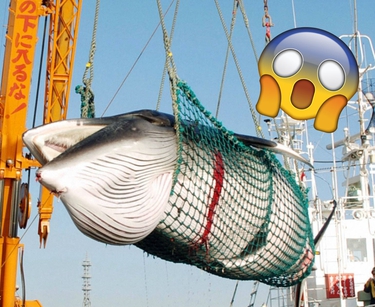
From the 10th of June, Icelandic fishermen will again hunt for fin whales.
Two years they had paused.
Fin whales are a endangered species, 161 whales may kill the fishermen, this quota has allowed the Icelandic government.
Only: Worldwide, fewer and fewer people want to eat the meat. Icelanders hardly. The Finn whale hunting is a minus business for the fishermen.
How many whales are hunted on average?
– In the 20th century, a total of 2.6 million whales were killed worldwide (Marine Fisheries Review)
– Norway killed 1480 whales in 2016 (Whale and Dolphin Conservation)
– Japan killed 300 animals (IFAW) in 2017
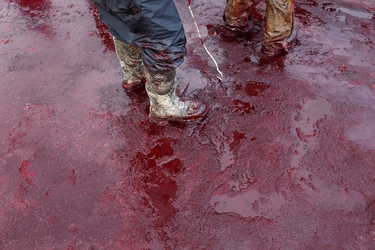
– The animals are hunted with harpoons. Modern models explode on impact or in the animal.Often, however, the whales do not die immediately, but drown in a span of up to 30 minutes before being pulled on board and gutted.
Why are they doing that ?!
The fish export is beside the tourism the largest economy branch of the Icelanders.
The largest whale company in Iceland and the only one that hunts the endangered fin whale is Hvalur. Its biggest sales market is Japan.
Because Japan demanded high quality standards and Icelandic whale meat was contaminated with environmental toxins, Hvalur had to cease whaling for two years.
Meanwhile, Japan has loosened its import regulations again. Hvalur, it seems, is taking the opportunity to boost whaling after two years of slacking back into export, and thus Iceland’s economy.
In collaboration with the University of Iceland, Hvalur also wants to develop medicines for iron deficiency – from fin whale bladders and bones.
A bloody job
Why this nonsense is:
Iceland’s largest market, Japan, hunts whales themselves.
The whale meat is offered annually at auctions. A 2012 ICSN Dolphin and Whale Action Network survey shows that three-quarters of the meat has not been sold. Even the Japanese fishermen are thus sitting on their flesh. A study by the Nippon Research Center in 2008 shows the reason: The Japanese do not want whale meat: 95 percent of Japanese rarely or never eat this meat.
The situation is similar in Iceland. The minke whale is processed here at most, but almost only in Reykjavik and for tourists, who think they have a supposedly “traditional” specialty in front of them. Only 3 percent of the locals eat whale meat themselves, according to the International Fund for Animal Welfare.
Who is behind the company Hvalur?
Mastermind Kristjan Loftsson
Kristjan Loftsson is managing director of the whaling company Hvalur and probably one of the richest and most influential Icelanders. He is involved in other fishing companies, also earned with redfish, cod and Co.
He does not need the whaling financially. And yet he leads in.
Marine biologist Thilo Maack from Greenpeace says: “Hvalur’s whaling is a total minus business and the question of ‘why’, can only be answered politically.”
The company Hvalur founded Loftsson’s father in 1947 – when the greasy whale meat was a grateful food shortly after the Second World War. Even before that, the Icelanders had eaten whale, but only stranded.
With the Loftsons, Icelandic whaling became industrial.
Iceland is thus in violation of the International Whaling Commission’s Biodiversity Convention, although it is a member. With the export of the meat it violates the Washington Convention (CITES). But…There are no legal consequences for Hvalur or Iceland.
Thilo Maack of Greenpeace says: “Loftsson does not want to be told by the world community, what he has to do and what he must not do”!!
Who is the fin whale?
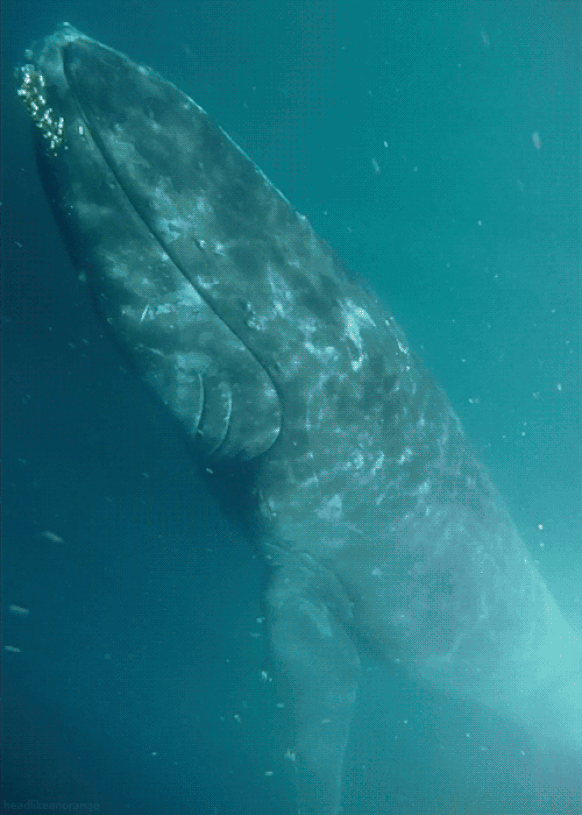
– He is the second largest mammal in the world. Adult finbacks grow up to 27 meters long.
– He is up to almost 50 km / h fast, dives up to 230 meters deep and can communicate with his conspecifics over a distance of up to 850 kilometers.
– However, the hunting has thinned out the populations so much that the fin whale appears on the IUCN Red List as “endangered”.
– Around 40,000 fin whales live in North Atlantic waters.
That’s the opposite movement
Katrín Jakobsdóttir, the new left-green Prime Minister of Iceland, had already called for a review of the need for whaling in 2014. It could now argue that the government will not issue any more quotas after this year’s hunting season.
And: For decades, Greenpeace has been trying to prevent the hunt itself by taking action on the high seas, as well as stopping reefers loaded with whale meat on their way to Japan. In the past, some airlines refused to transport the meat.
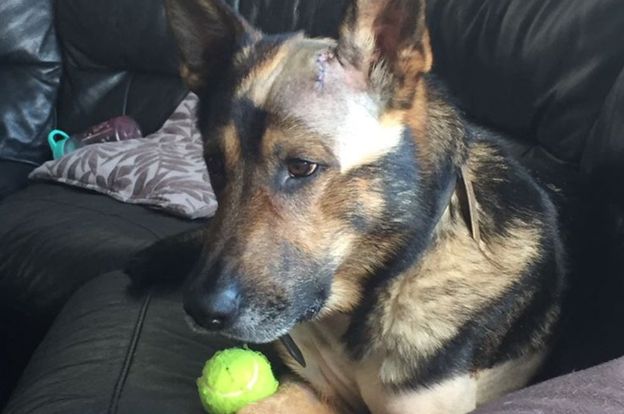
It could soon be a criminal offence to attack a police dog or horse after Michael Gove gave the government’s support to a bill implementing “Finn’s Law”.
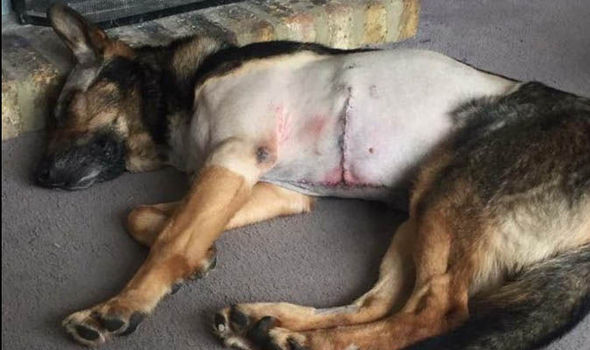
Named after brave police German shepherd Finn, who was stabbed in the head and chest while chasing a robbery suspect, a Service Animals Offences Bill will be read in parliament on Friday and is likely to have more of a chance of becoming law now that there is backing from government.
Criminal damage is currently the only available charge for someone who attacks a police or service animal – even though dogs are often bitten, kicked and strangled while in the line of duty.
Finn’s Law would make it a specific criminal offence to attack a police animal.
Announcing his backing, the environment secretary said: “This Bill will offer stronger protection for the many brave service animals that help to protect us.
“This Government is continuing to raise the bar on animal welfare, whether it be for our beloved pets, brave service animals or on farms.”
Finn saved his handler PC Dave Wardle’s life while they chased a robbery suspect in 2016.
The suspect injured PC Wardell’s hand and stabbed Finn in the head and chest as he tried to stop him from getting away.
While the suspect was charged with actual bodily harm for his injuries to PC Dave Wardell, he was only charged with criminal damage for almost killing Finn, as dogs are considered property in the eyes of the law.
The Bill would amend a 2006 Animal Welfare Act to address concerns about defendants’ ability to claim they were justified in using physical force to protect themselves from a service animal.
Sir Oliver Heald, who tabled the bill, said he was “delighted” at receiving government support and was now looking forward to the legislation passing through parliament.
“This is a good day for all of our brave service animals,” said the North-East Hertfordshire MP.
But we welcome yet another decision that an operation which has many outlets in the UK has decided to ditch plastic straws and instead convert to paper straws.
Posted on June 14, 2018 by Serbian Animals Voice (SAV)
Animal rights activists illegally take pictures of grievances in stables.
A survey shows that most people in Germany find this legitimate.
Get into a stable and film secretly: So activists reveal animal cruelty again and again. Foto: ARIWA
BERLIN taz-newspaper |
Most people in Germany consider it justified that animal welfare organizations reveal animal suffering by secretly filming in stables. This emerges from a representative survey of the opinion research institute Emnid. On Thursday evening, the Federal Parliament wants to debate a proposal by the FDP (the Liberal Party), which should make such searches more difficult with the help of tax law.
Clients of the survey are the Animal Organisations Ariwa, Animal Equality, German Animal Protection Bureau, Peta, Soko Animal Protection and Animal Retriever, which themselves repeatedly published undercover images of abuses on farms.
This undercover method supports 82.5 percent of respondents. 85 percent were in favor of stronger controls on animal welfare on farms. According to the study, 1,012 people over the age of 14 were interviewed last week for the study.
The CDU and the FDP, on the other hand, demand that activists who secretly enter agricultural farms for undercover shootings be punished. In addition, they want to withdraw the charitable status of organizations that publish appropriate footage !!
In this notch also suggests the FDP application in the federal day. Accordingly, the plenary is to call on the government to defend against the charitable status of associations that “violate the applicable penal laws or call for such a breach of law.” Probably the topic is first referred to a committee.
FDP (the Liberal Party)says: “Animal rights activists ax to the rule of law!”
Gero Hocker, agricultural policy spokesman of the FDP parliamentary group, justified the application in conversation with the taznewspaper so: “I believe that puts the ax to the rule of law, if private-sector organizations take over functions, that actually have to be taken over by the veterinary authorities.” The animal rights activists respond that the state does not fulfill this task sufficiently and therefore must be generated by their shots political pressure.
Foto: Animal Equality
Peta-law expert Edmund Haferbeckdoes not believe that the proposal, if made, would change the legal situation. Already now, the tax authorities would take the status of “Public usefulness“ from this organisations, which calls for criminal offenses. “In addition, the Higher Regional Court in Naumburg (Germany) has judged that penetration in stables is not punishable, if it uncovered maladministration, for which there were hints, for example, by whistleblowers,” said Haferbeck.
Peta is not vulnerable anyway. “We only publish videos that have been taken by others.” The organization had already disbanded its “investigation department” in 2013. The German Animal Welfare Office, for example, argues similarly.
Contrary to what is often said, the entry into the stables is usually not “burglary”. For, for example, the Duden defines this as follows: “forcibly entering a building, into a room or similar (to steal something)“. But violence is usually not necessary to enter many stables: they are often not closed. There are also no (or few) cases, where farmers have accused the activists of opening doors or stealing something. Legally, the activists are therefore usually accused of trespassing. But even that usually does not last in court.
But violence is usually not necessary to enter stables: they are often not closed!!
“The results of the survey show how far the demands of some politicians, above all the FDP parliamentary group and the Federal Minister of Agriculture Julia Klöckner, are bypassing the will of the population,” said the six animal rights associations. “Again and again, new cases show that official animal welfare controls are not effective. The fact that the detection of abuses by animal rights organizations should be targeted is a scandal and does not coincide with the conviction of the German population. “
Posted on June 14, 2018 by Serbian Animals Voice (SAV)
As we are fully aware:
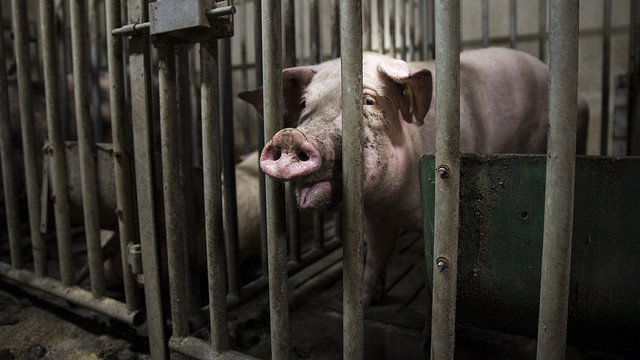
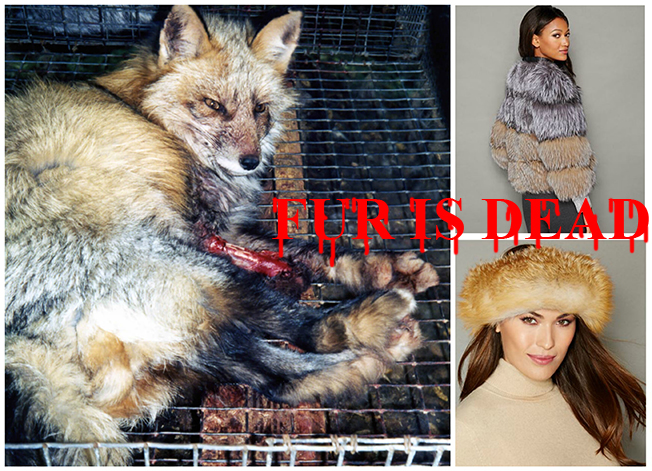
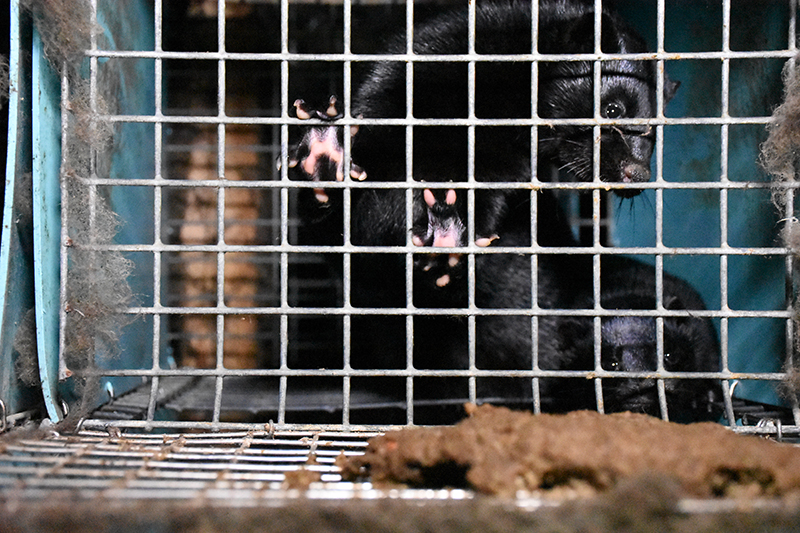
Animals on fur farms are deprived of food and water, confined to filthy cages, beaten, electrocuted, and gassed before they’re skinned and dismembered while still conscious and able to feel pain.
These cruel and cheap killing methods are used by fur farmers to cut costs—with little to no regard for the animals’ well-being.
This is what animals endure in the fur industry for clothing and accessories like those found at Macy’s, yet the company refuses to stop selling fur.
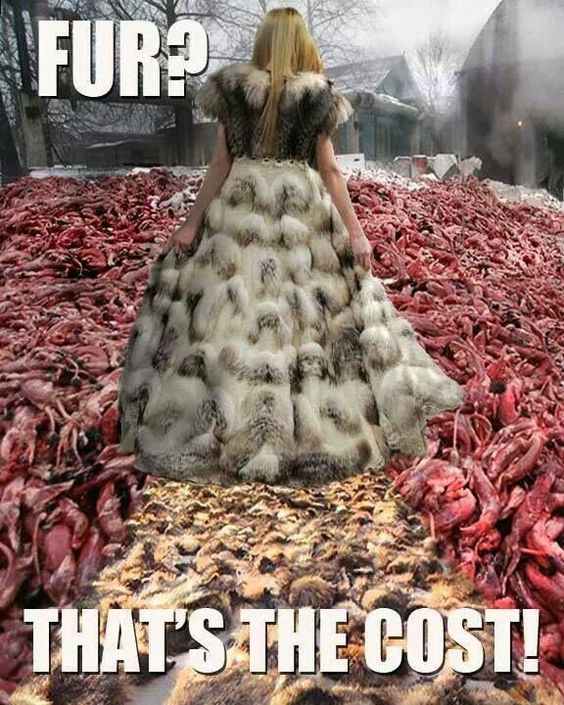
Whether it came from an animal on a fur farm or one who was trapped in the wild, every fur coat, trinket, and bit of trim caused a living, feeling being tremendous suffering—and took away a life.
With so many innovative and environmentally friendly vegan options available today, there’s no excuse to kill animals for clothing.
ACTION
Please urge Macy’s to legitimize its claims of being an operation of “integrity” by leaving abused animals out of its stores.
Addressed to: Head of Government of the CDMX José Ramón Amieva
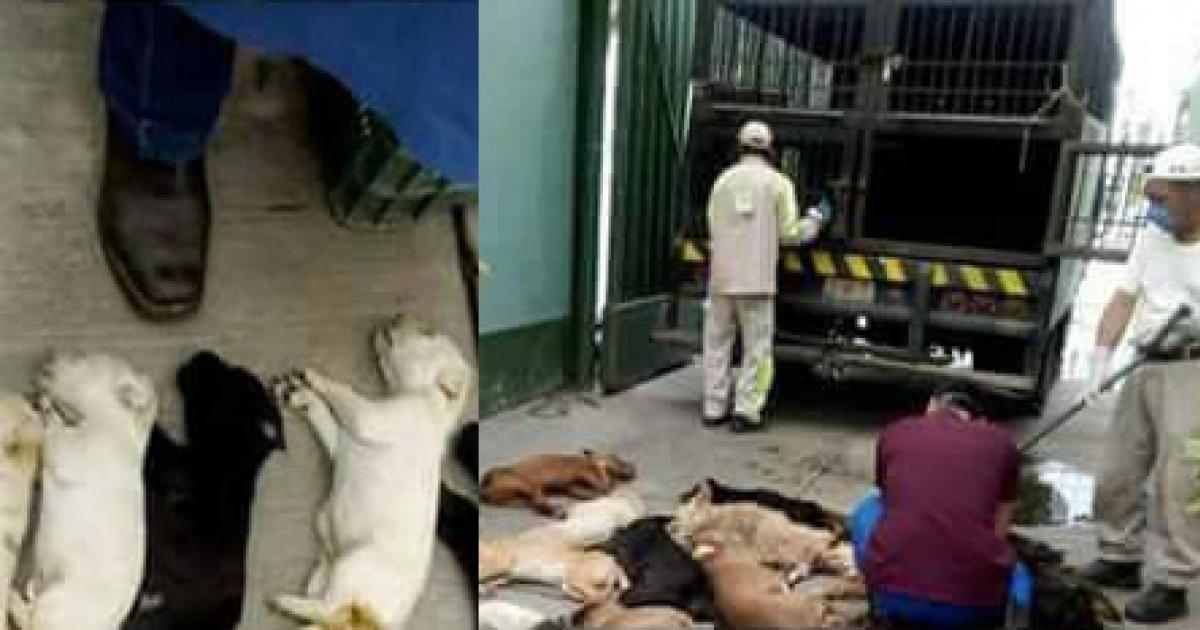
One month after the “electrocution of more than 250 puppies” by Laura Barajas Villegas, Director of Canine Control of Tláhuac and known as “The dog killer beast”, as well as the joint responsibility of Arturo Medina, Delegational Chief in Tláhuac. In the face of these brutal and inhumane acts, we demand the full application of the “Animal Protection and Welfare Law”, established in the Political Constitution of the CDMX and other applicable regulations, which punish with “Prison sentences between 8 months and 2 years and fines of 30,000 to 60,000 thousand pesos, to those who injure animals for cruelty and abuse.” That no official is above the Law!

















 Serbian Animals Voice (SAV)