Posted on June 6, 2018 by Serbian Animals Voice (SAV)
SAV Comment – we have been working with ‘Respect for Animals’ for months now regarding this issue. There are a great deal of lies given out by the Serbian Ministry over the amount of people that they think are employed in this business. We have all the facts and they have been given to Respect. The Serbians have had nearly ten years to do a phase out of the farming ready for the ban which was supposed to come in on 1st January 2019. Suddenly now after nine and a half years of the phase out, the Serbian Ministry is saying that it will attempt to overturn the projected ban coming into force next year. How typically Serbian government !! – we expected nothing more really, as this is what you get from a government of animal abusers. We have experienced this for over a decade.
Serbia: animal welfare organisations BANNED from ‘public’ sessions to consider keeping fur farms
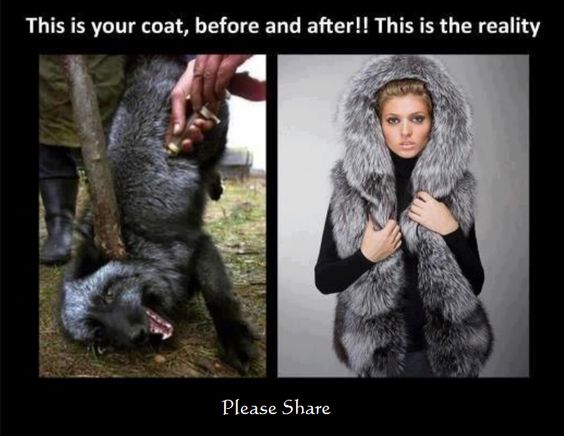
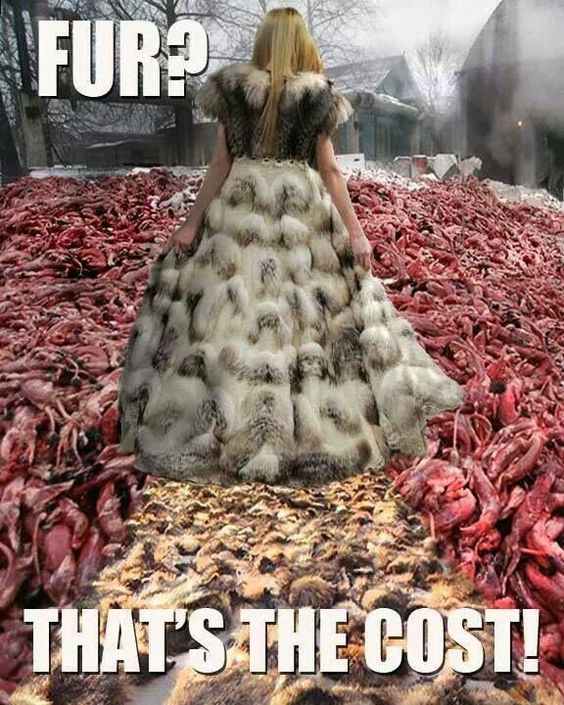
The fur industry has been lobbying the Serbian government ruthlessly, in a desperate attempt to keep the right to breed chinchillas in shocking fur farm conditions and avoid another embarrassing defeat. A public session has been arranged at the Serbian parliament on Tuesday 5 June to debate extending the proven cruelty of chinchilla fur factory farming. Shockingly, in an affront to the most basic principles of democracy, animal protection organisations has been prevented from attending the ‘public’ session.
Serbia has passed legislation banning fur farming which comes into effect in January 2019. The ban is now at severe risk.
Chinchillas are the only animals kept for fur in Serbia. The intense battery cage system used on fur farms deprives chinchillas from the opportunity to express their natural behaviour – such as running and jumping – and causes severe welfare problems. International studies have shown behavioral disorders, such as stereotypies, pelt-biting and infant mortality, are highly common on chinchilla fur farms.
The public session about the fur farming ban is scheduled just two days prior to the Make Fur History expo, that will take place in Belgrade on Thursday, June 7.
The exhibition – that was launched in the European Parliament on January 23 and is now touring Europe – invites lawmakers and stakeholders to discuss the negative impact of fur farming on animals, the environment and local communities and shows the urgency for more national bans. Respect for Animals will be attending the event as part of the campaign to end chinchilla suffering at the hands of the barbaric fur industry.
With a 10-year phase-out period, Serbian fur farmers have been given the opportunity to transition to a more economically stable and sustainable industry. With less than one year left before the transitional period runs out, any change to the previously agreed upon legislation would raise serious questions regarding the Serbian legislative process.
We have already written to Serbian politicians and a joint letter from the international Fur Free Alliance has been delivered to the Serbian parliament.
As part of the Fur Free Alliance, Respect for Animals urges the Serbian government to stay true to its legislative commitment to ban the farming of animals for their fur, and save sentient beings from a cruel life and death.
Posted on June 5, 2018 by Serbian Animals Voice (SAV)
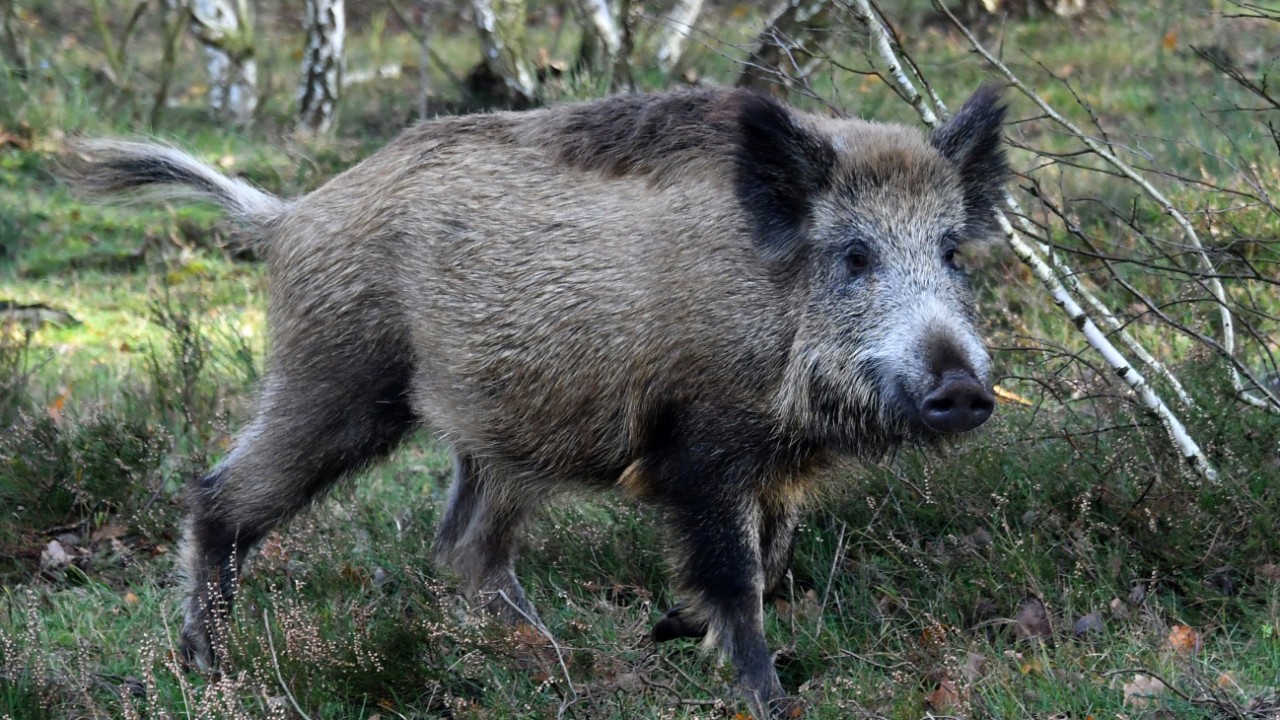
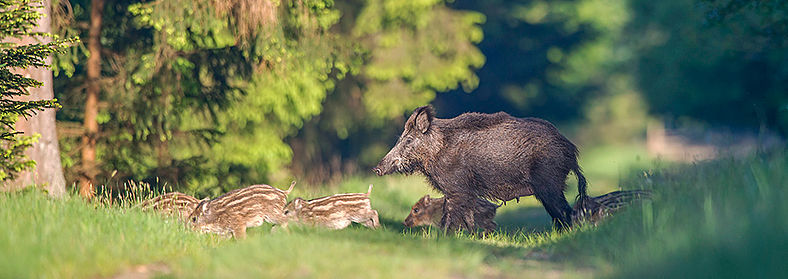
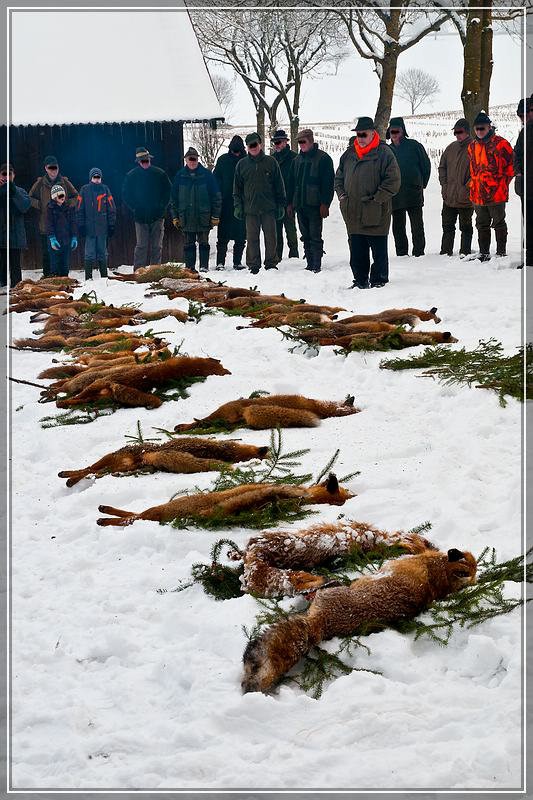
Hesse Environment Minister Mrs. Priska Hinz: “The higher the stock of wild boar, the faster the spread of the disease is possible. Therefore, it is still very important to keep the local wild boar density low throughout Germany, “said the Minister on May 26 at the State Hunters Day in Fulda, and cordially thanked the legal killers of the forest for done an unprecedented mass murder in the amount of 96,000 wild boars!
In the hunting season 2017/18, a record distance was achieved for wild boar: in Hesse, around 96,000 wild boars were killed, which represents an increase of around 30 percent over the previous year.
There are no more taboos on wild boar hunting for more than two decades, in Germany.
The number of “motor hunts” has increased in recent years. Forest owners, farmers’ associations and political leaders in the ministries are calling for intensive action against the alleged “pig pests”!
Germany – closed seasons are no longer respected and apply high premiums for killed pigs.
Yesterday, however, came an interesting message in the newspaper www.topagrar.com, which said:
“The Danish parliament has decided: The country wants to build a fence about 70 kilometers long against wild boars. He is to prevent wild boars from wandering from Schleswig-Holstein to Denmark. The fence is part of a package against African swine fever, which was agreed by the liberal-conservative minority government in Copenhagen and the supporting right-wing populist Danish People’s Party. Politicians fear, that migratory animals infected with the disease are threatening the billion-dollar pork industry in Denmark”.
A much better-informed guy about the african pest, Schleswig-Holstein’s Environment Minister Robert Habeck (Greens) criticized the Dane as a “politically difficult signal” … “So far, there were only cases of swine fever in Eastern Europe, in Germany is still no disease of a pig known”!!
Why then the mass murder of 96,000 living beings in his neighbor country Hesse?
Obviously, the one, the unsuspecting Mrs. Priska Hinz, did not know that not a single fattening pig in Germany leaves his concentration camps in his entire short life, and therefore does not come in contact with meadow and other wild pigss, and therefore the fattening pigs can not get the plague.
The other, the Mr. Robert Hack, regardless of the motives of his honesty, is annoyed by his neighbor’s improper “political deeds”, but forcibly forgets the senseless genocide from the gun of his Hesse neighbors to 96,000 creatures, which will go into the criminal history of hunters.
After all the crap that we read in the press every day, we come to the conclusion that even a pig pest proves to be an unfit competitor to the politician pest.
Parliamentary debates don’t lead directly to changes in law, but they can influence decision-making and raise the profile of a campaign.
In this case, the campaign reflects a larger movement that seems to keep gaining momentum. In the past year, major fashion brands like Gucci, Michael Kors, and Versace have said that they’re no longer using fur in their collections. Meanwhile, the city of San Francisco banned all sales of fur, and both Norway and the Czech Republic announced plans to end fur farming in their countries. In the UK, London’s popular Camden market banned sales of fur as of March.
Opponents of fur believe that farming and trapping is cruel and unethical. At the same time, technology has produced faux furs so good that even the fanciest of luxury brands, such as Tom Ford, see them as viable substitutes—giving rise to the argument that, at this point, using fur is simply outdated. “Do you think using furs today is still modern?” Gucci CEO Marco Bizzari said to Business of Fashion last year (paywall) when talking about thecompany’s decision to stop using fur. “I don’t think it’s still modern and that’s the reason why we decided not to do that.”
Not all shoppers agree. In China and other parts of Asia, sales of fur items, such as coats, remain strong. There are still plenty of buyers for fur in places like Europe and the US, too, especially when the fur is used as a trim. Canada Goose parkas, with their hoods edged in coyote fur, are a common sight in the colder parts of America. And not long before Gucci ditched fur, it had a sales hit with its kangaroo-fur-lined loafers. They were one of the items that proved the brand was back on the upswing after its new creative director, Alessandro Michele, took over in 2015.
The UK itself prohibited fur farming in 2000, but still allows fur imports, which is where the dispute before Parliament now lies. The petition that prompted the debate says imports are coming from countries that aren’t safeguarding animals.
Mike Moser, CEO of the British Fur Trade Association, called it “seriously flawed,” in a statement issued by the group. The petition “erroneously states that much of the fur imported into the UK comes from countries ‘that have very weak or no animal welfare laws at all’ as justification for a fur import ban,” he said. “In fact, all fur farms, wherever they are, must be licensed by authorities and independently inspected in order to operate.”
But critics of the fur industry point to investigations that keep turning up cases of animal abuse, despite regulations. Last week, 50 veterinarians and animal behaviorists sent a letter (pdf) to Michael Gove, the UK’s secretary of state for environment, food, and rural affairs, saying there are “severe animal welfare deficiencies inherent to the fur trade.”
They supported Humane Society International UK’s call for a ban on fur imports to Britain.
Posted on June 4, 2018 by Serbian Animals Voice (SAV)
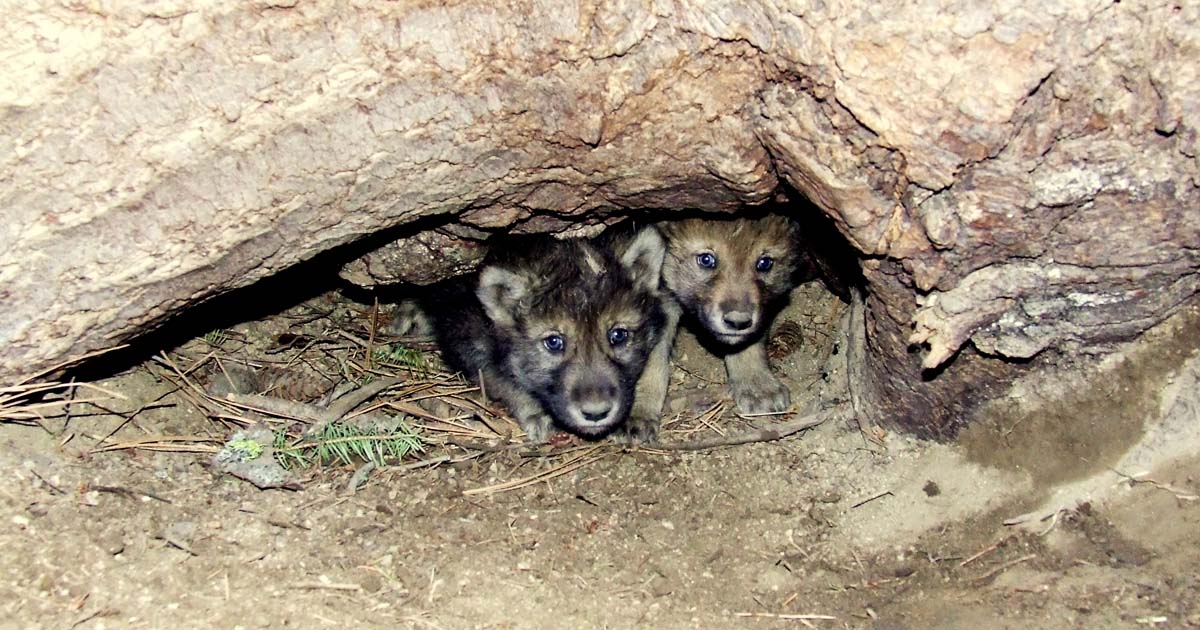
Grey wolf cubs – hiding from the idiot Trump
Dear Mark,
In an attempt to reverse yet another Obama regulation, the Trump administration has proposed to strike rules that forbid inhumane hunting methods on federal land in Alaska.
This proposal would allow bear and wolf families to be gunned down where they sleep.
Cruel hunting methods like bait, hounds and artificial lights would be used to target bears. And even swimming caribou could be shot by hunters chasing them in motorboats.
Please – Don’t Visit the UK
It’s all part of a new Trump policy to expand hunting on public lands and defer to states anytime there’s a conflict. But this is just cruel.
The iconic wildlife of Denali National Park and Preserve and other national park lands are public treasures. Officials need to hear that you value these animals in the wild and don’t want to see them killed by thrill-seeking trophy hunters.
Act now to demand that the National Park Service withdraw this heartless proposal.
Posted on June 3, 2018 by Serbian Animals Voice (SAV)
South Africa is the world’s leading producer of mohair.
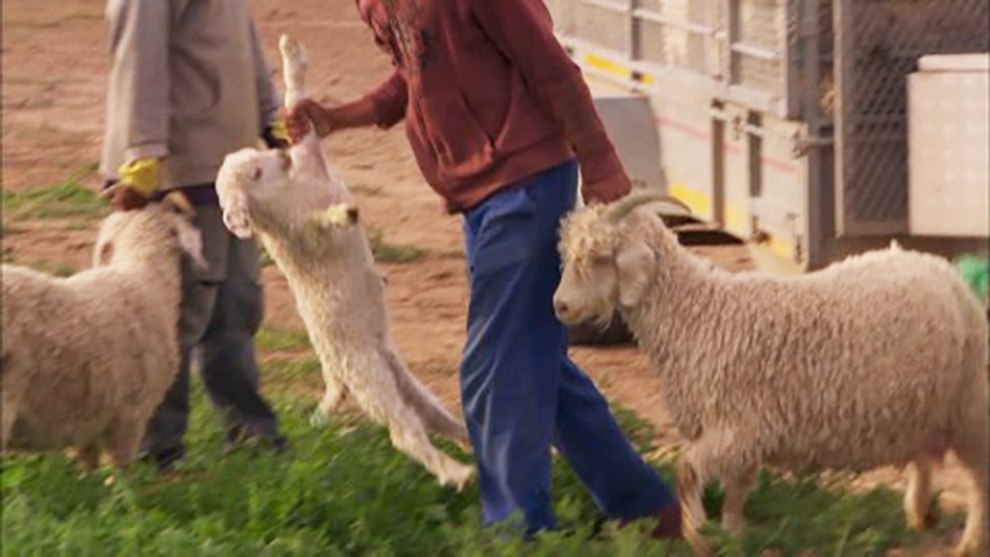
A shocking report by PETA Asia shows for the first time the full horror behind the scenes of the South African mohair industry. Workers dragged goats to and fro, threw them to the ground, mutilated them, and even cut the throat of the animals with full consciousness. Some yelled out loud. The groundbreaking footage shows only part of the abuse found on all 12 eyewitness-visited angora farms.
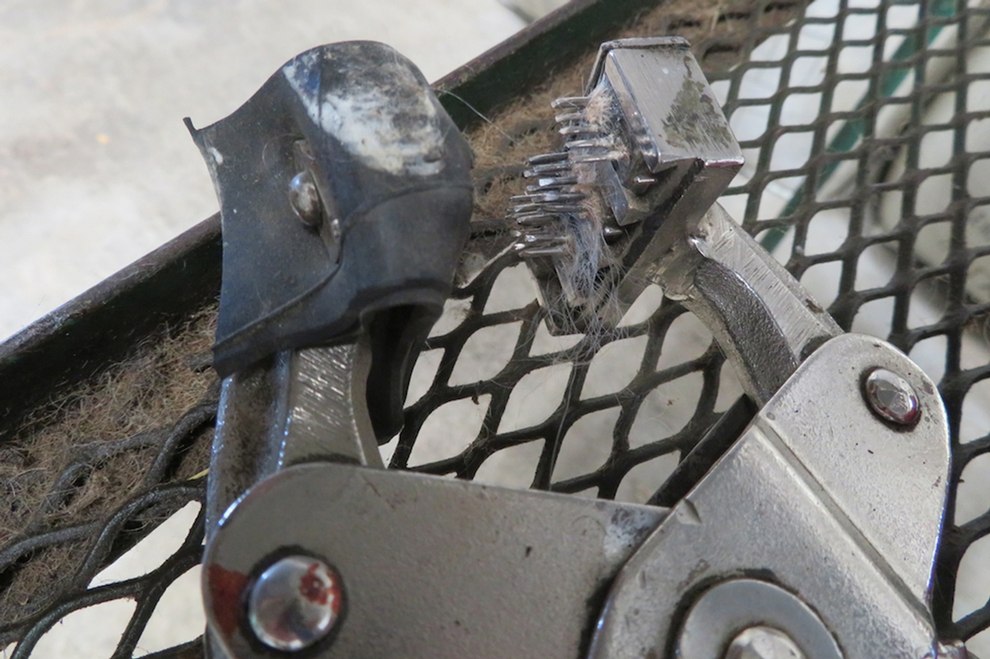
Systematic animal suffering Many goats were pierced with a pair of pliers sharp needles through the ears. The animals are in great pain. According to a farmer, the animals are supposed to scream terribly.
Another farmer said his goats “scream and roll around” when neutered without anesthetics. After all, it was “damn painful.” Another farmer explained, “We … cut … [the ear] just off” if there is any suspicion that it has cancer. A farmer cut a goat’s head – apparently without painkillers – with a knife. So, she wanted to drain the liquid from what she called an “abscess” !!!
Thousands of dead animals before and after the shearing One farmer said that in some farms, at least 25 percent of goats would die before the first shearing. The first shearing is usually done at six months.
The Shearing robs the goats of their natural cold protection. Farmers admitted that many goats freeze to death after the shearing, when it’s cold, windy and rainy. One man said that in South Africa, 40,000 goats died of hypothermia in just one weekend. Another said that on some farms up to 80 percent of goats would die after the shearing. Other goats succumbed to their injuries or died of dehydration because they got stuck in thorns during foraging in the pasture. The workers even shaved the wool from the rotting corpses!!!
Bathed in chemicals and pressed under water
The fur of some goats was smeared with feces. To clean the mohair before the shearing, a farmer dipped goats into pelvis with cleaning solution. He dipped their head under the water and admitted it poisoned the animals if they swallow the solution.
Clippers are paid per piece, not per hour.
This promotes rapid and therefore murderous work. The goats have cuts on them and often bleed on the face and ears. The clippers cut off whole pieces of skin and, according to a farmer, even teats. The animals did not receive any painkillers before the workers began to sew their wounds on the filthy soil.
Unprofitable goats died a painful death
The goats that survive the repeated scissors are exploited for five or six years because of their hair. About 90 percent of the South African Angora goats who lived so long are then sold for slaughter.Slaughter is often not in approved establishments, but privately. On a farm, a worker with goats fully consciously cut his throat with a blunt knife and then broke his neck. He immediately chopped off an animal’s head. Another animal was conscious for over a minute after the first cut and kicked.
Other goats end up in the slaughterhouse. In the battlefield the eyewitness visited, the goats received an electric shock and were hung upside down on one leg. Then they slit their throats, bleeding them, and skinned them.
Mohair is not a byproduct of the meat industry
The garment industry and individual companies state in part that the hair they sell, the skin and feathers are by-products of the meat industry. But Angora goats are only bred for their hair and many do not even reach the slaughterhouse.
What can we do?
We can best help the angora goats by not buying mohair! Always check the label in the store. Good check. If the word “mohair” is written on it, we leave the product on the shelf.
Posted on June 3, 2018 by Serbian Animals Voice (SAV)
SAV Comment:
A beautiful story from Harmony Fund. We got this story because we give money each month to Harmony – they help animals and people caring for them all over the world.
Please try to support Harmony with a monthly donation – your money will help animals welfare work the world over.
We love sharing good-news updates on how your donations are transforming lives, and today you’ve saved not only several dogs in Romania, but also the woman who cares for them.
In our last newsletter, we told you the story of this sweet Romanian woman named Mandache who became homeless a few years ago when the government took her home through eminent domain for industrial expansion.
Rather than wallow in her own suffering, Mandache summoned all her strength each day to find food for dogs who were also homeless. She would go through town, scavenging for scraps for the animals, despite her own declining health and battle with cancer.
Mandache asked us for help with adopting one particularly gentle dog whom she thought might be harmed by other street dogs when she left for a few days for the allotment of government funded cancer treatment.
Since that time, several of our supporters asked how they could help Mandache and we were able to find a small place for her to live. It’s a kitchen with a little bed to sleep on and a bathroom area. There is running water and heat and It is safe from bad weather and the dangers of the street. She can properly rest and heal in this space. But what has happened since Mandache moved in is nothing short of amazing.
Every morning, Mandache leaves her kitchen early to begin her rounds of street feeding. She has no intention of surrendering her mission to help street dogs, and it is an honor to help her. We’ve already rescued several of the dogs she was feeding and they’ve received full veterinary care and are up for adoption. When we showed Mandache photos of some of the dogs happily settled in at their new homes, she cried with joy and kissed each photo.
In this line of work, we often come upon people like Mandache who devote every ounce of their being to helping others. It is a true privilege to help her to continue in this work. The rent for her room is only $65 a month. Our own Debbie Evans sent her a wonderful gift of essential living supplies and we are providing food and medicines for the dogs on an ongoing basis and continuing a rolling rescue program there.
Posted on June 2, 2018 by Serbian Animals Voice (SAV)
It follows the letter of a hunter, in which he explains his reasons, why he has hung up “the gun on the nail”!
After 12 years I finally got up the courage to quit the hunting community. During this time, I could fully recognize the mentality of today’s hunter. I also had the opportunity to work with several hunting associations, so the remarks below do not apply to a small circle of hunters – in which I was a member – but I dare say that the hunter mentality is more or less the same everywhere is.
Why should not one become a hunter?
1.The claim that hunters are environmentalists or ecologists is ridiculous, as is the claim that hunters spend many volunteer hours in the hunting district for the benefit of wildlife, animals and the environment.
Everything the hunter does in the hunting district is directly or indirectly linked to hunting = “harvesting”, shooting or social gathering. By the way: The so-called environmental protection works consist largely of the construction or preservation of the hunters’ projects – which are where they are, anyway a disturbing element – or for food preparation, which is in most cases only a lure for the wild animals; the feeders for animals in the forest are surrounded by high seats (podiums in the forest, where hunters shoot at the animals while sitting). The various cleaning actions in the forest and the corridor are only sand in the eyes of the general public – and of course pure hunter propaganda.The hunters with their high seats, vehicles and their presence are the biggest natural pests among all earthlings!
2.Even more ridiculous is the assertion that the hunt, in the first place, cares for the wild animals and shooting is just one of their activities. The aim of the hunt is the execution or killing, possibly the most beautiful animals as a personal trophy – and nothing else.
3. Do not believe that hunting is a Samaritan service to sick, injured or distressed animals. For the situations in which the hunters could act as Samaritans, you do not need hunters (in Germany: about 360 000) with the shotgun, but only a few professionally trained people who have a right attitude to the animals.
I assert that no act of success in blood can be honorable-least of all hunting, where the animal as a victim is helpless and vulnerable to the hunter.
4. The hunter world is much worse than you can imagine. You will not become a true hunter with the completion of the course and the exam, BUT:
– If you only see the animal as a thing and then, when you have killed it, it brings prestige to other people, raises your self-esteem and causes envy of colleagues.
– If you are willing to neglect your family, work responsibilities and yourself because of the hunt.
– When slander, hypocrisy, and alcohol the only strength is for you, or at least not strange is to you.
– If the pain and agony of the animals do not touch you anymore.
Leaving the hunting society was a great relief for me, and I believe that there are many hunters who accidentally go into this “organization”: on the recommendation of friends – hunters, like me, for example – or family tradition.
If you are still a hunter, then consider it: If you want to be animal and nature lovers, as most hunters like to claim for themselves, then you can be it – but please without a gun!
My intention is not to convince the jaded hunters of their error. From experience, I know that this is hardly possible, because hunting is paramount in their lives – and I have often had an opportunity to see what these people in the green uniform are ready for.
I appeal to those who flirt with the “green” brotherhood. I assure you from my experience: If you doubt a little more whether the hunt is really the right thing for you, then you have no business in hunting. Because then you are – thank God – not brutal enough for the soulless hunters! “















 Serbian Animals Voice (SAV)