We are presently inundating you with information because COVID-19 has coincided with the new Agriculture Bill and we need you to call the alarm. To take a quote from our interviewee, Michael Greger; “In this new age of emerging diseases we now have billions of feathered and curly tail test tubes, for viruses to incubate and mutate within. Billion more spins at pandemic roulette. Maybe COVID-19 is the dry run we needed, the fire drill, to wake us up out of our complacency to reform the food system before it’s too late.”
We have interviewed several people from the scientific community who have spoken out about factory farming and the stress they inflict on animals and risk this poses to public health.
Author of Bird Flu: A Virus of Our Own Hatching and leading nutritionist, Dr Michael Greger accounts past pandemics and their roots in the industrialisation of livestock production. He advises “along with human culpability comes hope and, if changes in human behaviour can cause new plagues, maybe changes in human behaviour may prevent them in the future.”
Dr Lizzie Rowe, senior researcher at the Sustainable Food Trust, and a research associate at the University of Bristol tells us how poor welfare and squalid conditions in factory farms causes stress & disease in animals that have the potential to unleash viruses to human populations. She strongly believes that high welfare farming should not be a luxury, it should be an imperative.
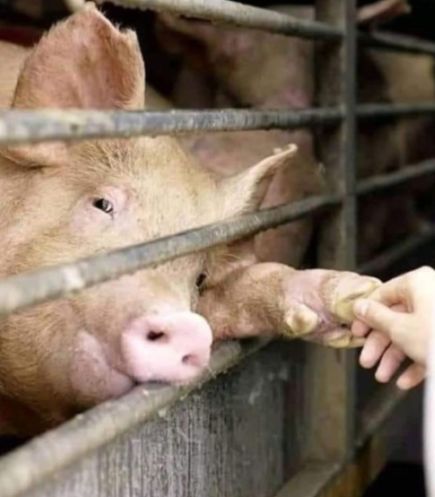
News of 3 coronavirus deaths linked to a meat packing plant in West Yorkshire is the first report of this catastrophe on English soil. It reminds us that giant meat plants are intrinsically volatile due to insufficient care of the largely immigrant workers, crammed together with inadequate PPE and poor assurance of pay if they want to stay home to self-isolate from the risk of COVID-19. In the US, due to the closure or slow down at giant meat plants, up to 10 million market hogs will be inhumanly euthanised between the weeks ending on 25 April and 19 September 2020, despite unprecedented demand at food banks. We should question the import of pork from this system, and the increasing industrialisation of our food system at home, in terms of both production, processing and retailing. A network of small scale farms, abattoirs,processing plants and markets is the most resilient way to feed the nation.
Therefore, we are bitterly disappointed with the news last week (13th May) that a majority of MP’s rejected amendments to the Agriculture Bill that would have enforced into law the protection of UK farmers from low welfare imports. To compete, UK farmers will have to join the downward spiral of ever lower animal welfare and worker health standards. The fascinating House of Commons debate shows the polarisation in both parties with short speeches from those MP’s that want to protect our farmers from cheap imports and those that chase damaging trade deals. Our hope lies in a majority in the House of Lords voting for the amendments. Look out for news next week of how to engage in this important bill as it moves through the House of Lords and then back for the 3rd reading in the House of Commons… In the meantime we can inform ourselves on the issue; let’s not drop the ball on this one, it could shape British farming for years to come.
Millions of US farm animals to be culled by suffocation, drowning and shooting
Closure of meat plants due to coronavirus means ‘depopulation’ of hens and pigs with methods experts say are inhumane, despite unprecedented demand at food banks
More than 10 million hens are estimated to have been culled due to Covid-19 related slaughterhouse shutdowns. The majority will have been smothered by a water-based foam, similar to fire-fighting foam, a method that animal welfare groups are calling “inhumane”.
The pork industry has warned that more than 10 million pigs could be culled by September for the same reason. The techniques used to cull pigs include gassing, shooting, anaesthetic overdose, or “blunt force trauma”.
In “constrained circumstances”, according to the American Veterinary Medical Association (AVMA), techniques [pdf] might also include a combination of shutting down pig barn ventilator systems with the addition of CO2 so the animals suffocate.
The ‘depopulation’ comes despite food banks across the US reporting unprecedented demand and widespread hunger during the pandemic, with six-mile-long queues for aid forming at some newly set up distribution centres.
The American meat supply chain has been hit hard by the closure of slaughterhouses, due to Covid-19 infection rates among workers. 30 to 40 plants have closed, which means that in the highly consolidated US system beef and pork slaughtering capacity has been cut by 25% and 40% respectively, according to the United Food and Commercial Workers (UFCW).
The closures have meant that animals cannot be killed for food and many must instead be culled, or “depopulated” at home.
More pigs to be ‘depopulated’
As it is comparatively easier to keep cattle on farms, cow culls do not appear to be an issue as yet, and the chicken cull may have peaked, said Adam Speck, an agribusiness analyst with IHS Markit.
“[Cattle] could stay on ranches another six months if necessary. The peak of the chicken cull has passed for now. North of about 10 million chickens were depopulated, either at the chick or egg stage,” Speck said.
At the hen stage, Leah Garcés, president of US welfare organisation Mercy for Animals, said it is hard to be sure of the numbers. But, “what we know with certainty is that 2 million meat chickens [and] 61,000 laying hens”, have been killed on farms.
Compared with poultry, said Garcés, stopping or slowing the production cycle of pigs is harder, mainly because pig growing periods are about six months compared to six weeks for hens. “Pregnancies had already been set in motion when the slaughterhouse closures occurred,” she said, and pigs were already in the system.
The National Pork Producers Council (NPPC) has estimated that: “up to 10,069,000 market hogs will need to be euthanised between the weeks ending on 25 April and 19 September 2020, resulting in a severe emotional and financial toll on hog farmers”.
For pig culls, AVMA “preferred methods” include injectable anaesthetic overdose, gassing, shooting with guns or bolts, electrocution and manual blunt force trauma. AVMA methods “permitted in constrained circumstances” include ventilator shutdown (VSD), potentially combined with carbon dioxide gassing, and sodium nitrite which would be ingested by pigs.
Speaking more graphically, Garcés said manual blunt force trauma can mean slamming piglets against the ground while VSD would “essentially cook the pigs alive”.
Asked to estimate numbers of pigs that have already been culled, Speck said producers are very reluctant to depopulate. “About two million might have been culled so far due to the Covid-19 pandemic, over the last six or so weeks.”
Speck added that with slaughterhouses likely to return to 85% capacity by the end of May, the NPPC’s depopulation estimate of 10 million pigs could be significantly reduced.
Speck said breeders are thinning herds and slowing growth to reduce pig supply. “They are sending breeding sows to slaughter, aborting pregnant sows on a small scale and [keeping market-bound pigs] on maintenance style rations with less protein. Coming into the summer months the pigs will also gain weight more slowly as the weather heats up.”
Methods are ‘inhumane’
Asked about growth slowdown, Garcés said it posed other welfare risks. “One method to slow down growth is to turn the heat up inside of the warehouses beyond the pigs ‘comfort zone’ because pigs eat less when they are too hot,” she said.
The combination of feed restrictions and higher barn temperatures, she said, mean pigs are “hungry and hot, increasing their overall discomfort, which is already high in a factory farm setting”.
In what appears to be an attempt by the industry to reduce any negative depopulation impact, a blog managed by the National Pork Board called Real Pig Farming offers social media sharing tips for farmers. The blog suggests farmers: “Think twice before engaging with posts that show what may be happening on farms right now.”
It said: “Most people do not understand the complexity of raising pigs and getting pork from the farm to their table. That means, “[a] good rule of thumb is to speak to a level a third grader [eight to 10 years old] would understand to ensure that things are not taken out of context.”
NPPC spokesperson Jim Monroe said that as of the week ending on 15 May, less than 25% of overall slaughter capacity was idled and the situation was improving. Monroe, added that the “tragic need to euthanise animals is to prevent animal suffering.”
For poultry, culling options are no easier. Filling sheds with carbon dioxide gas is one method, said Kim Sturla, director of welfare organisation Animal Place. Another cull method, she said, is to smother hens with water-based foam, similar to firefighting foam. Water-based foaming is categorised as the “preferred” method by the AVMA.
Previously asked about water-based foaming and other cull methods such VSD, an AVMA spokesperson said depopulation decisions were difficult and “and contingent upon several factors, such as the species and number of animals involved, available means of animal restraint, safety of personnel, and other considerations such as availability of equipment, agents and personnel”.
European campaigners said firefighting foam causes prolonged suffering. Although risks of similar livestock culls appear low in Europe so far, welfare group, Compassion in World Farming advised using foam that contains nitrogen gas because death is faster.
A 2019 European Food Safety Authority journal report said it did not find water-based or firefighting foam acceptable because “death due to drowning in fluids or suffocation by occlusion of the airways” is not seen as “a humane method for killing animals, including poultry”.
Posted on May 22, 2020 by Serbian Animals Voice (SAV)
In a few weeks, Little Grey and Little White; 2 ex performing Beluga whales; will be released into their new forever sanctuary home in Icelandic waters. At last, free from performing stupid tricks for stupid humans.
Posted on May 21, 2020 by Serbian Animals Voice (SAV)
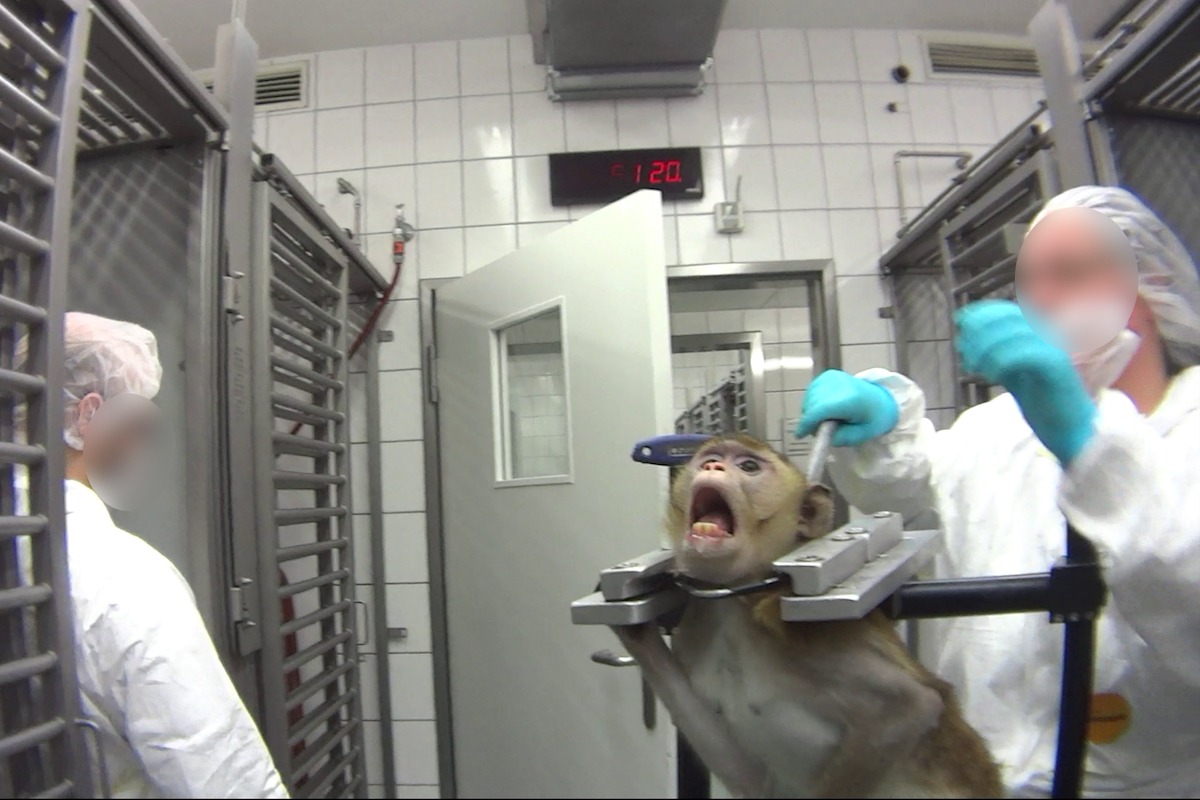
Four months of undercover research by the SOKO association and a short, powerful campaign, supported by the power of the images, brought a historical change.
The laboratory is now history, the authorities have withdrawn their operating license, and most of the animals were saved.
Almost 50 years of fighting were going on against LPT, it seemed hopeless to close it, and furthermore the laboratory was expanded, e.g. in primate husbandry.
Former LPT employees accuse the Hamburg-based company of falsifying studies and torturing animals.
Thanks to the “SOKO animal protection” as well as a large demonstration and increasing pressure, the laboratory is now closed!
Perhaps we should erect a memorial in front of the Hamburg laboratory in the name of the victims, like this one in Munich in Dachau, to remind us where millions of beings have lost their lives under fascism.
A very nice contribution by the Austrian philosopher and animal ethicist, Helmut. F. Kaplanon the subject:
“Animal testing is wrong regardless of whether it is useful for humans. The legitimate question is not: “What is the maximum amount of health we can produce?” But: “How much health can we generate in an ethically acceptable way?”
The – real or perceived – usefulness of animal testing is not an ethical argument at all: there are many things that would be useful but are still immoral and prohibited, for example human testing.
The only reason why animal experiments have not been frowned upon and banned for a long time is simply because animals cannot defend themselves. They are helpless delivered to us.
But of course this is not a moral justification, just a cynical exercise of power.
Animal experiments are and remain crimes against defenseless beings” (Helmut Kaplan, Animal ethicist)
The day has finally arrived: the Farm-to-Fork and Biodiversity to 2030 strategies of the European Union’s Green Deal have been adopted. Both contain positive points that suggest the Commission is ready to take action for animals – but will these strategies deliver the concrete changes the EU needs to move away from intensive farming and the exploitation of wild animals and their habitats?
Last week, an open letter from Eurogroup for Animals and its member organisations asked the European Commission to take our recommendations for both strategies on board, and our members also mobilised to drum up support at national level as part of our “Stop Pandemics – Start Here” campaign.
Indeed, during the preparation of the strategies, the COVID-19 pandemic offered a particularly timely reminder that devastating results can come out of the way we trade, farm and keep animals. Wild and domestic animals have carried viruses and bacteria for millennia, but what has changed is the way we humans interact with them. The legal and illegal wildlife trade, urbanisation and the destruction of wildlife’s natural habitats for agricultural purposes, especially for the intensification of animal farming, are combining to push humans, wildlife and other animals closer than ever before – and heightening the risk of pandemics like the one we’re suffering now.
With the presentation of the finalised texts today, it seems that the Commission has indeed taken most of this to heart.
The Biodiversity to 2030 Strategy takes many of our recommendations on board, committing to keep existing environmental policies strong and stimulating the enforcement of the Birds and Habitats Directives, with ambitious goals for protecting European species. It also makes a commitment to legally protect a minimum of 30% each of the EU’s land and sea areas, and says that at least 25% of the EU’s agricultural land must be organically farmed by 2030.
The Commission will propose a further tightening of the rules of EU ivory trade in 2020, and by 2021, it will revise the Action Plan against wildlife trafficking to step up efforts to combat the illegal wildlife trade. It states that the EU will enhance its support to global efforts aimed at applying the ‘One Health’ approach, by promoting better protection of natural ecosystems coupled with efforts to reduce wildlife trade and consumption, to improve resilience to possible future diseases and pandemics.
However, to ensure that the strategy is implemented effectively, the Commission should also regulate the legal wildlife trade, which impacts global biodiversity and animal welfare, and poses health risks to EU citizens. An EU-wide ‘Positive List’ for exotic pets, specifying which animal species are suitable and safe to be kept as pets, would offer a much-needed precautionary approach, given the continuous shifts in species and numbers of animals in trade, and would be coherent with the ‘Do No Harm’ principle promoted in the strategy.
“The document is ambitious,” says Reineke Hameleers, CEO of Eurogroup for Animals. “However, we will be pushing for implementing actions to regulate the exotic pet trade to protect EU consumers, animal welfare and biodiversity. Going by the strategy’s acknowledgment of the ‘Do No Harm’ principle and the fact that any product on the market should comply with EU and international commitments, we hope they’ll be open to the idea. We also urgently need a full ban on the ivory trade, stricter regulation of the legal trade in wildlife, and a EU-wide Positive List.”
As for the Farm-to-Fork Strategy, happily the Commission makes it clear that animal welfare legislation will be revised and broadened, and the revision will have to provide higher welfare standards than existing ones. This is an opportunity for all existing animal welfare laws to be revised, particularly the Transport and Slaughter regulations, but also others such as the Broiler and Pig Directives. This also opens the opportunity to deliver on the recent ECI “End The Cage Age”, calling for an end to the use of cages in livestock systems, and to include specific animal welfare provisions for species such as cattle. As the strategy makes the link between legislative change for animal welfare and the aquaculture sector, this is the opportunity to introduce the first species-specific provisions for farmed fish, too.
However, in other respects the strategy is less ambitious. While the Commission accepts that moving to more plant-based diets and less meat consumption is good for health and the environment alike, earlier versions of the strategy proposed an end to promotional measures for meat. The finalised text now says only that the Commission will undertake a review of EU promotional support for agrifood products with a view to enhancing its “contribution to sustainable production and consumption”. We expect this review to lead to a transparent conclusion that meat should not be promoted, and we regret that the language has become so weak in the final version.
The strategy announces the creation of a framework for a sustainable food system, but remarkably a reflection on the role of the intensive livestock industry in the spread of zoonotic diseases is missing. Eurogroup for Animals believes the new framework law should lead to a profound system change including a phase-out of intensive animal farming practices. Although the strategy commits to considering options for animal welfare labelling, there is no mention of method-of-production labelling, which would provide an objective and harmonised framework to support the transition towards higher welfare and sustainable livestock systems.
The strategy also recognises the detrimental impact imported products can have on the environment in producing countries, calling to avoid the externalising or export of unsustainable practices. The call for EU trade policy to contribute to enhancing cooperation, and particularly to obtaining commitments from third countries on animal welfare, is very welcome.
“This document is historical in so many ways, opening the door to a potential better world for farm animals in the EU and other parts of the globe. It shows the Commission’s willingness to strengthen animal welfare legislation after years of stagnancy, and that they’re listening to the voices of millions of EU citizens,” says Reineke Hameleers. “Nevertheless, we need systemic change and that needs a lot of determination, as well as resources. The Commission’s plan for a sustainable food system is laudable, but will they also provide additional support to farmers in the transition towards higher animal welfare systems and regenerative agriculture?”
Both strategies recognise that the wildlife trade and intensive farming together add up to more than the sum of their parts, and not just where zoonoses such as COVID-19 are concerned. The Biodiversity to 2030 Strategy states several times that it will work in tandem with the new Farm-to-Fork Strategy and the revised Common Agricultural Policy, and that the Commission will ensure that the CAP’s strategic plans lead to the use of sustainable practices such as organic farming, agro-ecology, and stricter animal welfare standards. Similarly, the Farm-to-Fork Strategy asserts that “the Commission will ensure the implementation of this strategy in close coherence with the other elements of the Green Deal, particularly the Biodiversity strategy”.
The finalised strategies will now be rolled out, with the European Parliament adopting a resolution on the content later this year. At Eurogroup for Animals, our next opportunity will be to influence the European Parliament’s response to the two strategies, so our members will start to mobilise citizens in the days ahead to contact their MEPs and make their voices – and our recommendations – heard.






 Serbian Animals Voice (SAV)