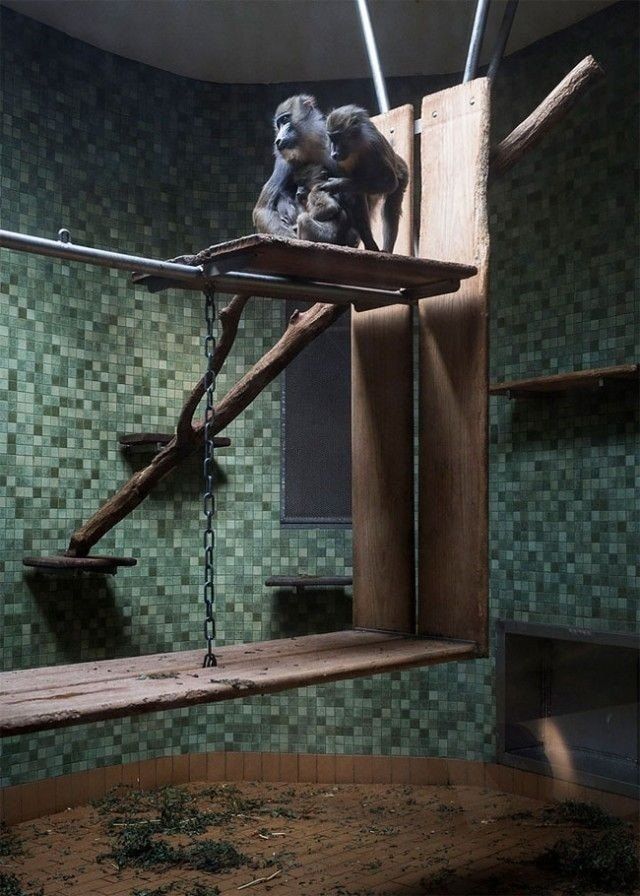
My comment: Even under the best of circumstances at the best of zoos, captivity cannot begin to replicate wild animals’ habitats.
Animals are often prevented from doing most of the things that are natural and important to them, like running, roaming, flying, climbing, foraging, choosing a partner, and being with others of their own kind.
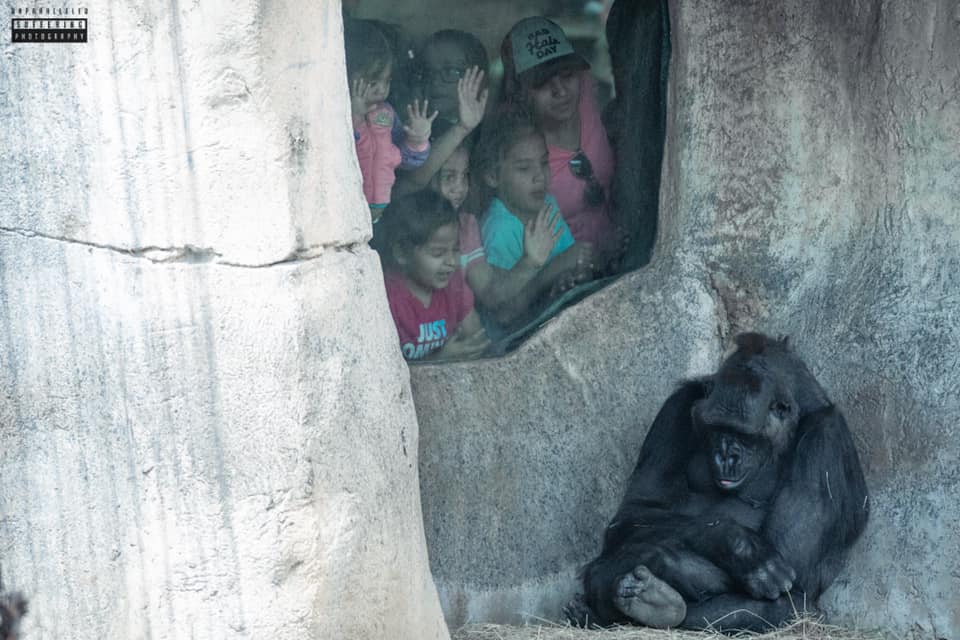
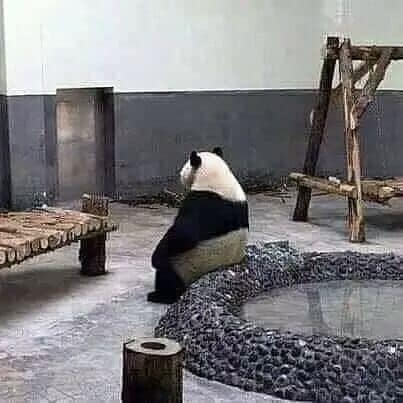
Zoos teach people that it is acceptable to interfere with animals and keep them locked up in captivity, where they are bored, cramped, lonely, deprived of all control over their lives, and far from their natural homes.
Zoos often kill the animals when there are “too many” of a particular species.
There are hundreds of cases where animals are starved to near death. Zoo animals are treated like prisoners.
Zoo use animals to make some money out of it.
It is an ugly lie to tell people zoos are educational for the kids or any age person.
We can learn everything about any animal online, we can watch videos, read articles, books and so.
Just like we all know much about dinosaurs even if we never seen them in real. There is no need to make animals suffer in the name of education or any other reason.
The best education is to teach your kids never to visit a zoo.
Posted on May 19, 2020 by Serbian Animals Voice (SAV)
The EU Commission with its 27 members (after Brexit) is a supranational body and has the executive’s tasks in the political system.
In other words: it is the “police” of the EU area.
It is called the “guardian of the treaties” and makes sure that all EU countries abide by the law.
As soon as a violation in animal transport is sufficiently proven (and there are not only sufficient videos of it, but also shocking), it can turn the EU Court of Justice against a member state.
One thing has to be said about this: the members of the EU Commission are not elected by the EU citizens, but by the EU Parliament.
The same applies to the head of the EU Commission, Ursula von der Leyen.
Of course, the majority of the EU Parliament is necessary for the EU Commission election (members and presidents), but if we take into account that EU is = Germany, we know who is voting for whom!
The EU tolerates constant breaches of contract, and one of them is their shameless inaction against the video-documented manure stands during animal transport.
We, the complainants (Fairbrother, Kemp, others) welcome the decision made by the Advertising Regulatory Board (ARB) Appeal Committee regarding the ruling Fair Cape Dairies vs Kemp, Fairbrother, others on 30 April 2020.
22.1 The use of the phrases/words “#HappyCows” and “humane” by Fair
Cape in its advertising is in breach of clause 4.1 and 4.2.1 of the Code [of Advertising Practice].
22.2 Fair Cape is instructed to withdraw the phrases/words “#HappyCows” and “humane” from its advertising in accordance with clause 15.3 and 15.5 of the Procedural Guide.
We are in agreement with the statement by the ARB Appeal Committee that
”In our view, humane treatment means more than freedom from violence, pain and disease; it means treatment characterised by tenderness, compassion, and sympathy. It does not include many of the practices complained of, such as the forced impregnation of cows, the forced separation of calves from their mothers immediately after birth, and the slaughter of male calves thereafter.
It follows then, in our view, that the cows cannot be described as happy, or as humanely treated.”
We would like to thank the Advertising Regulator Board for their commitment to fairness and transparency during the course of our complaint and appeal. We also applaud their commitment to responsible and honest advertising. In addition, we would like to thank Animal Law Reform South Africa for their assistance with this matter, including the provision of research, compilation of information and points of issue and review of the Code and documents submitted.
Consumers care about their food choices and many care deeply about animals. For these reasons consumers are increasingly demanding transparency from these industries. To meet these demands it is unfortunate that green-washing and humane-washing advertising techniques are extremely common and heavily on the increase. These advertising techniques are designed to purposely manipulate and exploit the good faith of well meaning consumers.
Fair Cape Dairies has a history of misleading consumers with so-called ‘free-range’ claims and their use of the terms ‘humane’ and ‘#happycows’ in their advertising is no exception. Fair Cape Dairies do not only directly misinform consumers, but they actively conceal many of their practices while creating an illusion of transparency.
Unfortunately, the majority of people in South Africa are not aware of the many horrific standard practices in the dairy industry. The dairy industry thrives in obfuscation. They have an interest in omitting and obscuring the facts about dairy, and it is done through ‘omission and silence and in the presentation of an incomplete and idealised picture’ (¹).
We encourage all those who value truth and justice and who abhor cruelty to animals to investigate the dairy industry and to inform yourselves. This cruelty is not an anomaly, but is standard practice inherent in the industry. To be informed, is to be empowered. When we are informed we can make consumer choices that are authentic and genuinely in line with our values.
We believe we have extensively covered many of these standard practices in our appeal (Section d. Facts and Research). In our appeal we also address many of the claims made by Fair Cape Dairies, we provide multiple facts on the dairy industry, and we provide information on consumer awareness of dairy practices in in South Africa.
While our original complaint was dismissed by the ARB, we felt confident that the ruling had grounds to be challenged and we subsequently submitted an appeal. Our complaint then found itself in front of the ARB Appeals Committee which ruled in our favour.
In our commitment to transparency we have provided all documents relating to the initial complaint, appeal, supporting documents and final rulings, ordered by date below.
Take PETA’s Cruelty-Free Shopping Guide along with you next time you head to the store! The handy guide will help you find humane products at a glance. Order a FREE copyHERE
Searching for Cruelty-Free Cosmetics, Personal-Care Products, Vegan Products, or more? Click HERE to search.
Want to do more than go vegan? Help others to do so! Click below for nominal, or no, fees to vegan literature that you can use to convince others that veganism is the only compassionate route to being an animal friend:
Posted on May 18, 2020 by Serbian Animals Voice (SAV)
German federal states further limit live animal transport
18 May 2020
Four Paws
News
Four Paws announced that Lower Saxony and Saxony will no longer approve live animal transports to and through the Russian Federation, while Lower Saxony will also prohibit transports to North Africa, particularly to Algeria and Morocco.
Part of the joint call for a national ban and an EU-wide ban on the export of live animals to third countries, it is a success to see two German federal states expanding the list of those countries.
This is due to animal welfare violations since, according to official information, there are no supply stations for the animals in the Russian Federation. Federal states Hesse and Bavaria have included Russia in their list of banned third countries last year.
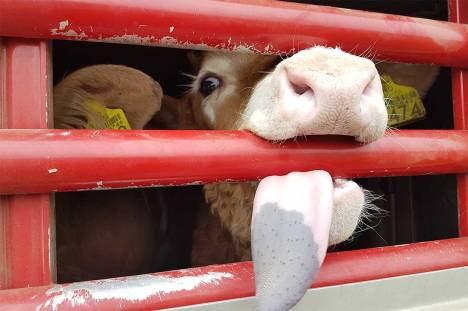
We welcome this decision, but there should a nationwide ban in place. The cattle is still being transported to the high-risk countries concerned via other federal states. It is obvious that the animals are exposed to the worst agonies and an unimaginable torture during transport and also at the destination. In Lebanon, Algeria, Libya, Morocco and Iran, among others, the animals are killed under the cruelest conditions.
Rüdiger Jürgensen, Managing Director FOUR PAWS Germany
The post ‘German federal states further limit live animal transport’ is modified from an article published by Four Paws in their original language.
Posted on May 18, 2020 by Serbian Animals Voice (SAV)
We don’t want another strategy. We want meaningful change for animals
9 April 2020
EurogroupforAnimals
News
The European Commission has called on citizens and organisations to take part in an online consultation to gather information and views on the EU Animal Welfare Strategy 2012-2015.
The consultation goes hand-in-hand with the Commission’s evaluation on the strategy, which will assess the extent to which it delivered on its objectives, and whether they are relevant and consistent today. It will also look at efficiency and whether the strategy usefully complements national efforts in this field. This has to be done before any new actions are brought forward.
This evaluation of the Animal Welfare Strategy will inform the actions that come after, so it’s vital that the animal movement contributes its opinion to the consultation with a unified voice, even though we may want to stress different aspects of policy or different priorities.
However, we can all agree on some things. The Animal Welfare Strategy resulted in no demonstrable overall improvement for the welfare of animals. Instead of meaningful progress for animals on the ground, we are left with no ‘foundation’ on which to build, and eight years have passed by in the meantime.
The strategy should serve as a lesson: strategies in themselves don’t lead to anything. We need actions, not words, and we hope that this new Commission will deliver real improvements to the lives of animals through the revision of existing legislation as well as the introduction of new law to adequately protect all species.
To help you formulate your responses, Eurogroup for Animals has put together somedetailed information to help us all come across with a unified voice and call for legislative changes instead of a new strategy.
We trust that the Commission’s evaluation – and the accompanying consultation – will lead to concrete actions focused on the improvement of existing legislation, as well as the introduction of new laws to adequately protect other species.





 Serbian Animals Voice (SAV)
 Serbian Animals Voice (SAV)