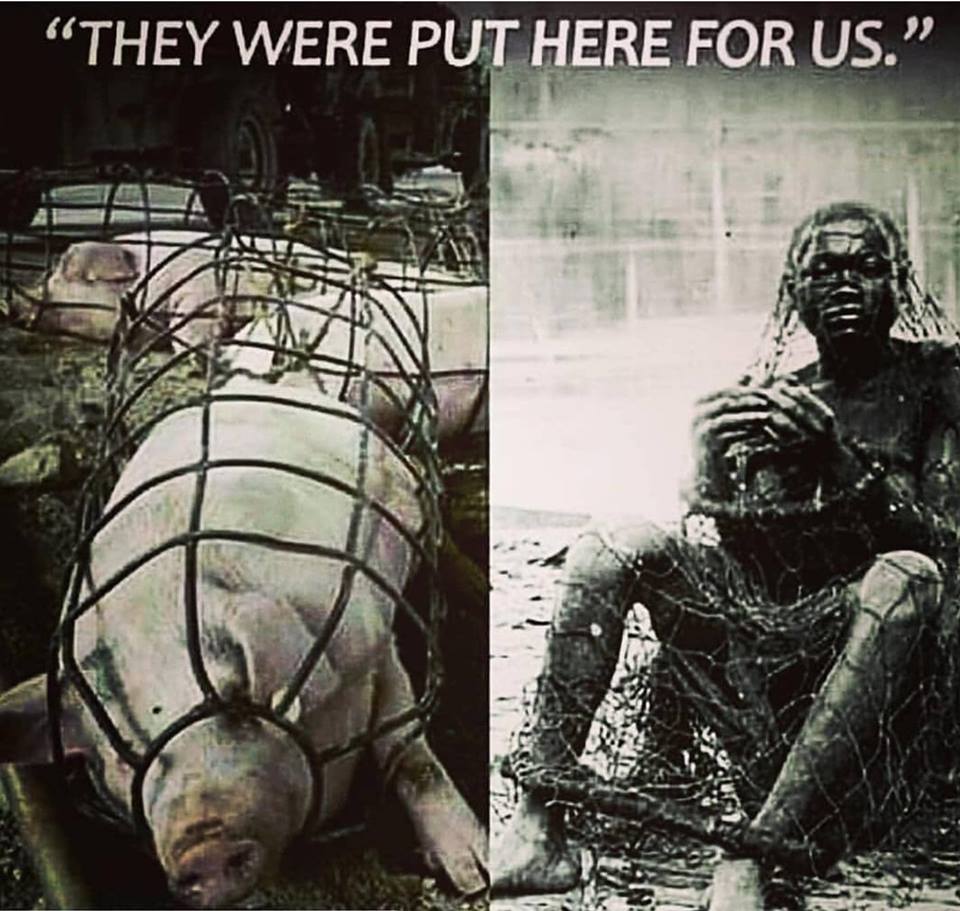
Now France Slaughters Its Mink.

Staying on the disgusting issue of the fur trade:


Now France slaughters its mink: Up to 1,000 animals are culled at farm in western France after Covid positive test after cases in Denmark, Sweden, Greece and the Netherlands

  • Mink infected with coronavirus been found in France and are set to be culled
  • One thousand mink will be slaughtered after tests identified the virus at a farm
  • Officials locked down swathes of northern Denmark where variant originated.

Mink infected with coronavirus have been found in France and are set to be culled after the virus was detected at a farm in the western part of the country.  

One thousand mink will be slaughtered after tests identified the virus at a farm in the Eure-et-Loire region of western France after the country started testing its four mink farms in mid-November.

It comes after officials locked down swathes of northern Denmark where a new Covid-19 variant originated and ordered the culling of 17million mink earlier this month in a bid to stomp out the strain before it became widespread. 

Cases in mink have also been reported elsewhere in Europe, notably in Sweden, Greece and the Netherlands.

A French Ministry spokesman said: ‘At this stage, tests have shown the virus circulating in an Eure-et-Loire farm.

‘A second farm is unscathed. Tests are still under way in the last two farms, with results expected during the week.’  

The new Covid-19 variant — called Cluster 5 — caused global panic after it was found to be resistant to antibodies, substances made by the body to fight off infections. 

It was feared Cluster 5 would be able to slip past promising new Covid-19 vaccines, which work by stimulating an antibody response. 

Officials locked down swathes of northern Denmark where the strain originated and ordered the culling of 17million mink earlier this month in a bid to stomp out the variant before it became widespread.

In a statement today, the country’s health ministry said there had been ‘no new cases of Cluster 5 since September 15’ which led it to conclude it ‘has most likely been eradicated’.  

Scientists believe the mutant virus jumped from fur farm workers to mink in the summer before it was passed back to humans.  As it crossed between species, a mutation occurred on its ‘spike’ protein, which it uses to enter human cells. It was significant because the leading vaccine candidates work by targeting this protein. 

When news about the new strain broke earlier this month, Britain banned non-British citizens returning from Denmark and introduced strict quarantine rules for any Brit who’d recently returned from the country.

At the time, UK Health Secretary Matt Hancock warned the mutated could have ‘grave consequences’ if it became widespread.    

The Danish health ministry said in a statement on Thursday : ‘There have been no new cases of the Cluster 5 mink mutation since September 15, which has led to the Danish infectious disease authority SSI to conclude that this variant has most likely been eradicated.’ 

The Government said most of the strict lockdown rules imposed on November 5 on seven municipalities in North Jutland would be lifted on Friday. They had originally been due to stay in place until December 3.  

Cluster 5 has only been found in 13 people living in the region, which is home to 280,000 people. 

All minks in the seven municipalities have been culled, totalling 10.2 million, and the slaughter is still ongoing in other parts of the country.

With three times more minks than people, the Scandinavian country is the world’s biggest exporter, selling pelts for around £596million ($792m) annually, and the second-biggest producer behind China. 

Farmers living in regions of Denmark not affected by the mutated strain of Covid-19 are still allowed to sell mink fur — but must still kill all their livestock this month.  

Five different strains of mutant mink coronavirus have been spotted in 214 people in Denmark since June. 

Analysis by Denmark’s State Serum Institute revealed only Cluster 5 was less sensitive to antibodies. 

Antibodies are disease-fighting proteins made and stored by the immune system to fight off invaders in the future by latching onto their spike proteins. 

But if they are unable to recognise proteins because they have mutated, it means the body may struggle to attack a virus the second time and lead to a second infection. 

It raised fears the new strain could be harder to treat or vaccinate against.  

It is not uncommon for viruses to be able to jump between humans and other animals – which was also the case for H5N1, or bird flu, and H1N1, swine flu.

The sole purpose of any virus is to replicate as many times as possible. So when a virus jumps from one species to another it naturally mutates to adapt to a new host. 

With Covid-19, tiny changes in its DNA occurred when it was passed to mink. It means that when the virus was passed back to humans its biology was different, so it may behave differently to other strains while inside humans.

It is not uncommon for viruses to be able to jump between humans and other animals – which was also the case for H5N1, or bird flu, and H1N1, swine flu.

The sole purpose of any virus is to replicate as many times as possible. So when a virus jumps from one species to another it naturally mutates to adapt to a new host. 

With Covid-19, tiny changes in its DNA occurred when it was passed to mink. It means that when the virus was passed back to humans its biology was different, so it may behave differently to other strains while inside humans.

Now France slaughters its mink: Up to 1,000 animals are culled at farm in western France | Daily Mail Online

It’s not just mink: Foxes and raccoon dogs on fur farms ‘may infect humans with coronaviruses’, scientists warn.


It’s not just mink: Foxes and raccoon dogs on fur farms ‘may infect humans with coronaviruses’, scientists warn | The Independent

It’s not just mink: Foxes and raccoon dogs on fur farms ‘may infect humans with coronaviruses’, scientists warn

Exclusive: The whole industry has the potential to act as a virus factory, say animal-welfare activists

Other animals reared for their fur – such as foxes and raccoon dogs – can catch coronaviruses and pass it to humans, scientists have warned, after millions of mink across Europe were culled over fears they could spread Covid-19.

The World Organisation for Animal Health has advised countries to monitor for infection “susceptible animals, such as mink and racoon dogs”, as well as humans in close contact with them.

scientific paper this summer warned that raccoon dogs “are susceptible to and efficiently transmit” Covid-19 and “may serve as intermediate host” for it – meaning they may transmit Covid-19 to people.

It prompted animal-protection lobbyists to claim “all fur farming has the potential to act as a virus factory”.

A scientific paper in 2004 reported that foxes in a wildlife market in Guanzhou, China, were found to have been infected with Sars-CoV, which causes Sars, another type of coronavirus.

Coronavirus fears as China plans to entrench mink and fox fur industry

It’s estimated that more than 32 million foxes and raccoon dogs are held in fur farms around the world, their pelts mostly destined for markets in Asia.

An outbreak of coronavirus in mink in Denmark earlier this month prompted the country to begin a cull of all 17 million of the animals on its fur farms. Some were suffering a mutated form of the virus, which infected more than 200 people.

Governments in four other countries – Spain, Greece, the Netherlands and Ireland – have also issued orders or advice to cull their farmed mink populations.

Experts are worried that the new human coronavirus vaccines may not be effective against mutated strains.

The British Fur Trade Association insists that species other than mink, “such as fox and wild fur” are not affected by the virus. It says fur farms worldwide have put in place extensive biosecurity measures after the mink outbreaks.

But the paper by 17 scientists stated that raccoon dogs “were suspected as potential intermediate host for both SARS-CoV6 and SARS-CoV2”. The authors wrote: “Rapid, high-level virus shedding, in combination with minor clinical signs and pathohistological changes… highlight the role of raccoon dogs as a potential intermediate host.  

“The results are highly relevant for control strategies and emphasise the risk that raccoon dogs may represent a potential SARS-CoV-2 reservoir.”  

Raccoon dogs in a wildlife market in Shenzhen, China, were also found to have been infected with Sars.

Christian Drosten, director the Institute of Virology at the Charité Hospital in Berlin, has even suggested fur-farm raccoon dogs, rather than pangolins, were the source of Covid-19, telling The Guardian earlier this year: “Raccoon dogs are a massive industry in China, where they are bred on farms and caught in the wild for their fur. If somebody gave me a few hundred thousand bucks and free access to China to find the source of the virus, I would look in places where raccoon dogs are bred.”

Most zoonotic diseases in modern times, from the 1918 flu pandemic onwards, have had animal origins, with viruses infecting humans emerging from birds, farmed animals and wild hunted animals.

The stress of being caged literally drives animals mad and also suppresses their immunity, making them especially susceptible to disease, scientists say.

Globally, 94 million animals are farmed for their fur, including 61 million mink, 20.1 million foxes and 12.4 million raccoon dogs, according to figures from Humane Society International, with China the biggest single fur-producing country.

The UK has banned fur farming but still imports of real fur. The value of imports rose from about £55m in 2016 to £70m-£75m in the following two years, but then last year fell back to £55.9m last year, according to HMRC figures.

Raccoon dogs, which originate in Asia and are distant cousins of foxes, are a separate species from raccoons, natives of America.

Claire Bass, executive director of Humane Society International (HSI) who has visited fur farms, said: “Fox and raccoon dogs who are reared for fur in their millions across Europe, China and north America can also become infected with SARS-CoV-related viruses, and considering the appalling conditions in which these animals are forced to live, it’s little wonder that fur farms have the potential to act like virus factories.  

“If we learn anything from the tragic scenes of mink culls, it must be that we cannot continue to exploit and push animals beyond the limit of their endurance, not only causing them immense suffering but also putting human lives at risk, all for a frivolous fur fashion item that nobody needs.”

HSI says the fur trade has been “in freefall” for several years, with average pelt prices at auction houses dropping and growing numbers of financial institutions, including Standard Chartered and the European Bank for Reconstruction and Development, adopting policies not to invest in the trade.

Ms Bass said the fact that the virus had spread and mutated within stressed mink populations was “another major nail in the coffin” of the fur industry, and accused the UK of being complicit in the cruelty by importing fur.

A spokesperson for the Department for Environment, Food and Rural Affairs said: “Fur farming has rightly been banned in this country for nearly 20 years. Once our future relationship with the EU has been established, there will be an opportunity for the government to consider further steps it could take in relation to fur sales.

 “We have also co-created the leaders’ pledge for nature, which includes a commitment to working globally to address the links between how we treat our planet and the emergence of infectious diseases.”

The Independent has asked the British Fur Trade Association and the International Fur Federation to comment.


Chart Room Cafè: Dogs yes, children not!

A man has opened a café that you cannot go to with children, but with dogs!

The newly opened café caused anger among parents: the owner has banned children under 12 from entering.
But they can come with dogs

Bob Higginson opened the Chart Room in Brixham, England.

After the opening, the owner announced that the cafe could also be visited with older children and even dogs, but children under 12 will not be served.
Angry locals said this ban was a form of discrimination.

“My main customers are more mature people in need of peace and quiet. I wanted people to be able to come and remember the past and have nostalgic conversations without kids running around and distracting me,” said Higginson.

Higginson says he really doesn’t mind if people come with dogs. Many people go for a walk with a service dog, others just bring pets.

“I’ve never met a dog who is misbehaving,” said the facility’s owner.

http://www.zinteresno.ru/2020/10/ein-mann-hat-ein-cafe-geoffnet-das-man.html

And I mean…Isn’t it discrimination, the prohibition of entry for dogs in many cafes and restaurants in Europe (and especially in southern countries)?

But we let it happen and take it for granted because our rights are at stake.

I would very much like to visit the café; and very often!

Animals never bothered me.
Human animals bother me.

We can wish the owner that he gets success and support with his animal-friendly café.

My best regards to all, Venus

People and animals: not the same but comparable interests

“Animal rights are the subjective rights of animals. Animal ethics examines the extent to which animals, possibly including humans, have such rights from a moral point of view. In addition, animal rights are discussed as part of a state legal system”. (Wikipedia)

From the Austrian animal ethicist and philosopher Helmut F. Kaplan

Animal rights in a philosophical context

The prerequisite for realizing animal rights is that one first has a concept of animal rights.
And that is a comprehensible and practicable concept of animal rights.
So far this has not been the case.

There is only such a thing as rough versions of the concept of animal rights embedded in various theoretical contexts.
In my book “Animal Rights: Against Speciesism” I am now developing what I believe to be a comprehensible and practicable basic concept of animal rights.
It is based on the principle of equality proposed by Peter Singer.

No sane person asserts that humans and animals are in a factual sense alike.
People and animals – like people among themselves – have different interests.

It would therefore be completely wrong to treat humans and animals equally because different interests justify and require different treatment.
In contrast to humans, dogs, and cats, for example, do not need religious freedom or the right to vote – because they cannot do anything with it.
And, unlike women, men do not need maternity leave – because they cannot get pregnant.

Animal rights based on the principle of equality

What the principle of equality demands is simply this: Where people and animals have the same or similar interests, we should also take these same or similar interests into account:

Because everyone has an interest in inadequate food and shelter, we should take this interest into account equally in all people – and not discriminate arbitrarily on the basis of race or gender.

So no racism and sexism.

And because both humans and animals have an immense interest in not suffering, we should take this interest into account in humans and animals equally – and not make arbitrary discrimination based on species.

So no speciesism.

We said: The same or similar interests of humans and animals should be considered equally.

In other words: animals have the right to have their interests taken into account in the same way as comparable human interests.
Animal rights are then the sum of the claims resulting from this equal consideration. The decisive sentence that characterizes this concept of animal rights is:

Animals have the right to have their interests considered in the same way as comparable human interests.


Helmut. F.Kaplan- https://tierrechte-kaplan.de/

And I think…The cause of all crimes against animals is the perverse ideology of the Carnists to reduce the world to edible parts.
Animals that use us for this purpose may be enslaved, exploited, tortured, slaughtered.
And no one regards this crime as a deprived right because we regard and treat animals as lawless anyway.

For the animals who are our slaves today, life is an uninterrupted nightmare

My best regards to all, Venus

Avian influenza on the march

Avian influenza outbreak in France, Croatia, and Bavaria
20th November 2020

After cases of avian influenza in parts of Germany, the Netherlands, Belgium, Denmark, Sweden, Ireland, and Great Britain, which can be assigned to bird migration, France, Croatia and parts of Bavaria bordering Austria have now also reported cases.

This also increases the risk of an epidemic outbreak in Austria, the Ministry of Health warned in a broadcast yesterday.

The precautionary measures must be strengthened, “all necessary precautions are taken to be able to react quickly to outbreaks in Austria,” it said.

Geflügelpest in Polen: In Brandenburg wächst die Angst vor der Vogelgrippe - Berlin - TagesspiegelPoland

The national reference laboratory in the Agency for Health and Food Safety (AGES) has prepared itself for the examination of any samples that may accumulate and has made a risk assessment. There is also close contact with the economy, especially with the poultry industry (!!!)

The call to increase biosecurity measures in poultry farms has already been issued.

According to the ministry, a task force for avian influenza is preparing the first measures. Wild birds found dead (especially ducks and other waterfowl) should be reported to the responsible authorities, the health department appealed.

The strain currently identified (H5N8) is not dangerous for humans and is not transmitted via food.


https://orf.at/stories/3190670/

And I mean…At the moment the animal farms consist only of animal corpses.
The mass murder of poultry is definitely imminent.

We had it with the wild boars in Germany, with the minks in Denmark, with the pigs in Tönnies …it has meanwhile become systemically relevant

By then, more antibiotics will be given to the poultry, the meat-eaters are calmed down, but the ultimate solution is always mass murder.

And the population prays to the God of the meat mafia…our daily meat Give us every day.

My best regards to all, Venus

Corona benefits

“The Central Council of St. Martin’s Geese thanks the German Government for closing the restaurants”.


They have also spoken out in favor of a hard lockdown with a 24-hour curfew for 2 months.

The spokesman for St. Martin’s geese:” With these measures, the problem should be permanently resolved”.

Regards and good night, Venus

Spain: Documentation of the industrial exploitation of pigs

An investigation by Tras Los Muros ( Glass Walls )- Author: Aitor Garmendia (Photographer for Animal Liberation)

Factory. The industrial exploitation of pigs.

With a population of more than 30 million, the Spanish pig sector has established itself as the largest producer of live pigs in the European Union, and in 2020 it is expected that the number of animals sent to the slaughterhouse will exceed that of Germany, a country that in these moments ranks first.

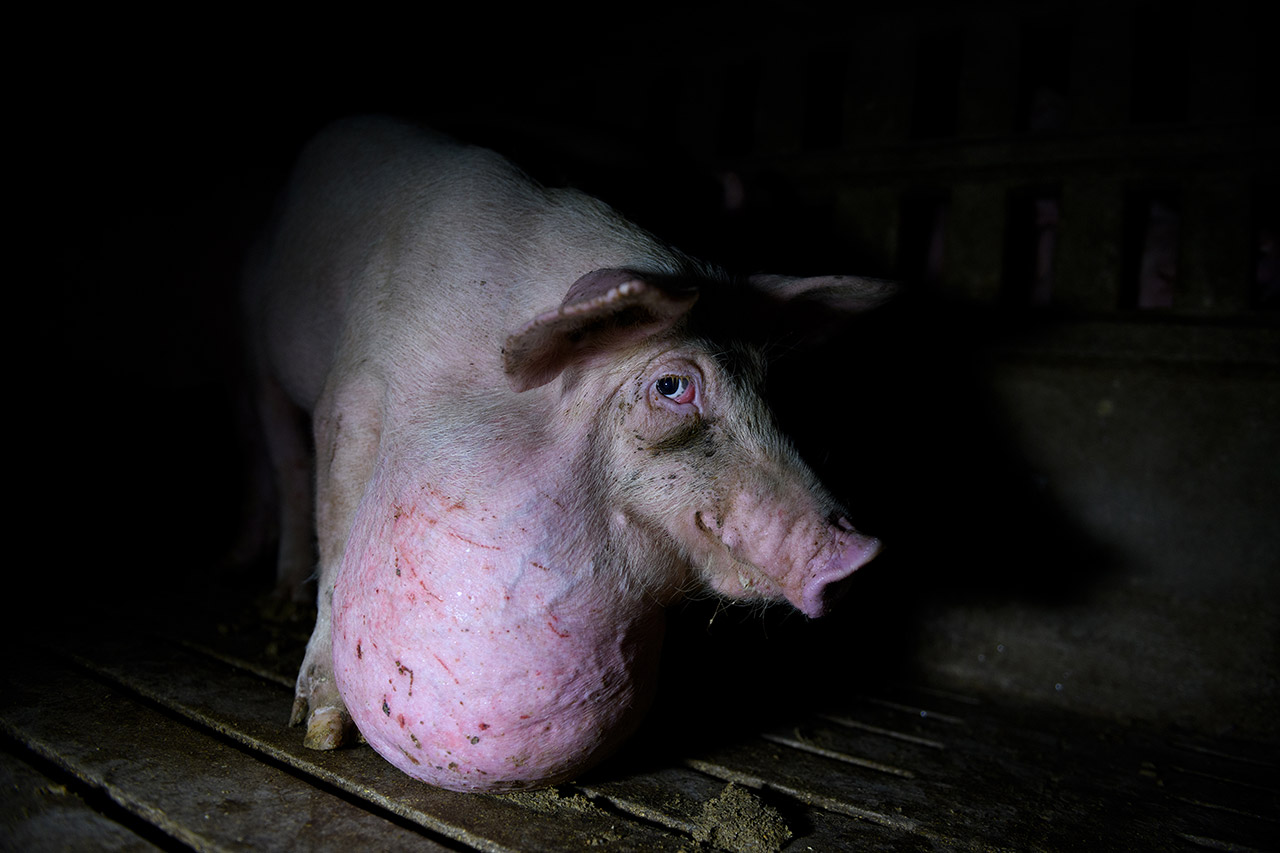
Veterinary neglect is common to all farms visited. Animals that suffer from innumerable health problems are not treated for reasons of economic profitability. / October 2019. Castilla la Mancha.

In July 2019, a slaughterhouse and the largest pig cutting plant in Europe began its activity in Binéfar, in the province of Huesca.
It is estimated that it will lead to the death of 160,000 pigs a week. Under the relentless rhythm of production, animals suffer from systematic exploitation and institutional helplessness.

The images presented in this work as well as the description are representative of the standards by which the industrial exploitation of pigs is developed.

Between 2019 and 2020 I, Aitor Garmendia, have accessed, together with a research team made up of people who have chosen to remain anonymous, to 32 pig farms located in Castilla y León, Aragón, and Castilla-La Mancha.

In them, I have verified and documented the consequences of the structural violence that takes place under the standards of the livestock industry.

Veterinary neglect, non-compliance with the animal welfare law, and the abuses described below are not isolated cases, but rather an inherent part of industrial animal husbandry and exploitation systems.

At the factory farm

More than 95% of the pork meat consumed in Spain comes from intensive farming systems. The farms can be closed-cycle and contain all phases of production (gestation, farrowing, and fattening) in one or more locations geographically close or may be dedicated to covering

All farms operate under similar standards and are governed by the same regulations.

Regardless of their size or their structure in phases, the quality of life of the pigs is compromised in any of them, be these large farms or small facilities managed by families.

In their houses, pigs for meat production are housed on concrete floors in overcrowded and unsanitary conditions, and females selected for their reproductive capacity spend part of their lives trapped in iron frames.

Área de gestación Aragon 2019

Confinement prevents the natural behavior of pigs, which, like their ancestors, must be able to develop for their well-being. The frustration of your interests and needs leads to numerous health problems.

Unlike other species, pigs lack sweat glands, and their ability to dissipate heat is very limited. If they have the right conditions, they look for cool places, streams, and puddles to take mud baths or rest.

However, on intensive breeding farms the temperatures can be very high – something common in hot months – and given the impossibility of accessing a place to cool off, they have no choice but to wallow in their excrement.

Eye injury-Castilla-La Mancha 2020


Power, propaganda, and the right to information

The industry invests millions of euros in propaganda – part of it coming from public funds – in order to project an idea that does not conform to what actually happens.


For more…at https://worldanimalsvoice.com/2020/11/21/spain-documentation-of-the-industrial-exploitation-of-pigs/


And I mean…It is inconceivable to be human and to be silent in the face of the torture of animals, just as it is inconceivable to fight for human rights and to be silent when people are being tortured.

This holocaust of animals is not only a reality in Spain, it is the same everywhere.

We are all responsible for bringing the truth to light.
Most consumers know what is going on behind the walls of the slaughterhouses and are silent, they suppress it or do not care.

Documentation of animal suffering in a farm factory is a thorn in their conscience, so they don’t want to be informed.
Do not present us or inform us, not even if something like this actually happens in the slaughterhouses.

And with their collaboration, they support a fascist system, one of the most inhuman in human history.

My best regards to all, Venus