Posted on August 7, 2015 by Serbian Animals Voice (SAV)

Under the bill, the names and addresses of convicted animal abuses in New York would be made readily accessible to the public. Those involved in the sale and adoption of animals would be able to check the registry before allowing someone to own an animal.
Animal cruelty has been a felony in New York since 1999 when Buster’s Law was passed. Buster was a cat in Schenectady in upstate New York who was doused with kerosene and set on fire in 1997. The law bearing his name was created to ensure that those who commit such crimes are convicted. The new law(S2305A-2013) takes things a step further by creating the registry.
It is more than well-established that the abuse of animals can be a “gateway behavior” to violence against humans. Senator Greg Ball of Patterson, who sponsored the bill, addressed this very point:
Persons who commit crimes against animals represent some of the worst kind of people, and often expand their carnage to their neighbors and the larger community. Most people can agree that the level of respect and kindness shown for animals — creatures who cannot speak for themselves, or protect themselves and are easily abused and taken advantage of — is a fine predictor of how a person will treat their peers.
Just as Megan’s Law was created to protect children from repeated sex offenders, Ball’s bill will protect animals from repeat animal abusers — from (again, quoting Patterson) “violent and cruel behavior” that “cannot and should not be tolerated.”
Alice Calabrese, the CEO of Lollypop Farm and the Humane Society of Greater Rochester, says that there is a “high recidivism rate” among those who abuse animals, and that the registry is more than needed. Her organization receives about 1,200 calls about animal cruelty every year.
Ball’s bill is now being sent to the New York Assembly where it is being sponsored by Assemblyman Jim Tedisco, who was the driving force behind the sponsorship of Buster’s Law. Noting that we have “expanded the DNA database to help catch criminals and exonerate the innocent,” Tedisco underscores that we “now we have an opportunity to advance additional public safety measures including protecting our pets from abuse and ensuring animal abusers don’t go on to hurt people.”
Michigan is also considering creating a registry of animal abusers, as have other states (including California). However, a bill to create such a registry in Maryland last year failed. Now that New York is on the verge of creating a registry of animal abusers, it really is up to the other 49 states to follow suit and do the right thing, as Michelle Gwynn writes.
As Tedisco says, creating the registry of those convicted under Buster’s Law means that ”all members of the family” are protected. If all states had such a registry, the next step could be a national registry of animal abusers in order for states to share information, and so that we can best protect “who cannot speak for themselves.”

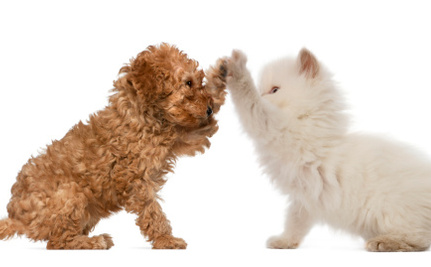
Now that’s worth a ‘High 5’ !!
Filed under: GENERAL NEWS - International / National / Regional | Leave a comment »
Posted on August 7, 2015 by Serbian Animals Voice (SAV)

Bear bile replacement breakthrough in China
Dear Mark,
I’m absolutely thrilled to share with you news of a major step towards ending bear bile farming.
Our hope for an end to the suffering of China’s moon bears in the bile industry has been hugely boosted as Chinese manufacturer Kaibao Pharmaceuticals announced it has successfully synthesised a substitute for bear bile to be used in traditional medicine.
This is a HUGE step that could eventually save thousands of protected moon bears from farms by drastically scaling back China’s bear bile industry.
Kaibao is the number one consumer of bear bile purchasing around 18 tonnes of powdered bile annually, approximately half of all purchased. Make no mistake this is big news.
And the fact that this project is heavily backed and funded by the Chinese government shows a clear intent at the highest levels to move away from bear bile farming and actively seek ways to make this industry obsolete, once and for all.
Read the story here.
We have come a long way. For those estimated 10,000 bears that are currently held in horrific bile farms around China, this could be the breakthrough we have been working so hard to achieve for the past 17 years.
Thank you for your continuous support throughout. This remarkable progress is because of you. We really couldn’t do this without you.
Jill Robinson MBE, Dr med vet hc, Hon LLD
Founder and CEO
Filed under: CAMPAIGNS - Global Animal Welfare Issues, GENERAL NEWS - International / National / Regional, The "Serbian Animals Voice (SAV) ALLIANCE | Leave a comment »
Posted on August 7, 2015 by Serbian Animals Voice (SAV)
Posted on August 5, 2015 by Serbian Animals Voice (SAV)


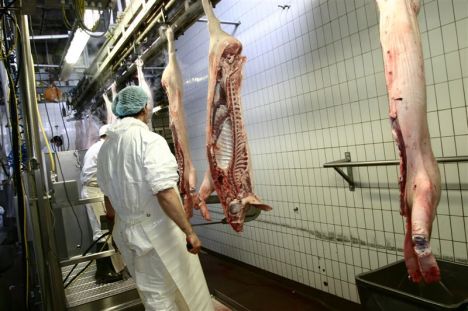
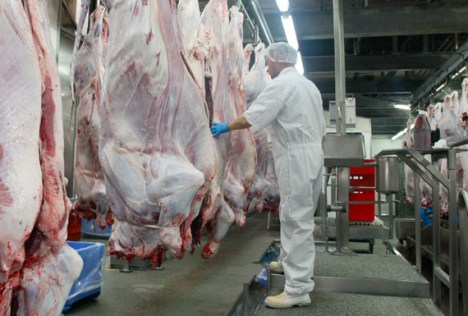
Above – EU.
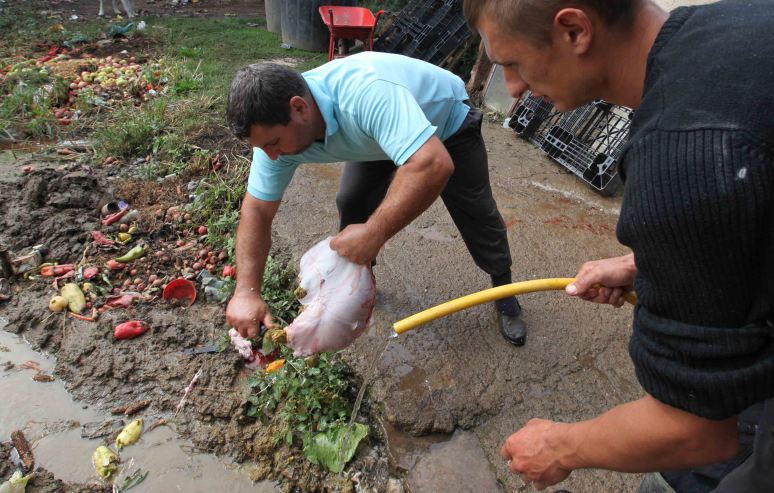
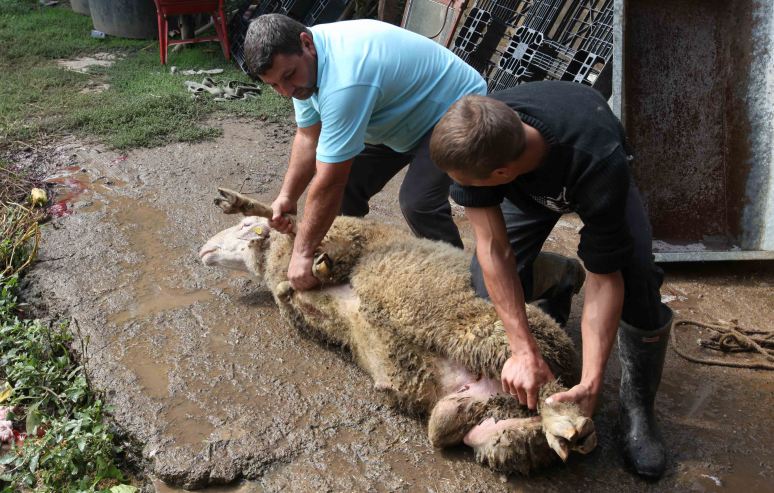
We have uncovered this link (below) today as part of our investigation work producing the reports for the EU which are described in previous posts. It is rather graphic but is also a clear indicator of the things that need to be done, – improvements; especially as Serbia is hoping to gain EU membership in the relatively near future.
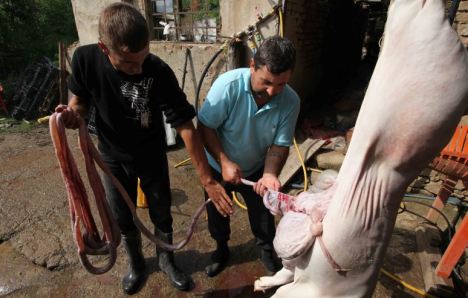

Above: Serbia.
Here is the link to some of the standards in Serbia – WARNING – Graphic Footage:
In EU nations, when an animal carcass has been slaughtered and prepared at a slaughterhouse, it is then ‘approved’, a slaughterhouse employee marks it with an EU health symbol to prove that the meat is safe for human consumption. We doubt that this is happening at the Serbian facility shown. Is the carcass fit for human consumption ? – just look at the outside floor conditions at which this sheep was killed.
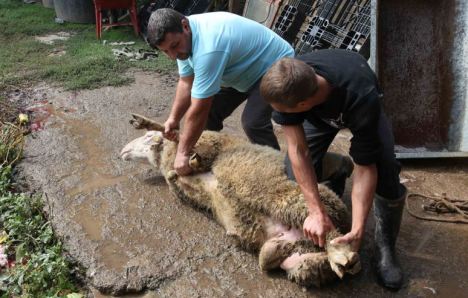
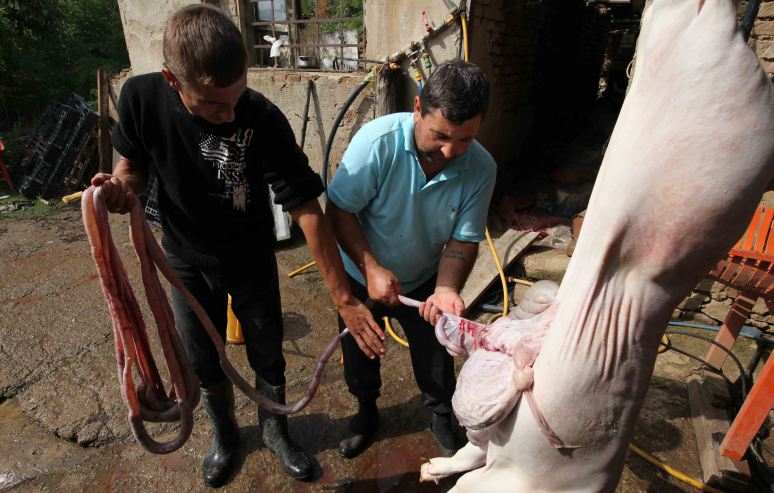
Above: Serbia.
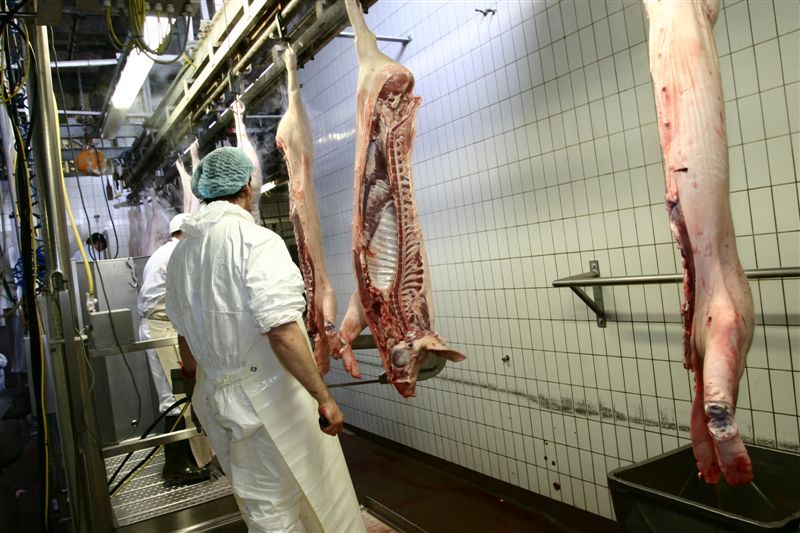
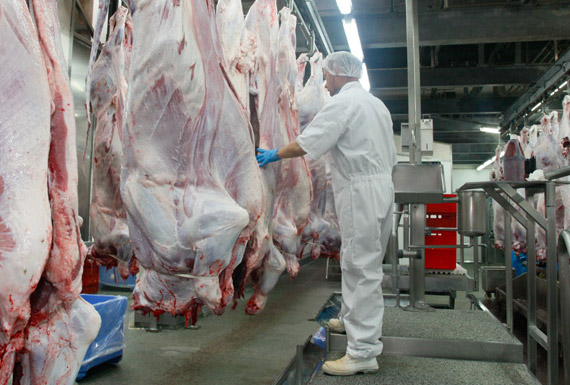
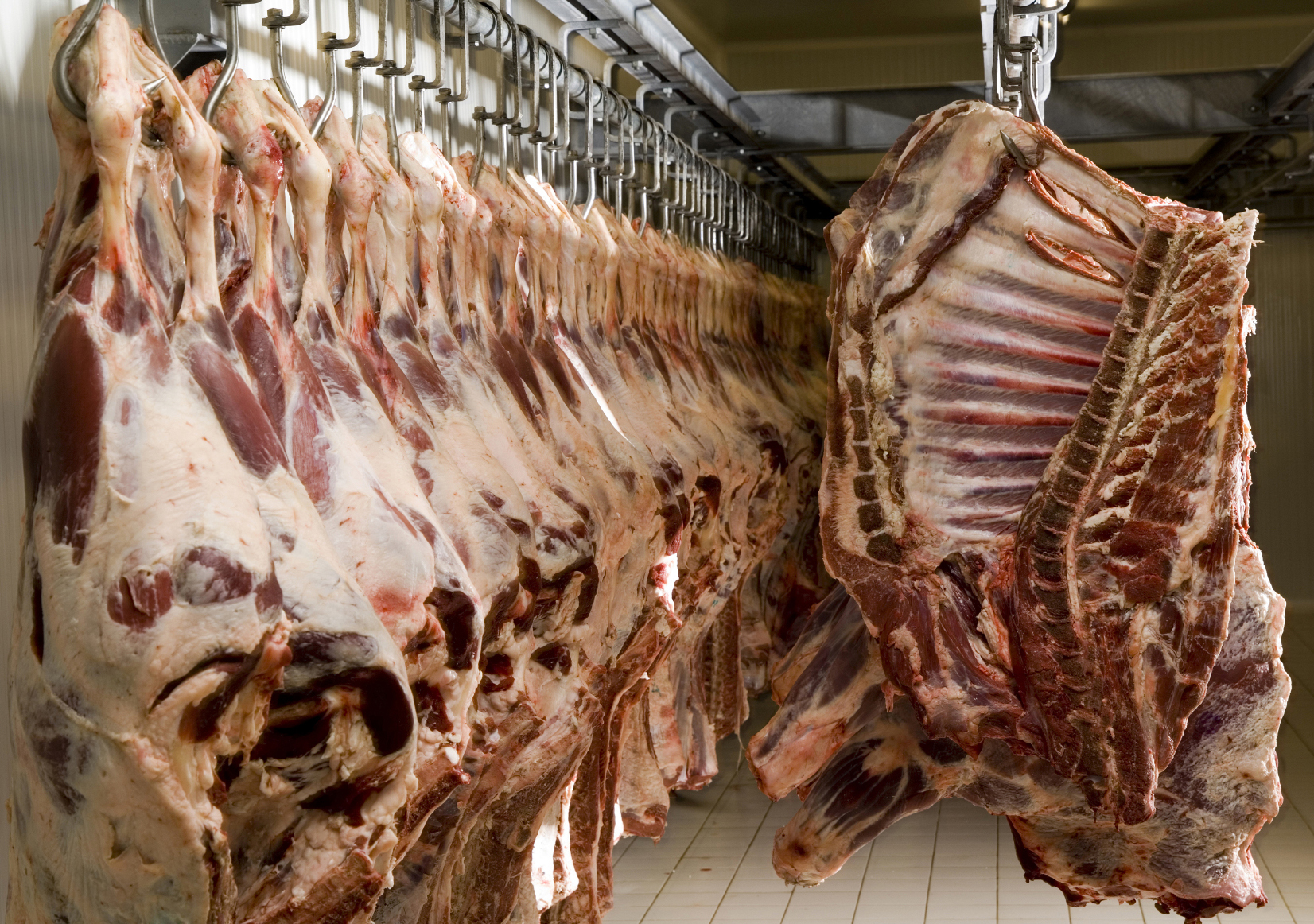
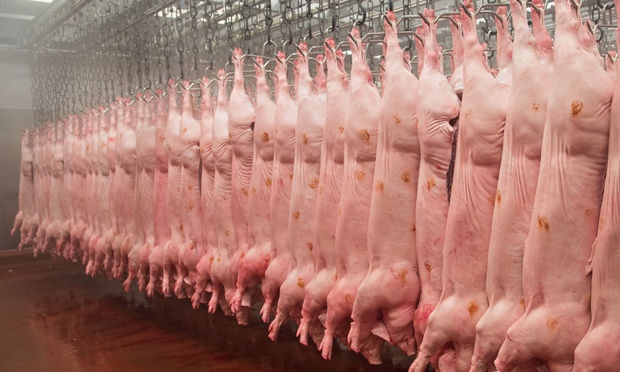
Below: EU.
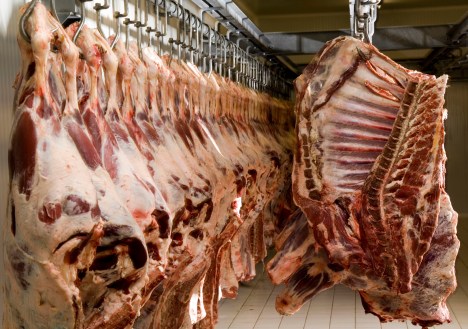
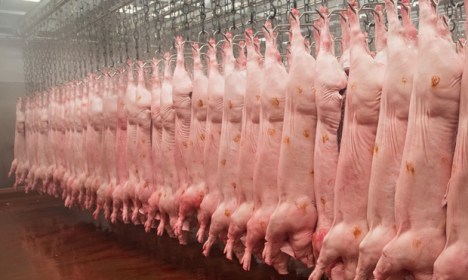
As non meat eaters we do not like doing things about slaughterhouses; but we feel that is a necessity here especially as we are currently working on reports of animal welfare standards within Serbia. Compare the EU slaughterhouse conditions with those in the link re Serbia. There is no real comparison; and once again this shows where Serbia has to step up to the plate to put its animal welfare house in order. When Serbia joins the EU; it will have to have slaughterhouses of the types shown in the photographs for the EU – what is shown in the above link (Serbian standards) will not be acceptable to the standards of EU nations. Serbia will have to comply.
The thing we found really disturbing on the link photographs is the fact that in several shots, you can see several bottles of beer; and the slaughterman having a drink of beer in between slaughtering animals. In an EU facility alcohol would not even be allowed on the site; let alone a quick ‘guzzle’ in between animal killings !!
Serbia has a lot to learn about animal welfare; and we will do all we can to show up the differences between EU and Serbian standards. There are no if’s or but’s; if Serbia becomes a future member of the EU then it will have to comply with EU standards.
We will do all we can to show these regulations are being enforced.
Post UPDATE 5/8/15.
26 November 2014
Company to end waste meat to energy operation at the end of the year, but will seek international arbitration in the United States over the project’s long-term future
Serbia’s only plant turning hazardous meat waste into an energy source that complies with all national legislation has been shut down over an argument between its owners and the government.
Belgium company Energo Zelena claims the Republic of Serbia’s “failure” to enforce its own legislation on treatment of hazardous animal by-products and ongoing “discriminating” against its business means its operation is not financially viable.
According to the company Serbian authorities have not treated its bids for work fairly and have instead handed deals to local companies run by Serbs. A spokesman said: “As foreign direct investors, we have been continuously discriminated against. As a result our investment is severely jeopardised and the company is operating with substantial loss.”
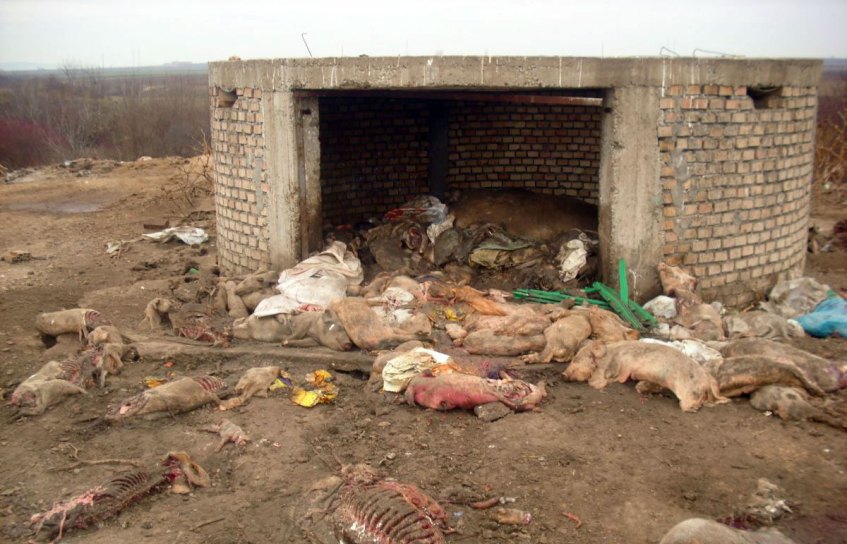
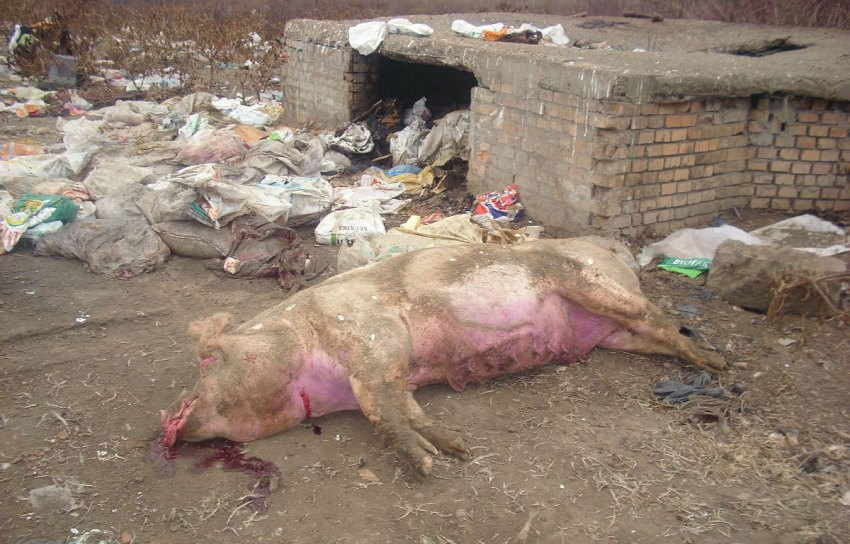
The company further claims waste meat is being illegally dumped as local authorities are failing to ensure it is sent to a proper processing facility.
See our past post from 2011 – does this have any relationship to this we ask ??
Filed under: CAMPAIGNS - Global Animal Welfare Issues, GENERAL NEWS - International / National / Regional, PHOTOGRAPHS - **WARNING** (Animal Suffering), SERBIA (Central Serbia: Capital - Belgrade) and (Serbia, The "Serbian Animals Voice (SAV) ALLIANCE | Leave a comment »
Posted on August 4, 2015 by Serbian Animals Voice (SAV)
Thanks to Lisa for finding this out and getting the link – disturbing ! :
PIG MRSA SUPERBUG SPREADING TO HUMANS THROUGH PORK
Pigs, Antibiotics and Us:
This Guardian report exposes the shocking conditions of the UK’s intensive pig farms, and the horrifying risk they pose to your health.
Filed under: CAMPAIGNS - Global Animal Welfare Issues, GENERAL NEWS - International / National / Regional, The "Serbian Animals Voice (SAV) ALLIANCE, VIDEOS | Leave a comment »
Posted on August 3, 2015 by Serbian Animals Voice (SAV)
Hi all;
Well things on the site have been quiet for the past week or so, but we have been working behind the scenes on a new project.
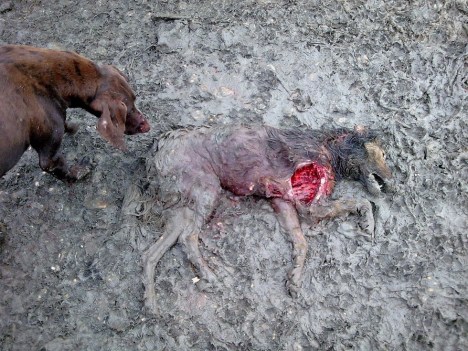
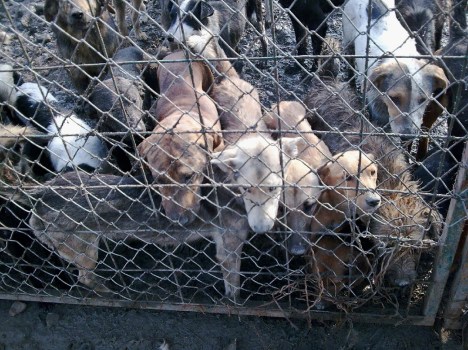
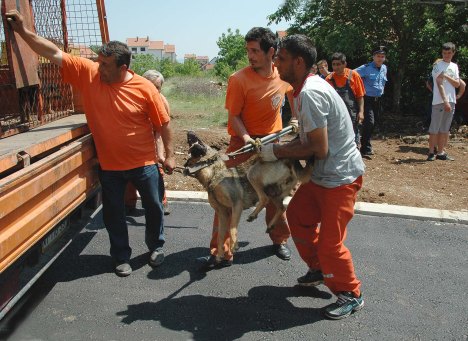
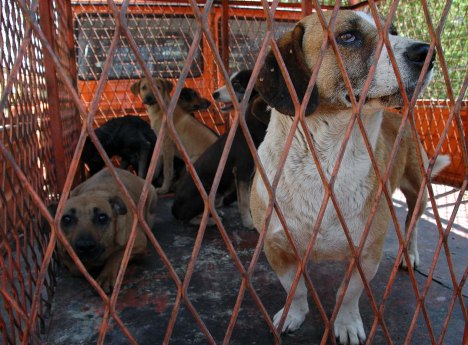
We cannot say that much about it at the moment, but it does involve the EU Enlargement Commission; Serbia’s current attempts to join the EU at present, and the fact that Serbia is NOT enforcing it own rules of law – or laws / legislation; which is what a nation seeking EU accession has to show and prove it is doing to the EU Enlargement Commission PRIOR to EU membership.
We are working with both Serbian and Austrian campaigners to take the issues of animal welfare; or the lack of, a lot further now. Via all of our contacts, as well as those of our Austrian colleagues; we will have the ability to make massive contacts with both the EU and its Parliament, as well as giving the reports we are producing to our Serbian campaigner friends who will then be able to approach the Serbian government directly also to ask what we know will be some very embarrassing questions for the government.
Combined with the fact that we know that the EU has authorised over the period 2014-2020 that it provides Serbia with over 1.5 BILLION Euros to get it s house in shape, we are asking, as UK and Austrian (EU) taxpayers providing contributions to this funding; what are we getting back from the Serbian government with regard animal welfare improvements within Serbia.
Over the last week we have now produced the almost final draft of our first report to the EU. There will be several more over the coming months which will target specific issues in particular. This first report is best described as an ‘overview; which outlines the situation for Serbian animals; the lack of legislation implementation by the serbian government; as well as the huge financial incentives that the EU is giving to Serbia in order that it enforces application of the ‘rule of, law’ – something which we know is NOT being implemented at the moment regarding Serbian animal welfare law.
The documents we hope will cause problems with the EU and Serbian governments. As the EU is providing over 1.5 BILLION Euros to Serbia for pre EU accession, we have the right to ask questions and to ask exactly where our EU money is going and what it is being spent on.
At the moment, not on animal welfare. We hope that via our reports and the massive links we have across the EU, we can make a difference. We will probably be publishing each report on this site as we produce it; so you can get an idea of what we are doing.
We hope that this will be a positive move for Serbian animal welfare. The EU must enforce what it preaches on its europa website. We aim to question lots about the whole system and its apparent current failures.
Regards Mark.
Filed under: CAMPAIGNS - Global Animal Welfare Issues, DOCUMENTS, GENERAL NEWS - International / National / Regional, SERBIA (Central Serbia: Capital - Belgrade) and (Serbia, The "Serbian Animals Voice (SAV) ALLIANCE | Leave a comment »
Posted on August 3, 2015 by Serbian Animals Voice (SAV)
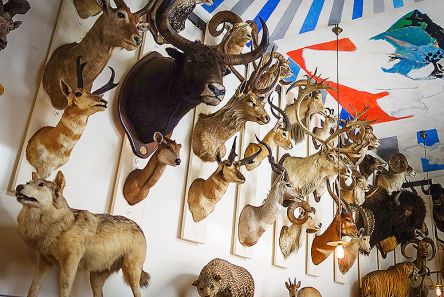
A Minnesota dentist’s killing of the famous lion has sparked outrage, but it remains to be seen whether it will spur a crackdown on big game hunting.
With one shot of his bow, Walter Palmer went from being a Minneapolis dentist to the world’s most reviled big game hunter.
The public outcry following his hunt of Zimbabwe’s famous tourist attraction, Cecil the Lion, has not only led to the closure of his dental office but could be a galvanizing force in altering the trophy hunting industry in the United States that’s fueling wildlife loss in Africa, according to conservationists.
Killing rare animals is nothing new for the dentist, who has crossbow records for killing a menagerie’s worth of wildlife, including rhino, warthogs, buffalo, and more. But none of his kills brought a spotlight on the contentious issue of trophy hunting until he and his hired Zimbabwean hunters lured the black-maned Cecil out from the protection of national park boundaries with bait.
The heavily studied lion—he had a GPS collar on when he was shot—wandered wounded for 40 hours before finally being tracked down and shot with a gun by the hunters.
“I’ve never seen any sort of animal issue resonate like this before,” said Beth Allgood, campaigns director at the International Fund for Animal Welfare. When she first heard the reports about Cecil’s death at the hands of a Spaniard, Allgood was a little surprised, but then it was revealed the hunter was an American—a story line Allgood with her 20 years in conservation work is familiar with.
“Americans don’t like to accept the role we play in wildlife trade,” Allgood said.
“We like to look at China fueling demand and Africa not doing enough to protect these animals, but when it comes to lions, we have a big part in it.”
Americans travelling to Africa make up more than 60 percent of the foreign-participated lion trophy hunts carried out each year, according to John Jackson, president of the lobbying group Conservation Force. About 15,000 hunters make the trek annually, and a majority of them want to bring back a trophy, Jackson said. The group argues that lion hunts are integral to the species’ conservation, and the big game industry—worth $675 million in South Africa alone—brings in money for habitat expansion and species conservation efforts.
But those efforts haven’t stemmed the rate at which lions are dying off. Across the continent, there has been a 60 percent decline in lions over the past 30 years. Habitat loss and poaching have contributed to the demise, but hunting also plays a role, said Allgood.
Oxford University (UK) professors have also been studying the effects of big game hunting on lion populations in Zimbabwe. Of the 62 lions they tagged in the region, 24 have been shot and killed by sport hunters. Ten have died from other causes.
There were once 200,000 lions roaming Africa. Today, there are fewer than 32,000.
That has prompted the U.S. Fish and Wildlife Service to consider listing African lions as a threatened species.
The move could potentially limit the countries from which big game hunters can bring back lion trophies. Eleven countries currently allow lion hunt safaris, but new regulations would require these countries to show FWS officials that their lion populations are healthy and managed properly, and that plans are in place to conserve the species.
But listing the lion only puts a Band-Aid on a bigger issue, argues Eric Jensen, a University of Warwick professor who studies public engagement in wildlife issues.
“The problem is a long-standing association between hunting large animals and masculinity,” Jensen said. “While most Americans don’t support the activity, it still resonates with key ideas like Davy Crockett and Theodore Roosevelt. The fact that in 2015 people are still travelling thousands of miles to kill exotic animals and bring back trophies shows that there are deep-seated cultural problems in Western societies, where such behavior should be unthinkable.”
Pro-hunting advocates argue that removing the older lions like 13-year old Cecil, who are less prone to breed, is actually beneficial for species populations because it allows more vigorous and youthful cats to mate more successfully.
That was not the case with Cecil, however. Hwange National Park officials said Cecil had been muscled out of his pride five years ago by a younger, stronger male. He subsequently mounted a comeback by forming a coalition with another older male lion named Jericho. For the past 18 months, Cecil had been back in charge of two prides—one of which consists of three lionesses and seven cubs under seven months old. Without Cecil to protect them, researchers who have been studying the animal expect a new lion to come in, take out Cecil’s cubs, and start his own bloodline.
“It’s called the ripple effect,” Allgood said. “You take out a pride leader like Cecil, and in the fight for dominance, the other males kill the young cubs.”
The Zimbabwe Conservation Task Force said the $54,000 Palmer spent to kill Cecil pales in comparison to the millions of dollars the big cat would have garnered in tourist dollars over the course of his life.
Filed under: GENERAL NEWS - International / National / Regional, HUNTING - Primarily UK and Germany | Leave a comment »







 Serbian Animals Voice (SAV)