Posted on May 22, 2018 by Serbian Animals Voice (SAV)
Support for live export ban grows as shutdown bill begins voyage through Parliament
Support for shutting down the live sheep export trade is gaining ground, with Labor set to formally endorse the proposal this week.
Key points:
·The Live Sheep Long Haul Export Prohibition Bill will be introduced to Parliament today
·Sussan Ley has backing of two Liberal colleagues, believes numbers will increase
·Shadow Ag Minister says Labor will lock in support for the bill
Liberal MP Sussan Ley will today introduce a private member’s bill that would ban live sheep exports to the Middle East during the northern hemisphere summer months in 2019 and entirely close the sector down in five years.
“This has been a trade marked by disaster following debacle and that’s gone on for 33 years, it’s had a very sad history, a very dismal history,” she said.
Shadow Agriculture Minister Joel Fitzgibbon told AM Labor will lock in its support for what will be known as the Live Sheep Long Haul Export Prohibition Bill.
“I will certainly be recommending to both the shadow cabinet and to the party room this week that we support the bill,” he told AM.
“I have no doubt that the bill reflects the view of the broader Labor Party and on that basis I’m very confident that the party room will embrace the bill.”
Labor’s support drastically increases Ms Ley’s chances of securing the numbers to debate the bill in the House of Representatives.
She already has the backing of Liberal colleagues Sarah Henderson and Jason Wood, and believes the numbers will increase.
“I’ve had conversations with two or three that … are very supportive. I will leave it up to them about when they talk about their support and to what degree they might get behind this bill,” she said.
But her hopes of securing Ian Goodenough’s support, who indicated an interest in the bill, have fallen through.
“After considering all the factors I have decided to initially back the Government position on the McCarthy Review to implement a series of changes,” he said.
Where to from here?
History shows most private members’ bills do not pass Parliament, because debate has to be approved by the Government.
Prime Minister Malcolm Turnbull has made it clear he has no intention of shutting down the trade because he believes the sector can be cleaned up.
Ms Ley needs to rely on Labor, the crossbench and some of her colleagues to get the bill over the line, and Joel Fitzgibbon believes that is possible.
However it is dependent on several factors, including Labor winning the impending byelections.
“If Labor can restore its numbers to 69, with Sussan Ley and Sarah Henderson we get to 71,” he said.
“We only need five more to get the absolute majority we need to pass the bill. We will find at least three of those on the crossbench and a number of the Government’s own ranks have approached me expressing their support privately for this bill.”
Like with any private member’s bill it is a juggling act with numbers, but the uncertainty has not stopped Ms Ley.
“I in some ways compare this to the gay marriage debate where several private members bills were tabled over the years and they didn’t provide the immediate response but they were all part of building the case, making the argument and looking at it … with fresh eyes,” she said.
The live sheep export trade will be under the microscope in the coming months, as politicians watch to see if the sector has implemented changes to improve conditions for the animals.
Any major incidents at sea could see more Liberal MPs supporting the bill, such as Mr Goodenough.
“I believe the bill has merit and could be used as an end measure in the event that the Government’s reforms do not improve the industry,” he said.
Queensland Liberal MP Warren Entsch said there would have to be another rethink about the industry’s future if large numbers of sheep died at sea.
“I don’t want to do a knee jerk reaction on this,” he said.
“The reality is that if these changes mean that we don’t see that image again then we know we have achieved the right outcome. If those images surface again, then I know something has to change.”
IN THE NEWS: Live export ban faces prospect of passing Parliament after Labor signs on.
IN THE NEWS:On MAY 11, 2018
Labor will support Liberal MP Sussan Ley’s bill to outlaw live exports, meaning an outright ban on the trade within five years is, for the first time, a realistic prospect.
Fairfax Media can also reveal that a second government MP is considering co-sponsoring the bill, indicating that momentum for a ban is rapidly building in the government.
Labor’s spokesman for agriculture, Joel Fitzgibbon, announced last week that the opposition no longer believed the industry – which is under fierce scrutiny after footage emerged showing thousands of sheep “boiling alive” on a ship heading to the Middle East – was incapable of repair.
However, he had stopped short of supporting the bill to be presented to Parliament on May 21 by Ms Ley, a former government cabinet minister who represents a regional seat in NSW.
Fairfax Media understands Labor has since been in intensive negotiations with Ms Ley over the contents of her bill. It agreed to support the bill after insisting it gave farmers a minimum five-year transition period to wind down the trade rather than face an immediate ban.
However, the northern summer trade, where the extreme conditions can cause mass fatalities of animals, would be banned from 2019.
MPs pushing for a ban believe they also have enough support in the Senate to pass the bill.
Liberal MP Jason Wood told Fairfax Media that he is considering co-sponsoring Ms Ley’s bill for the trade to be gradually abolished despite the Turnbull government resisting a “knee jerk” reaction.
Another Victorian Liberal backbencher, Sarah Henderson, said she will also second Ms Ley’s bill. The backbench push comes in spite of Prime Minister Malcolm Turnbull’s personal plea for the bill to be dropped.
Mr Wood said no Australian could treat their pets the way live exporters had been treating livestock.
Last weekend, Fairfax Media published gruesome new footage of sheep that had died en route to the Middle East. Vets said the sheep had effectively “boiled to death” in the heat.
“Under Australian law, if a dog was left in a car on a hot summer day, that would be regarded as animal cruelty; yet we have 65,000 sheep at a time being transported in these awful conditions,” Mr Wood said.
Mr Wood, the member for La Trobe, said there had been so many documented instances of animal abuse on board live export ships that calls for a ban could no longer be described as a “knee-jerk reaction”.
“This is something I have called for, for a long time. I’ve been given assurances from the industry before that animals wouldn’t suffer. I’ve obviously been conned,” he said.
Mr Wood wants the government to back the ban but, if he decides to co-sponsor it, up to three government MPs could join with Labor and the crossbenchers in the lower house to have the bill passed.
But with Labor down four MPs in the lower house following the resignations of four of its MPs and crossbencher Rebekha Sharkie – all caught up in the dual citizenship fiasco – any debate and vote is unlikely to happen until after byelections are held.
If the government refuses to grant the necessary procedure to allow the bill to be debated, those in favour of the ban will require an absolute majority of 76 to suspend standing orders and have it brought on for a vote.
If Labor retains its seats in the byelections, an absolute majority would require three government MPs, along with the crossbench votes of Ms Sharkie, the Greens’ Adam Bandt and independents Andrew Wilkie and Cathy McGowan.
The Liberal party will be campaigning hard to regain the once-Liberal seat of Mayo in Adelaide, which it lost at the last election to Ms Sharkie, who stood as a candidate for the now-departed Senator Nick Xenophon.
Labor will expect to retain Freemantle in Western Australia, although faces slimmer margins in Longman in Queensland and Braddon in Tasmania.
Any improvement to Mr Turnbull’s lower house majority could jeopardise the chances of the live export bill passing parliament, unless more government MPs are willing to cross the floor.
Next week, Agriculture Minister David Littleproud will receive the review he commissioned after the footage was first aired. He told radio station 5AA on Thursday that transitioning the industry, worth $1.8 billion, to one of local processing and exporting “was definitely a possibility”.
But he said the refrigeration required to support chilled meat imports in hot Middle Eastern countries was still “decades away” and, if Australia vacated the space, it would be filled by other countries with potentially lesser animal welfare standards.
Posted on May 22, 2018 by Serbian Animals Voice (SAV)
You only have to read this, our recent post; to see the reality of animal ‘welfare’ in the EU – EU politicians who care nothing; and simply carry on as usual, despite the evidence:
The recent uproar over the ability of animals to feel pain has created a grossly inaccurate discussion. Beneath all the bluster and posturing from those claiming to be concerned by animal welfare was an underlying implication: without the EU, British animals would suffer horrific cruelty at the hands of a pig-hating, cattle-loathing domestic government.
Of course such a belief borders on hysterical paranoia. Britons are a nation of animal lovers. We have a proud history of global leadership in the field of animal welfare. Removing ourselves from the inept EU presents us with an exciting opportunity to once again become a pioneer in improving animal welfare standards internationally. This can be done through trade deals and by discussions in international arenas. Despite the idyllic face given to this by many, the EU is guilty of holding back British ambitions for improved standards. In some cases the EU actively prevents us from taking action to improve animal conditions which could stop the unnecessary pain and suffering endured by animals.
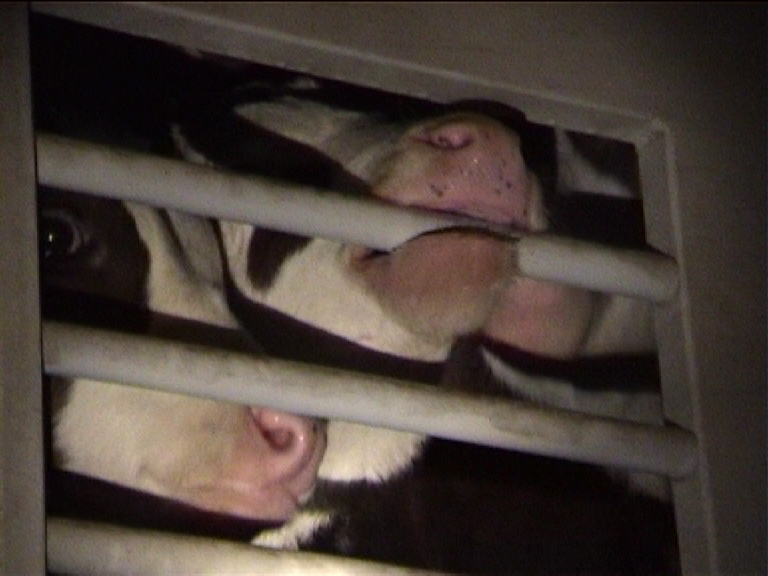
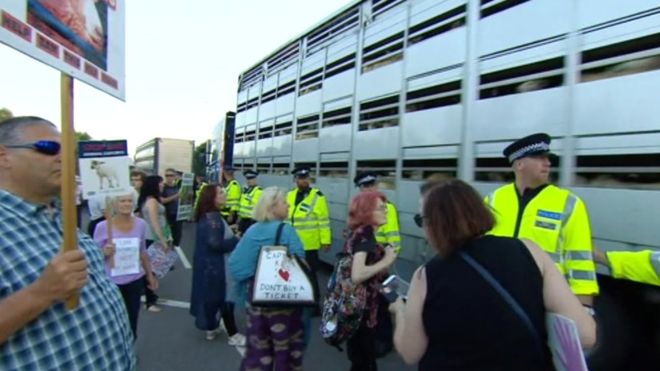
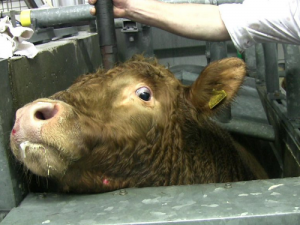
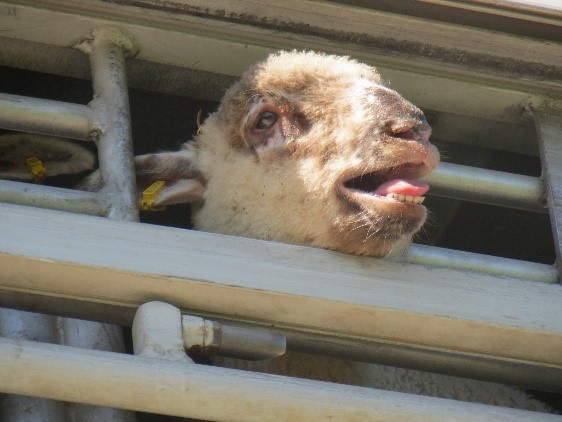
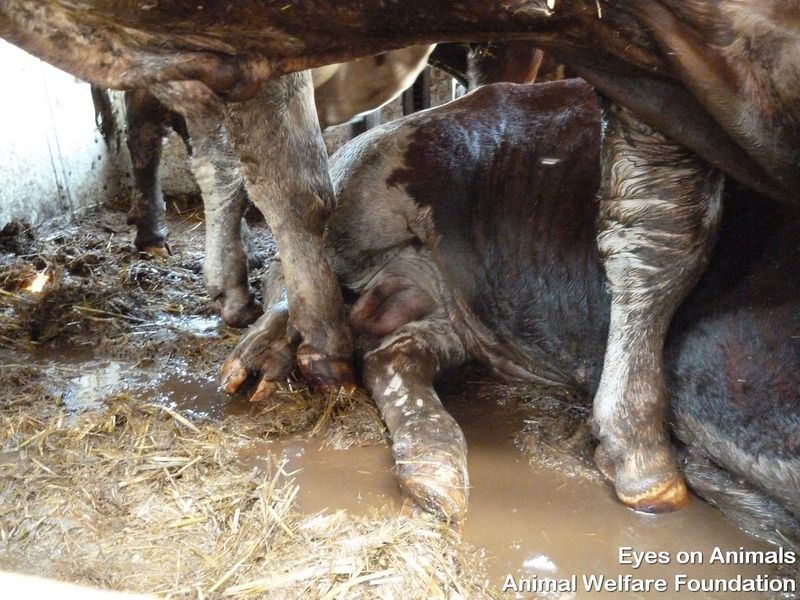
Take, for instance, the matter of transporting livestock for slaughter across long distances. The images of cattle, sheep and pigs horrifically crammed into the back of lorries, suffering from severe health conditions, exhaustion and dehydration, rightly provokes outcry from the Great British Public. Parliament, when discussing the matter, finds itself in almost complete cross-party unanimity. There is a strong consensus for banning the barbaric export of live animals.
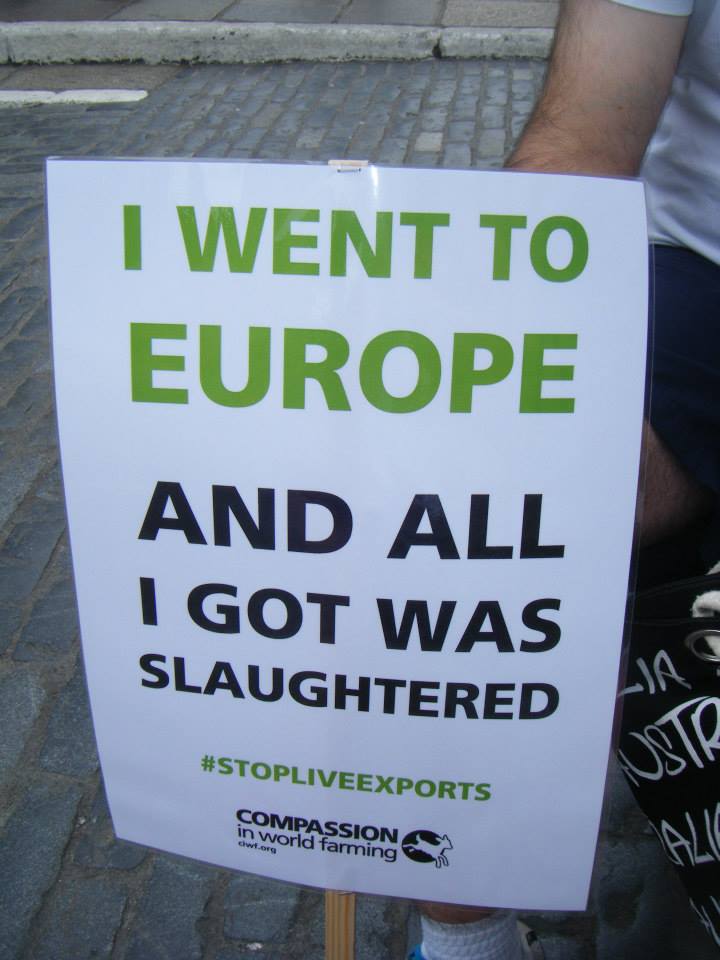
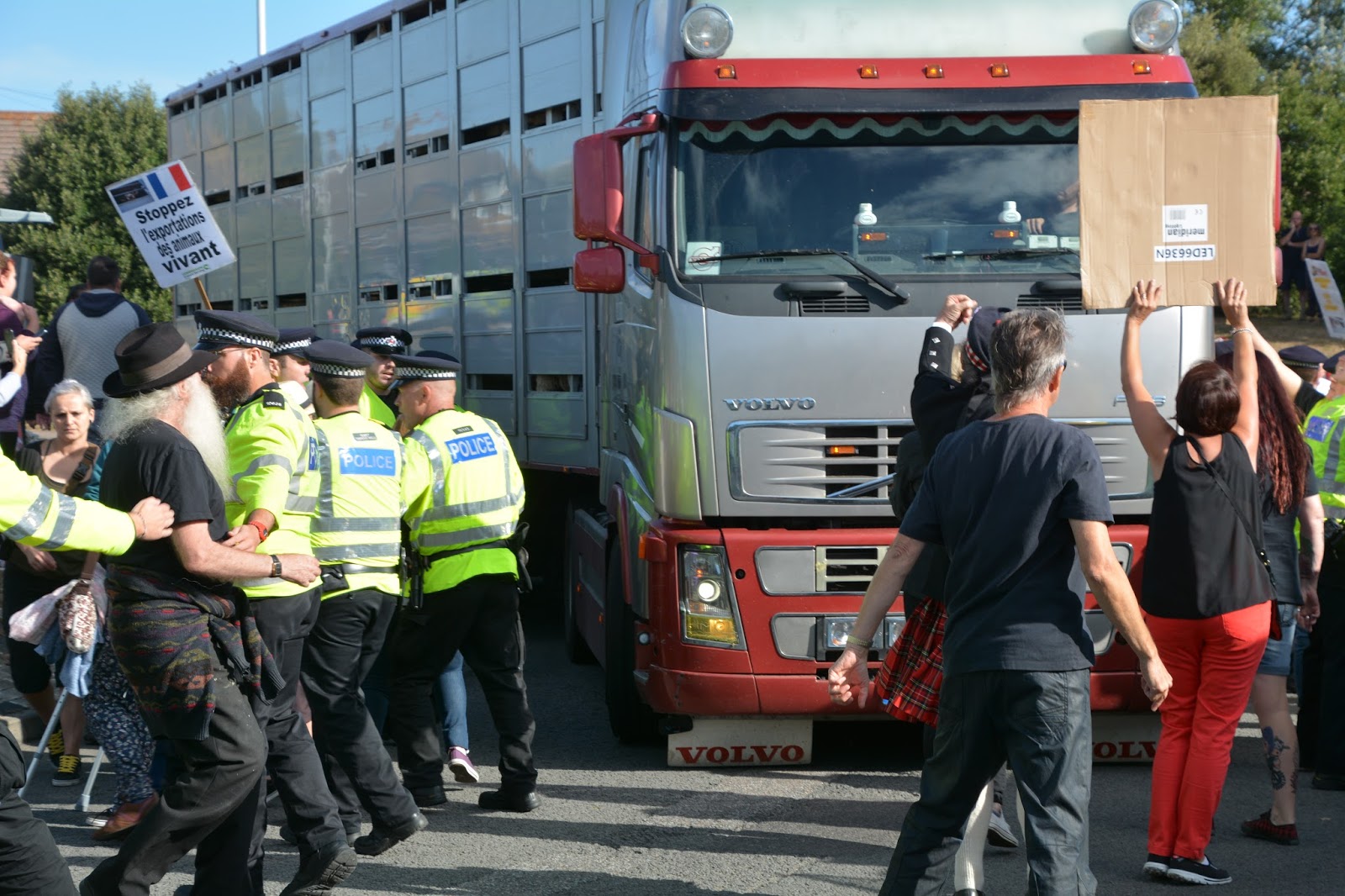
Above – England – Live Animal Export Demonstrations
However, this robust current of objection – displaying our credentials as an animal loving nation – is in vain. Our membership of the EU and the principle of free movement reduces our concerns to irrelevance. The Treaties are clear. The free movement of goods – clearly also including animals which even the EU admits can feel pain – must not be impeded in any way.
Once we are outside the EU, any Bill advocating the end of this torture will be passed in a blink of an eye, but until then, nothing can be done!
The disconnect between intentions and ability is mind-numbingly infuriating, especially as there is such a simple solution. However, this lays bare just one way in which the EU impedes Britain’s desire to reduce the suffering of animals.
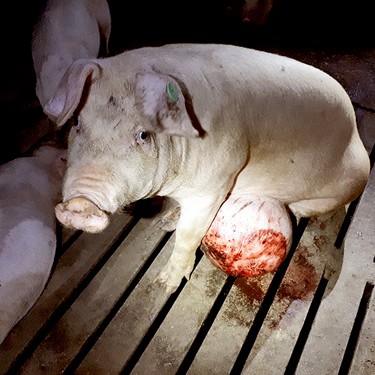
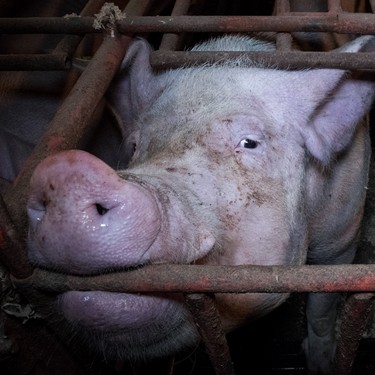
Even where European legislation exists to prevent suffering, the protectionist fervour with which the agricultural sector is shielded means most breaches of welfare practice are overlooked. The EU Commission fails to enforce the rules in order to maintain and satisfy European farmers’ market advantage and competitiveness. The Commission also actively discourages the use of CCTV in abattoirs and opts to ignore laws maintaining the dignity of pregnant pigs. This allows those that fail to uphold even basic animal rights to continue, massively reducing their expenditure in the process in order to maximise profits.
The fact that British farmers consistently maintain high standards despite the rules not being enforced is therefore testament to their own credential as guarantors of animal well-being rather than the result of EU influence.
Law-abiding British farmers who take every effort and cost to minimise suffering for livestock are at a systemic disadvantage. They face competition with an influx of cheaply produced meat (mainly from eastern EU countries) – reared and slaughtered on a policy of minimum expenditure – with little thought for animal suffering. Once we are outside the EU, British farmers will not have to choose between maintaining high standards or market competitiveness, but they will be able to meet both requirements satisfactorily.
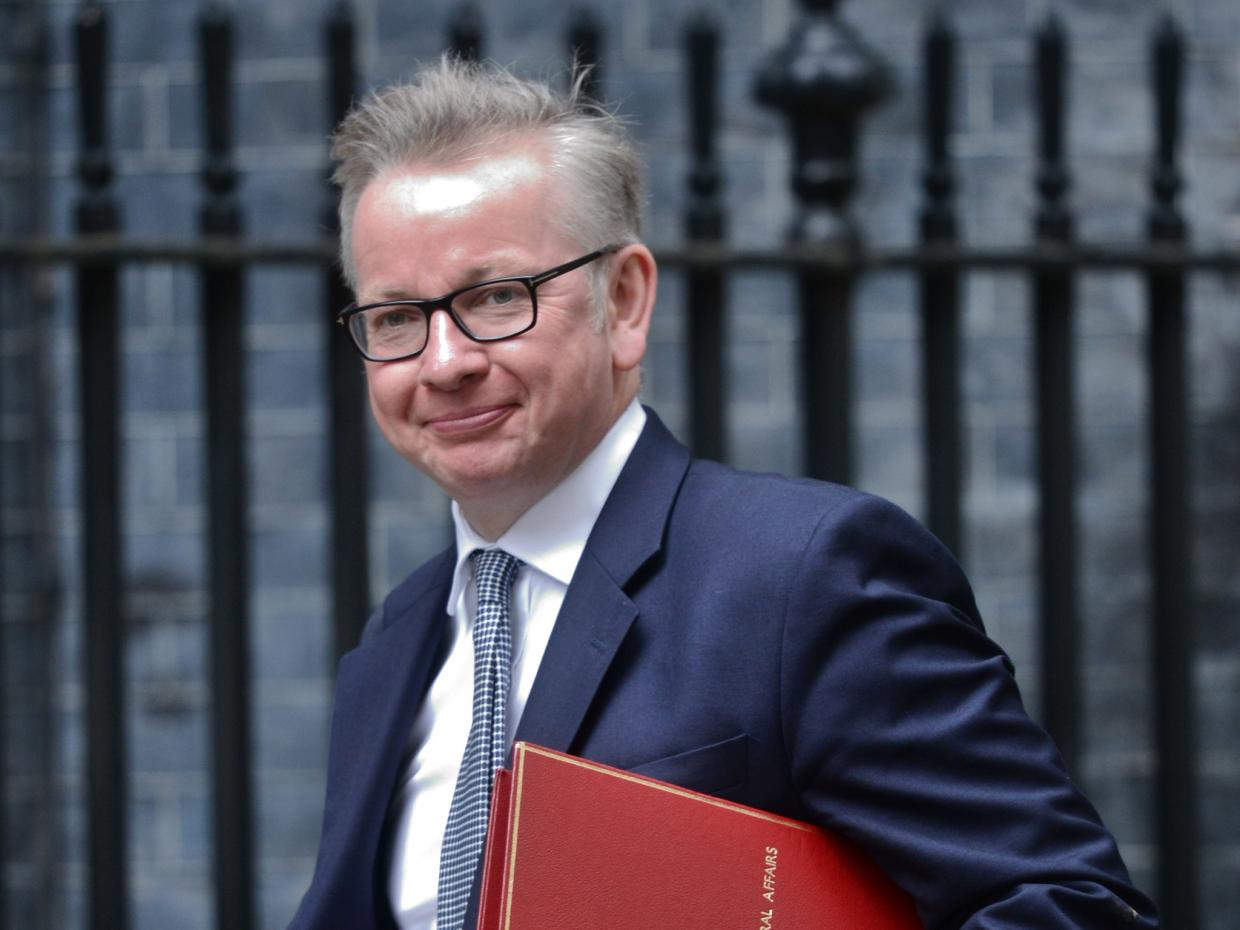
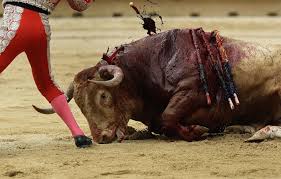
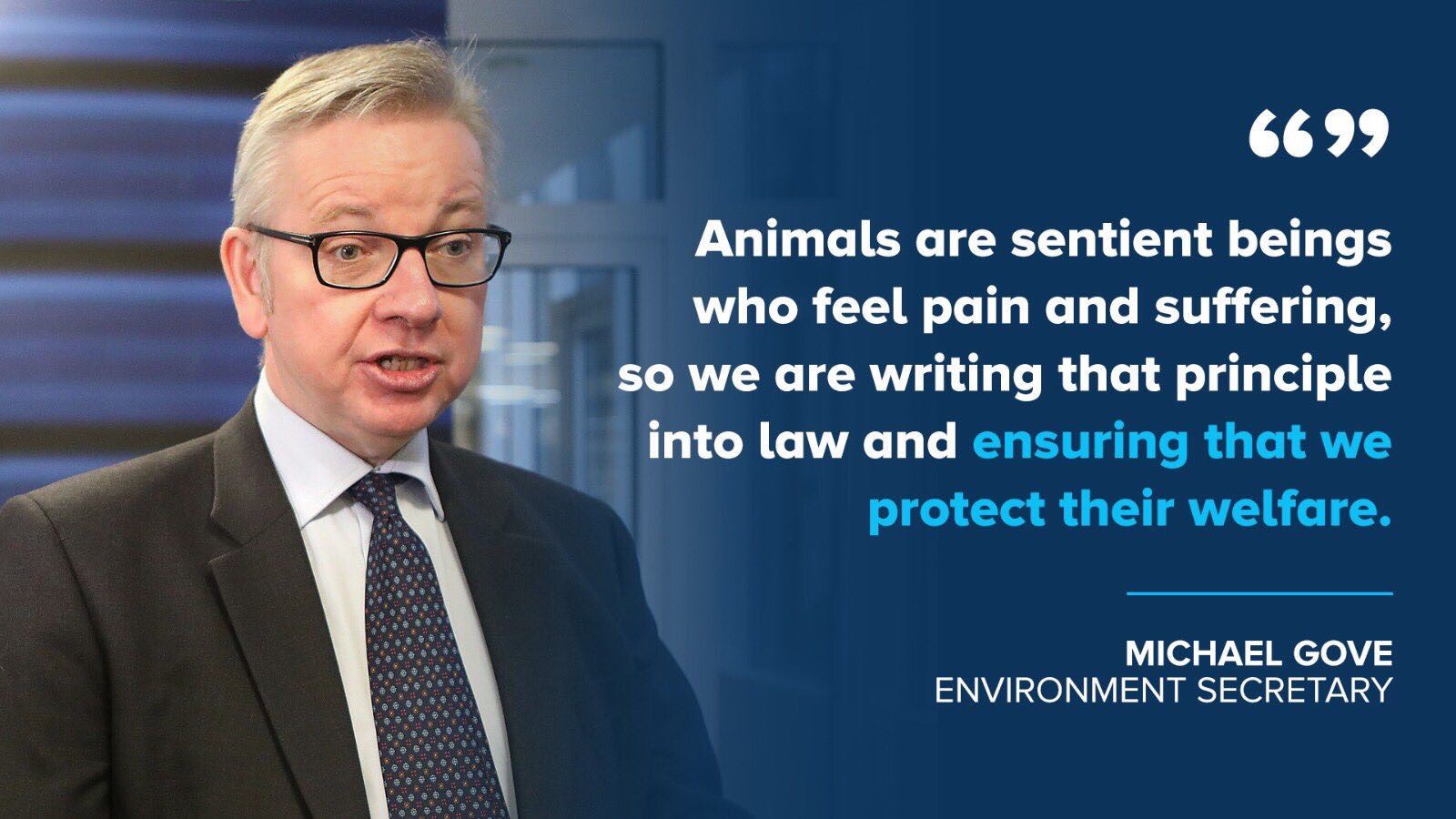
As we can see from Michael Gove’s (photo above) enthusiastic tenure as Environment Secretary, British welfare standards are already on the rise. The draft Animal Welfare (Sentencing and Recognition of Sentience) Bill goes further than its EU equivalent, banning medieval practices (such as bullfighting in Spain and other EU countries), which are permitted by Article 13 of the Lisbon Treaty on account of them being so-called ‘cultural traditions’.
This, in addition to a toughening of prison sentences for the most serious offences, and moves to improve surveillance in slaughterhouses, shows a strong intent by Britain to make improvements where needed.
In the pet industry, moves are being made to clamp down on puppy smuggling and the illegal transportation of other domestic animals, which is facilitated by the EU’s ‘pet passport’ scheme: a problem which has, until now, remained out of Parliament’s jurisdiction. These proposals provide a small taste of post-EU Britain’s desire to go beyond European mediocrity.
Excitingly, once we are outside the Customs Union, the free-trading role Britain will craft for itself, once free of the EU’s stranglehold, will create a multitude of opportunities to engage with other countries. This will allow us to spread the values of animal welfare which are so important to us as a nation.
By taking part in bilateral trade deals, British negotiators will be able to install minimum standards which must be met before produce can enter the United Kingdom. Not only will this ensure British consumers are protected from unethically reared meat, but will force nations seeking access to the UK market to meet our set standards of welfare.
Once we Get Britain Out of the EU, we (UK) will be in full control to pursue the highest possible standards of animal welfare. Free trade agreements will provide the perfect platform of interaction from which we can spread these values for animal welfare to other countries.
Posted on May 22, 2018 by Serbian Animals Voice (SAV)
EU Commission assesses the “El Pozo scandal” as an isolated case and does not initiate punitive measures!
(Well-com again to the “Do Nothing” Factory from EU!!)
At the end of February, MEP Stefan Bernhard Eck put a written question to the Commission to draw attention to the horrific events revealed by the Animal Equality animal welfare organization in a pig farm in Spain that owns the meat group EL Pozo supplies. He asked whether the Commission would sanction non-compliance with EU regulations, or at least request clarification from the Spanish authorities.
On 15.05.2018, almost three months later, Eck’s office finally received the Commission’s response: they had learned from the media about the case of El Pozo and had turned to the competent authorities. These would have to “promise to remedy the situation”. However, the Commission considered that it was a “case-by-case”, so that sanctions under the Regulation on official controls, in which Stefan Eck had worked as shadow rapporteur, were not considered, and only systematic failure to comply with the relevant EU rules would justify such measures.
Conclusion: Once again, an animal welfare and food scandal is not sufficiently addressed and taken as an isolated case, although the Commission is aware, that violations of EU animal welfare regulations in all Member States are the rule!
For those who do not know, what the “El Pozo scandal” is!
Animal Equality published shocking footage from a pig farm in Alhama de Murcia, Spain in early February 2018. The company is part of a company that supplies the meat producer El Pozo. The sausages from El Pozo are also sold in German supermarkets such as Edeka and Rewe as well as in the online marketplace of Amazon.de.
The research was done in collaboration with the prestigious Spanish TV program Salvados, presented by the well-known presenter Jordi Évole. On Sunday, February 4, the research was first broadcast on Spanish television and nationwide followed by a huge number of viewers. The cruel conditions in the factory have shocked even the experienced investigators of Animal Equality. The pictures show, among others:
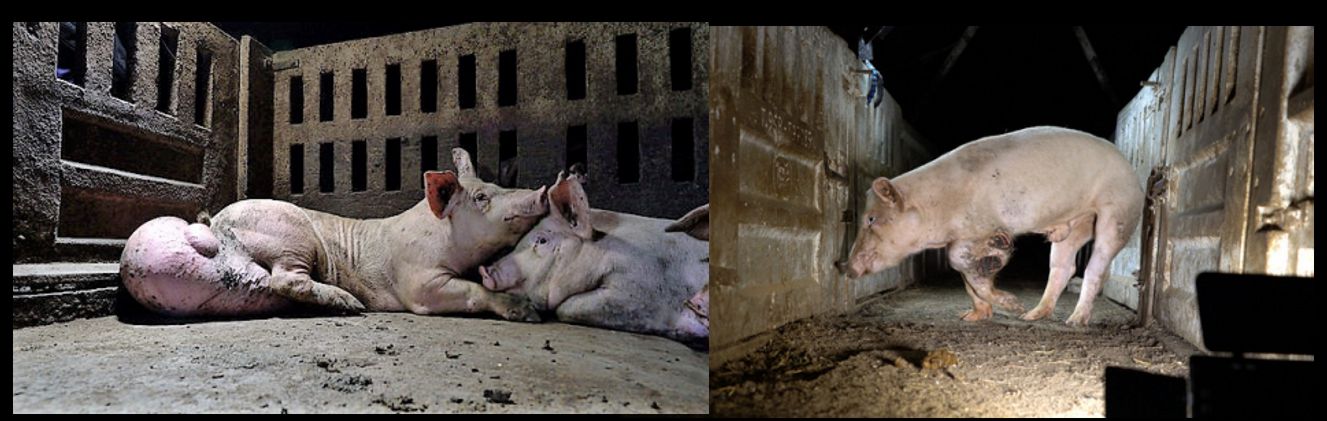
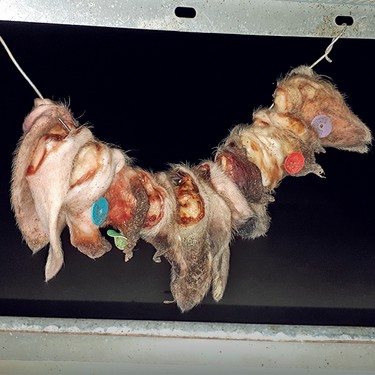
-sick pigs with huge pus-bumps and severe cases of intestinal breakages, which do not receive any veterinary care,
-dying and dead animals in some advanced state of asphyxiation lying between the surviving ones,
-Animals that can barely move due to their weaknesses and are injured by conspecifics after days without food or even eaten alive,
-sick and injured pork babies suffering torment without veterinary care,
-Pigs that have to live in catastrophic hygienic conditions in their own excrements,
– Containers overflowing with dead animals and fly maggots.
Experts are horrified
Animal Equality presented the recordings to Ignacio Arija, director of the Institute of Animal Husbandry at the Complutense University of Madrid. The livestock expert was appalled: “If you had told me that these scenes came from a country without any animal welfare legislation, I would have believed it, but not in the European Union, there should not be anything like that here, just like us there is something like that. […] Something like that has to be reported. “
Veterinarian Ignacio Mercadal, who has analyzed the video material and authored a veterinary report, concludes: “The magnitude and severity of the injuries suggest that the pigs have not been treated by veterinarians for an extended period of time.”
Posted on May 21, 2018 by Serbian Animals Voice (SAV)
And the name is: Piñatex!
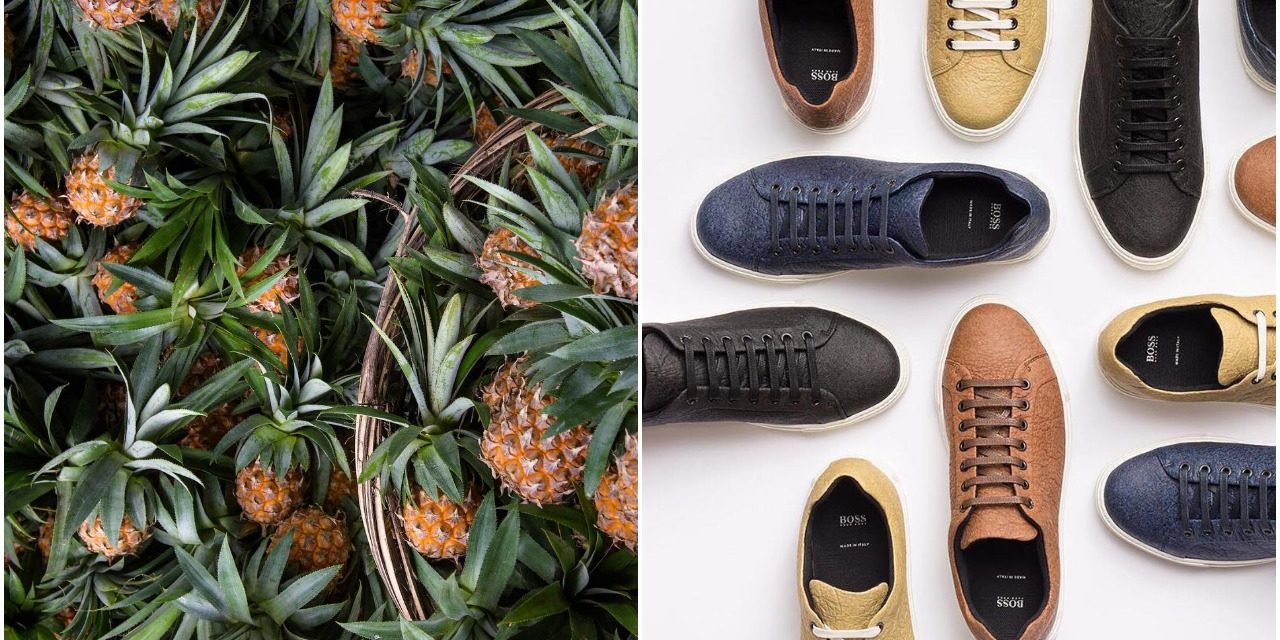
Fashion label Hugo Boss is about to launch its first line of vegan footwear — a collection of sneakers for men crafted from pineapple leaf fiber.
The new product line was created in response to the rapidly growing consumer demand for more sustainable and cruelty-free fashion.
Piñatex is an innovative, sustainable and 100% cruelty-free material that makes a splendid substitute for leather. The leaves used to manufacture it are by-products from harvested pineapples, and therefore don’t need any extra resources to grow. Sourced from the Philippines, this progressive material is creating extra income for local farmers.
Designed by Dr. Carmen Hijosa over the course of seven years, Piñatex is an ideal material for footwear, accessories, clothing, indoor furniture or even automobile upholstery.
Hugo Boss describe the pineapple-leather shoes as “bold steps forward for responsible design,” with every pair of shoes featuring soles crafted from recycled TPU (thermoplastic polyurethane), a 50/50 cotton and linen lining, and organic cotton shoelaces. Even the four different colored dyes are plant-based.
Not only is pineapple leather much easier on the environment and kinder to animals, it is also cheaper than animal leather, selling at between $5 to $15 per square meter.
This forward-thinking fashion label continues to advance towards a more peaceful, cruelty-free future, having already discontinued the use of fur in 2016.
With over one billion animals killed for the leather industry each year, it is promising to see these environmentally friendly, cruelty-free products finding their way onto the retail market.
My Comment:
Bravo, Hugo Boss!
In contrast to an incompetent parliamentary coalition in Germany, which is currently trying by all means to criminalize and destroy the animal aktivism, you, a German, are taking a big step forward to abolish the suffering and pain of millions of animals.
In the name of the animals we say “thank you”!
Posted on May 20, 2018 by Serbian Animals Voice (SAV)
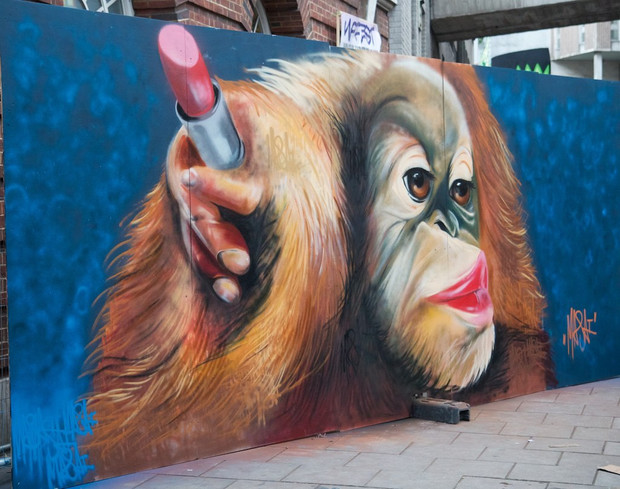
From 1973 to 2005, the orangutans lost almost half of their living space, according to WWF. This is due to forest changes and fires. Today they are threatened with extinction. Only 50,000 specimens should still live in the wild.
The idea of a monkey brothel is just absurd, but cruel reality Photo: flickr.com
Many orangutan females have to live in Indonesian brothels – and have sex with humans there. The word “animal cruelty” would have to be reinvented for these institutions.
When orangutan females have been recruited and found by the “pimps,” they are threatened with immediate death because brothel operators are interested in the newborn females.
They are sold into sex slavery. Here is the motto: the younger, the better. Young monkeys are easy to educate and get used to humans.
Young orangutans who fall into the hands of this prostitution ring experience hell on earth. They are distributed among villages and trained as domestic servants.
In a zoo in Bangkok monkeys are dressed as Gogo- girls or trained as kickboxer and abused.
When they land in the brothel, there are agonizing years before them. The females are shaved and made up. Dozens of men pass each other every day for sexual satisfaction in a dark room, where the animals are tied to a bed. The strong animals do not fight because they are used to humans.
Monkey brothles work because they are cheap. The customers do not have much money.
In the wild, the animals are up to 50 years old. In the brothels seldom older 20 years. The animals suffer depression and memory loss. Some monkeys try to end their lives.
Therefore, the brothels cannot be prohibited:
Indonesia is dominated by corruption and poverty. Attempts by animal welfare groups to liberate the monkey sex slaves can only be undertaken with heavy police intervention. The villagers perform armed resistance. Animal trade is a billion-dollar business, that competes in Asia with drug and arms trade.
Comment:This article is one year old. But I announce it now, because so far it has received very little attention.
And as far as I know, nothing has changed.











 Serbian Animals Voice (SAV)