Austria: the marmot hunt has started


from the blog of Martin Balluch*

flagge-von-österreich-jpg


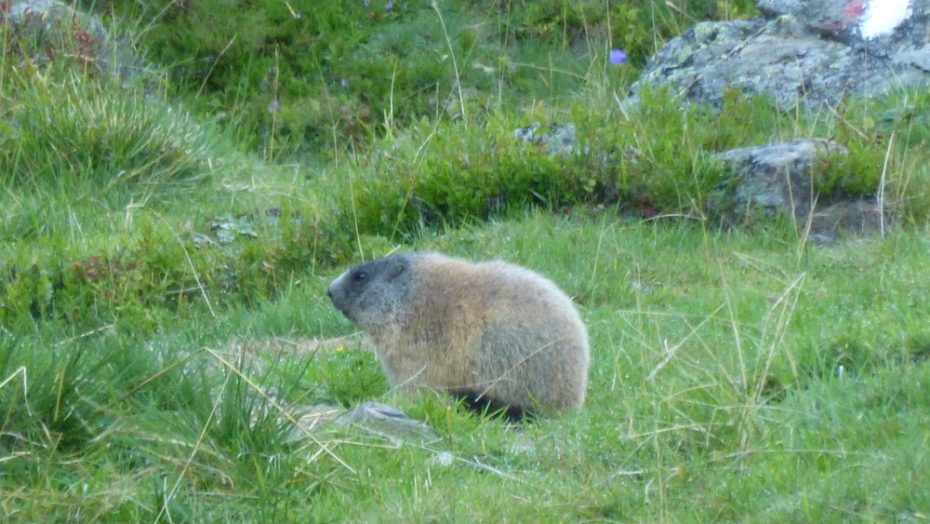
Back from a week in the forest, I realize that the hunt for marmots has started. At least with us in Styria, (Austria). In Tyrol and elsewhere it lasts until mid-August, but there are still 2 months left for this cheap hunt.

The shot costs only € 500, with a € 100 discount if you don’t hit. It is 4 times as expensive to shoot a chamois.
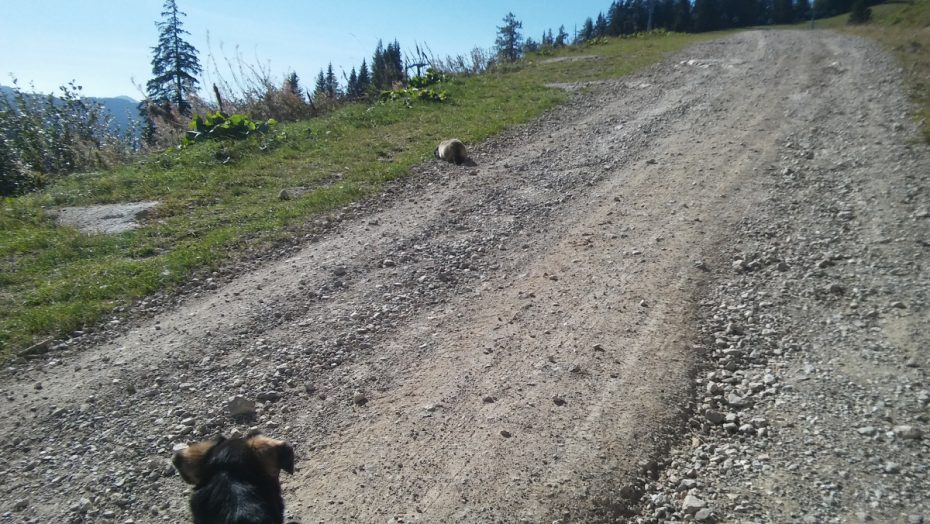
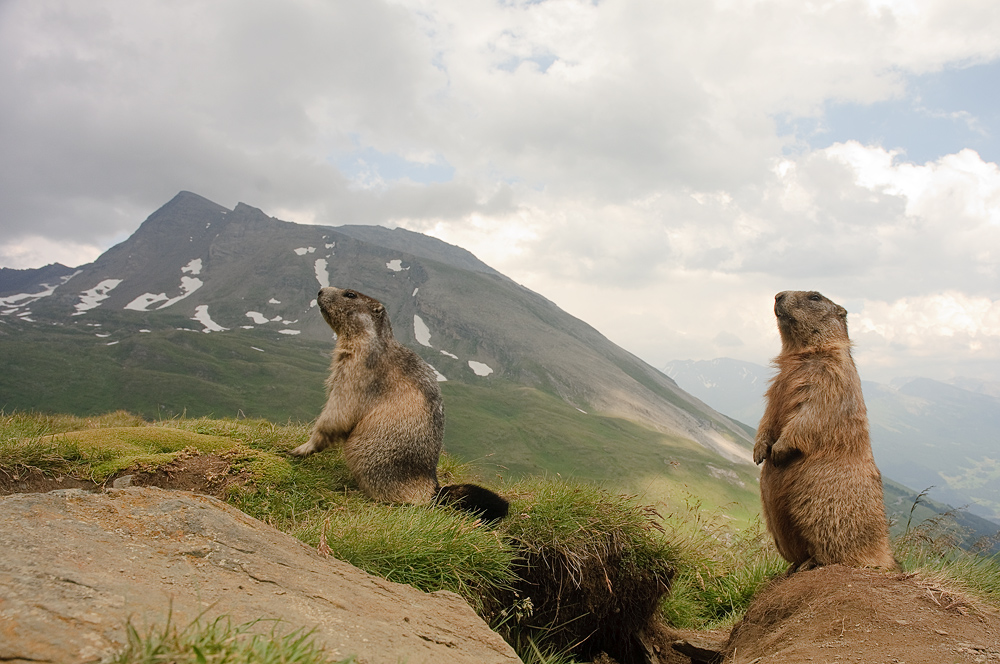
The picture above shows an encounter with a marmot on the Wetterinalm. “Beautiful” meadows road, isn’t it? You can tell right away that there is nature here.

The marmot lives carefree there, doesn’t care about hikers or my dog ​​friend who was there.

He is totally peaceful with all animals anyway.

Last autumn I and my family were in an alpine pasture in the Hohe Tauern for a few days after the cows were brought down. We made friends there with a family of marmots.

And then a hunter came up from the valley with his 14-year-old son and a 17-year-old hunting guide. The 14-year-old wanted to shoot a groundhog for his birthday.

Nothing easier than shooting at these almost tame marmots that had played with us.

While these hunters were happy, I felt like a traitor.

How can you be nice to animals when others take advantage of this approach to kill?

I have reported about this incident: https://martinballuch.com/eine-ganz-normale-murmeltierjagd/
 

* Dr. Martin Balluch: Martin Balluch studied mathematics, physics, and astronomy at the University of Vienna. He then did his doctorate in physics at the Ruprecht-Karls University in Heidelberg in 1989. From 1990 to 1997 he worked as a university assistant alongside Stephen Hawking in the Department of Applied Mathematics and Theoretical Physics (DAMTP) at Cambridge University.
He is the chairman of the “Verein gegen Tierfabriken” (association against animal factories) which has had many successes against gate hunting in Austria.


For more…at https://worldanimalsvoice.com/2020/08/04/austria-the-marmot-hunt-has-started/


Some interesting facts about marmots: The small rodents can’t stand the heat. They feel 20 degrees Celsius like we humans 36 degrees in the blazing sun.

Marmots hibernate. At -20 degrees Celsius, the ground squirrels like to crawl in their burrow, where it is pleasantly warm. They cuddle up to each other and lower their body temperature to 6 degrees so that they burn little energy. The smallest come in the middle because it is warmest there. In this way, up to 20 marmots form a huge ball of fur under the ground. They create complex tunnels in which many human animals would get lost.


And I mean…The only ones allowed to kill with impunity are the hunters.

Hunters and farmers produce many excuses to justify their murders of defenseless animals. The first do it out of a hobby and perverse sadism, but they always keep silent the joy, the experience of killing.
The second one is used to torturing animals anyway and cruelly slaughtered for profit.

In today’s society, the following applies: Whoever feels nothing when killing is a psychopath and severely disturbed.

In my view, these people are ruthless assholes, who can continue to kill animals in the forest and everywhere because they are protected by authorities, judges, and politicians who are also hunters themselves.

In Germany, the hunters are a miserable minority of 45% of the population, who nevertheless have the right to terrorize citizens and animals in the forest, to “accidentally” kill pets, to destroy the soil, and to cause enormous pollution.

But the average German thinks it’s none of his business what happens in the forest until he finds his cat or dog shot somewhere, by a hunter.
And he must be happy if a hunter does not mistake him with a wild boar when he takes when he goes for a walk in the forest!!

And so we are back to a known fact: as long as society is manipulated by media propaganda and false information and acts cowardly, nothing will change about the hunt.

It is these who have the power to abolish hunting that must be put under pressure.
From all of us.

We have many resources for this today, we just have to bring courage.

We owe it to the animals.

My best regards to all, Venus

Germany: 5000 pigs burned alive during a major fire in a fattening plant

Every rescue came too late for the animals: thousands of pigs were burned and suffocated in a fire in the community of Teutschenthal. The fire is now under control.

banane rep deutschlandpg

5000 animals were burned in a fire in a pig fattening plant in Saxony-Anhalt. The fire department was in large-scale operations for several hours.

A police spokesman said on Friday that the property damage was estimated to be between four and five million euros (!!!)

*** Major fire at SMA Woestmann KG pig fattening plant Teutschenthal Saalekreis Teutschenthal 16 07 2020 Photo Holger John, Teutschenthal Saxony Anhalt- Germany


A total of three stables and a connecting building were affected by the fire.
“The pigsties themselves have largely burned down. The animals have to be assumed that they all died in the fire,” said a police spokesman for the MDR.

The fire that broke out in Teutschenthal near Halle on Thursday morning has now been extinguished. However, a fire watch is held due to individual embers, the spokesman said.

The cause of the fire was unclear for the moment.


https://www.spiegel.de/panorama/teutschenthal-in-sachsen-anhalt-5000-tiere-bei-grossbrand-ins-mastanlage-verendet-a-0affb5c8-a62c-403d-9cae-4124f254da04

And I mean…Around 115,000 animals per year die through stall fires in Germany alone, approx. 5000 stables burn in 1 year, which is around 14 fires a day !!!

During the Corona period, the stall fires increased.

Incredible numbers, a cruel death, and nobody gives the correct causes.

The police report usually gives the following reasons: defective electrical systems and ventilation, completely inadequate fire protection … but there are other reasons that play a role!

The farmers have great problems with the animals, the coronavirus also affects the marketing of breeding cattle, calves, and slaughter cows. Prices are falling, foreign demand is severely restricted and auctions cannot take place. Their “slaves” no longer bring the money they want.

Killing by conventional methods costs a lot, fires are cheaper because in this case, the insurance company pays and the farmers also get compensation for every being that is burned.

In this case, too, someone has rehabilitated himself at the cost of fellow creatures’ lives.
And the authorities wave it through.

The news came only in the local newspaper.
If it were 5,000 human animals, we would have National Mourning Day!


My best regards to all, Venus

USA. Californian Trophy Hunter Shoots Elephant In Head Multiple Times to Kill. Urge UPS To Stop Shipping Trophies of Dickheads.

american-flag-120402148


https://worldanimalsvoice.com/2020/08/03/usa-californian-he-man-trouphy-hunter-we-call-him-a-tosser-shoots-elephant-in-the-head-many-times-petition-to-ups/

WAV Comment – A ‘big man tosser’ of a US trophy hunter shoots an elephant in the head many times.  Watch the video to see what a complete and utter wanker this bloke is – just like ALL hunters.  So this is your way of ‘protecting’ wild animals is it ? – asshole !

A curious young elephant approaches an American trophy hunter—only to be shot in the head repeatedly and allowed to endure a prolonged, painful death.

As part of a breaking investigation, PETA has obtained footage of a Californian trophy hunter named Aaron Raby shooting an elephant in the head over and over again. The elephant falls to his knees and suffers in agony as Raby shoots him at least four more times over the next two minutes. How many shots were taken after the video stopped and how long the elephant suffered before finally dying is unknown.


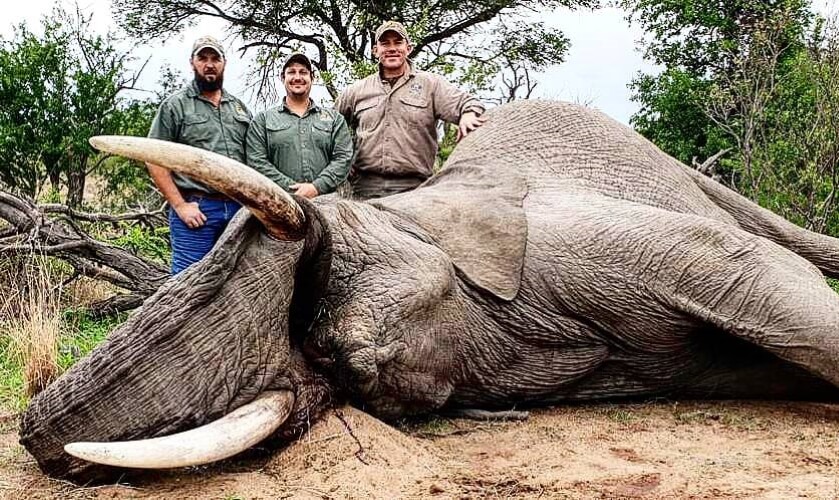
American trophy hunter Aaron Raby (center) poses with the elephant he killed outside Kruger National Park.

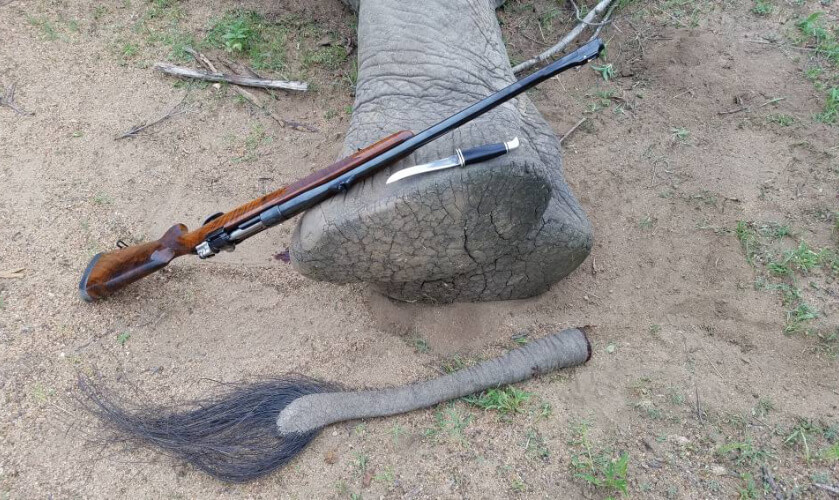
Afterward, Raby mutilates the elephant’s corpse, cutting off his tail. He later pays tens of thousands of dollars to have the elephant’s body parts preserved for shipment to the U.S.

Aaron Raby paid $30,000 to kill this elephant, after which he cut off his tail. Raby later paid another $20,000 to have the elephant’s body parts preserved for shipment to the United States.

Every year, thousands of wild animals like this magnificent elephant are slaughtered by trophy hunters for the perverse pleasure they get out of it and so that those who make a living selling hunting trips and accessories can profit from the trade in body parts. These animals need your help now.

UPS continues to allow this cruel industry to exist by shipping trophy hunters’ gruesome souvenirs. Please watch the video and then urge UPS to stop shipping hunting trophies immediately!

India: Amazing Rescues from Animal Aid Unlimited. August 2020.

See all the videos via this link:


https://worldanimalsvoice.com/2020/08/03/india-amazing-rescues-from-animal-aid-unlimited-august-2020-we-hope-video-links-work/


Dear Mark,

Happy Rakhi, to our brothers and sisters in animal protection and to our animal brothers and sisters. Raksha Bandhan is an important holiday here in India celebrating protection of someone you love. It expresses the bond between brothers and sisters, whether related by blood, or by love. Thank you, because you have expressed the real meaning of Rakhi every time you’ve helped someone vulnerable, of any species, colour, age or kind.

Orlando’s unbearable neck pain is gone!

Whoever says animals can’t speak hasn’t met Orlando. His sorrowful cries told a group of strangers that he was in excruciating pain and needed help. His worrying eyes expressed his confusion when we brought him to the examination table. And his adoring smile announced as clear as a bell that he loved his care-giver, Dhapu. Meet Orlando, whose injuries were invisible, so he told us all about them.

Animals can speak. They say “I hurt.” They say “I feel better now.”

And they say Thank You. Please donate.

I Understand Their Plight.


https://worldanimalsvoice.com/2020/08/03/after-being-damaged-in-a-surgery-i-understand-their-plight-even-more/

With thanks to Stacey for sending over,

Re  https://our-compass.org/2020/08/03/i-was-a-journalist-who-reported-on-captive-animals-then-i-became-one/

Source Medium: tenderly
By Christina M. Russo

After being damaged in a surgery, I understand their plight even more.

I do not have coronavirus. But I have been living in isolation.

For 633 days.

In October 2018, I had an elective gynecological surgery called a laparoscopic myomectomy — a benign mass removed from my uterus. There was no indication that this operation was particularly complex or risky. The surgery was performed by the director of gynecology at one of the top hospitals in the world. The average recovery time was two to six weeks.

But from the moment I awoke in the recovery room, it was clear something had gone terribly wrong. And I have been living in acute, life-altering pain ever since.

Before the surgery, I was an avid hiker. A runner. I worked at my family’s iconic fruit, vegetable and flower company, carrying heavy buckets of hydrangea or field-picked zinnia without a second thought.

I was also a freelance journalist, and just weeks before my operation was the proud co-recipient of a National Press Club award for an exclusive story in the Guardian on the capture of wild elephants in Zimbabwe for Chinese zoos. I had reported for years on animal cruelty, including stories on donkey abuse in Ethiopia; bear dancing in India; deadly swimming-with-dolphin programs in the Caribbean; and the mistreatment of horses in northern California. The award was profoundly meaningful and a photograph of me next to my co-writer of the story showed a beaming, vibrant woman at the apex of her career.

And then it was over.

Post-surgery, I spent months in bed in agony. I called my doctors pleading for help. I could barely walk without crying. I could not urinate without gasping or having someone hold my hand. I could not carry a carton of orange juice. I could not drive. I could not work. All I could do was writhe in pain on the couch, because I could not climb the stairs to my bedroom. My surgeon placated me with hollow assurances that time would heal all things.

Ten months after my surgery, I was still in physical torment. One summer day I decided I would hobble to the beach, 400 yards away. My sister took a photo of me coming home. Crawling.

Friends and family tried to soothe me; my husband took an unpaid leave of absence from the fire department to care for me. I hired someone to make soup for me. I lost 25 pounds. I did acupuncture. I had nerve blocks. I meditated. Still, one of my physicians would not recommend additional pain medicine — and I was taking arguably some of the lowest dosages possible — because of my “heightened despair.” I went to the emergency room four times. Finally — 15 months after surgery — one ER physician admitted me into the hospital, blatantly saying he hadn’t seen a patient in my level of pain in months.

I was going mad.

And then, I got mad. Not just for myself, but for those whose plight I had been exposing before my operation: the innumerable animals confined to their own physical and mental isolation and torment in zoos.

Someone once told me that when people go to zoos and aquariums they think they are seeing something extraordinary. But what they are really seeing is a slow death.

For some, this might seem like a frivolous point when people are dying from a virus that the world is trying to contain and eradicate. But for me, the caged animals represented not only a journalistic career, but, now, a personal kinship.

When I was a child, my parents took me to a zoo on Cape Cod. The “main attraction” was a lone gorilla slumped against a wall in a thick glass cage. Visitors stared at the animal who was sitting on the floor next to a dirty car tire. They saw something foreign, and cartoonish and entertaining. They pointed their fingers and laughed.

I grabbed my father’s hand and cried.

Decades later, I produced a documentary for public radio examining the ethics of American zoos. I conducted many interviews and visited zoos around the country. From a journalistic perspective it was clear that caging animals to serve as “conservation ambassadors” for the wild is a misguided, if not entirely bogus notion. If it were working, maybe we wouldn’t be in a global conservation crisis.

After living almost entirely inside my home for 21 months, the images that have always haunted me are now turning into an unrivaled simpatico: A massive male elephant confined to an exhibit the size of my neighbor’s garage. An official zoo training video that showed an elephant screaming as men beat and bloodied her into submission. A binturong in a tiny cage with a single bowl of water that was green with stagnant algae. A lone, sickly yak who was literally eating the inside of his wooden stall. A camel with legs covered in diarrhea. A pair of African white rhinos lying nose-to-nose in a barren enclosure, continents away from where they should have been. And at one zoo, supposedly one of the best in the country, I was led to a neon-lit basement where a stunning silverback gorilla had been living in isolation. For 10 years.

One of the most disturbing images I’ve seen recently is a video, taken by elephant advocate Sharon Pincott of elephants in a zoo in Beijing, walking in circles in concrete, empty cages. In the video, they go round and round and round behind metal bars. And on the outside, noisy visitors clamor and gab. I sent the video to elephant behaviorist Joyce Poole, who has been acting against the internment of elephants in zoos for decades and has seen what one would colloquially call, it all. But this video, she said, left her sobbing.

What drives human beings to cage animals for entertainment? After years of reportage, I ultimately think it’s based on some cocktail of human hubris, a religiously-buoyed belief in our dominion, and even society’s, dare I say, over-reliance on science. For example, there’s the oft-repeated phrase that humans are the only species that knows it is going to die. Who came up with that one? Or that many animals don’t have a sense of self, or communicate in ways that are as sophisticated as us, because it has yet to be proven. These kinds of refrains cement the idea that animals are lesser than. And allow humans en masse to do things to animals they would never do to each other. When it comes right down to it, though, the bottom line is that there are more people who don’t care about the welfare of animals than those who do.

After my surgery, I was at the mercy of my doctors to find the cause of my pain. Initially, I was sure they would do this with fervor. But they didn’t. So, day after day life was the same: Wake up, suffer, talk to doctors, go to sleep. Wake up, suffer, talk to doctors, go to sleep. Anguish, disbelief, and despair eclipsed my once purpose-filled life. And monotony, perhaps one of the most crushing and consuming kinds of agonies, set in. Imagine then, being an animal in a zoo. What if you were in pain? What if you were lonely? What if you wanted to walk beyond the bars? Someone once told me that when people go to zoos and aquariums they think they are seeing something extraordinary. But what they are really seeing is a slow death. In real time.

The coronavirus-spawned isolation is testing people in ways they’ve never been tested before, physically and mentally. And with this isolation, there is an opportunity to ponder. So for the first time in many, many months, I’ve sharpened probably the last remnants of my journalistic pen to write this essay.

The current fear, despair, mania, physical constraint and existential heartache will most likely be temporary for those who have the fortune to survive this virus. And you, dear reader, will have the great gift of being free of your quarantine, your confinement, and your cage.

But for so many magnificent animals, this new world is not novel. Or a dramatic medical measure. Or a safety lockdown. Or a fleeting moment. For animals at the zoo — or in any cage — this is something else. Something far, far more horrible. For them, this is something that you, very briefly, called life.

Christina M. Russo is a freelance journalist, with a focus on animal issues. Published in National Geographic, the Guardian, YaleE360, Outside, Fashionista and others.

tenderly is a vegan magazine, of the Medium family, that’s hopefully devoted to delicious plants, liberated animals, and leading a radical, sustainable, joyful life.

Click HERE to go Dairy-Free

Take the Dairy-Free Challenge HERE

Learn about eggs HERE

Download Your FREE Vegan PDF HERE

Order a FREE vegan kit: HERE

Bacon alternatives HERE

Take PETA’s Cruelty-Free Shopping Guide along with you next time you head to the store! The handy guide will help you find humane products at a glance. Order a FREE copy HERE

Searching for Cruelty-Free Cosmetics, Personal-Care Products, Vegan Products, or more?
Click HERE to search.

Click HERE to find out How to Wear Vegan!

Want to do more than go vegan? Help others to do so! Click below for nominal, or no, fees to vegan literature that you can use to convince others that veganism is the only compassionate route to being an animal friend:

PETA: HERE

Vegan Outreach: HERE

Get your FREE Activist Kit from PETA, including stickers, leaflets, and guide HERE

Have questions? Click HERE

There’s no right way to do the wrong thing!

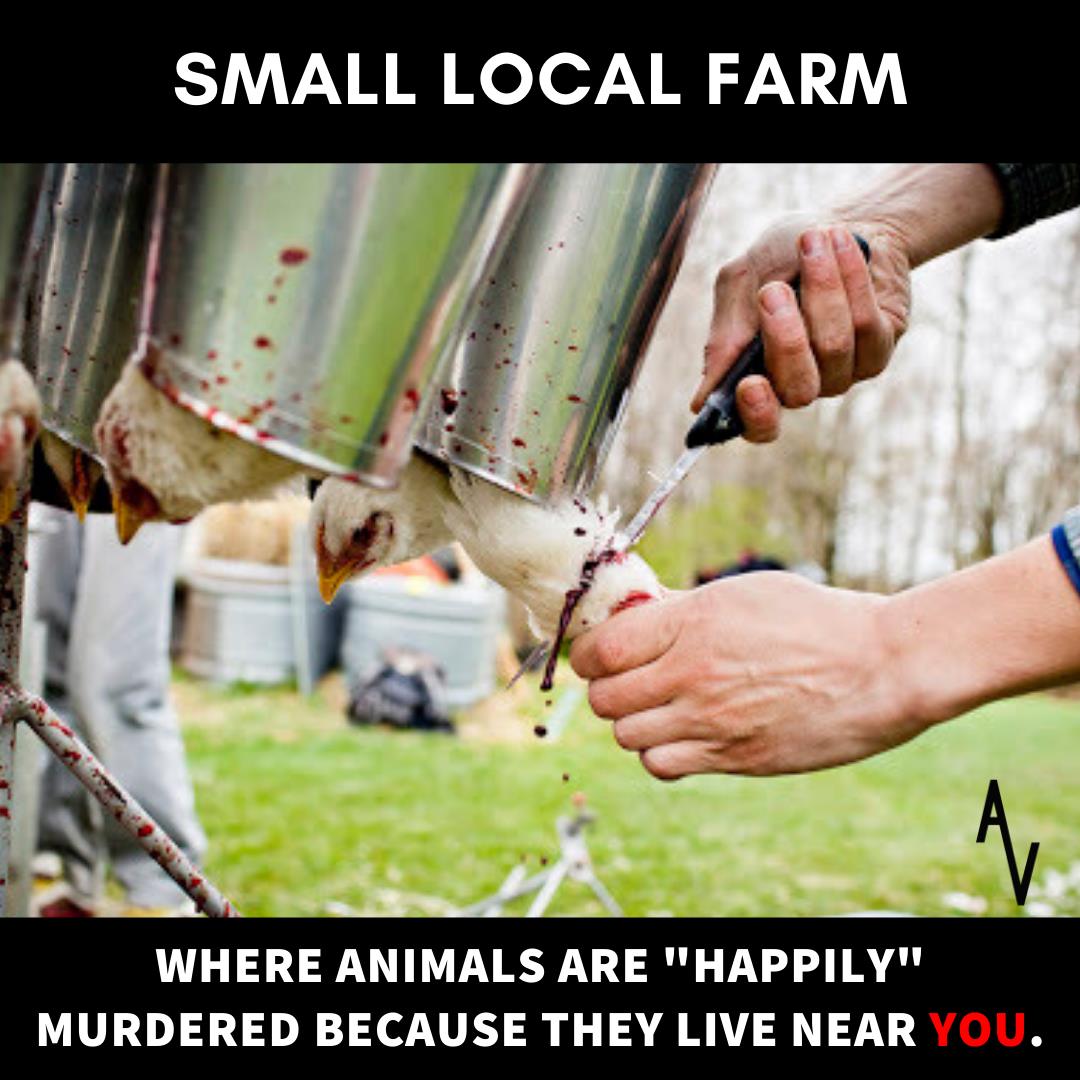
Many nonvegans often tell us how they only buy from some kind of idyllic fantasy land of small local family farms where enslavement and killing are “done a respectful way.”

Why exactly does distance matter when an individual is murdered and enslaved?

Is it suddenly moral and ethical to slice the throat of someone when it is 10 miles away, but 100 miles is when it is too far and now you wouldn’t buy from them because they are immoral and unethical?

There’s no right way to do the wrong thing. Stop supporting this violence and abuse.


Anonymous for the Voiceless

And I mean…Stop being a collaborator of the meat mafia yourself.

With their propaganda, they want you to believe their lie.

The meat mafia wants you to cooperate and help in their crimes against animals and people; with your consumption, you support thieves, crooks, mass murderers.

Stop keeping alive this fascist system of slavery, of mass destruction, be no longer the hangman’s right hand!

My best regards to all, Venus


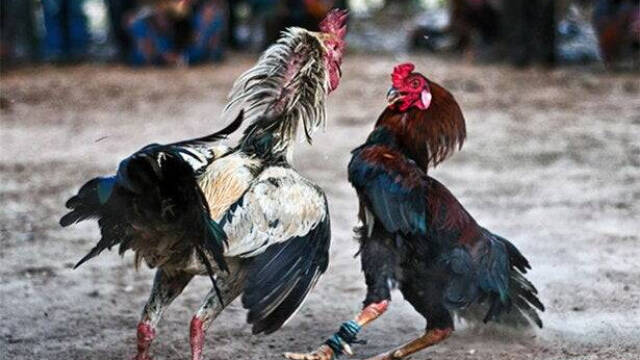
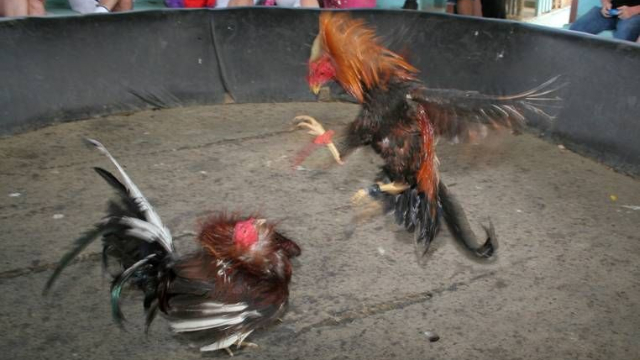
Spain: medieval cockfighting still active

In addition to bullfighting, cockfighting is one of the embarrassments of the Spanish country, with the difference that the second is practically illegal.


They can only be associated with the peña, and the presence of veterinarians is not mandatory, although in fights where roosters use spurs on their legs to attack alongside their beaks, the wounds are common and about one in 10 dies in battle.

Las peleas de gallos todavía son consideradas legales en las comunidades de Andalucía y Canariascockfights are still considered legal in the communities of Andalusia and the Canary Islands

The Telecinco program ‘Sálvame’ has shown this afternoon images of Juan José Padilla, Morante de la Puebla and Alberto López Simón in a cockfight held in June in Sanlúcar de Barrameda (Cádiz), which could constitute a punished crime with up to 18 months in prison.

AnimaNaturalis will take the case to court.

In the images that ‘Sálvame’ has shown this Tuesday, you can see the bullfighters how they witness these brutal cockfights from the stands. The act, supposedly, would have been held in June, the month in which Spain was still in a state of alarm due to the pandemic. In addition, there are images in which you can see the bullfighters delivering an award with a minor, who has a mask in hand.

No one else in the photo is wearing a mask.

The police have asked the program management for all the evidence, data, photos, and videos to intervene, according to Kiko Hernández during the program.

Are cockfights legal in Spain?


For more…at https://worldanimalsvoice.com/2020/08/02/spain-medieval-cockfighting-still-active/


And I mean…Even so, in Andalusia, there has been the case of a last illegal fight in which the Civil Guard has had to intervene. Members of the Benemérita denounced 83 people in a meeting of 120 in which they bet on cockfights in a corral in El Palmar de Troya in Seville.

Peleas_de_gallos_2Cockfighting is still legal in Andalusia and the Canary Islands

It should be noted that, at the time of being surprised, the meeting attendees were huddled around the “ring” or fighting place of the animals, without keeping safe distances or wearing protective face masks against the coronavirus.

Roosters are sometimes equipped with metal spurs, their combs are often amputated, and they are fed with amphetamines, caffeine, or strychnine, which means drugs to increase their aggressiveness and endurance.

In addition, those who enter into an illegal fight of this type can pay a fine that can go up to 20,000 euros.

It is high time that Spain left the Middle Ages and prohibited bullfighting, cockfighting, and the execution of hunting dogs (galgos) after every hunting season.

At least these three criminal ways of making money from the suffering of animals are the shame of Spain.

My best regards to all, Venus